Downy Gentian Gentiana puberulenta
Also called Prairie Gentian, pȟežúta zí (Lakota)
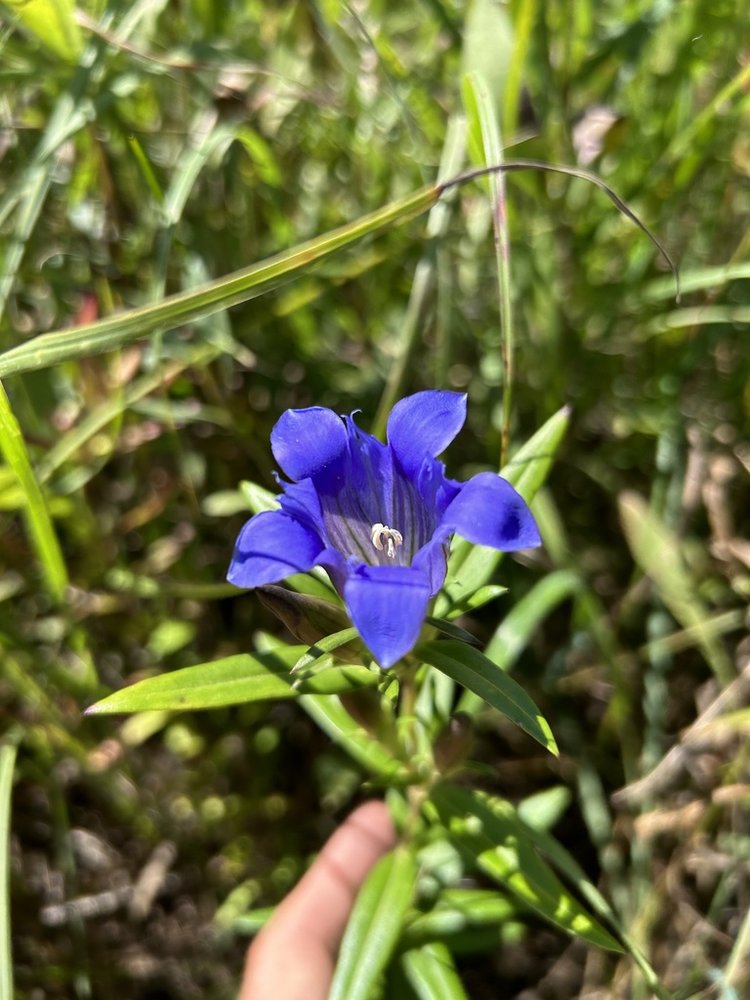
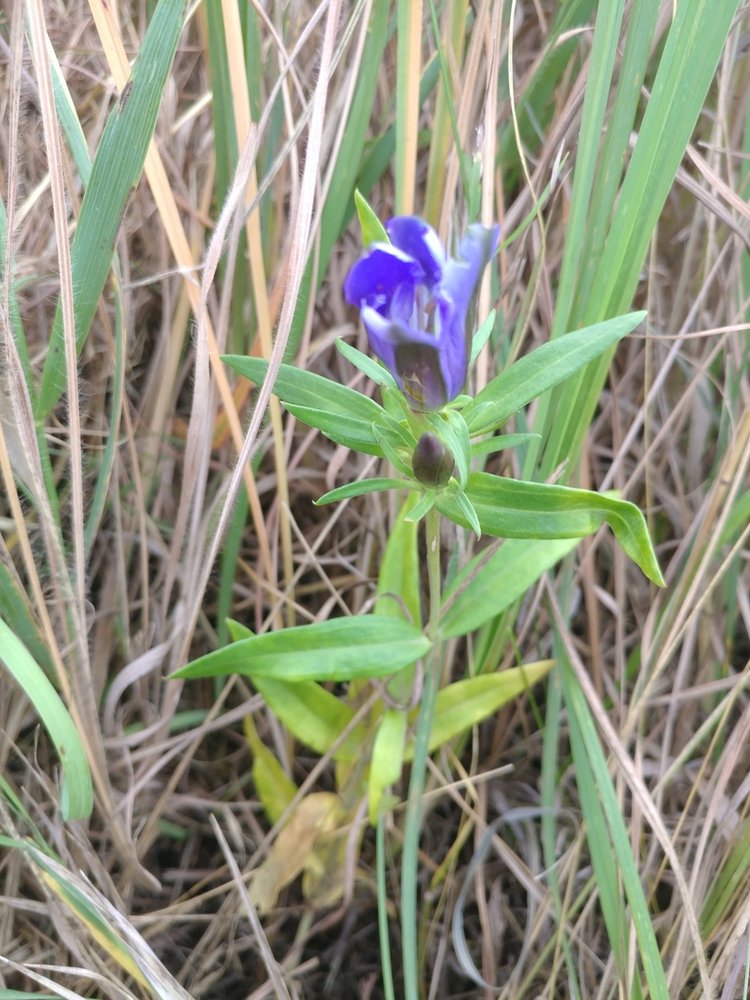
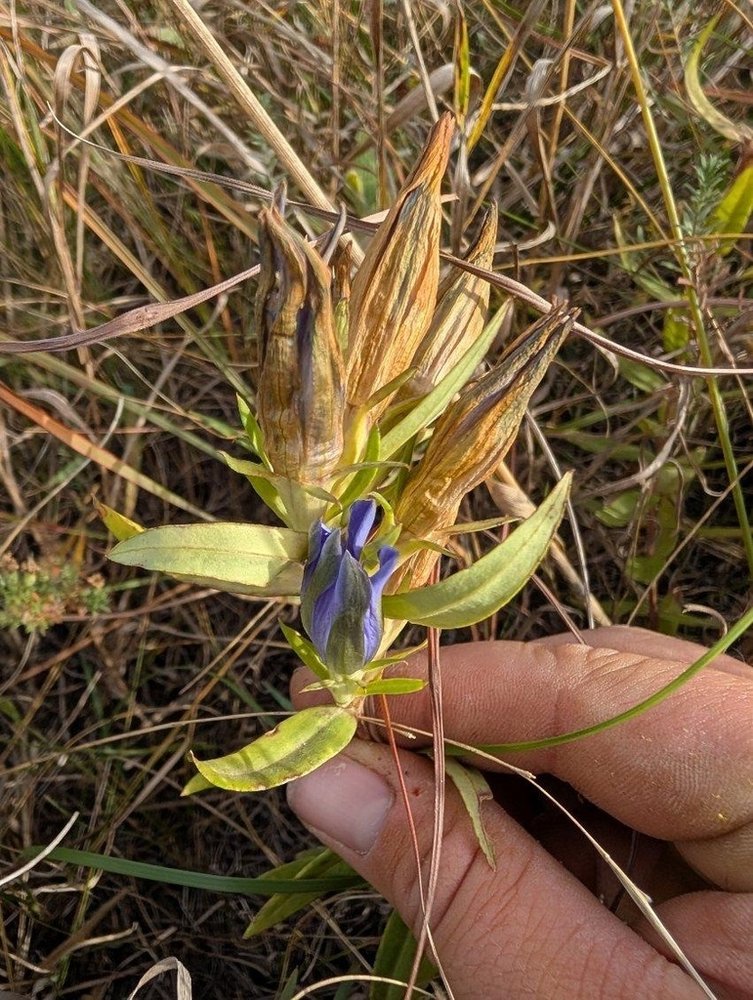
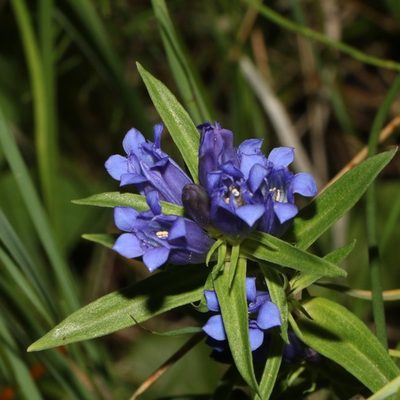
Downy Gentian (Gentiana puberulenta) is a native perennial 10–60 cm (4–24 in) tall, with deep blue, upright, bell-shaped flowers 3.5–6 cm (1½–2¼ in) long that open in late summer and fall at the top of the stem and in the upper leaf axils. South Dakota's Rare Plants table lists it in the Black Hills as separated from its main range, and this page gives no locations.
Free photos from other sources
| Family | Gentianaceae · Gentian |
|---|---|
| Status | Native perennial |
| Blooms | Late summer into fall, August to October |
| Height | 10–60 cm (4–24 in) |
| Where | Dry upland prairies, open woods and hills, often on lime-rich soil |
| Also called | Prairie Gentian, pȟežúta zí (Lakota) |
| Traditional use | The 1998 Lakota plant guide Culturally Important Plants of the Lakota lists it as pȟežúta zí and says a decoction of the root was taken as a bitter tonic. Gilmore's 1919 account, written under the old name Dasystephana puberula, which Flora of North America says was long misapplied to this plant (the name itself is typified by a different gentian), gives a Dakota name meaning 'yellow medicine', for the color of the roots, and says a decoction of the root was taken as a tonic, alone or with other medicinal plants. |
| Note | South Dakota's Natural Heritage Program lists it on its Rare Plants of South Dakota table and describes the Black Hills plants as separated from its main range. This page gives no locations. |
Traditional use: first drafted by Google AI, then checked against the sources on this page.
Roots, seeds & germination
Seed: The fruit is a smooth, oblong capsule, often wrapped in the dried flower, holding many small seeds; Flora of North America says the seeds are winged.
How do you identify Downy Gentian?
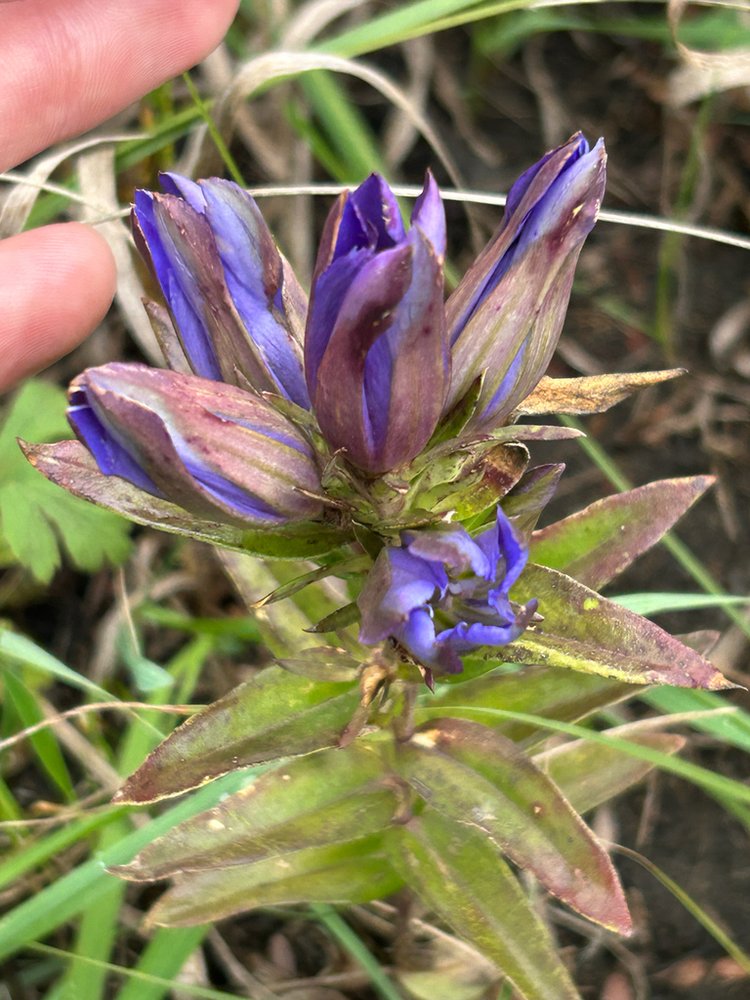
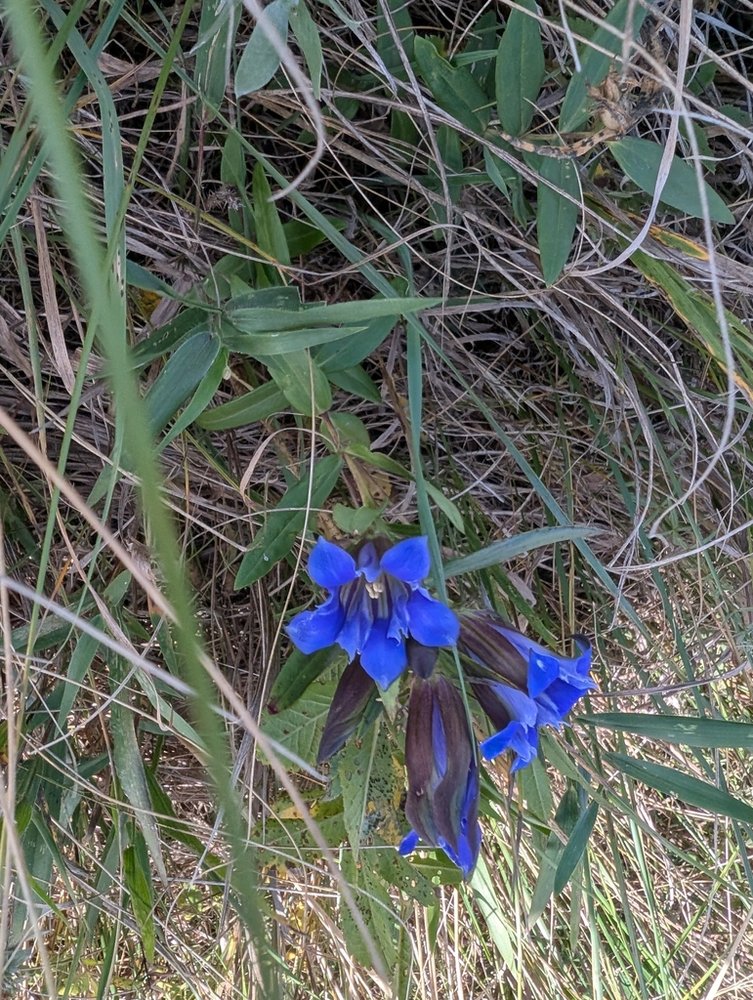
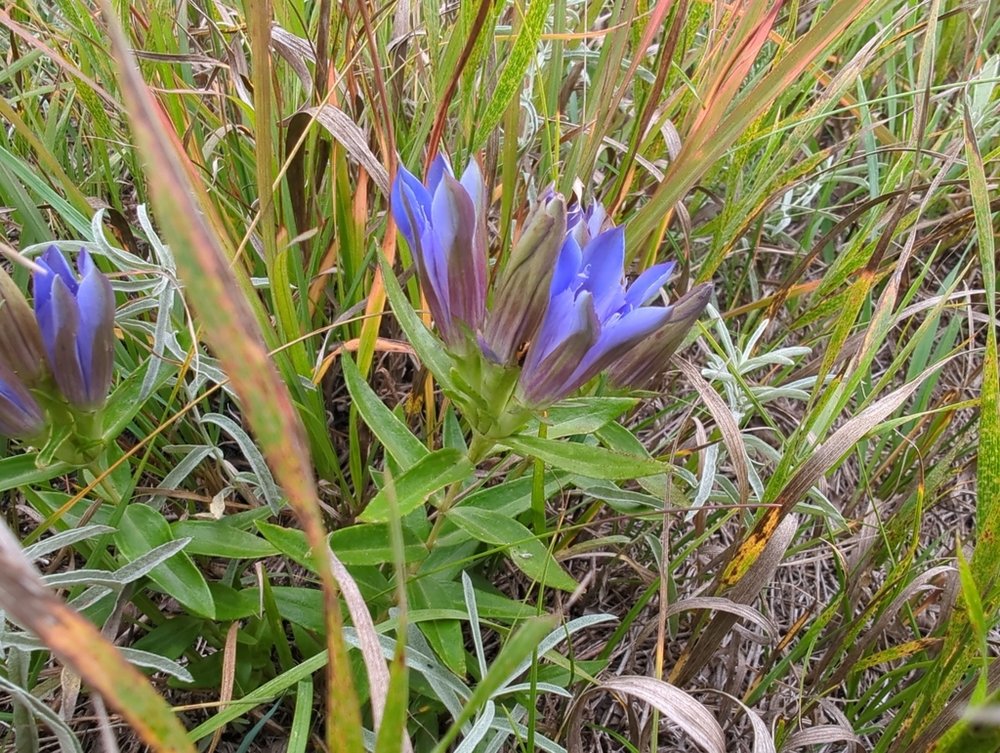
Look for stout, usually unbranched stems, finely hairy and often tinged red, with pairs of narrow, stalkless, glossy leaves 1.5–7 cm (½–2¾ in) long, each pair at right angles to the pair above and below. The flowers sit in tight clusters at the top of the stem and in the upper leaf axils, upright and bell-like, bright blue to deep blue-violet, with 5 spreading, sharply pointed lobes. Between the lobes is a pleat-like flap of tissue with a ragged outer edge, and inside the tube the base is white with dark blue stripes. Four narrow, leafy bracts spread out below the flower. Flora of North America says Pleated Gentian (Gentiana affinis) has generally much smaller flowers, and that its corolla lobes are less than twice as long as the free part of the pleats, while Downy Gentian's are more than twice as long.
When does it bloom?
Late summer into fall, August to October.
Where does it grow?
Dry upland prairies, open woods and hills, with mesic to somewhat dry savannas and prairies on calcareous (lime-rich) soils named by Flora of North America, which gives 100–1,300 m (330–4,300 ft) across its whole range. In the Black Hills it is on South Dakota's Rare Plants table, which describes the Black Hills plants as separated from the plant's main range. This page gives no locations.
Other gentians in this guide
Sources: Flora of North America Vol. 14: Gentiana puberulenta (eFloras); Minnesota Wildflowers: Gentiana puberulenta (Downy Gentian); Kansas Wildflowers and Grasses: Downy gentian, Gentiana puberulenta; South Dakota Natural Heritage Program: Rare Plants of South Dakota (SD Game, Fish and Parks); Culturally Important Plants of the Lakota (Black Elk and Flying By, 1998), entry 135; Gilmore 1919, Uses of Plants by the Indians of the Missouri River Region (Dasystephana puberula entry); Native American Ethnobotany Database (BRIT): searched under Gentiana puberulenta, G. puberula and Dasystephana puberula; no uses listed.