Creeping Bellflower Campanula rapunculoides
Also called Rampion Bellflower, European Bellflower, Rover Bellflower
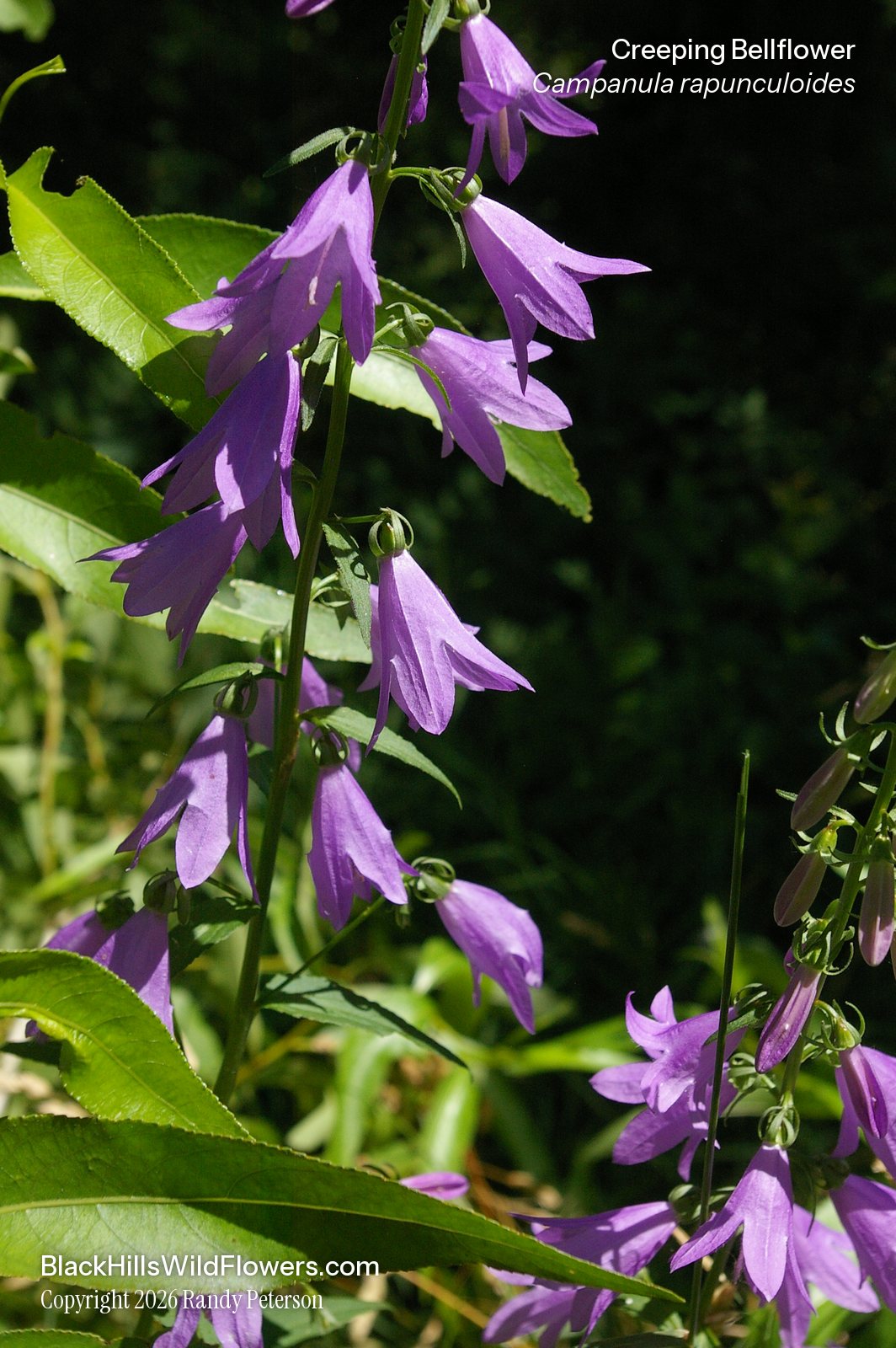
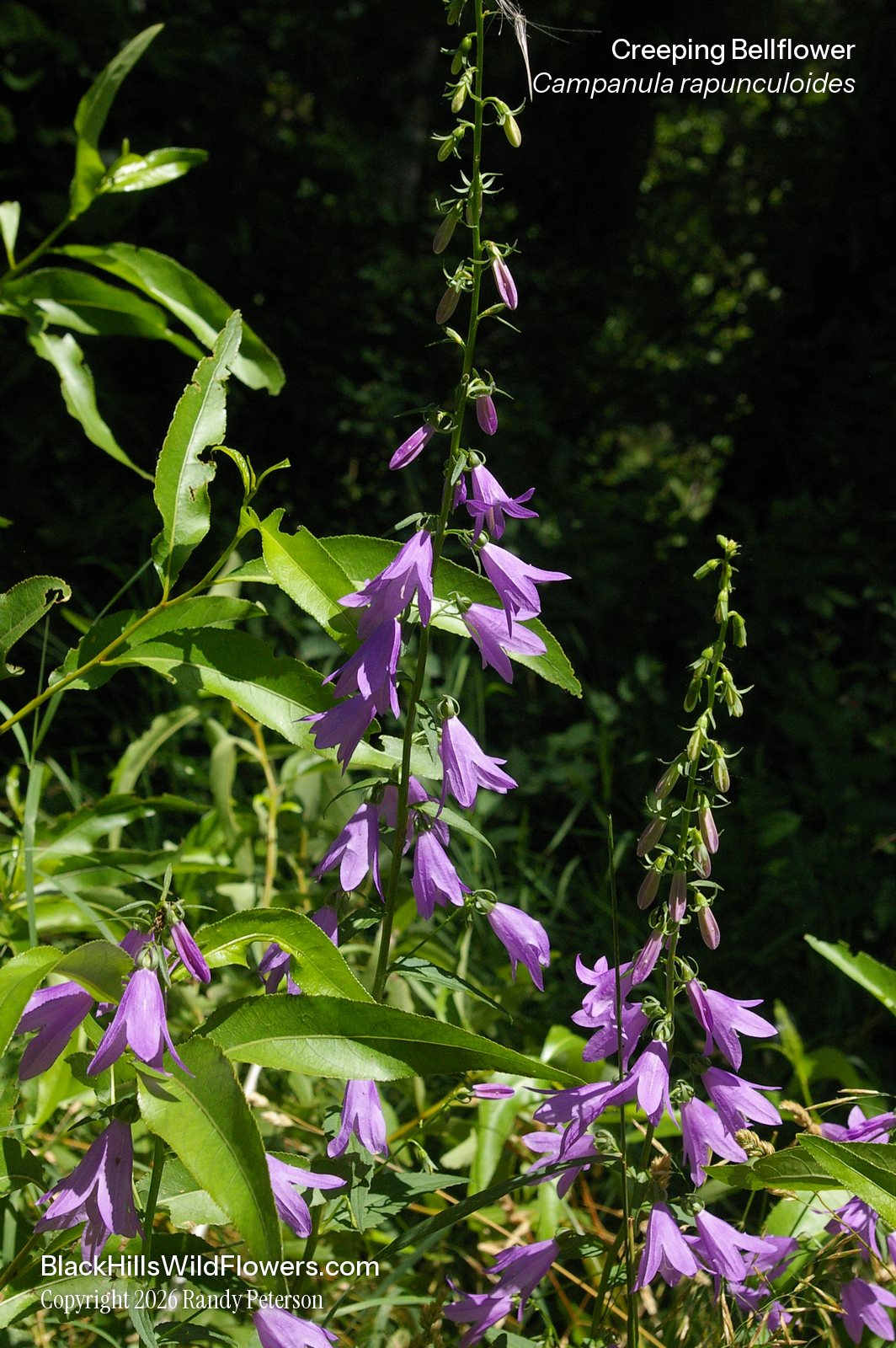
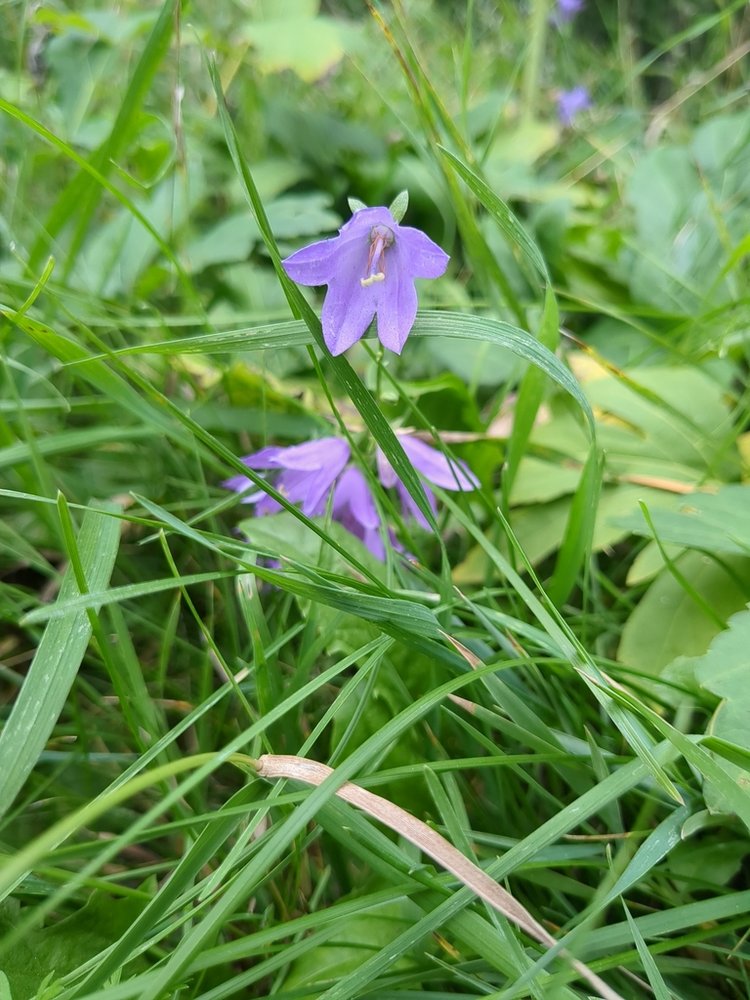
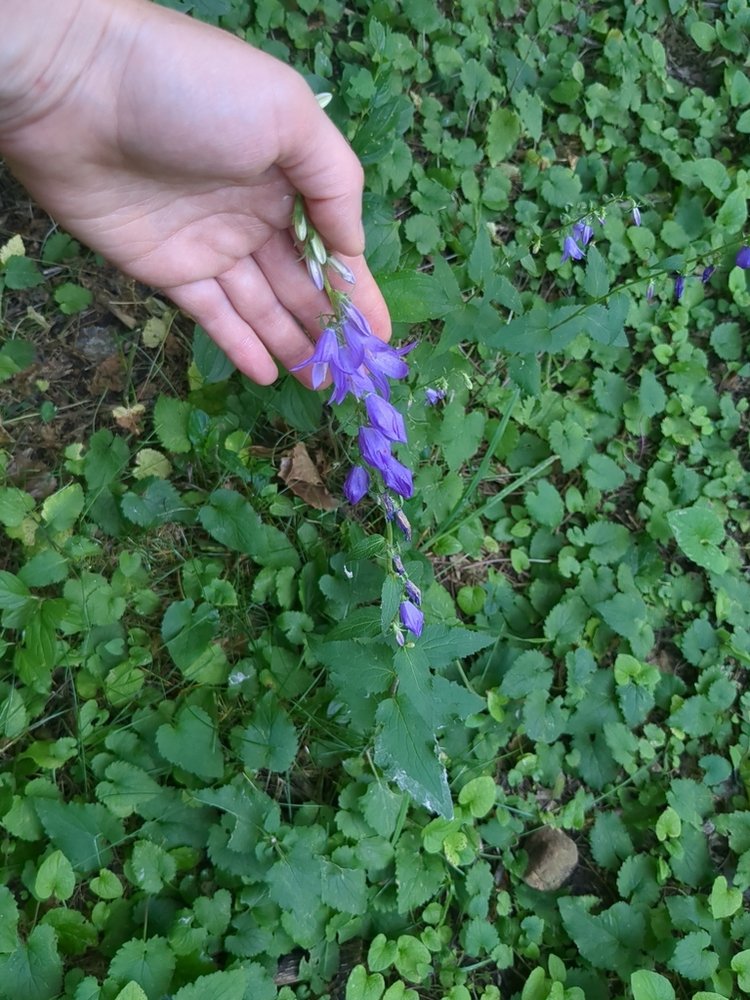
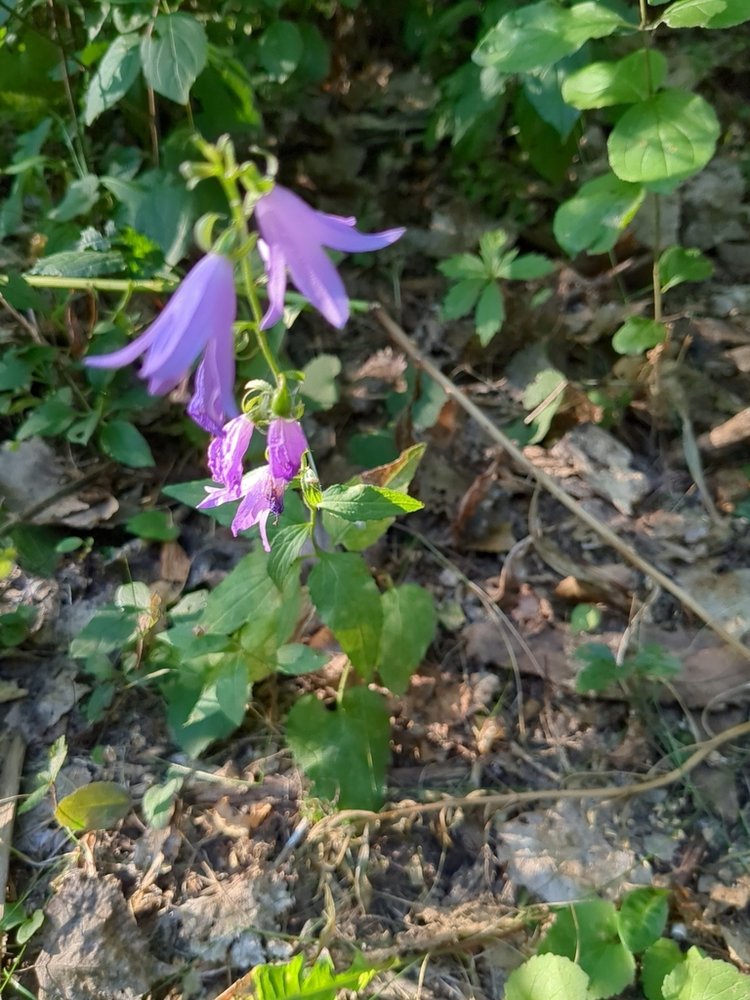
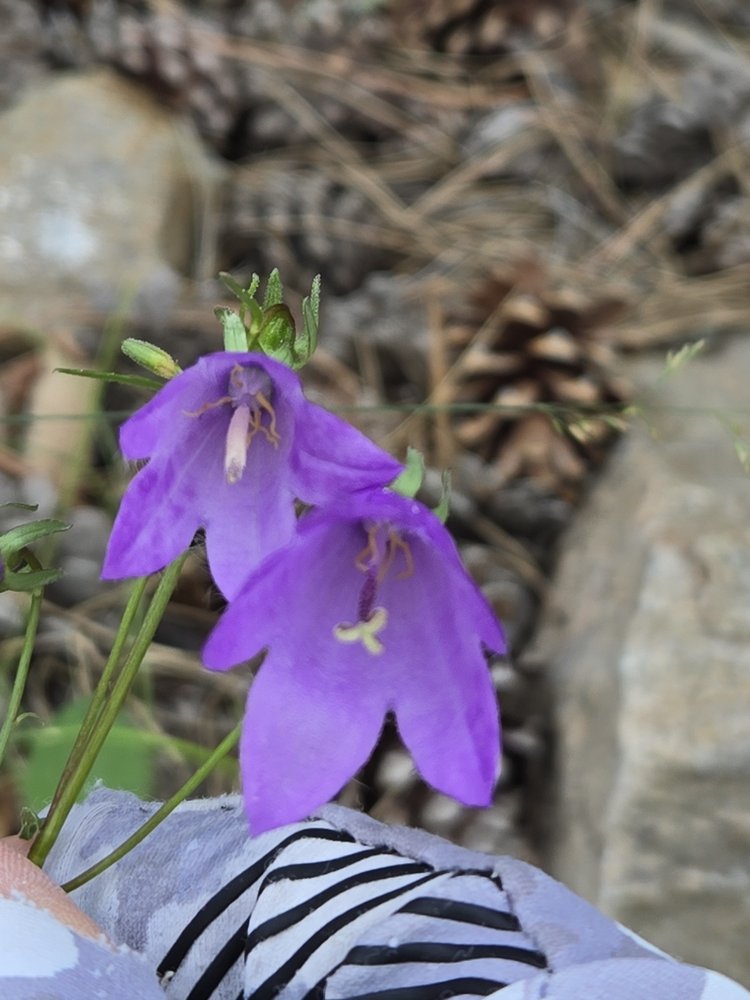
Creeping Bellflower (Campanula rapunculoides) is a European garden plant gone wild: an upright stem 30–100 cm (12–39 in) tall with nodding blue-violet bells hanging along one side, opening from the bottom up from June into October. It spreads by deep, fleshy roots and thousands of seeds, and once established it is very hard to get rid of. In the Black Hills it is a plant of towns, roadsides and creek banks; herbarium specimens from Lawrence County go back to 1936, and the National Park Service lists it at Wind Cave. Photographed in the Black Hills.
Free photos from other sources
| Family | Campanulaceae · Bellflower |
|---|---|
| Status | Introduced perennial |
| Blooms | June into October, mostly July to September |
| Height | 30–100 cm (12–39 in) |
| Where | Yards, lawns, roadsides, creek banks and shaded woodland edges in and around towns |
| Also called | Rampion Bellflower, European Bellflower, Rover Bellflower |
Roots, seeds & germination
Root: A deep, fleshy, branched system of creeping underground stems (rhizomes) that every so often swell into carrot-shaped, tuber-like storage roots, which in turn send out more runners. The roots can reach more than 30 cm (12 in) down, and a small piece of root left in the soil can grow a new plant.
Seed: Each flower becomes an upright capsule 6–10 mm (¼–⅜ in) long that turns brown and splits open at the side to shed tiny brown seeds under 1 mm. A flower makes 50 to 150 seeds and a plant up to 15,000. Mowed regularly, it doesn't flower at all.
How do you identify Creeping Bellflower?
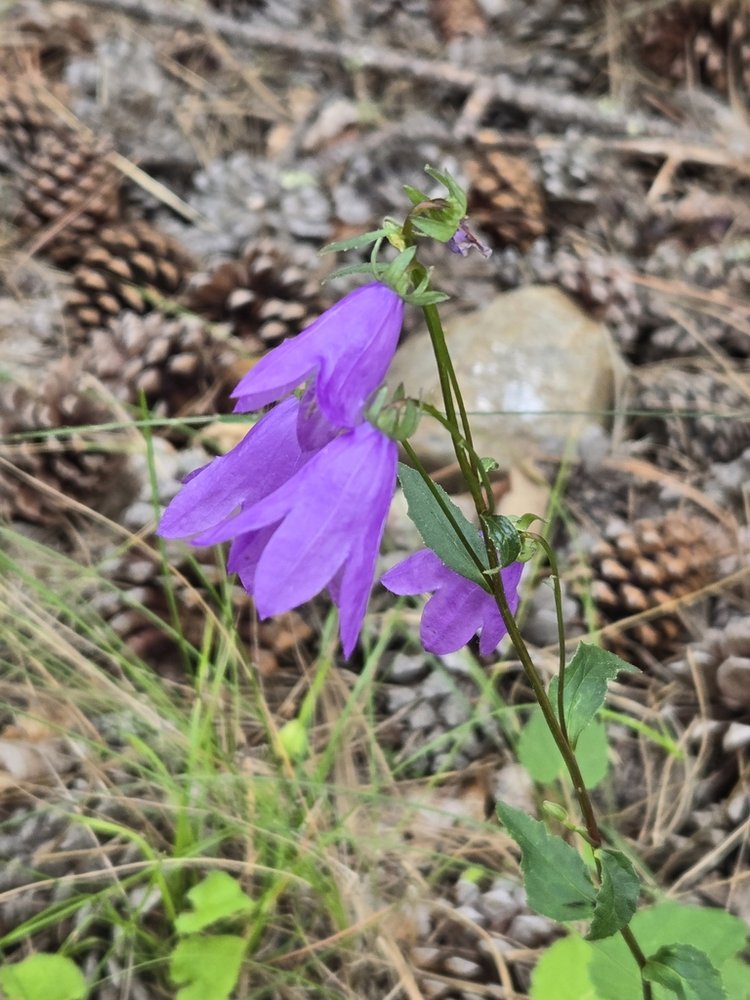
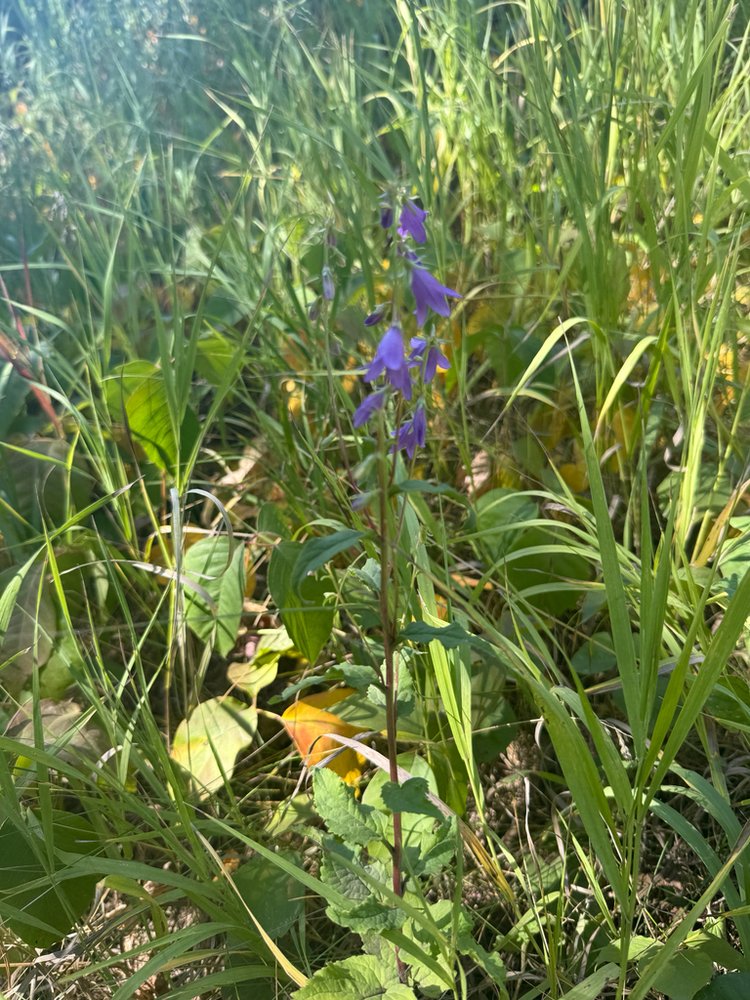
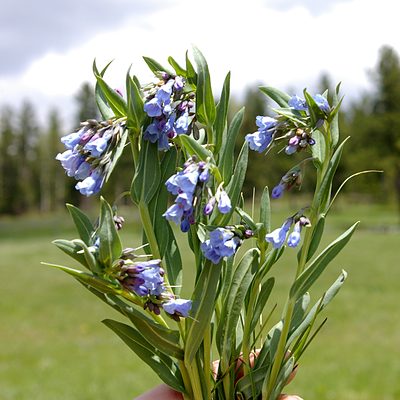
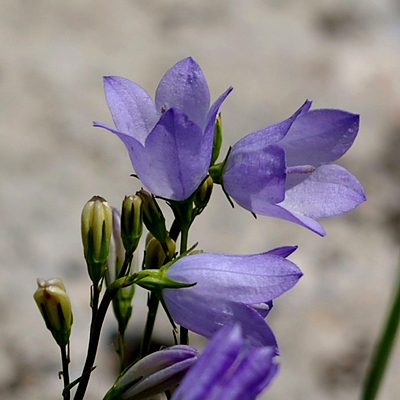
Look for one upright, usually unbranched stem with the bells hanging from one side of its upper part, opening from the bottom up; the stem has milky sap when broken. Each nodding bell is 1.5–4 cm (⅝–1½ in) long, blue-violet to purple, with 5 pointed lobes that curve back, 5 stamens inside and a protruding style ending in 3 curled lobes, and the 5 narrow green calyx lobes fold back away from the bell. The leaves alternate and are coarsely toothed and rough: heart-shaped on long stalks at the base, where they wither as the plant flowers, and smaller and narrower up the stem. It has been mistaken for Harebell, a native bellflower; Harebell is a spindly, delicate plant 10–50 cm (4–20 in) tall with narrow stem leaves and smaller bells, usually under 2.5 cm (1 in), on thin stems. It has also been mistaken for bluebells, whose flowers are more trumpet-shaped, in tighter clusters that dangle at the branch tips.
When does it bloom?
June into October, mostly July to September.
Where does it grow?
Yards, lawns, roadsides, creek banks and shaded woodland edges in and around towns; SDSU says it is most abundant in urban and suburban settings. Most Black Hills herbarium specimens are from Lawrence County, starting with a flowerbed in 1936, then yards, lawns, streambanks, roadsides and creek banks from 1947 to 2011; Pennington County specimens include one that escaped a garden under ponderosa pines in 1992, and there is one each from Meade and Custer counties and one from Crook County in the Wyoming Black Hills. The National Park Service lists it at Wind Cave, and iNaturalist has 45 research-grade Black Hills records, July to October. It is not a listed noxious weed in South Dakota or Wyoming.
Other flowers to compare
Other bellflowers in this guide
Bellflower family (Campanulaceae): 2 other plants in this guide
Sources: Campanulaceae: Campanula rapunculoides (R. Neil Reese) — SDSU Open PRAIRIE; Campanula rapunculoides (Creeping Bellflower) — Minnesota Wildflowers; Creeping Bellflower (Campanula rapunculoides) — Illinois Wildflowers; Creeping bellflower (Campanula rapunculoides) — Wisconsin DNR invasive species fact sheet; Creeping Bellflower (Campanula rapunculoides), monthly weed post, May 2022 — Montana State University Extension; Creeping bellflower — University of Minnesota Extension; USDA PLANTS Database: Campanula rapunculoides (CARA); NPSpecies checklist, Wind Cave National Park vascular plants; GBIF occurrence search: Campanula rapunculoides, South Dakota herbarium specimens; GBIF occurrence search: Campanula rapunculoides, Wyoming herbarium specimens; iNaturalist: research-grade Creeping Bellflower observations near the Black Hills; State Noxious Weeds — South Dakota Department of Agriculture and Natural Resources; South Dakota Locally Noxious Weed Pest List — DANR; Designated noxious weed list — Wyoming Weed and Pest Council; Plants as Pests: Wyoming designated and county-declared weeds surveyed — University of Wyoming CAPS.