Venus Looking Glass Triodanis perfoliata
Also called Clasping Venus' Looking-glass, Clasping-leaved Venus' Looking-glass
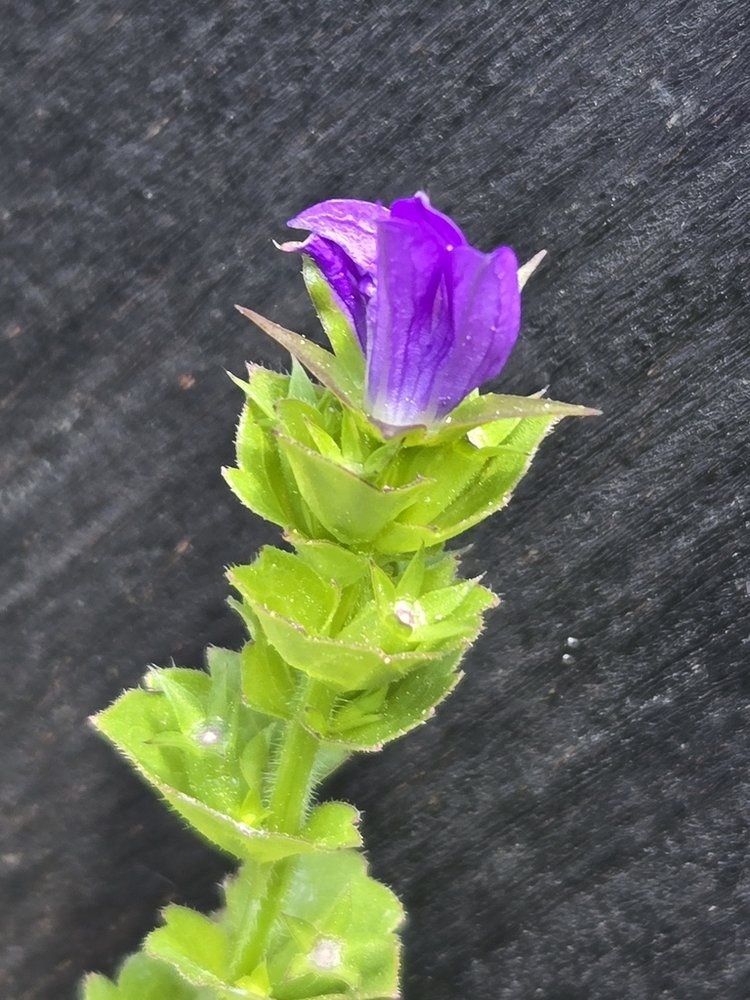
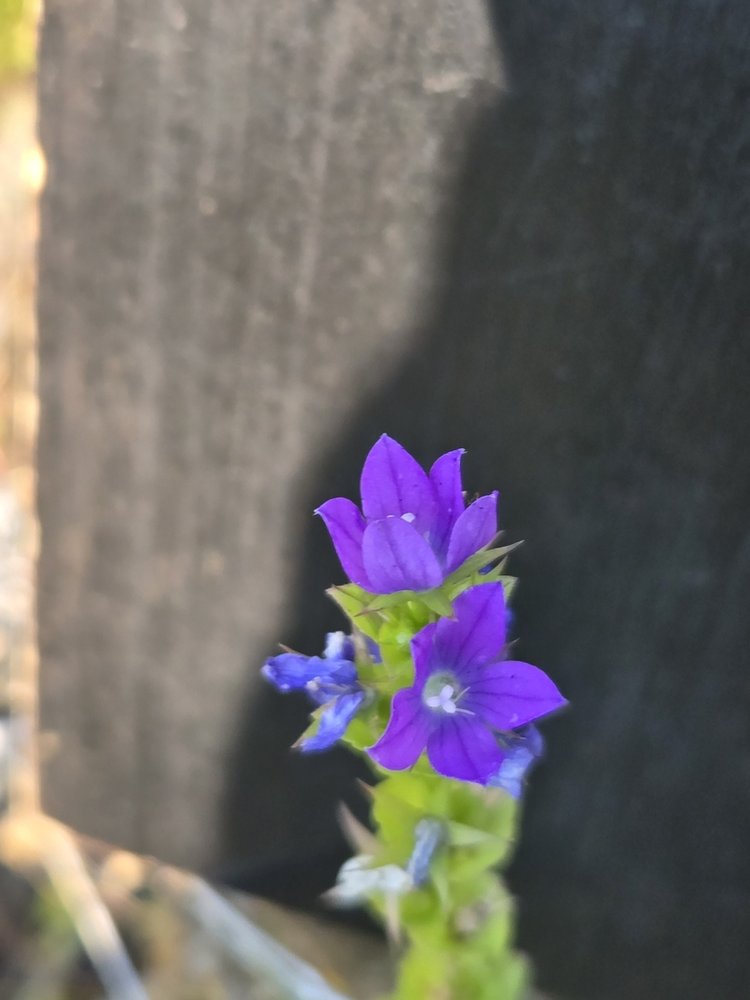
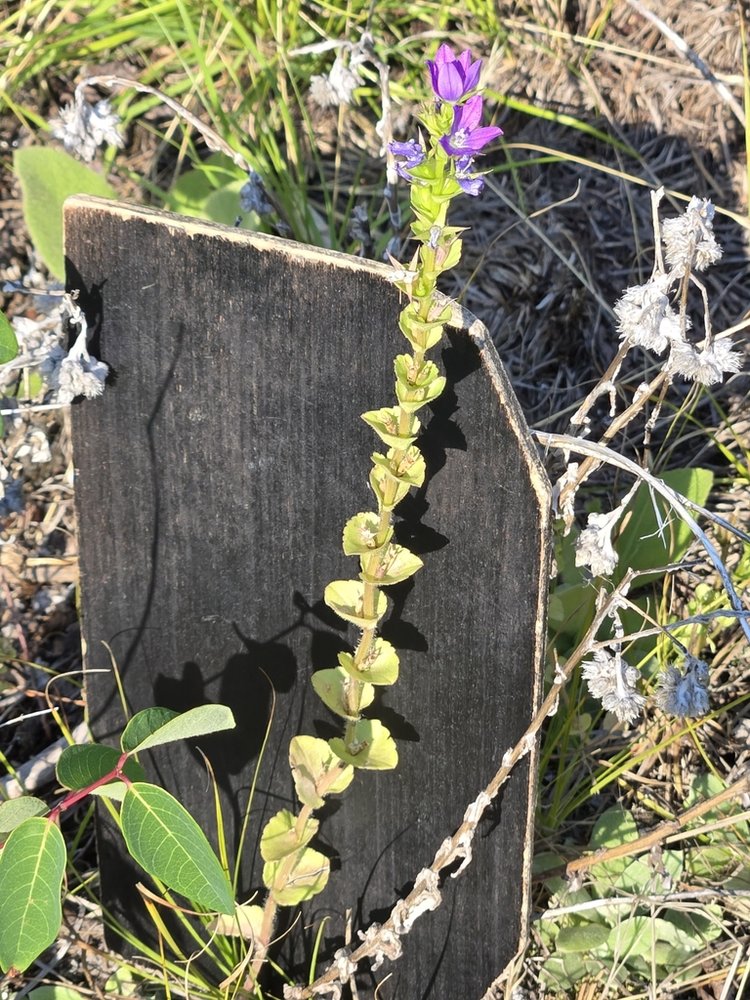
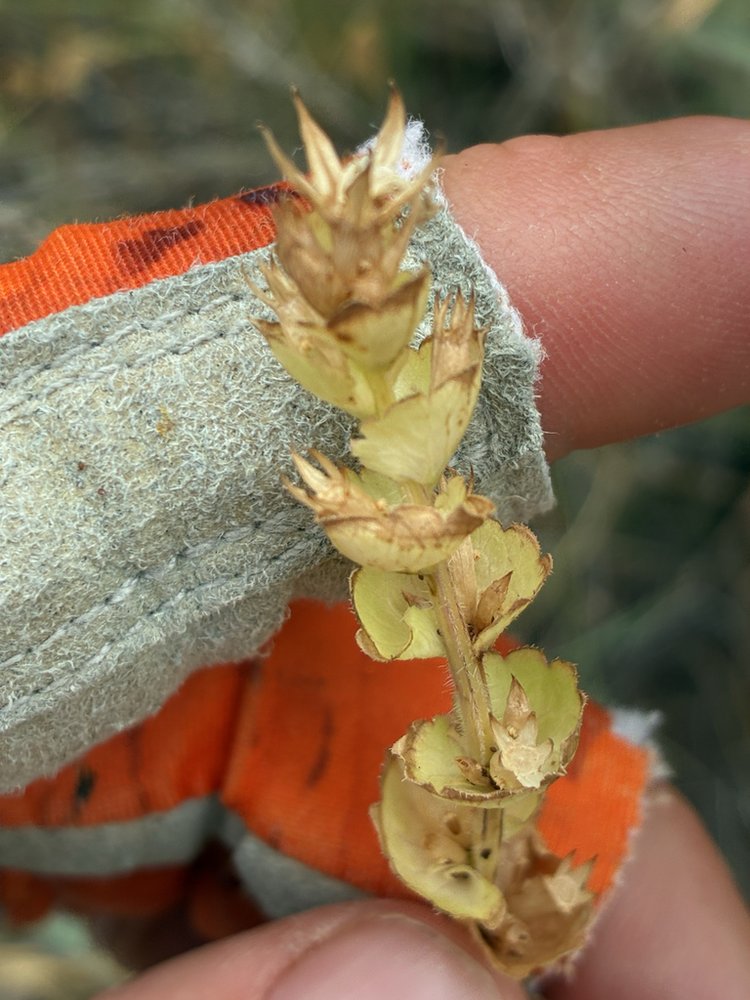
Venus Looking Glass (Triodanis perfoliata) is a native annual of the bellflower family with round, toothed leaves that clasp the stem and, from May into August, small violet to lavender flowers set one to three at a time in the leaf joints. In the Black Hills it grows in open ponderosa pine woods, meadows and grassy or rocky slopes, and herbarium specimens come from Custer, Pennington and Lawrence counties and Crook County, Wyoming.
Free photos from other sources
| Family | Campanulaceae · Bellflower |
|---|---|
| Status | Native annual |
| Blooms | May into August |
| Height | 10–75 cm (4–30 in) |
| Where | Open pine woods, meadows, grassy and rocky slopes, prairies and roadsides |
| Also called | Clasping Venus' Looking-glass, Clasping-leaved Venus' Looking-glass |
| Synonym | Specularia perfoliata |
| Traditional use | Moerman's database records that the Cherokee took an infusion of the roots for dyspepsia and used it as a bath (Taylor 1940), and a liquid compound of the root for dyspepsia from overeating (Hamel and Chiltoskey 1975). It records that the Meskwaki used the plant as an emetic and smoked it at ceremonies (Smith 1928). |
Traditional use: first drafted by Google AI, then checked against the sources on this page.
Roots, seeds & germination
Root: A taproot, and the plant has milky sap, according to Missouri Plants.
Seed: The seeds are numerous, about 0.5 mm long, lens-shaped and shiny reddish-brown, and are released when the capsule splits from the top down to its pore.
How do you identify Venus Looking Glass?
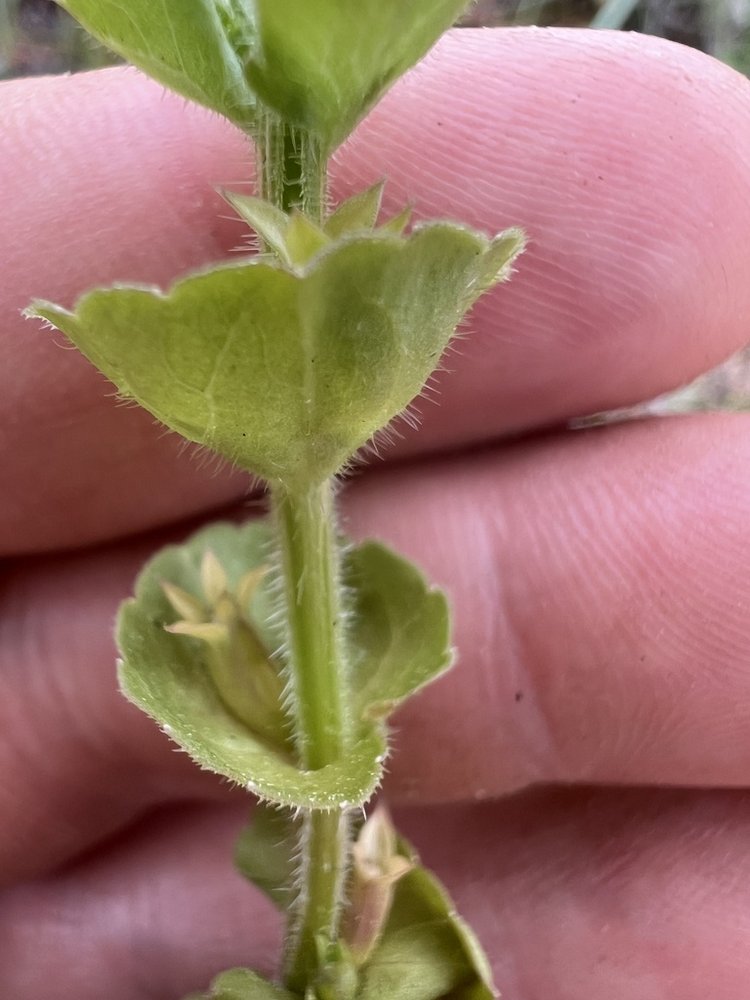
Look for an annual 10–75 cm (4–30 in) tall, with an angled, mostly erect stem that is unbranched or branched near the base and stiffly hairy along the angles. The leaves alternate up the whole stem, are about as wide as long (up to 2.5 cm, 1 in), broadly egg- to heart-shaped, toothed, and clasp the stem at the base with no stalk. One to three stalkless flowers sit in the leaf joints along the stem. The upper flowers open, about 1.3 cm (½ in) across, with 5 petals joined at the base, in colors from deep blue-violet to pale lavender, with a white style tipped by 3 lobes. Lower flowers are small, never open and still set seed, so a single stem can carry open flowers near the tip and fruit below. The fruit is an oblong capsule with a pore about midway up each section. Minnesota Wildflowers separates the southern Triodanis biflora, whose leaves are oval and not clasping and whose fruit pore is near the tip, and Triodanis leptocarpa, whose leaves are lance-shaped and much longer than wide.
When does it bloom?
May into August.
Where does it grow?
Open ponderosa pine woods, meadows, grassy slopes, rocky slopes and disturbed soil at the edge of pine woodland. Herbarium specimens from Custer, Pennington and Lawrence counties, South Dakota, and Crook County, Wyoming, collected from 1892 to 2018, include a meadow in open ponderosa pine woods, soil among granite cliffs and boulders, open mountain meadows, a plowed field and moist soil; one 1972 label calls it abundant. Minnesota Wildflowers and Kansas Wildflowers give the bloom season as May to July; the South Dakota and Wyoming Black Hills specimens were collected from May to August.
Bellflower family (Campanulaceae): 2 other plants in this guide
Sources: Minnesota Wildflowers: Triodanis perfoliata (Clasping-leaved Venus' Looking-glass); Kansas Wildflowers and Grasses: Clasping Venus' looking-glass (Triodanis perfoliata); Missouri Plants: Triodanis perfoliata (Clasping Venus' Looking Glass); USDA PLANTS Database: Triodanis perfoliata (TRPE4); Native American Ethnobotany Database (BRIT): Triodanis perfoliata; GBIF specimen 177049630 (Custer County, SD, 1972; Black Hills National Forest, 'abundant'); GBIF specimen 4911410626 (Pennington County, SD, 2018; disturbed soil at edge of ponderosa pine woodland); GBIF specimen 2573523090 (Custer County, SD, 1972; meadow in open ponderosa pine woods); GBIF specimen 5895811284 (Custer County, SD, 1892; altitude 5500 feet); GBIF occurrence search: Triodanis perfoliata, preserved specimens, South Dakota and Wyoming.