Violet Woodsorrel Oxalis violacea
Also called Violet Wood Sorrel, Violet Wood-sorrel, Violet Oxalis, Purple Woodsorrel
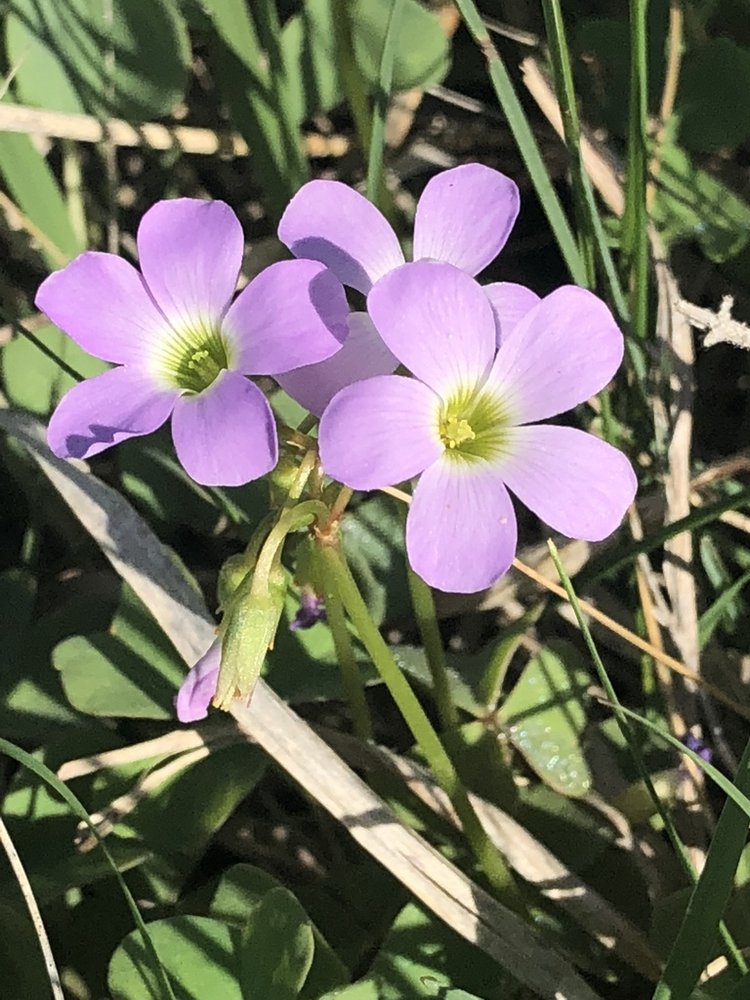
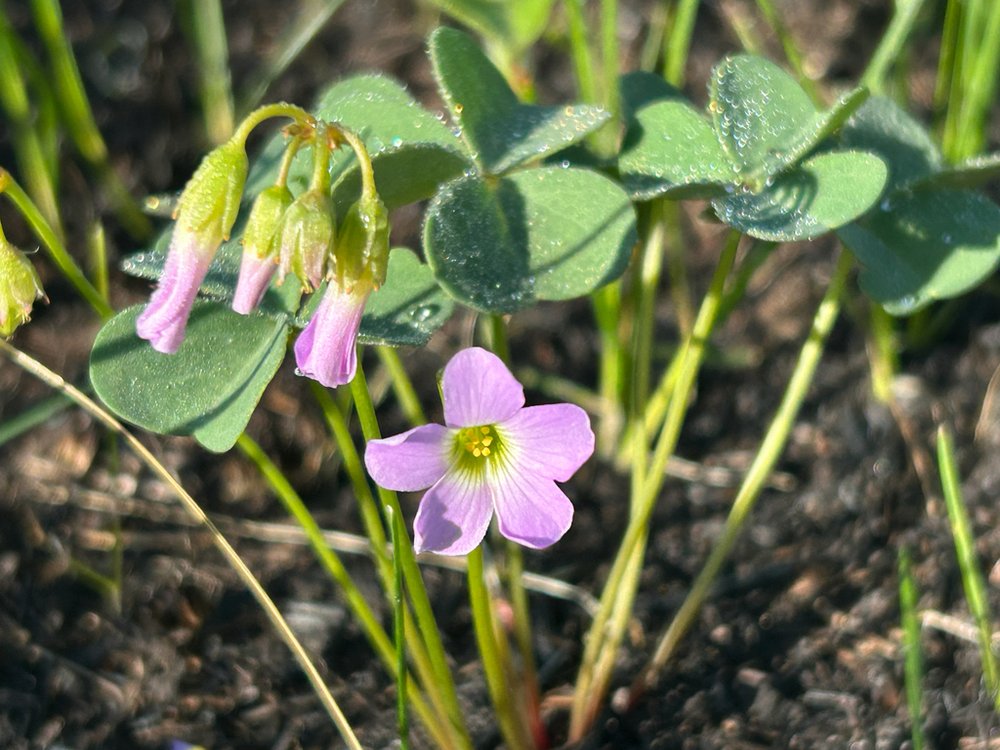
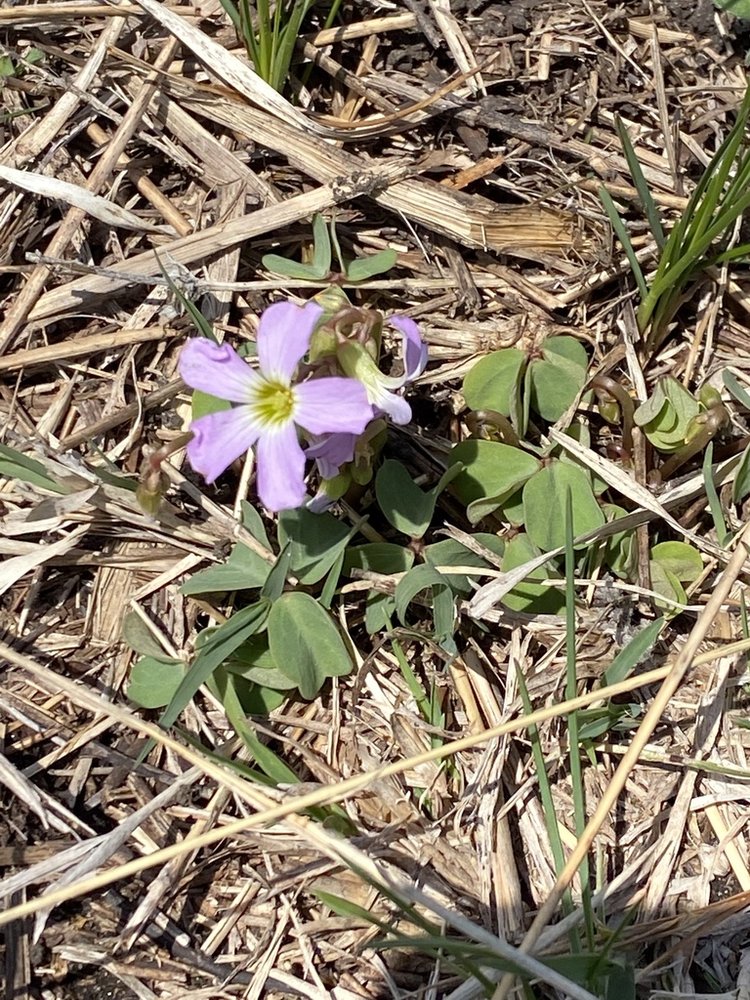
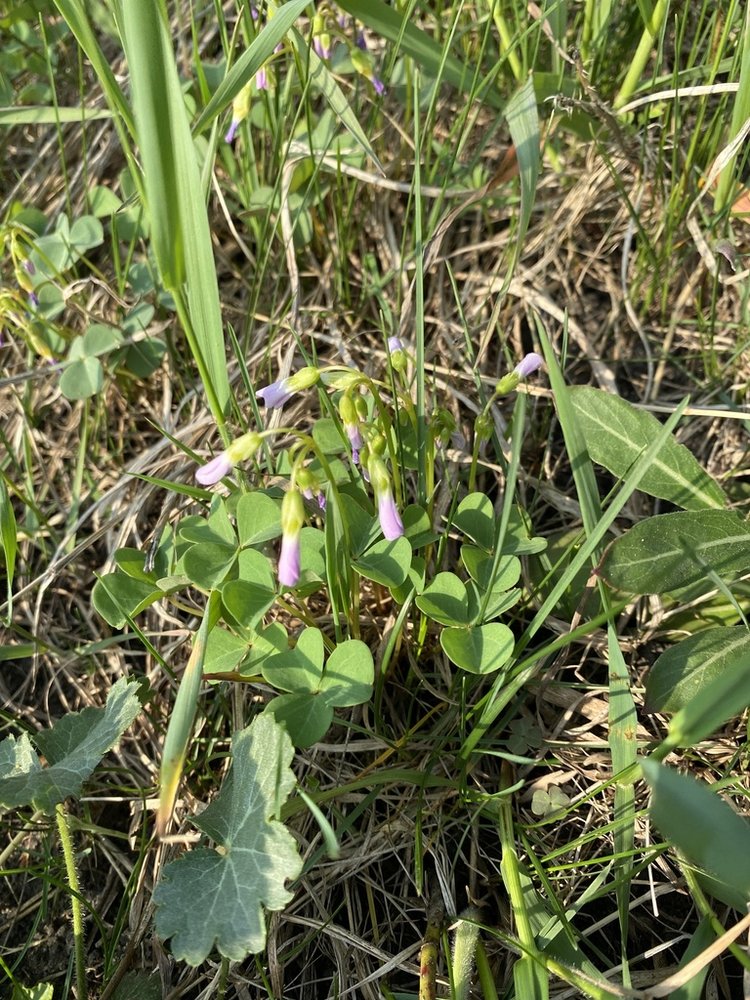
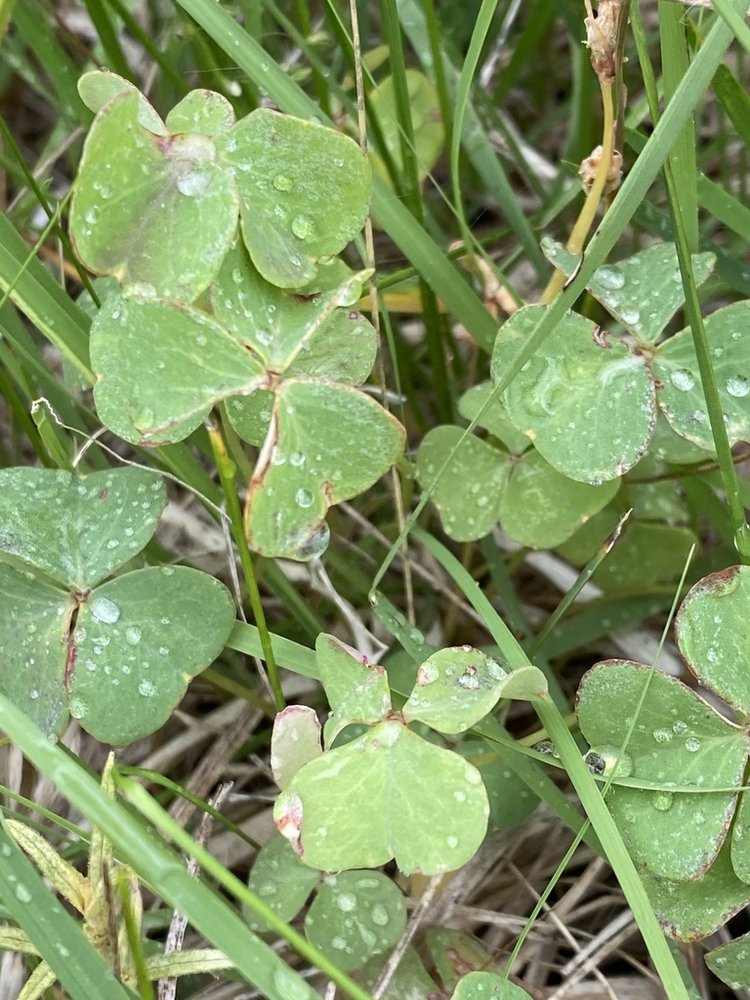
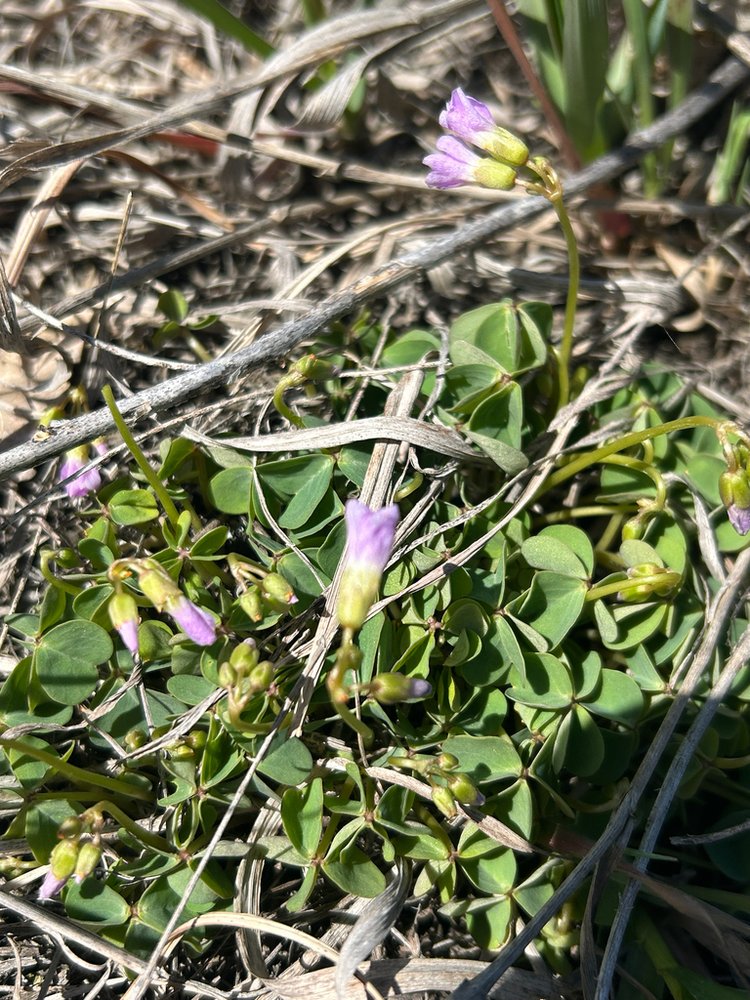
Violet Woodsorrel (Oxalis violacea) is a low native perennial that grows from a bulb, with leaves of three notched, heart-shaped leaflets and clusters of lavender to rose-purple, five-petaled flowers on leafless stalks. In the Black Hills, herbarium specimens and the Mount Rushmore plant list show it in pine woods and on rocky outcrops, with specimen labels dating its flowers from June into early July.
Free photos from other sources
| Family | Oxalidaceae · Wood Sorrel |
|---|---|
| Status | Native perennial |
| Blooms | June into early July on Black Hills specimen labels; the species can flower again in autumn after rains (Lady Bird Johnson Wildflower Center, Flora of North America) |
| Height | 9–23 cm (3½–9 in) |
| Where | Pine woods, rocky outcrops, road cuts and stony or grassy hillsides |
| Also called | Violet Wood Sorrel, Violet Wood-sorrel, Violet Oxalis, Purple Woodsorrel |
| Synonym | Ionoxalis violacea, Oxalis violacea var. trichophora, Sassia violacea |
| Toxicity | The leaves and stem contain oxalic acid, which can cause poisoning if too much uncooked foliage is eaten (Kansas Wildflowers). |
| Traditional use | Gilmore's 1919 account, as recorded in Moerman's database, says Pawnee children ate the leaves, flowers, flower stalks and bulbs of this plant, that the Pawnee found it sour and salty, and that pounded bulbs were fed to horses to make them fleet; the database lists the same food and horse-feed uses for the Omaha and Ponca. The Chiricahua and Mescalero Apache ate the bulbs raw or boiled, according to Castetter and Opler 1936 in the same database. The Cherokee chewed the leaves for sore throat, according to Hamel and Chiltoskey 1975 in the same database. |
| Note | The photos here were taken in eastern South Dakota: no free-licensed photo from the Black Hills was available. |
Traditional use: first drafted by Google AI, then checked against the sources on this page.
Roots, seeds & germination
Root: Grows from a single bulb, with small bulblets at the tips of slender, scaly underground stems that are usually absent (Flora of North America). The Lady Bird Johnson Wildflower Center says it spreads quickly by runners from its bulbs.
Seed: The fruit is an egg-shaped capsule 4–5 mm (about ³⁄₁₆ in) long (Flora of North America). Minnesota Wildflowers says it has 5 chambers with 2 or 3 seeds each.
How do you identify Violet Woodsorrel?
Look for leaves that all come from the base, each with 3 heart-shaped leaflets 8–15 mm (⅜–⅝ in) long, notched at the tip, that fold down at night. A leafless stalk 9–23 cm (3½–9 in) tall carries a cluster of a few to several flowers on weak stalks, so they tend to flop about. Each flower has 5 petals 10–18 mm (⅜–¾ in) long, rose-purple or lavender to pink, paler toward the base with a green throat, and 10 stamens, 5 long and 5 short. The sepals end in two orange knobs (Flora of North America) or a spot of color at the tip (Minnesota Wildflowers). The flowers close at night and on very overcast days. The fruit is a small egg-shaped capsule.
When does it bloom?
June into early July on Black Hills specimen labels; the species can flower again in autumn after rains (Lady Bird Johnson Wildflower Center, Flora of North America).
Where does it grow?
Open pine forest, rocky outcrops, road cuts, stony banks and grassy hillsides. Specimen labels from Pennington and Custer counties describe it on limy, rocky soil at the edge of a burned ponderosa pine forest, on top of a rocky outcrop under scattered pines, on a mossy north-facing granite outcrop, in ponderosa pine forest, on a stony bank, in open pine, on a rocky clay hillside and where grass meets pine. GBIF holds only 10 Black Hills specimens, 6 of them from 1897 to 1935 and the others from 1975, 1992, 1997 and 2010. The National Park Service lists it as present at Mount Rushmore, and iNaturalist has 7 research-grade records within 120 km of the Hills, near Keystone, Hermosa and Mount Rushmore. It isn't on the Wind Cave, Jewel Cave or Devils Tower lists.
Sources: Flora of North America Vol. 12: Oxalis violacea (eFloras); Minnesota Wildflowers: Oxalis violacea (Violet Wood Sorrel); Kansas Wildflowers and Grasses: Violet wood sorrel, Oxalis violacea; Lady Bird Johnson Wildflower Center: Oxalis violacea (violet woodsorrel); USDA PLANTS: Oxalis violacea (OXVI), profile data; NPSpecies checklist, Mount Rushmore National Memorial vascular plants; GBIF specimen 4988020344: Fertig 2010, Pennington County, Black Hills; GBIF specimen 5077618934: Mahoney 1997, Pennington County, rocky outcrop under pines; GBIF specimen 3038911510: Larson 1992, Custer County, mossy granite outcrop; GBIF specimen 5159135461: Todd 1975, Custer County, ponderosa pine forest; GBIF specimen 1999069347: Wiegand 1935, Custer County, Black Hills, stony bank; GBIF specimen 3038911531: Bennett 1935, Pennington County, open pine; GBIF specimen 6232153316: Ginter 1928, Custer County, grass and timber type; GBIF specimen 2512287362: McIntosh 1924, Custer County, rocky clay hillside; GBIF specimen 3038911533: Travers 1897, northern Black Hills, grass-pine ecotone; GBIF occurrence search: Oxalis violacea preserved specimens, South Dakota and Wyoming; iNaturalist: research-grade Oxalis violacea observations within 120 km of the Black Hills; Native American Ethnobotany Database (BRIT): Oxalis violacea, 19 uses; Gilmore 1919, Uses of Plants by the Indians of the Missouri River Region (Ionoxalis violacea entry); Culturally Important Plants of the Lakota (Black Elk and Flying By, 1998), checked; wood sorrel not listed.