Closed Gentian Gentiana andrewsii
Also called Bottle Gentian, Closed Bottle Gentian, Andrew's Gentian, kapȟópa (Lakota), waȟčá wašté (Lakota)
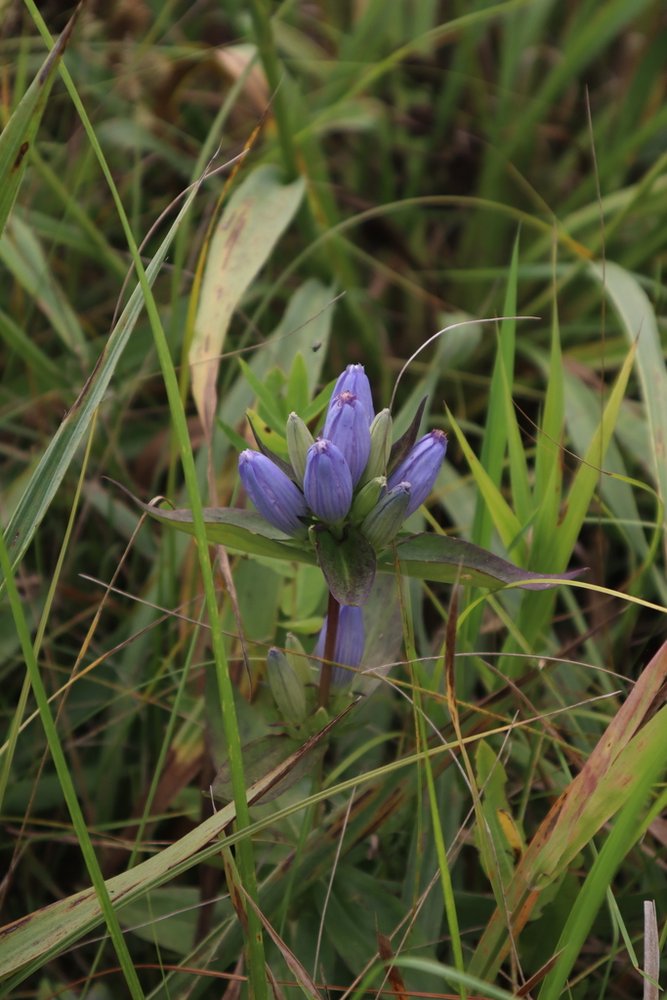
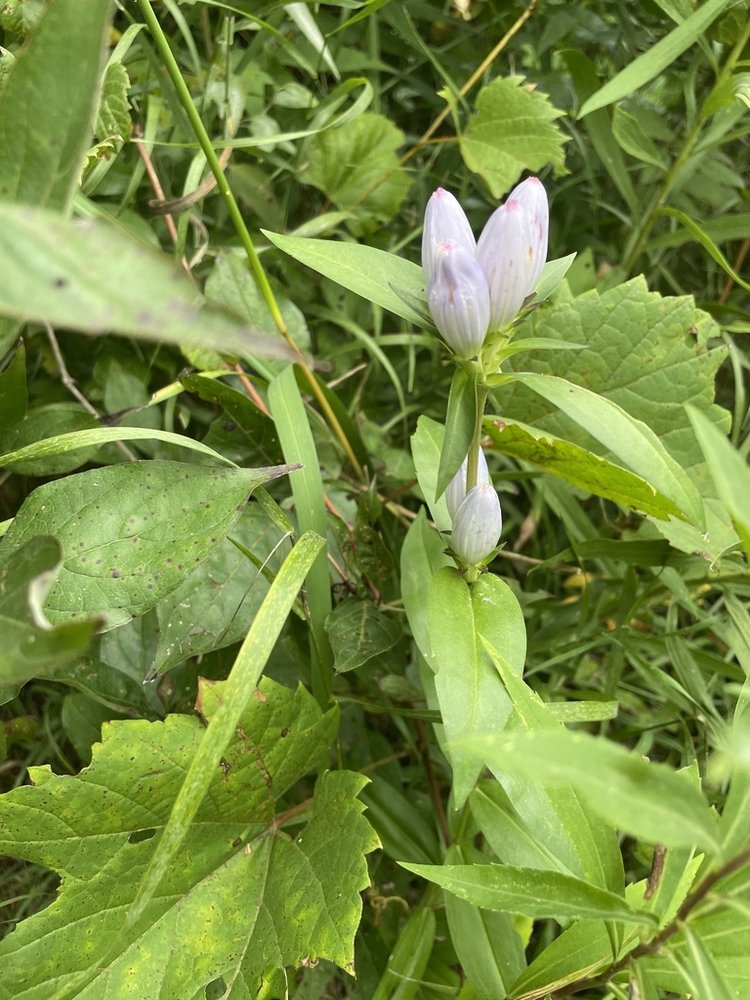
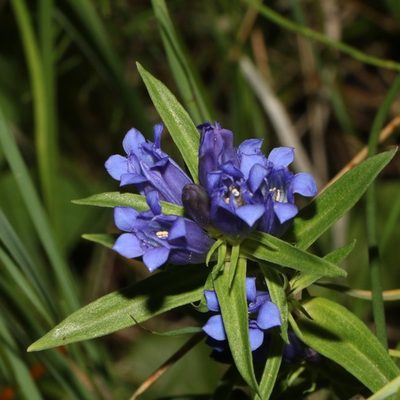
Closed Gentian (Gentiana andrewsii), also called Bottle Gentian, is a native perennial whose blue-to-purple flowers never open and look like large buds, in a tight cluster at the top of the stem above a whorl of leaves, blooming from August into September. It grows in moist fields, thickets and wet ground, and its Black Hills record is three herbarium specimens from Custer and Pennington counties, collected in 1987 and 2014, plus 10 research-grade iNaturalist records from 2020 to 2026.
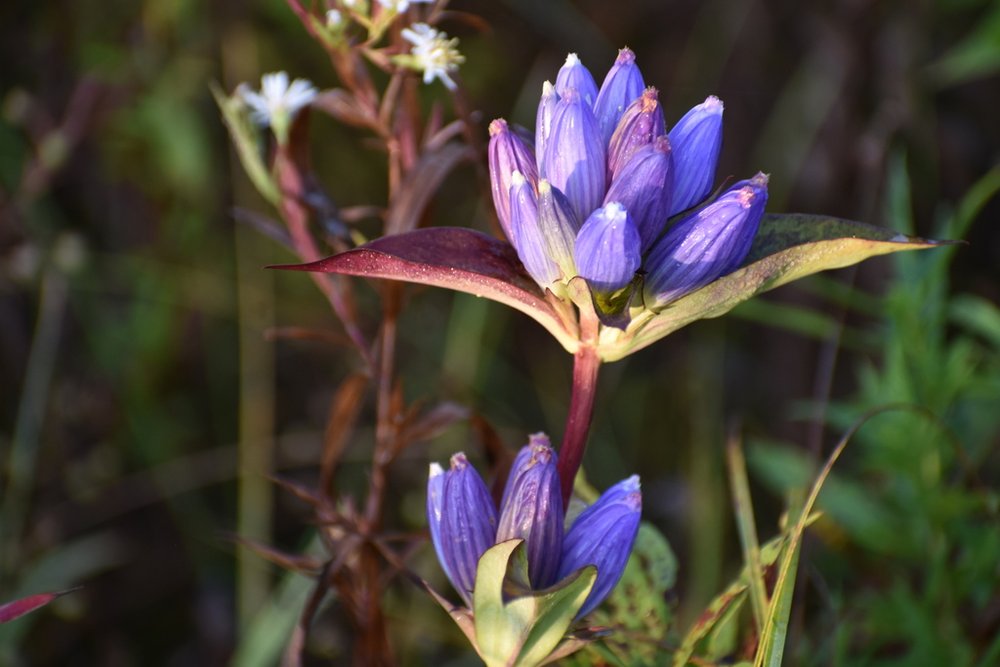
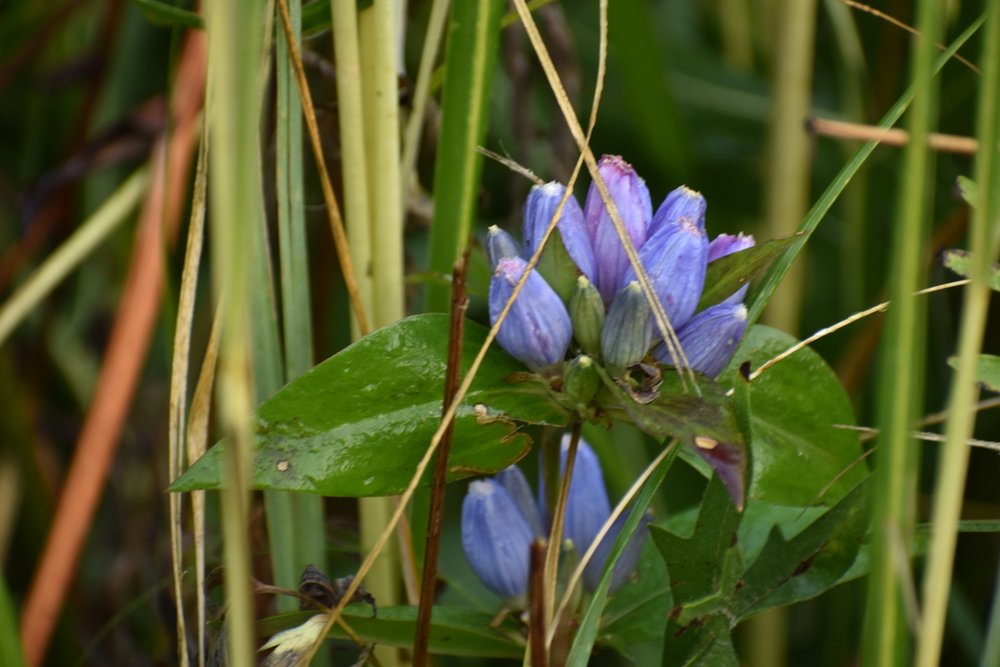
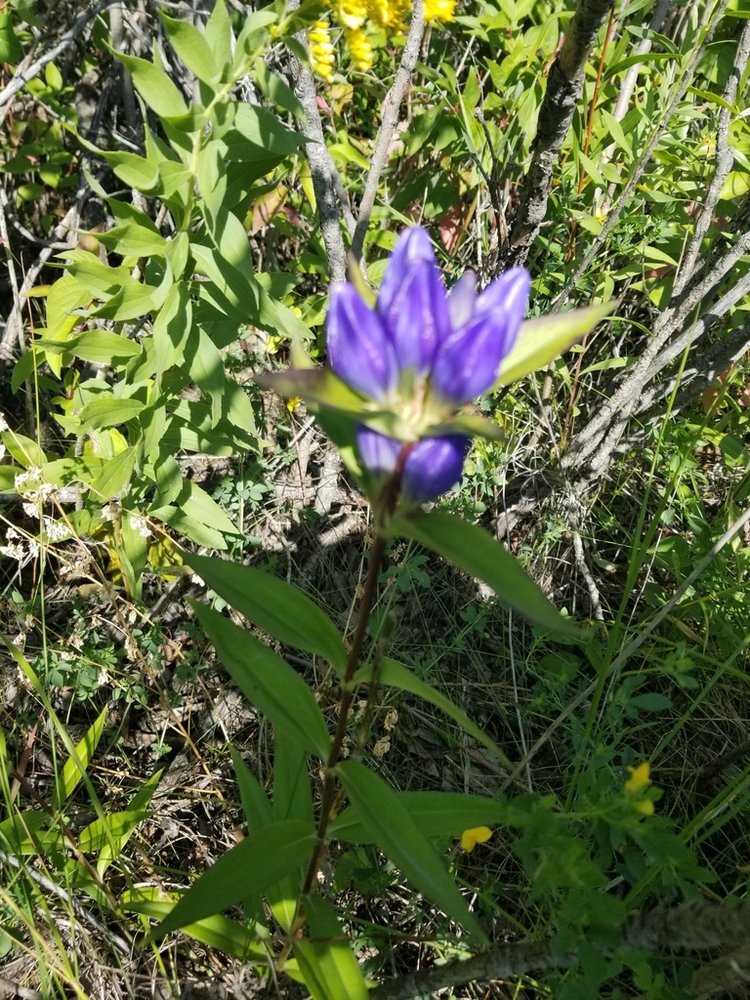
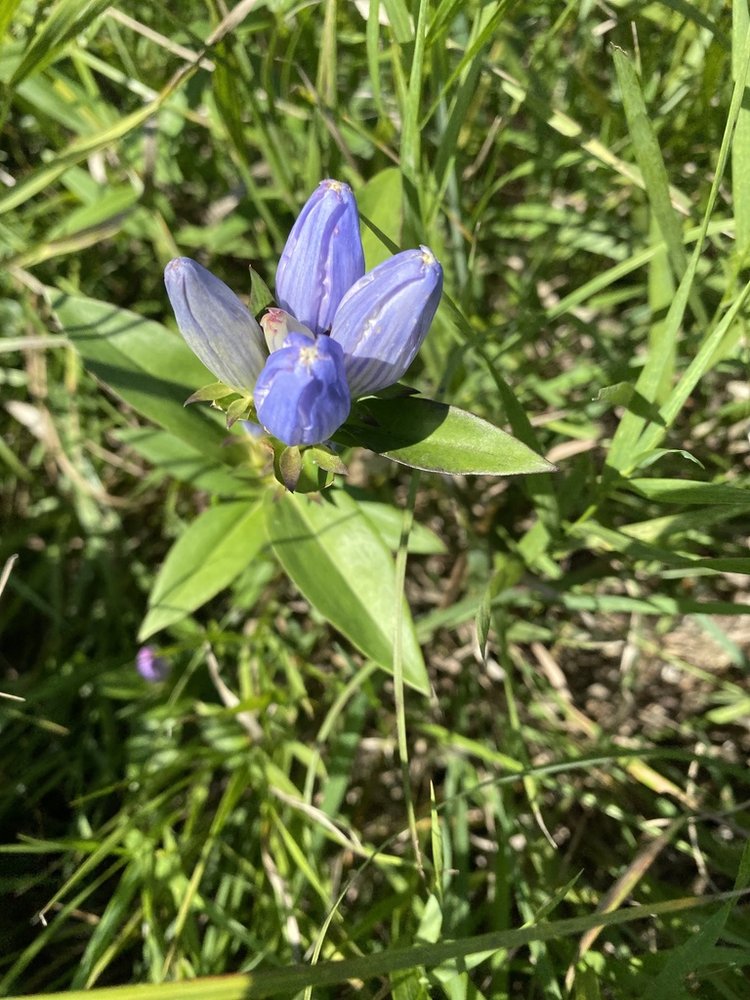
Free photos from other sources
| Family | Gentianaceae · Gentian |
|---|---|
| Status | Native perennial |
| Blooms | August into September |
| Height | 30–60 cm (12–24 in) |
| Where | Moist fields, thickets, creek floodplains and lake shores, in sun or part shade |
| Also called | Bottle Gentian, Closed Bottle Gentian, Andrew's Gentian, kapȟópa (Lakota), waȟčá wašté (Lakota) |
| Traditional use | Black Elk and Flying By 1998 (entry 134, “closed gentian, bottle gentian”) say the Lakota use the roots to flavor beverages and rub the root on the skin to prevent snakebite. Moerman's ethnobotany database (BRIT) records that the Meskwaki used the root for snakebite (Smith 1928) and that the Iroquois used root infusions for pain and headaches (Herrick 1977). |
Roots, seeds & germination
Seed: The fruit is a capsule about 2.5 cm (1 in) long that splits along seams to release many seeds, each wrapped in papery wings that carry it on the wind (Minnesota Wildflowers).
Germination: The Lady Bird Johnson Wildflower Center says the seed needs light and 3 months of cold stratification (a chill at about 4 °C, 40 °F) to germinate.
How do you identify Closed Gentian?
Look for a perennial 30–60 cm (1–2 ft) tall with a thick, smooth stem and opposite, glossy, pointed leaves up to 10 cm (4 in) long and 5 cm (2 in) wide, with no leaf stalk, fine rough hairs on the edges and 3 to 7 parallel veins; just under the flower cluster the leaves form a whorl. The flowers are tubular, 2.5–4 cm (1–1½ in) long, with pleats between the 5 fused petals, and the 5 lobes overlap and have tiny fringe or teeth at the tip. They never open, so they look like large buds. Color is typically blue to purplish, occasionally pink or white. One cluster sits at the top of the main stem, and some plants have smaller clusters at the leaf joints higher up (Minnesota Wildflowers). The fruit is a capsule about 2.5 cm (1 in) long that splits along seams to release many seeds with papery wings (Minnesota Wildflowers). Minnesota Wildflowers says white-flowered plants can be mistaken for Yellow (or Cream) Gentian (Gentiana flavida), which has more clasping leaves and flowers that open a little at the top, and the Lady Bird Johnson Wildflower Center says Blind Gentian (Gentiana clausa) is a very similar species; GBIF holds no specimen of Blind Gentian from South Dakota or Wyoming.
When does it bloom?
August into September.
Where does it grow?
Moist fields, thickets and the edges of woods, in sun or part shade (Minnesota Wildflowers); Missouri Plants adds forest openings, upland prairies and glades. Its record in the Black Hills is small. GBIF holds 12 preserved specimens from South Dakota, 3 of them from the Black Hills: one collected in 1987 in Custer County in ponderosa pine forest on rocky loam beside a creek, with the collector's note “Rare; clump of purple/blue buds,” and two collected in September 2014 in flower, one from Pennington County on a graminoid-dominated floodplain (grass, sedge and rush family plants) with deciduous trees and shrubs and one from Custer County on a lake shore in a small band of wetland plants. The rest are from eastern South Dakota and Todd County. GBIF holds none from Wyoming. None of the plant lists of Wind Cave National Park, Jewel Cave National Monument, Mount Rushmore National Memorial or Devils Tower National Monument names it. iNaturalist has 10 research-grade records from the Black Hills and its foothills, dated August and September. It isn't on South Dakota's state noxious weed list or its locally noxious (county) list, or on Wyoming's state designated weed list or weed-seed lists.
Other gentians in this guide
Sources: Minnesota Wildflowers: Gentiana andrewsii (Bottle Gentian); Missouri Plants: Gentiana andrewsii (Closed Gentian); Lady Bird Johnson Wildflower Center: Gentiana andrewsii (Closed Bottle Gentian); USDA PLANTS Database: Gentiana andrewsii (GEAN), closed bottle gentian, native in the lower 48 states; Native American Ethnobotany Database (BRIT): Gentiana andrewsii; Culturally Important Plants of the Lakota (Black Elk and Flying By, Sitting Bull College, 1998), entry 134; GBIF occurrence search: Gentiana andrewsii, preserved specimens, South Dakota (12); GBIF occurrence search: Gentiana clausa, South Dakota and Wyoming (none); iNaturalist: Gentiana andrewsii research-grade observations in the Black Hills; NPSpecies checklist, Wind Cave National Park (vascular plants); NPSpecies checklist, Jewel Cave National Monument (vascular plants); NPSpecies checklist, Mount Rushmore National Memorial (vascular plants); NPSpecies checklist, Devils Tower National Monument (vascular plants); A Survey of the Vegetation of Jewel Cave National Monument (Marriott and Hartman, University of Wyoming, 1986); South Dakota DANR: State Noxious Weed and Pest List; South Dakota DANR: Locally Noxious Weed and Pest List (county designations, PDF); Wyoming Weed and Pest Council: Identify Weeds (state designated weeds); Wyoming rule 010-63 Wyo. Code R. 63-3: Prohibited Noxious Weeds (weed-seed list); Wyoming rule 010-63 Wyo. Code R. 63-4: Restricted Noxious Weeds (weed-seed list).