Canada Mayflower Maianthemum canadense
Also called Wild Lily-of-the-valley, False Lily-of-the-valley, Twoleaved Solomonseal
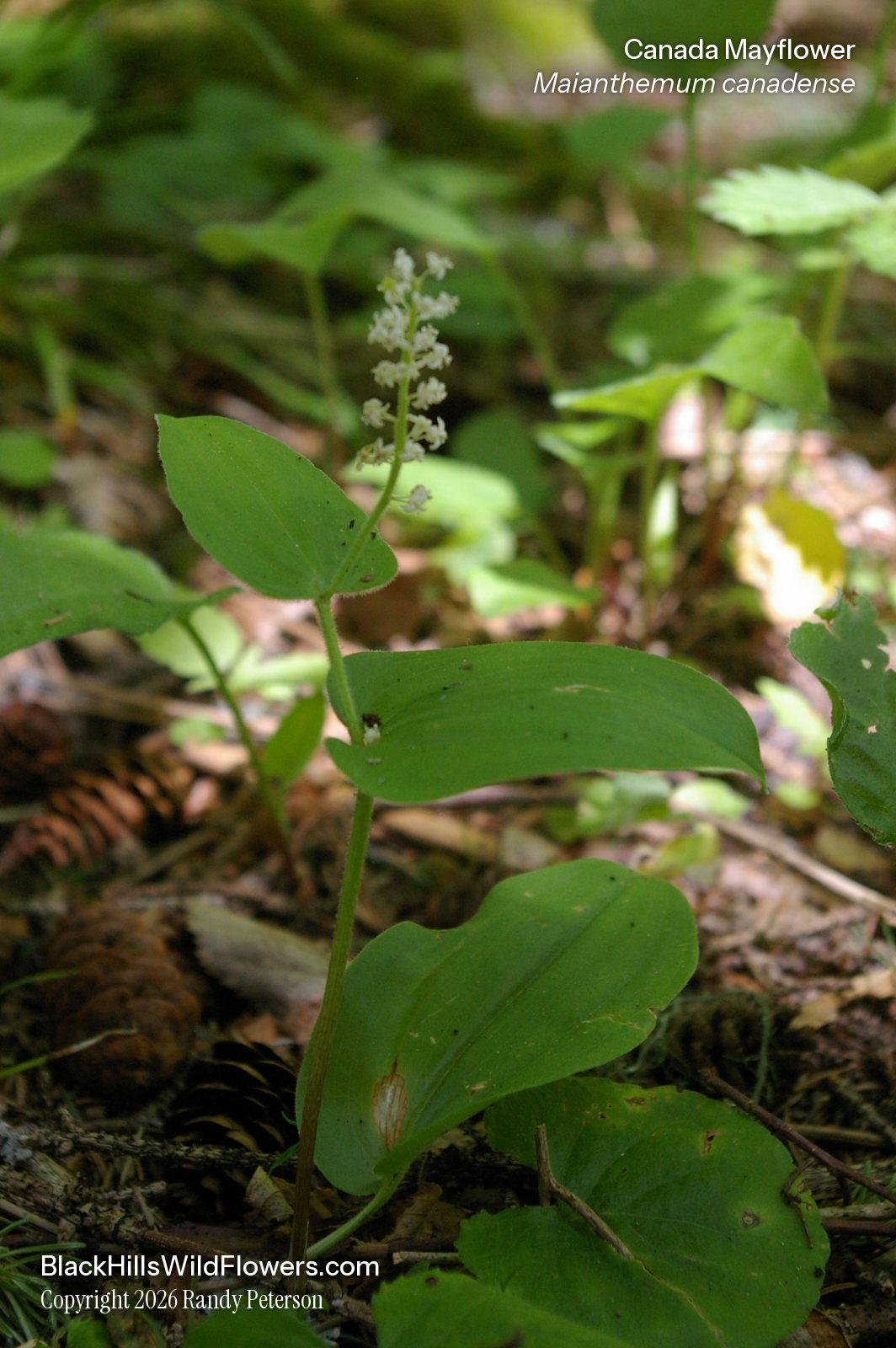
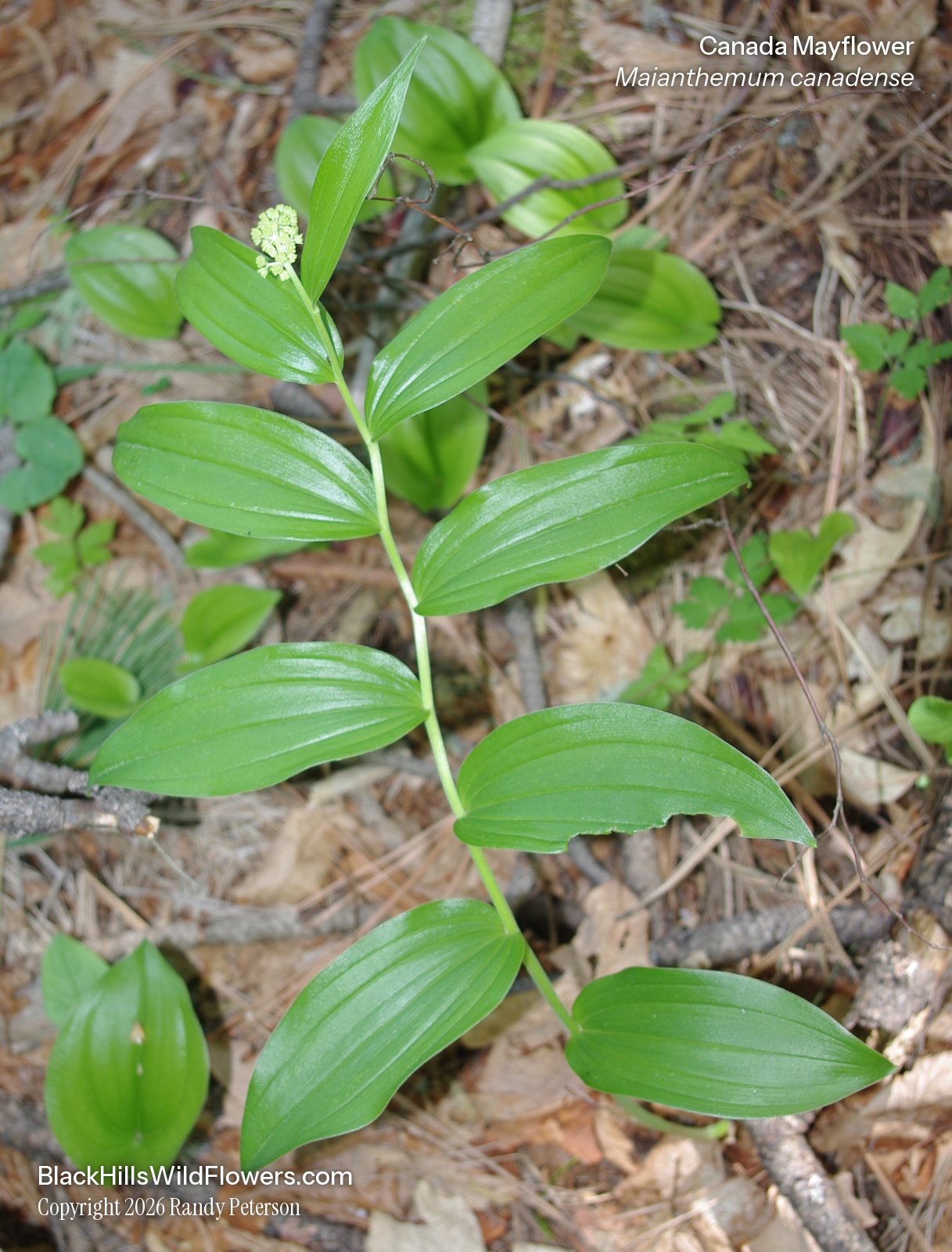
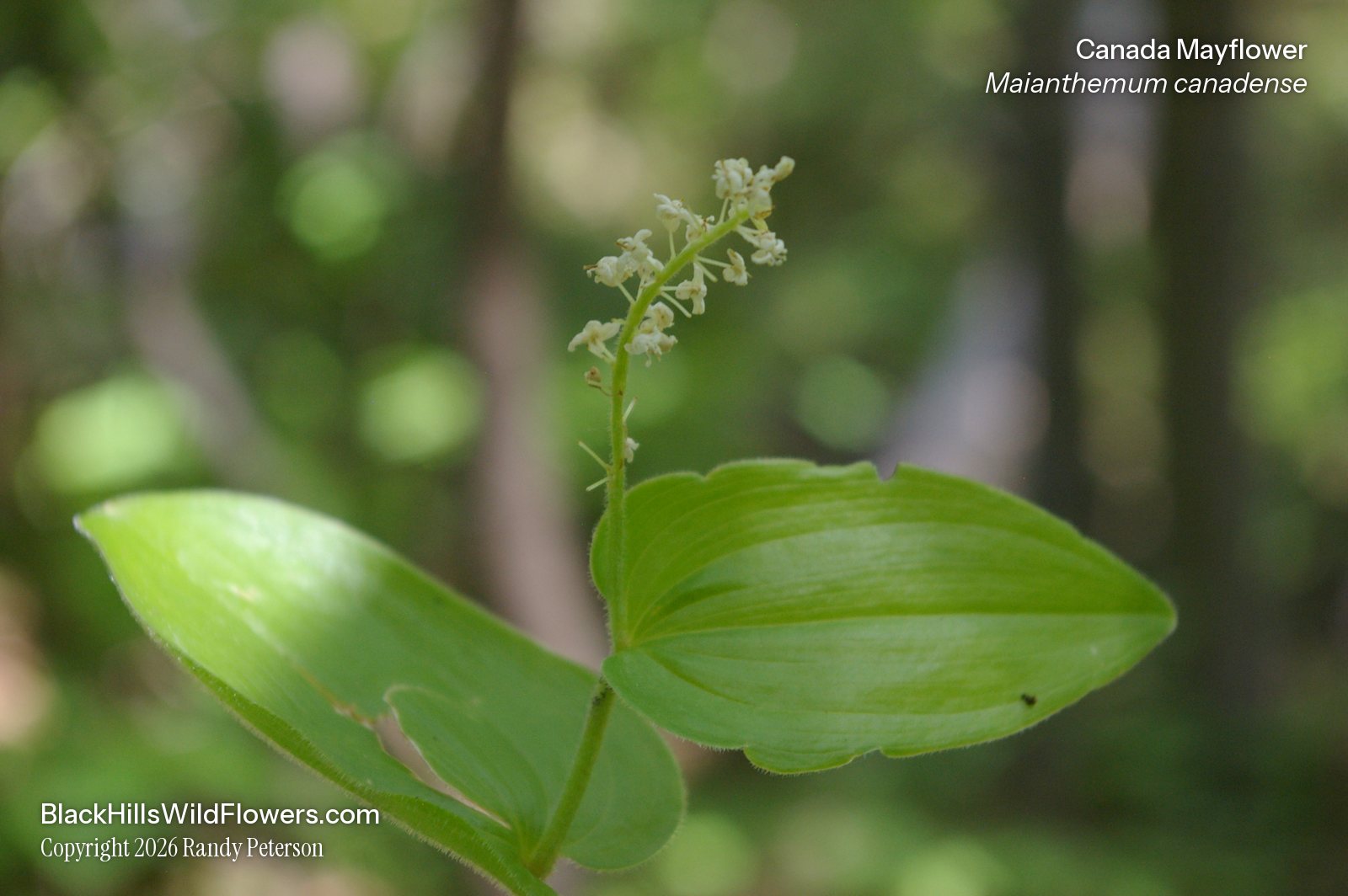
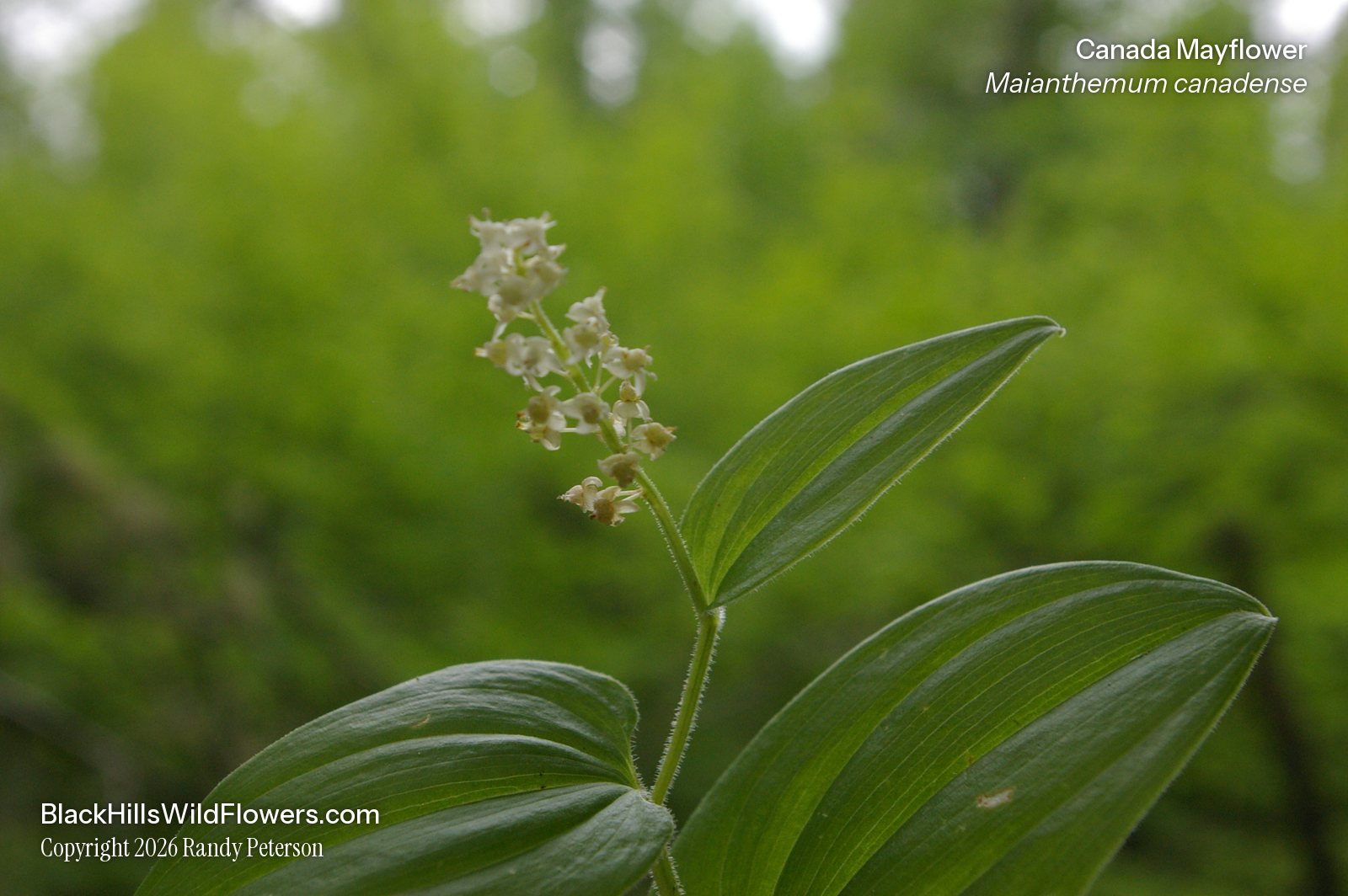
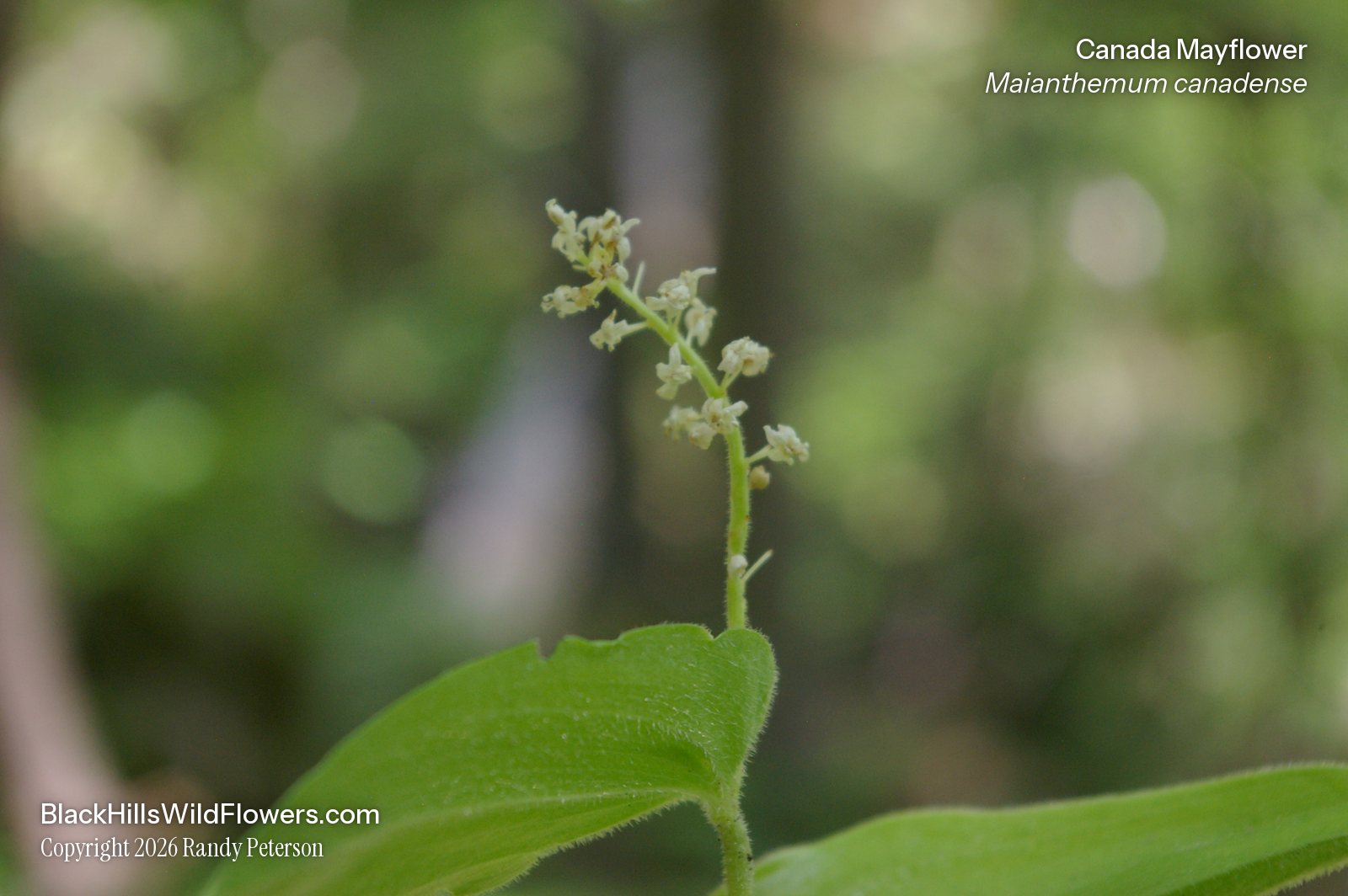
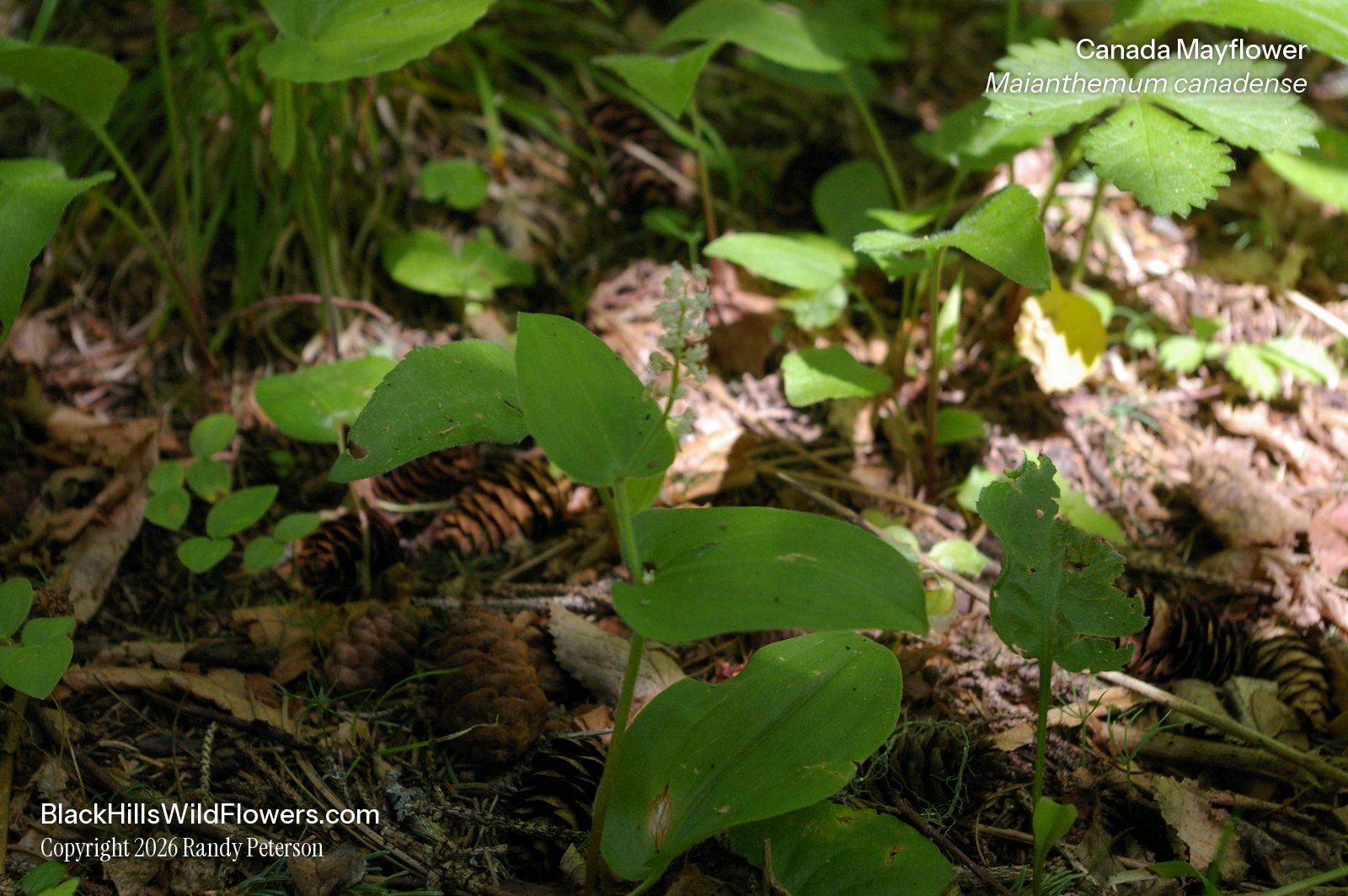
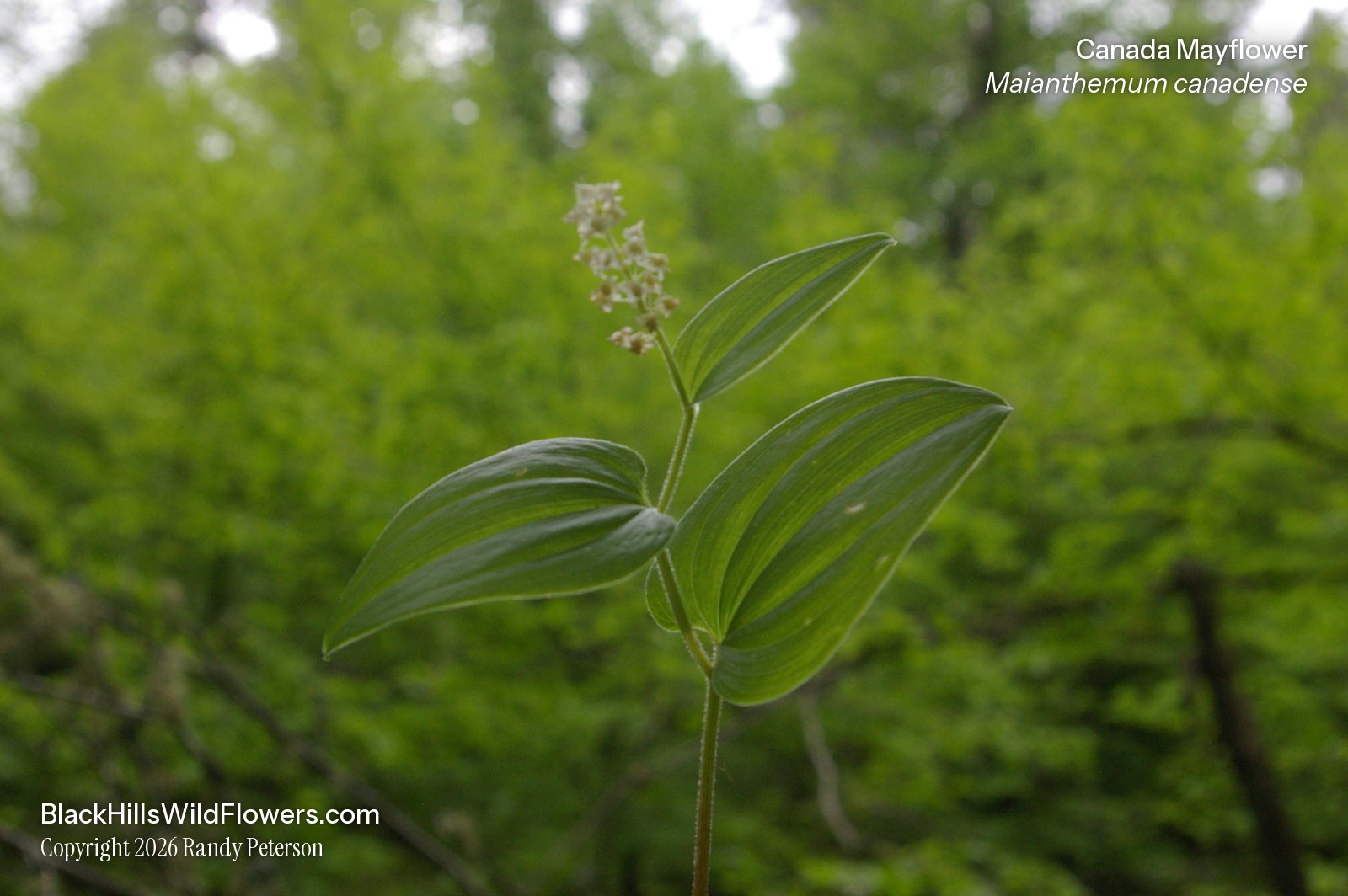
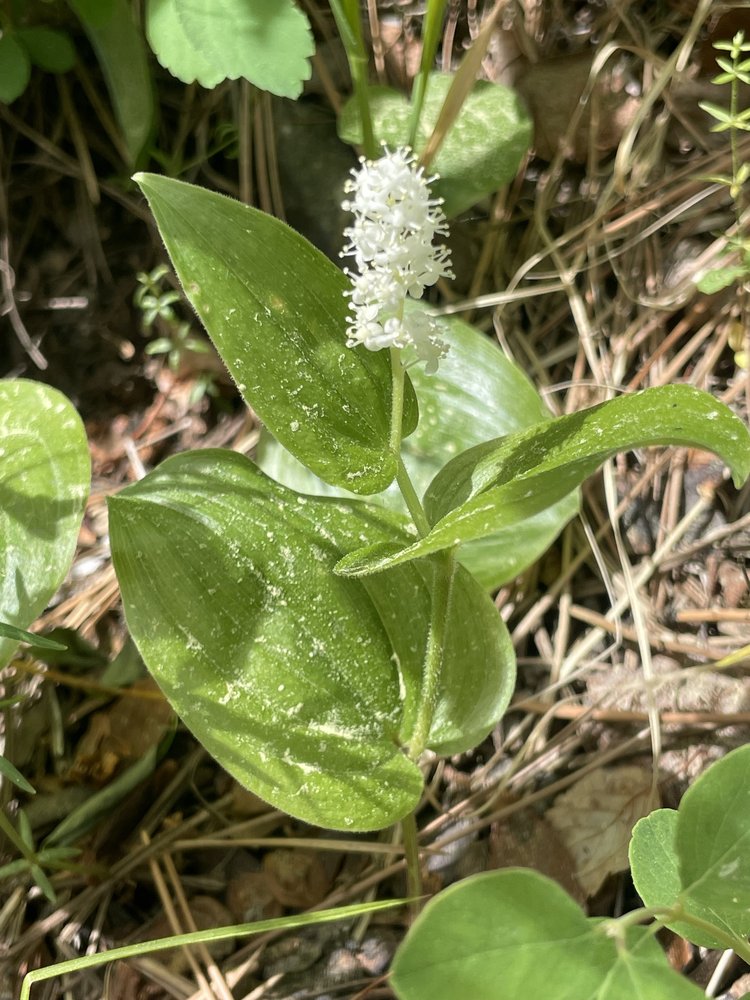
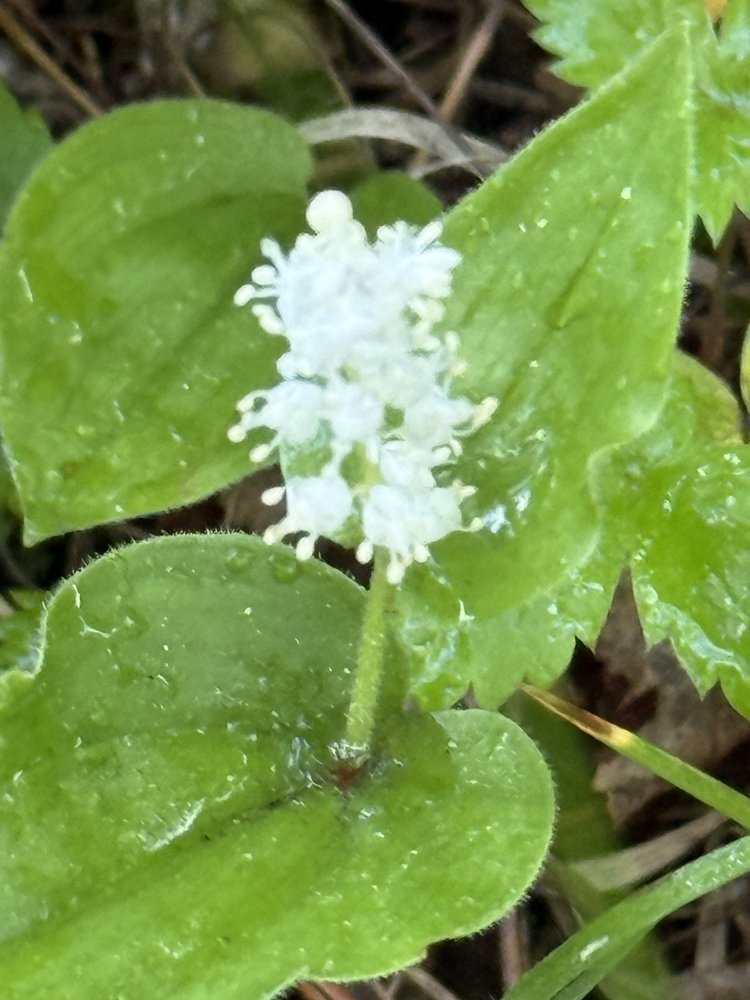
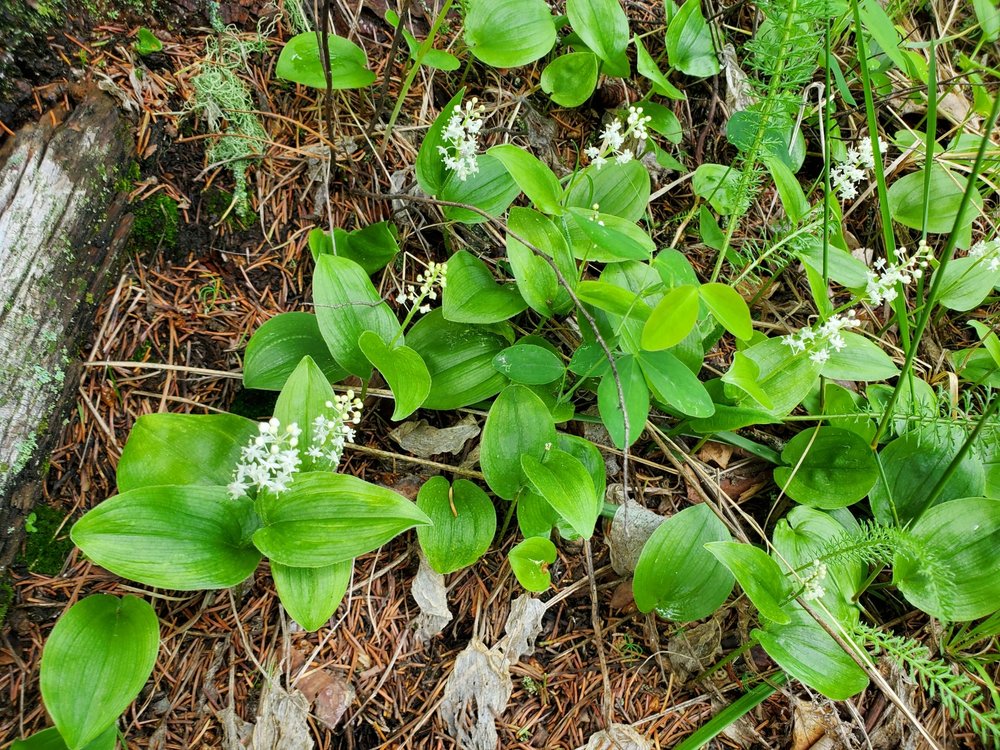
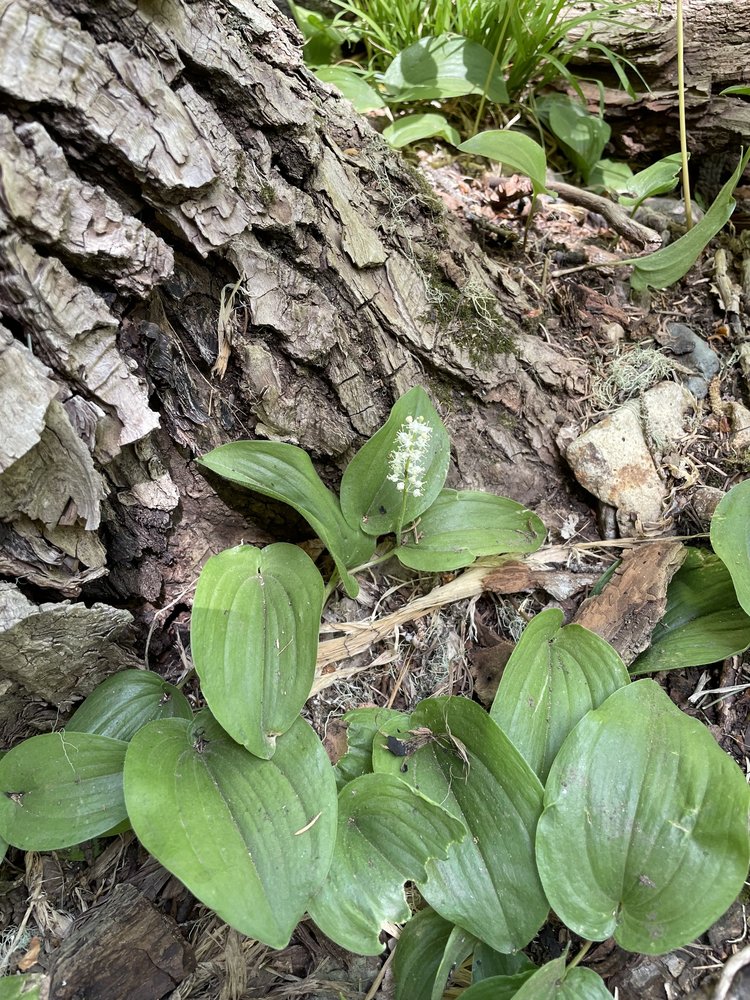
Canada Mayflower (Maianthemum canadense) is a small native perennial of shady forest floors, 8–20 cm (3–8 in) tall, that spreads by creeping rhizomes into patches of single heart-based leaves, with a few stems carrying two leaves and a short spike of tiny white four-pointed flowers in late May and June. In the Black Hills it grows in moist spruce, aspen and pine forest, and the National Park Service lists it at Mount Rushmore. Photographed in the Black Hills.
Free photos from other sources
| Family | Asparagaceae · Asparagus |
|---|---|
| Status | Native perennial |
| Blooms | Late May and June |
| Height | 8–20 cm (3–8 in) |
| Where | Moist, shady floors of spruce, aspen, birch and pine forest, creek bottoms and north slopes |
| Also called | Wild Lily-of-the-valley, False Lily-of-the-valley, Twoleaved Solomonseal |
| Synonym | Smilacina canadensis, Maianthemum canadense var. interius |
| Traditional use | Moerman's ethnobotany database lists the Ojibwe as using the plant for headache and sore throat (Smith 1932) and the Potawatomi as using the root for sore throat (Smith 1933). |
Traditional use: first drafted by Google AI, then checked against the sources on this page.
Roots, seeds & germination
Root: Slender creeping rhizomes (underground stems) with occasional tuber-like swellings run through the litter layer and about 1 cm (⅜ in) into the soil, growing 15–30 cm (6–12 in) a year. One clone can be up to 6 m (20 ft) across and 30 to 60 years old. In a typical patch, shoots without flowers outnumber flowering ones.
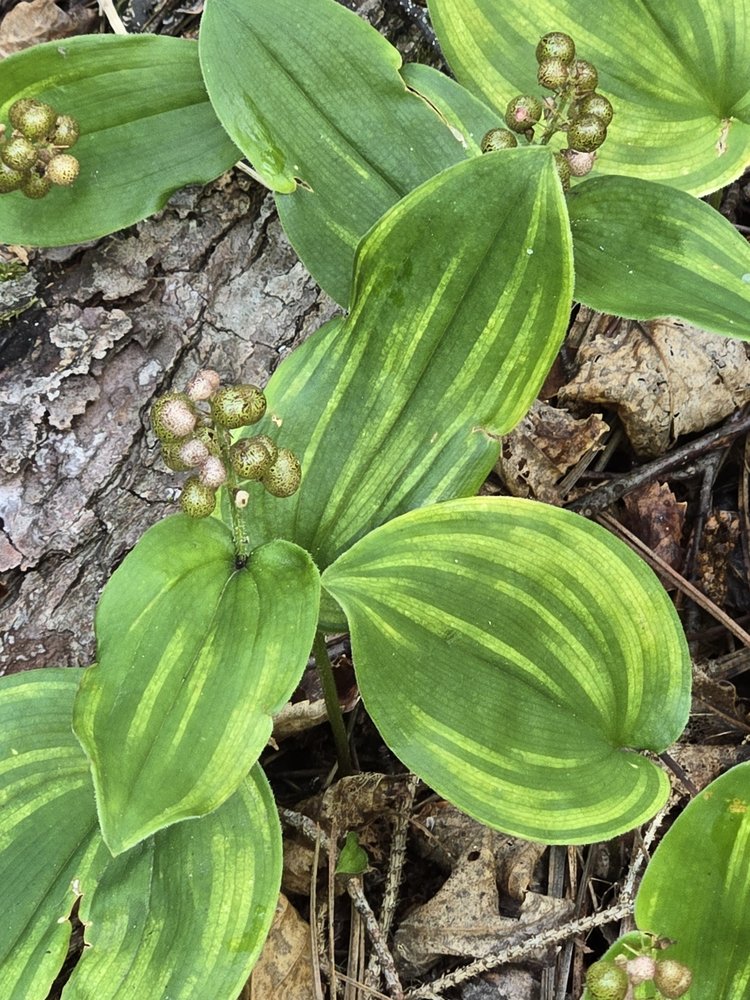
Seed: A round berry about 6 mm (¼ in) across, green mottled with pale red, ripens to dark red in late summer and holds one to four seeds. Fruit set is low, 10 to 35 percent of flowers in studies, and some seeds are spread by birds; ruffed grouse eat the fruit that hangs on into spring.
Germination: The Fire Effects Information System reports little or no seed bank: seeds in soil from 11 sites did not germinate even after stratification (a cold, moist treatment), and seedlings were scarce even where seed was plentiful. After fire it comes back from the rhizomes, and very few plants come in from seed.
How do you identify Canada Mayflower?
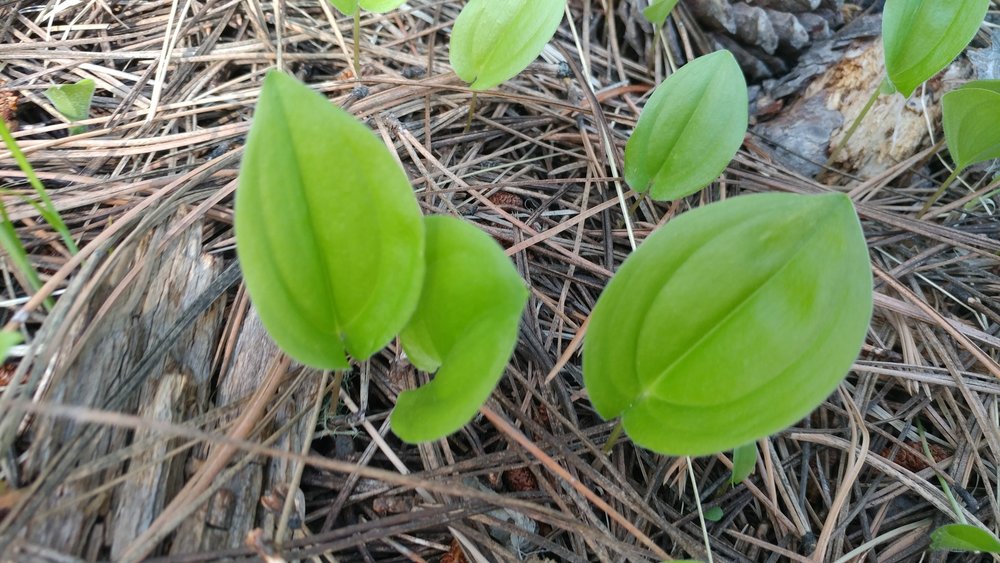
Look for patches of single heart-based leaves rising from the ground, with a few stems 8–20 cm (3–8 in) tall that zigzag between two, rarely three, alternate leaves of unequal size, each oval with a heart-shaped base, a pointed tip and parallel veins, toothless, up to 7.5 cm (3 in) long, hairless on top and sometimes finely hairy underneath. One dense spike-like cluster 2.5–6 cm (1–2½ in) long tops each flowering stem; each tiny flower, about 6–9 mm (¼–⅜ in) across, has 4 white tepals that curve back and 4 stamens that stick out like the points of a star, and the tepals drop soon after blooming. The berries are green speckled with red and ripen dark red in late summer. Canada Mayflower looks like a dwarf Starry False Solomon's Seal, but unlike that plant its flowering stalk usually has only two leaves, and its flowers have just 4 tepals and 4 stamens, where most plants of the old lily family have 6 of each.
When does it bloom?
Late May and June.
Where does it grow?
Moist, shady floors of spruce, aspen, birch and pine forest, creek bottoms and north slopes, in part shade to full shade. The Fire Effects Information System says a Black Hills aspen classification names it as a dominant or indicator plant, and the National Park Service lists it at Mount Rushmore. More than a hundred herbarium specimens come from Lawrence, Pennington, Custer and Meade counties in South Dakota and Crook County in Wyoming, the earliest collected in 1892, with labels from the northern Hills, Custer State Park and the Bear Lodge Mountains, many under white spruce or in moist spruce-aspen forest, at about 1,080–1,825 m (3,500–6,000 ft).
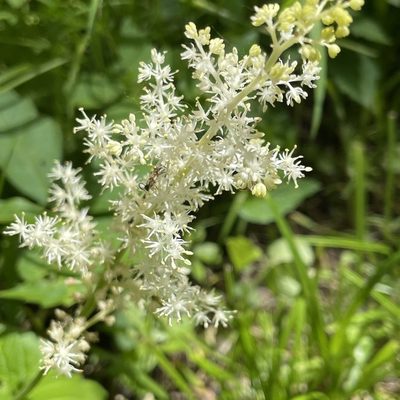
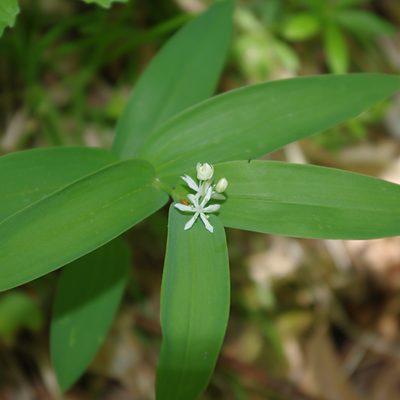
Other mayflowers and false Solomon's seals in this guide
Compare all 3 mayflowers and false Solomon's seals side by side
Asparagus family (Asparagaceae): 5 other plants in this guide
Sources: Minnesota Wildflowers: Maianthemum canadense (Canada Mayflower); USDA Forest Service Fire Effects Information System: Maianthemum canadense (Pavek 1993); Illinois Wildflowers: Canada Mayflower (Maianthemum canadense); USDA PLANTS Database: Maianthemum canadense (MACA4); NPSpecies checklist, Mount Rushmore National Memorial vascular plants; GBIF backbone: Maianthemum canadense Desf., with synonyms; GBIF occurrence search: Maianthemum canadense, South Dakota and Wyoming herbarium specimens; GBIF specimen 1317363620: Meade County, 1892; GBIF specimen 2512286312: Lawrence County, moist slope under white spruce, 2010; GBIF specimen 2512286828: Lawrence County, moist spruce-aspen forest, 2009; Moerman, Native American Ethnobotany database (BRIT): Maianthemum canadense.