Great Plains Yucca
Yucca glauca
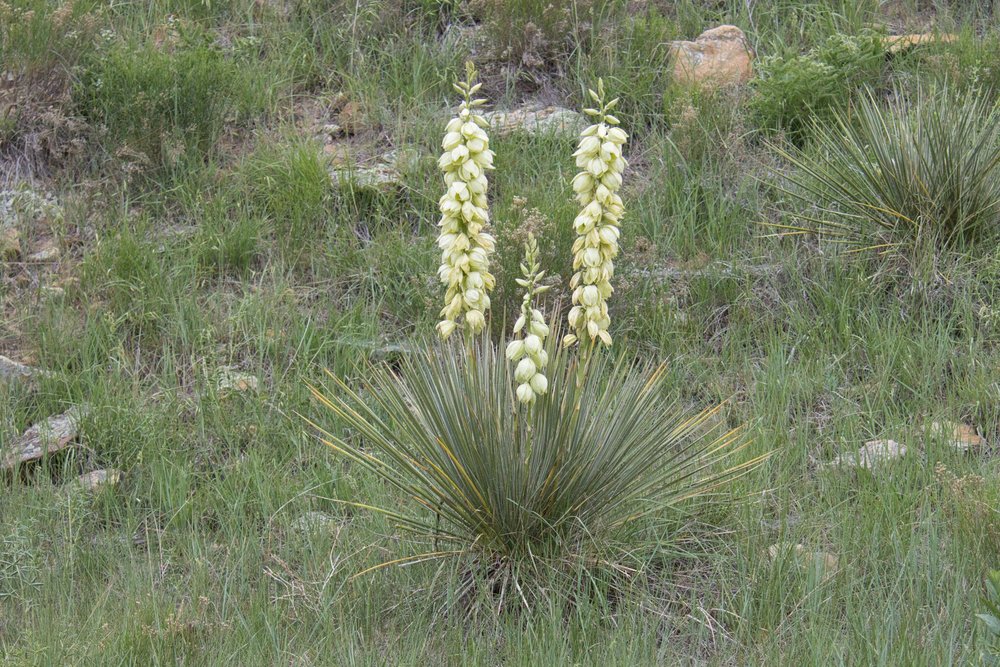
Great Plains Yucca (Yucca glauca), usually called soapweed, is a native evergreen that forms a stiff, spiky clump of narrow leaves and sends up a tall stalk of creamy, bell-shaped flowers in June. It is common on the dry, sunny foothills and prairies around the Black Hills, especially in the south, and the National Park Service lists it at Wind Cave, Jewel Cave and Devils Tower.
Free photos from other sources
| Family | Asparagaceae · Asparagus |
|---|---|
| Status | Native shrub |
| Blooms | June into early July |
| Height | 30–150 cm (1–5 ft) |
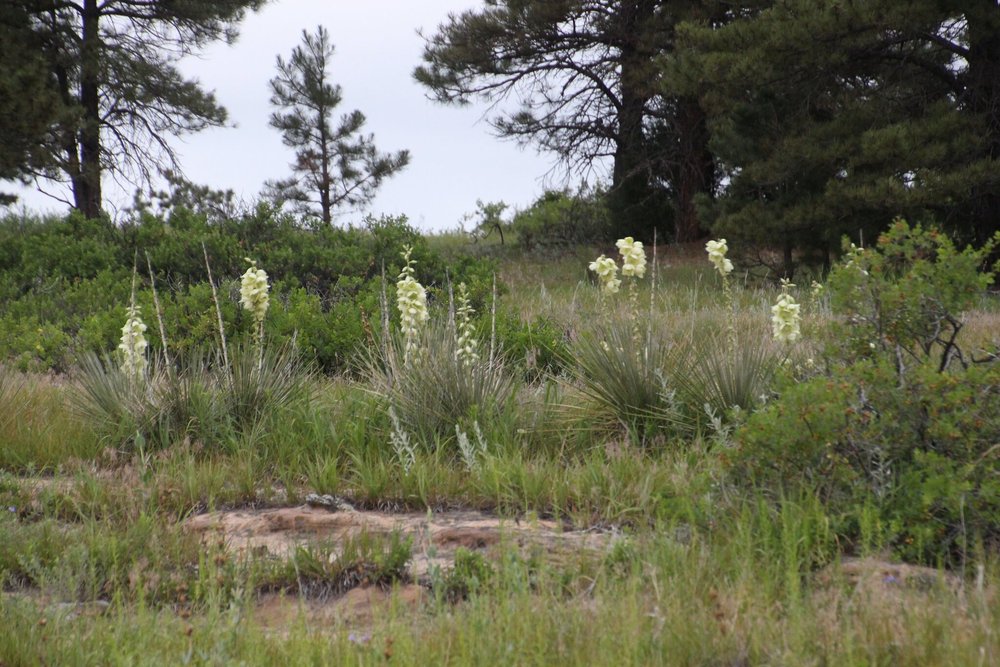
| Where | Dry, sunny prairie hills, rocky and sandy slopes and open pine savanna |
| Also called | Soapweed, Soapweed Yucca, Small Soapweed, Spanish Bayonet, Plains Yucca, hupȟéstola (Lakota) |
| Synonym | Yucca angustifolia, Yucca glauca var. gurneyi, Yucca stricta, Yucca glauca var. stricta |
| Traditional use | Black Elk and Flying By's 1998 Culturally Important Plants of the Lakota (Sitting Bull College) says the dried, powdered root was boiled into a shampoo and the root was used for stomachaches, and the flowers, buds and seed pods were eaten. Gilmore (1919) records that the Teton Dakota made fire drills from bound leaves, with the dried stalk as the hearth. |
Roots, seeds & germination
Root: A deep taproot plus a spreading mat of rhizomes 10–60 cm (4–24 in) below the surface, with roots reported more than 6 m (20 ft) deep in eastern Colorado. New rosettes sprout from the rhizomes, so yucca grows in clumps; each rosette flowers once and dies, but the clone can live more than 50 years.
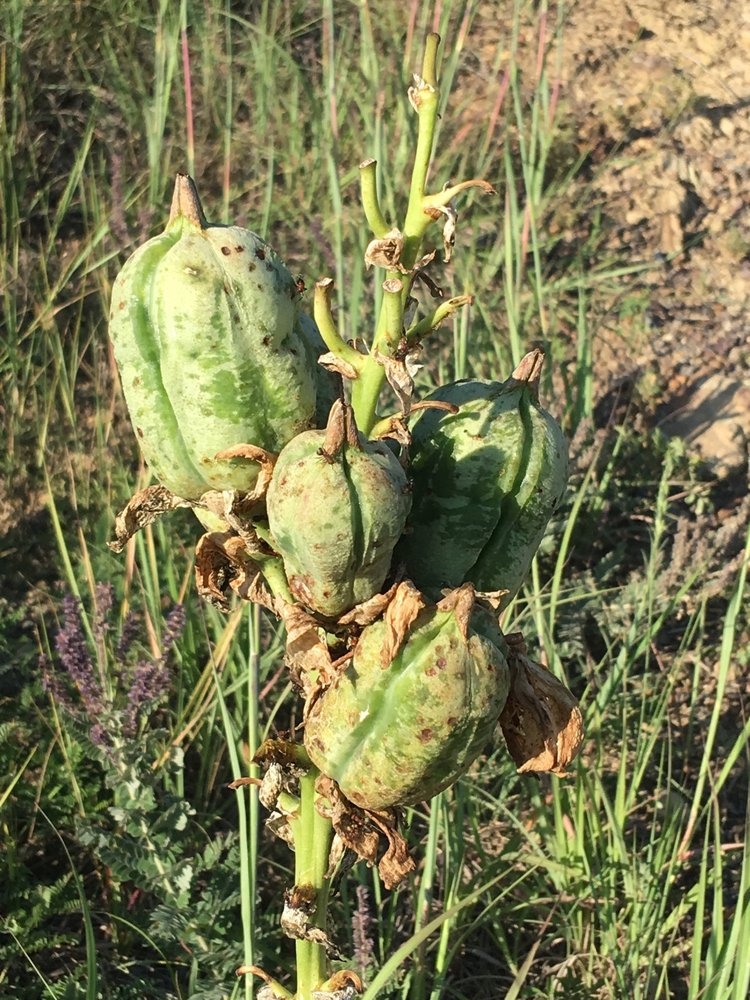
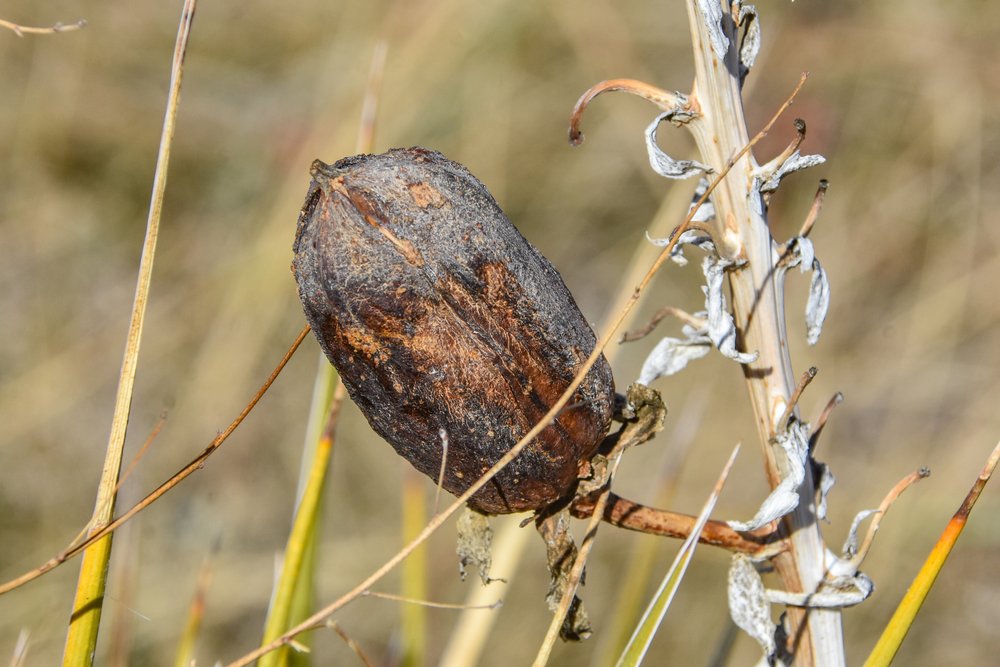
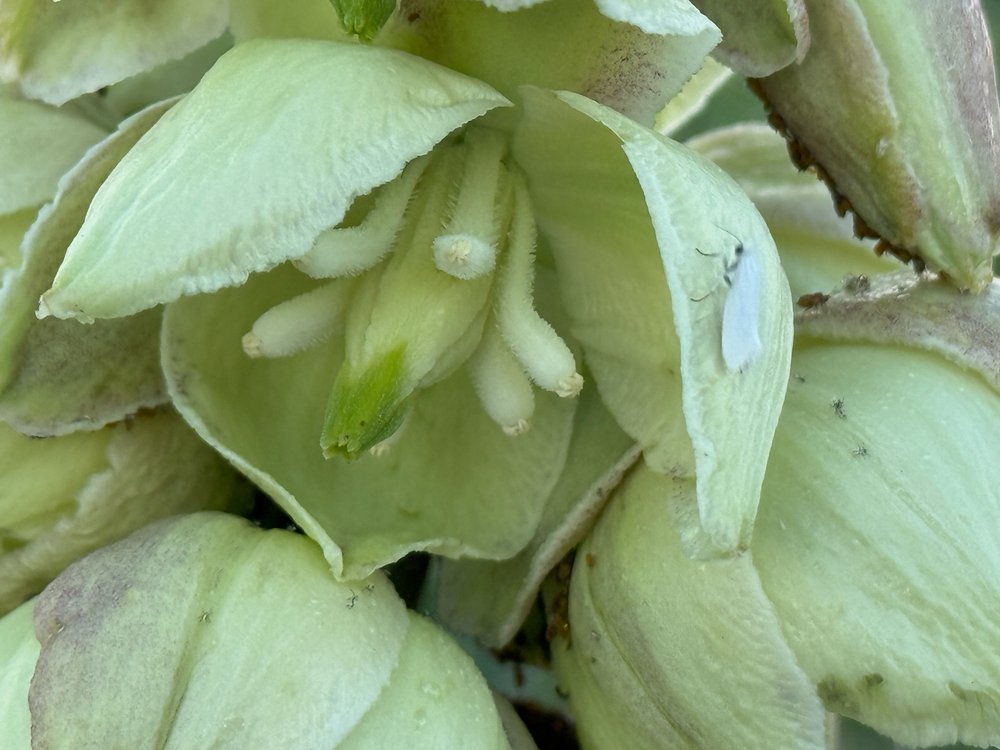
Seed: An upright, six-sided pod 4–6 cm (1½–2½ in) long, green in July and woody grayish brown by September, when it splits into three parts to show stacks of flat, glossy black seeds. The flowers are pollinated almost only by small white yucca moths, whose caterpillars eat some of the seeds, and plants don't set seed every year.
Germination: Not difficult with fresh seed. The Lady Bird Johnson Wildflower Center says seed held over winter sprouts promptly at about 15–21 °C (60–70 °F), and SDSU advises collecting the pods in September and sowing the next spring. Seedlings grow slowly and may take 20 years or more to flower.
How do you identify Great Plains Yucca?
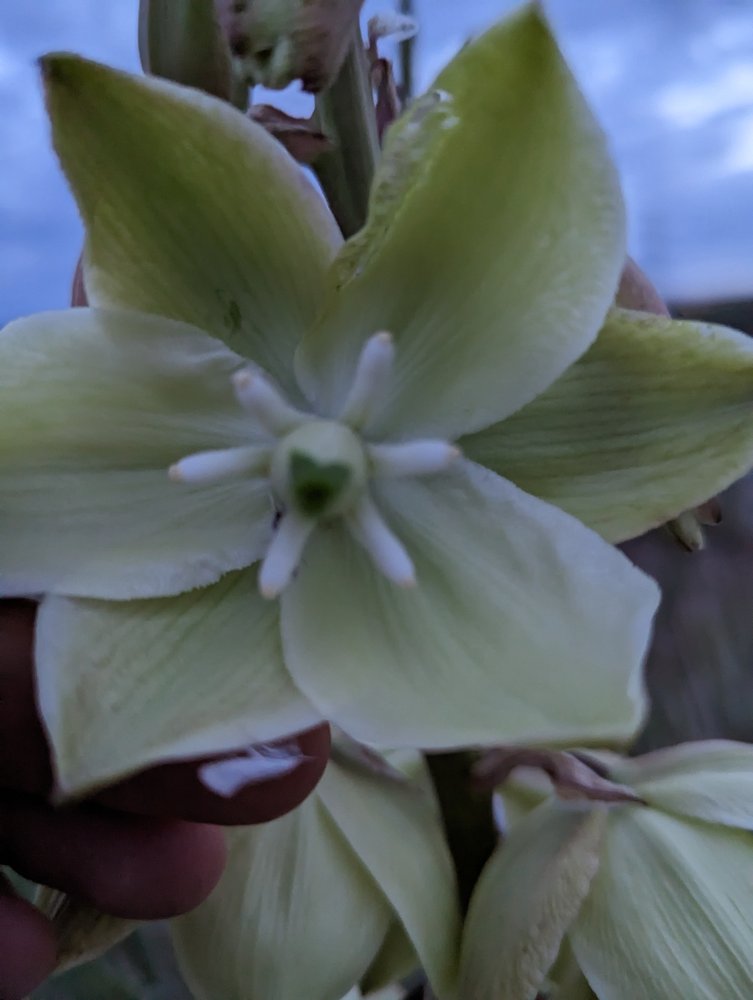
Look for a dense, round clump of stiff, sword-shaped leaves 20–100 cm (8–40 in) long but only about 0.6–1.2 cm (¼–½ in) wide, pale blue-green and waxy, each ending in a sharp spine, with fine white threads curling off the edges. One stout, mostly unbranched stalk rises above the leaves with 15–75 nodding, creamy to greenish-white bells, 4–7 cm (1½–3 in) across. Upright, six-sided pods follow, turning hard and brown and splitting by fall, and the dry stalks often stand through winter. It is the only wild yucca in the Black Hills, so a spiky evergreen clump with a stalk of cream bells is this plant.
When does it bloom?
June into early July.
Where does it grow?
Dry, open, sunny ground with good drainage: prairie hills, rocky and sandy slopes, limestone ledges, the red-bed valley around the Hills and open ponderosa pine and bur oak woodland on south- and west-facing slopes. It is most common in the foothills and the prairie ringing the Hills, especially in the south around Wind Cave National Park and Custer State Park, and scarce in the cool, high forest of the central Hills. Herbarium specimens come from all seven Black Hills counties, and the National Park Service lists it at Wind Cave, Jewel Cave and Devils Tower.
Sources: Culturally Important Plants of the Lakota (Black Elk & Flying By, Sitting Bull College, 1998), entry 332, filed with the SD PUC; Gilmore, M. R. 1919. Uses of Plants by the Indians of the Missouri River Region (33rd Annual Report, Bureau of American Ethnology), p. 71 and plates 7–8; A Survey of the Vegetation of Jewel Cave National Monument (Marriott & Hartman 1986), lists Yucca glauca var. glauca; NPSpecies species list, Wind Cave National Park (NPS); NPSpecies species list, Devils Tower National Monument (NPS); NPSpecies species list, Jewel Cave National Monument (NPS); Groen, A. H. 2005. Yucca glauca. Fire Effects Information System, USDA Forest Service; Yucca Moths: Pollinator of the Month (USDA Forest Service, Celebrating Wildflowers); Pellmyr, O. & Krenn, H. W. 2002. Origin of a complex key innovation in an obligate insect–plant mutualism. PNAS 99: 5498–5502; COSEWIC Assessment and Status Report on the Soapweed (Yucca glauca) in Canada, 2013, chapter 3 (Government of Canada); Soapweed Yucca (National Park Service, Scotts Bluff National Monument); Reese, R. N. Agavaceae: Yucca glauca. Native Plants of South Dakota, SDSU Open PRAIRIE; Yucca glauca (Lady Bird Johnson Wildflower Center Native Plant Database); Yucca glauca, soapweed (Kansas Wildflowers and Grasses); Yucca glauca, Soapweed (Prairie Moon Nursery); GBIF Backbone Taxonomy: Yucca glauca Nutt. (synonyms); GBIF herbarium specimens of Yucca glauca, South Dakota; GBIF herbarium specimens of Yucca glauca, Wyoming; iNaturalist observations of Yucca glauca, Wind Cave National Park.