Feathery False Solomon's Seal Maianthemum racemosum
Also called False Solomon's Seal, Feathery False Lily of the Valley, Solomon's Plume, False Spikenard, yapízapi hú (Lakota)
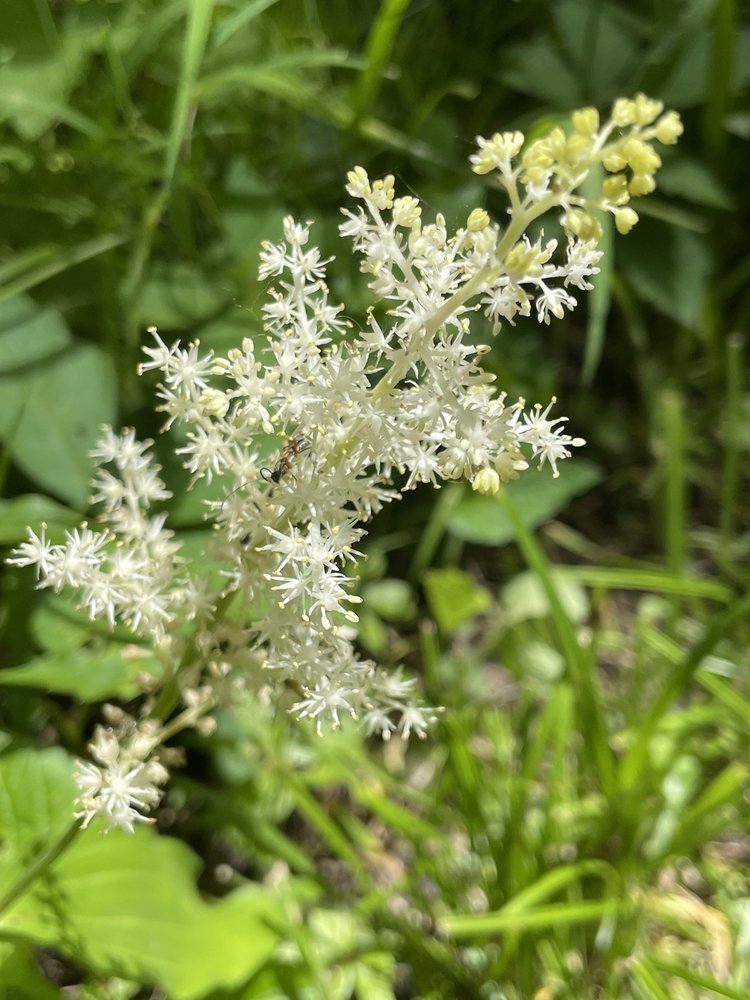
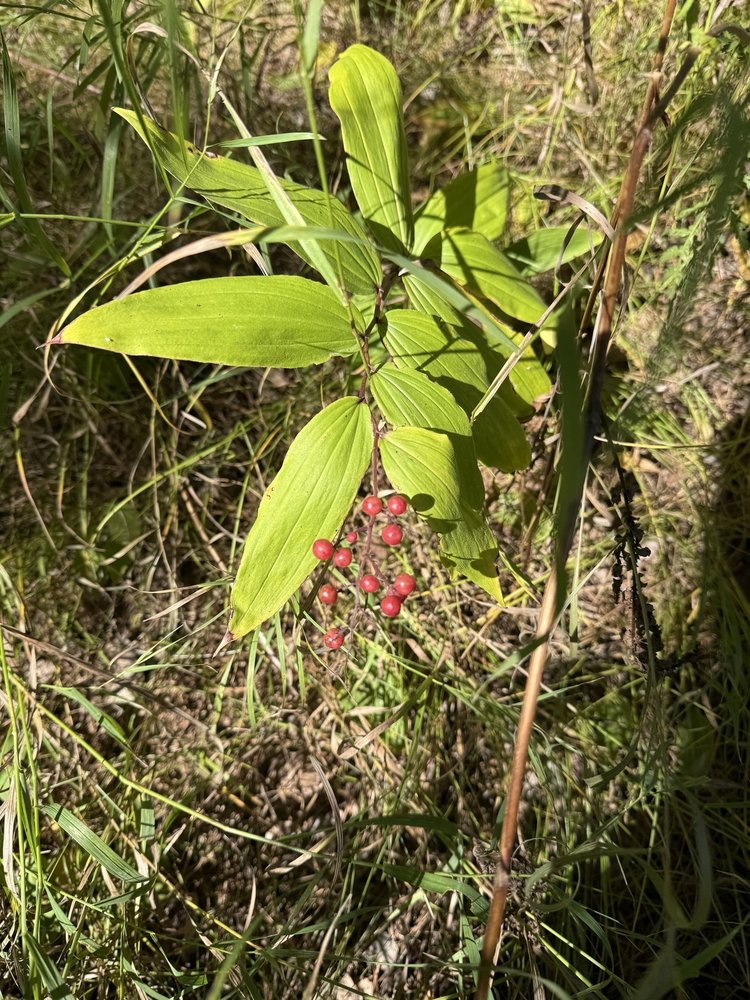
Feathery False Solomon's Seal (Maianthemum racemosum) is a native perennial 35–80 cm (14–31 in) tall, with a stem that is erect to arching, alternate oval to lance-shaped leaves in two rows, and a plume-like cluster of many tiny white star-shaped flowers at the tip from May into July. Herbarium specimens from Lawrence County, South Dakota, were collected in shaded ravines and draws under spruce, pine, aspen and birch, along creeks and in floodplain woods.
Free photos from other sources
| Family | Asparagaceae · Asparagus |
|---|---|
| Status | Native perennial |
| Blooms | May into July |
| Height | 35–80 cm (14–31 in) |
| Where | Moist woods and thickets, in part shade or shade, including creek canyons, ravines and floodplain woods |
| Also called | False Solomon's Seal, Feathery False Lily of the Valley, Solomon's Plume, False Spikenard, yapízapi hú (Lakota) |
| Synonym | Smilacina racemosa |
| Traditional use | Black Elk and Flying By's 1998 Culturally Important Plants of the Lakota gives the Lakota name yapízapi hú for Maianthemum racemosum and records that the berries were eaten raw or cooked and that the dried, ground rhizome was used to stop bleeding from wounds. South Dakota State University prints the same Lakota name. |
| Note | Some older books call this plant Smilacina racemosa. |
Roots, seeds & germination
Root: A whitish rhizome (underground stem) (South Dakota State University).
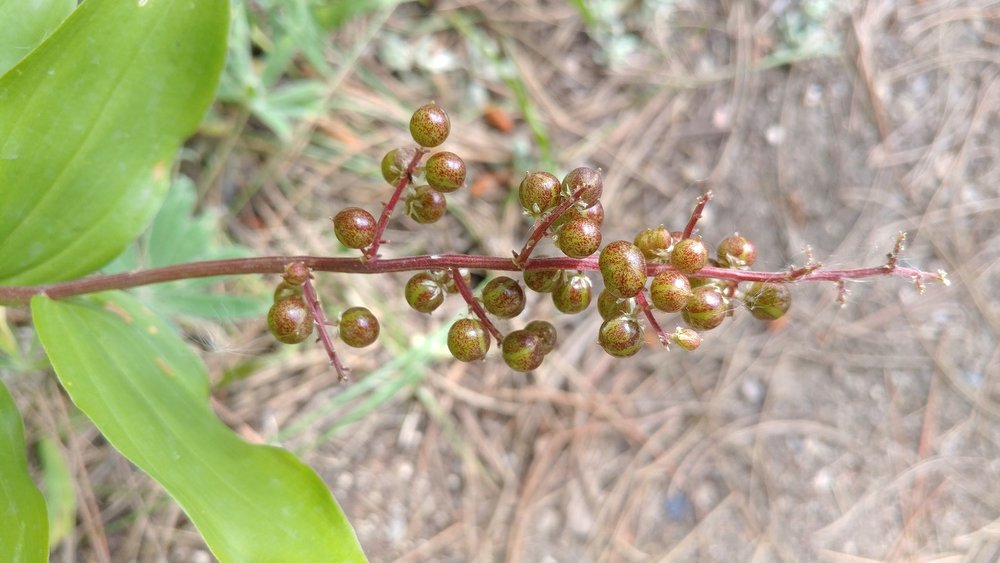
Seed: The fruit is a cluster of berries 4–6 mm (⅛–¼ in) across, green to red to purple (South Dakota State University), bright red when ripe (Minnesota Wildflowers). South Dakota State University gives June to August as the season for the ripe, dark red to purple berries.
Germination: The seeds are hard to germinate. Sown in fall, they come up in the second year; for spring sowing, seeds kept moist need 90 days of cold, then 90 days of warmth, then cold again (South Dakota State University).
How do you identify Feathery False Solomon's Seal?
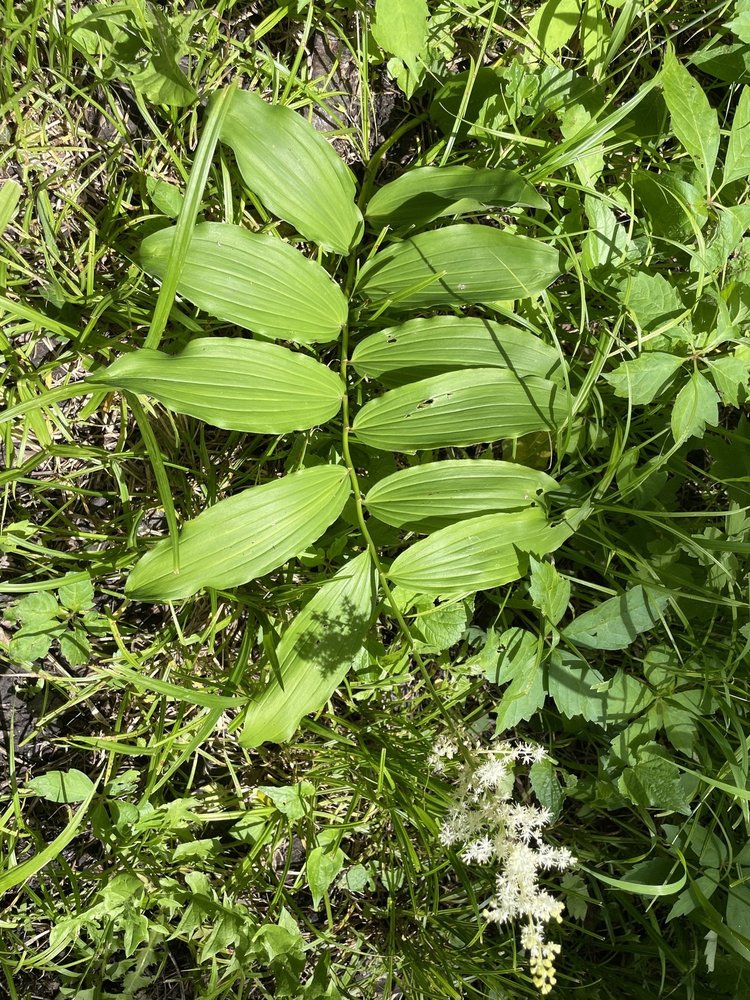
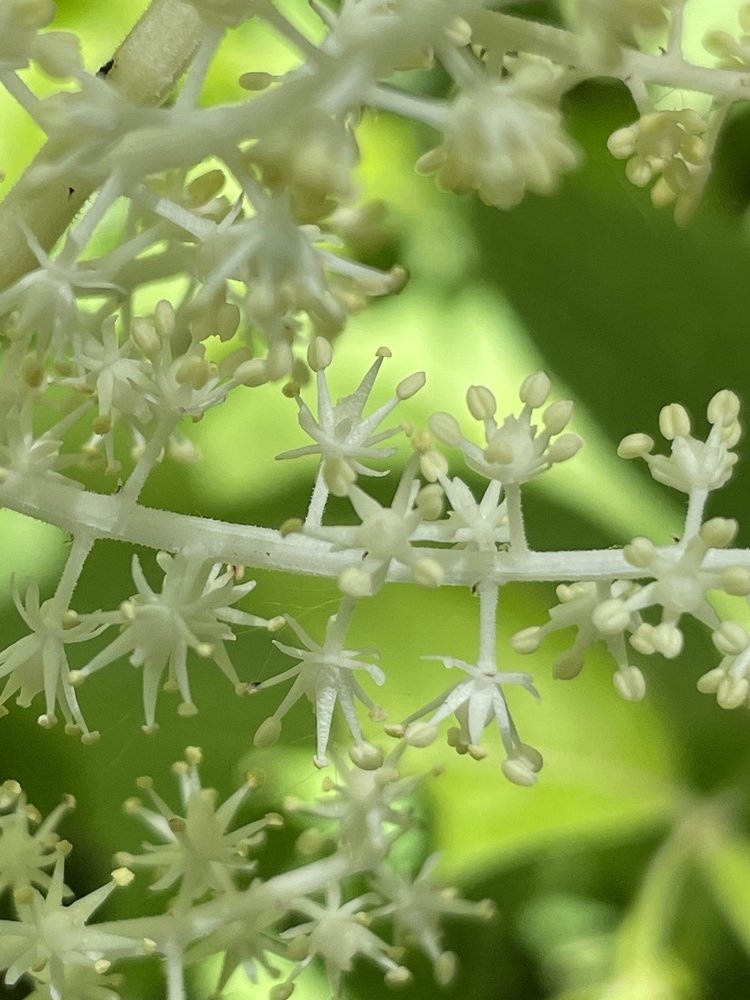
Look for a perennial from a whitish rhizome (an underground stem) with a simple, unbranched stem, erect to arching and finely hairy, that zig-zags between the alternate leaves. The leaves are lance-shaped to elliptical, 6–15 cm (2½–6 in) long and 2–7 cm (¾–2¾ in) wide, in two rows, stalkless or on a very short stalk, with a rounded base, a pointed tip, edges that are slightly wavy but without teeth, hairs on the underside and heavy parallel veins. At the stem tip is a plume-like cluster (a panicle) 8–13 cm (3–5 in) long and about 5 cm (2 in) across, with up to 80 star-shaped flowers, each about 3 mm (⅛ in) across, with 3 white petals and 3 petal-like sepals that look like 6 petals, and cream to pale yellow stamen tips. The fruit is a cluster of waxy berries 4–6 mm (⅛–¼ in) across that go from green to red, or on to purple (South Dakota State University), and Minnesota Wildflowers says they are bright red when ripe. Minnesota Wildflowers compares it with two plants in this guide. Starry False Solomon's Seal prefers sunnier places, has fewer, larger flowers, a stem that is often more upright, and leaves that are narrower and stiffer. Smooth Solomon's Seal carries its flowers on the underside of the arching stem instead of in a plume at the end.
When does it bloom?
May into July.
Where does it grow?
Moist woodlands and thickets, in part shade or shade (South Dakota State University; Minnesota Wildflowers); South Dakota State University places it in the eastern and western border counties of South Dakota. GBIF holds 23 preserved specimens from the Black Hills counties, 22 of them from Lawrence County, South Dakota, and 1 from Crook County, Wyoming, collected from 1892 to 2018. Their labels name a moist slope under spruce in a creek canyon bottom, a creek-edge riparian zone, a narrow canyon with spruce, ironwood and paper birch, north-facing spruce forest along a creek, a damp draw under pine and birch, a ravine under aspen and ironwood, floodplain open woods, a shaded hillside, and the edge of hardwood forest; the 10 labels that give an elevation run from 1,100 to 1,650 m (3,600–5,400 ft). It is not on the National Park Service plant lists for Wind Cave, Jewel Cave, Mount Rushmore or Devils Tower, and iNaturalist has no research-grade records from the Black Hills area.
Other flowers to compare
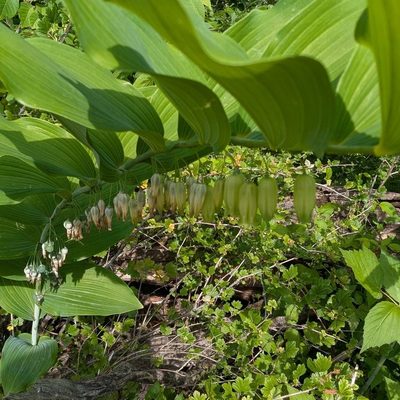
Other mayflowers and false Solomon's seals in this guide
Compare all 3 mayflowers and false Solomon's seals side by side
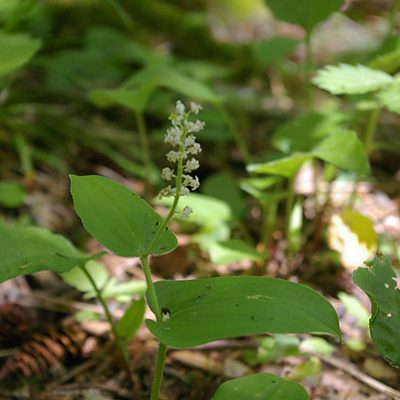
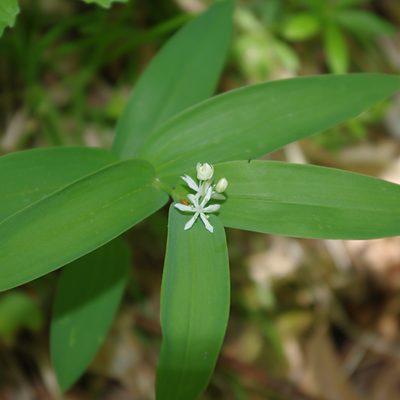
Asparagus family (Asparagaceae): 5 other plants in this guide
Sources: South Dakota State University, Open PRAIRIE: South Dakota Native Plant Research, Liliaceae: Maianthemum racemosum (R. Neil Reese); Minnesota Wildflowers: Maianthemum racemosum (False Solomon's Seal); Lady Bird Johnson Wildflower Center: Maianthemum racemosum (MARA7), Feathery False Solomon's Seal; USDA PLANTS Database: Maianthemum racemosum (MARA7), feathery false lily of the valley; GBIF occurrence search: Maianthemum racemosum, preserved specimens, South Dakota and Wyoming; iNaturalist: Maianthemum racemosum research-grade observations in the Black Hills (none); Culturally Important Plants of the Lakota (Black Elk and Flying By, Sitting Bull College, 1998), entry 183; NPSpecies checklist, Wind Cave National Park (vascular plants); NPSpecies checklist, Jewel Cave National Monument (vascular plants); NPSpecies checklist, Mount Rushmore National Memorial (vascular plants); NPSpecies checklist, Devils Tower National Monument (vascular plants); South Dakota Natural Heritage Program: Rare Plants of South Dakota; Black Hills National Forest Revised Forest Assessment: At-Risk Species (October 2023).