Field Chickweed
Cerastium arvense
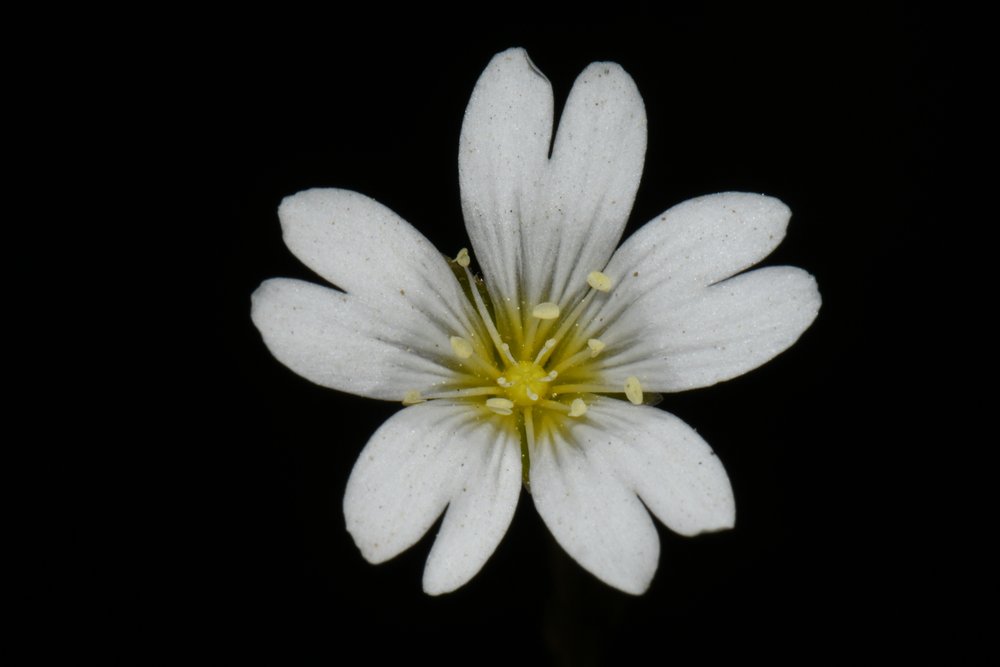
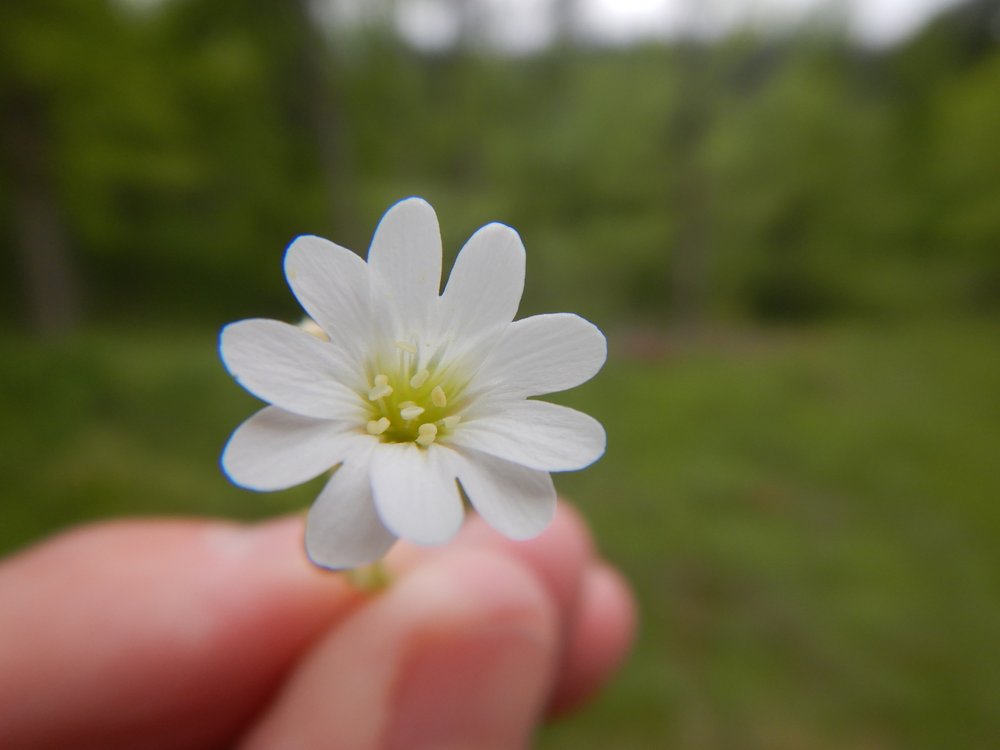
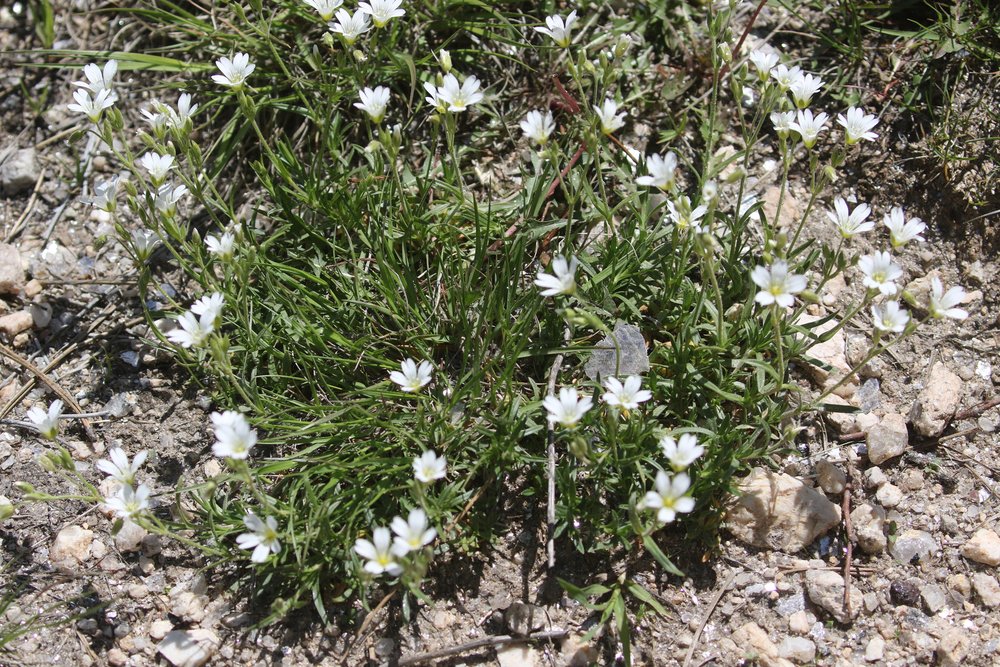
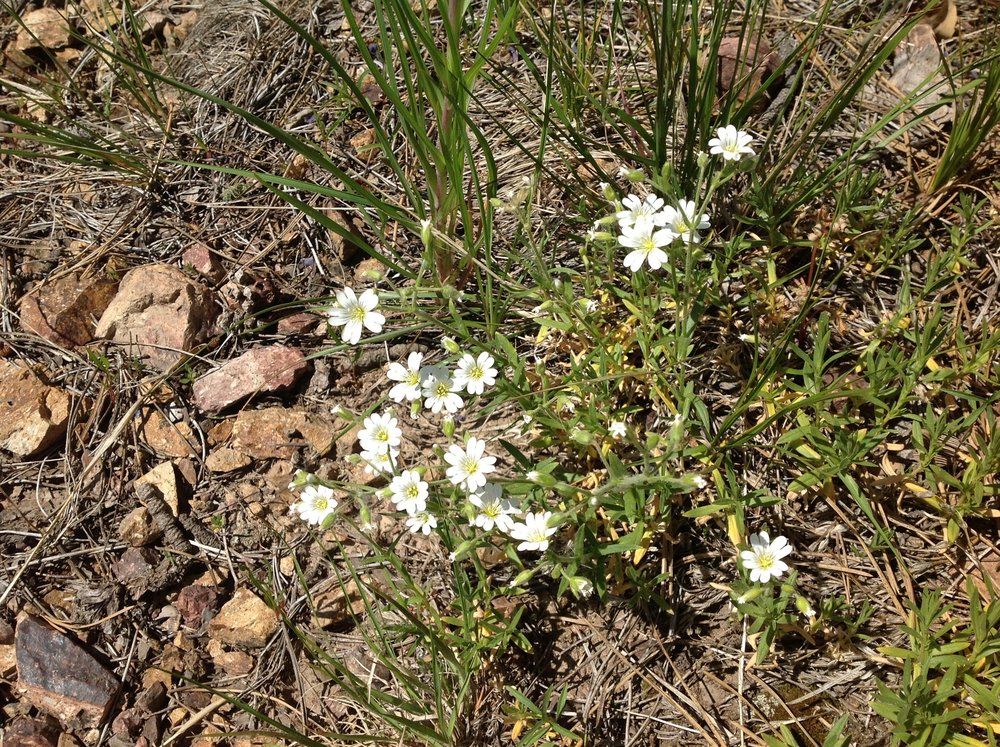
Field Chickweed (Cerastium arvense) is a low native perennial of the pink family that forms loose mats of narrow leaves, with white, five-petaled flowers whose petals are notched so deeply the flower seems to have ten. It blooms in May and June, a little later up high, and the Black Hills National Forest calls it common throughout the Black Hills.
Free photos from other sources
| Family | Caryophyllaceae · Pink |
|---|---|
| Status | Native perennial |
| Blooms | May and June, sometimes into July |
| Height | 5–30 cm (2–12 in) |
| Where | Prairie, meadows, rocky slopes and open pine forest |
| Also called | Prairie Chickweed, Field Mouse-ear Chickweed, Starry Chickweed, American Field Chickweed |
| Synonym | Cerastium strictum, Cerastium arvense var. strictum, Cerastium elongatum |
| Note | Black Hills plants are the native subspecies strictum; the European subspecies arvense is introduced and may turn up near towns. |
Roots, seeds & germination
Root: A slender taproot that later sends out short rhizomes, with low, leafy shoots spreading from the base to make the loose mats.
Seed: A narrow, often slightly curved, tan capsule 6–11 mm (¼–½ in) long that sticks out past the sepals and opens at the tip by 10 small teeth. Inside are many tiny, flattened, reddish- to golden-brown seeds covered in small bumps.
Germination: Easy. SDSU says the seed needs no pretreatment and can be sown in fall or spring, and a University of Washington nursery protocol found that long, cold storage lowered germination, so fresh seed is best.
How do you identify Field Chickweed?
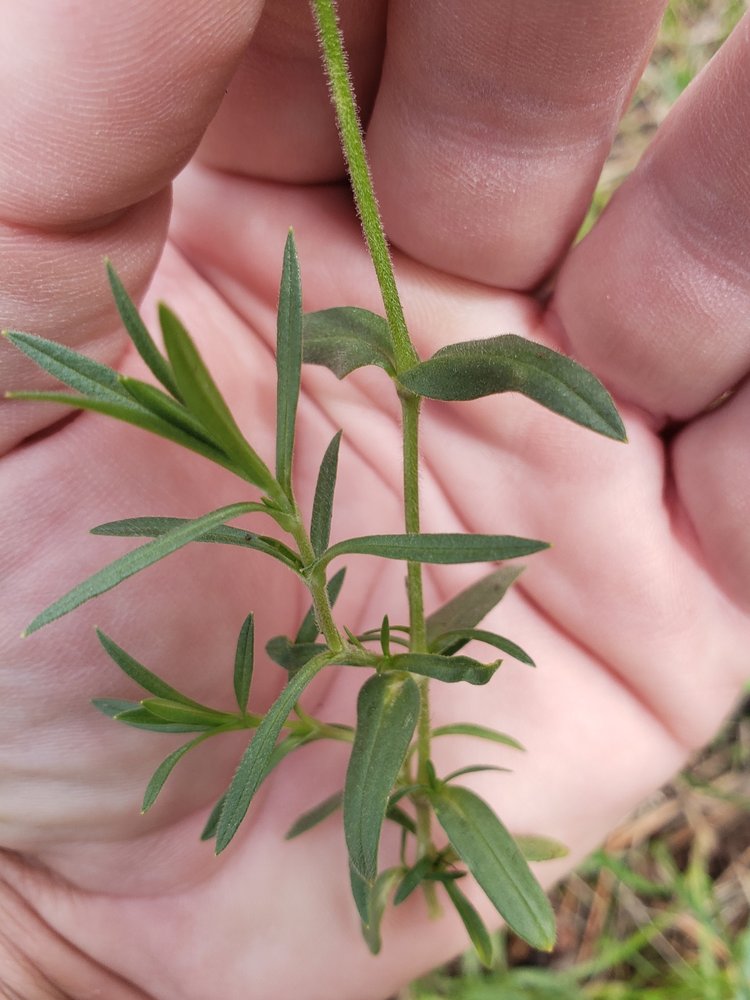
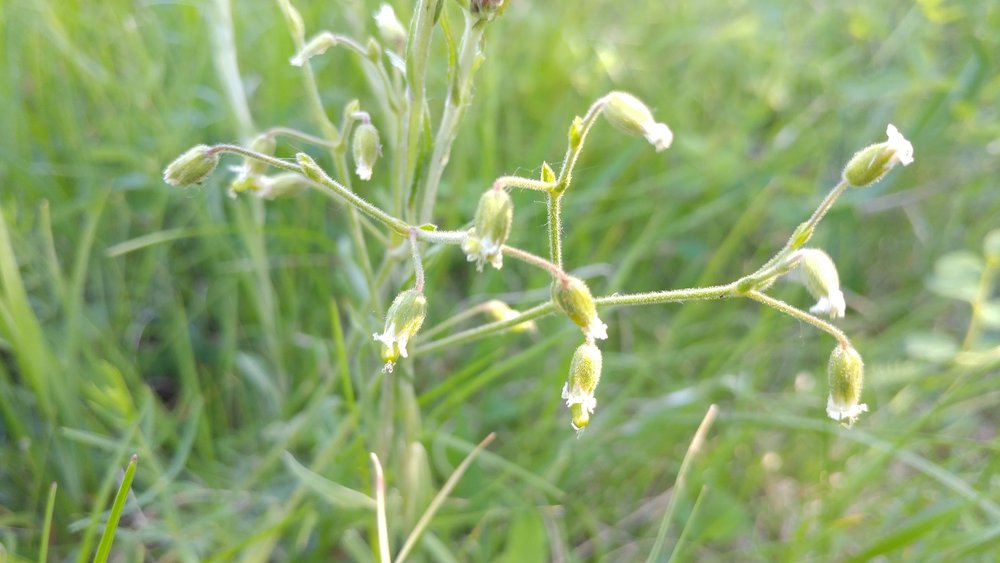
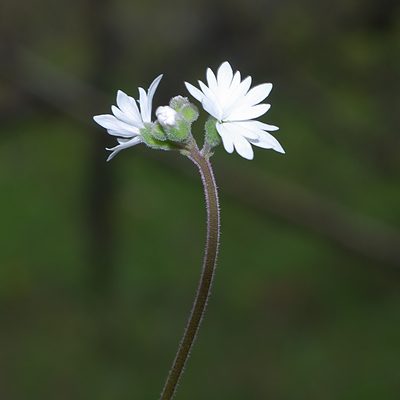
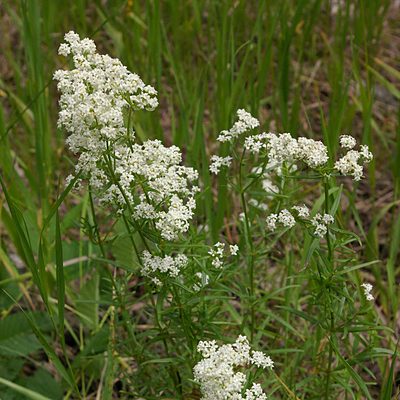
Look for white flowers about 1–1.5 cm (½ in) across with five petals, each split at the tip into two rounded lobes, so the flower seems to have ten. The petals are about twice as long as the green, hairy sepals behind them, which sets it apart from the weedy Mouse-ear Chickweed and Common Chickweed, whose tiny flowers have petals no longer than the sepals. The narrow leaves grow in opposite pairs, with small tufts of short leaves in the joints of the lower ones, and the upper stems are sticky with glandular hairs. Prairie Star's petals are cut into three finger-like lobes, and Northern Bedstraw has its leaves in whorls of four around a square stem.
When does it bloom?
May and June, sometimes into July.
Where does it grow?
Full sun to light shade on dry to moderately moist, well-drained, often rocky or gravelly ground: mixed-grass prairie, meadows, rocky slopes and outcrops, open ponderosa pine forest, aspen and birch openings and roadsides. Black Hills herbarium specimens come from Lawrence, Pennington, Custer, Meade and Fall River counties and Crook and Weston counties in Wyoming, from about 1,075 to 2,125 m (3,530–6,970 ft). The 1986 Jewel Cave survey lists it, and the National Park Service records it at Wind Cave, Jewel Cave, Mount Rushmore and Devils Tower.
Other flowers to compare
Sources: USDA Forest Service, Black Hills National Forest: Black Hills Native Plants (Prairie chickweed); Marriott and Hartman 1986, A Survey of the Vegetation of Jewel Cave National Monument (lists Cerastium arvense L., no exotic code); NPSpecies checklist, Wind Cave National Park vascular plants (Cerastium arvense ssp. strictum); NPSpecies checklist, Devils Tower National Monument vascular plants (Cerastium arvense ssp. strictum); NPSpecies checklist, Jewel Cave National Monument vascular plants; NPSpecies checklist, Mount Rushmore National Memorial vascular plants; USDA PLANTS Database: Cerastium arvense ssp. strictum (CEARS2), native L48/AK/CAN; USDA PLANTS Database: Cerastium arvense (CEAR4); VASCAN (Canadensys): Cerastium arvense subsp. strictum, accepted name and synonyms; GBIF occurrence search: Cerastium arvense preserved specimens, Black Hills bounding box; iNaturalist: Cerastium arvense research-grade observations, Black Hills radius; SDSU Open PRAIRIE, Native Plants of the Northern Great Plains: Cerastium arvense ssp. strictum (R. Neil Reese); Minnesota Wildflowers: Field Chickweed (Cerastium arvense); Minnesota Wildflowers: Mouse-ear Chickweed (Cerastium fontanum); Minnesota Wildflowers: Common Chickweed (Stellaria media); Minnesota Wildflowers: Northern Bedstraw (Galium boreale); Illinois Wildflowers: Field Chickweed (Cerastium arvense subsp. strictum); University of Washington ESRM 412 propagation protocol: Cerastium arvense (2009); Canadian Food Inspection Agency: Weed Seed, Cerastium spp.; Native American Ethnobotany Database (BRIT): Cerastium (Iroquois records only); Culturally Important Plants of the Lakota (Black Elk and Flying By, Sitting Bull College, 1998), filed with the South Dakota PUC (checked; no Cerastium entry); Gilmore 1919, Uses of Plants by the Indians of the Missouri River Region (Internet Archive; checked, no Cerastium entry); Black Hills Wildflowers: Prairie Star (Lithophragma parviflorum); Pacific Northwest Wildflowers: Lithophragma parviflorum.