Wax Currant Ribes cereum
Also called Western Red Currant, Pink Currant, Whisky Currant
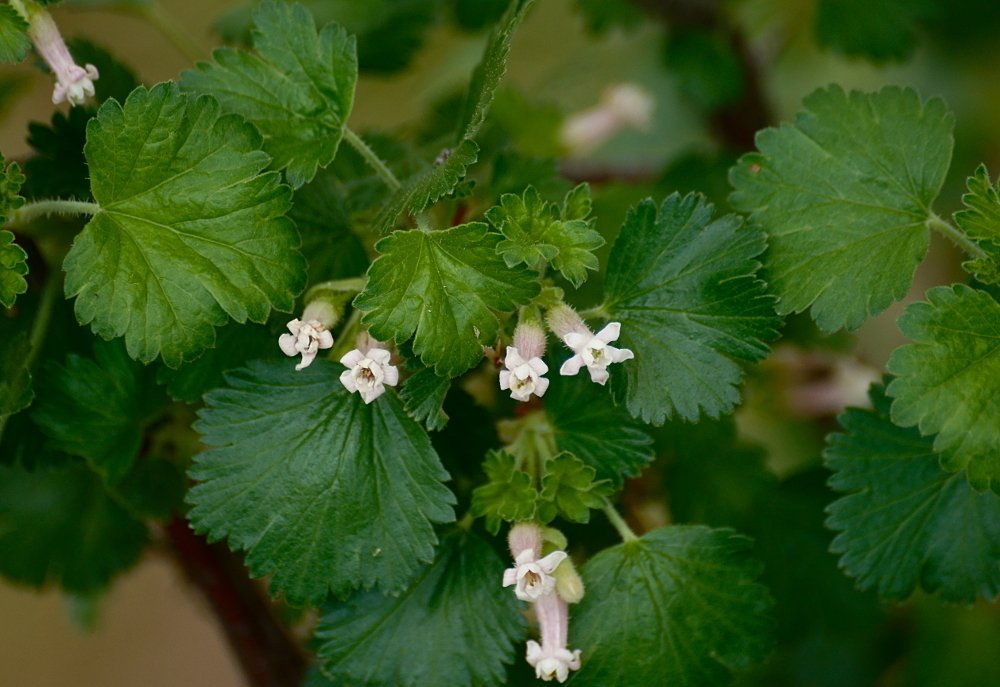
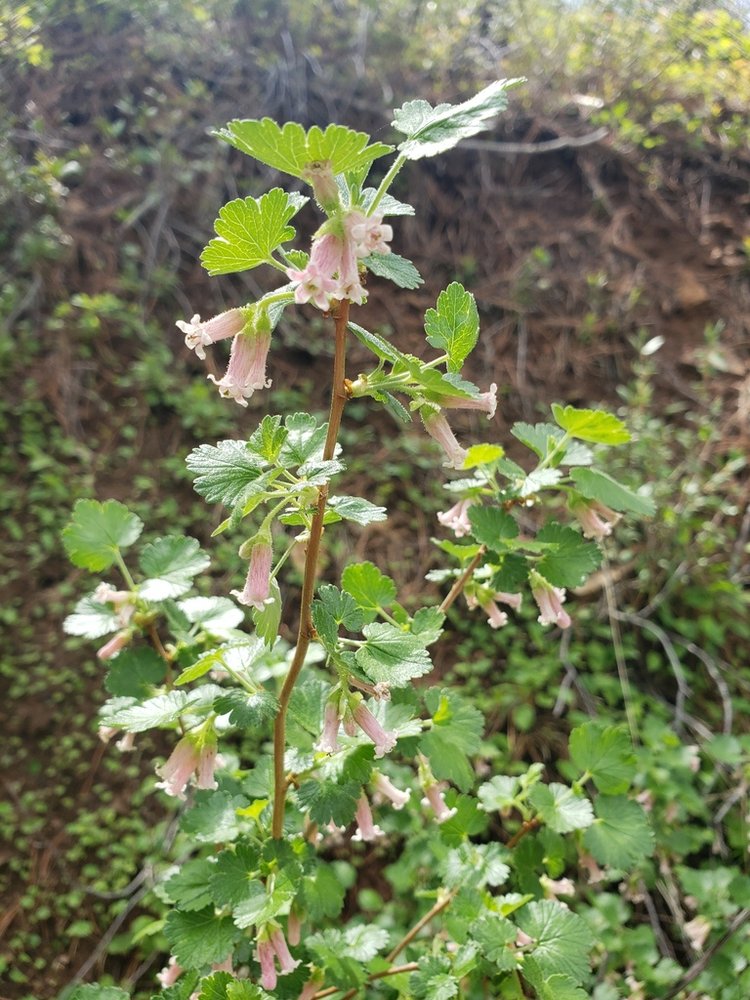
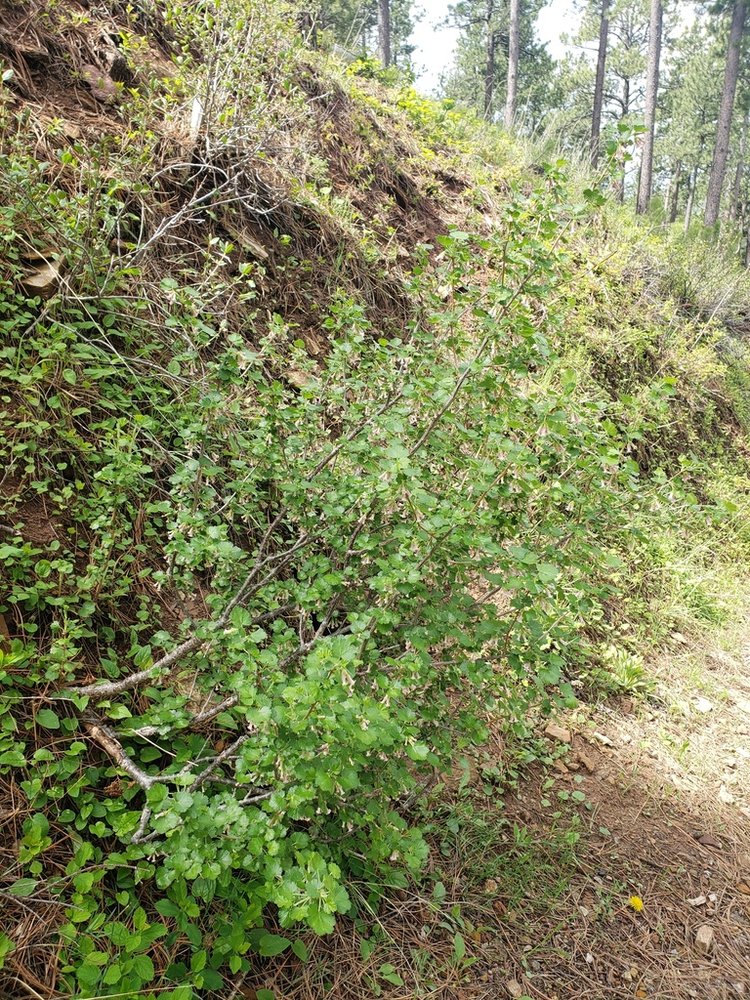
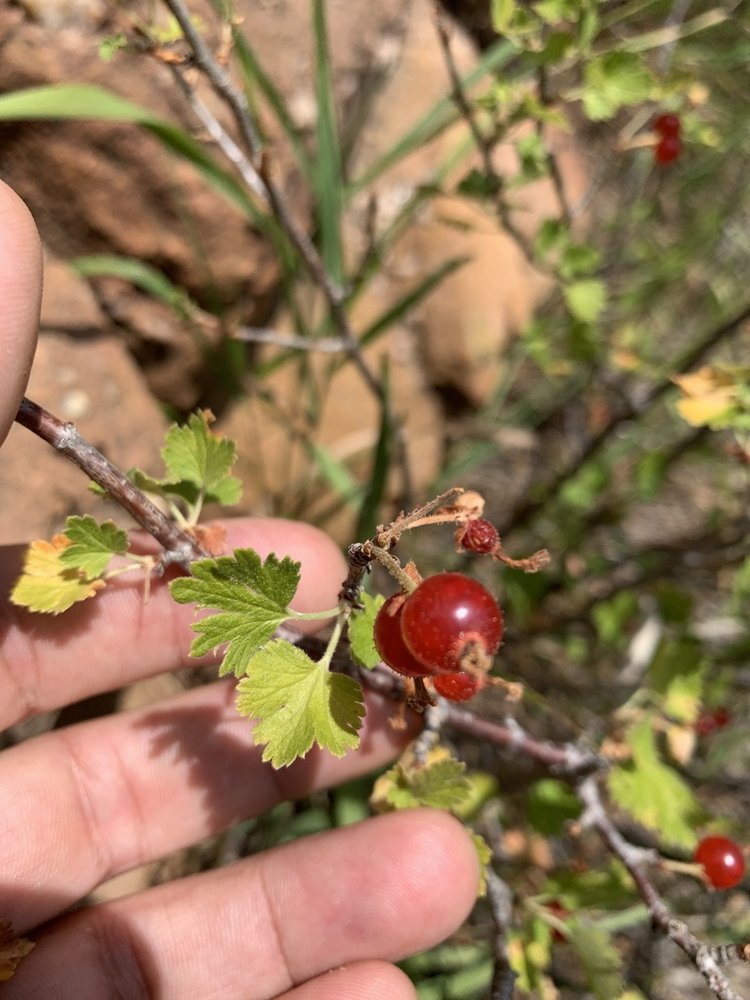
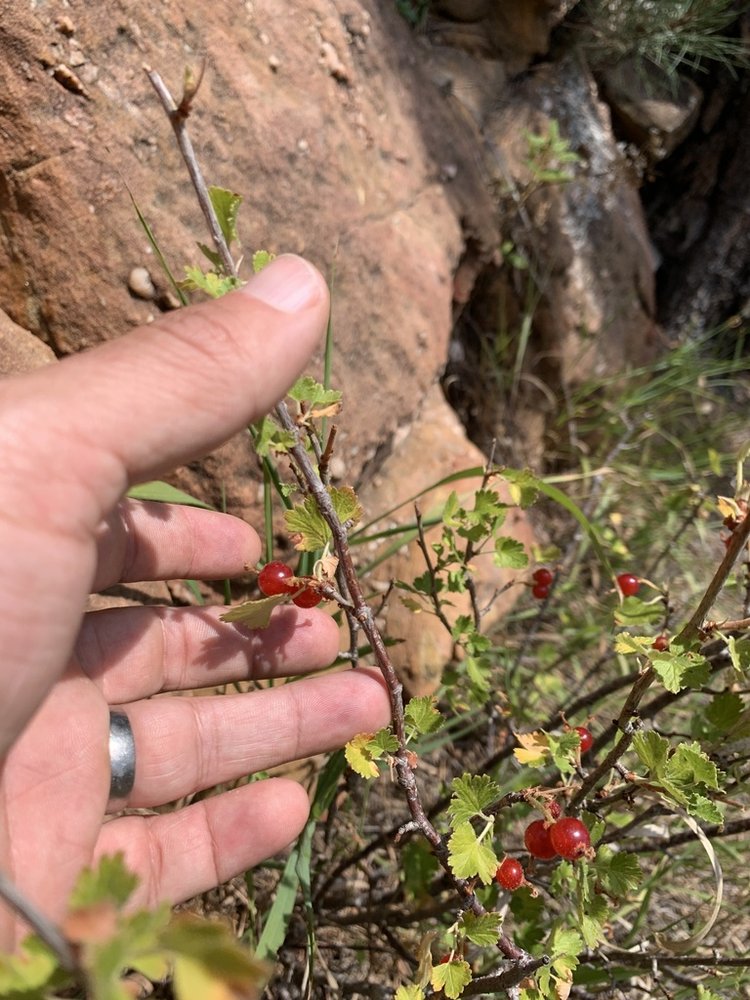
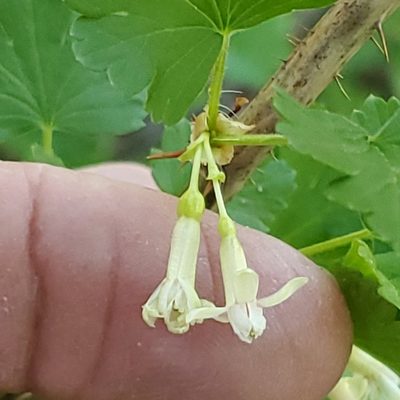
Wax Currant (Ribes cereum) is a native, spineless shrub 0.2–2 m (8 in–6½ ft) tall of dry rocky slopes, rock outcrops and open pine woods across the Black Hills, where the National Park Service lists it at Wind Cave, Jewel Cave, Mount Rushmore and Devils Tower. In May and June it hangs out small clusters of narrow, tubular white-to-pink flowers, and by August it carries red to orange-red berries. Its small, rounded, shallowly lobed leaves are dotted with glands, and the plant has a spicy smell.
Free photos from other sources
| Family | Grossulariaceae · Currant |
|---|---|
| Status | Native deciduous shrub |
| Blooms | May into June |
| Height | 0.2–2 m (0.7–6.5 ft) |
| Where | Dry rocky slopes, rock outcrops and ridges in open ponderosa pine forest and its edges |
| Also called | Western Red Currant, Pink Currant, Whisky Currant |
| Synonym | Ribes cereum var. inebrians, Ribes cereum var. pedicellare, Ribes inebrians |
Roots, seeds & germination
Root: It has no rhizomes, and its sprouting from the root crown after fire is described as weak, though sprouts were seen two years after a low-severity prescribed burn in Idaho.
Seed: Each berry holds many seeds and ripens by August. Many seeds drop beneath the parent and birds and mammals carry others off, and fallen seed stays alive in the soil and duff for many years.
Germination: The seed needs scarification, a scratching or wearing of the seed coat, to sprout. In central Idaho it establishes after light scratching of the ground and thrives after thorough scarification, which sets off germination, and a low-severity fire may also bring up seed stored in the soil.
How do you identify Wax Currant?
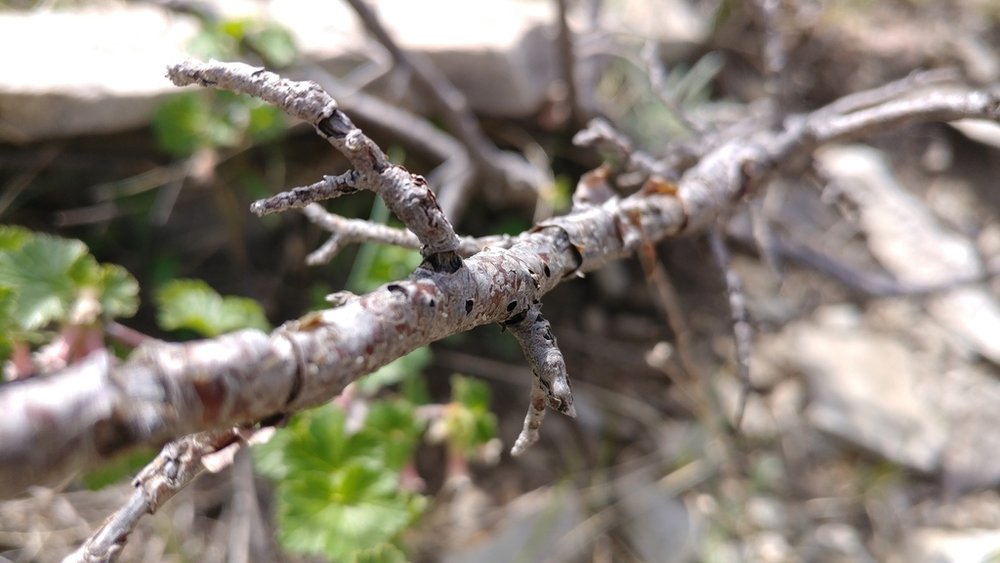
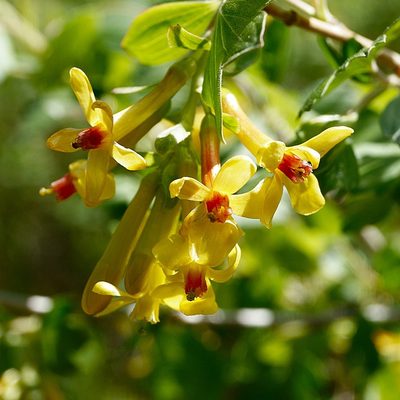
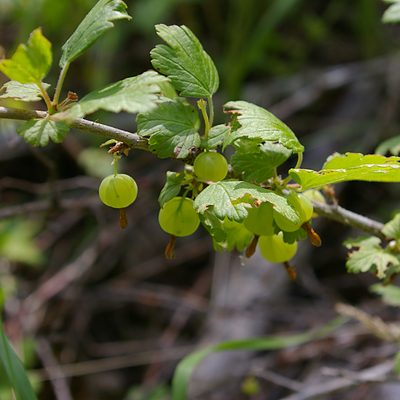
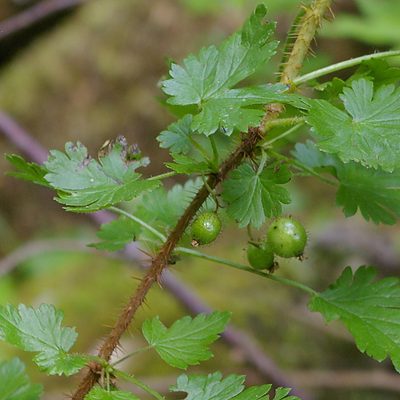
Look for a compact, often mounded shrub with spreading or arching branches, smooth, cherry-like bark on old wood, and no spines or prickles anywhere on the stems. The leaves are small, mostly 1–2 cm (½–¾ in) across, almost kidney-shaped to fan-shaped with 3 to 5 shallow rounded lobes and coarse rounded teeth, and they are dotted with glands, most noticeable along the edges; the plant has a notably spicy smell. In May and June drooping clusters of 2 to 8 flowers hang from the branches, each a narrow tube 5–9 mm (¼–⅜ in) long, white to pinkish-white and hairy outside, with five short spreading lobes at the mouth and the stamens hidden inside; the bright green style turns brown as the flower ages. The berries are dull to bright red or orange-red, egg-shaped, 5–12 mm long and glandular. Golden Currant is also spineless but stands 1–3 m tall with golden-yellow flowers 6–20 mm long in evenly spaced clusters of 5 to 18, leaves 1.6–3.6 cm (⅝–1½ in) long cut about halfway into three lobes, and smooth berries. Northern Gooseberry has 1 to 3 spines at each leaf node, flowers alone or in twos and threes, and smooth berries.
When does it bloom?
May into June.
Where does it grow?
Dry rocky slopes and talus, sandstone boulders, limestone outcrops and cliffs, dry hillsides and ridge-top grassland in and at the edges of open ponderosa pine forest, from about 1,075 to 2,035 m (3,500–6,700 ft) on Black Hills herbarium labels, most between 1,250 and 1,650 m (4,100–5,400 ft). The National Park Service lists it at all four Black Hills parks, the 1986 Jewel Cave plant survey records it as pink currant, and about 130 herbarium specimens come from Lawrence, Pennington, Custer, Meade and Fall River counties in South Dakota and Crook and Weston counties in Wyoming.
Other currants and gooseberries in this guide
Sources: Flora of North America Vol. 8: Ribes cereum (N. H. Holmgren), eFloras; Flora of North America Vol. 8: Ribes aureum (golden currant), eFloras; Flora of North America Vol. 8: Ribes oxyacanthoides (northern gooseberry), eFloras; USDA Forest Service Fire Effects Information System: Ribes cereum (Marshall 1995); Lady Bird Johnson Wildflower Center: Ribes cereum (RICE); USDA PLANTS Database: Ribes cereum (RICE); ITIS: Ribes cereum var. cereum (TSN 530046), with its synonyms; Marriott and Hartman 1986, A Survey of the Vegetation of Jewel Cave National Monument; NPSpecies checklist, Wind Cave National Park vascular plants; NPSpecies checklist, Jewel Cave National Monument vascular plants; NPSpecies checklist, Mount Rushmore National Memorial vascular plants; NPSpecies checklist, Devils Tower National Monument vascular plants; GBIF occurrence search: Ribes cereum, South Dakota and Wyoming herbarium specimens; iNaturalist: research-grade Ribes cereum observations in the Black Hills; Culturally Important Plants of the Lakota (Black Elk and Flying By, 1998), filed with the South Dakota PUC (checked; Ribes cereum not listed).