Golden Currant
Ribes aureum
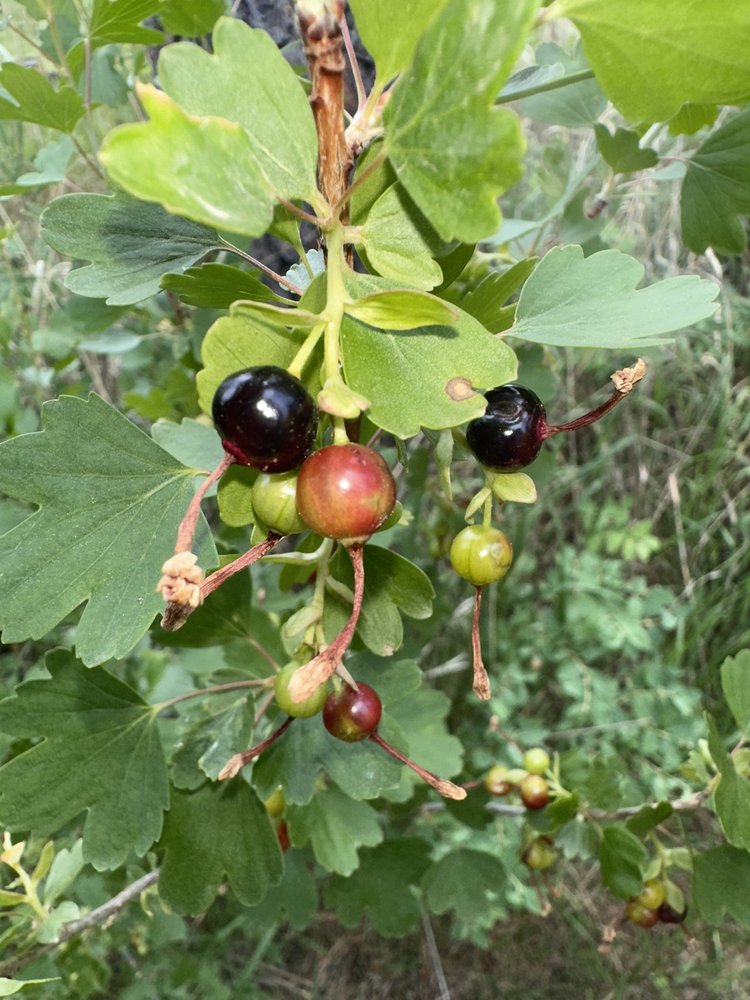
Golden Currant (Ribes aureum) is a native, thornless shrub of draws, creek banks and the warm foothills of the Black Hills. It blooms from late April through May, before most other shrubs, with clusters of yellow trumpet-shaped flowers that smell of cloves, and by midsummer its berries turn from yellow to orange, red and finally black.
Free photos from other sources
| Family | Grossulariaceae · Currant |
|---|---|
| Status | Native shrub |
| Blooms | Late April through May, sometimes into early June |
| Height | 1–3 m (3–10 ft) |
| Where | Wooded draws, creek banks, springs and shrubby edges in the lower foothills |
| Also called | Buffalo Currant, Clove Currant, Fragrant Golden Currant, Missouri Currant, wičhágnaška hú (Lakota) |
| Synonym | Ribes odoratum, Ribes aureum var. villosum, Chrysobotrya odorata, Chrysobotrya aurea, Ribes longiflorum, Ribes fragrans |
| Traditional use | Sitting Bull College's 1998 Culturally Important Plants of the Lakota says the berries were eaten fresh or dried for later, and a poultice of the root bark or inner bark was used on swellings. Grinnell recorded that the Cheyenne pounded and dried the berries into cakes for winter. |
Roots, seeds & germination
Root: A dense, well-branched root system that spreads by rhizomes and root suckers, so one plant slowly becomes a clump. Fire or cutting kills the tops, but it resprouts from the rhizomes after light to moderate burns.
Seed: Each berry holds many tiny, round seeds. Birds, chipmunks, ground squirrels and other animals eat the fruit and spread the seeds, and seed can wait for years in the soil and leaf litter.
Germination: The seed is dormant and needs a cold, moist winter before it sprouts. Sow it in fall about 6 mm (¼ in) deep, or give it 60–90 days of cold, moist stratification; scratching the seed coat usually helps further. It also roots easily from cuttings.
How do you identify Golden Currant?
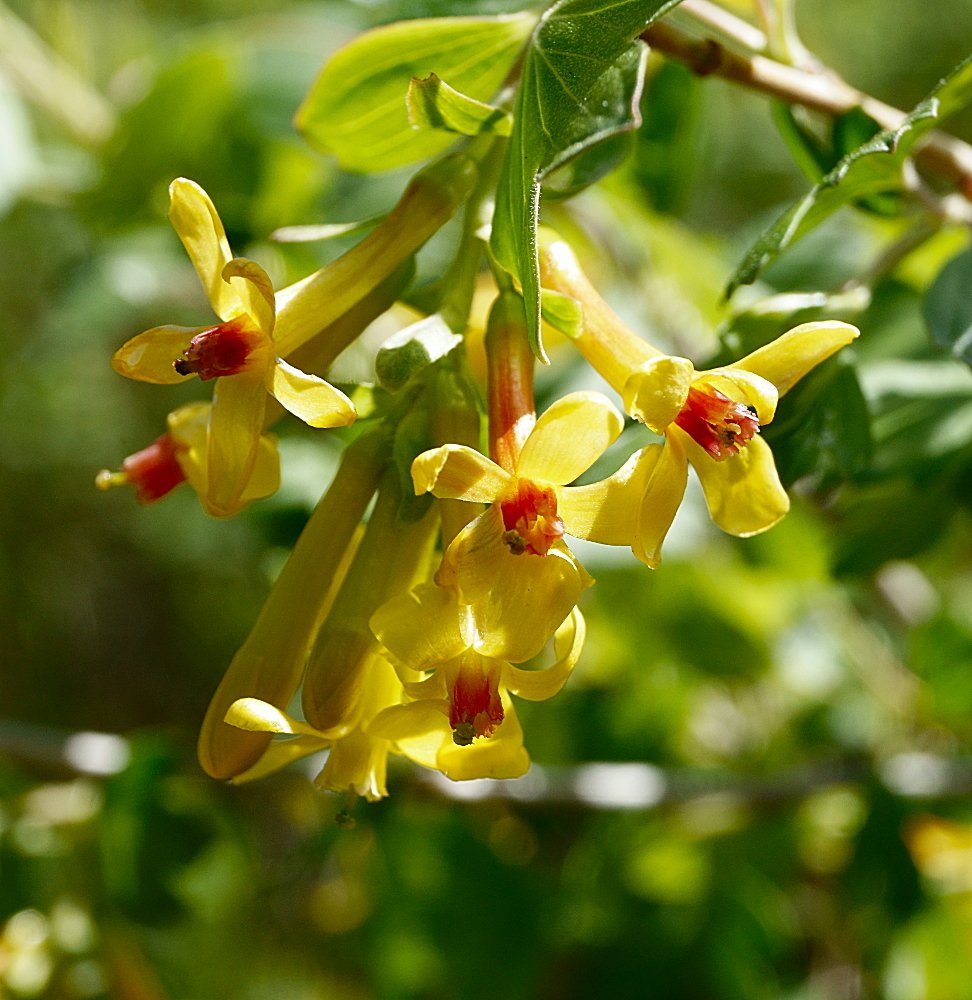
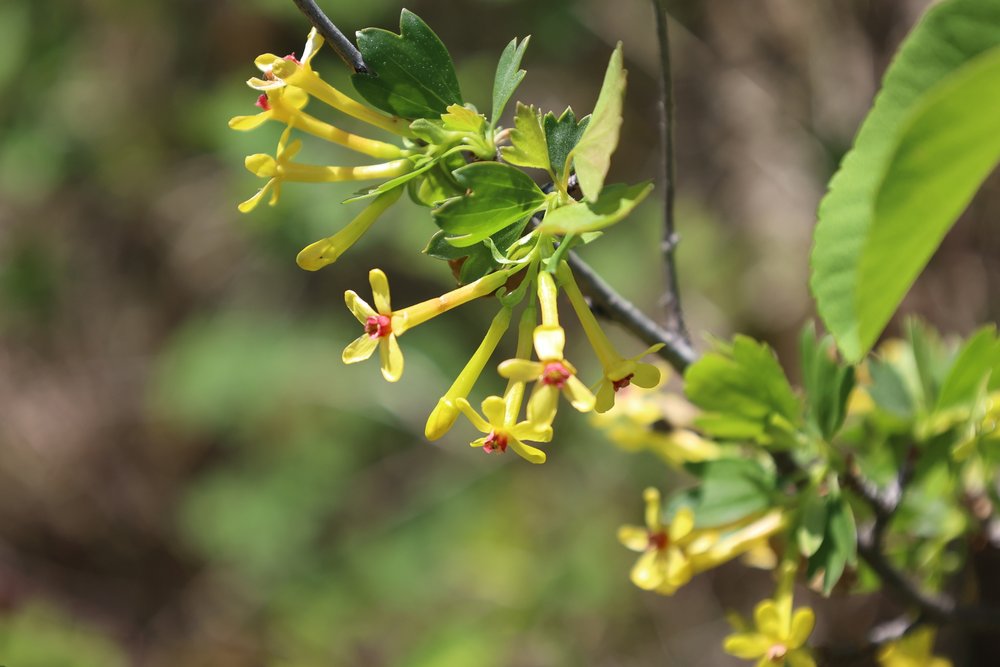
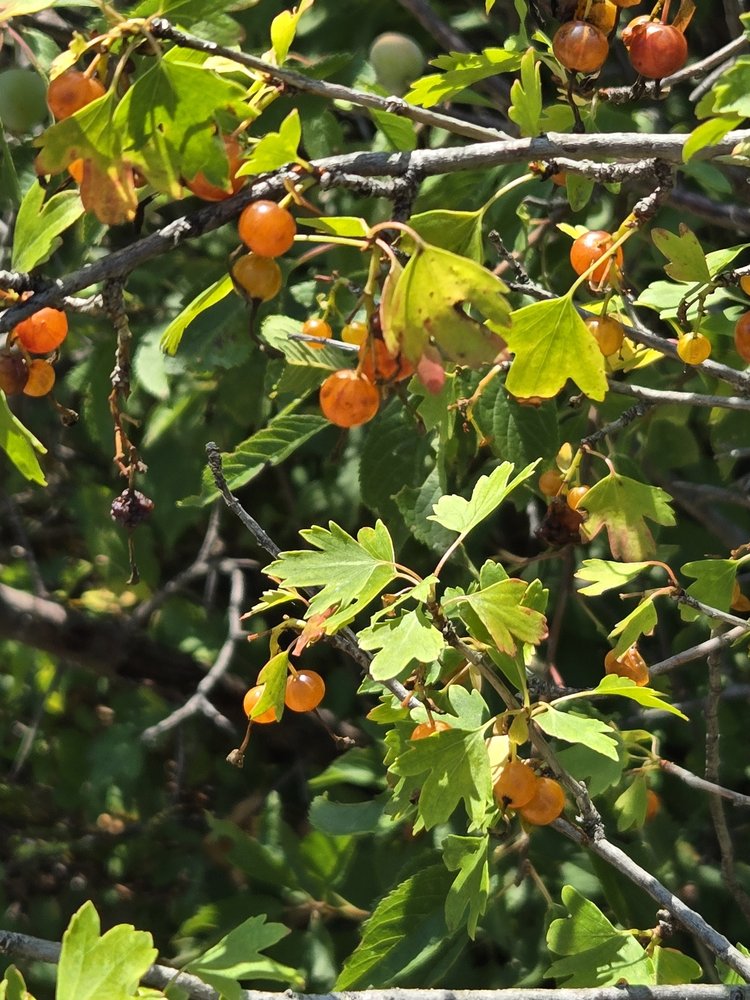
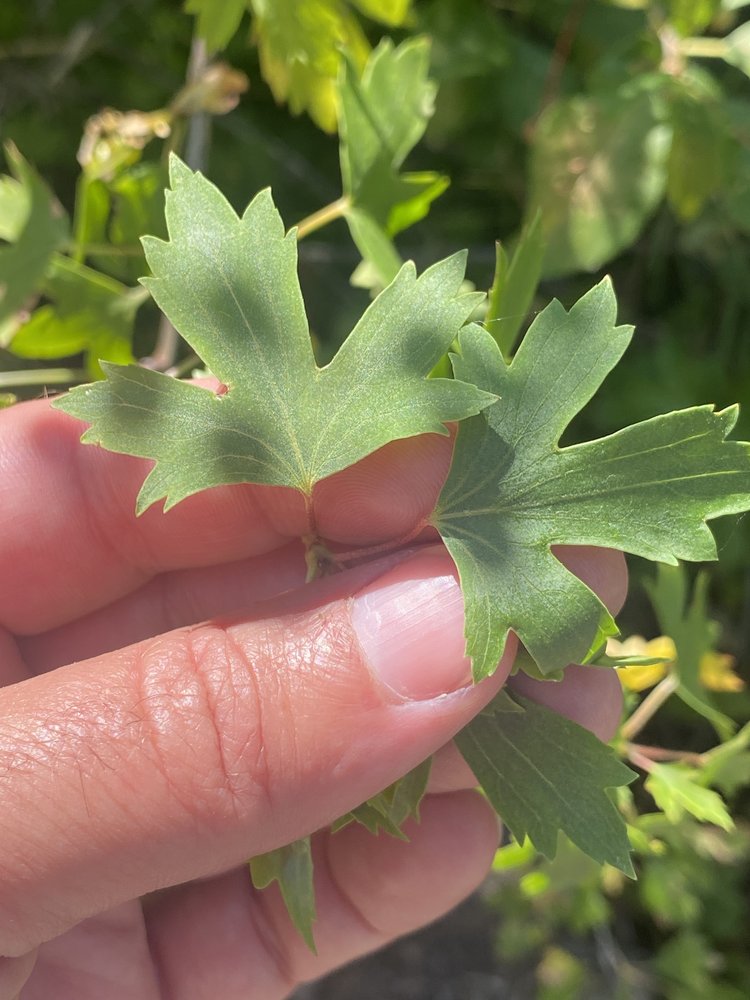
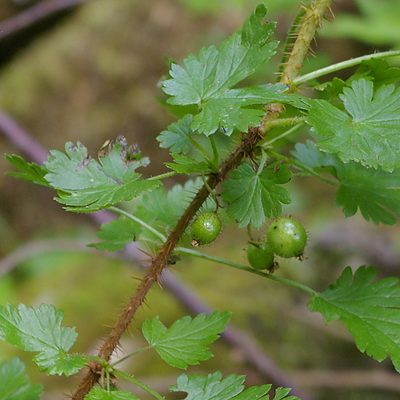
Look for a thornless, many-stemmed shrub 1–2 m (3–6 ft) tall with small, light green leaves cut into three rounded lobes, each with a few blunt teeth. In spring it carries drooping clusters of 5–15 bright yellow flowers, each a slender tube 1–2 cm (⅜–¾ in) long that flares into five lobes, with short inner petals that turn orange or red as the flower ages, and a spicy, clove-like scent. The berries are smooth and keep the shriveled flower on the tip. Northern Gooseberry has one to three sharp spines at each leaf node and small greenish-white to pinkish flowers, and Wax Currant has white to pale pink flowers and small, sticky, kidney-shaped leaves.
When does it bloom?
Late April through May, sometimes into early June.
Where does it grow?
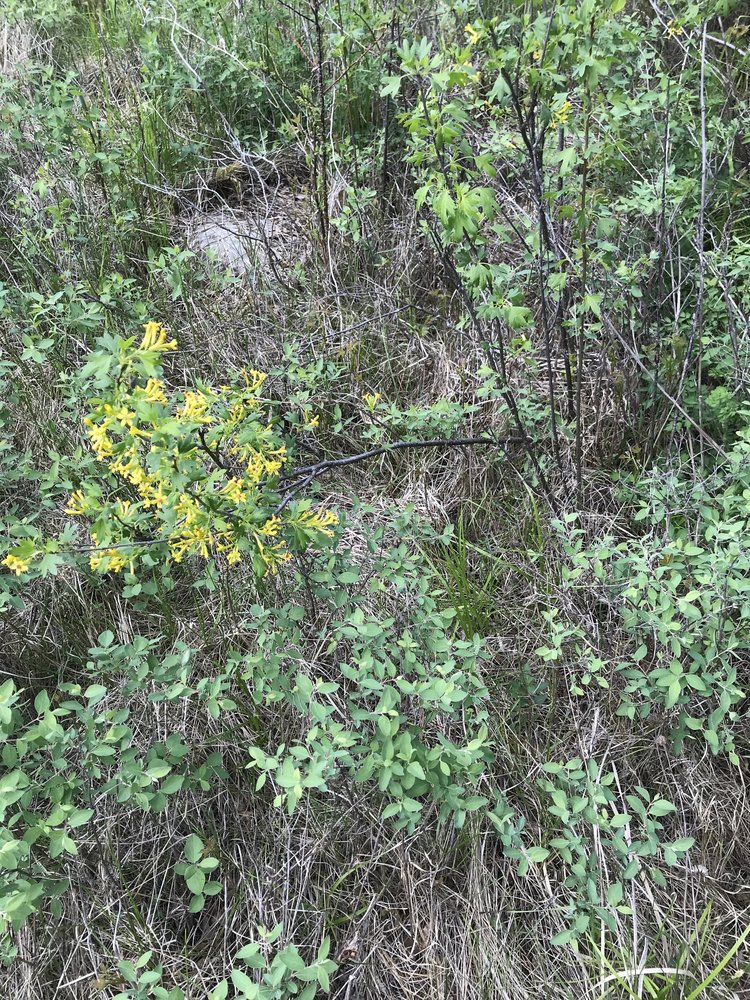
Wooded draws and ravines, creek banks, springs, canyon bottoms with boxelder, and shrubby openings in ponderosa pine and at the edge of grassland, mostly in the lower, warmer foothills at about 1,220–1,585 m (4,000–5,200 ft). The 1986 Jewel Cave plant survey lists it, it is on the Wind Cave and Devils Tower species lists, and about 30 herbarium specimens come from six Black Hills counties. It is also planted in yards and windbreaks, so plants in towns may be escapes.
Other plants to compare
Sources: USDA PLANTS Database: Ribes aureum (RIAU), golden currant; Nesom, G. USDA NRCS Plant Guide: Golden Currant, Ribes aureum Pursh var. villosum DC.; Wynia, R. 2011. USDA NRCS Plant Fact Sheet: Golden Currant (Ribes aureum). Manhattan Plant Materials Center; Marshall, K.A. 1995. Ribes aureum. USDA Forest Service Fire Effects Information System (FEIS); Flora of North America Vol. 8: Ribes aureum; Flora of North America: Ribes aureum var. aureum; Flora of North America: Ribes aureum var. villosum (Clove currant); Flora of North America: Ribes cereum (wax currant); Flora of North America: Ribes oxyacanthoides (northern gooseberry); Flora of North America: Ribes americanum (American black currant); Marriott, H. & Hartman, R. 1986. Vegetation of Jewel Cave National Monument; NPSpecies checklist: Wind Cave National Park, vascular plants; NPSpecies checklist: Jewel Cave National Monument, vascular plants; NPSpecies checklist: Devils Tower National Monument, vascular plants; NPSpecies checklist: Mount Rushmore National Memorial, vascular plants; Black Elk, L. & Flying By, W. 1998. Culturally Important Plants of the Lakota (entry 257); Gilmore, M.R. 1919. Uses of Plants by the Indians of the Missouri River Region (Internet Archive); Native American Ethnobotany Database (BRIT): Ribes aureum; University of Washington Plant Propagation Protocol: Ribes aureum; GBIF occurrence search: Ribes aureum preserved specimens, Black Hills area; iNaturalist: Ribes aureum observations within 80 km of the central Black Hills.