Southern Maidenhair Fern Adiantum capillus-veneris
Also called Venus's-hair Fern, Common Maidenhair
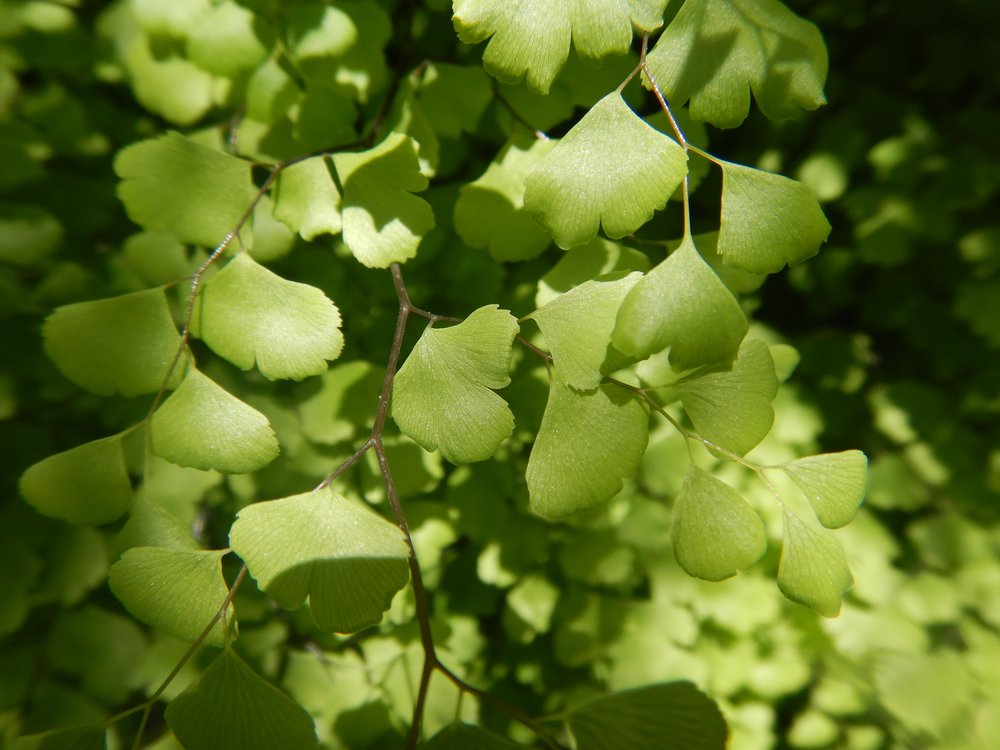
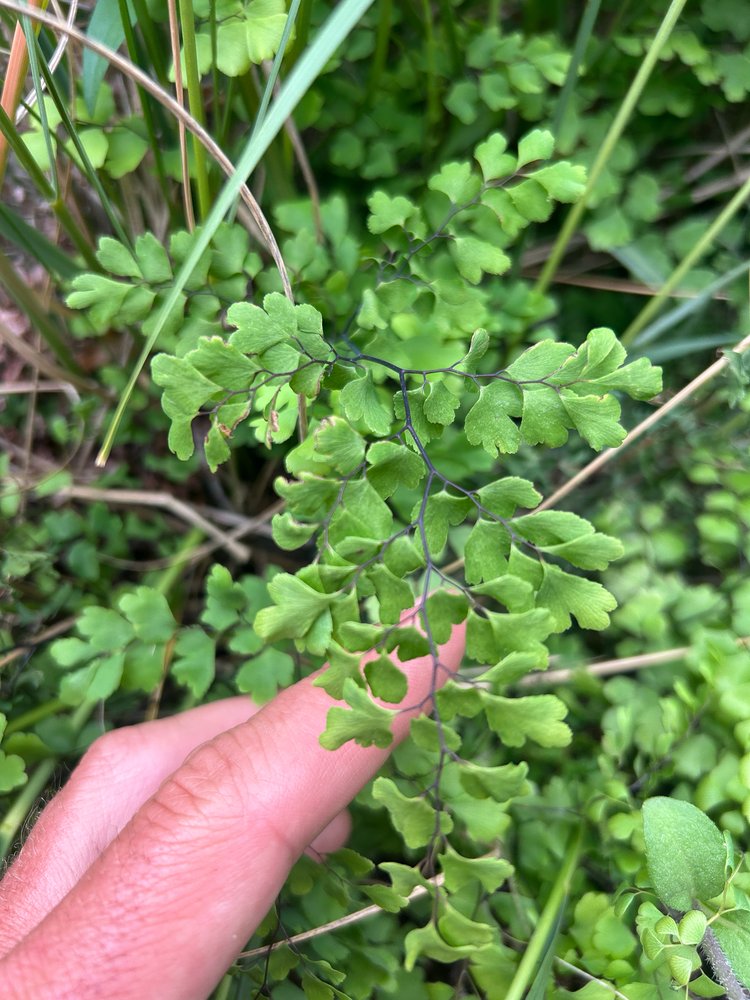
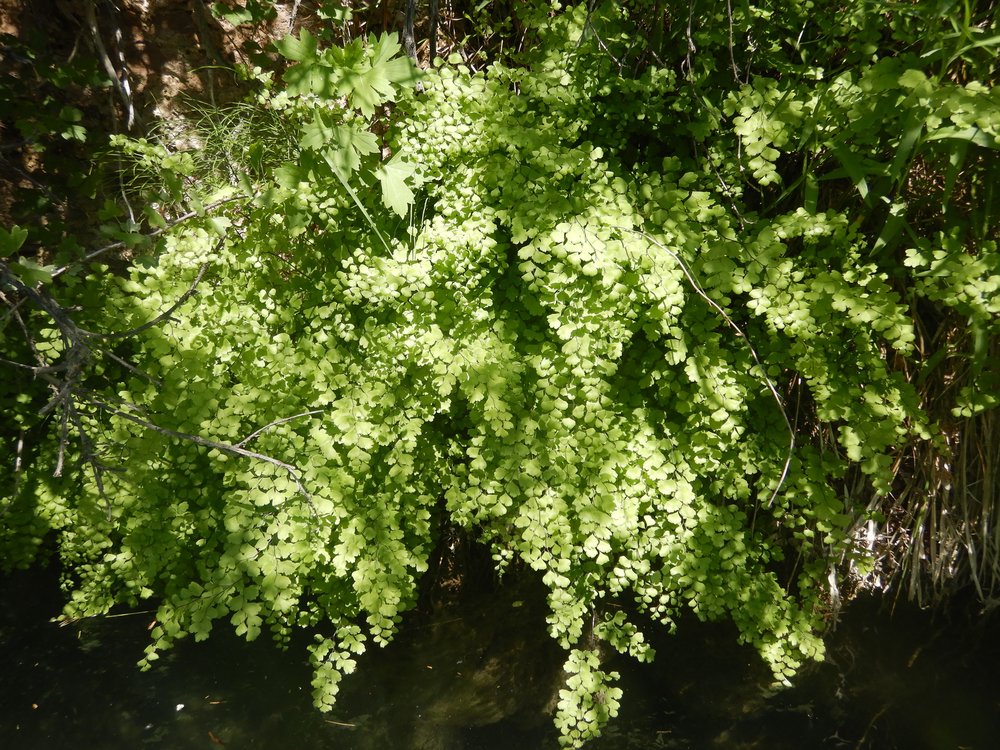
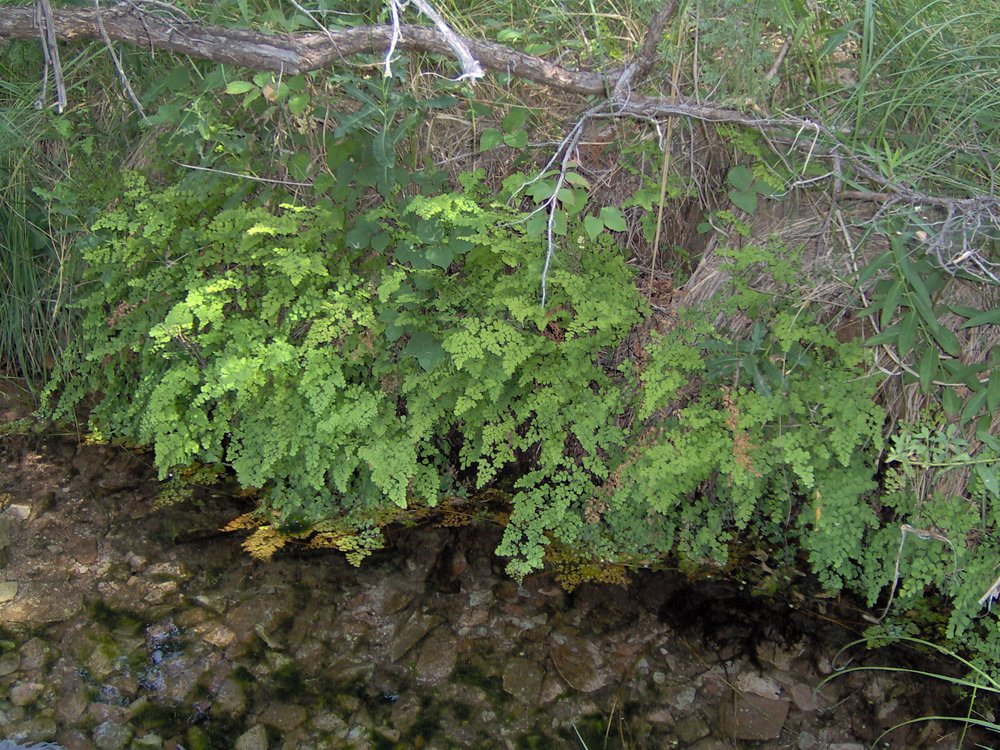
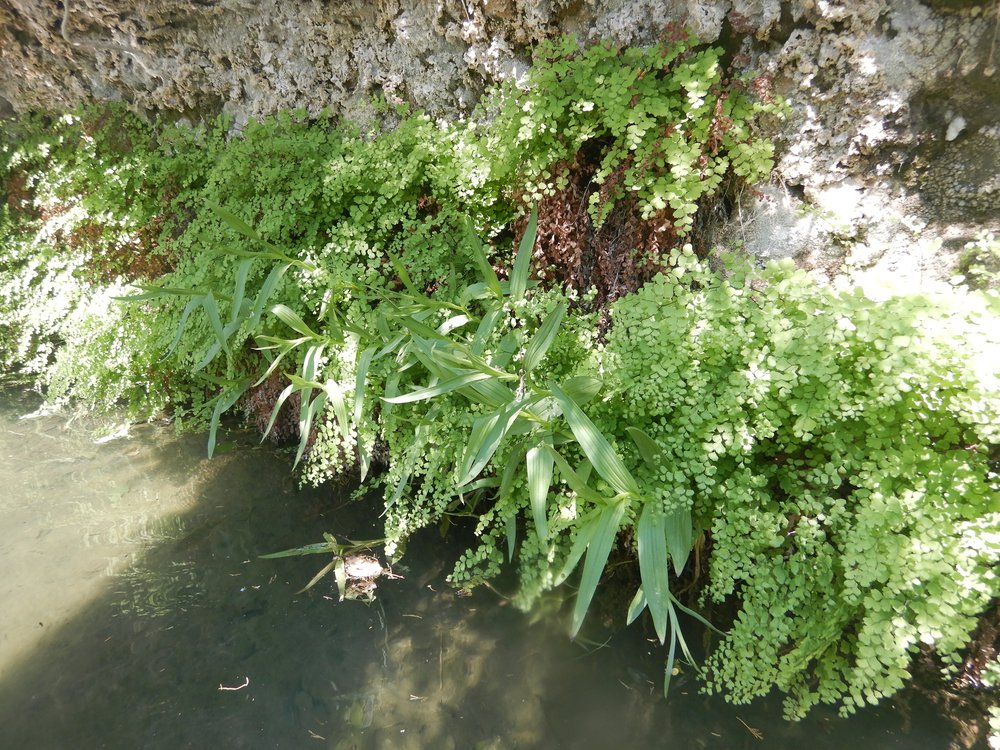
Southern Maidenhair Fern (Adiantum capillus-veneris) is a delicate native fern with fan-shaped leaflets on thin, shiny black stalks, growing in dense, drooping clumps on wet, lime-rich ground. It is a plant of the southern United States and warm regions around the world; in the Black Hills it grows only on warm, lime-rich seeps, where botanists have collected it since the 1890s.
Free photos from other sources
| Family | Pteridaceae · Maidenhair fern |
|---|---|
| Status | Native fern |
| Blooms | No flowers; spores ripen in July and August |
| Height | 15–75 cm (6–30 in) |
| Where | Warm, lime-rich seeps: wet limestone rock, stream banks and rocks standing in the water, in part shade to full sun |
| Also called | Venus's-hair Fern, Common Maidenhair |
| Traditional use | Wyman and Harris's 1951 account of the Kayenta Navajo says they used a wash of the plant on bumblebee and centipede stings. |
| Note | The Forest Service lists it as a species of local concern in the Black Hills, and South Dakota ranks it S1, critically imperiled. This page gives no locations. |
Roots, seeds & germination
Root: A short, creeping rhizome (an underground stem) that sends up closely spaced fronds. The rhizomes spread to form dense mats over wet rock and along banks, and clumps that break loose can lodge downstream and start new patches.
Seed: No seeds. Spores form in spore cases hidden under the folded-back edges of the leaflets and ripen in July and August. The tiny spores travel on the wind, which is thought to be how this fern of warm regions first reached the Black Hills.
Germination: A spore sprouts into a tiny, heart-shaped green plant that makes both eggs and sperm. The sperm need water to swim to the eggs, so the whole cycle depends on wet ground; the new fern then rises from the fertilized egg on that small plant.
How do you identify Southern Maidenhair Fern?
Look for lax, drooping fronds 15–75 cm (6–30 in) long on thin, hairless, shiny black stalks. The leaflets are fan- or wedge-shaped and about as long as wide, with lobed outer edges that are finely toothed on leaflets without spores, and the dark color of each little stalk runs right into the base of the leaflet. On a fertile frond the outer edge of a leaflet rolls back over the spore cases in small crescent-shaped or oblong flaps. Northern Maidenhair Fern (Adiantum pedatum), a close relative that does not grow with it in the Black Hills and that South Dakota ranks as historical (last collected in 1941), has a leaf stalk that forks into two main branches and leaflets at least twice as long as wide.
When does it bloom?
No flowers; spores ripen in July and August.
Where does it grow?
Warm, lime-rich seeps in the Black Hills: wet limestone and tufa (rock built up by lime-rich water), stream banks and benches, and rocks standing in the water, in part shade to full sun. Across its range it grows on moist, lime-rich cliffs, banks and ledges along streams and rivers, on the walls of lime sinks, around foundations and on mortar. At the northern edge of its range it depends on a steady flow of warm water to get through the winter.
Other ferns in this guide
Sources: Flora of North America Vol. 2: Adiantum capillus-veneris (C. A. Paris) — eFloras; Flora of North America Vol. 2: Adiantum, genus key — eFloras; Flora of North America Vol. 2: Adiantum pedatum — eFloras; Hornbeck, Reyher, Sieg and Crook 2003, Conservation Assessment for Southern Maidenhair Fern and Stream Orchid in the Black Hills — USDA Forest Service; Black Hills forest plan, Phase II Amendment Final EIS (2005), ch. 3-3.2 Flora, Species of Local Concern — USDA Forest Service; Black Hills Draft Forest Plan Assessment: At-Risk Species, 2023 — USDA Forest Service; Rare Plants of South Dakota, Natural Heritage Database species list — South Dakota Game, Fish and Parks; USDA PLANTS profile: Adiantum capillus-veneris (ADCA) — USDA NRCS; Native American Ethnobotany Database: Adiantum capillus-veneris — BRIT.