Bracken Fern Pteridium aquilinum
Also called Western Brackenfern, Western Bracken, Bracken, Brake Fern, Common Bracken
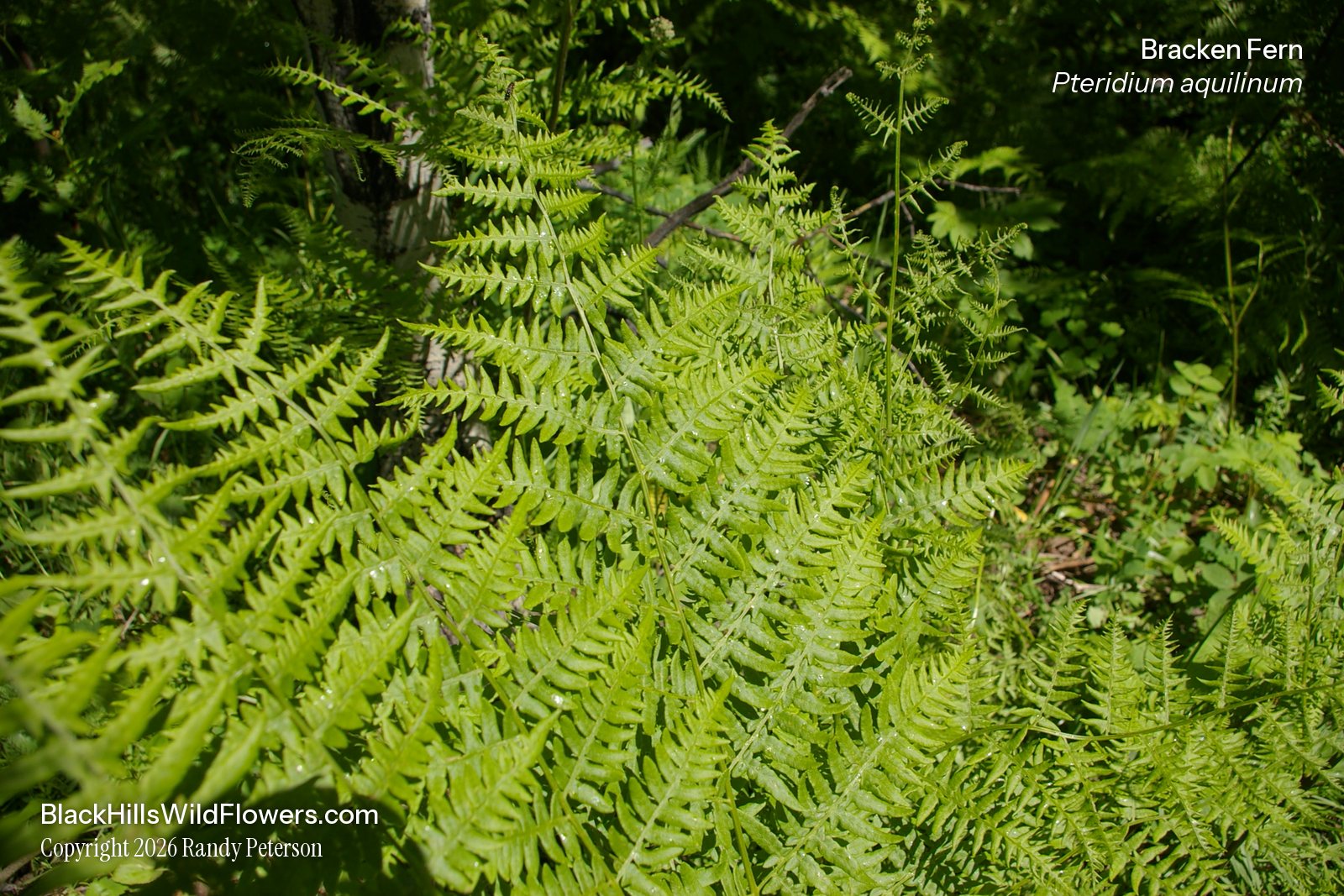
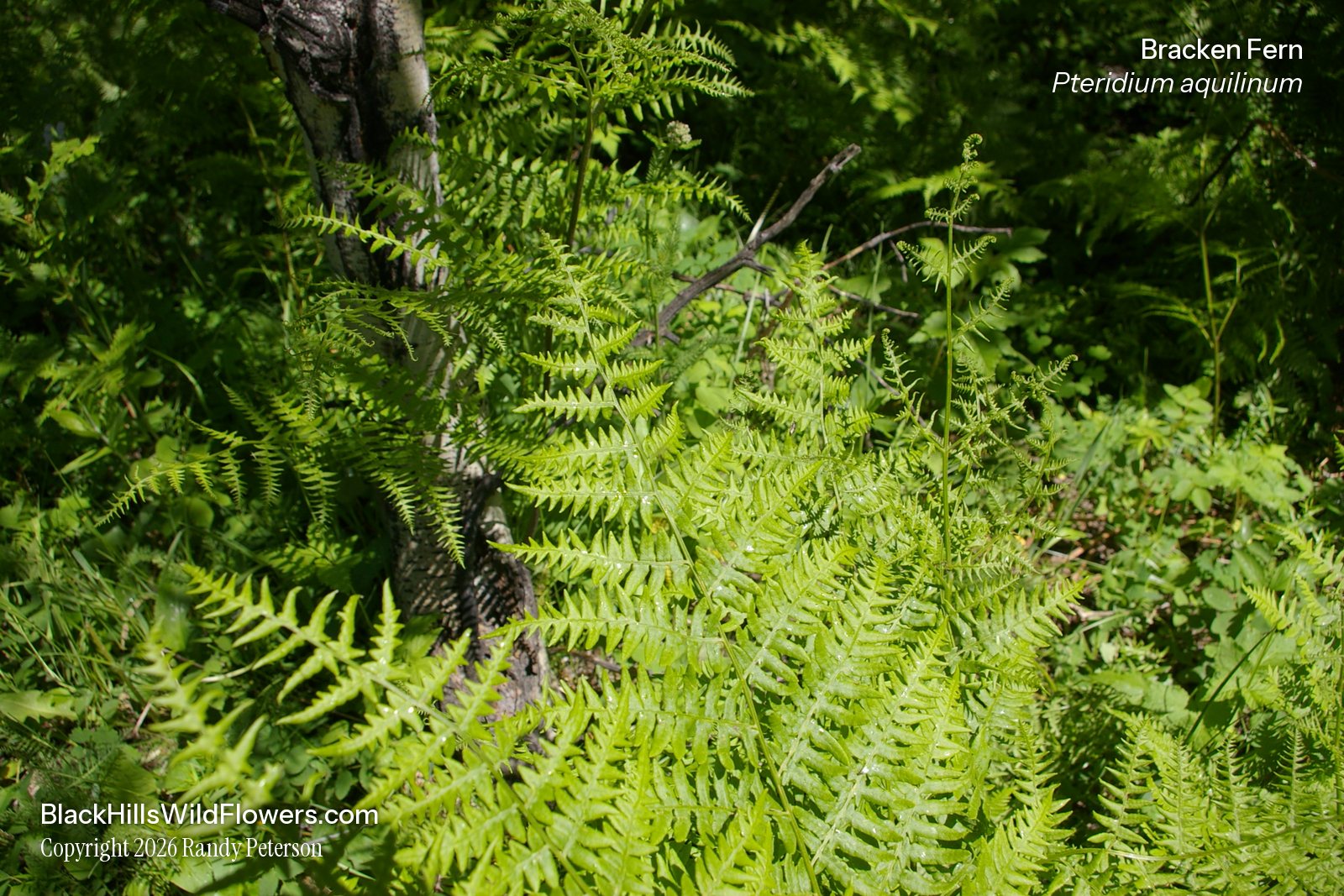
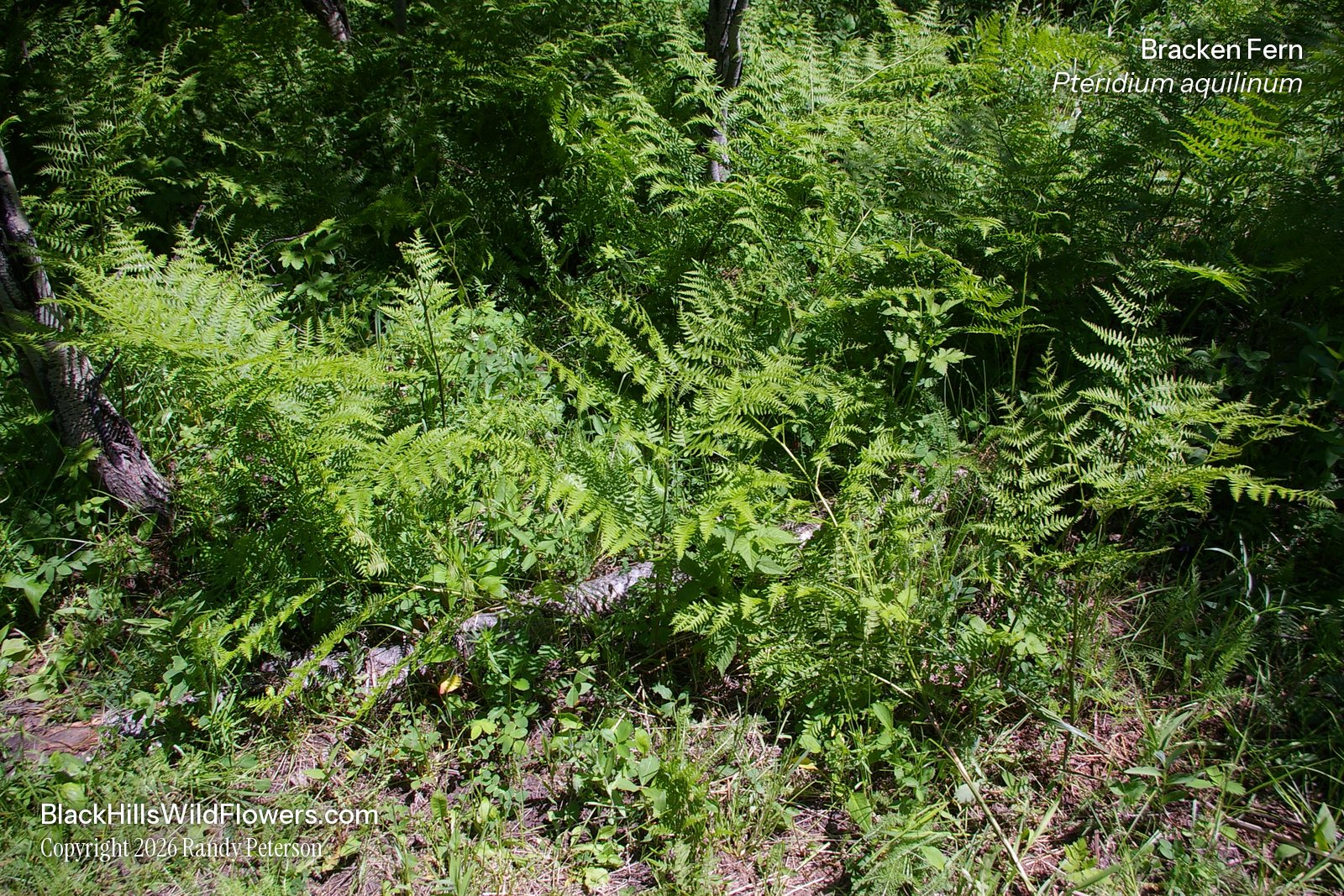
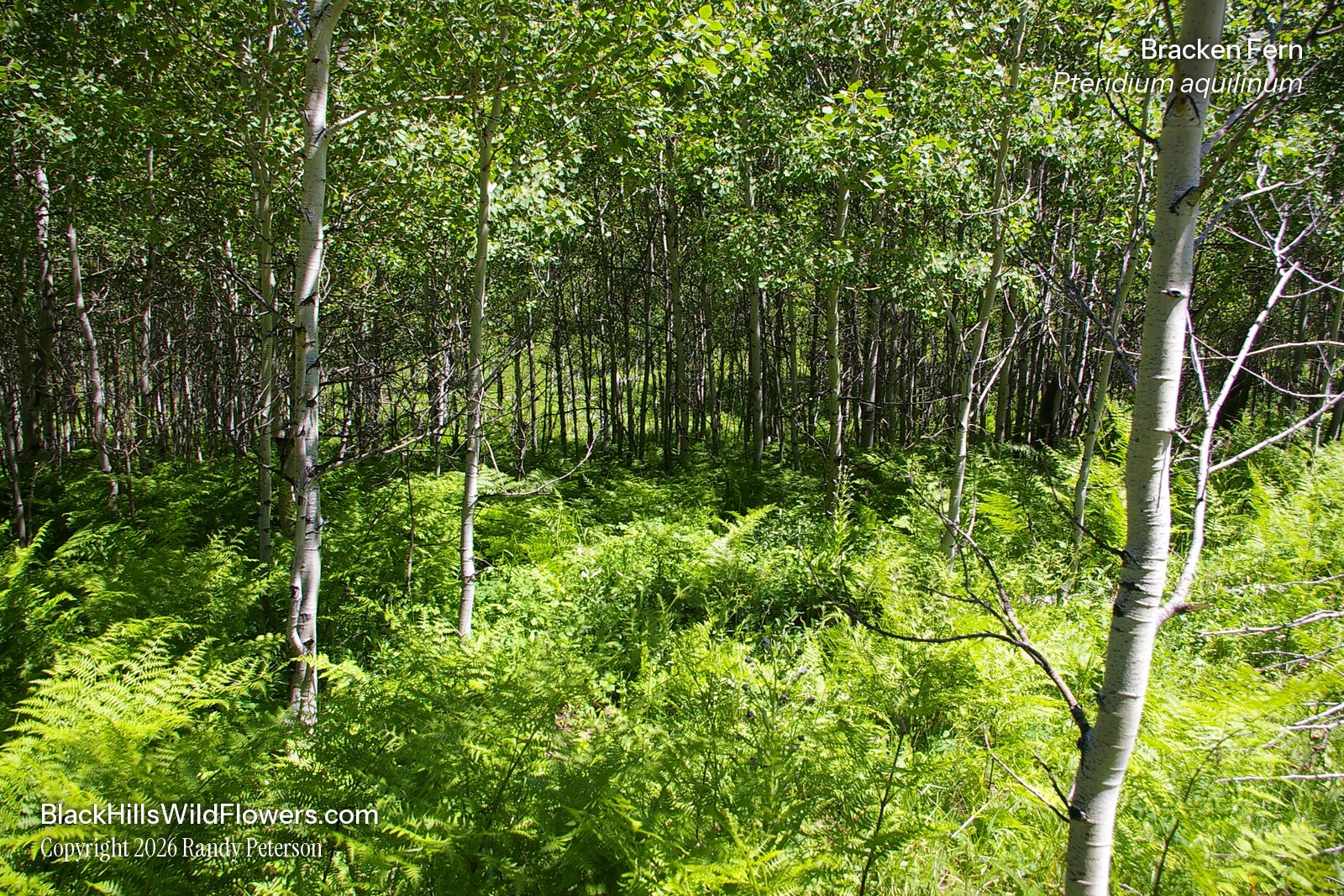
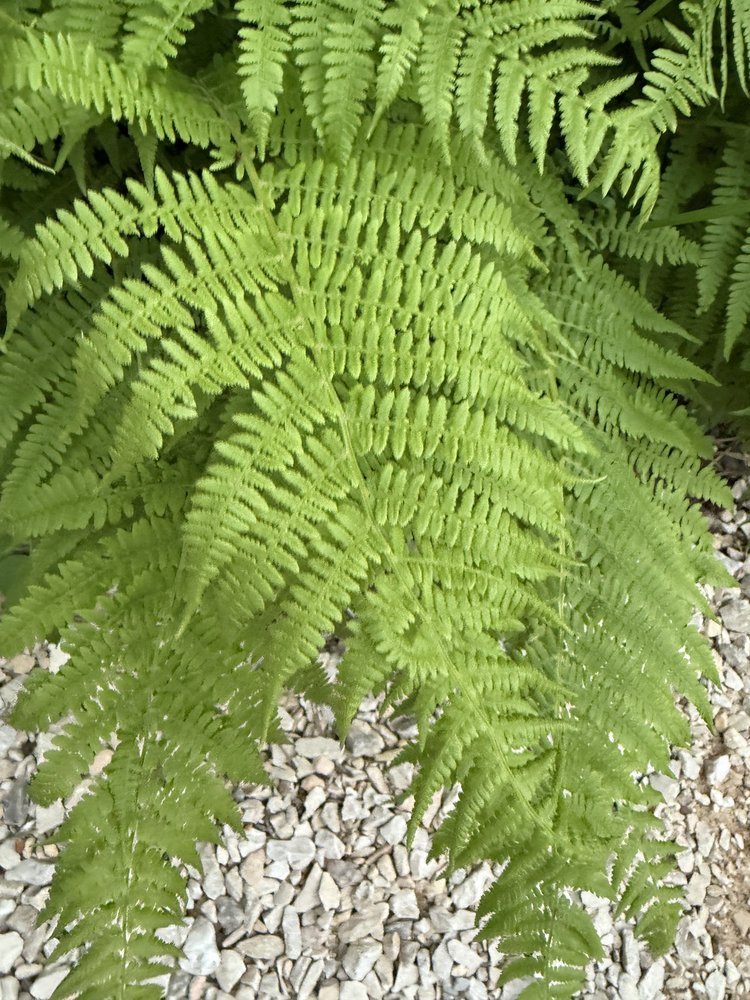
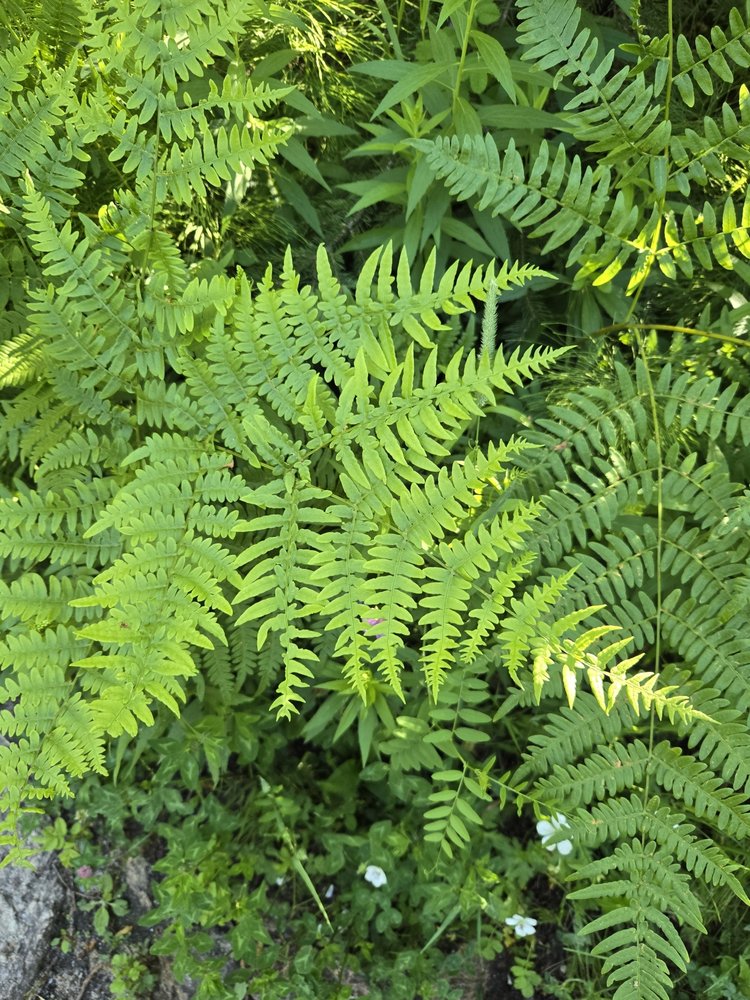
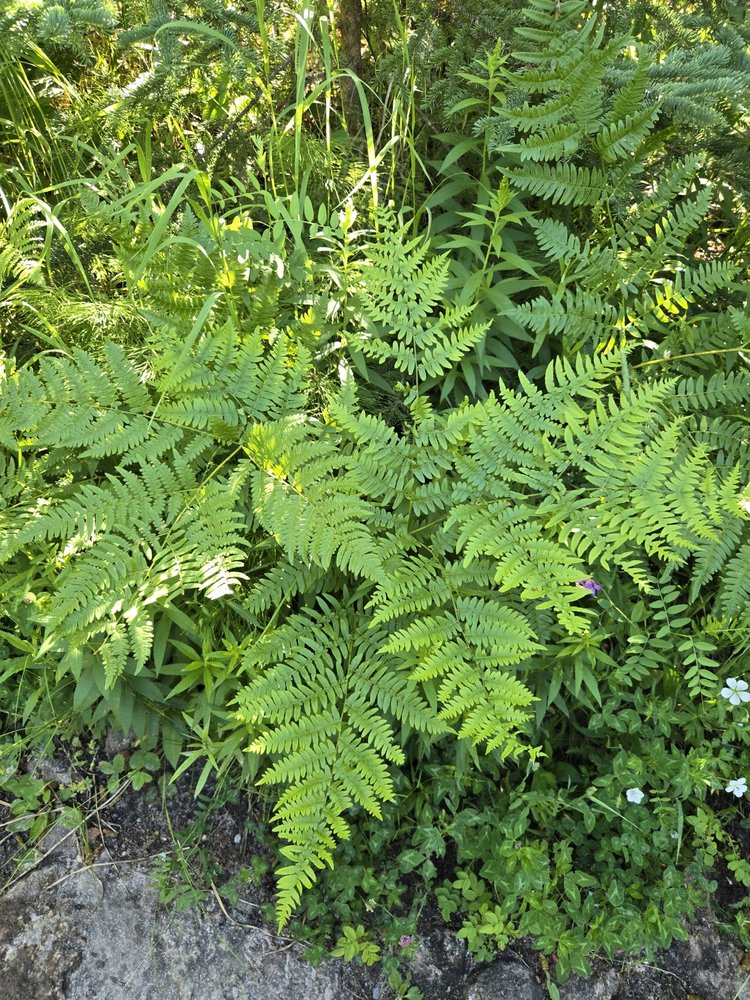
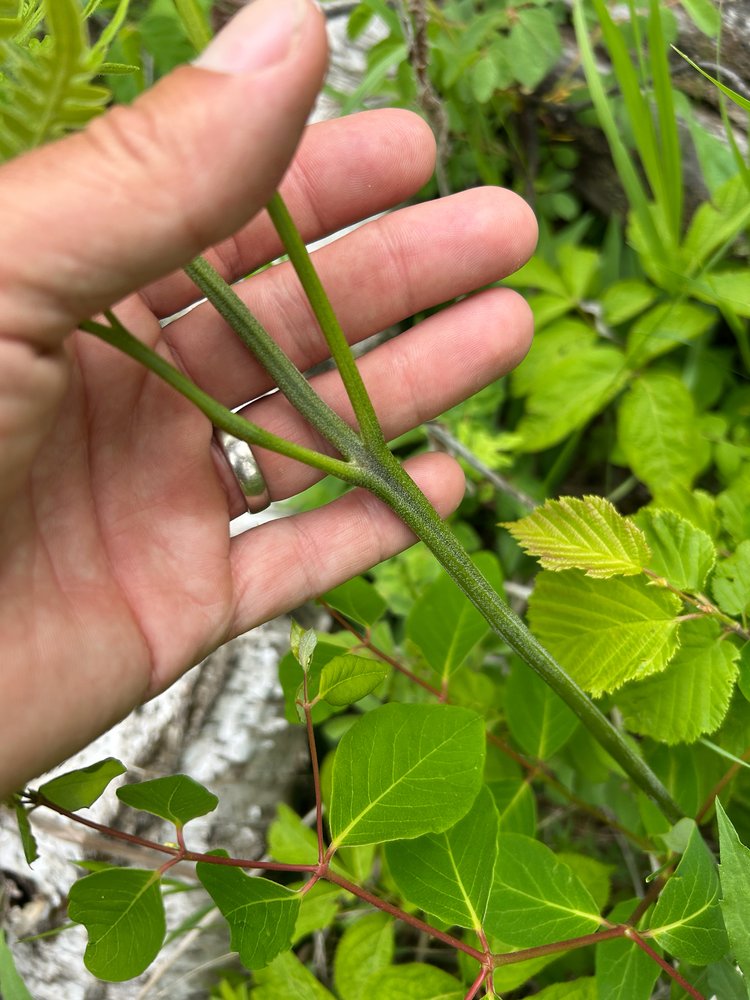
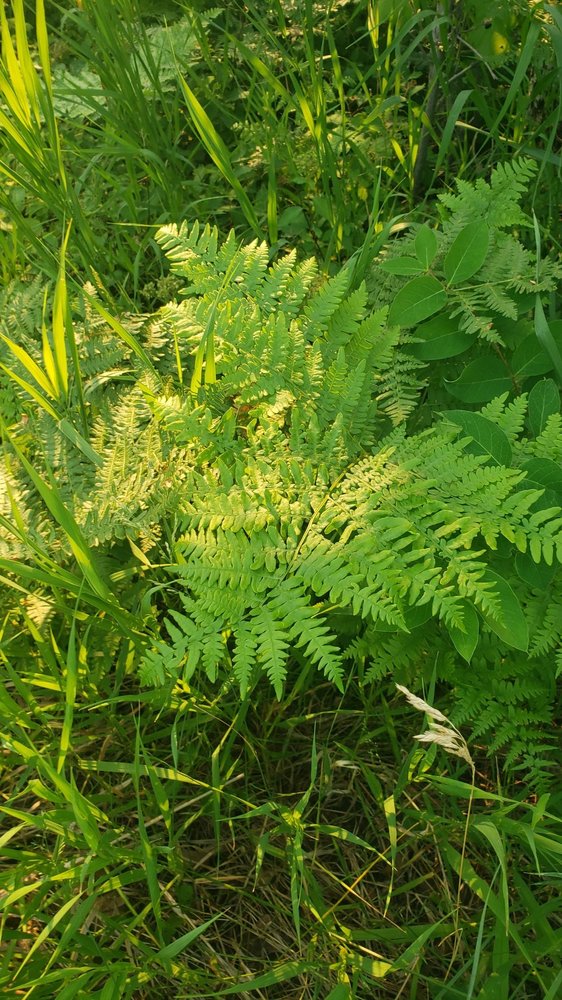
Bracken Fern (Pteridium aquilinum) is a big, coarse native fern whose broadly triangular fronds, divided two or three times and often held almost flat, rise singly from a deep, creeping rhizome and form colonies in aspen, birch and pine woods, openings and old burns. The fronds stand 30–130 cm (1–4 ft) tall, and the spores ripen in a band under the rolled-under edges of the lobes from July into September. In South Dakota it grows mainly in the Black Hills, where most herbarium records come from the northern Hills, and the National Park Service lists it at Mount Rushmore. Photographed in the Black Hills.
Free photos from other sources
| Family | Dennstaedtiaceae · Bracken fern |
|---|---|
| Status | Native perennial fern |
| Blooms | No flowers; fronds come up in spring, spores ripen under the rolled frond edges from July into September, and frost kills the fronds |
| Height | 30–130 cm (1–4 ft) |
| Where | Aspen, birch and ponderosa pine woods, woodland openings, draws, creek bottoms, old fields and burns, in part shade to sun |
| Also called | Western Brackenfern, Western Bracken, Bracken, Brake Fern, Common Bracken |
| Synonym | Pteris aquilina |
| Toxicity | Poisonous to livestock, with the greatest losses when it is fed in hay: horses develop a thiamine deficiency, and cattle and sheep suffer bone-marrow damage and bleeding that is often fatal. It contains thiaminase and the carcinogen ptaquiloside, and its toxins pass into cows' milk. |
| Traditional use | The BRIT ethnobotany database, citing Smith (1932), records that the Ojibwe took a root infusion for stomach cramps, burned dried leaves on coals for the smoke to ease headaches, and put the young fern tips in soup. |
Traditional use: first drafted by Google AI, then checked against the sources on this page.
Roots, seeds & germination
Root: A deep, creeping, branching rhizome (underground stem) up to 2.5 cm (1 in) thick, scaly and brown-black, that can run several meters. The main rhizome system usually lies 8–30 cm (3½–12 in) down, with short rhizomes within 4 cm (1½ in) of the surface and some as deep as 1 m (40 in), and thin, black, brittle roots reach more than 50 cm (20 in) deeper. The long rhizome shoots grow 25–90 cm (10–35 in) a year in most varieties and store food and water, while short side shoots near the surface send up the fronds. The buried rhizomes survive fire and sprout vigorously afterward, and a clone can be hundreds of years old.
Seed: None; spores instead. They form in a continuous band under the rolled-under edge of each lobe, protected by the rolled margin on one side and a thin flap on the other. A single fertile frond can make about 300 million dust-like spores a year. They ripen from the base of the frond upward, from July into September on the Great Plains, so they are shed over a long period; the plant makes fewer spores in shade and far more after a fire.
Germination: The spores have no dormancy and sprout best at 15–30 °C (59–86 °F), even in the dark, on moist, nutrient-poor ground with a pH of 5.5 to 7.5. In the wild they seem to need soil sterilized by fire, because on ordinary soil the tiny first stage, one cell thick, is soon overwhelmed by other plants, and young plants from spores are rarely found. Most spread is by the rhizomes, and any broken piece of rhizome can sprout. In cultivation, a young plant starts its rhizome once it has up to 10 fronds, and the rhizome can grow 2.2 m (7 ft) in its first year.
How do you identify Bracken Fern?
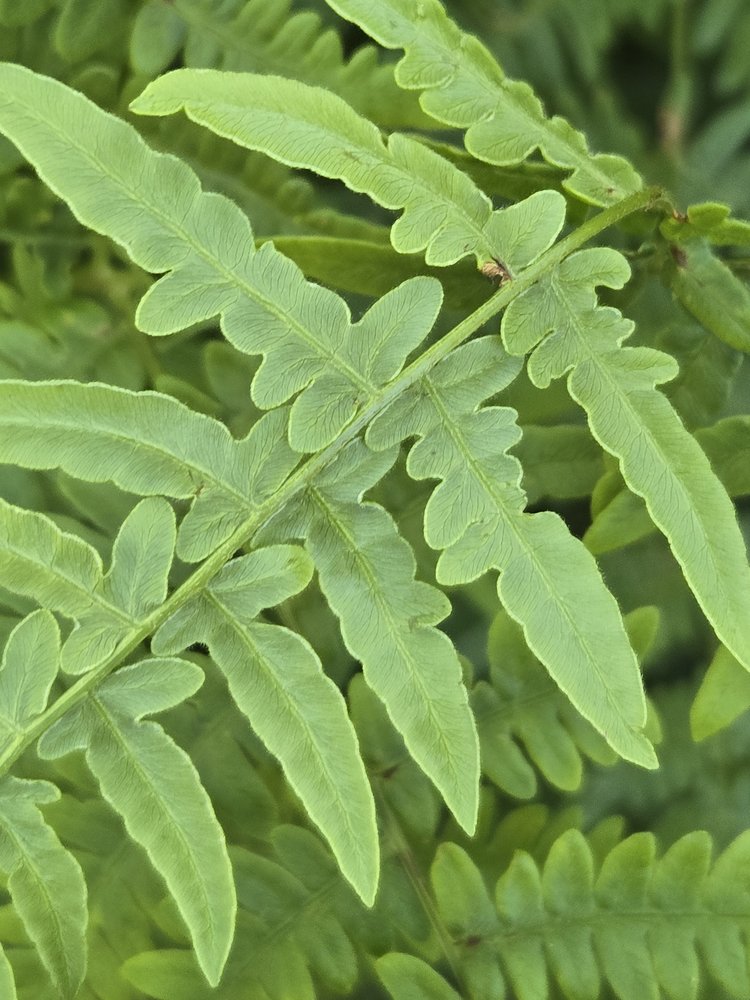
Start with the frond: broadly triangular, divided two or three times, papery to leathery, and often held nearly flat on a long stalk; the bottom pair of leaflets can be nearly as large as the rest of the frond, so it may look three-parted. The fronds come up one at a time from the buried rhizome rather than in a clump, so a patch is a colony of single fronds. The stalk is grooved, green or reddish at first and dark brown by late season, and often as long as the blade or longer. The underside of the blade is usually hairy, densely so in the western variety (var. pubescens), and the top is smooth. The lobes are oblong with their edges rolled under, and in summer a dark band of spore cases runs along the rolled edge of fertile lobes. The fronds are the first plant killed by frost, and the dead fronds make a highly flammable mat; the buried rhizomes survive fire and sprout again. Oak ferns also hold triangular fronds flat, but they stand under 40 cm (16 in) tall and carry round spore clusters at the vein tips rather than a band along the edge.
When does it bloom?
No flowers; fronds come up in spring, spores ripen under the rolled frond edges from July into September, and frost kills the fronds.
Where does it grow?
Aspen, birch and ponderosa pine woods, spruce and aspen draws, creek bottoms, woodland openings, old fields, thickets and burned ground, in part shade to sun, from about 1,310 to 2,130 m (4,300 to 7,000 ft) on herbarium labels. In South Dakota it is mainly a Black Hills plant. Of 74 herbarium specimens from Black Hills counties, 1892 to 2014, 56 come from Lawrence County in the northern Hills, a few from Pennington and Custer counties, and 11 from Crook County, Wyoming, including the Bear Lodge Mountains. One 1960 collection came from a burned ponderosa pine forest. The National Park Service lists it at Mount Rushmore.
Other ferns in this guide
Sources: Flora of North America vol. 2: Pteridium aquilinum, with key to the varieties, eFloras; Flora of North America vol. 2: Pteridium aquilinum var. pubescens, eFloras; USDA Forest Service Fire Effects Information System: Pteridium aquilinum (Crane 1990); SDSU Open PRAIRIE: Dennstaedtiaceae: Pteridium aquilinum (R. Neil Reese), entry 459; USDA PLANTS profile: Pteridium aquilinum (L.) Kuhn, PTAQ; Minnesota Wildflowers: Pteridium aquilinum (Bracken); NPSpecies checklist, Mount Rushmore National Memorial vascular plants; GBIF occurrence search: Pteridium aquilinum, South Dakota herbarium specimens; GBIF occurrence search: Pteridium aquilinum, Wyoming herbarium specimens; BRIT Native American Ethnobotany Database: Pteridium aquilinum.