Broadleaf Cattail Typha latifolia
Also called Common Cattail, Cattail, Soft-flag, Broad-leaved Cat-tail, Reed Mace, wihúta hú (Lakota), hiŋtkáŋ (Lakota)
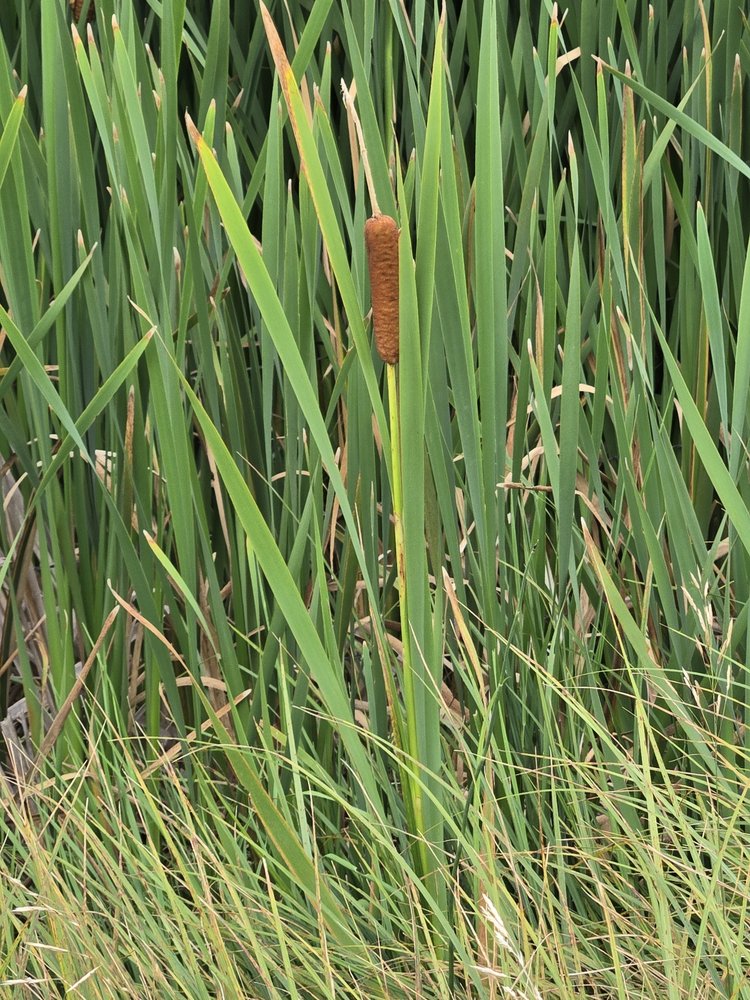
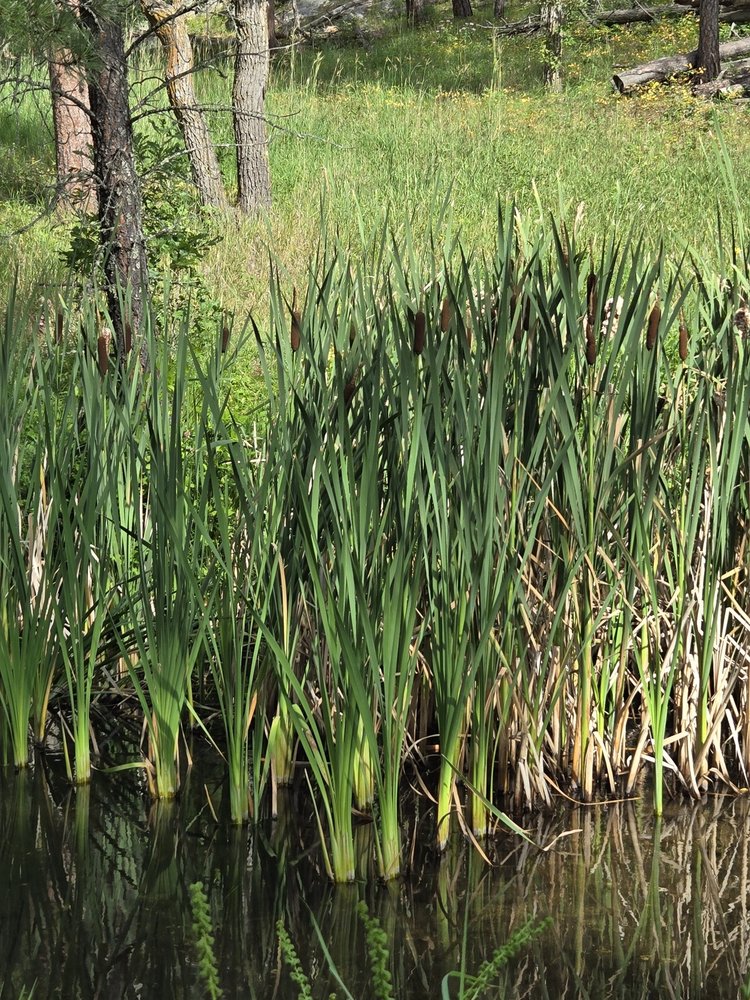
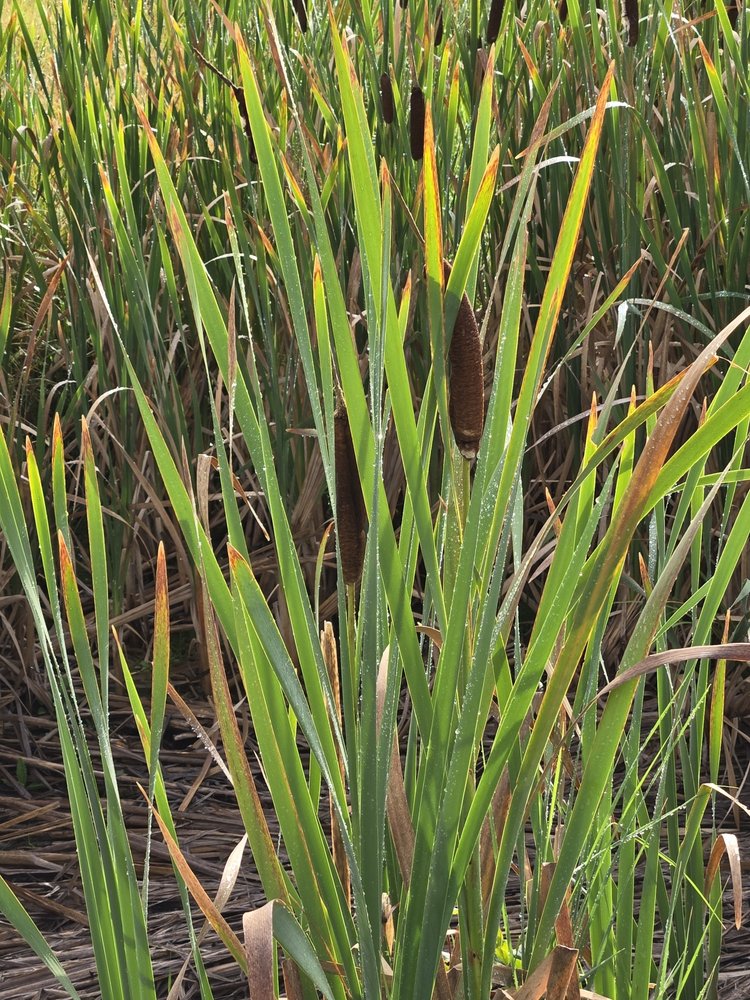
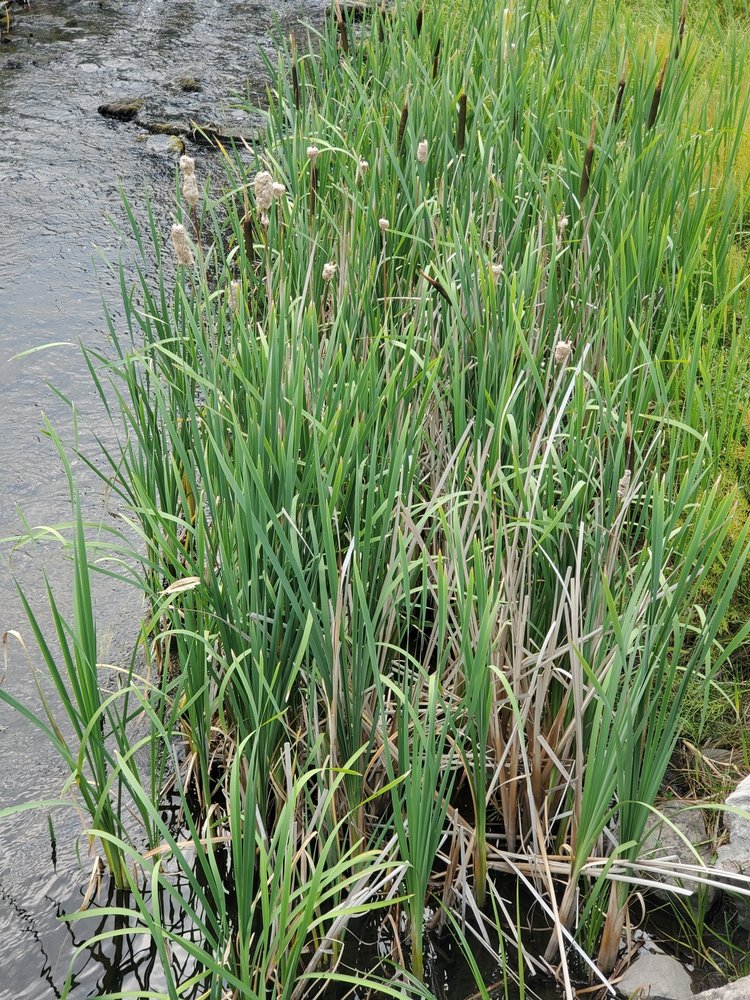
Broadleaf Cattail (Typha latifolia) is a native cattail of ponds, marshes and creek edges, a stout plant 1.5–3 m (5–10 ft) tall with flat, blue-green, strap-like leaves and a stiff stalk topped in June and July by a velvety flower spike, its yellow male part sitting directly on top of the green female part. The female part ripens into the familiar brown spike that stands into winter and then bursts into wind-borne fluff. In the Black Hills the National Park Service lists it at Jewel Cave, Mount Rushmore and Devils Tower, and the 1986 plant survey of Jewel Cave records it.
Free photos from other sources
| Family | Typhaceae · Cattail |
|---|---|
| Status | Native perennial |
| Blooms | June and July; the brown female spike stands into winter |
| Height | 1.5–3 m (5–10 ft) |
| Where | Shallow water and wet soil: pond and lake margins, marshes, creek edges, springs and wet ditches |
| Also called | Common Cattail, Cattail, Soft-flag, Broad-leaved Cat-tail, Reed Mace, wihúta hú (Lakota), hiŋtkáŋ (Lakota) |
| Food use | The USDA plant guide says all parts of the cattail are edible at the right stage of growth, including the young shoots, the base of the stem, the flower stalks, the pollen and the starchy rhizomes. |
| Traditional use | Black Elk and Flying By (1998) record that the Lakota lined babies' diapers and cradleboards with the soft down of the seed head, applied the down as a poultice to burns and, mixed with fat, to smallpox sores, and added the pollen of the male spike to flour; the young shoots and rhizomes were eaten. The BRIT ethnobotany database, citing Gilmore (1919), records that the Dakota, Omaha, Pawnee, Ponca and Winnebago made dressings for burns and scalds from the down and used it on infants to prevent chafing. Citing Hart (1981), it adds that the Northern Cheyenne once made baskets from the leaves. |
Traditional use: first drafted by Google AI, then checked against the sources on this page.
Roots, seeds & germination
Root: Tough, stout rhizomes (underground stems) that run horizontally just below the surface, up to 70 cm (28 in) long and 0.5–3 cm (¼–1¼ in) thick, with shallow fibrous roots; some are thin and feathery near the surface, and thicker ones were found 7.5–20 cm (3–8 in) down in two studies. A plant grown from seed made a clone 3 m (10 ft) across in one season, and one colony covered 54 m² (580 sq ft) with 480 m (1,600 ft) of rhizome after two seasons.
Seed: The female half of the spike ripens hundreds of thousands of tiny single-seeded fruits, each up to 1.5 mm long with long hairs at the base; one study averaged 222,000 seeds per spike. The spike usually stands through winter and bursts in spring, when the drying hairs spread and push the fruits out into the wind; they also float, and mud carries them on animals and people. A seed weighs about 0.05 mg and in a 10 km/h breeze travels an estimated 47 m (154 ft). The female flowers ripen before the male ones on the same spike, so cross-pollination is possible.
Germination: Seeds need light and warm temperatures and sprout on bare wet soil or under very shallow water; flooded soil raises seedling losses, and seedlings rarely appear inside an established stand. Seeds collected for three years from one Colorado population at 2,600 m failed to germinate at all. Most spread is by rhizomes: a seedling forms a clone in its first season and flowers in its second, and each shoot usually lives about a year and dies after flowering.
How do you identify Broadleaf Cattail?
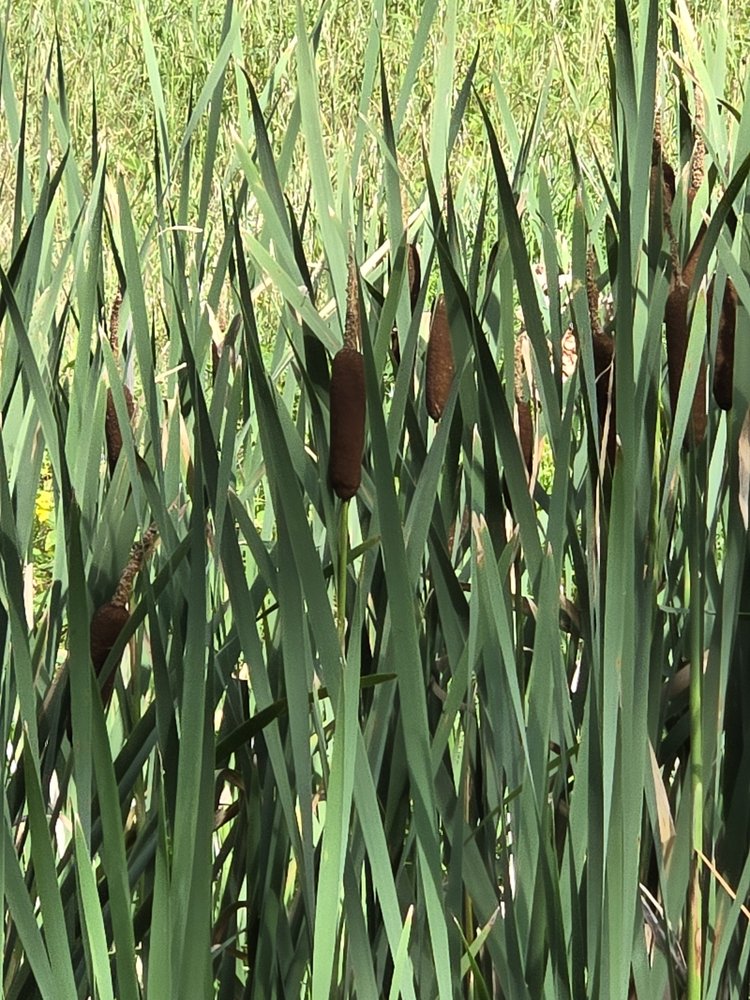
Start with the spike: a dense, velvety cylinder 1.8–5 cm (¾–2 in) thick at the top of a stiff round stalk, about six times as long as thick, with the narrower male half sitting right on top of the slightly wider female half. Usually there is no gap between them; a gap is rare, mostly under 1.5 cm, though up to 4 cm has been reported. The female part is pale green in flower, then reddish brown to blackish brown, 24–36 mm (1–1½ in) thick in fruit and often mottled with whitish hair tips, while the male part sheds its pollen and withers away, leaving a bare tip above it. The leaves are flat and strap-like, usually blue-green when fresh, the widest 10–23 mm (½–1 in) across, and the upper leaves reach about as high as the spike. Shoots stand 1.5–3 m (5–10 ft) tall, unbranched, in colonies from the rhizomes. Narrowleaf cattail, which the National Park Service lists at Wind Cave and Devils Tower, has leaves 4–12 mm wide that are not blue-green, a male spike separated from the female by 1–8 cm (½–3 in) of bare stalk, and a thinner female spike 13–22 mm thick in fruit; it often grows in somewhat brackish water and has spread into roadside ditches and other disturbed places. The hybrid of the two, Typha × glauca, can be intermediate or lean toward either parent, with or without a gap; it is highly sterile but spreads by rhizomes into very large, dense stands, where broadleaf cattail usually forms small or loose colonies.
When does it bloom?
June and July; the brown female spike stands into winter.
Where does it grow?
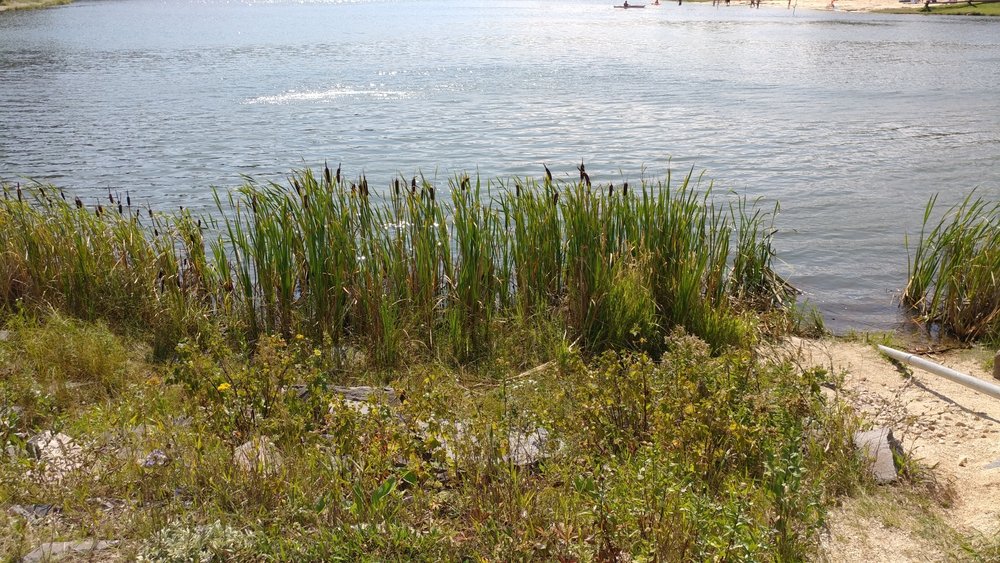
Shallow fresh water and wet soil: pond and lake margins, marshes, swamps, creek edges, springs and wet ditches; the highest labeled specimen is from 1,830 m (6,000 ft). Herbarium specimens from 1910 to 2010 come from Lawrence, Pennington, Custer and Fall River counties in South Dakota, including Custer State Park, and from Crook and Weston counties in Wyoming. The 1986 Jewel Cave survey lists it, and the National Park Service lists it at Jewel Cave, Mount Rushmore and Devils Tower. Across its range it grows in fresh to slightly brackish water or wet soil from sea level to 2,300 m, in marshes, wet meadows and fens.
Sources: Flora of North America vol. 22: Typha latifolia (S. G. Smith), eFloras; Flora of North America vol. 22: Typha angustifolia (S. G. Smith), eFloras; Flora of North America vol. 22: genus Typha, with key and hybrids (S. G. Smith), eFloras; USDA Forest Service Fire Effects Information System: Typha latifolia (Gucker 2008); USDA NRCS Plant Guide: Broad-leaved Cattail, Typha latifolia (Stevens and Hoag 2000); USDA PLANTS profile: Typha latifolia L., TYLA; Minnesota Wildflowers: Typha latifolia (Broad-leaf Cat-tail); Culturally Important Plants of the Lakota (Black Elk and Flying By 1998), filed with the South Dakota PUC, entry 314 Typha latifolia; Marriott and Hartman 1986, A Survey of the Vegetation of Jewel Cave National Monument; NPSpecies checklist, Jewel Cave National Monument vascular plants; NPSpecies checklist, Mount Rushmore National Memorial vascular plants; NPSpecies checklist, Devils Tower National Monument vascular plants; NPSpecies checklist, Wind Cave National Park vascular plants (narrowleaf cattail only); GBIF occurrence search: Typha latifolia, South Dakota herbarium specimens; GBIF occurrence search: Typha latifolia, Wyoming herbarium specimens; Gilmore 1919, Uses of Plants by the Indians of the Missouri River Region; BRIT Native American Ethnobotany Database: Typha latifolia; USDA NRCS Plant Guide: Broad-leaved Cattail (Typha latifolia).