Southwestern Showy Sedge Carex bella
Also called Elegant Sedge
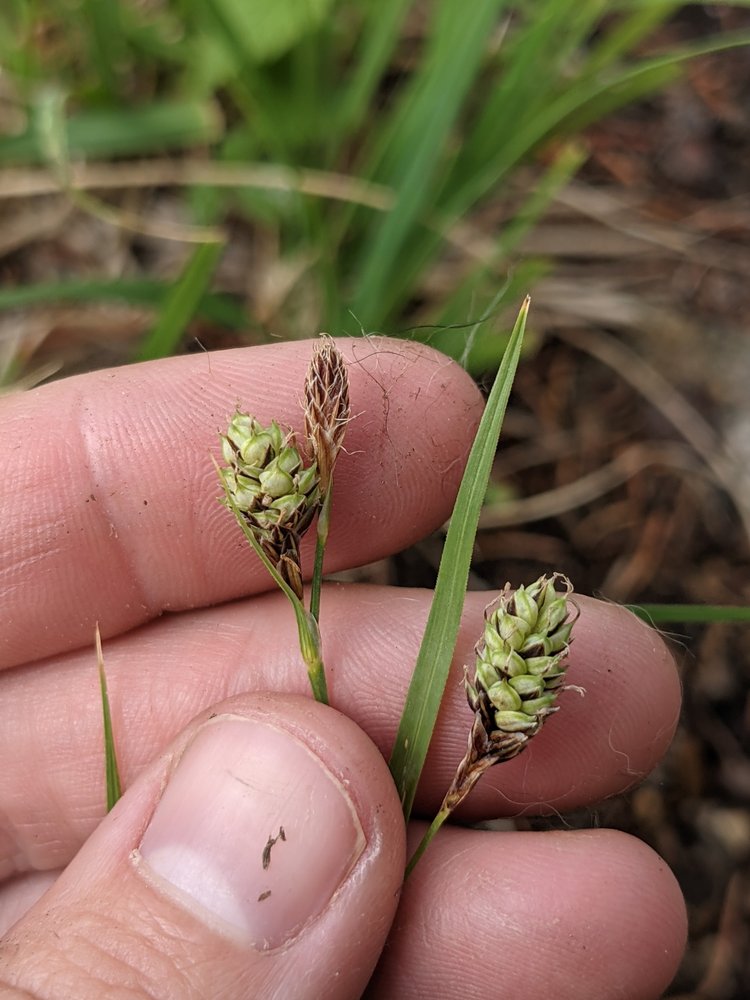
Southwestern Showy Sedge (Carex bella) is a clump-forming native sedge whose three or four spikes hang from thin stalks, each a mix of dark brown scales and pale green fruit sacs. It flowers in July and August in the Black Hills. A plant of high mountain meadows in the Southwest and the Rockies, it grows here in a few cool, moist, shaded pockets of spruce forest at some of the highest elevations in the Black Hills, several hundred miles from the nearest other stands.
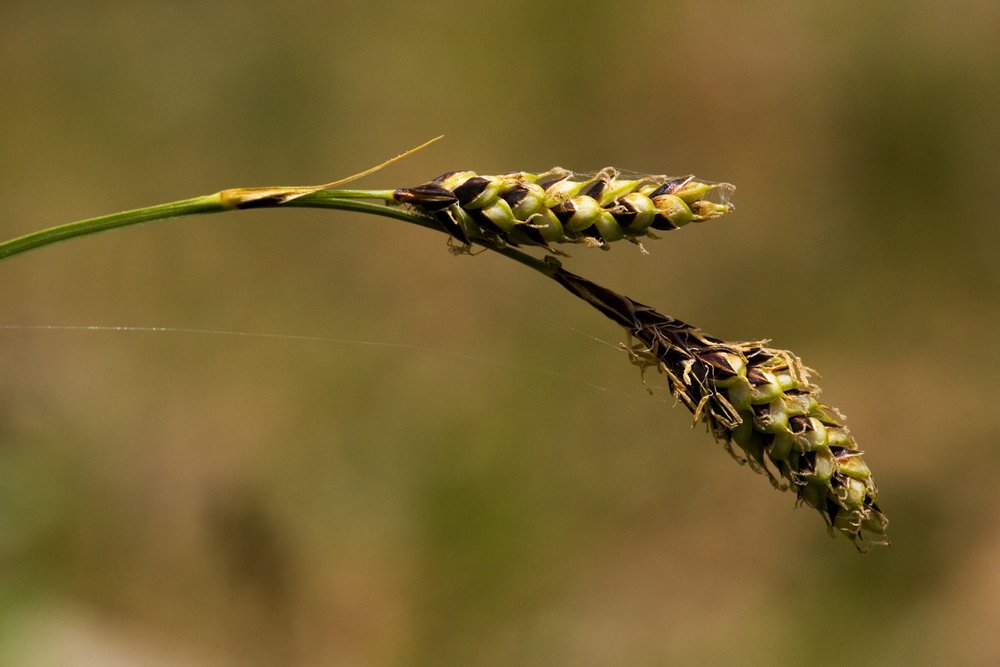
Free photos from other sources
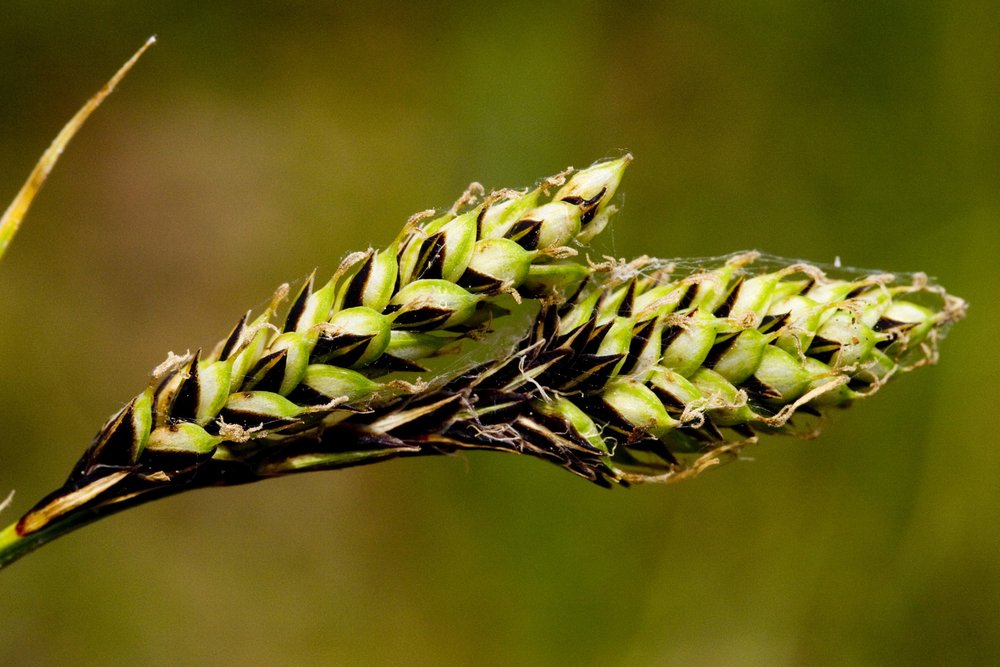
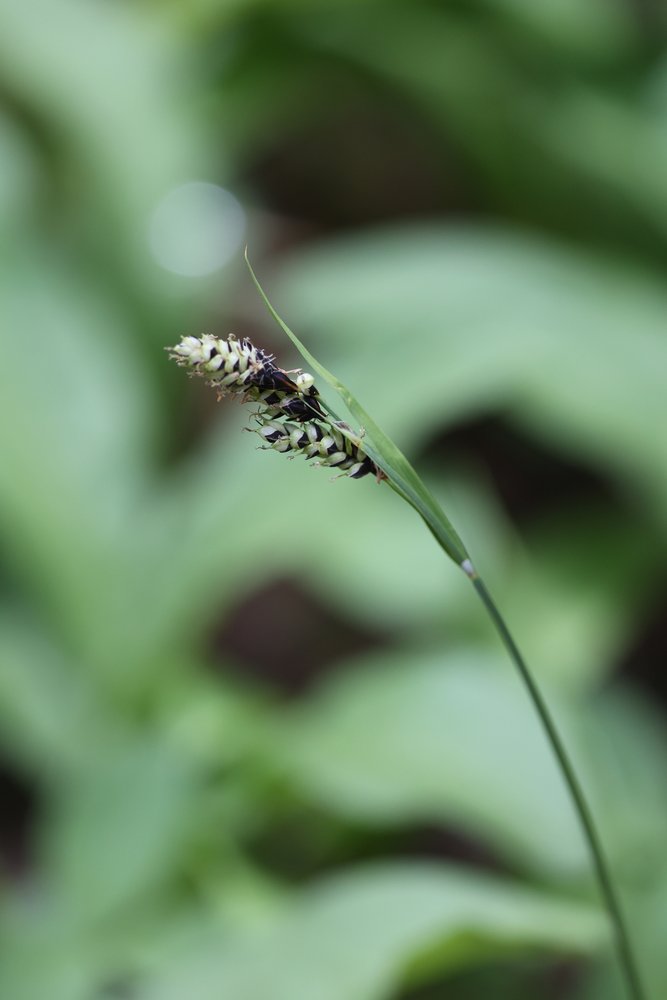
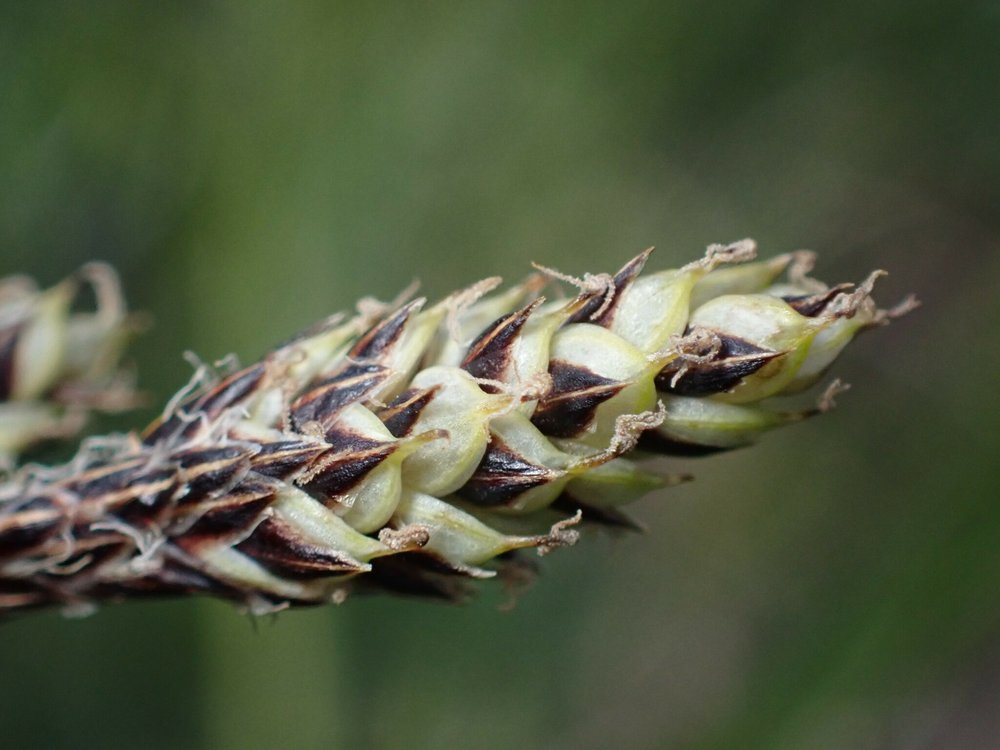
| Family | Cyperaceae · Sedge |
|---|---|
| Status | Native perennial |
| Blooms | July and August |
| Height | 45–90 cm (18–36 in) |
| Where | Cool, moist, shaded spruce and birch forest among granite outcrops and boulders at the heads of small streams |
| Also called | Elegant Sedge |
| Synonym | Carex atrata var. discolor, Carex uncompahgre |
| Note | The Forest Service lists it as a species of local concern in the Black Hills, and South Dakota ranks it S1, critically imperiled. This page gives no locations. |
Roots, seeds & germination
Root: A tufted sedge: the stems rise in clumps from a common base.
Seed: Each seed sits inside a pale green or pale yellow sac 3–4 mm long, elliptic to egg-shaped with a tiny beak, and the seed nearly fills it. The Forest Service reports low seed production, a low rate of spread and low seedling vigor; seed moves short distances by wind, water, insects and animals, and birds likely carry it farther.
How do you identify Southwestern Showy Sedge?
Look for three or four spikes, each 12–25 mm (½–1 in) long, set apart from one another on long thin stalks and hanging or nodding, each with female flowers above and male flowers at the base. The scales are light to dark brown with thin, clear edges and a lighter, often raised midvein, and are about as broad as the fruit sacs; the fruit sacs are pale green or pale yellow, veinless, 3–4 mm long, with a very short beak. The stems grow in clumps and are rough toward the base, with leaves 3–6 mm wide; the bract below the lowest spike can be shorter or longer than the whole head.
When does it bloom?
July and August.
Where does it grow?
Cool, moist, shaded spruce and birch forest among granite outcrops and boulders along the uppermost reaches of small streams, at some of the highest elevations in the Black Hills. These are low elevations for the species: elsewhere it grows in moist subalpine meadows at 2,800–3,900 m (9,200–12,800 ft), and on stream banks, in moist woods and on open slopes, often above timberline.
Other sedges in this guide
Sources: Flora of North America Vol. 23: Carex bella (D. F. Murray) — eFloras; Flora of North America Vol. 23: Carex sect. Racemosae, key — eFloras; Black Hills forest plan, Phase II Amendment Final EIS (2005), ch. 3-3.2 Flora, Southwestern Showy Sedge — USDA Forest Service; Black Hills Draft Forest Plan Assessment: At-Risk Species, 2023 — USDA Forest Service; Rare Plants of South Dakota, Natural Heritage Database species list — South Dakota Game, Fish and Parks; USDA PLANTS profile: Carex bella (CABE3) — USDA NRCS.