Foxtail Sedge Carex alopecoidea
Also called Tawny Sedge
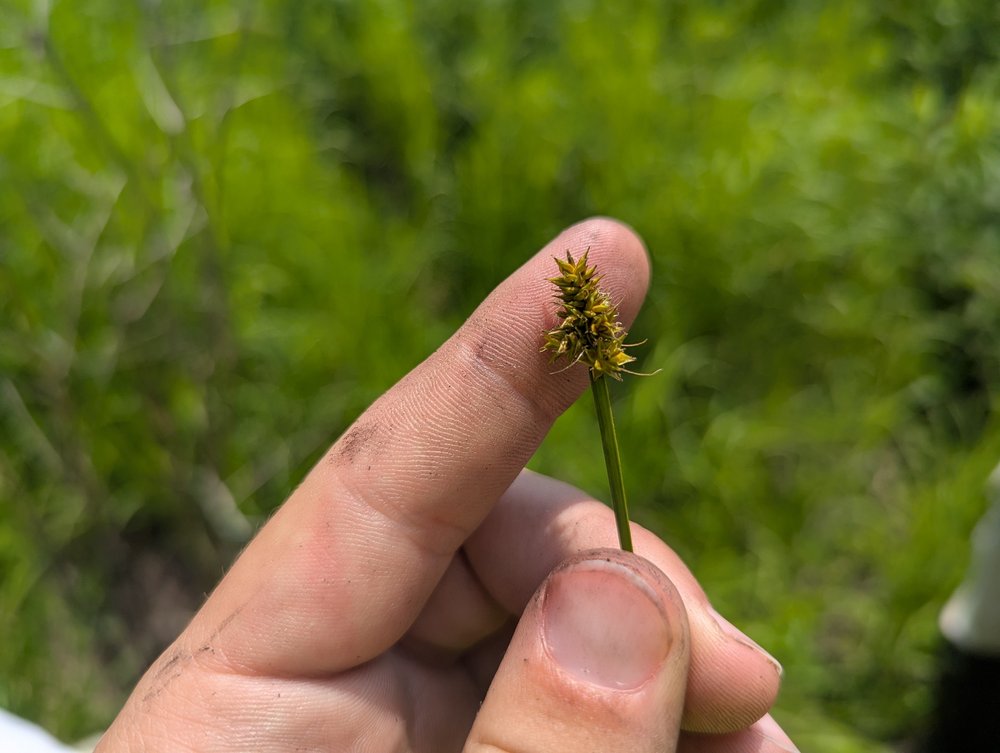
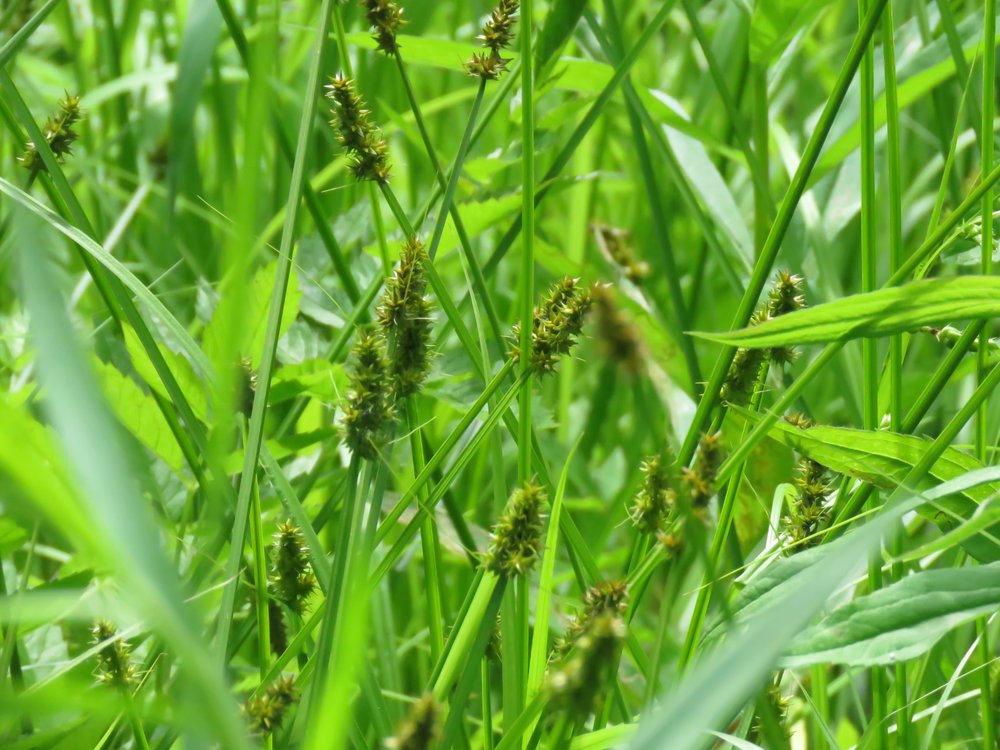
Foxtail Sedge (Carex alopecoidea) is a clump-forming native sedge of wet meadows and stream banks, with a dense, bristly, foxtail-shaped cluster of small spikes at the top of a spongy, sharply three-sided stem. Its seed heads ripen in June and July. A plant of eastern and central North America, it grows in western South Dakota only in the Black Hills, on the moist edges of wet meadows and streams.
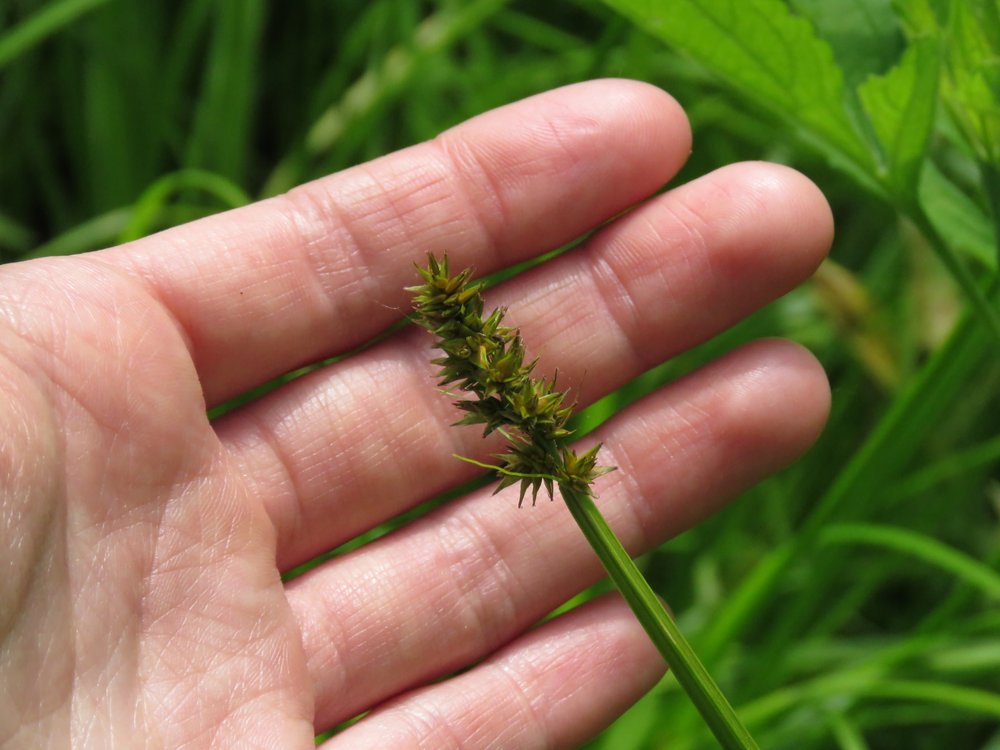
Free photos from other sources
| Family | Cyperaceae · Sedge |
|---|---|
| Status | Native perennial |
| Blooms | Fruits in June and July |
| Height | 40–80 cm (15–32 in) |
| Where | Wet meadows, stream banks and the moist edges of wetlands, especially on lime-rich ground |
| Also called | Tawny Sedge |
| Note | The Forest Service lists it as a Region 2 sensitive plant in the Black Hills, and South Dakota ranks it S2S3, imperiled to vulnerable. This page gives no locations. |
Roots, seeds & germination
Root: The plant grows in clumps and does not spread into colonies, and the base of each stem is wrapped in last year's brown sheaths, which break down into fibers.
Seed: Each small, dry seed sits inside a sac 3–4 mm long, pale brown turning coppery at the tip, widest at the base, with a toothed beak nearly as long as the body. The seeds themselves are round and flattened, about 1.5 mm across, and ripen in June and July.
How do you identify Foxtail Sedge?
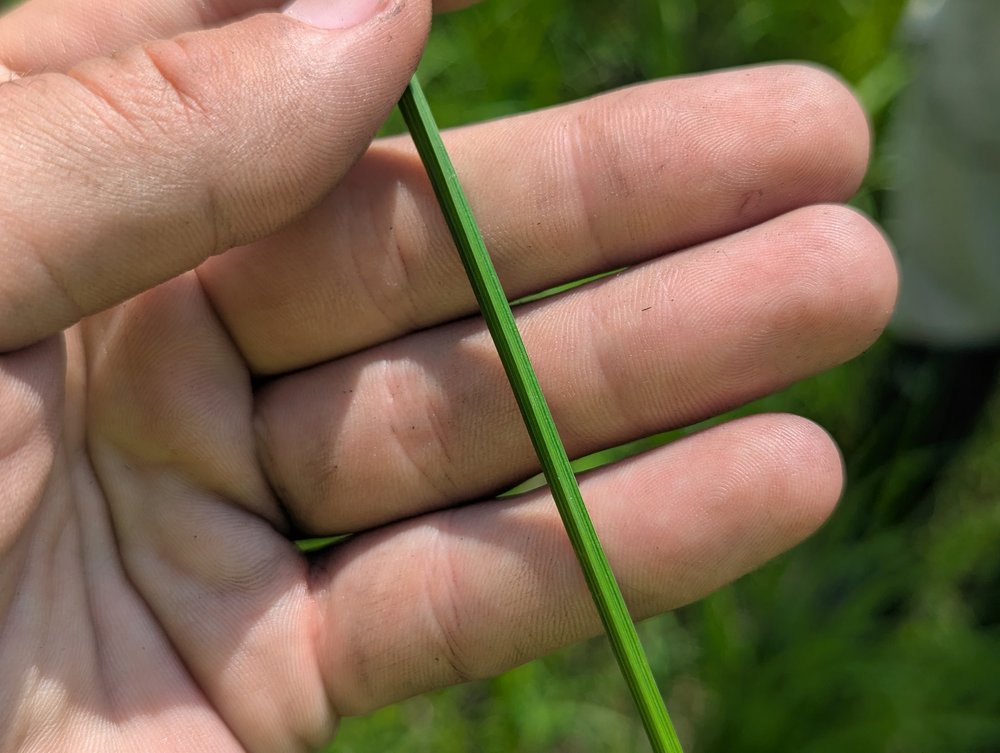
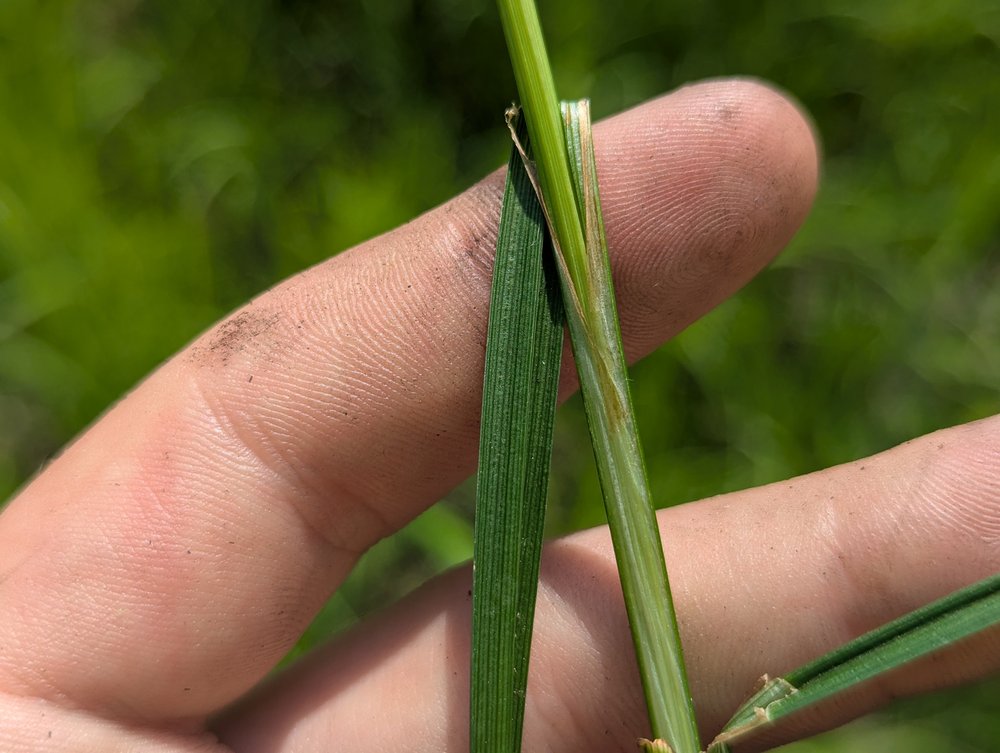
Look for a dense, cylindrical cluster 2–4 cm (¾–1½ in) long of 8 to 12 stalkless spikes crowded into one bristly head, each spike with male flowers at its tip and female flowers below; the bract under the lowest spike ends in a bristle that often reaches past that spike. The stem is up to 80 cm (32 in) tall, strongly three-sided with narrow wings on the angles, and stout but spongy, so it squeezes easily. The front of each leaf sheath is smooth, thin and fragile, whitish with red to purple dots. The fruit sacs are 3–4 mm long, tan to coppery, widest at the rounded base, with a toothed beak nearly as long as the body. Flora of North America says it is most like Carex conjuncta, a sedge of the eastern and central states not recorded in South Dakota, which has wrinkled sheath fronts and 3 to 5 strong veins on the back of each fruit sac.
When does it bloom?
Fruits in June and July.
Where does it grow?
Wet meadows, stream banks and the moist edges of wetlands in the Black Hills; herbarium specimens from the Hills come from about 1,740–1,850 m (5,700–6,100 ft). Across its range it grows in seasonally wet soil in wet meadows, openings in bottomland woods and on stream banks, especially on lime-rich ground.
Other sedges in this guide
Sources: Flora of North America Vol. 23: Carex alopecoidea (L. A. Standley) — eFloras; Flora of North America Vol. 23: Carex sect. Vulpinae, key and notes — eFloras; Flora of North America Vol. 23: Carex conjuncta — eFloras; Carex alopecoidea (Foxtail Sedge) — Minnesota Wildflowers; Black Hills forest plan, Phase II Amendment Final EIS (2005), ch. 3-3.2 Flora, Region 2 Sensitive Species — USDA Forest Service; Black Hills Draft Forest Plan Assessment: At-Risk Species, 2023 — USDA Forest Service; Rare Plants of South Dakota, Natural Heritage Database species list — South Dakota Game, Fish and Parks; USDA PLANTS profile: Carex alopecoidea (CAAL8) — USDA NRCS.