Groundcedar Lycopodium complanatum also listed as Diphasiastrum complanatum
Also called Ground Cedar, Northern Groundcedar, Northern Running-pine, Trailing Clubmoss
Groundcedar (Lycopodium complanatum) is a low, evergreen clubmoss whose flat, irregularly branched sprays of tiny scale-like leaves look like little sprigs of cedar, rising from a stem that runs along the ground. It makes spores, not flowers, in small cones held up on thin forked stalks. A plant of the northern forests, it grows in the Black Hills in scattered patches on shaded, north-facing slopes in cool spruce and birch forest.
Free photos from other sources
| Family | Lycopodiaceae · Clubmoss |
|---|---|
| Status | Native perennial |
| Blooms | No flowers; cones shed spores late summer into fall |
| Height | 8–44 cm (3–17 in) |
| Where | Shaded, north-facing slopes in cool spruce and birch forest |
| Also called | Ground Cedar, Northern Groundcedar, Northern Running-pine, Trailing Clubmoss |
| Synonym | Diphasiastrum complanatum, Lycopodium complanatum var. canadense |
| Traditional use | Johnston's 1987 account of the Blackfoot says they dusted the spores on wounds, snuffed them for nosebleed, and used a decoction of the plant for lung and venereal diseases. Moerman's database adds that the Blackfoot used the whole plant as a mordant to set dyes (Johnston 1987) and that the Ojibwe used the dried leaves as a reviver (Smith 1932). |
| Note | The Forest Service lists it as a Region 2 sensitive plant in the Black Hills, and South Dakota ranks it S2, imperiled. This page gives no locations. |
Traditional use: first drafted by Google AI, then checked against the sources on this page.
Roots, seeds & germination
Root: A horizontal stem 1–2 mm thick runs along the surface of the ground or just under the leaf litter, carrying small pressed-down leaves, and sends up the upright shoots at intervals.
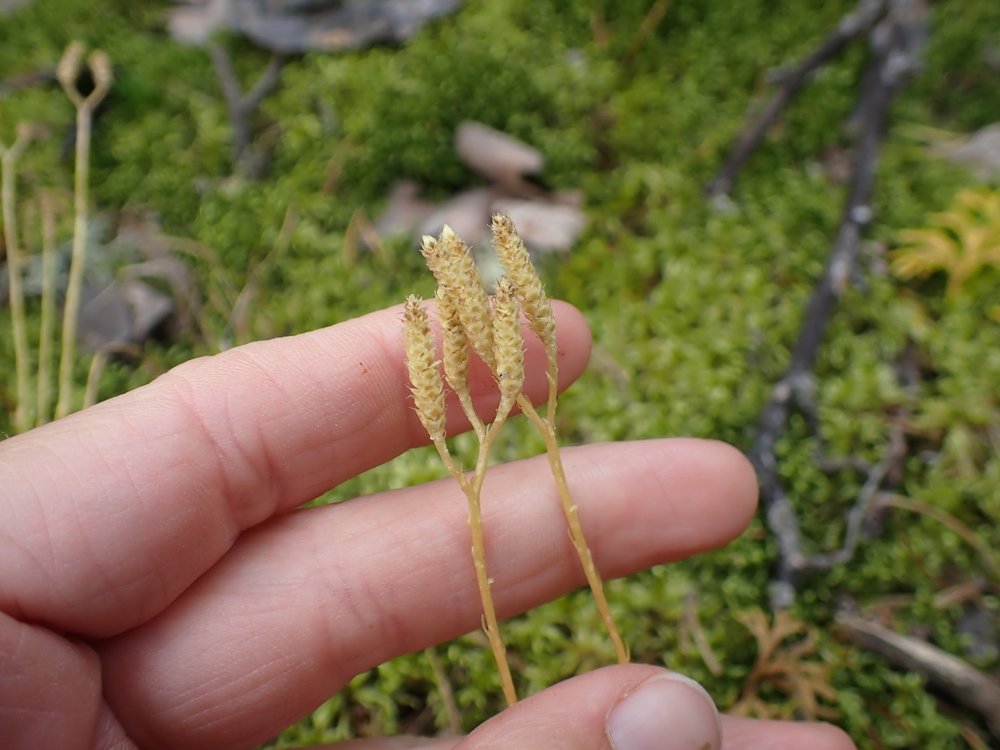
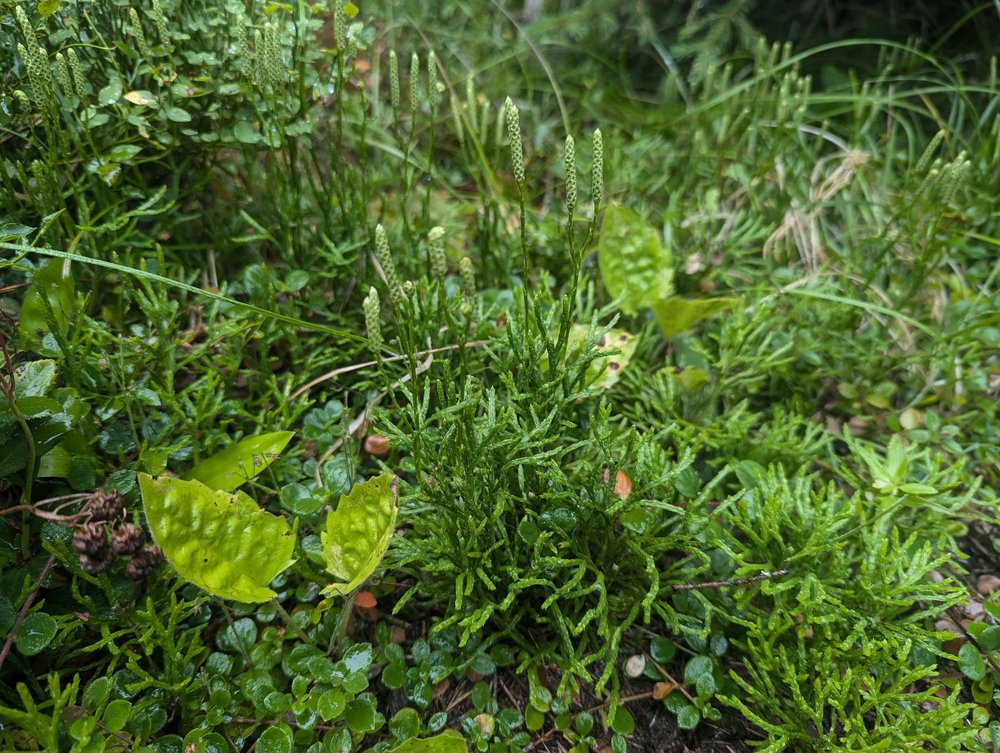
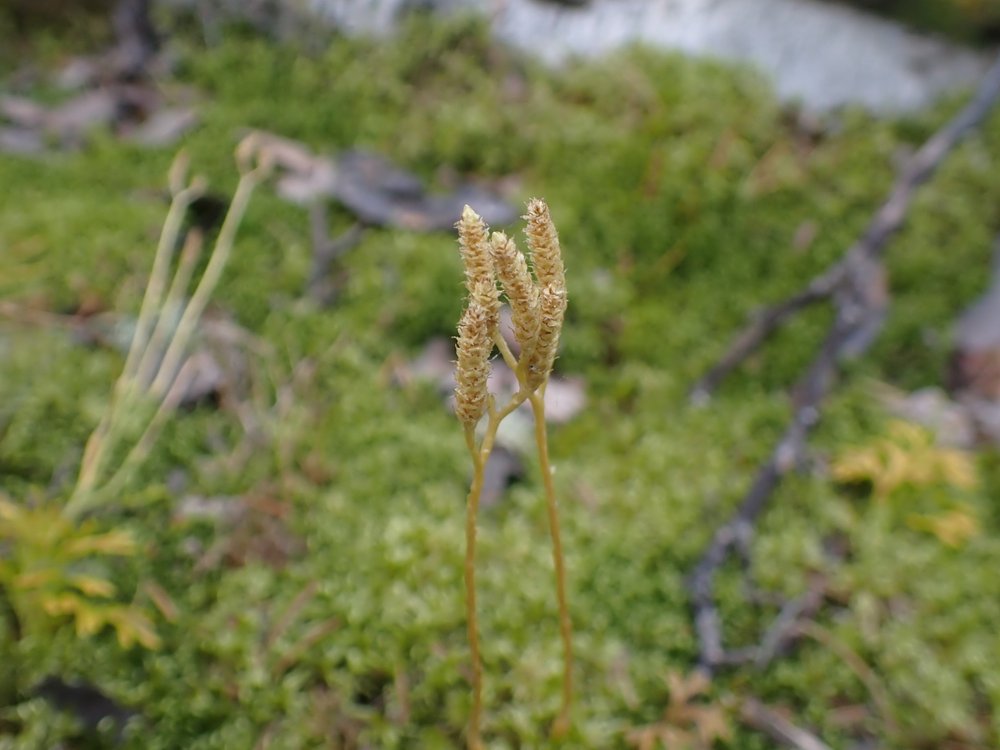
Seed: No seeds. Spores form in cones 8–32 mm (⅓–1¼ in) long, one to four at the top of a thin stalk up to 8.5 cm long that forks at even intervals; an upright shoot has one or two such stalks. The cone scales start green, turn yellow and then light brown, and spread to shed the spores in late summer and fall; the cones can last through winter.
Germination: As in other groundcedars, the spore does not grow into a green plant. It forms a small, carrot-shaped plant underground that has no green color and lives on a partner fungus; that hidden stage later produces the new clubmoss.
How do you identify Groundcedar?
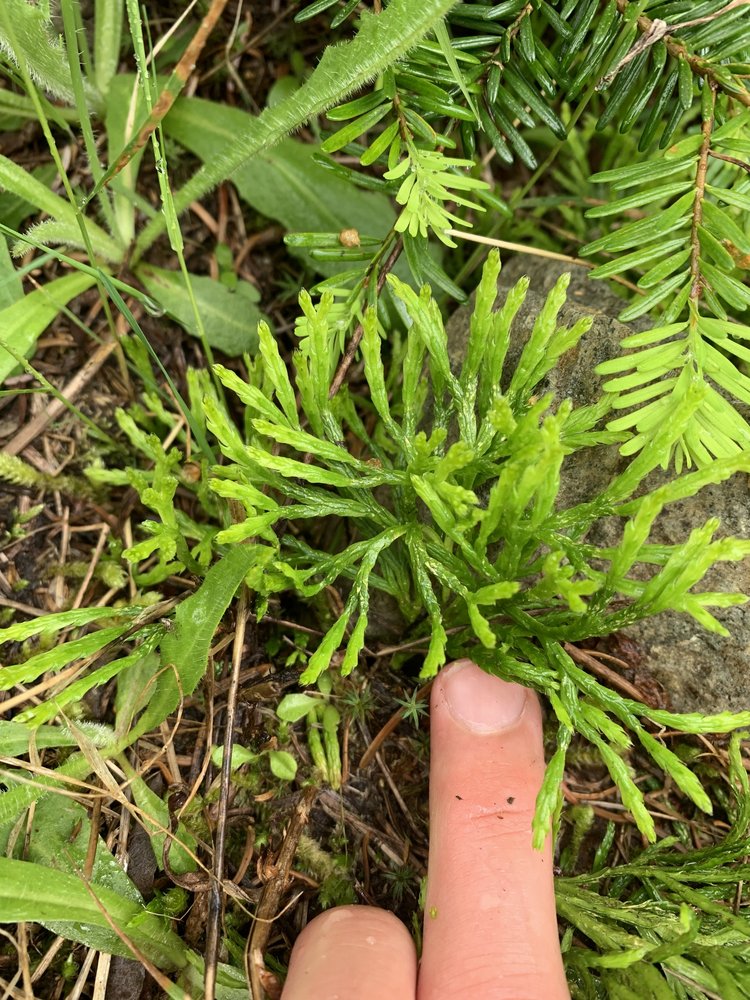
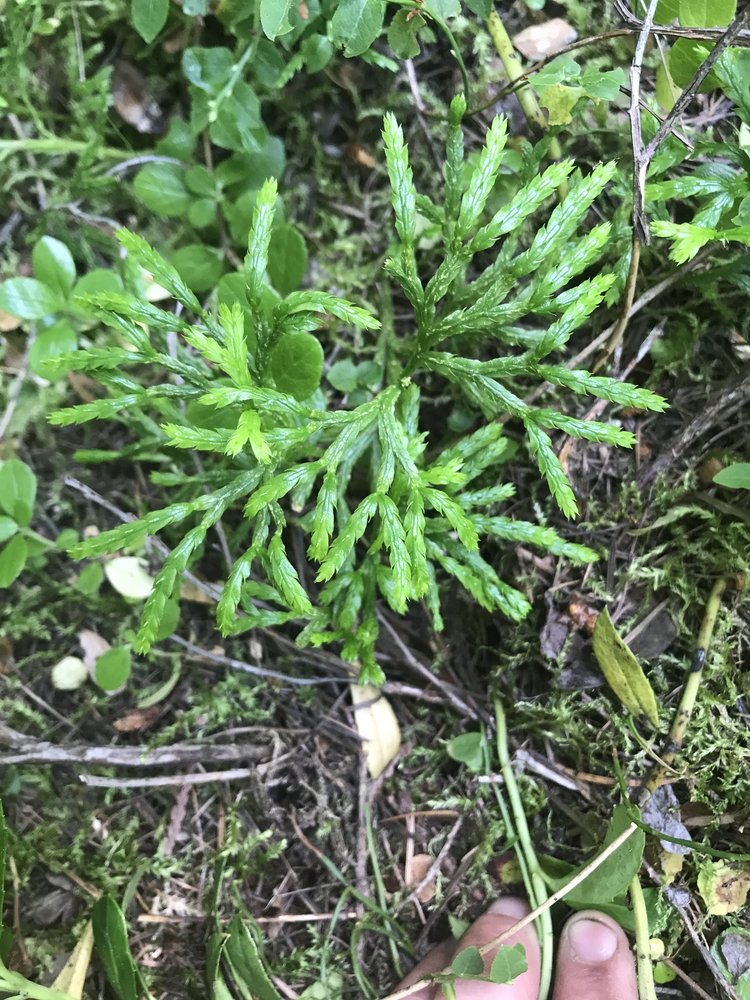
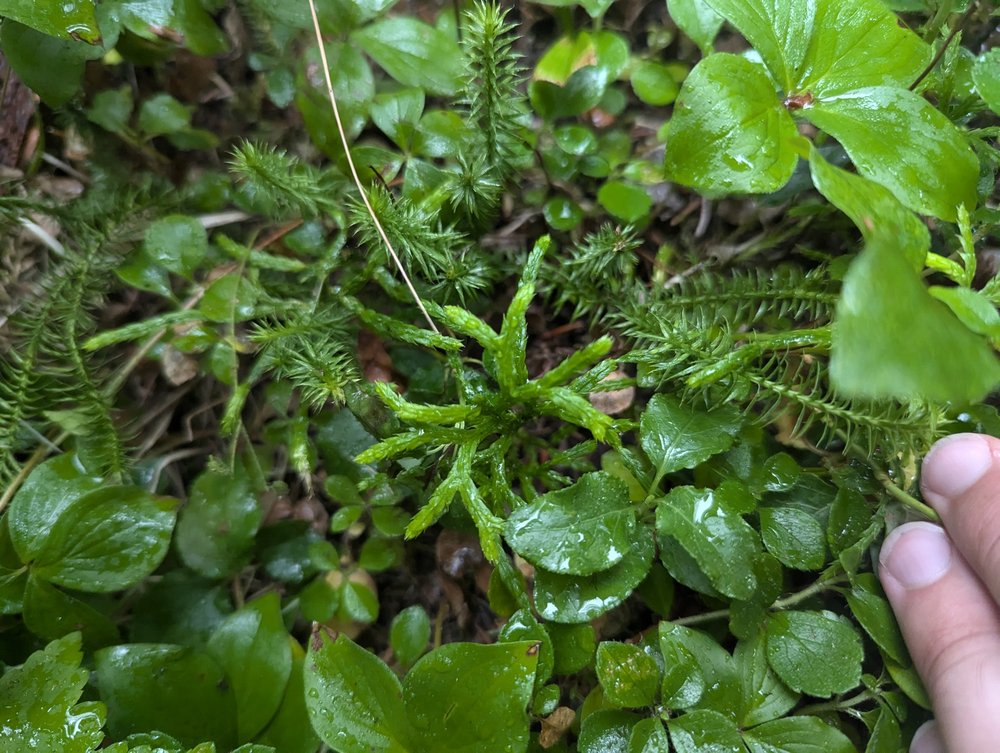
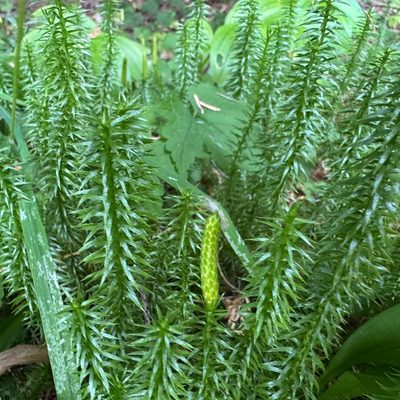
Look for flat, narrowly blade-like branchlets 2–4 mm wide, green and faintly shiny on top and dull and pale underneath, that branch irregularly like a little cedar tree and show an abrupt pinch at each year's growth. The leaves are tiny scales pressed to the branchlet in 4 rows, the two side rows largest and the underside row much smaller. Upright shoots stand 8–44 cm (3–17 in) tall from a stem that runs on or just under the litter, and one or two thin stalks up to 8.5 cm long, forking at even distances, hold one to four cones 8–32 mm long. Stiff Clubmoss, another rare clubmoss that grows with it at some Black Hills sites, has round, bristly shoots with needle-like leaves in 8 to 10 rows and a single stalkless cone at the tip. Dense Spikemoss (Selaginella densa), a plant of prairie and dry rocky slopes, makes tight cushion mats of leaves 3–5 mm long tipped with a white bristle; spikemosses as a group are much smaller than clubmosses.
When does it bloom?
No flowers; cones shed spores late summer into fall.
Where does it grow?
Shaded, north-facing slopes in cool spruce and birch forest in the Black Hills, where it grows in scattered patches. Across its range it grows in dry, open conifer or mixed forest and on alpine slopes; in Montana it grows in moist forest from the montane to the lower subalpine zone.
Other clubmosses in this guide
Sources: Flora of North America Vol. 2: Diphasiastrum complanatum (W. H. Wagner Jr. and J. M. Beitel) — eFloras; Flora of North America Vol. 2: Diphasiastrum, genus description and key — eFloras; Flora of North America Vol. 2: Lycopodiaceae, family key — eFloras; Flora of North America Vol. 2: Selaginella densa — eFloras; Diphasiastrum complanatum (Northern Groundcedar) — Minnesota Wildflowers; Selaginella rupestris (Rock Spikemoss) — Minnesota Wildflowers; Trailing Clubmoss, Lycopodium complanatum — Montana Field Guide, Montana Natural Heritage Program; Black Hills forest plan, Phase II Amendment Final EIS (2005), ch. 3-3.2 Flora, Region 2 Sensitive Species — USDA Forest Service; Black Hills Draft Forest Plan Assessment: At-Risk Species, 2023 — USDA Forest Service; Rare Plants of South Dakota, Natural Heritage Database species list — South Dakota Game, Fish and Parks; USDA PLANTS profile: Lycopodium complanatum (LYCO3) — USDA NRCS; Native American Ethnobotany Database: Lycopodium complanatum — BRIT.