Western Snowberry Symphoricarpos occidentalis
Also called Wolfberry, Western Wolfberry, Buckbrush, uŋšúŋgnasapi hú (Lakota), zuzéča tȟawóte (Lakota)
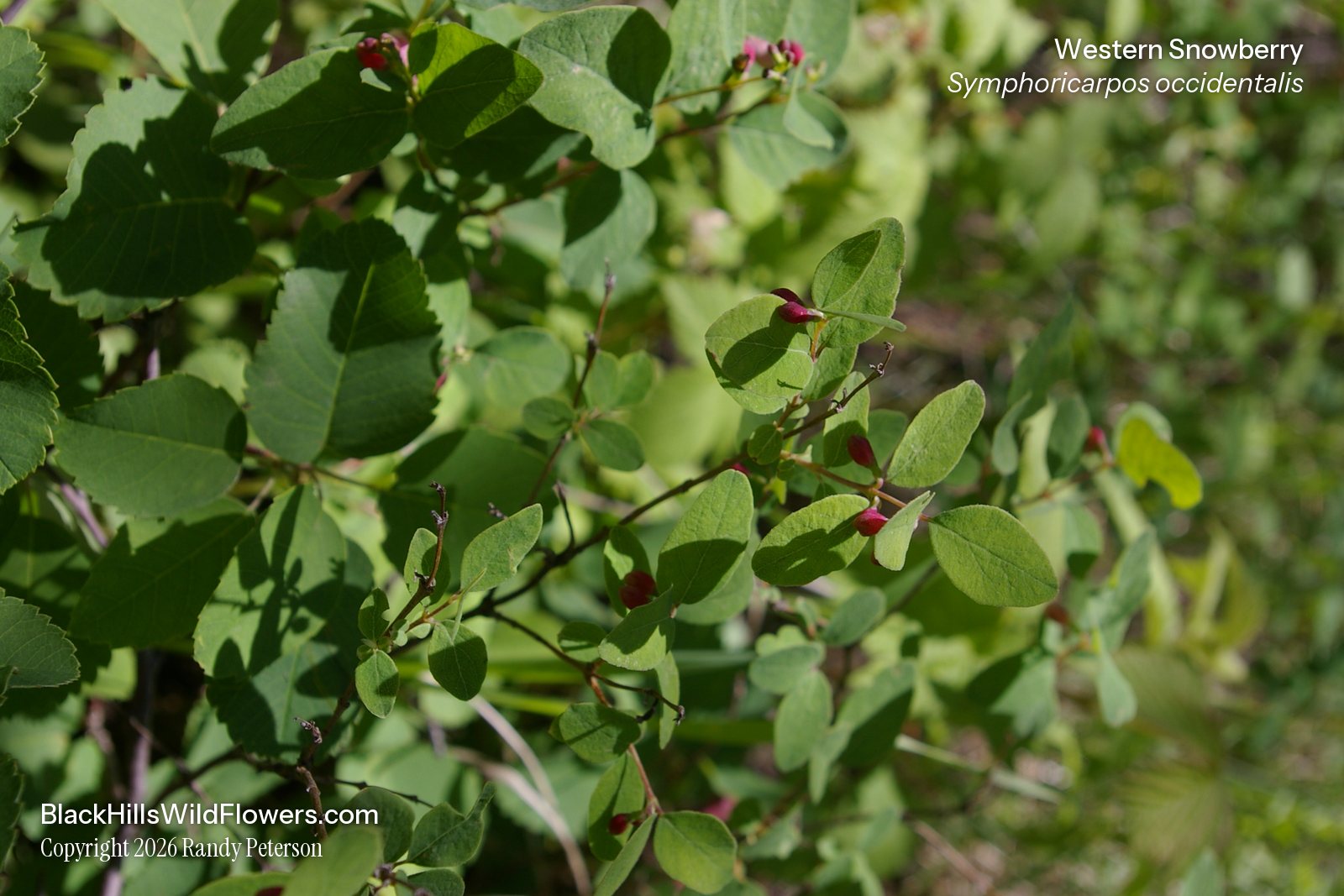
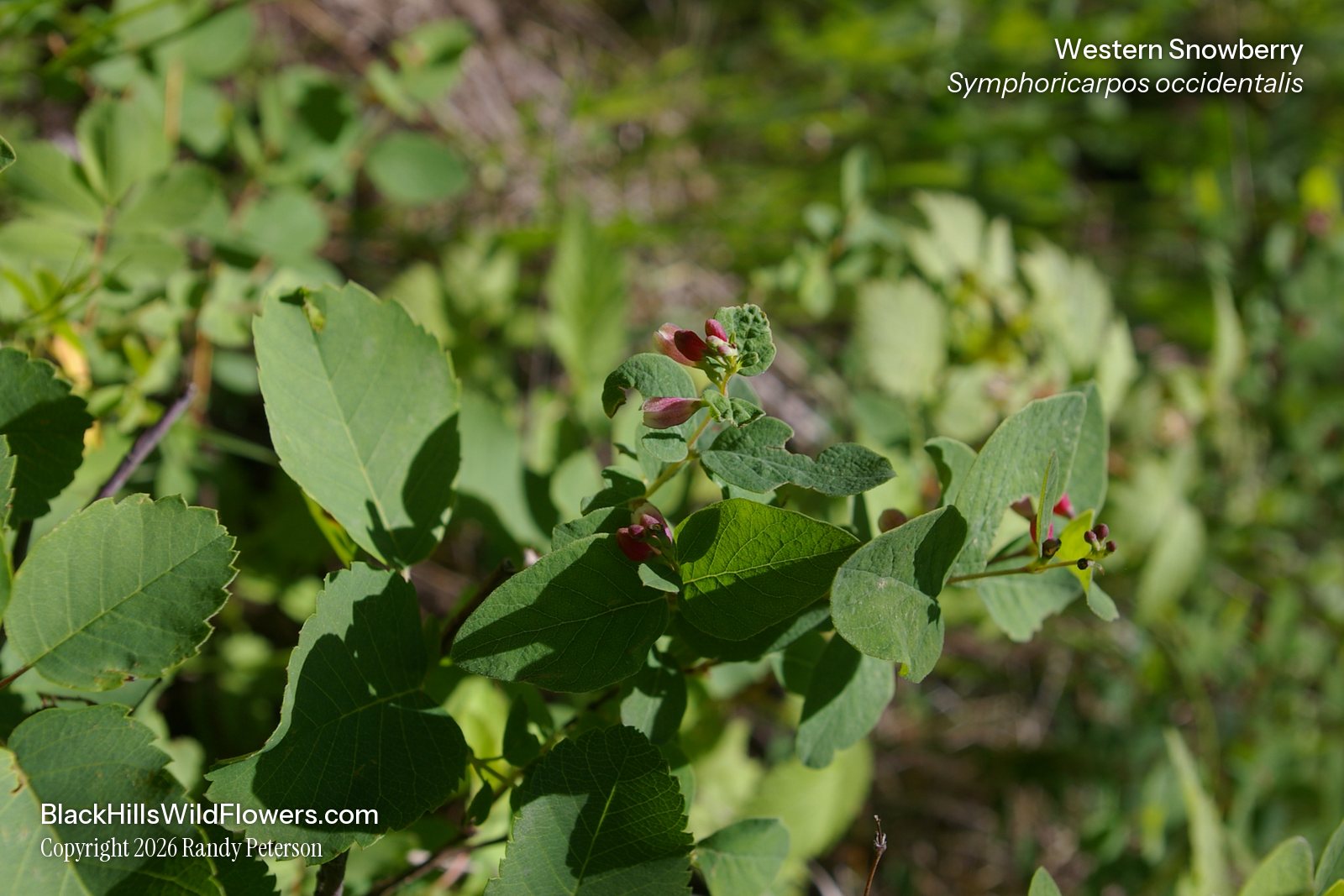
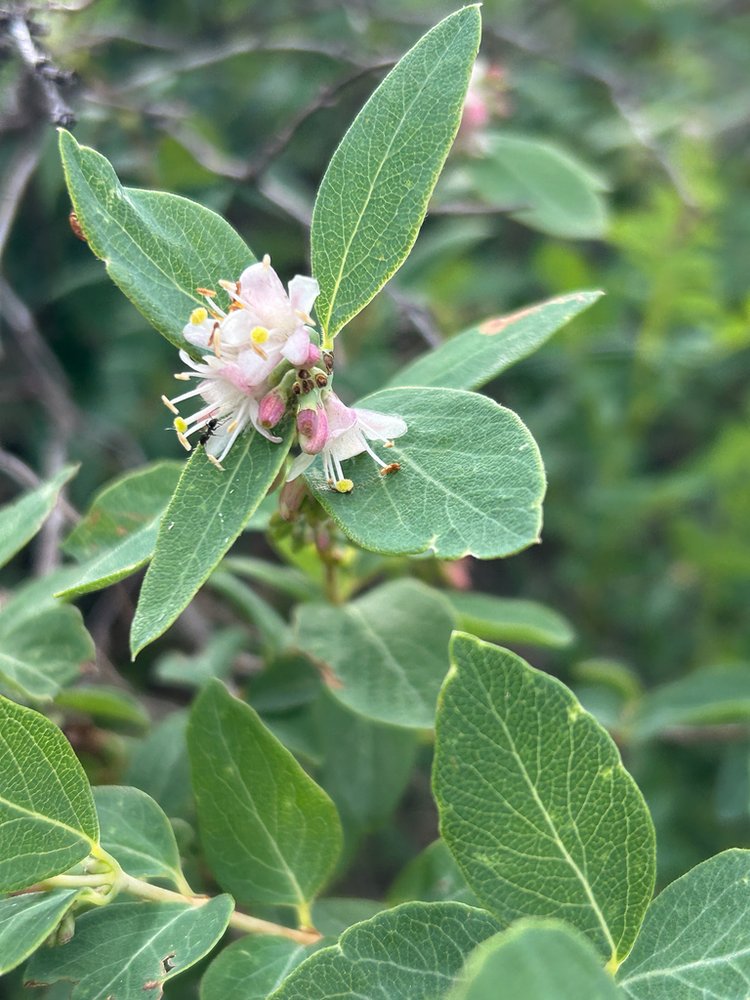
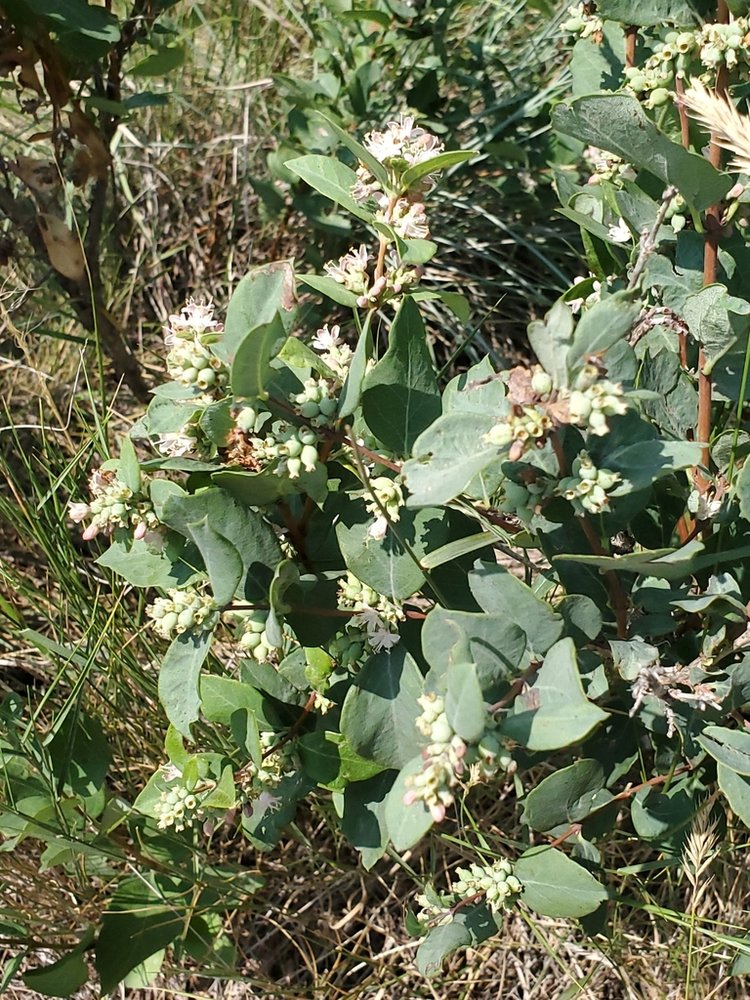
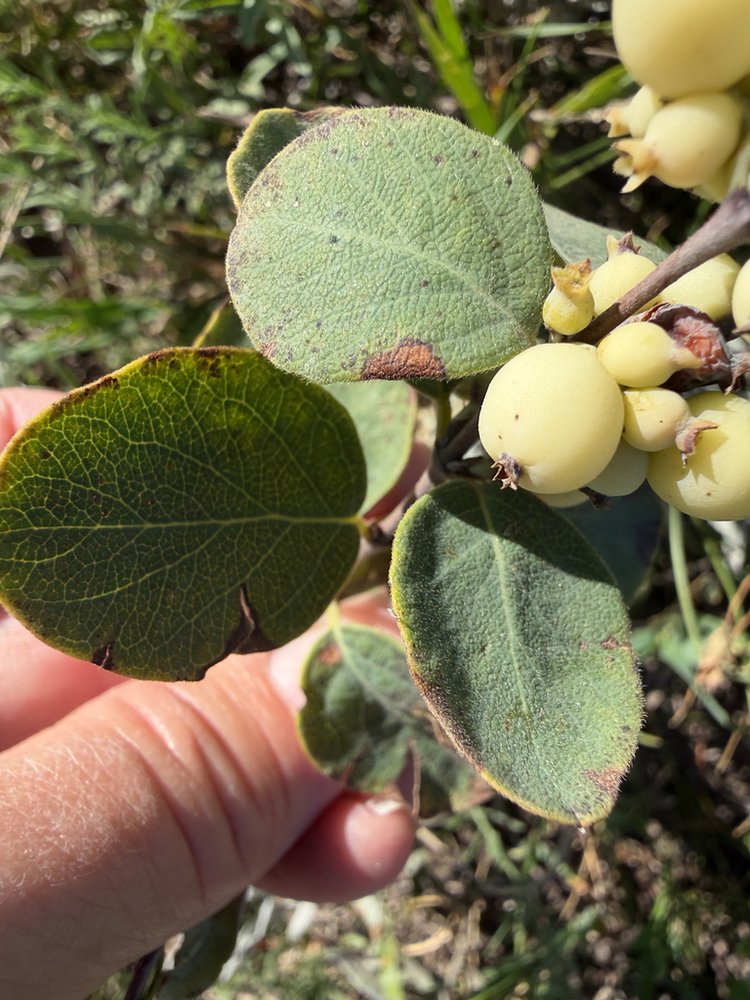
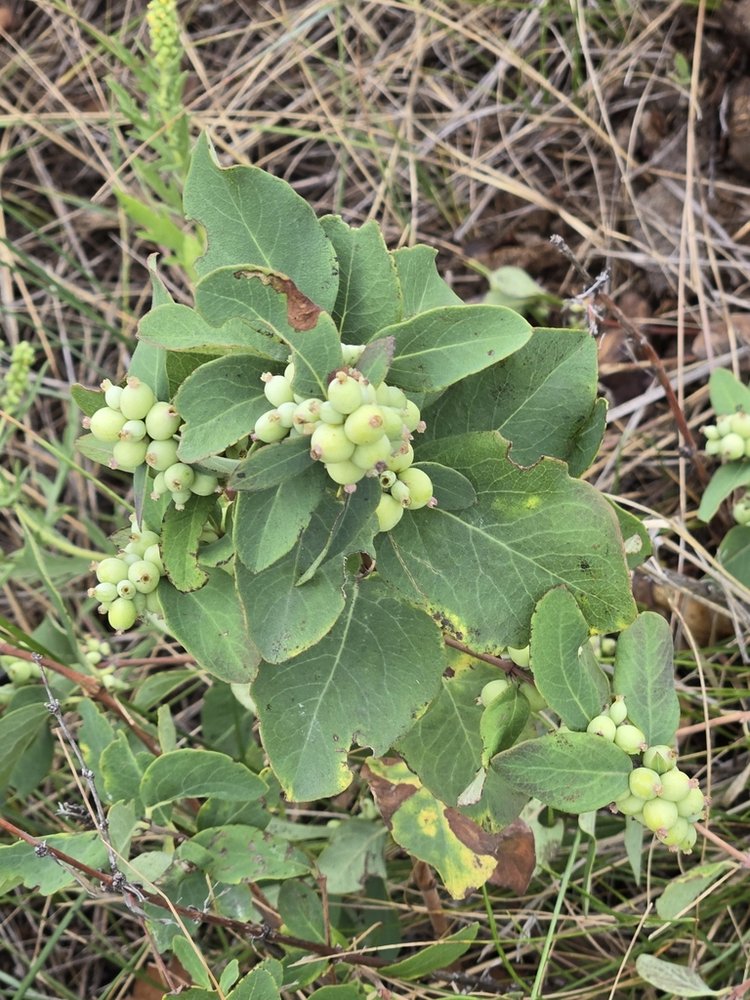
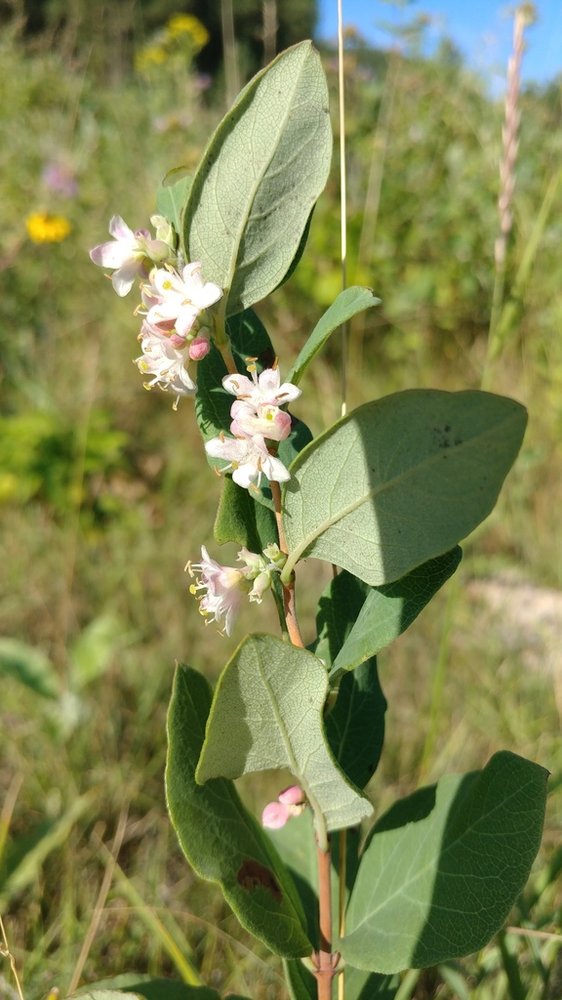
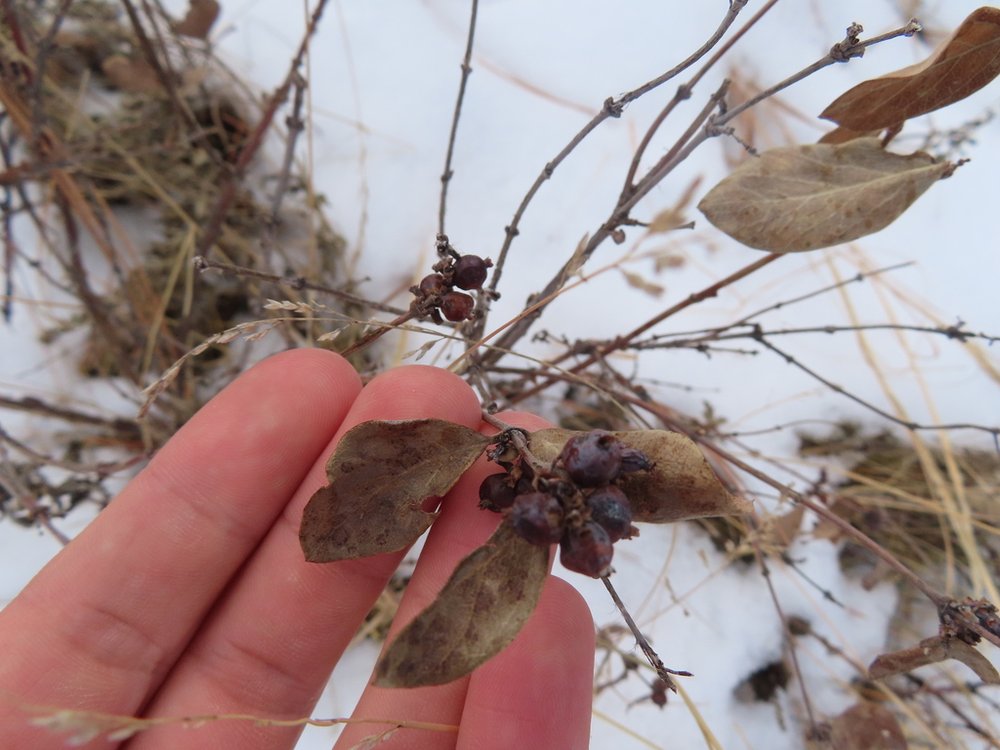
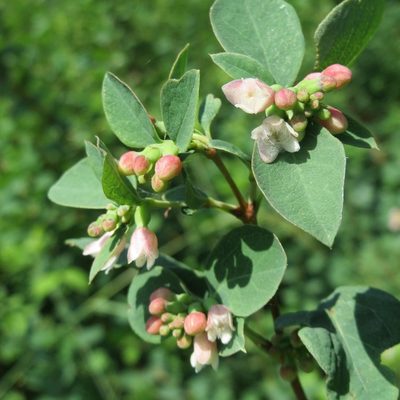
Western Snowberry (Symphoricarpos occidentalis) is a low native shrub, 0.3–1.5 m (1–5 ft) tall, that spreads by underground stems into dense patches in draws, on prairie and under open pine across the Black Hills. Tight clusters of small pink-and-white bell flowers with long protruding stamens open from June into August, followed by dull greenish-white berries that hang on through winter. The National Park Service lists it at Wind Cave, Jewel Cave, Mount Rushmore and Devils Tower. Photographed in the Black Hills.
Free photos from other sources
| Family | Caprifoliaceae · Honeysuckle |
|---|---|
| Status | Native deciduous shrub |
| Blooms | June into August, mostly July |
| Height | 0.3–1.5 m (1–5 ft) |
| Where | Draws, ravines and creek terraces, prairie, rocky hillsides, roadsides, and the understory of open ponderosa pine and bur oak stands |
| Also called | Wolfberry, Western Wolfberry, Buckbrush, uŋšúŋgnasapi hú (Lakota), zuzéča tȟawóte (Lakota) |
| Toxicity | The berries have low toxicity if eaten; the Lady Bird Johnson Wildflower Center lists vomiting and diarrhea, from calcium oxalate and possibly a saponic glycoside. |
| Traditional use | Black Elk and Flying By's 1998 Culturally Important Plants of the Lakota says boys used the long straight shoots as play arrows, the whole plant was used as a poultice for wounds, an infusion of the leaves as an eyewash, an infusion of the roots as a tonic, and an infusion of the inner bark for constipation. |
| Note | Common Snowberry (Symphoricarpos albus) also grows in the Black Hills and has no page of its own; the marks that separate the two are under identification. |
Roots, seeds & germination
Root: Long, sparsely branched rhizomes (underground stems) run about 35 cm (14 in) deep and send up new stems, and colonies reach 1 to more than 200 m (3 to 700 ft) across; in a Minnesota study the rhizomes at the center of a colony were about 20 years old, and roots from the rhizome of a four-year-old plant reached 1.55 m (5 ft) down. It sprouts after cutting or mowing and grows from stem and root cuttings.
Seed: Each berry holds two nutlets, and fruit can stay on the plant for a year or more. A stem makes more fruit as it ages, from about 4 on a one-year-old stem to about 75 on stems six years and older in a Minnesota study. Birds and small mammals spread the seed, and it builds up little in the soil.
Germination: The seed has a dormant embryo. Three to four months of warm storage followed by four to six months of cold, moist storage at 5 °C (41 °F) raises germination, and sprouting is best in cool conditions, 5–15 °C (41–59 °F). Seedlings are rare in the wild; new plants come mostly from the rhizomes.
How do you identify Western Snowberry?
Look for a low, dense thicket of upright stems with thin gray bark that splits to show red-brown underneath, and opposite, oval, somewhat leathery leaves 2–8 cm (¾–3 in) long, dark to blue-green above and paler and hairy below, with edges toothless or cut into a few large rounded teeth or shallow lobes. From June into August the branch tips and upper leaf joints carry tight clusters of stalkless pink to nearly white flowers, bell-shaped and 6–8 mm (about ¼ in) long, whose five lobes spread wide so the long white stamens and hairy style stick well out of the tube. The fruit is a dull greenish-white berry 6–9 mm across with two small nutlets inside; it hangs on through winter and slowly turns blackish-brown. Common Snowberry (Symphoricarpos albus) is on the same four park lists, and the flowers tell them apart: its flowers are smaller, fewer and short-stalked, with lobes that stay cupped and hide the stamens and style, its berries are a brighter white and about twice the size, and it is more a plant of forest and forest edge, while Western Snowberry favors open grassland.
When does it bloom?
June into August, mostly July.
Where does it grow?
Draws, ravines and creek terraces, prairie, rocky hillsides, pastures, roadsides and the understory of open ponderosa pine and bur oak stands. The Fire Effects Information System names Black Hills bur oak/western snowberry and ponderosa pine/western snowberry plant communities, the pine type at about 1,555–1,965 m (5,100–6,450 ft) in the central Hills, and Black Hills herbarium labels run from about 1,100 to 2,040 m (3,600–6,700 ft). The National Park Service lists it at all four Black Hills parks, and herbarium specimens come from all seven Black Hills counties in South Dakota and Wyoming. The 1986 Jewel Cave plant survey names a ponderosa pine-snowberry forest there with snowberry as the main understory shrub; drought kept those plants from blooming, so the survey could not name the species, but it notes that pine with Western Snowberry is a very common pine community in the Black Hills.
Other snowberries and coralberries in this guide
Honeysuckle family (Caprifoliaceae): 3 other plants in this guide
Sources: USDA Forest Service Fire Effects Information System: Symphoricarpos occidentalis (Hauser 2007); Minnesota Wildflowers: Symphoricarpos occidentalis (Wolfberry); Minnesota Wildflowers: Symphoricarpos albus (Snowberry); Lady Bird Johnson Wildflower Center: Symphoricarpos occidentalis (SYOC); USDA PLANTS Database: Symphoricarpos occidentalis (SYOC); Marriott and Hartman 1986, A Survey of the Vegetation of Jewel Cave National Monument; NPSpecies checklist, Wind Cave National Park vascular plants; NPSpecies checklist, Jewel Cave National Monument vascular plants; NPSpecies checklist, Mount Rushmore National Memorial vascular plants; NPSpecies checklist, Devils Tower National Monument vascular plants; GBIF occurrence search: Symphoricarpos occidentalis, South Dakota and Wyoming herbarium specimens; iNaturalist: research-grade Symphoricarpos occidentalis observations in the Black Hills; Culturally Important Plants of the Lakota (Black Elk and Flying By, 1998), entry 298, filed with the South Dakota PUC.