Western Snowbrush Ceanothus velutinus
Also called Snowbrush Ceanothus, Snowbrush, Shiny-leaf Ceanothus, Tobacco Brush
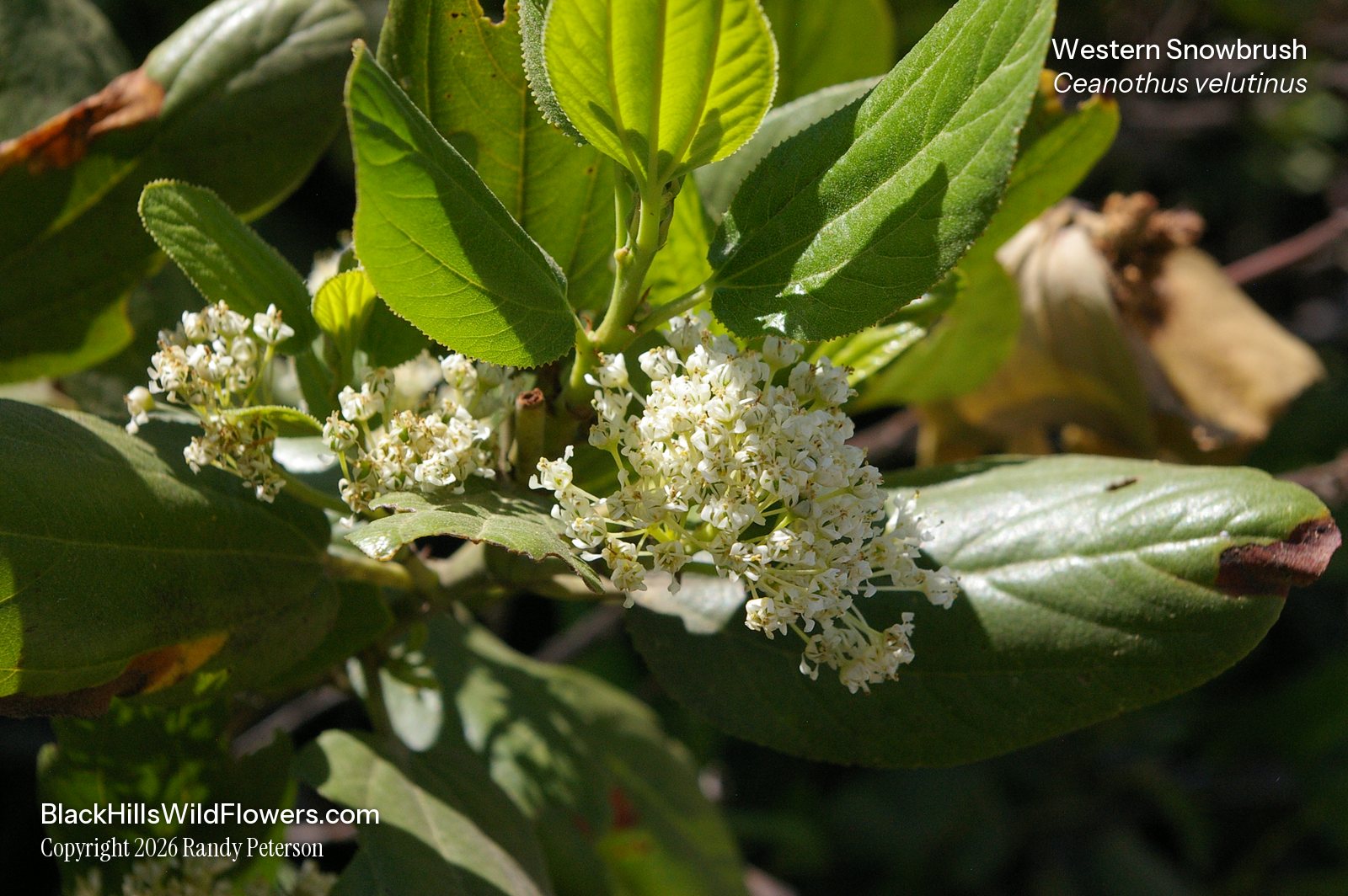
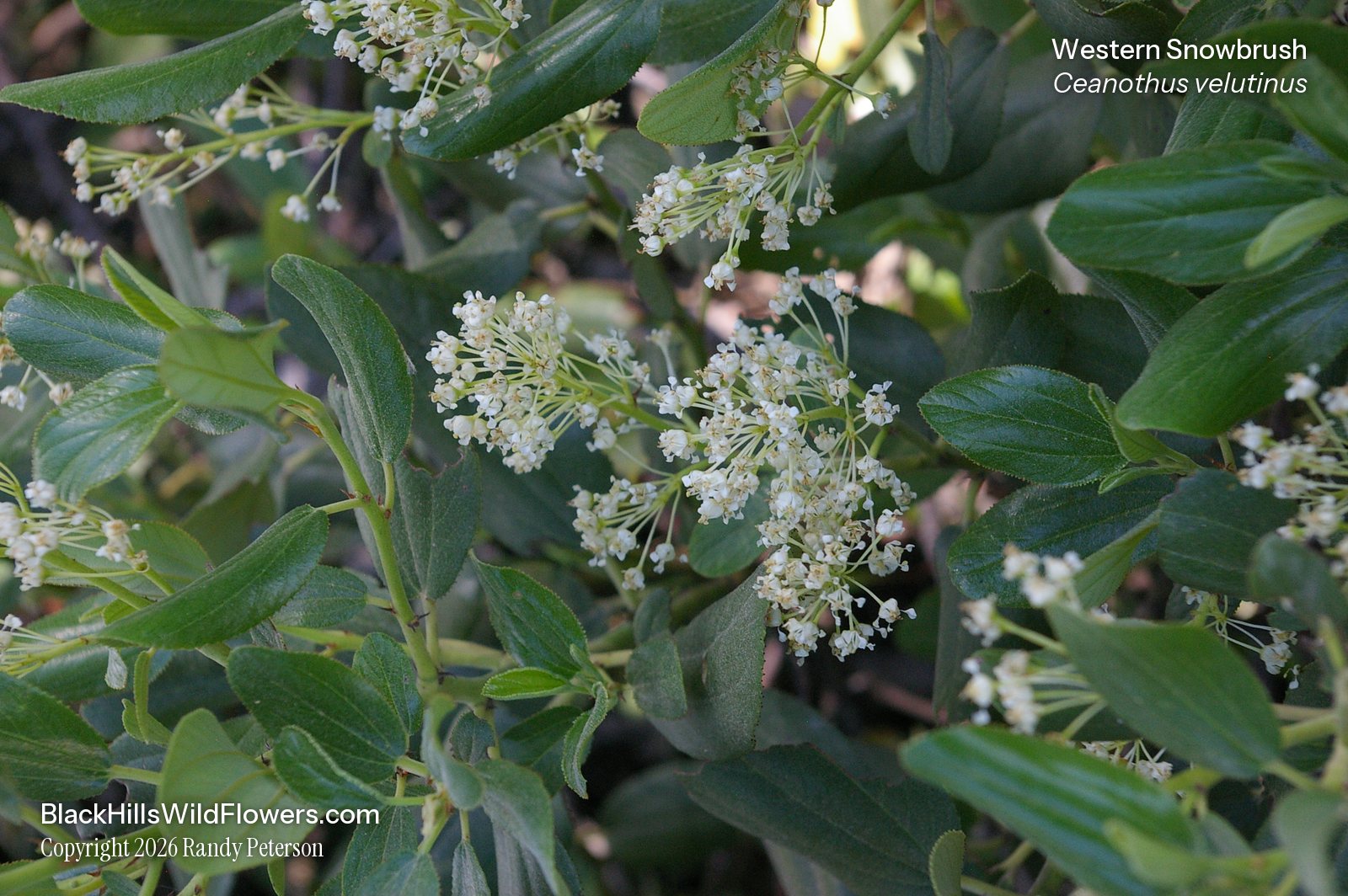
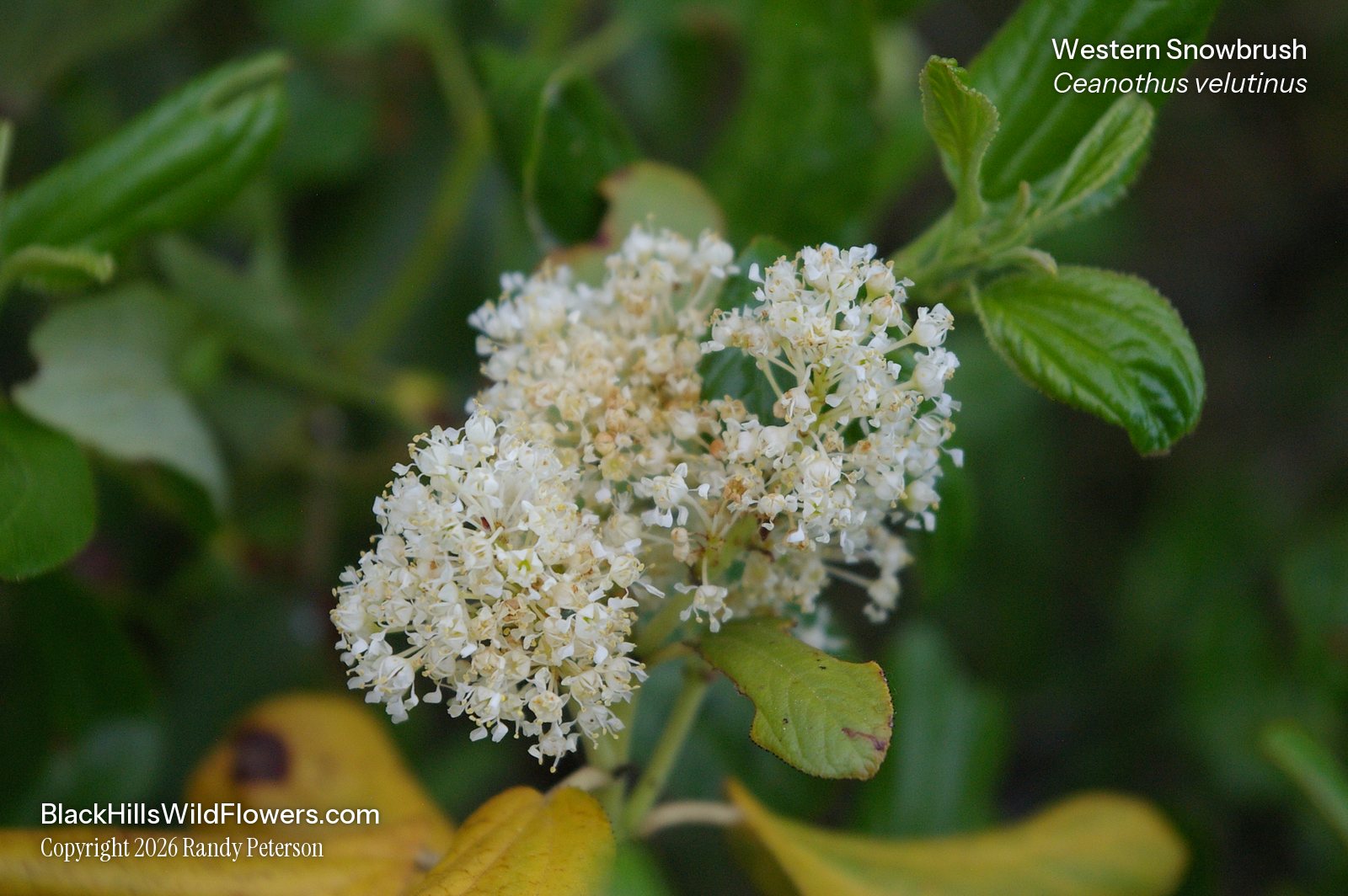
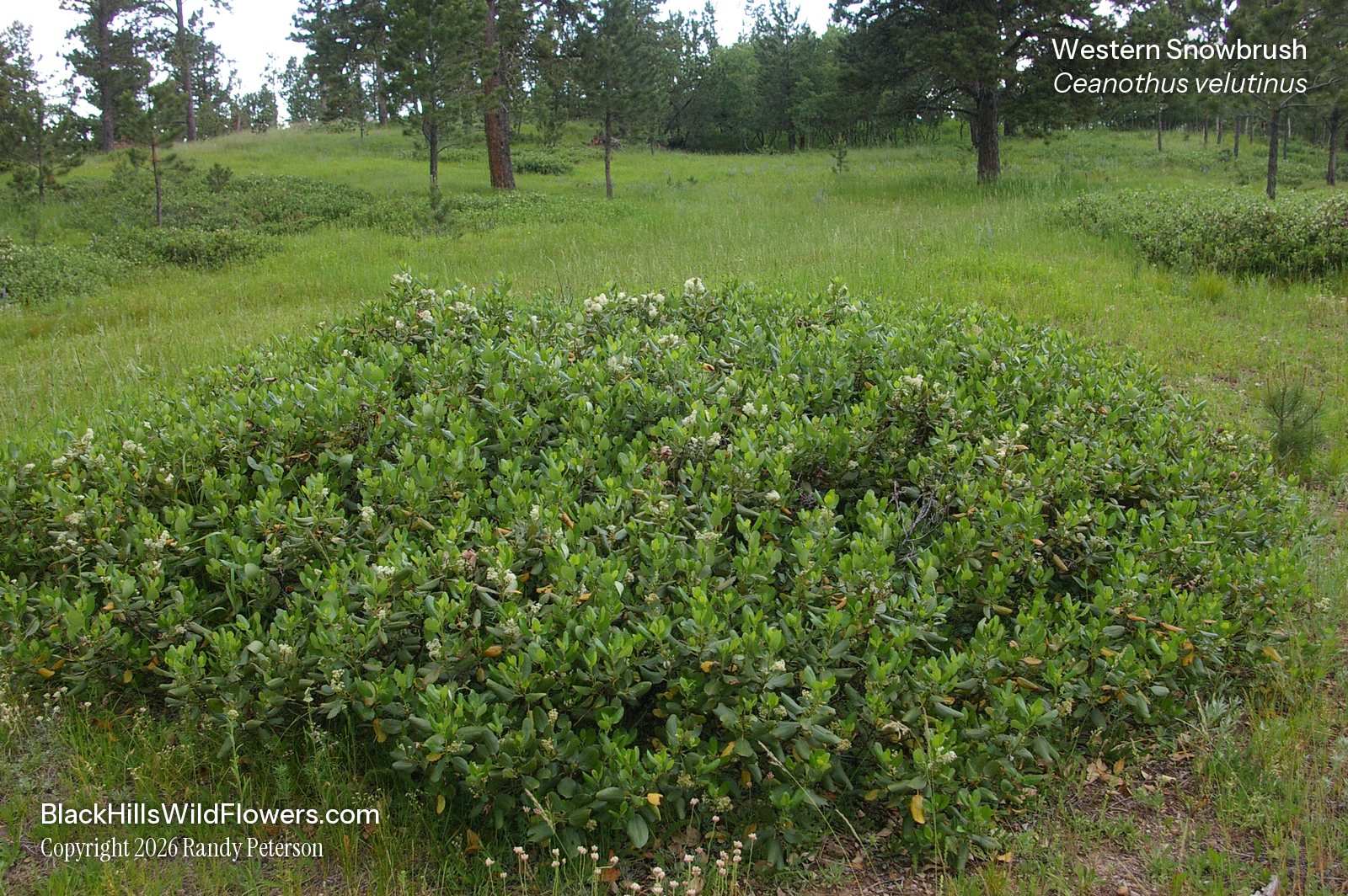
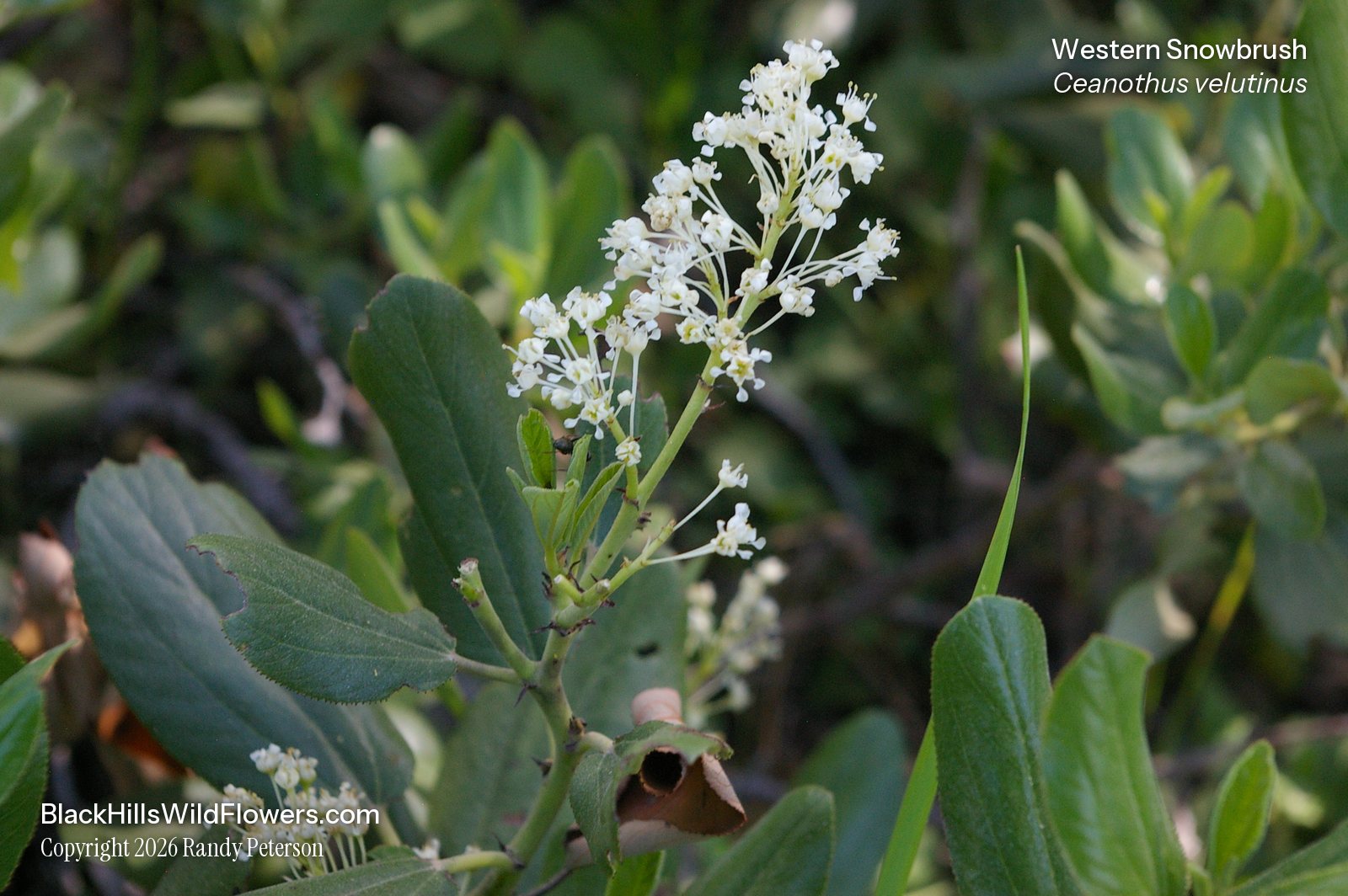
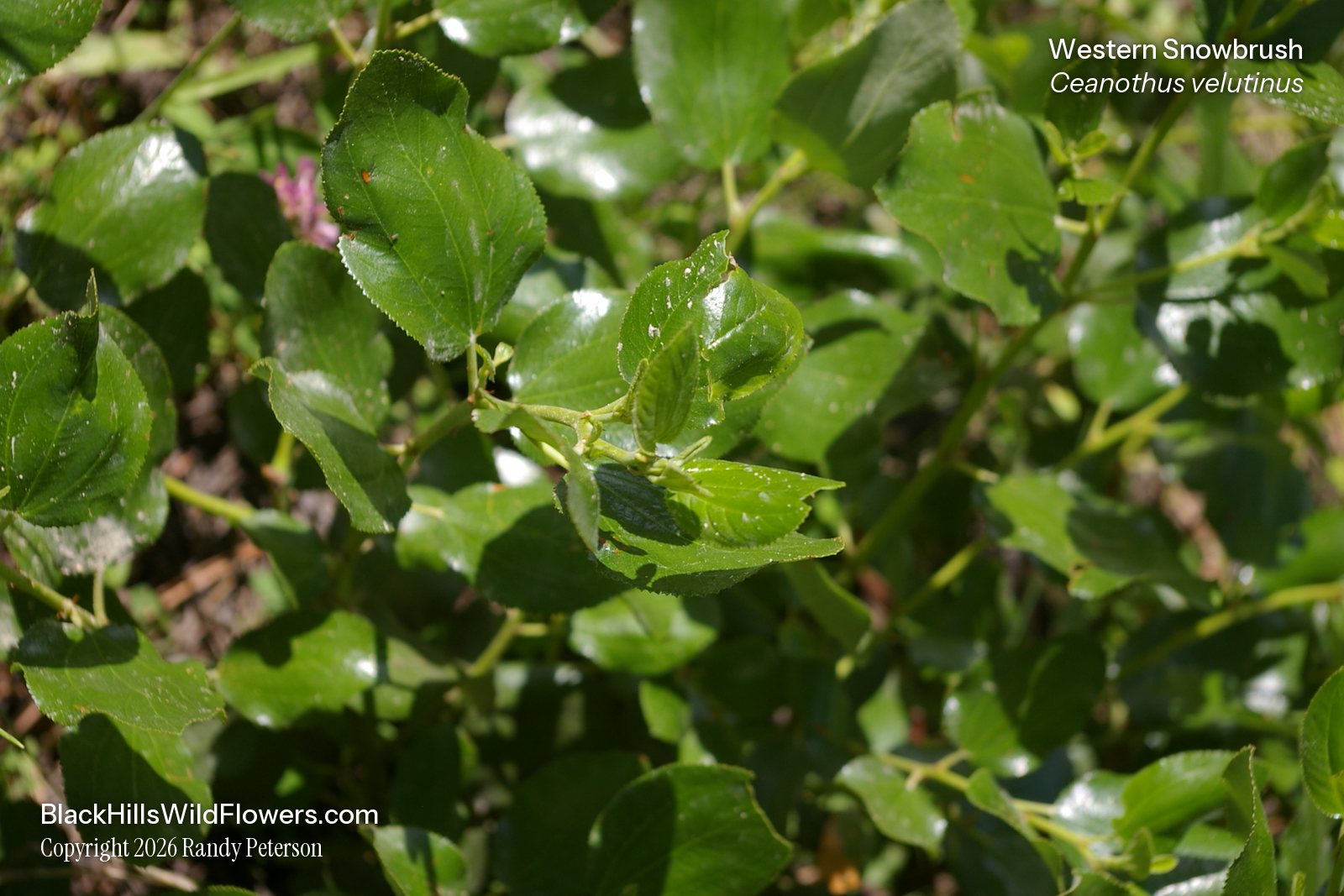
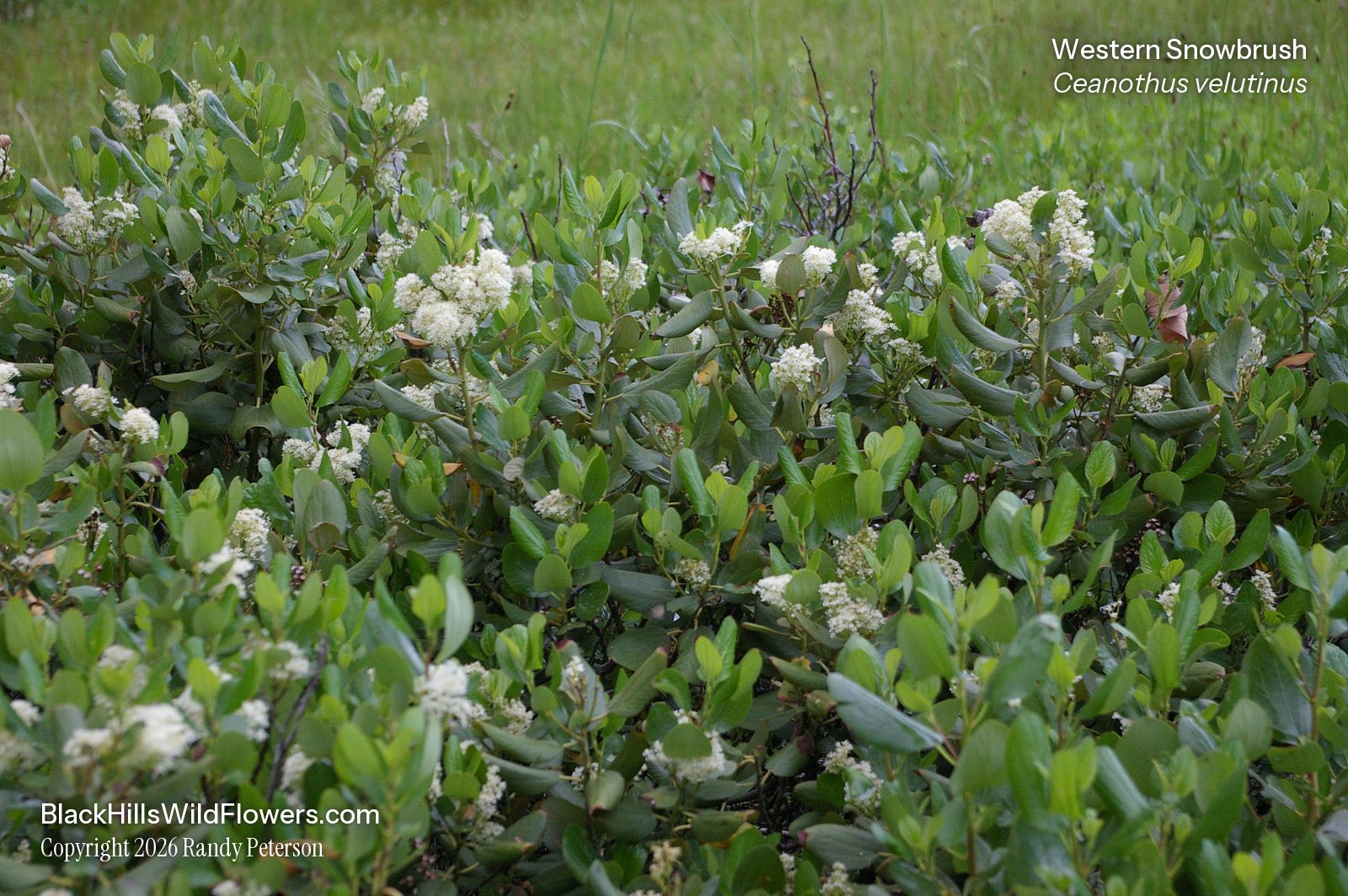
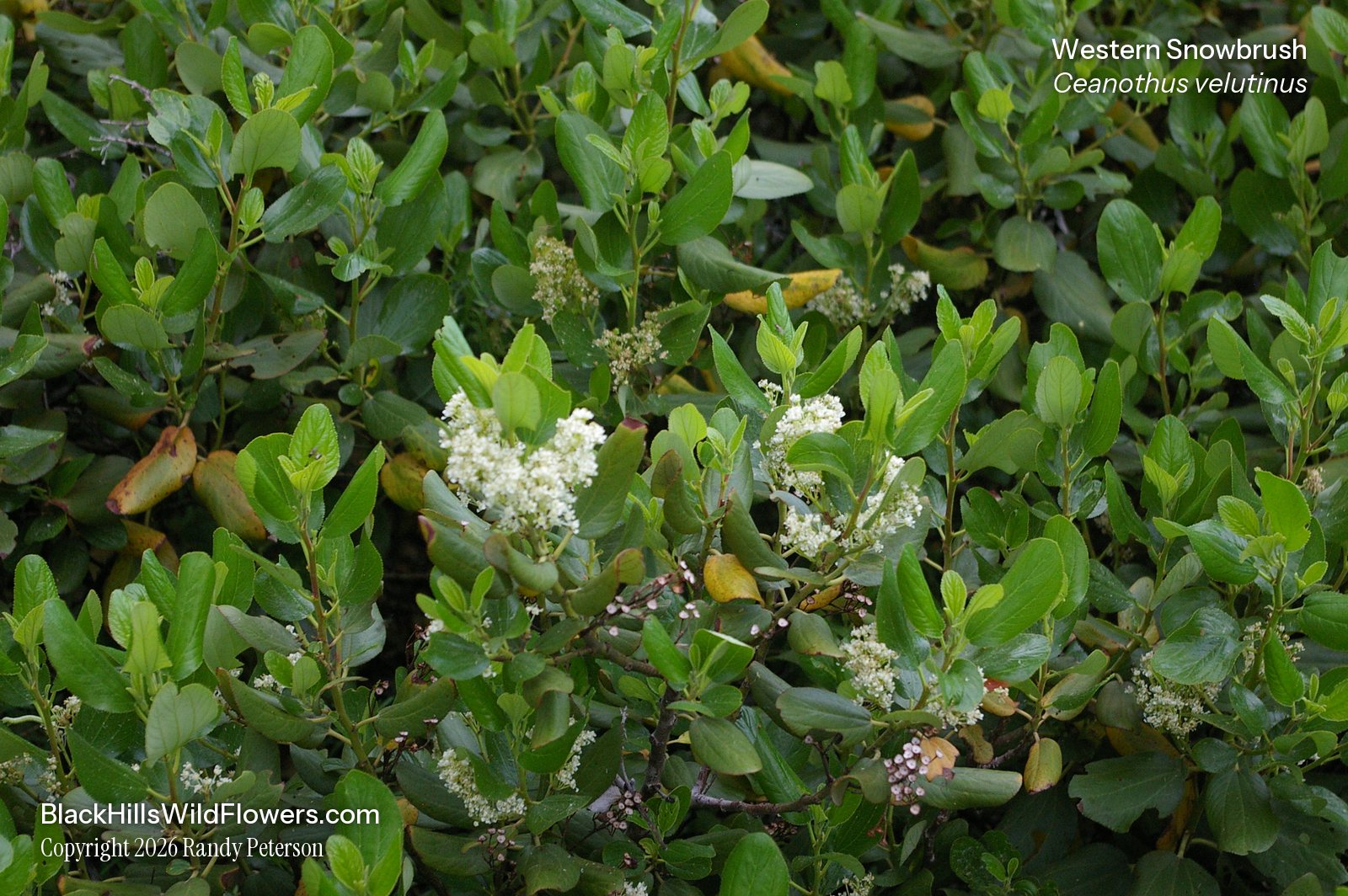
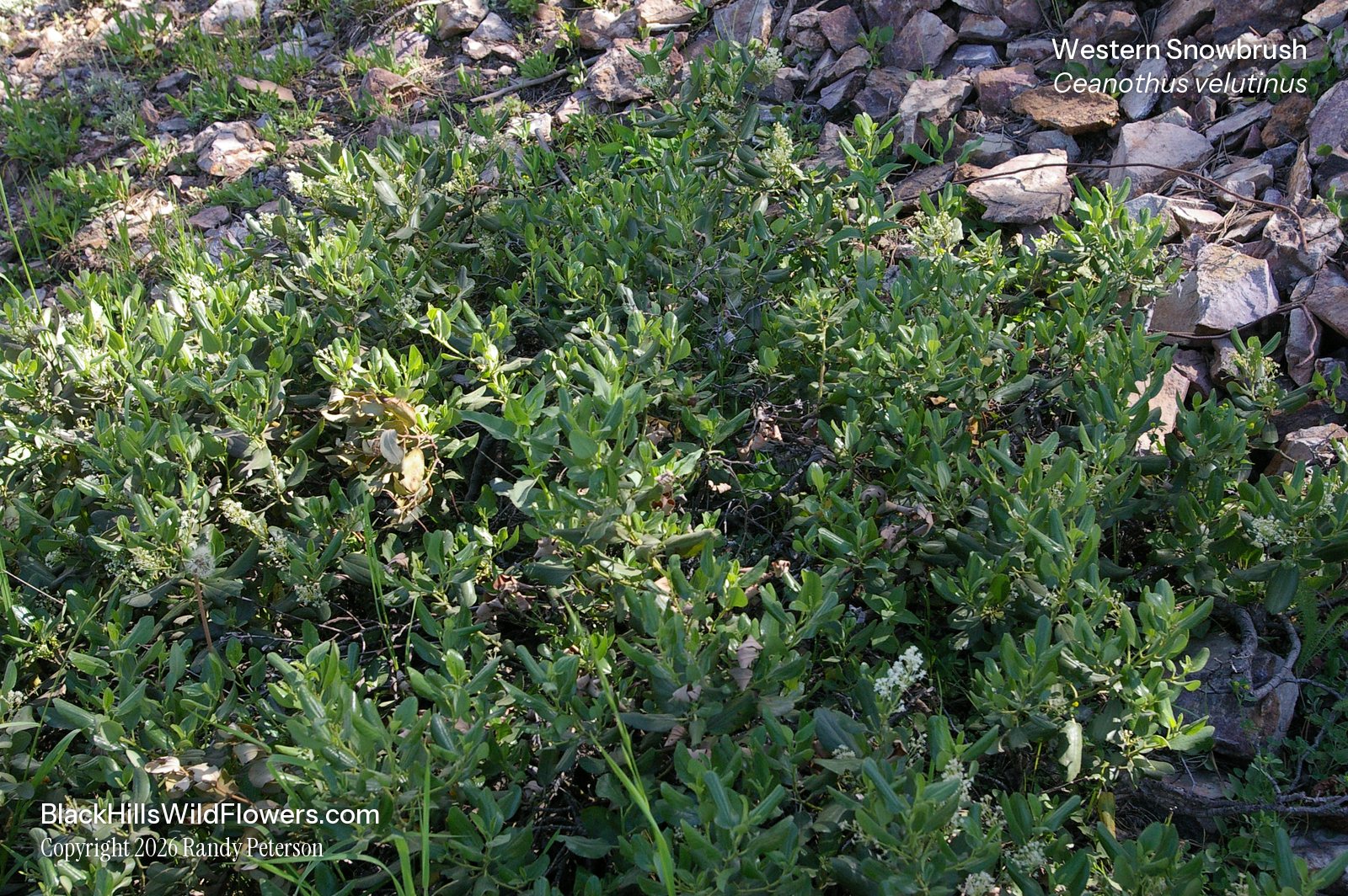
Western Snowbrush (Ceanothus velutinus) is a native evergreen shrub that grows in dense, rounded mounds of thick, glossy leaves, each with three main veins from the base, and in early summer it carries dense clusters of tiny white flowers. In the Black Hills it grows on rocky slopes and ridges and in ponderosa pine woods, mostly at about 1,450–2,075 m (4,800–6,800 ft). Photographed in the Black Hills.
Free photos from other sources
| Family | Rhamnaceae · Buckthorn |
|---|---|
| Status | Native evergreen shrub |
| Blooms | June and July in the few dated Black Hills records; across its range it flowers from May or June into September |
| Height | 0.5–2.7 m (2–9 ft) |
| Where | Rocky slopes, ridges and ponderosa pine woods, about 1,450–2,075 m (4,800–6,800 ft) |
| Also called | Snowbrush Ceanothus, Snowbrush, Shiny-leaf Ceanothus, Tobacco Brush |
Roots, seeds & germination
Root: A single large taproot with a deep, spreading root system that reaches 2–2.5 m (6–8 ft) down and spreads past the edge of the crown. Nodules on the roots hold bacteria that fix nitrogen, so stands put nitrogen back into the soil after fire.
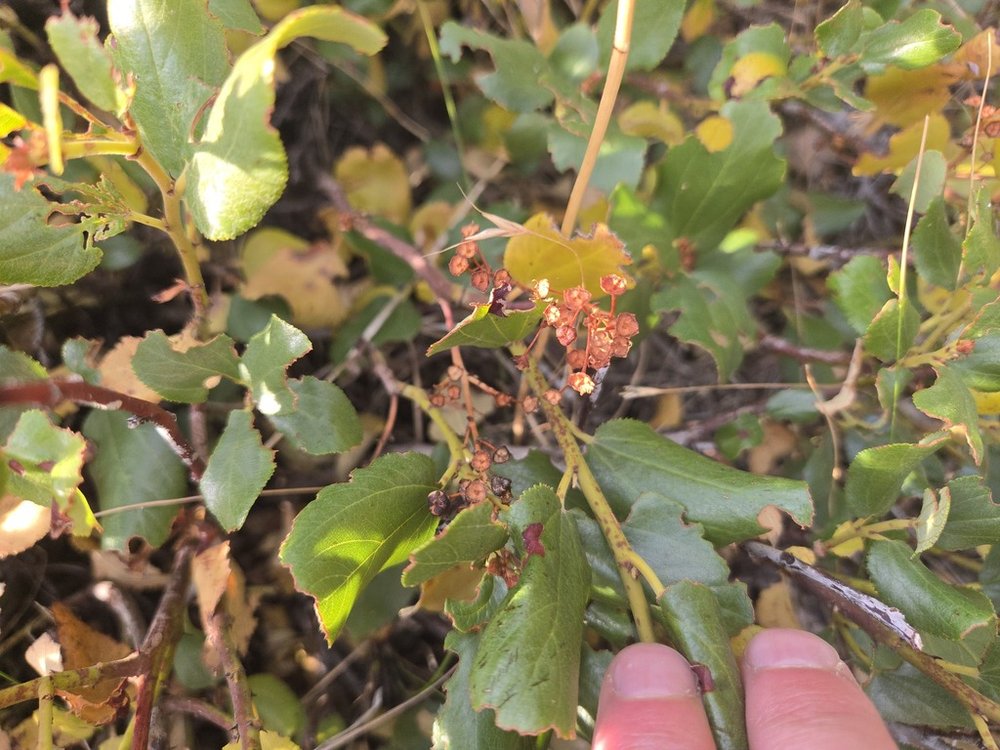
Seed: The fruit is a sticky, shallowly three-lobed capsule about 6 mm (¼ in) across, with one seed about 3 mm long in each lobe. It ripens from late June to early August and drops its seed from August on. The seed can stay alive in the soil for up to 200 years, so new stands can come up from buried seed after a fire.
Germination: The seed has a very hard, waterproof coat that must be cracked, scratched or heated before it can sprout; fire does this, best at 80–95 °C (176–203 °F). It then needs a cold, moist period, and heated seed that doesn't get one rarely sprouts. Nursery methods the Fire Effects Information System cites soak the seed in water near 90 °C (194 °F) for several hours, then hold it moist at 1–5 °C (34–41 °F) for 63 to 84 days; fall sowing gives the cold period naturally, and seedlings come up in spring.
How do you identify Western Snowbrush?
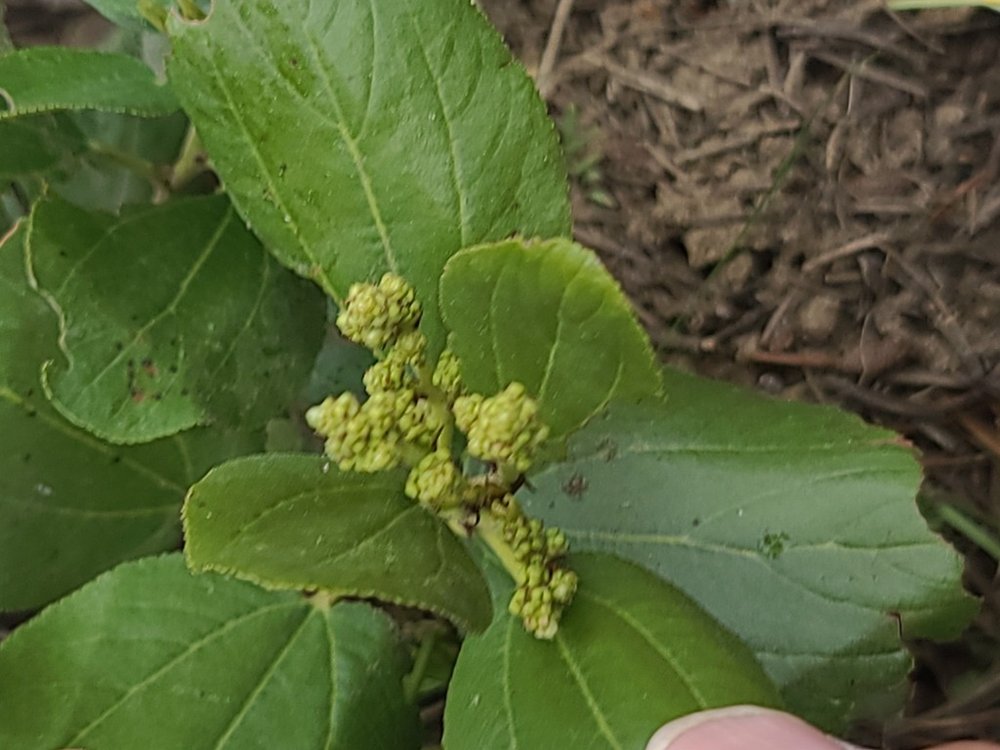
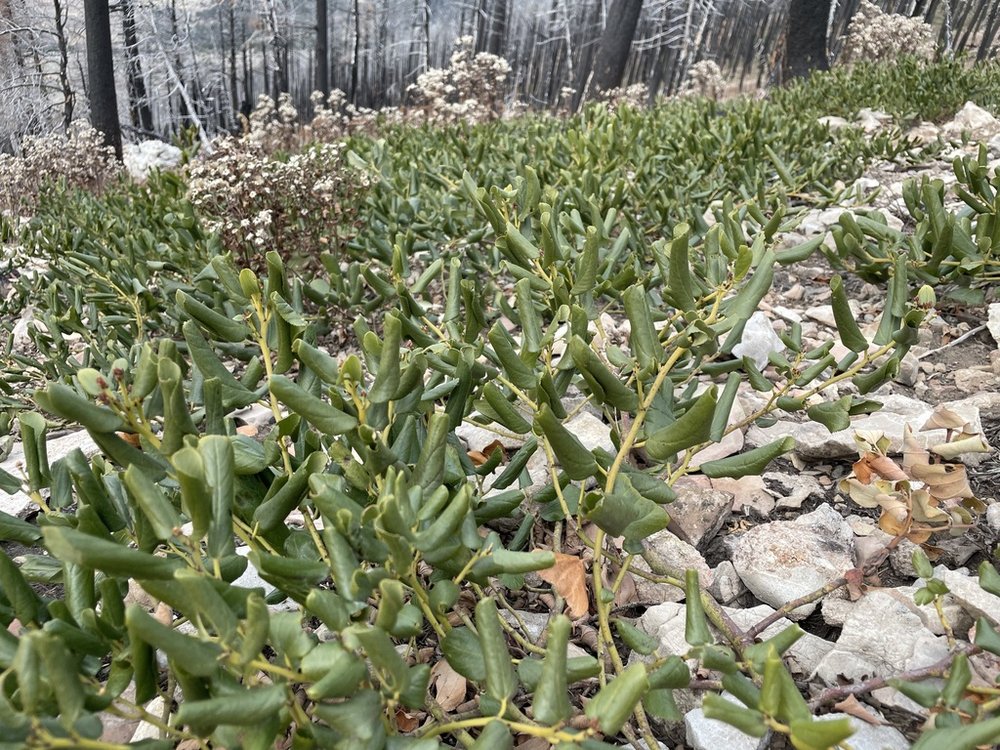
Look at a leaf first: it is thick, egg-shaped to oval, 3–7 cm (1¼–2¾ in) long, dark green and shiny above and paler below, with fine teeth and three main veins that fan out from the base. The leaves are sticky and smell heavily sweet when rubbed or in warm weather, and they stay green through winter. The shrub has several stems from the base and grows into a dense, round-topped mound, usually 0.5–1.5 m (2–5 ft) tall, with stout, smooth green twigs and smooth grayish-brown bark. Tiny white flowers, 4–5 mm across, crowd into branched clusters up to 12 cm (5 in) long on stalks from the leaf bases and branch tips, and they ripen into sticky, three-lobed capsules. Two other ceanothus grow in the Hills. New Jersey Tea is a highly branched shrub up to 1 m (3 ft) with lance-shaped to narrowly elliptic leaves 2–6 cm long, hairy underneath, and rounded flower clusters at the tips of the new branches. Fendler's Ceanothus is a spiny shrub with stiff, thorny twig tips and small, smooth-edged leaves about 2.5 cm (1 in) long, gray-green underneath.
When does it bloom?
June and July in the few dated Black Hills records; across its range it flowers from May or June into September.
Where does it grow?
Rocky open slopes, ridges and the slopes of peaks, and ponderosa pine woods, from moist to dry ground, at about 1,450–2,075 m (4,800–6,800 ft). The Fire Effects Information System describes it on open or partly shaded mountain slopes, and the Montana Field Guide notes it in open forest, especially after fire. Herbarium specimens from 1926 to 2011 come from Lawrence, Pennington and Custer counties in South Dakota and Crook County in Wyoming, and Rydberg's 1896 flora of the Black Hills calls it not uncommon at 1,700 m (5,600 ft). A 1946 study of Black Hills plants, cited by the Fire Effects Information System, rated it highly to moderately palatable to white-tailed deer in late fall and winter and unpalatable the rest of the year.
Sources: USDA Forest Service Fire Effects Information System: Ceanothus velutinus (Anderson 2001); Montana Field Guide: Snowbrush Ceanothus, Ceanothus velutinus; Montana Field Guide: New Jersey Tea, Ceanothus herbaceus; Virginia Tech Dendrology: Snowbrush, Ceanothus velutinus; Virginia Tech Dendrology: Fendler's ceanothus, Ceanothus fendleri; USDA PLANTS Database: Ceanothus velutinus (CEVE); Rydberg 1896, Flora of the Black Hills of South Dakota; GBIF occurrence search: Ceanothus velutinus, South Dakota and Wyoming herbarium specimens; GBIF specimen 4073821384: Crook County, Wyoming, 16 June 1938, in flower; Black Hills National Forest Revised Forest Assessment: At-Risk Species, October 2023; South Dakota Game, Fish and Parks: Rare Plants of South Dakota.