Narrowleaf Collomia Collomia linearis
Also called Tiny Trumpet, Narrow-leaf Mountain Trumpet, Slender-leaf Collomia
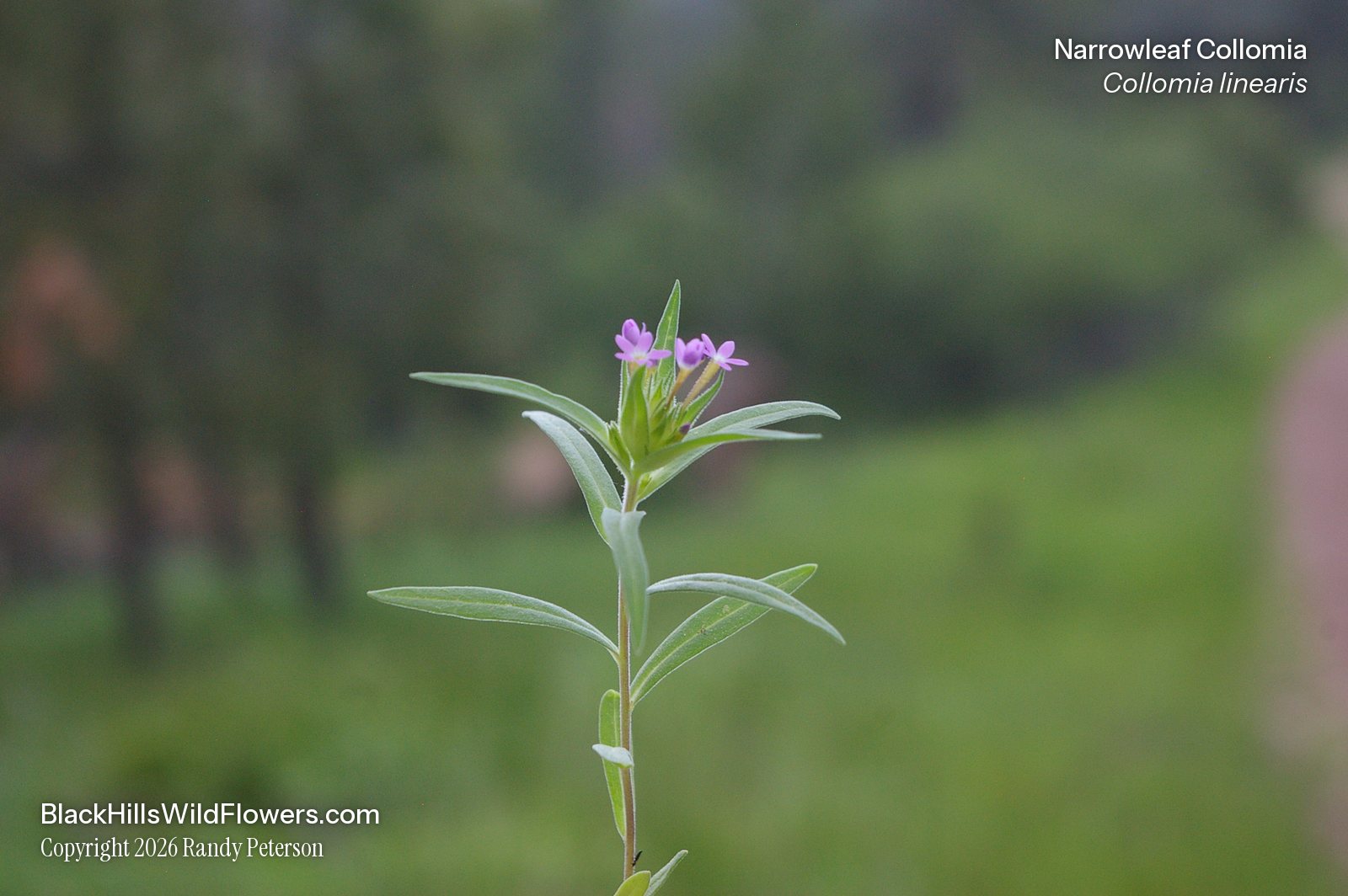
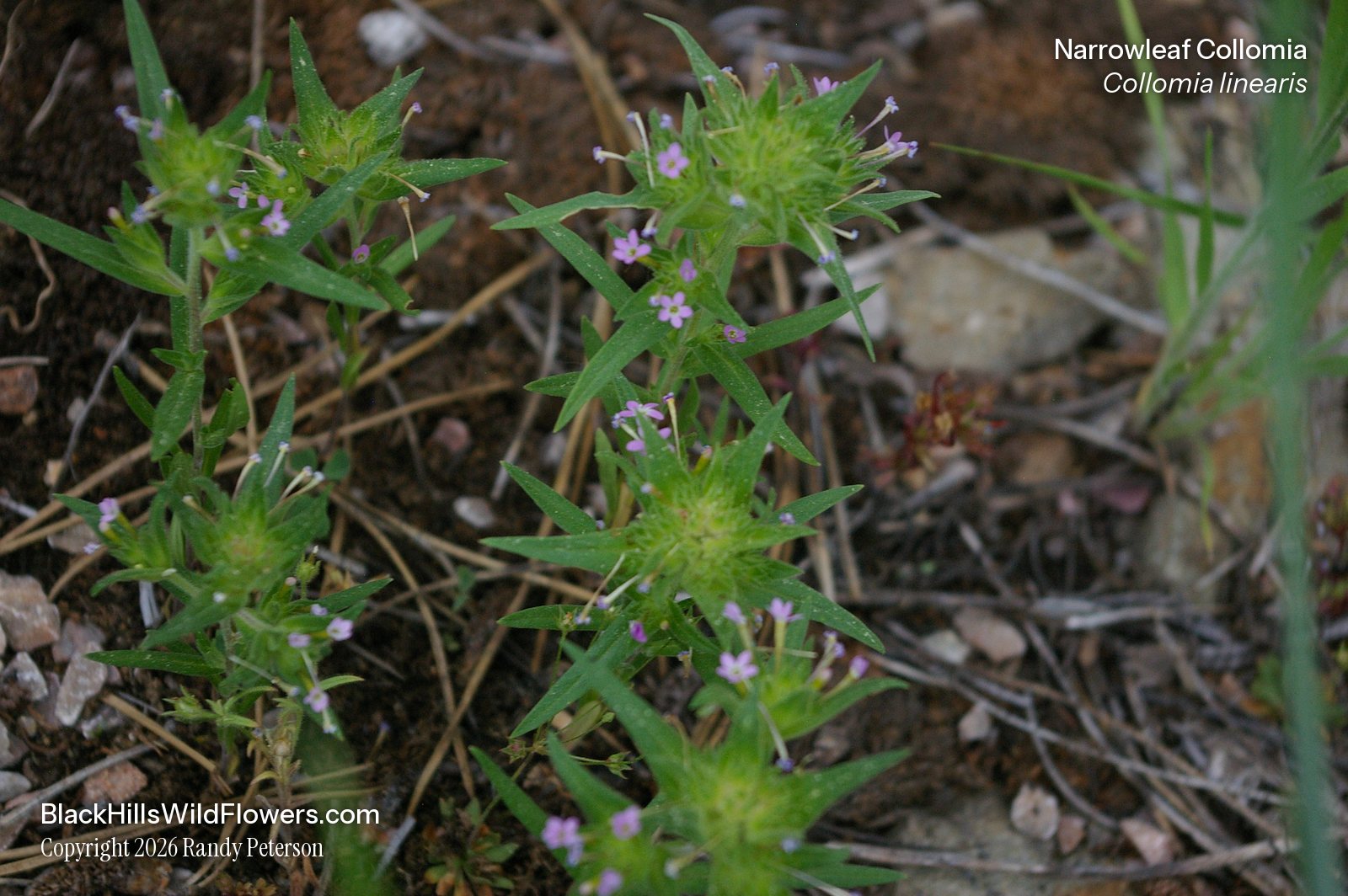
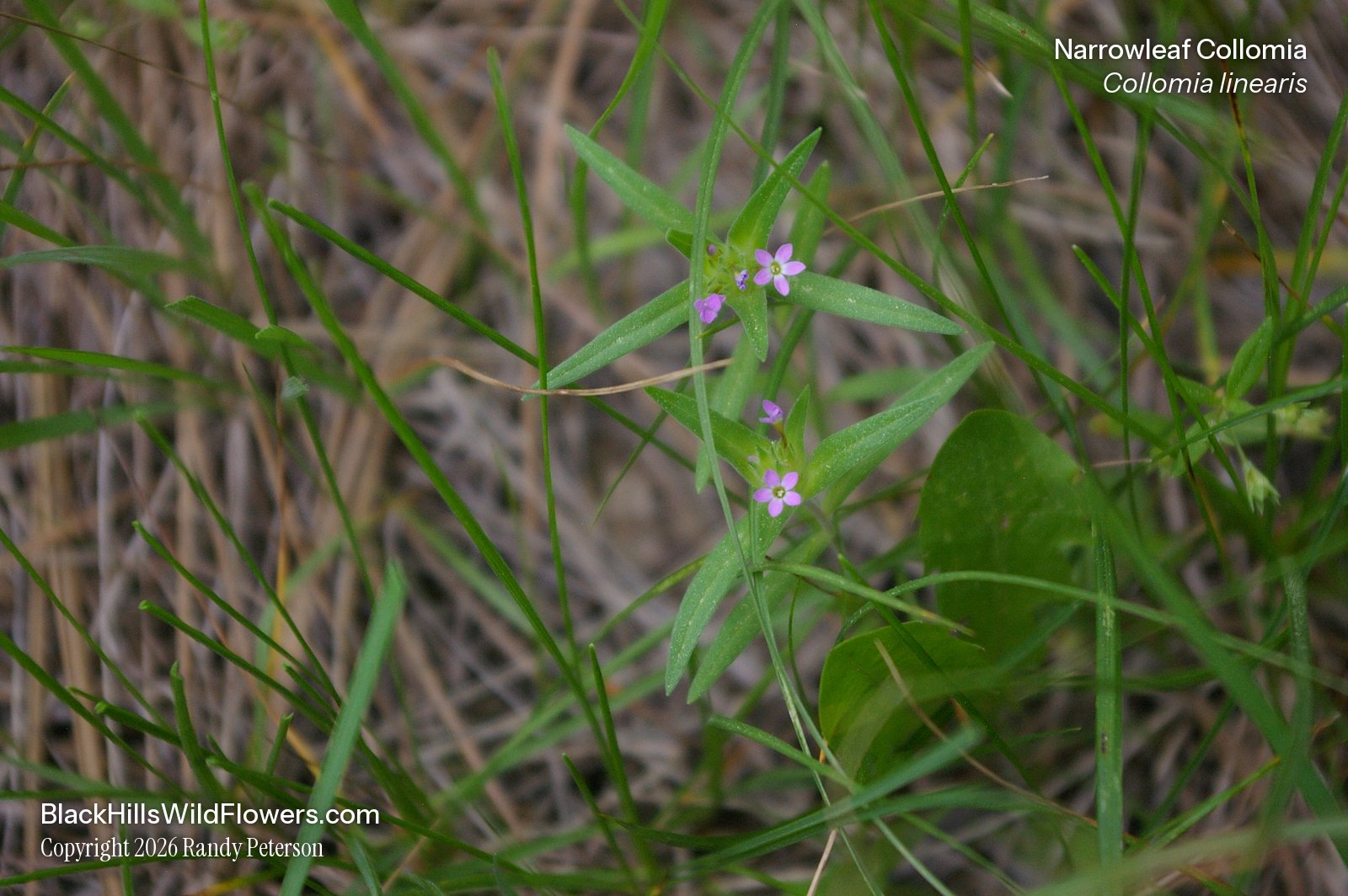
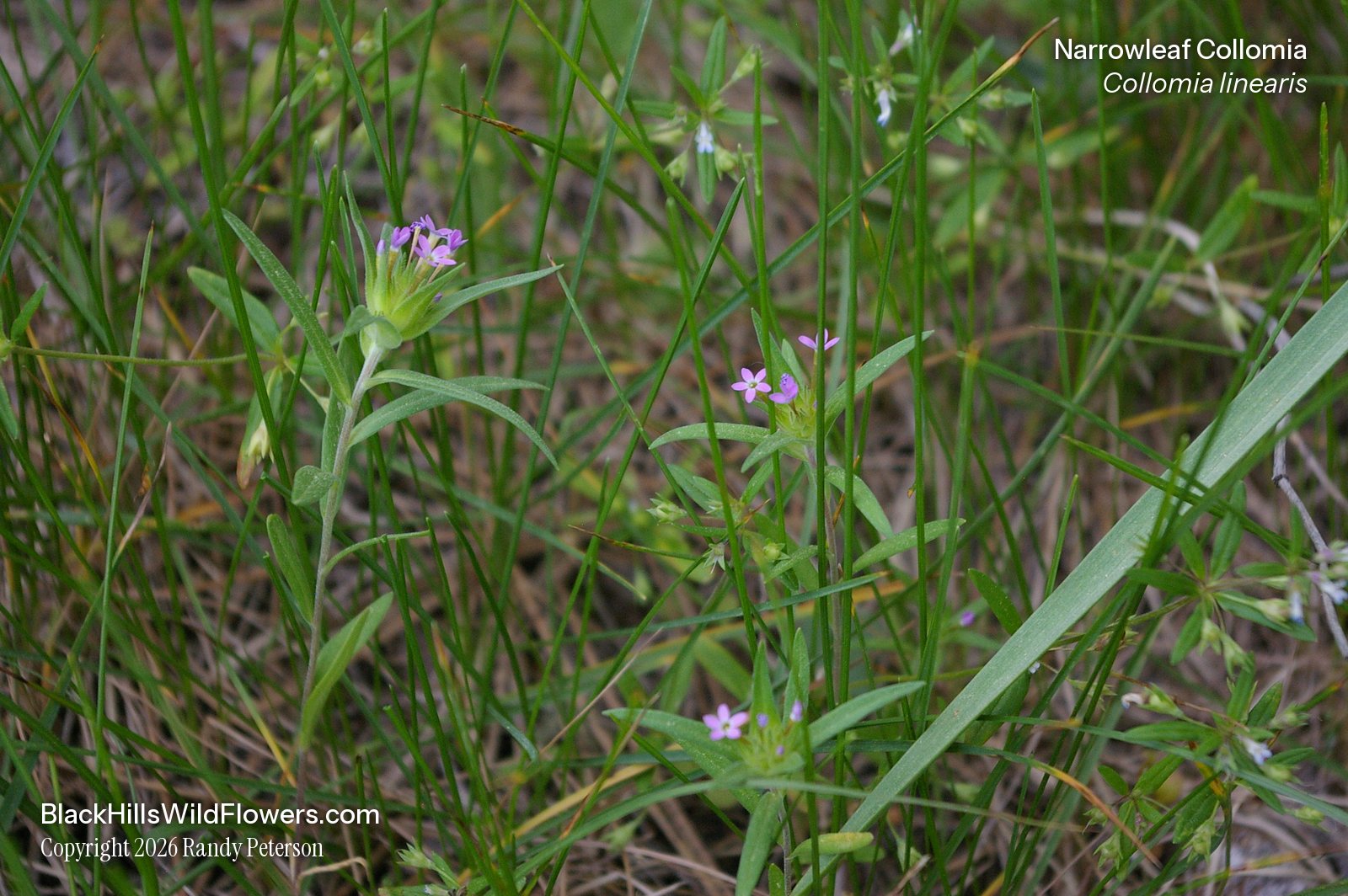
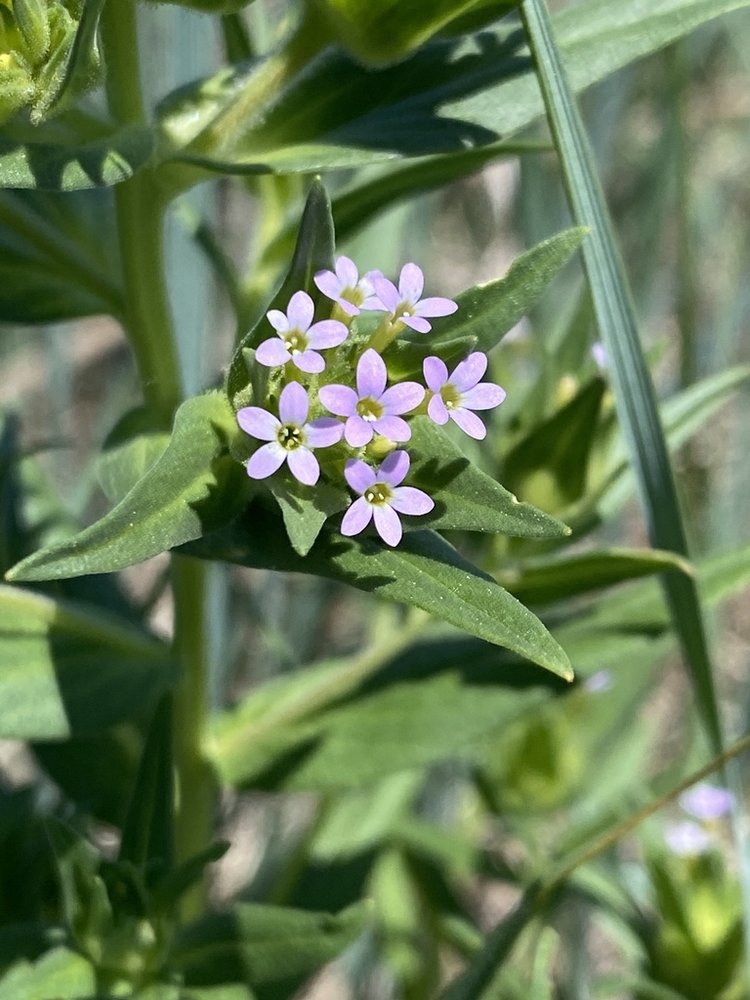
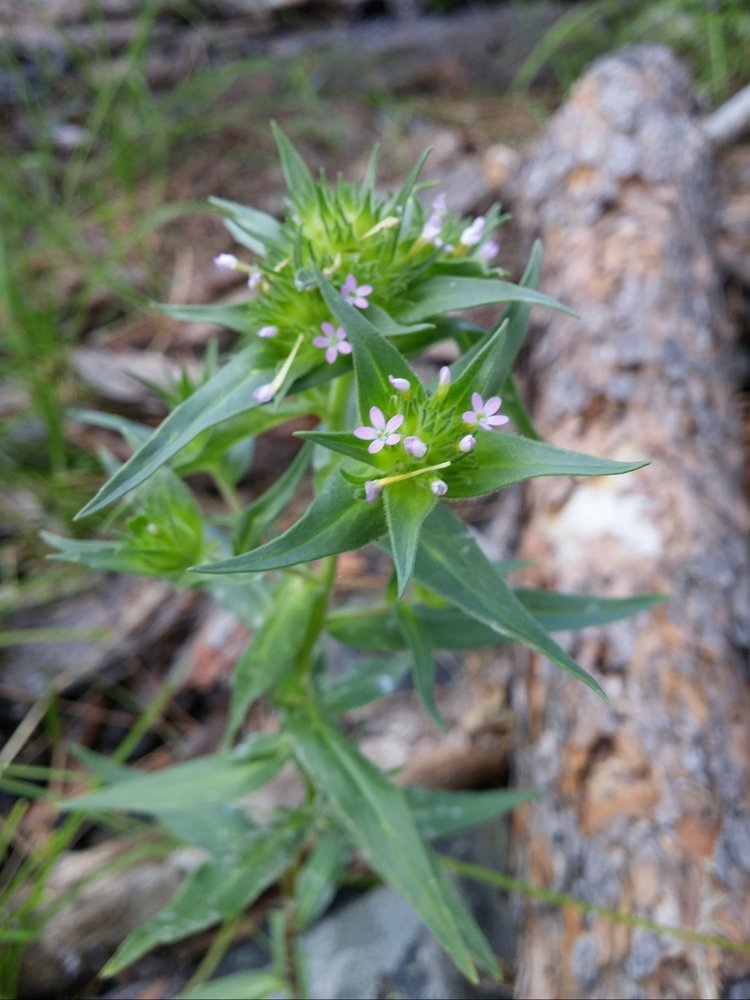
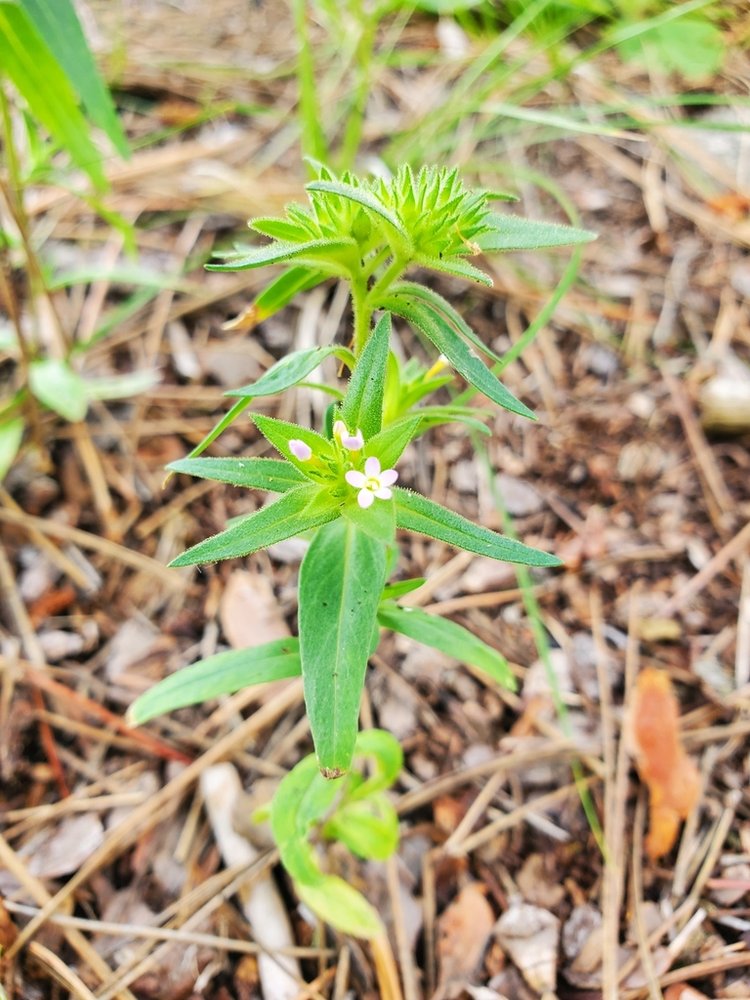
Narrowleaf Collomia (Collomia linearis), also called Tiny Trumpet, is a small native annual, 7–50 cm (3–20 in) tall, with narrow, toothless leaves and a dense head of little trumpet-shaped flowers, pink to violet and sometimes white or blue, set in leafy bracts at the stem tip, from late May through July in the Black Hills. In the Black Hills it grows on open, often disturbed ground such as roadsides, road cuts, meadows and open pine and pine–aspen woods, and the National Park Service lists it at Wind Cave, Jewel Cave, Mount Rushmore and Devils Tower. Photographed in the Black Hills.
Free photos from other sources
| Family | Polemoniaceae · Phlox |
|---|---|
| Status | Native annual |
| Blooms | Late May through July in Black Hills specimens; June into August in Minnesota |
| Height | 7–50 cm (3–20 in) |
| Where | Roadsides, meadows, open pine and pine–aspen woods, dry slopes |
| Also called | Tiny Trumpet, Narrow-leaf Mountain Trumpet, Slender-leaf Collomia |
Roots, seeds & germination
Seed: The fruit is a three-chambered capsule about as long as the sepals, with one seed in each chamber. The ripe seed is thrown from the capsule; when wet it turns sticky and unwinds hundreds of spiraling threads that fasten it to the ground.
How do you identify Narrowleaf Collomia?
Look for one upright stem, sometimes branched, finely hairy and glandular toward the top. The leaves are alternate, stalkless or nearly so, narrow and lance-shaped with a pointed tip, 2–9 cm (¾–3½ in) long and toothless; the lowest are the smallest and the upper ones the broadest. At the top of the stem, and at the tips of any branches, sits a dense cluster of 7 to 20 stalkless flowers ringed by large, leaf-like, glandular bracts. Each flower is about 1.3 cm (½ in) long and 6 mm (¼ in) across: a slender tube 6–9 mm long that opens into 5 small lobes, pink to violet, sometimes white or blue. The 5 sepals are narrow, sharply pointed and densely glandular-hairy. Minnesota Wildflowers names this mix as what sets it apart from other plants with small, five-lobed tubular flowers: the dense cluster at the branch tips, narrow, alternate, mostly stalkless leaves, a hairy stem, and glandular sepals and bracts.
When does it bloom?
Late May through July in Black Hills specimens; June into August in Minnesota.
Where does it grow?
Open, often disturbed ground: roadsides and road cuts, loose soil, meadows and grassland, open ponderosa pine and pine–aspen woods, creek banks and floodplains, and dry, rocky slopes. More than 100 herbarium specimens come from Lawrence, Pennington, Custer and Meade counties in South Dakota and Crook and Weston counties in Wyoming, and the National Park Service lists it at Wind Cave, Jewel Cave, Mount Rushmore and Devils Tower.
Phlox family (Polemoniaceae): 3 other plants in this guide
Sources: Minnesota Wildflowers: Collomia linearis (Tiny Trumpet); Montana Field Guide: Narrow-leaved Collomia, Collomia linearis (Montana Natural Heritage Program); USDA PLANTS Database: Collomia linearis, tiny trumpet (COLI2); ITIS: Collomia linearis (TSN 31041); NPSpecies checklist, Wind Cave National Park vascular plants; NPSpecies checklist, Jewel Cave National Monument vascular plants; NPSpecies checklist, Mount Rushmore National Memorial vascular plants; NPSpecies checklist, Devils Tower National Monument vascular plants; GBIF occurrence search: Collomia linearis, South Dakota and Wyoming herbarium specimens; South Dakota Game, Fish and Parks: Rare Plants of South Dakota (checked; not listed); Black Hills National Forest Revised Forest Assessment: At-Risk Species, October 2023 (checked; not listed).