Alyssum-leaf Phlox
Phlox alyssifolia
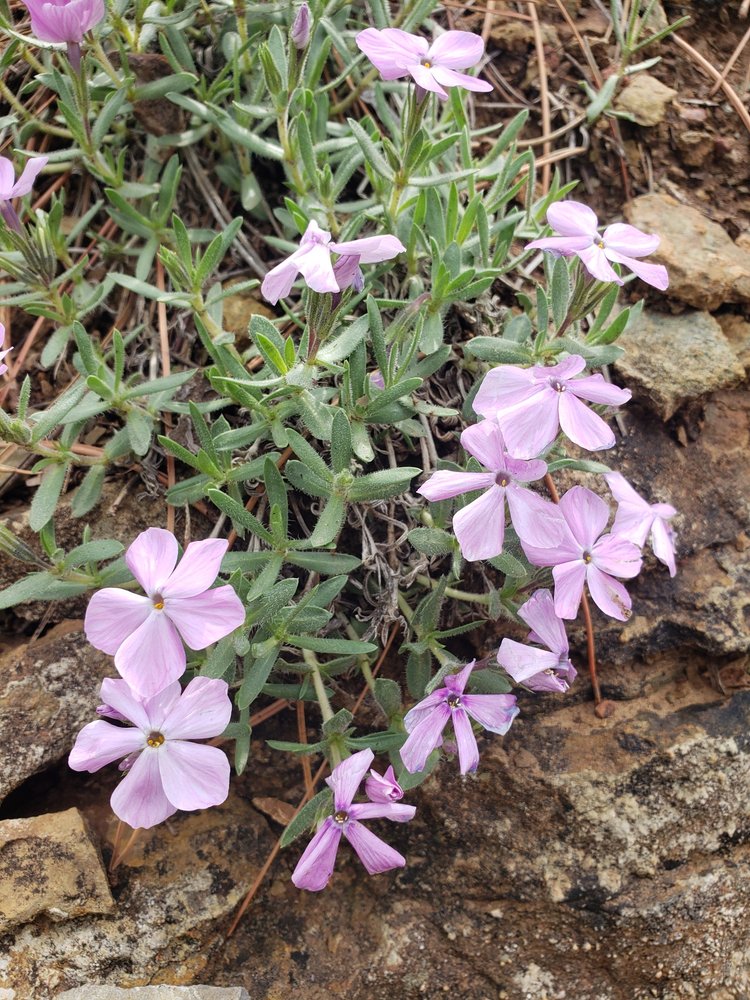
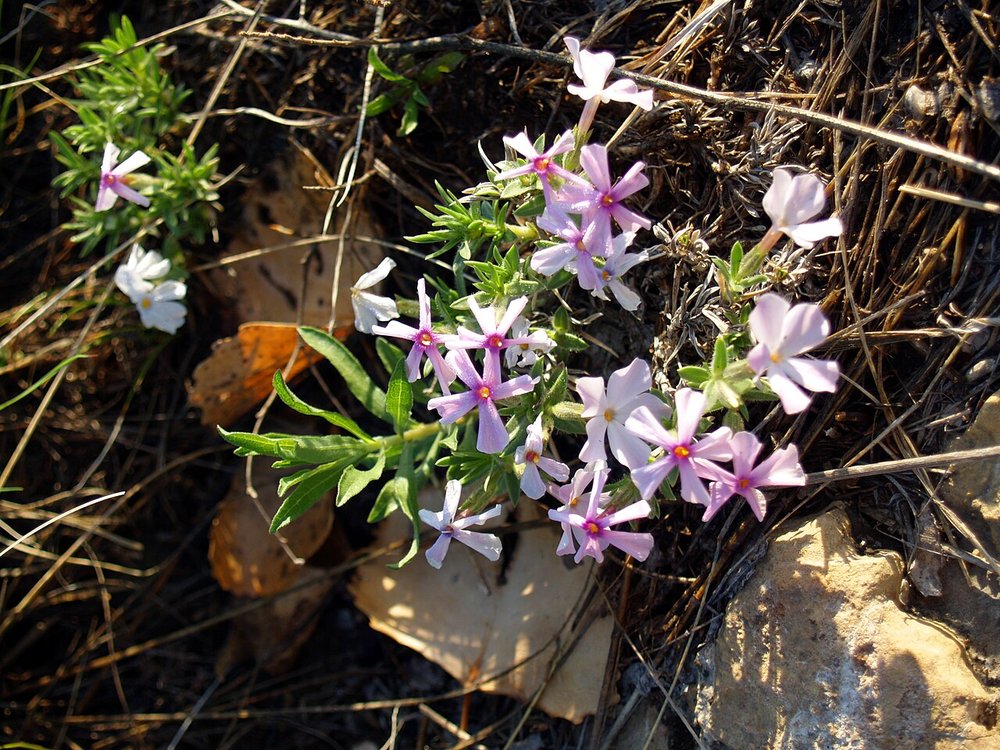
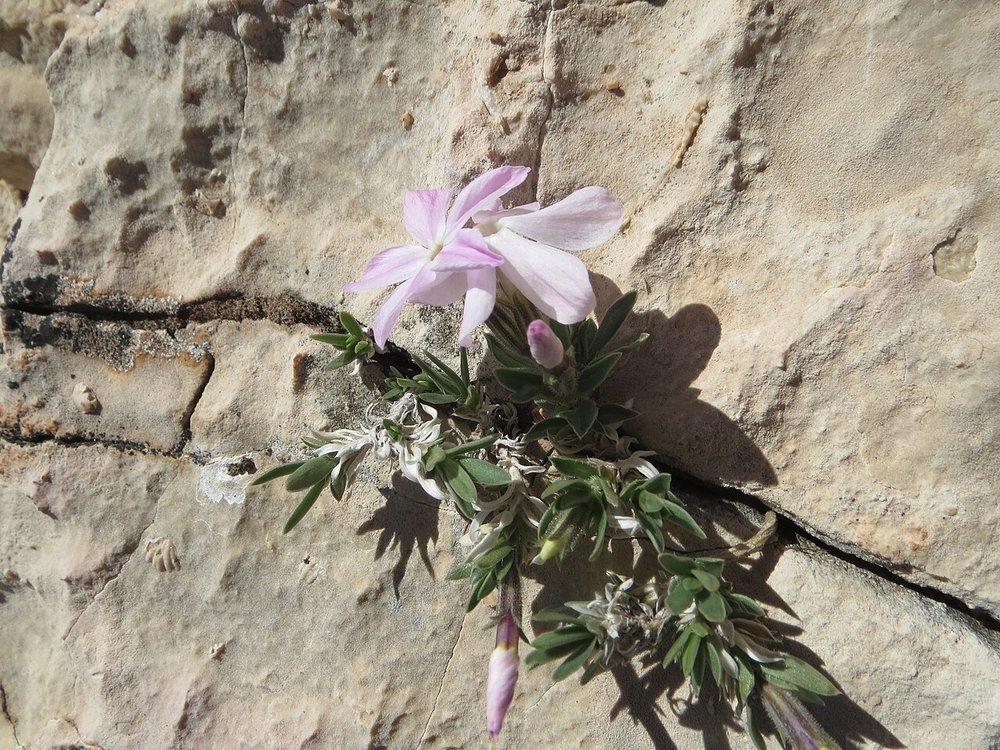
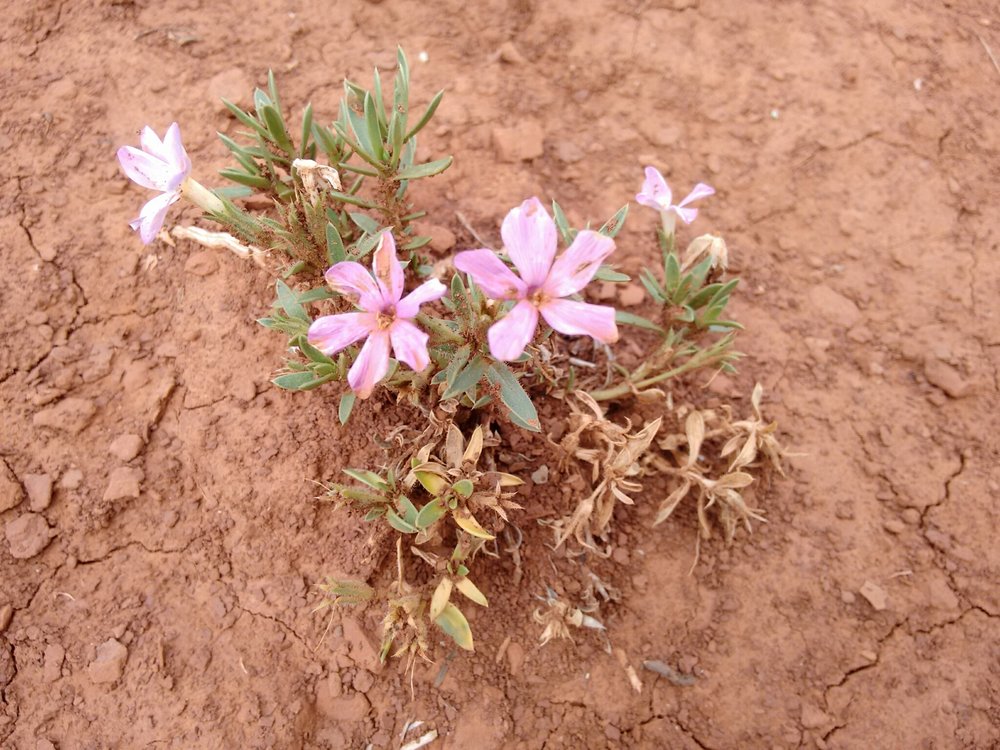
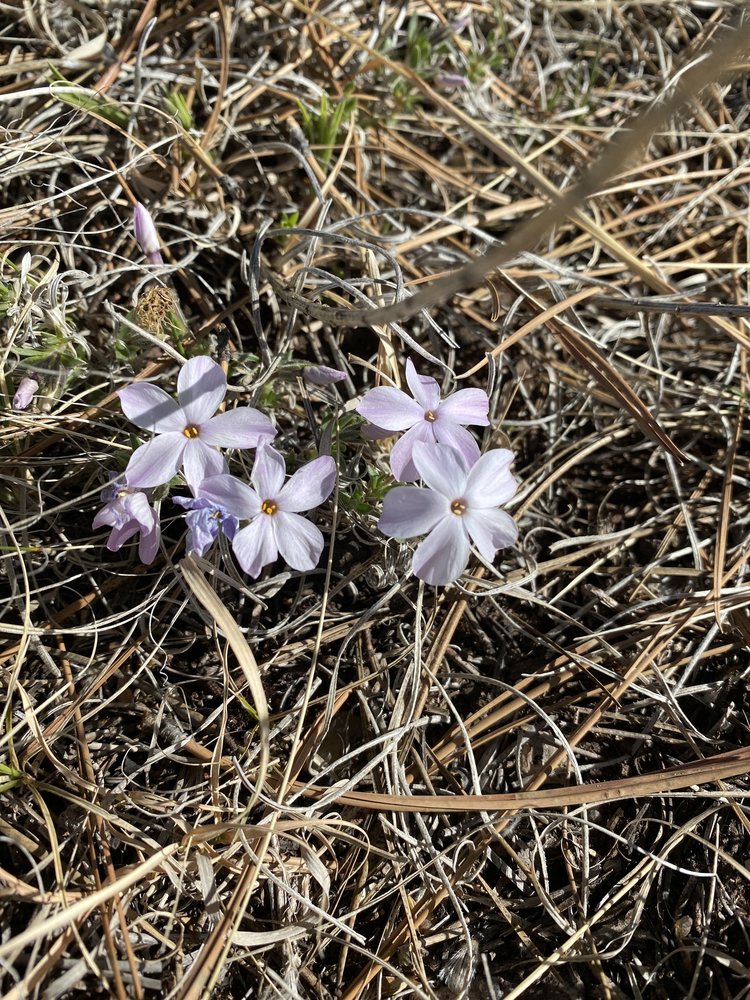
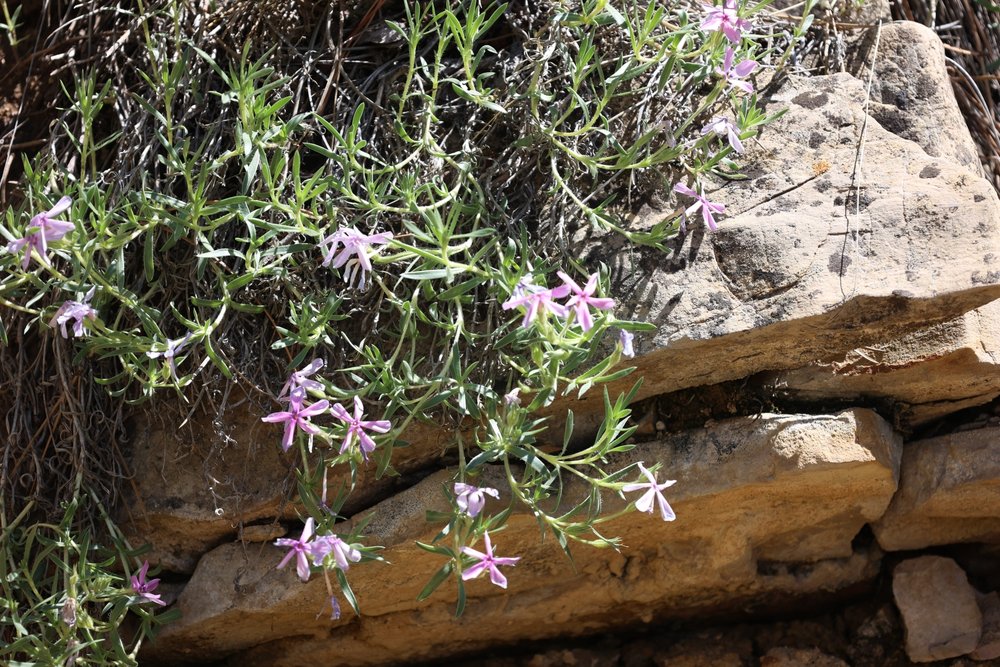
Alyssum-leaf Phlox (Phlox alyssifolia) is a native perennial that forms low mats of thick, stiff, white-edged leaves and bears pink to white flowers in spring. In the Black Hills it blooms from late April into June on rocky ridges, limestone ledges and open pine slopes, and the National Park Service lists it at Wind Cave, Jewel Cave, Mount Rushmore and Devils Tower.
Free photos from other sources


| Family | Polemoniaceae · Phlox |
|---|---|
| Status | Native perennial |
| Blooms | Late April into June, a few into July up high |
| Height | 5–10 cm (2–4 in) |
| Where | Rocky ridges, limestone ledges, and dry grassy openings in pine |
| Also called | Alyssumleaf Phlox, Alyssum-leaved Phlox, Pink Phlox |
| Synonym | Phlox abdita, Phlox collina, Phlox kelseyi var. collina |
| Listed | NatureServe ranks it vulnerable (S3) in Wyoming; South Dakota does not rank it. |
Roots, seeds & germination
Root: A deep taproot, with much-branched, woody lower stems that spread to make the mat.
Seed: Only a few seeds are set, in tiny capsules at the base of each flower.
Germination: A rock-garden plant database reports spring sowing, barely covered, with sprouting in 1–3 months at 16–18 °C (61–64 °F). In gardens it needs protection from winter wet and a sunny, well-drained spot.
How do you identify Alyssum-leaf Phlox?
Look for a low, tufted mat 5–10 cm (2–4 in) tall, with woody lower stems and mostly paired leaves. The leaves are the best mark: thick, stiff and hairy, oblong to lance-shaped, about 1–2.5 cm (½–1 in) long, with a whitish, thickened edge. The flowers come one to three at the stem tips, each with five petals spreading about 1.5–2.5 cm (⅝–1 in) across, pale to deep lilac-pink or white. Hood's Phlox forms a dense cushion of tiny, sharp, needle-like leaves, often woolly with tangled, cobwebby hairs.
When does it bloom?
Late April into June, a few into July up high.
Where does it grow?
Dry, open, rocky sites, mostly in sun: limestone ledges and ridges, rock crevices, gravelly knolls, red-soil foothills around the edge of the Hills and open slopes in ponderosa pine, from about 1,070 to 1,990 m (3,500–6,500 ft). Herbarium specimens come from all seven Black Hills counties, most from Lawrence and Crook, and the National Park Service lists it at Wind Cave, Jewel Cave, Mount Rushmore and Devils Tower.
Sources: Marriott, H. & R. Hartman. 1986. Vegetation of Jewel Cave National Monument (species list: Phlox alyssifolia, 'pink phlox'); NPSpecies: Wind Cave National Park vascular plant checklist (Phlox alyssifolia, Present); NPSpecies: Jewel Cave National Monument vascular plant checklist; NPSpecies: Devils Tower National Monument vascular plant checklist (P. alyssifolia ssp. alyssifolia, 'pink phlox'); NPSpecies: Mount Rushmore National Memorial vascular plant checklist (P. alyssifolia ssp. alyssifolia); USDA PLANTS Database: Phlox alyssifolia Greene, alyssumleaf phlox (PHAL3); Plants of the World Online (Kew): Phlox alyssifolia Greene; Plants of the World Online (Kew): Phlox alyssifolia subsp. abdita (A.Nelson) Wherry; Plants of the World Online (Kew): Phlox alyssifolia subsp. collina (Rydb.) Wherry; NatureServe Explorer: Phlox alyssifolia (G5; WY S3, ND S2, NE S1, SD SNR); GBIF occurrence search: Phlox alyssifolia preserved specimens, South Dakota and Wyoming; iNaturalist: Phlox alyssifolia observations within 100 km of the central Black Hills; Barr, C. A. 1951. Beautiful Native Plants from the High Plains, Badlands and Black Hills (Prairie Gem Ranch catalog, Smithwick SD; USDA National Agricultural Library historic archive); Wherry, Edgar T. 1946. Rock Garden Phloxes. Rock Garden Quarterly (NARGS) 4(2), March–April 1946; Rydberg, P.A. 1896. Flora of the Black Hills of South Dakota. Contr. U.S. Natl. Herb. 3(8) (Polemoniaceae, as 'Phlox kelseyi'); USDA Forest Service Fire Effects Information System: Phlox hoodii; Reese, R.N. 2025. Polemoniaceae: Phlox hoodii. South Dakota Native Plant Research, SDSU Open PRAIRIE; Rock Garden Plants database (Kadel): Phlox alyssifolia; USGS Northern Prairie Wildlife Research Center: Native Wildflowers of the North Dakota Grasslands, Alyssum-leaved Phlox (Phlox alyssifolia) (End of Term web archive copy, 2008); GBIF Backbone Taxonomy: Phlox alyssifolia and its subspecies (synonyms Phlox abdita, Phlox collina, Phlox kelseyi var. collina).