Russulas Russula sp.
Also called Brittlegills
Russulas (genus Russula, also called brittlegills) are gilled mushrooms whose cap, gills and stem are dry and brittle; on many kinds the stem snaps cleanly like chalk, and the gills are white when young. iNaturalist has 160 Russula records in the Black Hills, mostly from July, but only 11 are research-grade and most are named only to the genus, so which russulas grow in the Hills is largely unsettled.
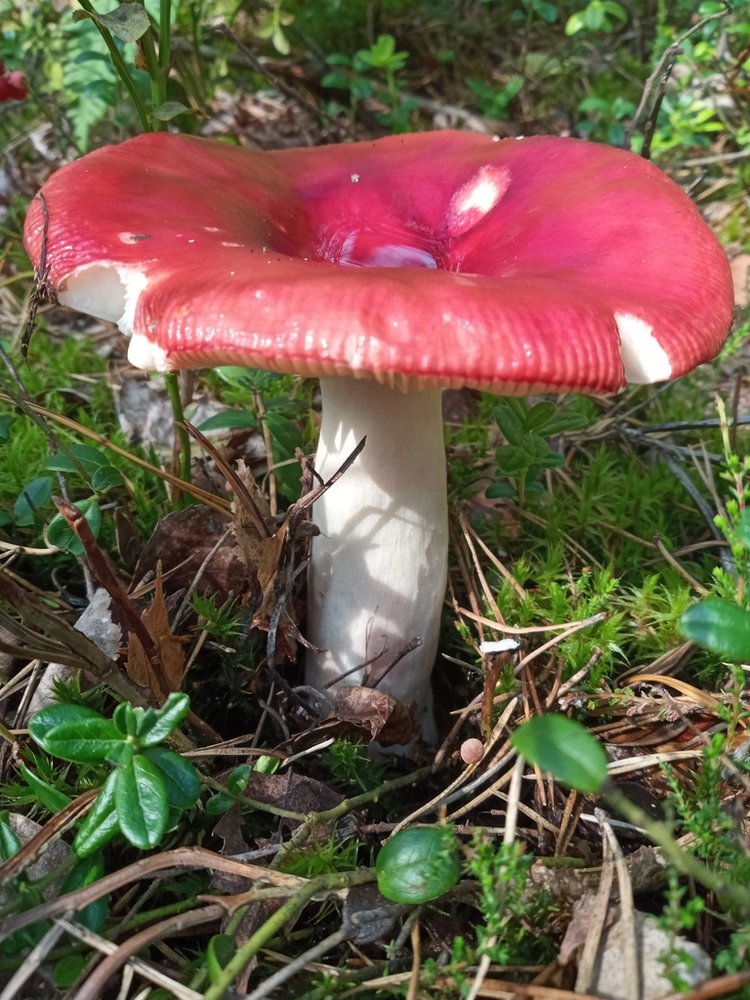
Free photos from other sources
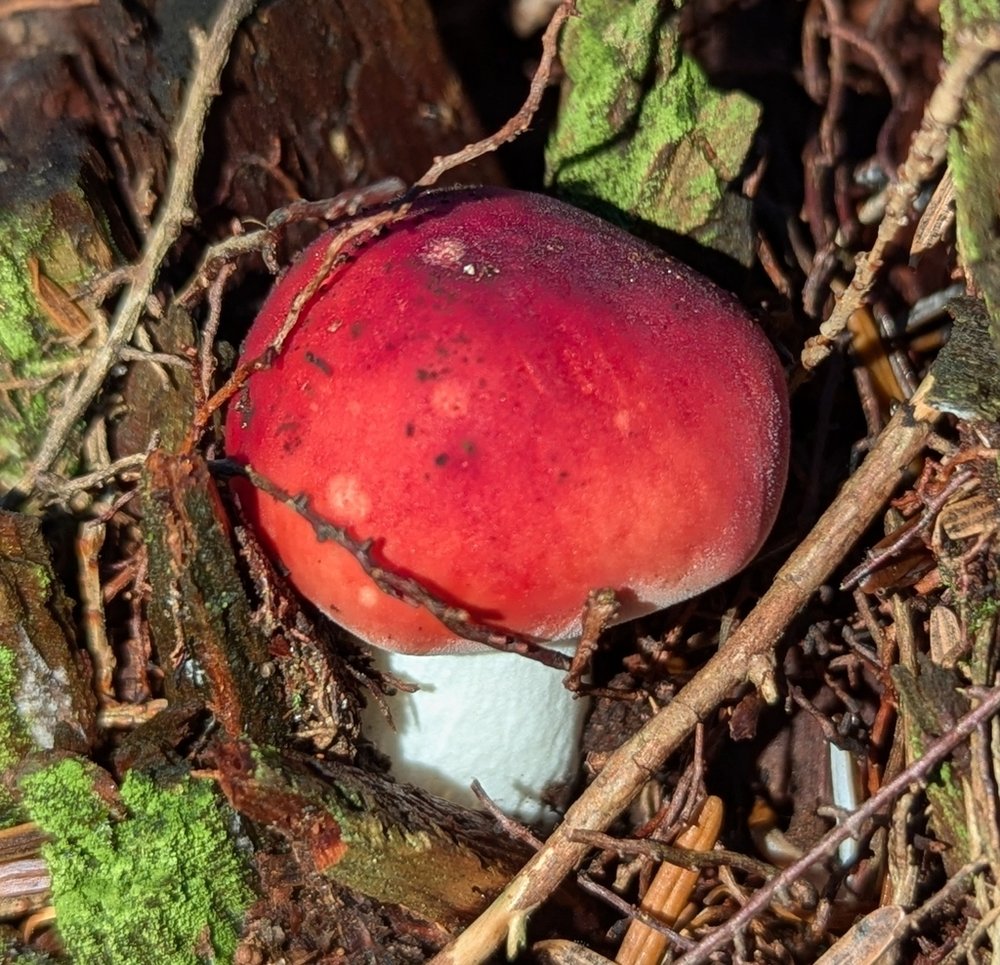
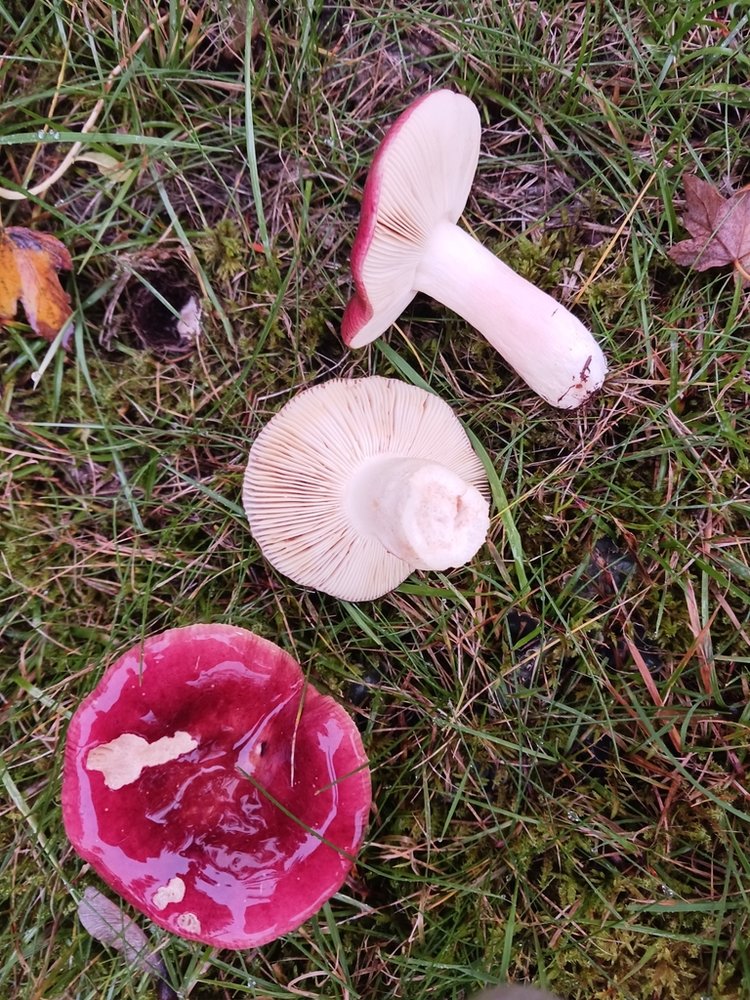
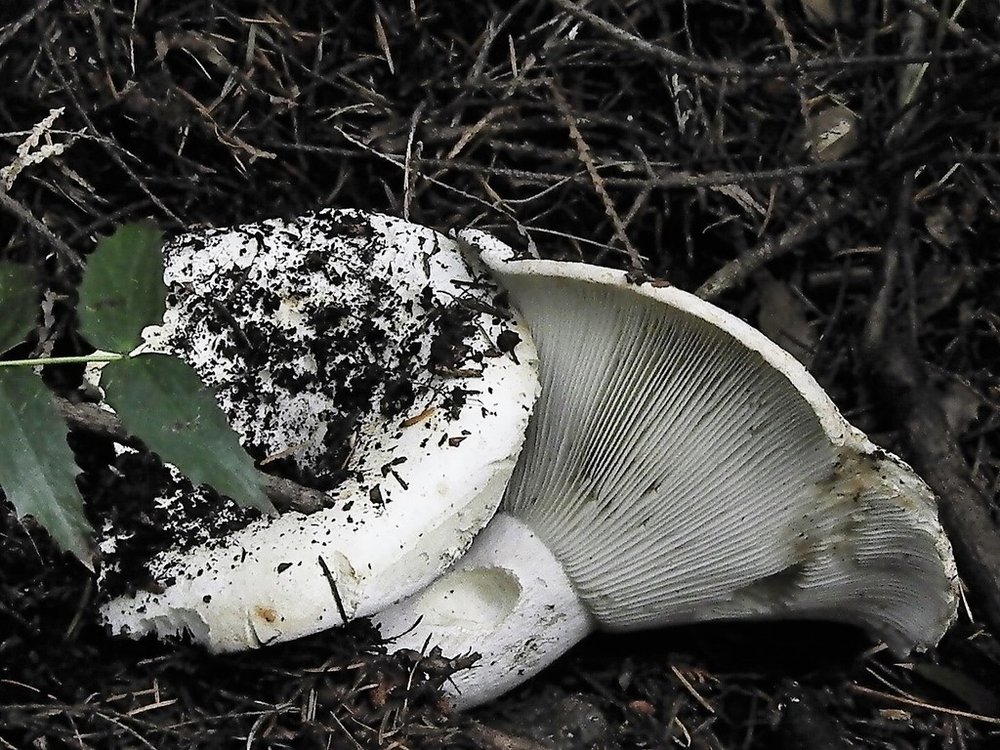
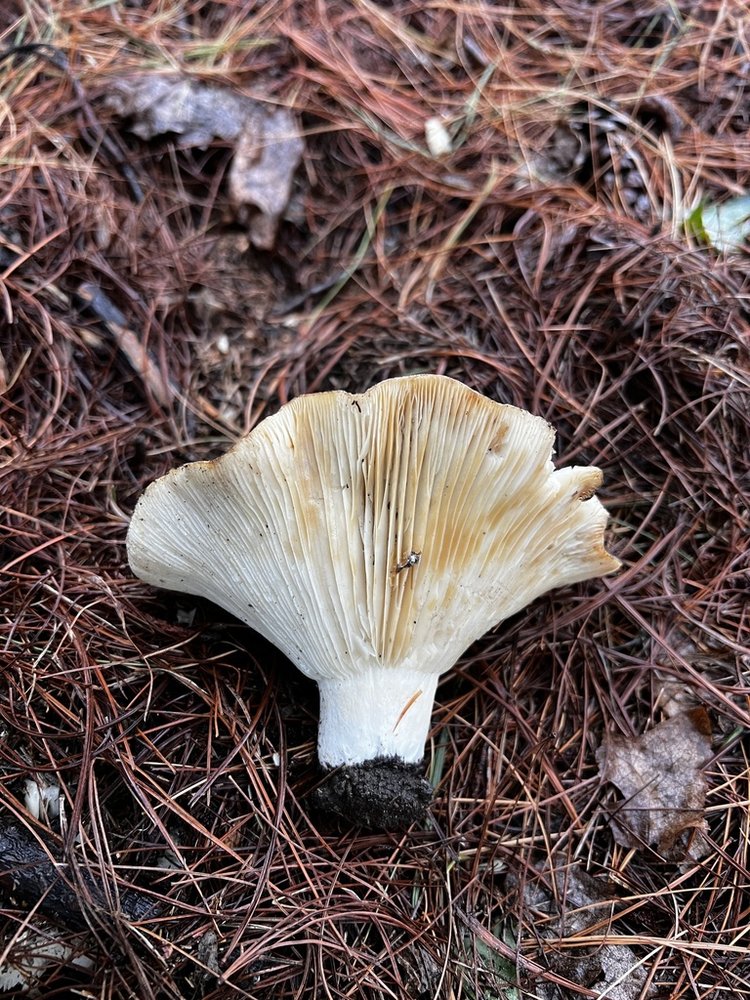
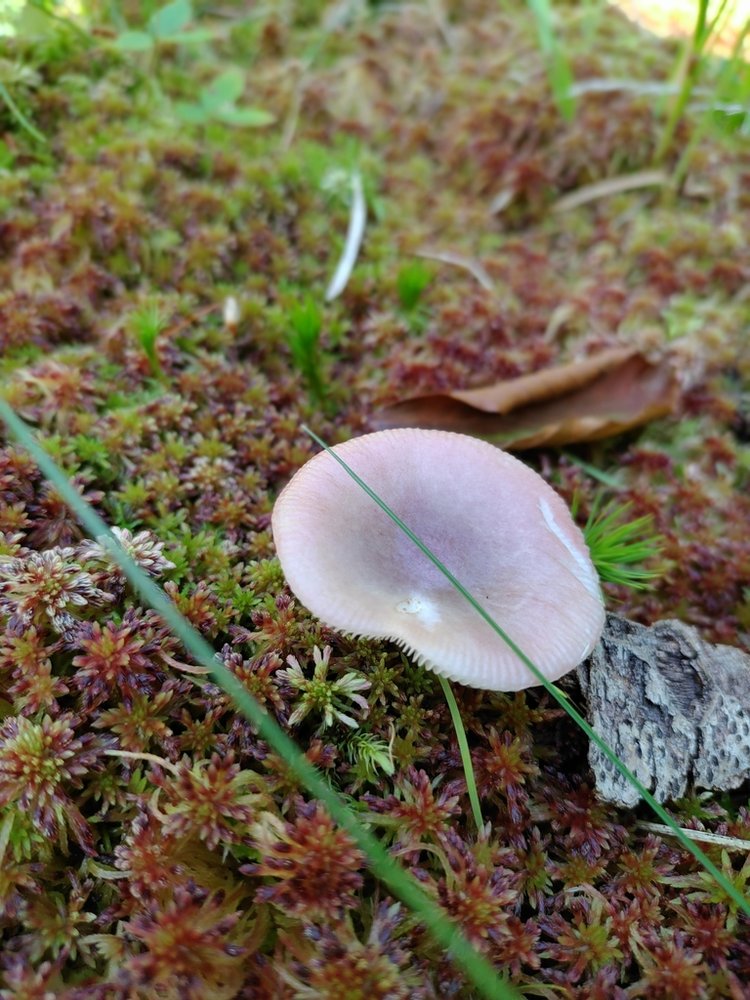
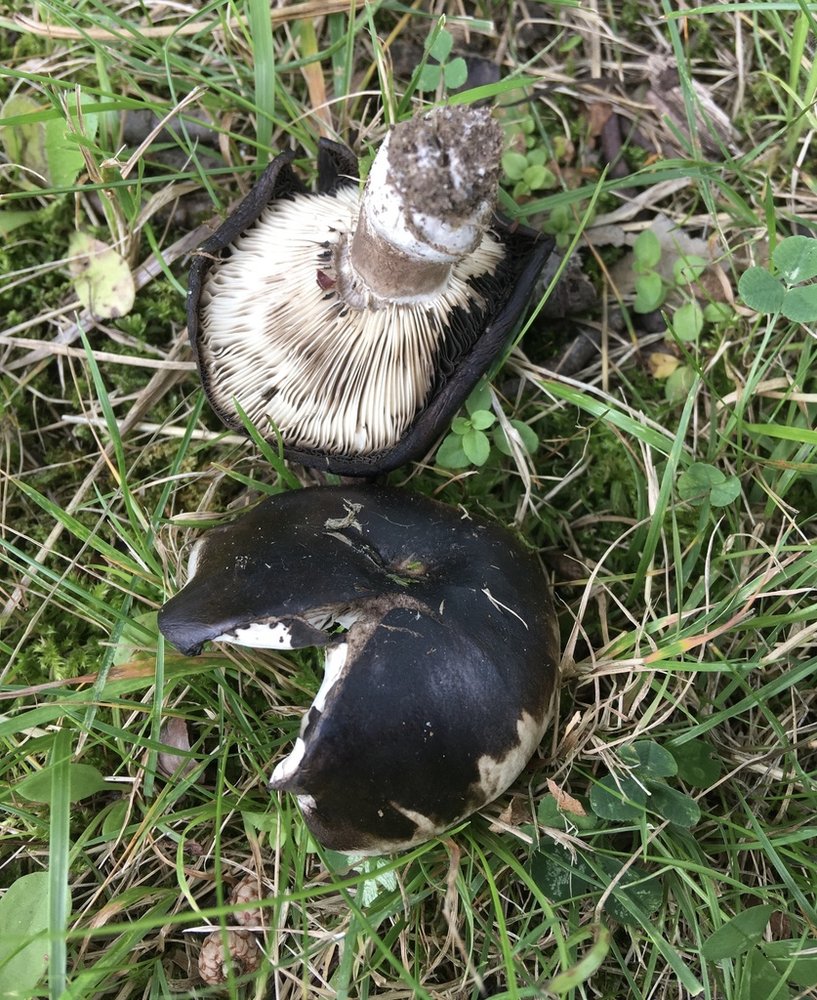
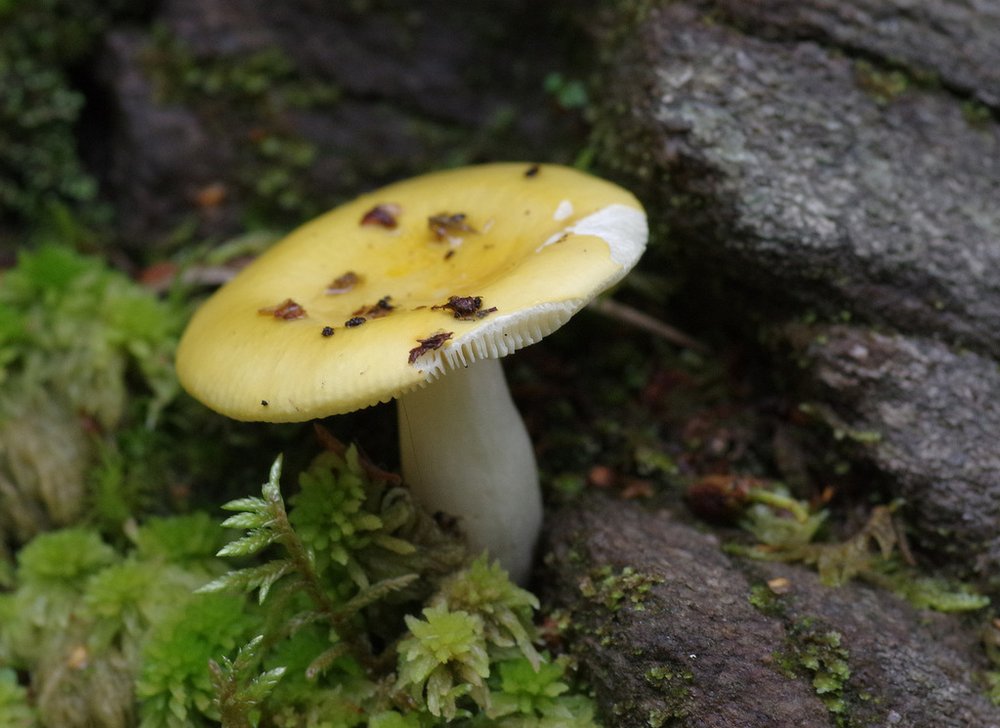
| Family | Russulaceae · Russulas and milkcaps |
|---|---|
| Type | Gilled mushroom |
| Season | Summer and fall (Kuo). In the Black Hills, iNaturalist's 160 records run June to October, plus one in May; 109 are from July, 67 of them from July 2025 alone |
| Size | Cap 2–30 cm (¾–12 in) wide, stem 2–13 cm (¾–5 in) long, depending on the kind |
| Grows on | Soil, with the roots of conifers or hardwoods |
| Spore print | White to orange-yellow, depending on the kind |
| Also called | Brittlegills |
| Toxicity | Poisonous: the Sickener (Russula emetica), one of the red-capped russulas, causes vomiting, nausea, diarrhea and stomach cramps. |
| Eating | This guide doesn't say which mushrooms are safe to eat. The wrong one can kill you. Treat every little brown mushroom as poisonous. |
| Note | This page covers five kinds of russula as groups, not single species, because russulas are hard to name and several of the names used in North America are European names that may not fit. Black Hills records are few and mostly unconfirmed. |
How it lives
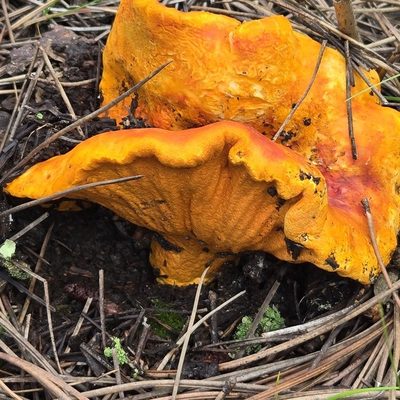
Russulas are mycorrhizal: the fungus wraps tree roots and trades nutrients with the tree, helping the roots take up water and minerals in exchange for sugars (Minnesota Seasons; Volk). Kuo gives conifers or hardwoods for the groups on this page. UBC says the Short-stemmed Russula can be parasitized by Hypomyces lactifluorum, and the parasitized mushrooms are called lobster mushrooms.
How do you identify Russulas?
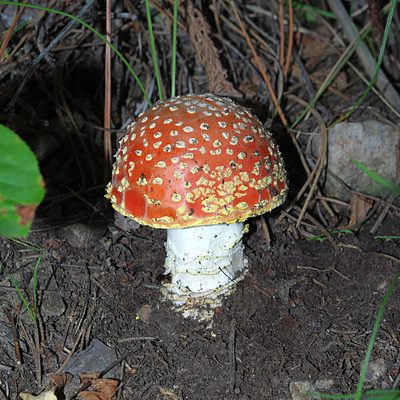
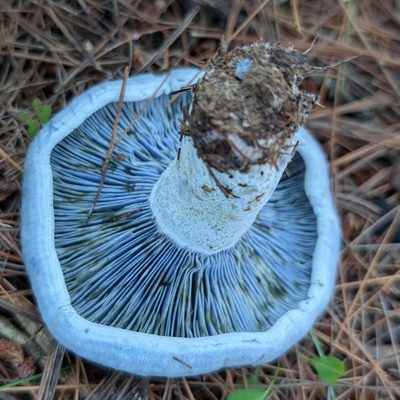
All russulas: the mature cap is flat or dish-shaped, often brightly colored and often wider than the stem is long; cap, gills and stem are dry, rigid and brittle; the stem is straight, not bulbous at the base; the flesh is usually white; the gills are white when young and may yellow with age (Minnesota Seasons). The stem usually snaps like a piece of chalk (Kuo; Minnesota Seasons; Missouri Department of Conservation). Kuo says only about 20 or 30 russulas can be named fairly easily, out of perhaps 750 worldwide, and Minnesota Seasons says the rest need a microscope and chemicals. Kuo also says the names brevipes, sanguinea, xerampelina and the blackening names may each cover several North American species, so the five kinds below are groups. AMANITAS come first among the look-alikes: the genus includes the deadly death angels (Volk) and this guide's Fly Agaric. Kuo's key to pale-spored gilled mushrooms separates them. A russula has no veil at all: no ring on the stem and no veil remains at its base. An Amanita has gills free from the stem and a veil that leaves a cup (volva), rings, a rim or flaky patches at the stem base (a few species lack clear ones), often warts or patches on the cap, and a ring on the stem or, if not, usually a strongly lined cap edge. Kuo says Amanita identification often starts at the stem base, so dig the whole mushroom out to see it. MILKCAPS (Lactarius), such as this guide's Indigo Milk Cap, give drops of milk or colored juice where the gills are cut or broken; russulas do not (Kuo; Volk; the University of British Columbia guide, UBC). Kuo says a milkcap, Lactarius deceptivus, often grows beside the Short-stemmed Russula and can be all but impossible to tell from it at a glance. SHORT-STEMMED RUSSULA (Russula brevipes). Cap 6–30 cm (2½–12 in), white to creamy, developing brownish stains and sometimes turning orangish brown with age; convex with a central dip and a rolled-under edge when young, later shallowly vase-shaped; dry, bald or suede-like, the skin not peeling easily. Gills crowded or close, white becoming creamy, attached or running slightly down the stem, sometimes bluish near the stem. Stem short, sturdy and white. Gills and stem often bruise brownish. Spore print white to creamy (Kuo; UBC). The cap may show only as a bulge in the duff with litter stuck to it (UBC). RED AND PINK-CAPPED RUSSULAS. The Missouri Department of Conservation says many russulas are red and they are often hard to tell apart; Tom Volk counted 128 russulas in a North American key that can have a red cap and says a red russula taken for R. emetica is probably something else. Three red russula names have Black Hills records (see Where). The Sickener (Russula emetica): cap 4–10 cm (1½–4 in), red to pink, sometimes with yellow blotches, or cream to white; sticky when wet; edge grooved; skin peels about halfway to the center; gills white, crowded, with few short ones; stem 4–10 cm (1½–4 in), white, stuffed (not hollow), not discoloring when scratched; no ring and no cup; spore print white (UBC, which says DNA is needed to confirm it). Russula sanguinea as Kuo treats it: cap 2–10 cm (¾–4 in), dark to bright red, sometimes fading; skin peeling only at the edge; gills white, soon creamy to yellow; stem 3–10 cm (1¼–4 in), firm, colored like the cap or flushed red over white; flesh white, not changing when cut; spore print creamy to orange-yellow; with pines, especially two-needled pines. Shrimp russulas (the Russula xerampelina group): cap 4–30 cm (1½–12 in), red, pink or purple to yellow, brown or olive, sticky when fresh (a few are dry); a fishy or shrimp-like smell, stronger with age or when dried; gills white to creamy, then yellowish, bruising yellowish brown to brown; stem white or flushed red to purple; stem and flesh slowly turn yellowish brown to brown when bruised or cut; spore print creamy to orange-yellow (Kuo). FRAGILE RUSSULA (Russula fragilis). Cap 2–6 cm (¾–2½ in), very variable: purple, wine, violet, red or pinkish red with the center almost black, brown or olive, sometimes entirely white; sticky, drying smooth; edge not grooved; skin peels. Gills narrow, white, fairly close. Stem 2.5–7 cm (1–2¾ in), white, fragile. Flesh thin and very fragile. Smell often fruity. Spore print white to cream. In conifer forests, in moss or on rotten wood (Matchmaker, Canadian Forest Service). BLACKENING RUSSULAS. Kuo groups russulas whose surfaces and flesh turn reddish, gray-black, or reddish and then gray-black when bruised or cut. Rub the stem, slice the mushroom in half and wait: the change can take half an hour or more. Russula albonigra: cap 6–20 cm (2½–8 in), white when young, soon brownish or gray to nearly black; flesh hard and white, turning gray then black when cut, never red first; gills thick and brittle; stem short, very hard, white, blackening where handled; spore print white (Matchmaker; Minnesota Seasons, which says a broken cap turns dark brown or black in about 20 minutes). Matchmaker says R. nigricans, R. densifolia and R. dissimulans redden before they blacken and R. adusta may redden slightly. UBC gives the nigricans group thick, widely spaced gills; Kuo keys R. densifolia by its usually close or crowded gills. In the Rocky Mountains, Kuo describes an unnamed albonigra-like russula under high-elevation conifers whose cap turns brown and bruises black with no red stage, and keys R. adusta, from the Rockies westward, as graying or blackening without a red stage, with a cap sticky when wet. Russula claroflava is Kuo's yellow member of the group: cap evenly yellow; stem and flesh slowly turn gray to blackish with no red stage; spore print orangish yellow; in conifer and birch bogs in northern and mountain North America. VARIABLE RUSSULA (Russula variata). Cap 5–15 cm (2–6 in), usually mottled green and purplish pink, sometimes one color; skin peels fairly easily; gills fork often and are soft and flexible when young, which Kuo calls un-russula-like; stem white, brittle; spore print white; with oaks and other hardwoods, found more often in eastern North America (Kuo). No Black Hills record was found.
When can you find it?
Summer and fall (Kuo). In the Black Hills, iNaturalist's 160 records run June to October, plus one in May; 109 are from July, 67 of them from July 2025 alone.
Where does it grow?
Russulas grow on the ground with tree roots (see How it lives). Kuo gives conifers or hardwoods for the groups above; no source opened says which trees the Hills' russulas grow with. Black Hills records are few and mostly unconfirmed. iNaturalist, searched in six Black Hills places (the core highlands, plateau and foothills, the national forest, Wind Cave National Park and Custer State Park), has 160 Russula records. Only 11 are research-grade: Russula claroflava 3, R. xerampelina 2, R. brevipes 1, R. vesca 1, and 4 named only as Russula. Another 35 are named to a species but not confirmed: R. brevipes 8, R. decolorans 5, R. claroflava 4, R. aeruginea 2, R. albonigra 2, and one each of R. xerampelina, R. emetica, R. sanguinea, R. fragilis, R. adusta and nine other species. The other 114 are named only to the genus or a group within it. Most come from Pennington, Custer and Lawrence counties in South Dakota and Crook County, Wyoming. iNaturalist has no Black Hills record of R. variata, R. nigricans, R. dissimulans or R. densifolia. GBIF holds six herbarium specimens of Russula from the Hills, 1918 to 1988, one of them from the Bear Lodge Mountains of Wyoming: five are named only to the genus, and the 1962 one is Russula foetens, a russula not described on this page. The National Park Service species list for Mount Rushmore National Memorial lists Russula emetica as present. So the Short-stemmed Russula and the yellow R. claroflava are reported most often, the Sickener is listed for Mount Rushmore, and the other kinds above are reported once or twice or not at all.
Other mushrooms to compare
Sources: The Genus Russula (M. Kuo), MushroomExpert.com; Key to Pale-Spored, Gilled Mushrooms (M. Kuo), MushroomExpert.com; The Genus Amanita (M. Kuo), MushroomExpert.com; Russula brevipes (M. Kuo), MushroomExpert.com; Russula sanguinea (M. Kuo), MushroomExpert.com; North American Shrimp Russulas: "Russula xerampelina" (M. Kuo), MushroomExpert.com; North American Blushing and Blackening Russulas, key (M. Kuo), MushroomExpert.com; Russula densifolia (M. Kuo), MushroomExpert.com; Russula species 02, a Rocky Mountain albonigra-like russula (M. Kuo), MushroomExpert.com; Russula claroflava (M. Kuo), MushroomExpert.com; Russula variata (M. Kuo), MushroomExpert.com; Russula emetica, Sickener or emetic russula, Mushrooms Up!, Beaty Biodiversity Museum, University of British Columbia; Russula brevipes, Short-stalked russula, Mushrooms Up!, Beaty Biodiversity Museum, University of British Columbia; Russula nigricans, Bloody blackening russula, Mushrooms Up!, Beaty Biodiversity Museum, University of British Columbia; Emetic Russula, Missouri Department of Conservation field guide; Russula emetica, the vomiting Russula, Tom Volk's Fungus of the Month (September 2004), University of Wisconsin-La Crosse; Russula fragilis, Matchmaker: Mushrooms of the Pacific Northwest (Canadian Forest Service); Russula albonigra, Matchmaker: Mushrooms of the Pacific Northwest (Canadian Forest Service); Brittlegills (Russula spp.), Minnesota Seasons; Blackening Russula (Russula albonigra), Minnesota Seasons; Variable Russula (Russula variata), Maryland Biodiversity Project; Russula in the Black Hills (160 records), iNaturalist; Russula records in South Dakota, GBIF; Russula herbarium specimens in Wyoming, GBIF; Mount Rushmore National Memorial fungi checklist, NPSpecies, National Park Service.