Ruby Porcini
Boletus rubriceps
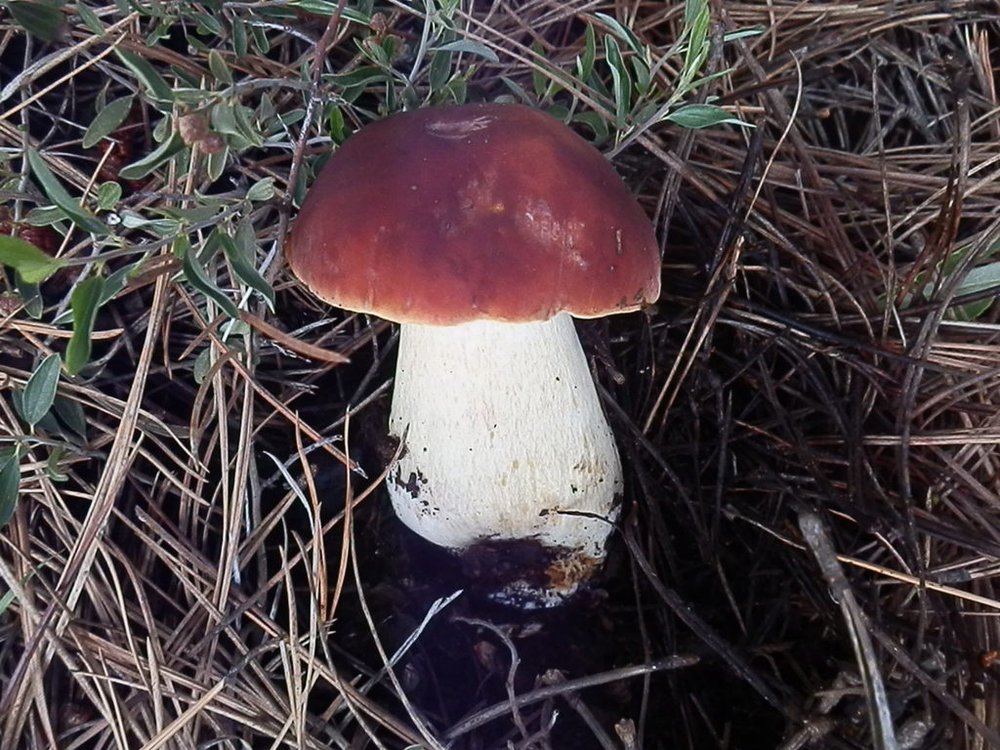
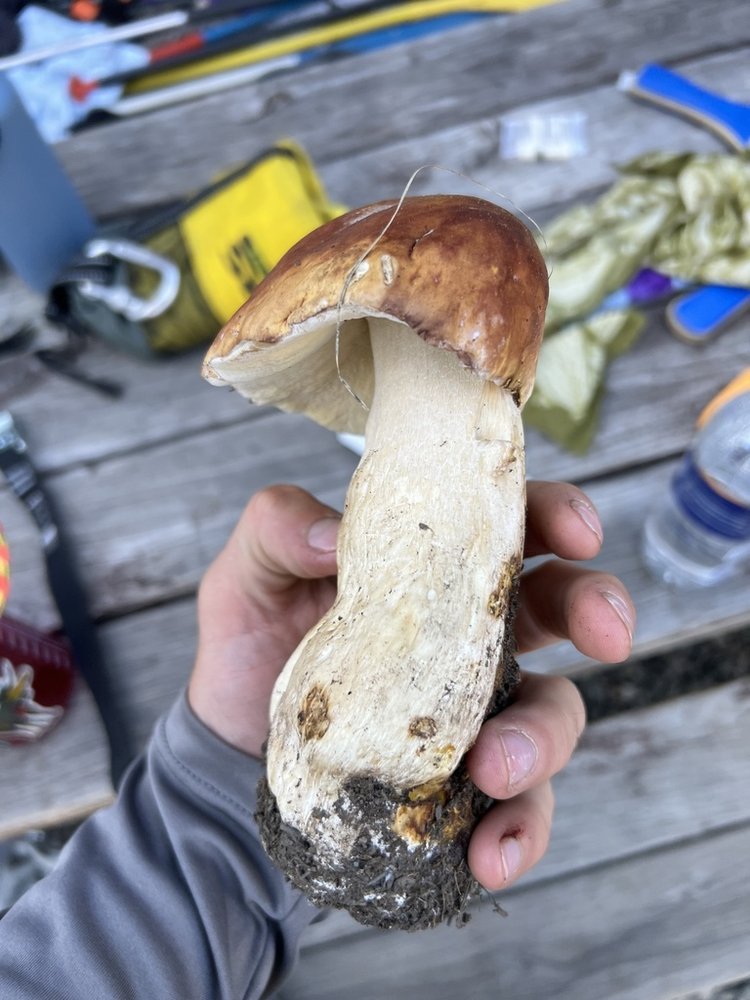
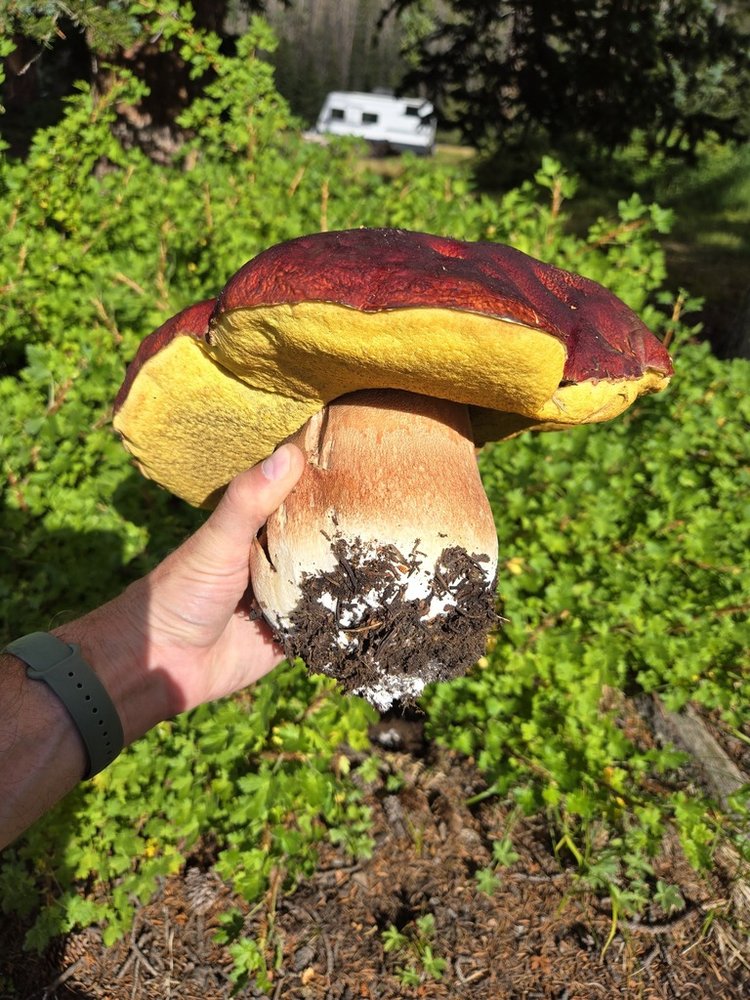
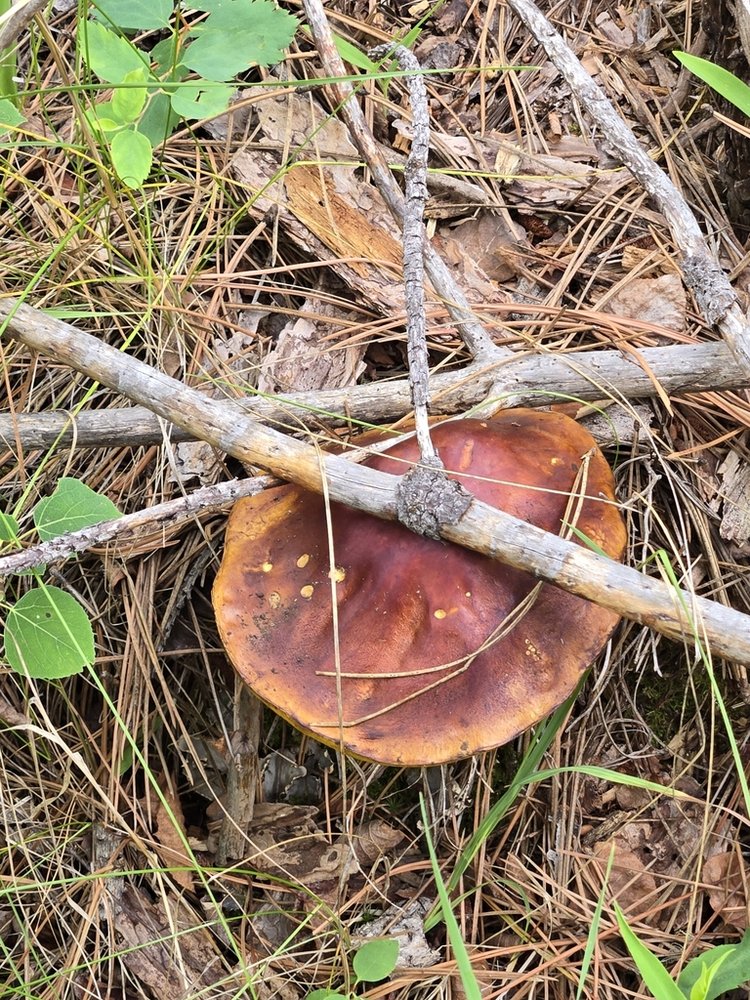
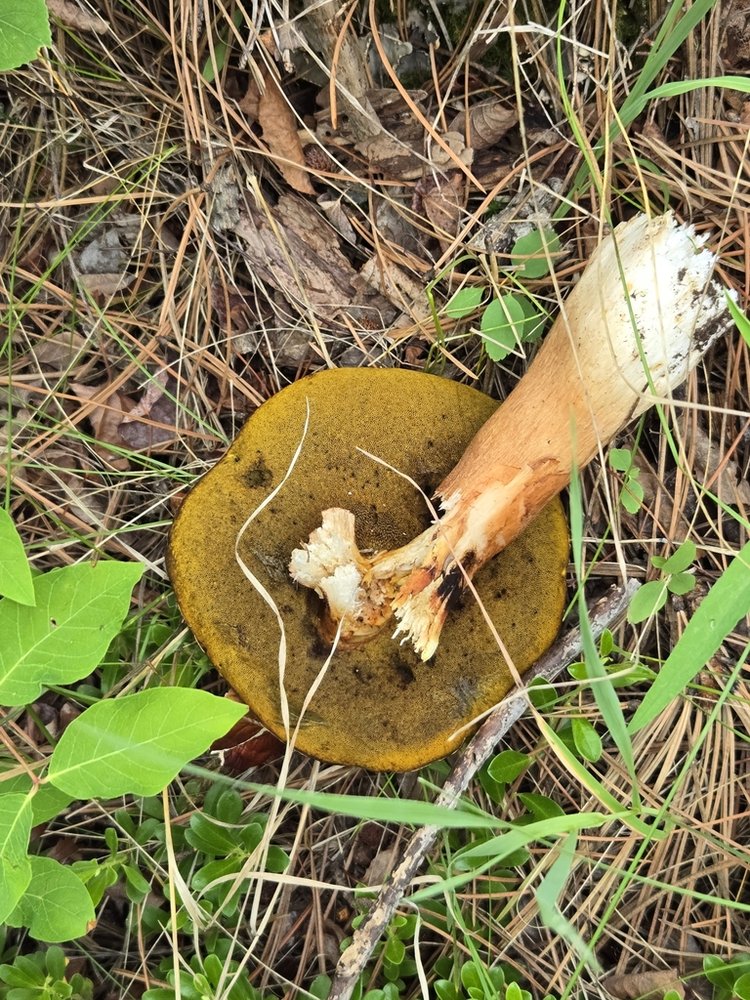
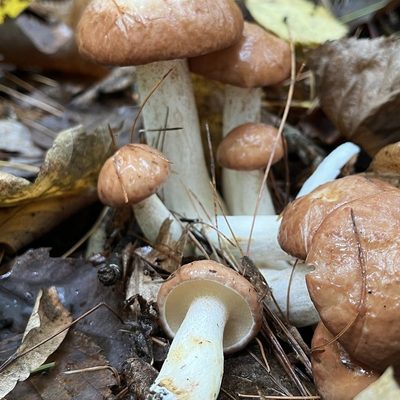
Ruby Porcini (Boletus rubriceps) is a large king bolete with a dark red to red-brown cap, a thick white stem with a fine white net near the top, and firm white flesh. Described in 2014 from the southern Rocky Mountains, it has iNaturalist records in the Black Hills from June into August, most often in July.
Free photos from other sources
| Family | Boletaceae · Bolete |
|---|---|
| Type | Bolete |
| Season | June into August, most often in July |
| Size | Cap 8–20 cm (3–8 in) wide, sometimes to 30 cm (12 in), stem 5–15 cm (2–6 in) tall and 2–6 cm (¾–2½ in) thick |
| Grows on | Soil in conifer forest; mainly spruce in the southern Rockies, also pine |
| Spore print | Dark olive-brown |
| Also called | Rocky Mountain Red-capped King Bolete, Rocky Mountain Red, Ruby King Bolete |
| Eating | This guide doesn't say which mushrooms are safe to eat. |
How it lives
Mycorrhizal: it trades nutrients with the roots of conifers, mainly spruce in the southern Rockies, and fruits after summer thunderstorms. Until it was named in 2014 it was reported as King Bolete (Boletus edulis) or as the European Boletus pinophilus. In the Rocky Mountains, Fly Agaric often comes up near it.
How do you identify Ruby Porcini?
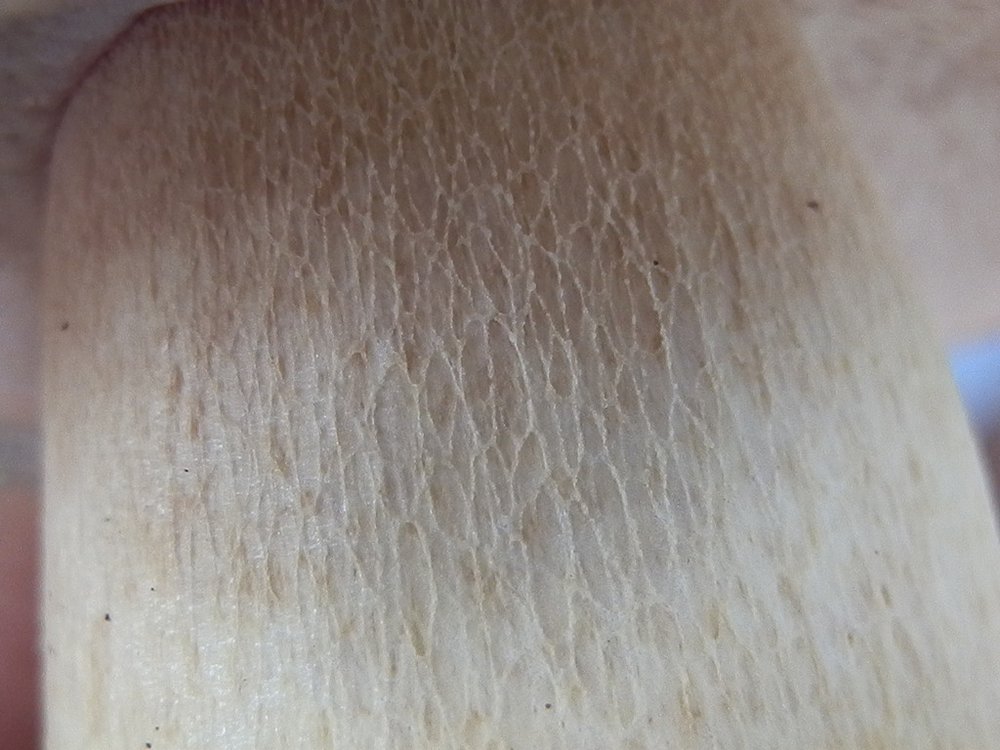
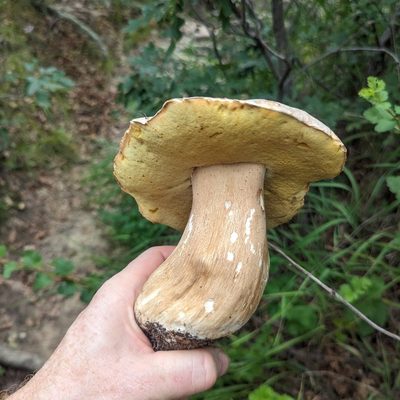
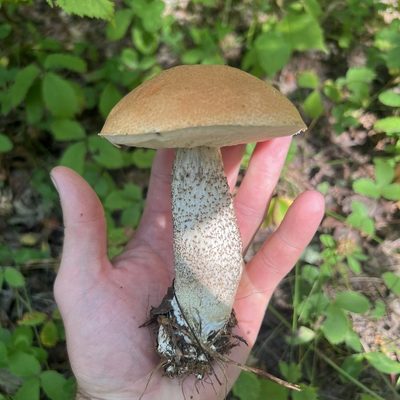
The cap is dark red to red-brown, 8–20 cm (3–8 in) wide, dry or slightly tacky, and sometimes has patches of thin white bloom when young; in strong sun it fades toward brown or yellow-brown. Under the cap are pores, not gills. On young mushrooms the pore openings are plugged with white tissue, so the underside looks white; it turns yellow and finally greenish yellow, and usually does not bruise. The stem is white, club-shaped or a little bulbous when young, with a fine white net at least over the upper part. Cut flesh is firm and white and usually does not change, though old or wet mushrooms may turn slightly blue just above the tubes. Barrow's Bolete has the same net, pores and flesh but a whitish to pale tan cap. Aspen Bolete can have a similar red-brown cap, but its stem has dark scabers (rough scales) instead of a net, and its flesh slowly darkens to a dusky grayish brown when cut. Slippery jacks have a sticky to slimy cap and, usually, tiny glandular dots on the stem instead of a net.
When can you find it?
June into August, most often in July.
Where does it grow?
On the ground in conifer forest, alone or in groups, often at the edges of meadows and trails. In the southern Rockies and the Southwest it grows mainly with spruce, and also with pine and possibly fir, at high elevations. The 2014 description gives its range as Colorado, New Mexico and Arizona and says the northern limit was not known. In the Black Hills, iNaturalist has 21 records, 10 confirmed by other observers, from Custer, Pennington and Lawrence counties, including 9 in Custer State Park. The records do not name a partner tree. No herbarium specimen or published Black Hills report was found.
Other mushrooms to compare
Sources: Arora, D. & J. Frank 2014. Boletus rubriceps, a new species of porcini from the southwestern USA. North American Fungi 9(6) — Washington State University Research Exchange; Kuo, M. 2016. Boletus rubriceps — MushroomExpert.com; Kuo, M. 2022. Boletus barrowsii — MushroomExpert.com; Thiers, H. D. 1975. The Boletes of California: Leccinum insigne var. insigne — MykoWeb; Kuo, M. 2023. Suillus — MushroomExpert.com; Boletus rubriceps observations in the Black Hills places, Wind Cave and Custer State Park — iNaturalist; Boletus rubriceps taxon names — iNaturalist; Boletus rubriceps D. Arora & J.L. Frank — Catalogue of Life (Species Fungorum), via ChecklistBank.