Granulated Slippery Jack
Suillus granulatus
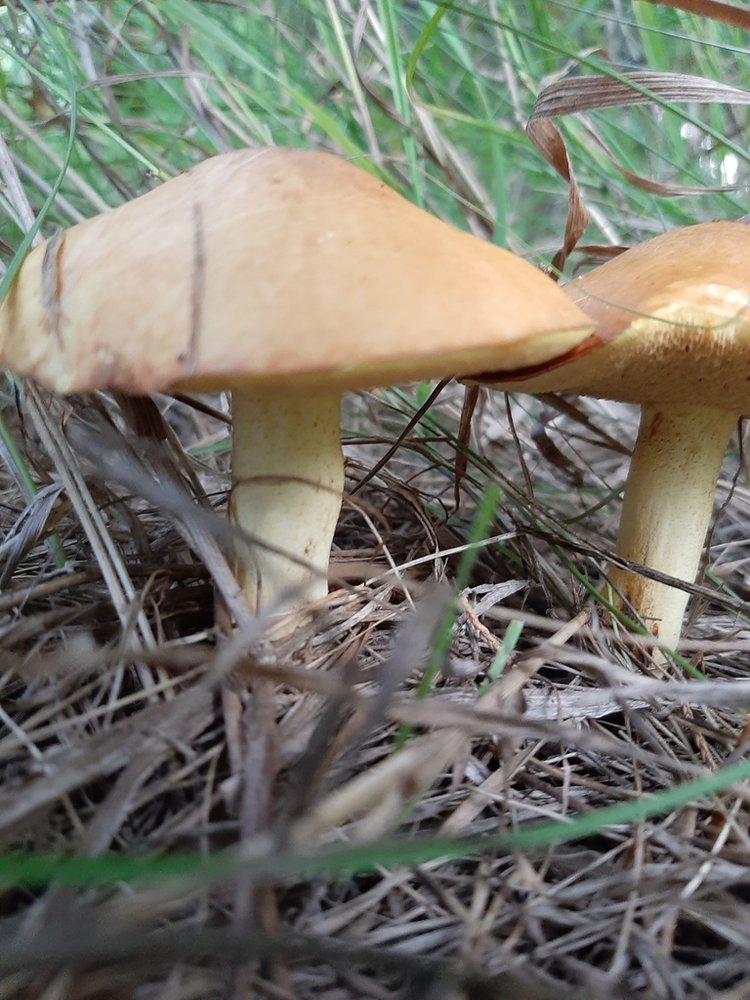
The Granulated Slippery Jack (Suillus granulatus) is a slimy-capped bolete, yellow to orange-brown, with small yellow pores and a pale stem speckled with tiny dots. The National Park Service calls it the most common mushroom seen at Jewel Cave, where it comes up near pines from May through September.
Free photos from other sources
| Family | Suillaceae · Slippery jack |
|---|---|
| Type | Bolete |
| Season | May into September, most often in June |
| Size | Cap 3–10 cm (1¼–4 in) wide |
| Grows on | Soil under pine; ponderosa pine in the Black Hills |
| Spore print | Ochre to sienna-brown |
| Also called | Dotted-stalked Suillus, Weeping Bolete |
| Synonym | Boletus granulatus |
| Toxicity | Touching the slime on the cap gives a small share of people a skin rash (allergic contact dermatitis); in one documented case it was red, swollen and itchy, began one to two days after contact and lasted about a week. |
| Eating | This guide doesn't say which mushrooms are safe to eat. |
How it lives
Mycorrhizal: it trades nutrients with pine roots. In Europe and Asia it grows with two-needled pines such as Scots pine. In North America the name has been used loosely: mushrooms under eastern white pine are now called Suillus weaverae, and true Suillus granulatus has been found with red pine in Minnesota, probably brought in from elsewhere. Which slippery jack grows under ponderosa pine in the Black Hills has not been checked by a specialist.
How do you identify Granulated Slippery Jack?
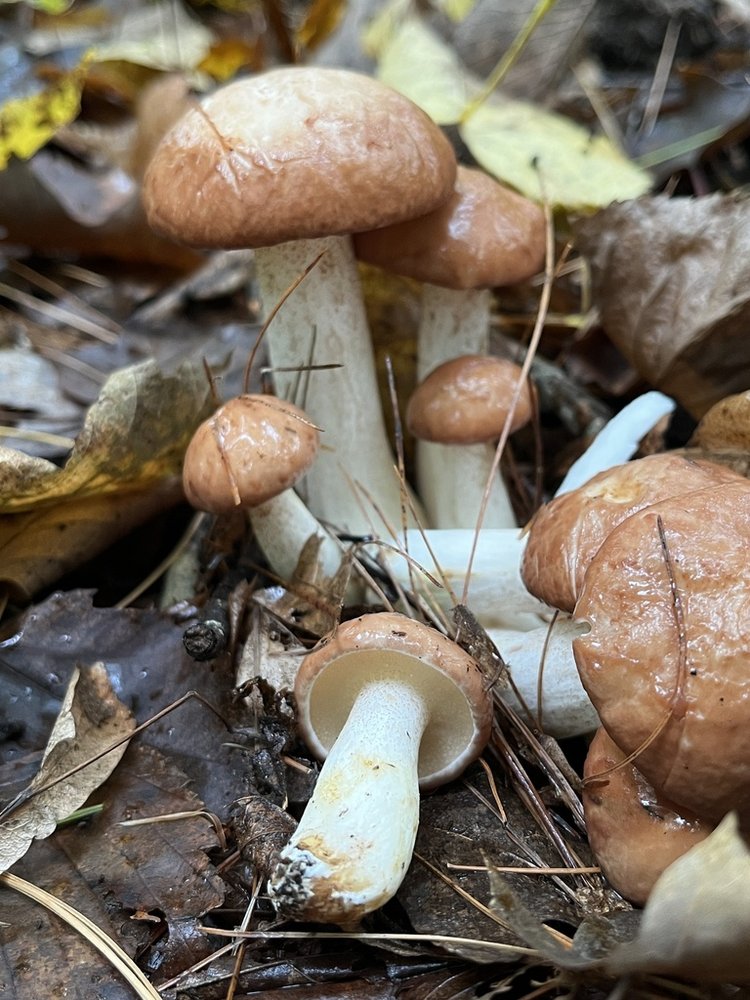
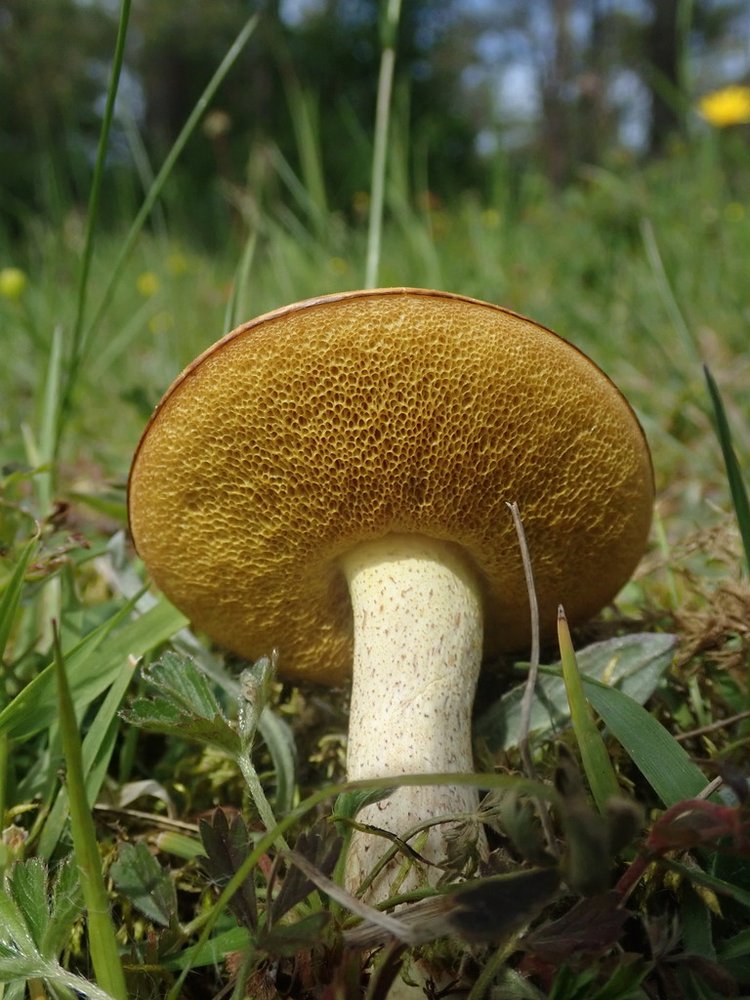
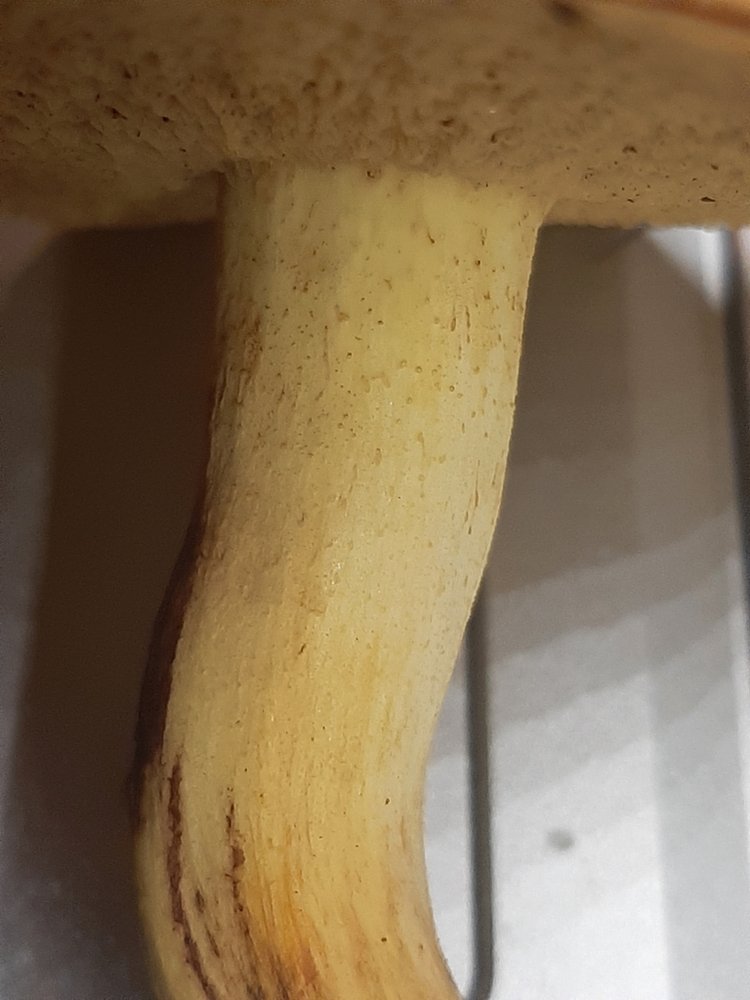
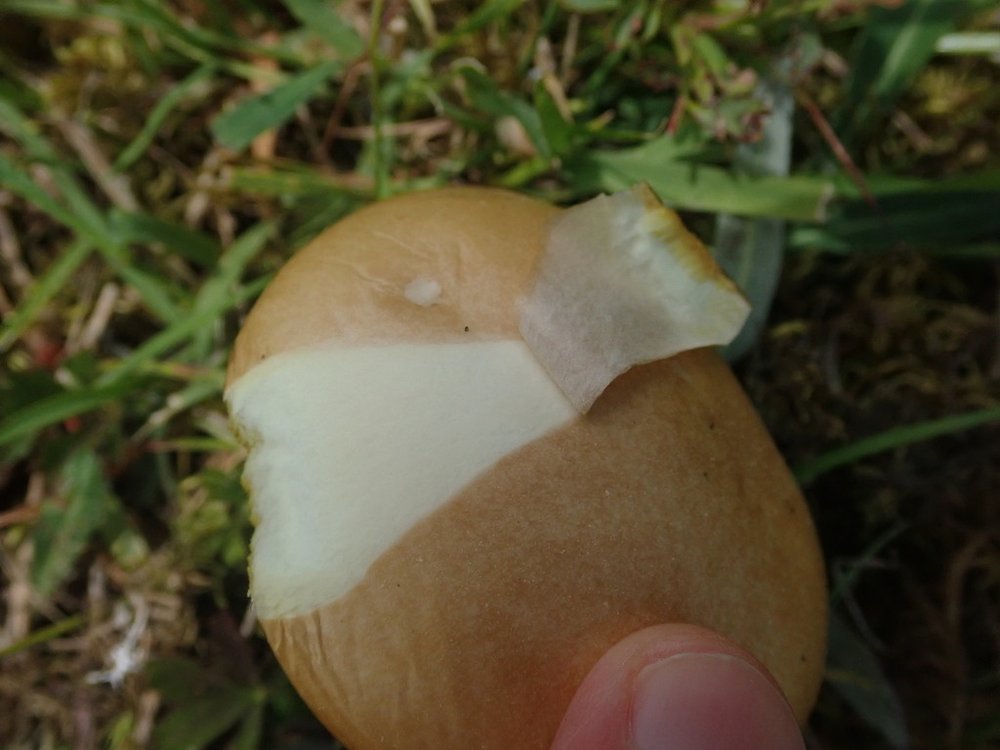
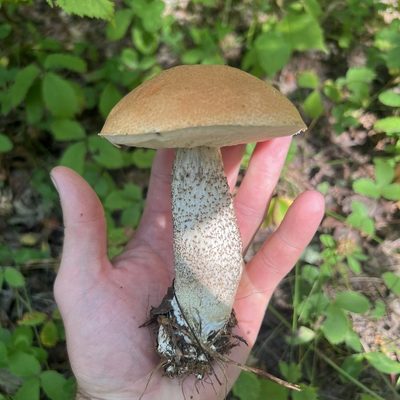
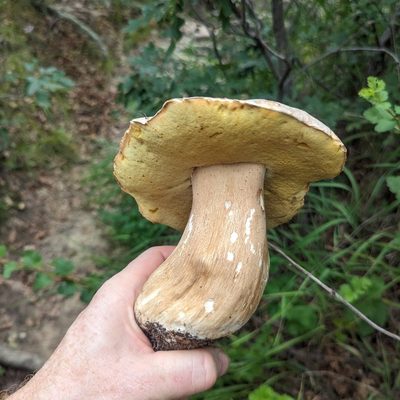
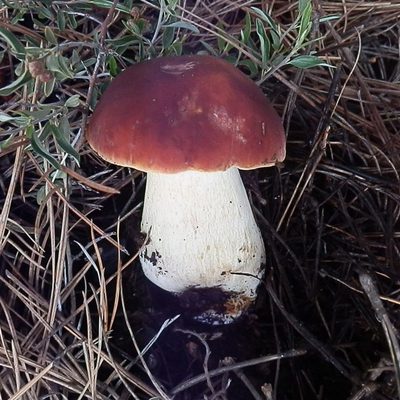
The cap is 3–10 cm (1¼–4 in) wide, sticky to slimy and shiny when wet, bright yellow at first and darkening to orange-brown or rusty brown as it flattens. Under the cap are small yellow pores, not gills, which often weep milky droplets when young. The stem has no ring; it is pale yellow to whitish and dotted with glandular dots, tiny raised spots that start pale and turn brown with age. The flesh is pale yellow and does not change color when cut. Kaibab Jack (Suillus kaibabensis), which grows only with ponderosa pine, looks almost the same, but its dots grow large and reddish brown, forming smears and lines, and its cap is more yellow. Short-stalked Suillus (Suillus brevipes) has a darker brown cap, a short, squat stem and dots so small they are nearly invisible. Aspen Bolete, Barrow's Bolete and Ruby Porcini have caps that are dry or only slightly tacky, not slimy, and their stems carry dark scabers or a fine net instead of dots.
When can you find it?
May into September, most often in June.
Where does it grow?
On the ground near pines, alone or in clusters. Pines are the main trees at Jewel Cave, and two iNaturalist observers in the Black Hills noted ponderosa pine. The Jewel Cave National Monument mushroom page lists it from May to September as the most common mushroom seen there. iNaturalist has 32 Black Hills records, mostly from Custer and Pennington counties, including 8 in Custer State Park and 2 at Wind Cave National Park, but only 5 are confirmed by other observers. Slippery jacks are hard to name from photos, and 7 more Black Hills records are filed as Kaibab Jack.
Other mushrooms to compare
Sources: Mushrooms and Other Fungi — National Park Service, Jewel Cave National Monument; Kuo, M. 2022. Suillus granulatus — MushroomExpert.com; Kuo, M. 2022. Suillus kaibabensis — MushroomExpert.com; Kuo, M. 2022. Suillus brevipes — MushroomExpert.com; Kuo, M. 2023. Suillus (genus page and key) — MushroomExpert.com; Suillus granulatus — Interactive Guide to Mushrooms and other fungi, Naturalis Biodiversity Center; Suillus granulatus, Weeping Bolete — First Nature; Bruhn, J. & M. Söderberg 1991. Allergic contact dermatitis caused by mushrooms: a case report and literature review. Mycopathologia 115: 191–195 — Michigan Technological University Digital Commons; Volk, T. J. 2004. Suillus americanus, the chicken fat mushroom. Tom Volk's Fungus of the Month — University of Wisconsin; Suillus granulatus observations in the Black Hills places, Wind Cave and Custer State Park — iNaturalist; Suillus granulatus (L.) Roussel — Catalogue of Life (Species Fungorum), via ChecklistBank; Kaibab Jack (Suillus kaibabensis) records in the Black Hills places, all needs ID — iNaturalist API; Suillus brevipes (Short-stalked Suillus) — iNaturalist taxon; Thiers, H. D. 1975. The Boletes of California: Leccinum insigne var. insigne — MykoWeb; Kuo, M. 2022. Boletus barrowsii — MushroomExpert.com; Arora, D. & J. Frank 2014. Boletus rubriceps, a new species of porcini from the southwestern USA. North American Fungi 9(6) — Washington State University Research Exchange.