Aspen Bolete
Leccinum insigne
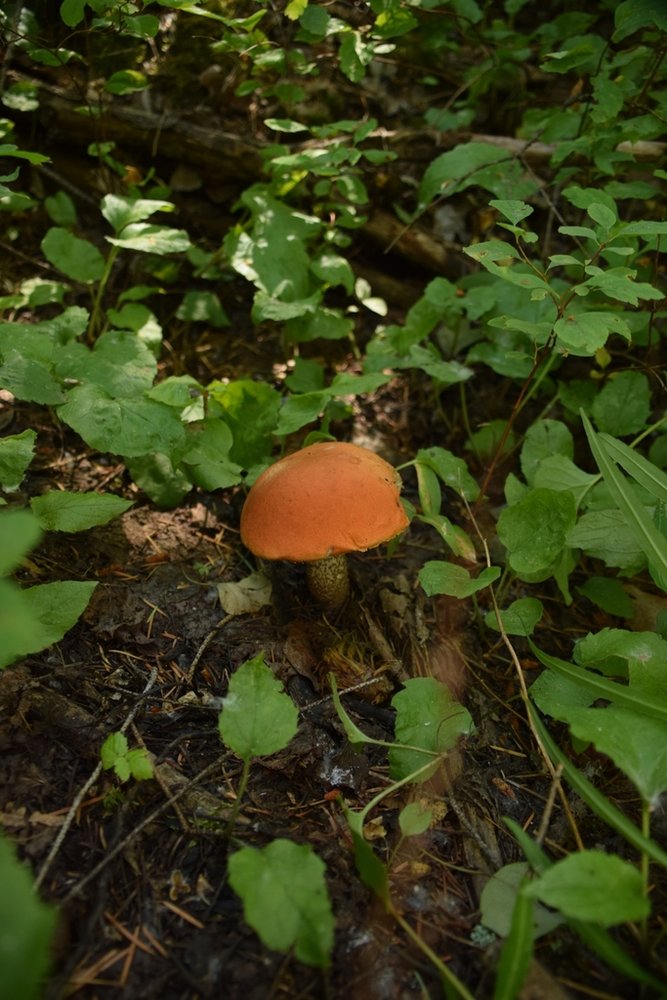
The Aspen Bolete (Leccinum insigne) is a large bolete with an orange to rusty brown cap and a white stem covered in scabers, small rough scales that turn dark brown to black. It grows under aspen, and iNaturalist's Black Hills records run from June into September, most often in July.
Free photos from other sources
| Family | Boletaceae · Bolete |
|---|---|
| Type | Bolete |
| Season | June into September, most often in July |
| Size | Cap 6–17 cm (2½–6½ in) wide, stem 8–13 cm (3–5 in) tall and 1–2 cm (½–¾ in) thick |
| Grows on | Soil under aspen |
| Spore print | Brown |
| Toxicity | It has caused poisonings: the North American Mycological Association's case registry lists Colorado cases with vomiting, diarrhea, cramps, chills and dizziness that began 5 to 6 hours later. |
| Eating | This guide doesn't say which mushrooms are safe to eat. |
How it lives
Mycorrhizal: it trades nutrients with the roots of aspen. Leccinum species partner only with certain kinds of trees, so the tree a scaber stalk grows under is one of the best clues to its name.
How do you identify Aspen Bolete?
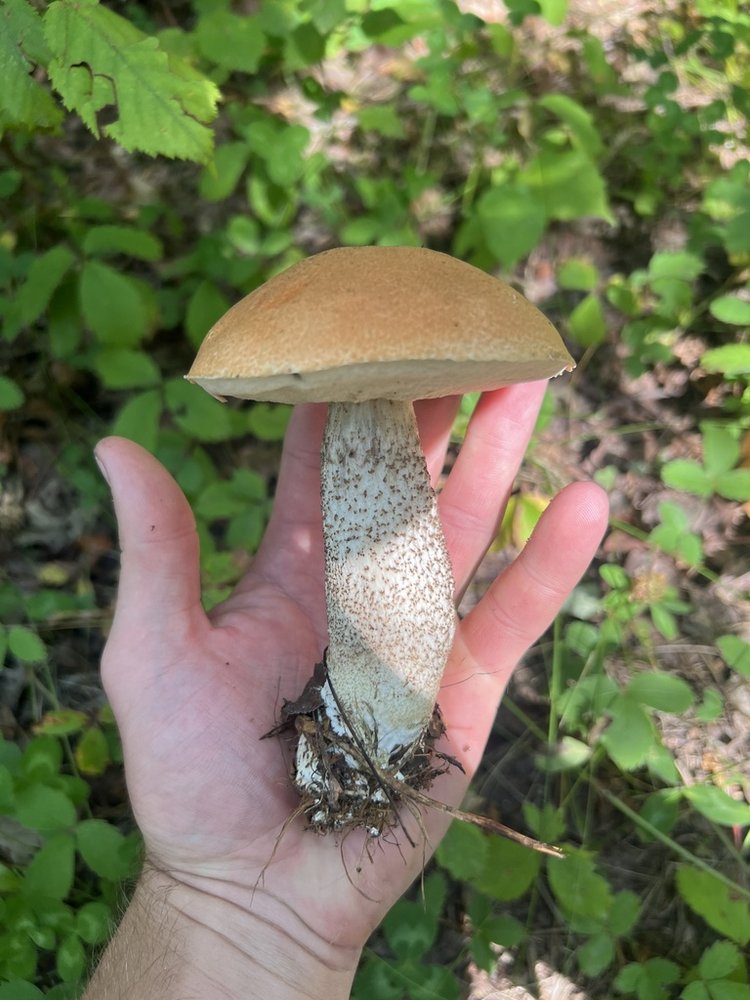
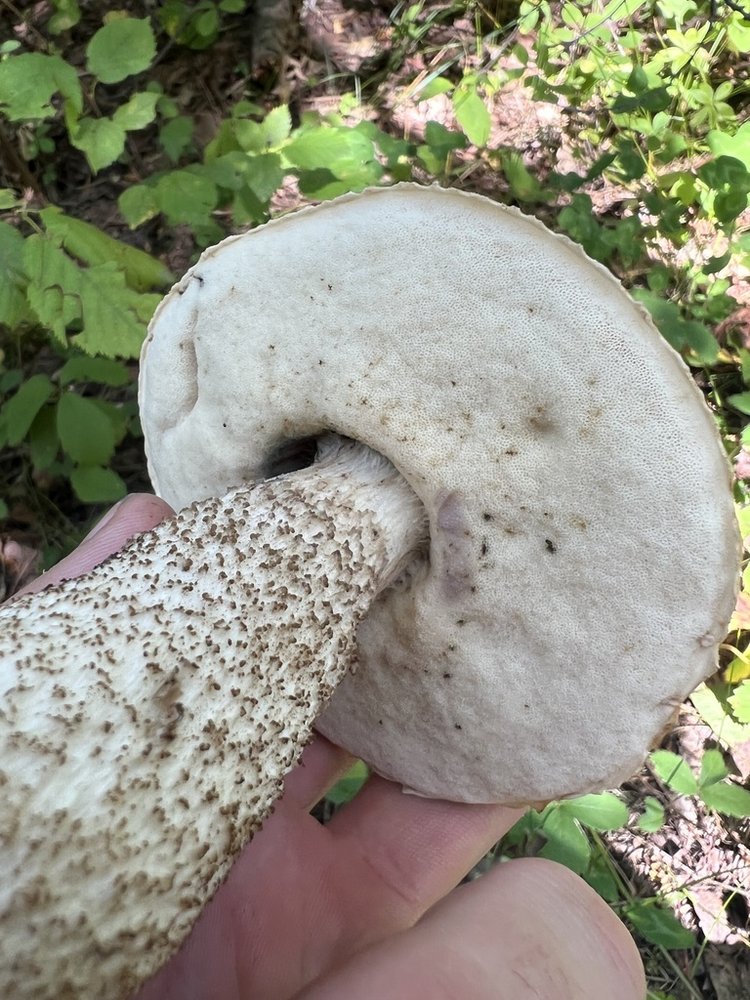
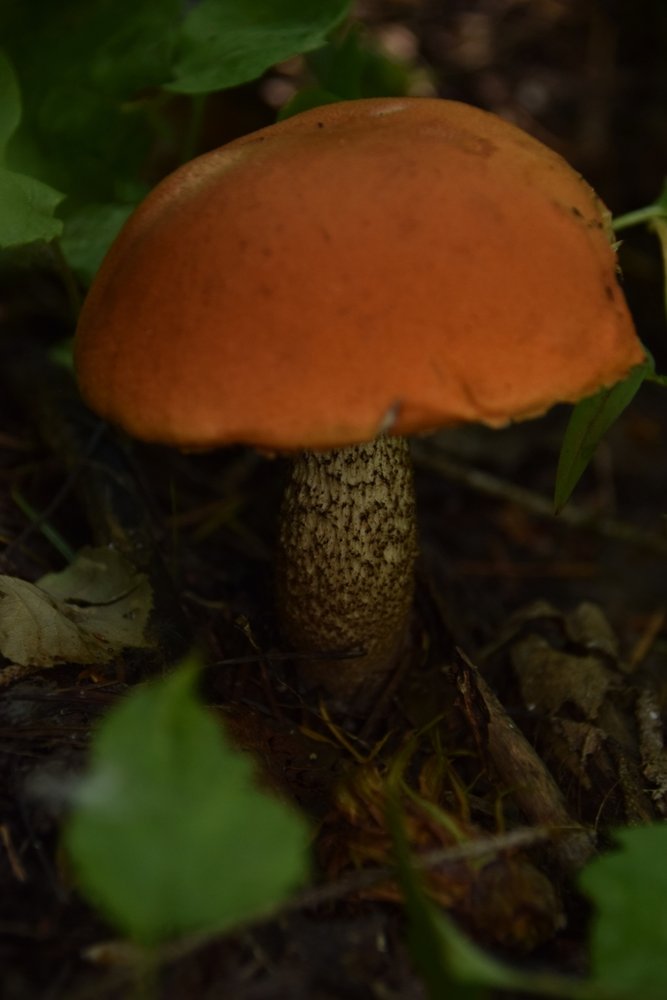
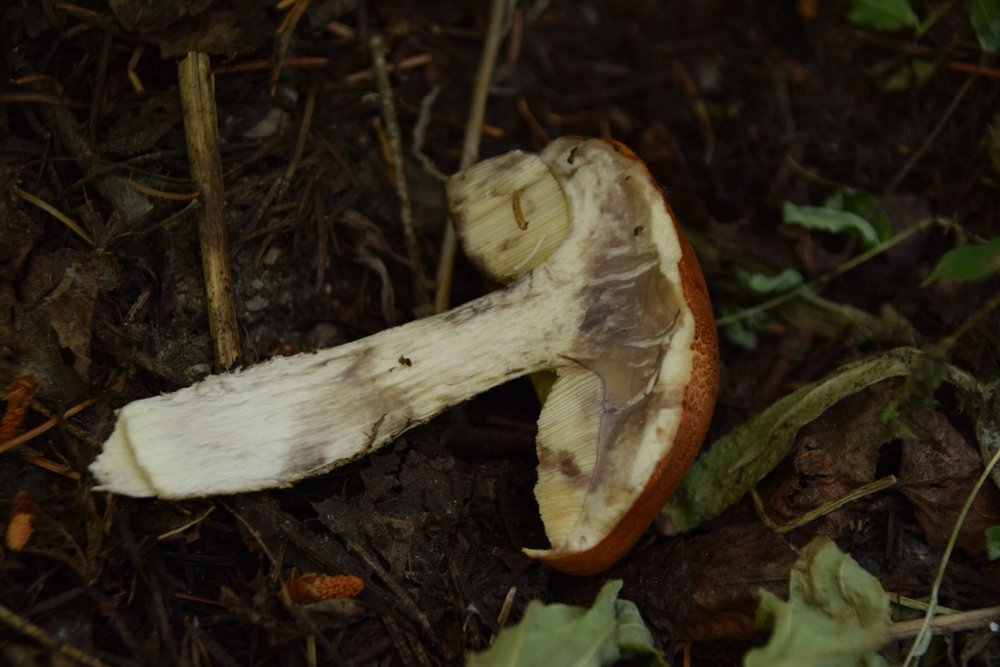
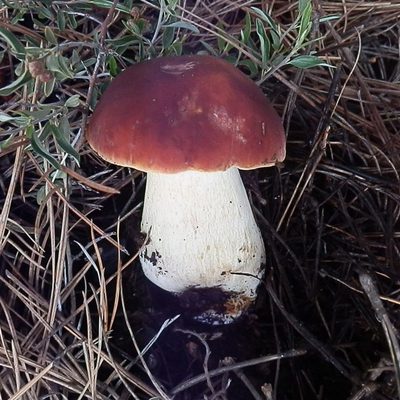
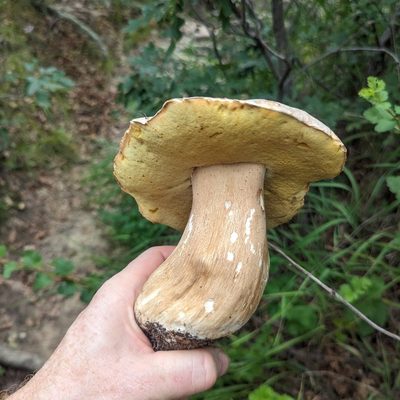
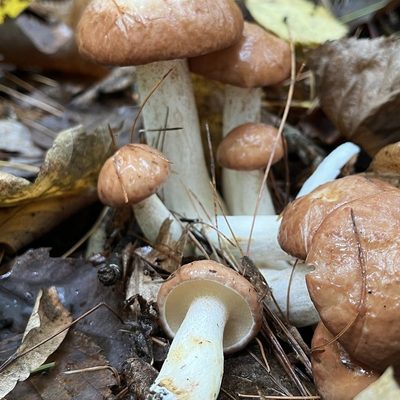
The cap is dry, orange to reddish brown, 6–17 cm (2½–6½ in) wide, with small flaps of tissue hanging from the edge. Under the cap are pores, not gills: whitish when young, then olive-buff to yellowish, bruising brown. The stem is white and covered with scabers that start white and turn dark brown to black as the mushroom ages. Cut flesh is white and slowly turns a dusky grayish brown, with no reddish stage, and the stem base sometimes turns bluish. It grows on the ground under aspen. Ruby Porcini can have a similar red-brown cap, but its stem has a fine white net instead of dark scabers and its white flesh does not darken when cut. Barrow's Bolete has the same net and white flesh with a pale cap. Slippery jacks have a sticky to slimy cap, usually tiny glandular dots on the stem, and grow under conifers.
When can you find it?
June into September, most often in July.
Where does it grow?
On the ground under aspen, scattered or in groups. It keeps to aspen throughout its range and is probably the most widespread Leccinum in North America. In the Black Hills, iNaturalist has 34 records, 11 of them confirmed by other observers, from Custer, Pennington and Lawrence counties, including 10 in Custer State Park and 1 at Wind Cave National Park. No herbarium specimen or published Black Hills report was found.
Other mushrooms to compare
Sources: Thiers, H. D. 1975. The Boletes of California: Leccinum insigne var. insigne — MykoWeb; Kuo, M. 2020. The Genus Leccinum and Leccinoid Fungi — MushroomExpert.com; Beug, M. W. Summary of the Poisoning Reports in the NAMA Case Registry for 2006 through 2017 — North American Mycological Association; Arora, D. & J. Frank 2014. Boletus rubriceps, a new species of porcini from the southwestern USA. North American Fungi 9(6) — Washington State University Research Exchange; Kuo, M. 2023. Suillus — MushroomExpert.com; Leccinum insigne observations in the Black Hills places, Wind Cave and Custer State Park — iNaturalist; Leccinum insigne A.H. Sm., Thiers & Watling — Catalogue of Life (Species Fungorum), via ChecklistBank; Kuo, M. 2022. Boletus barrowsii — MushroomExpert.com.