Fly Agaric
Amanita muscaria
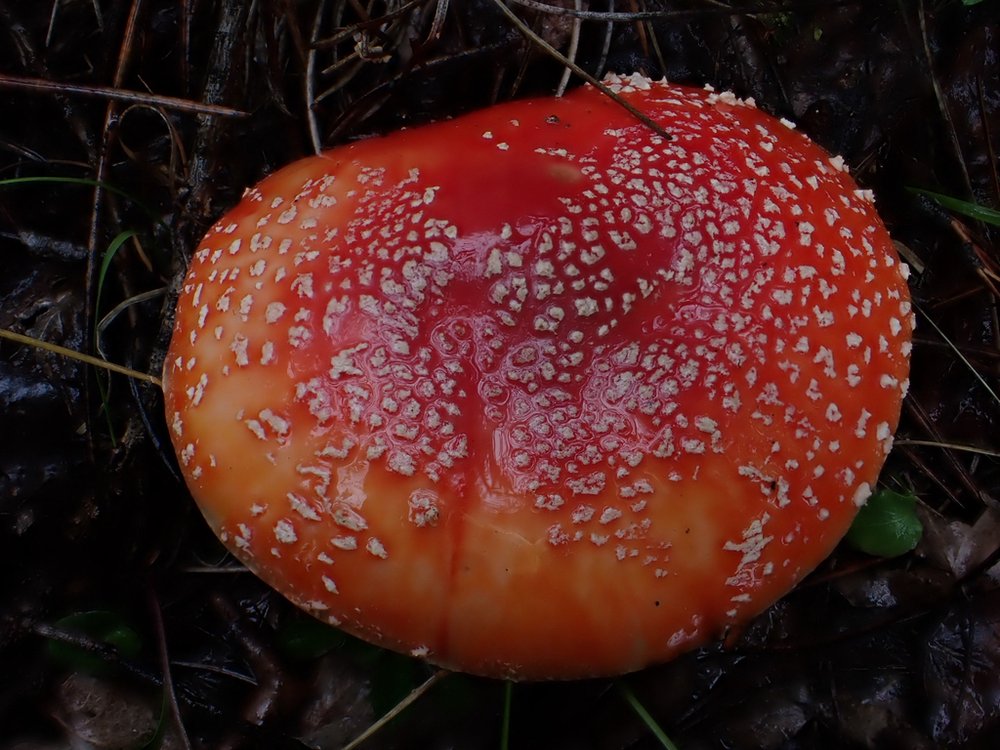
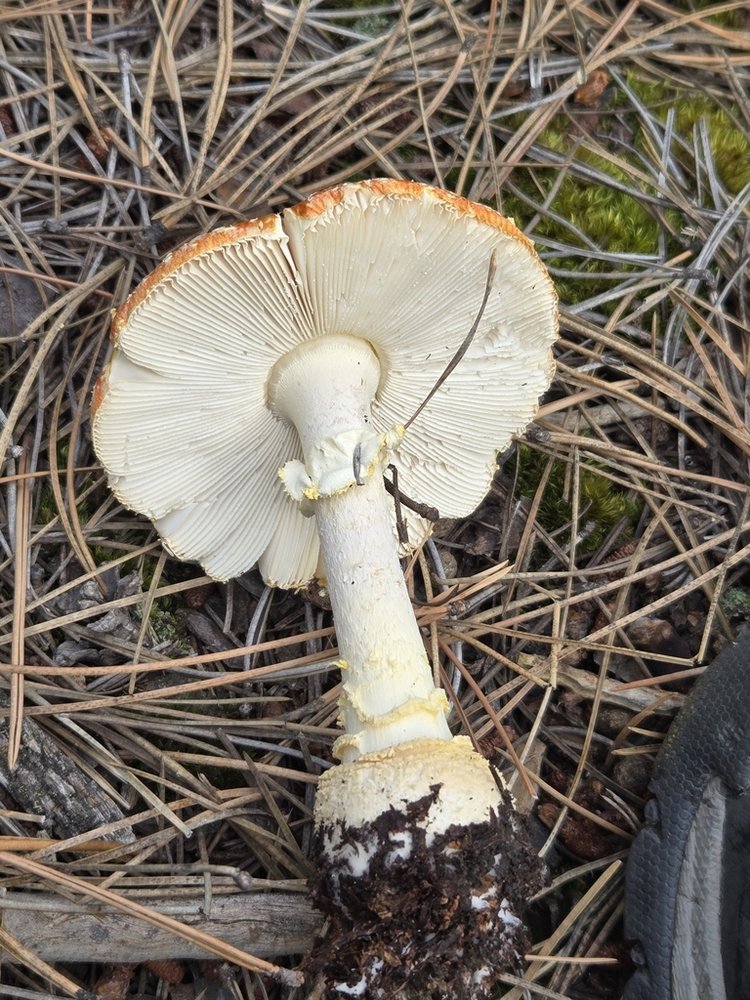
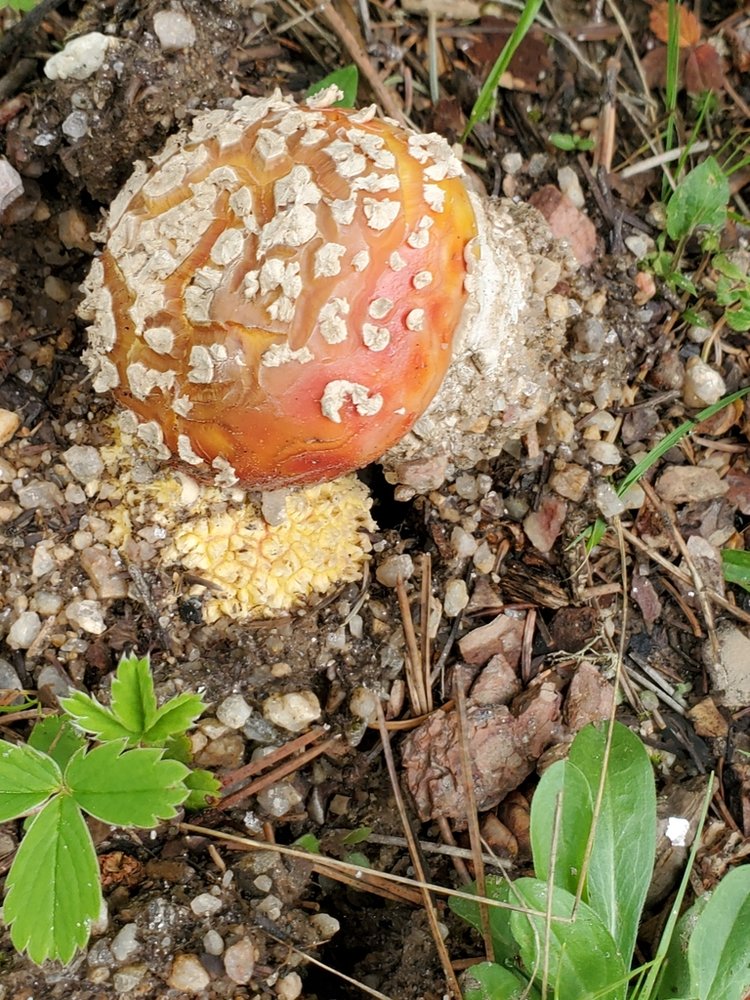
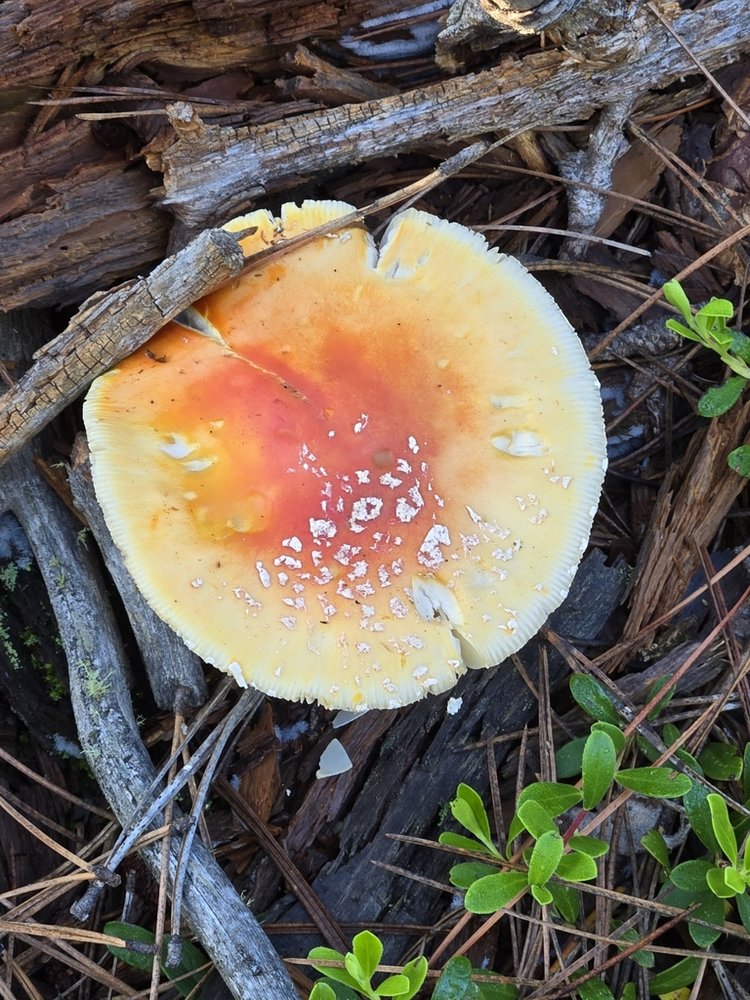
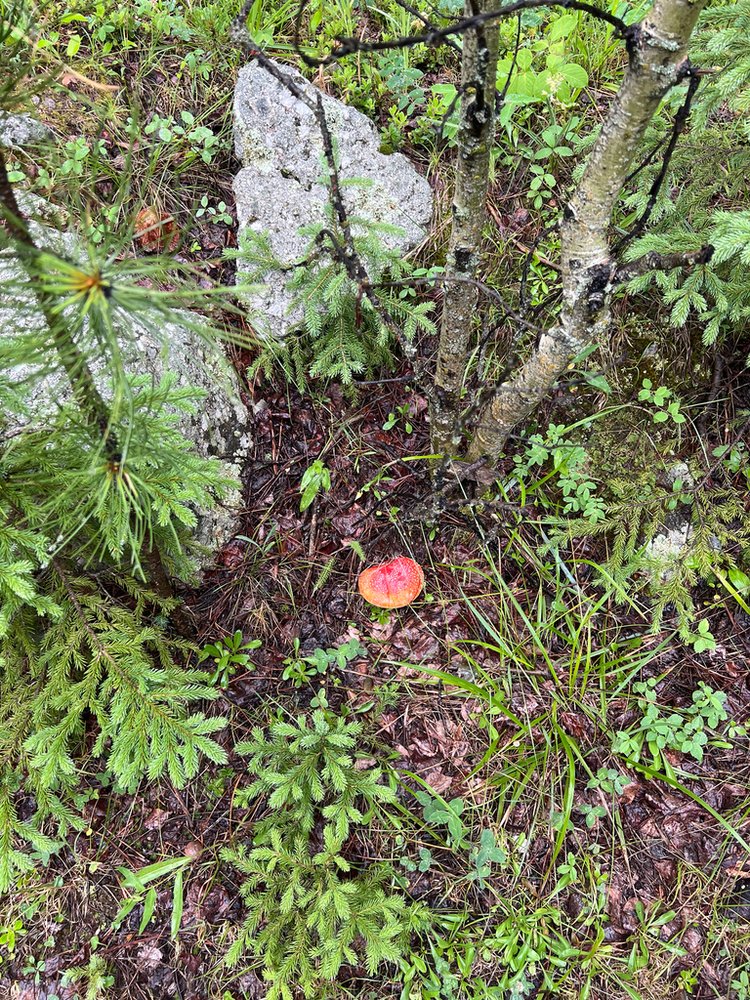
Fly Agaric (Amanita muscaria) is a large red mushroom with white to pale yellow warts on the cap, white gills, a skirt-like ring on the stem and shaggy rings around a bulb at the base. It is the most-recorded gilled mushroom in the Black Hills on iNaturalist, coming up on the forest floor from June into September, mostly in July.
Free photos from other sources
| Family | Amanitaceae · Amanita |
|---|---|
| Type | Gilled mushroom |
| Season | June into September, mostly in July |
| Size | Cap 5–25 cm (2–10 in) wide, stem 5–18 cm (2–7 in) tall |
| Grows on | Soil in conifer and mixed forests |
| Spore print | White |
| Also called | Fly Amanita |
| Synonym | Amanita muscaria var. flavivolvata, Amanita muscaria subsp. flavivolvata |
| Toxicity | Poisonous: it contains ibotenic acid and muscimol, which act on the brain and cause vomiting, confusion, delusions, seizures and a deep, coma-like sleep, and they can kill dogs and cats. |
| Eating | This guide doesn't say which mushrooms are safe to eat. |
How it lives
Fly agaric is mycorrhizal: it trades nutrients with the roots of living trees, both conifers and hardwoods, so it comes up near its partner trees. The warts on the cap and the rings on the bulb are leftovers of the universal veil, a skin that wraps the whole young button and tears as the mushroom grows.
How do you identify Fly Agaric?
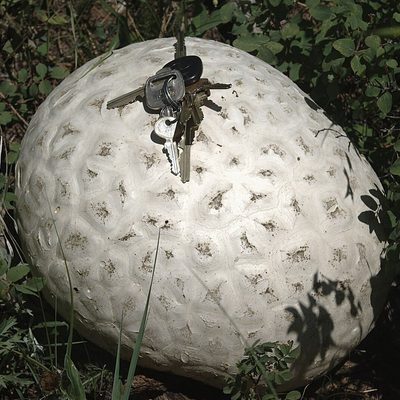
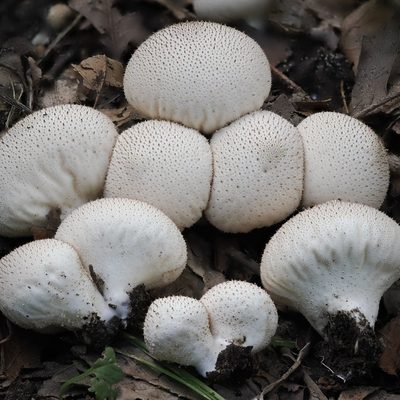
Look for a red to orange-red cap, 5–25 cm (2–10 in) wide, dotted with cottony warts that start pale yellow and soon turn white. With age the red fades to orange or yellow-orange, and rain can wash the warts off. The gills are white, crowded, and free of the stem or barely touching it, and the spore print (the dust the gills drop) is white. The white stem has a skirt-like ring near the top and ends in a swollen bulb topped by shaggy rings of veil tissue, usually two to four. The bulb is often buried, so look closely at the base. The flesh is white and doesn't change color when cut. The Western Panther (Amanita pantherinoides), reported in the Black Hills from a few unconfirmed records, has a brown, tan or yellowish brown cap with whitish warts and usually a collar-like roll of tissue at the top of its bulb instead of rings, and it carries the same poisons. White Amanitas such as the deadly destroying angels are white all over, with a bald cap, a ring and a white, sack-like cup around the base that may be buried or broken; iNaturalist has no Black Hills records of them. A young button can pass for a puffball, but cut in half it shows the outline of a cap, gills and stem, while a puffball is solid inside.
When can you find it?
June into September, mostly in July.
Where does it grow?
Soil in conifer and mixed forests. iNaturalist holds 135 Black Hills records (104 research grade) from 2011 to 2026, all from June to September, with 90 from 2025 alone. They come from Custer, Pennington and Lawrence counties, in the central and northern Hills, and 49 are from Custer State Park; there are none from Wind Cave. The 15 Black Hills records named below species level are all var. flavivolvata, the red western form that Kuo calls most common in the Rocky Mountains; none are filed as the yellow to orange var. guessowii of the northern Midwest and East. No Black Hills herbarium specimen turned up in GBIF (its South Dakota records there all come from iNaturalist), and no published Black Hills source opened for this guide names it.
Other mushrooms to compare
Sources: Amanita muscaria var. flavivolvata (M. Kuo, 2013) — MushroomExpert.com; The Genus Amanita, with a key to 113 species (M. Kuo) — MushroomExpert.com; Amanita pantherina, western North American version (M. Kuo, 2013) — MushroomExpert.com; Amanita bisporigera, the eastern destroying angel (M. Kuo, 2013) — MushroomExpert.com; Puffballs (M. Kuo) — MushroomExpert.com; Amanita muscaria, Matchmaker: Mushrooms of the Pacific Northwest — Canadian Forest Service; Amanita muscaria, the fly agaric: Fungus of the Month, December 1999 (T. Volk) — University of Wisconsin-La Crosse; Mushroom Poisoning Syndromes — North American Mycological Association; Amanita muscaria var. guessowii (M. Kuo, 2013) — MushroomExpert.com; Fly Agaric records in the six Black Hills places, research grade and needs ID — iNaturalist API; Western Panther (Amanita pantherinoides) records in the Black Hills places, all needs ID — iNaturalist API; Amanita muscaria: species synonyms — Species Fungorum (Index Fungorum); Amanita species recorded in the Black Hills places — iNaturalist API; Fungi recorded in the Black Hills places, by number of records — iNaturalist API; Amanita muscaria records from South Dakota by record type (no specimens) — GBIF.