Common Puffball
Lycoperdon perlatum
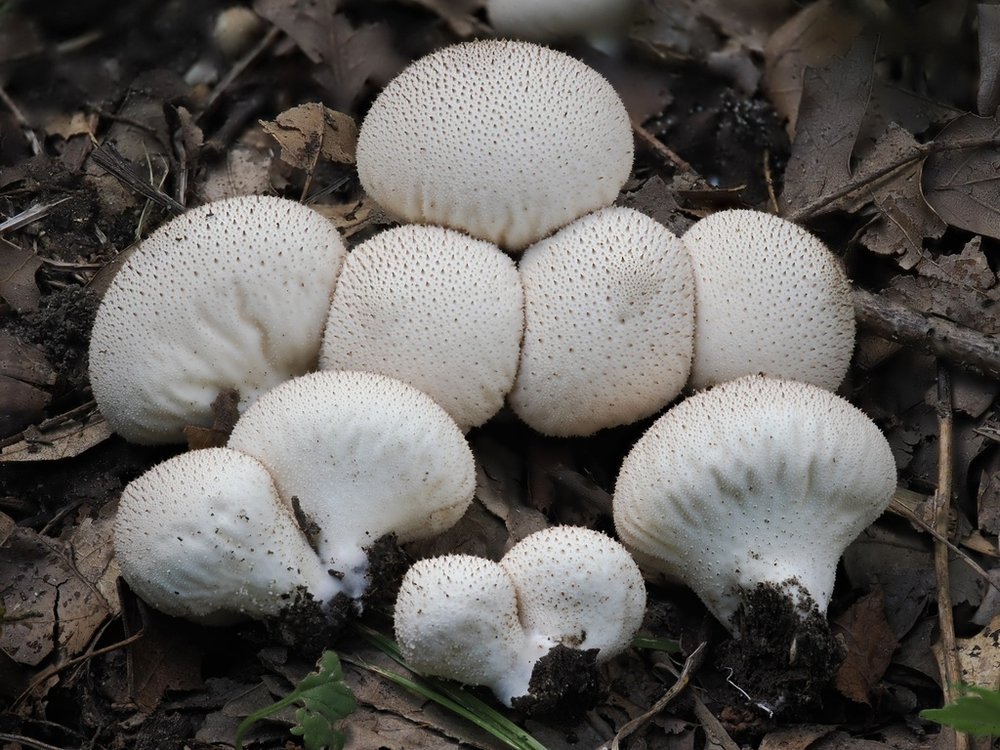
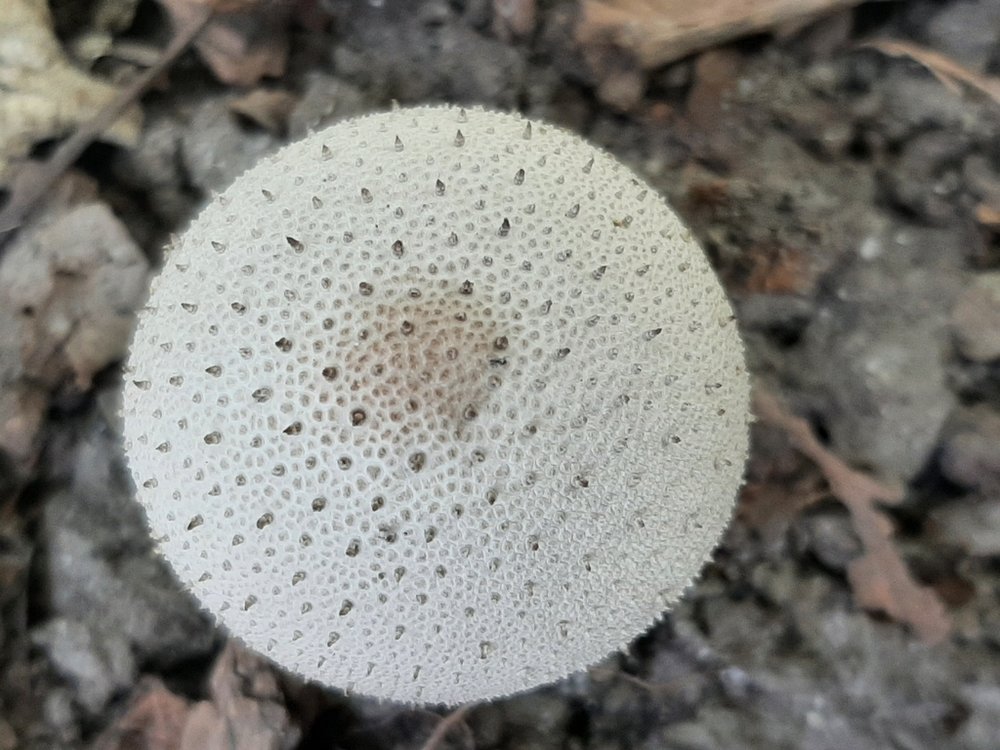
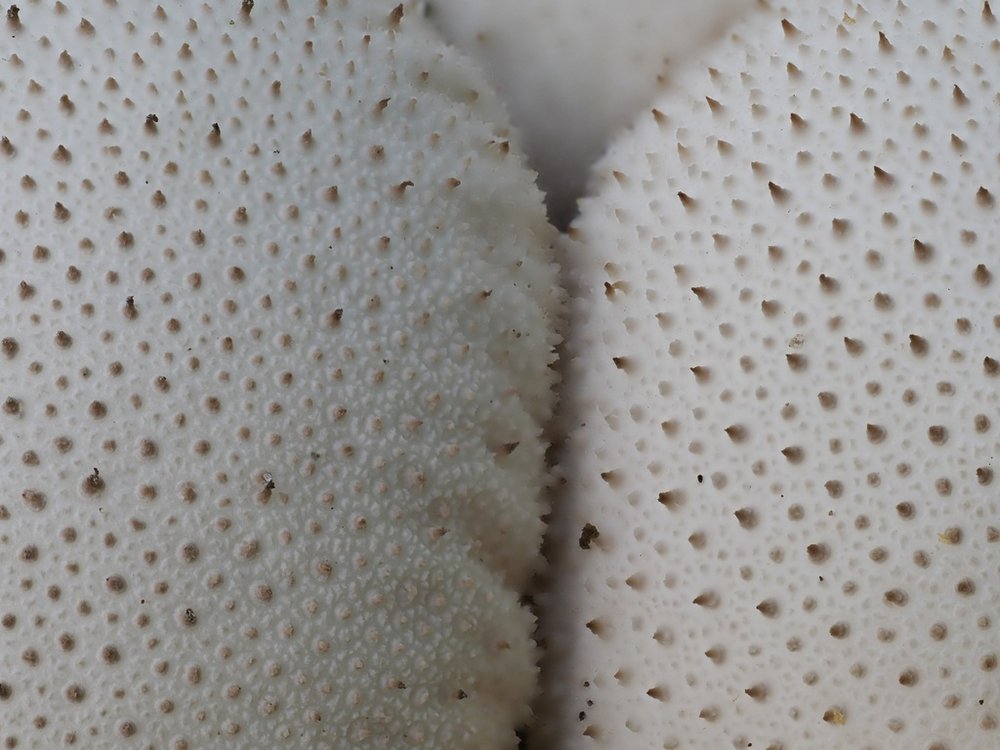
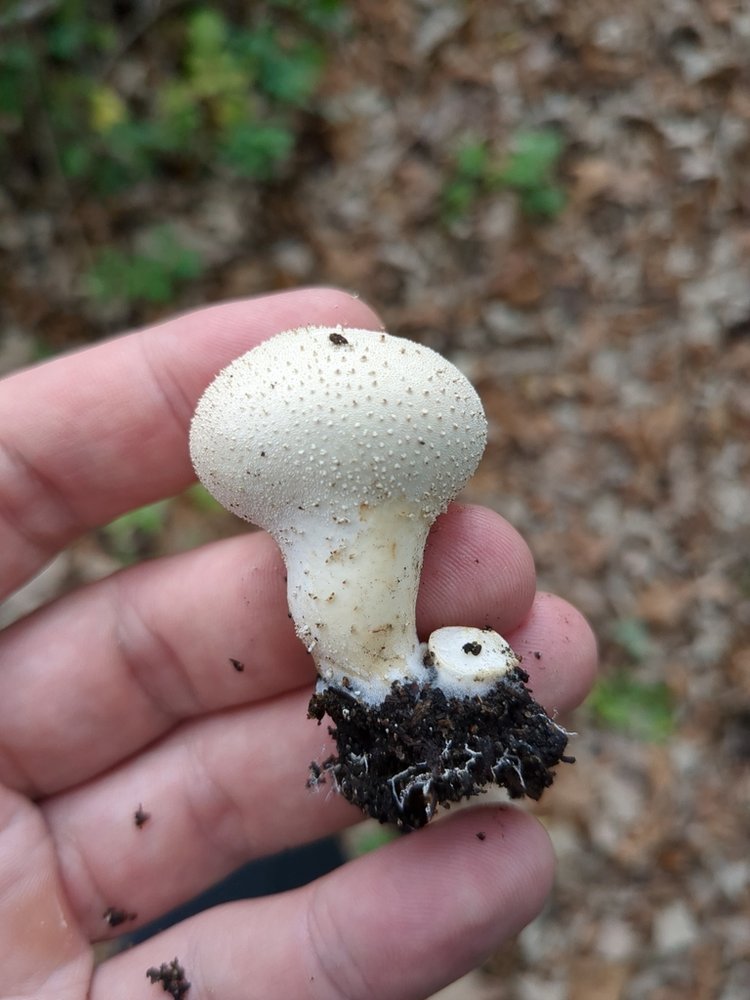
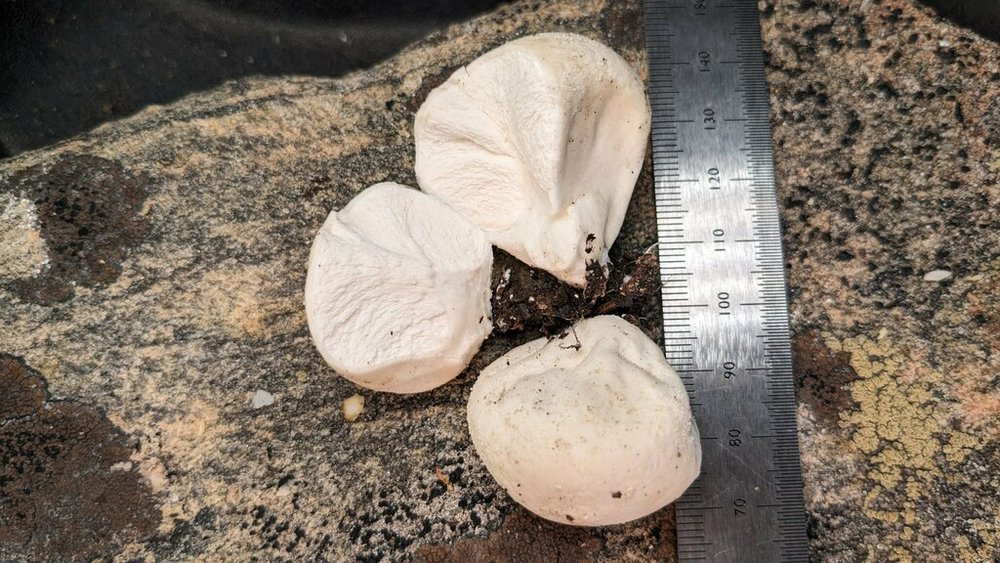
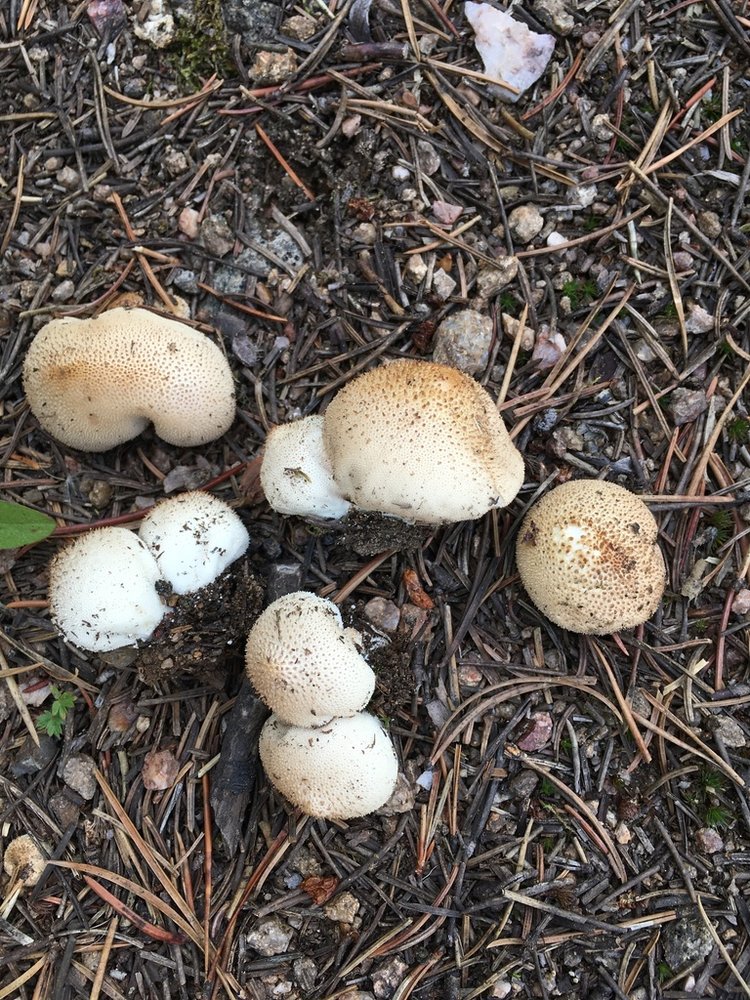
The Common Puffball (Lycoperdon perlatum) is a small white puffball, 2–7 cm (¾–2¾ in) wide, covered with tiny cone-shaped spines that rub off and leave small pits. The National Park Service lists it at Jewel Cave, on bare dirt and short grass from May to September, and at Mount Rushmore.
Free photos from other sources
| Family | Lycoperdaceae · Puffball |
|---|---|
| Type | Puffball |
| Season | May into October |
| Size | 2–7 cm (¾–2¾ in) wide, 3–8 cm (1¼–3 in) tall |
| Grows on | Bare soil, short grass and forest floor |
| Spore print | Olive brown (spore dust) |
| Also called | Gem-studded Puffball, Warted Puffball, Devil's Snuff-box |
| Synonym | Lycoperdon gemmatum |
| Toxicity | Breathing in the spores can cause lycoperdonosis, a rare lung illness: in Wisconsin in 1994, eight teenagers who inhaled spores of this puffball fell ill, five were hospitalized and two needed breathing tubes. |
| Eating | This guide doesn't say which mushrooms are safe to eat. |
| Traditional use | Sitting Bull College's 1998 Culturally Important Plants of the Lakota says that, as with all puffballs, the dried brown spores were used to stop bleeding from wounds, especially on a newborn's navel. It records this under the Purple-spored Puffball and the Tumbling Puffball, which it calls hokší čhekpá, not under this species. |
How it lives
It is saprobic, breaking down dead plant matter in the soil, and is anchored by thin white cords. When it ripens, a hole opens at the top, and raindrops and wind puff the spores out through it.
How do you identify Common Puffball?
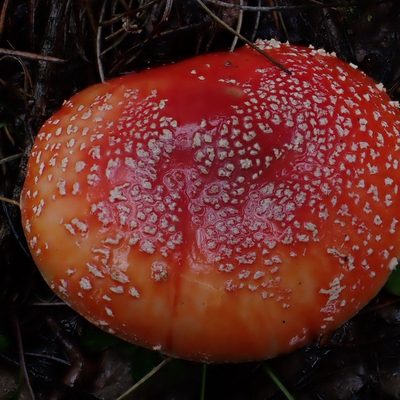
A small white to cream puffball, 2–7 cm (¾–2¾ in) wide and 3–8 cm (1¼–3 in) tall, often shaped like an upside-down pear, with a distinct base that ends in thin white cords in the soil. The top is covered with firm, cone-shaped spines about 1 mm high, often ringed by smaller spines or granules; they rub off and leave small pits, sometimes in a net pattern. With age it turns brown, a hole opens at the top, and a raindrop or a press sends out a puff of olive-brown spore dust. Cut a young one from top to bottom: it is white, spongy and the same all the way through. An Amanita button, such as a young Fly Agaric, the most recorded Amanita in the Black Hills on iNaturalist, shows the outline of a cap, gills and stem inside. Earthballs (Scleroderma), reported in the Black Hills, are poisonous and often mistaken for puffballs: they feel firm, not spongy, have a rind about 2 mm (1/16 in) thick, and the Common Earthball is purplish gray to purple-black inside even when young. The Pear-shaped Puffball (Apioperdon pyriforme), collected in the Black Hills, grows on rotting wood and has almost no spines.
When can you find it?
May into October.
Where does it grow?
Bare dirt and short grass on disturbed ground, trail edges and roadsides, and the floor of conifer and hardwood woods. Jewel Cave National Monument lists it among the fungi seen there from May to September, and it is on the National Park Service species list for Mount Rushmore National Memorial. iNaturalist has six Black Hills reports, none yet confirmed by other observers, from Lawrence, Pennington and Custer counties and Devils Tower. No herbarium specimen of it from the Hills turned up in GBIF; the Pear-shaped Puffball was collected in Lawrence County in 1918 and Pennington County in 1930.
Other mushrooms to compare
Sources: Lycoperdon perlatum (M. Kuo, February 2019) — MushroomExpert.com; Mushrooms and Other Fungi (Common Puffball) — National Park Service, Jewel Cave National Monument; NPSpecies checklist, Mount Rushmore National Memorial: Fungi — National Park Service; Respiratory Illness Associated with Inhalation of Mushroom Spores — Wisconsin, 1994 (MMWR) — Centers for Disease Control and Prevention; The Puffballs (M. Kuo, November 2008) — MushroomExpert.com; Scleroderma citrinum (M. Kuo, June 2025) — MushroomExpert.com; Scleroderma bovista, potato earthball — Beaty Biodiversity Museum, University of British Columbia (Mushrooms Up!); Puffballs (C. Engelbrecht, 2005) — Iowa State University Extension, Yard and Garden; Lycoperdon perlatum: synonymy and classification — Species Fungorum (Royal Botanic Gardens, Kew); Lycoperdon perlatum records in the Black Hills places — iNaturalist API; Puffball species recorded in the Black Hills places (Lycoperdaceae) — iNaturalist API; Amanita species recorded in the Black Hills places — iNaturalist API; Earthball (Scleroderma) records in the Black Hills places — iNaturalist API; Lycoperdon perlatum records from South Dakota — GBIF; Lycoperdon pyriforme (Pear-shaped Puffball) records from South Dakota, incl. Lawrence County 1918 and Pennington County 1930 specimens — GBIF; Culturally Important Plants of the Lakota (L. S. Black Elk & W. D. Flying By, Sitting Bull College, 1998), filed with the South Dakota PUC; Mushroom Poisoning Syndromes — North American Mycological Association.