Western Giant Puffball
Calvatia booniana
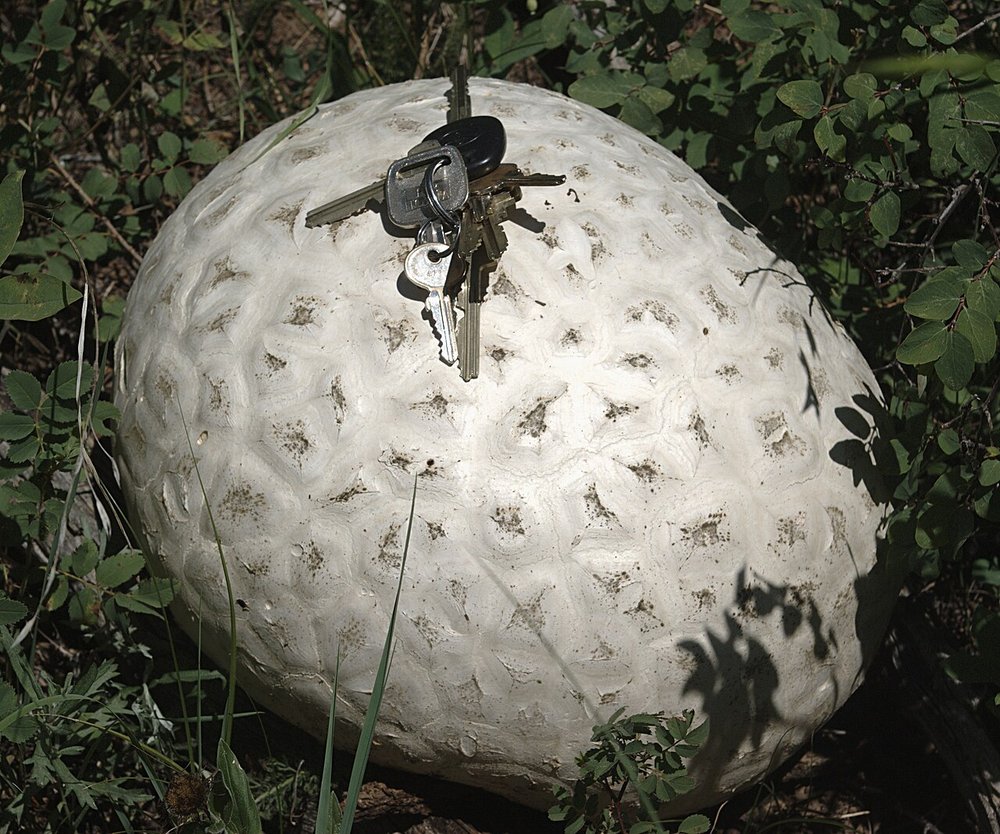
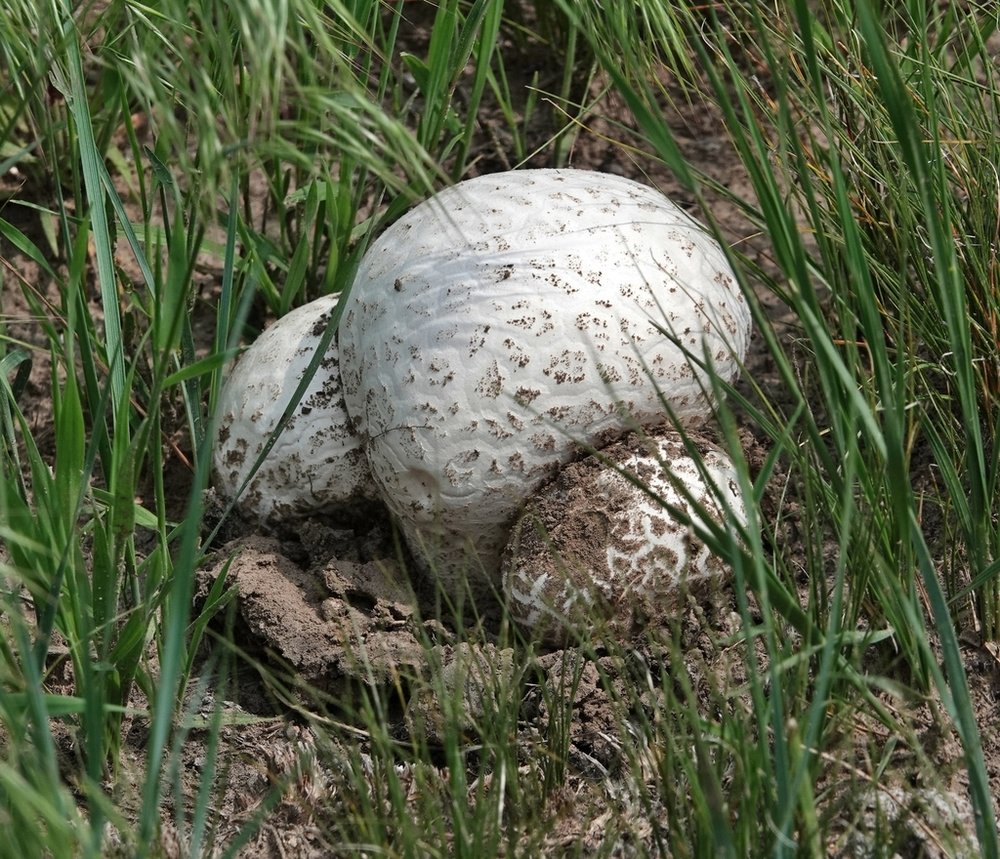
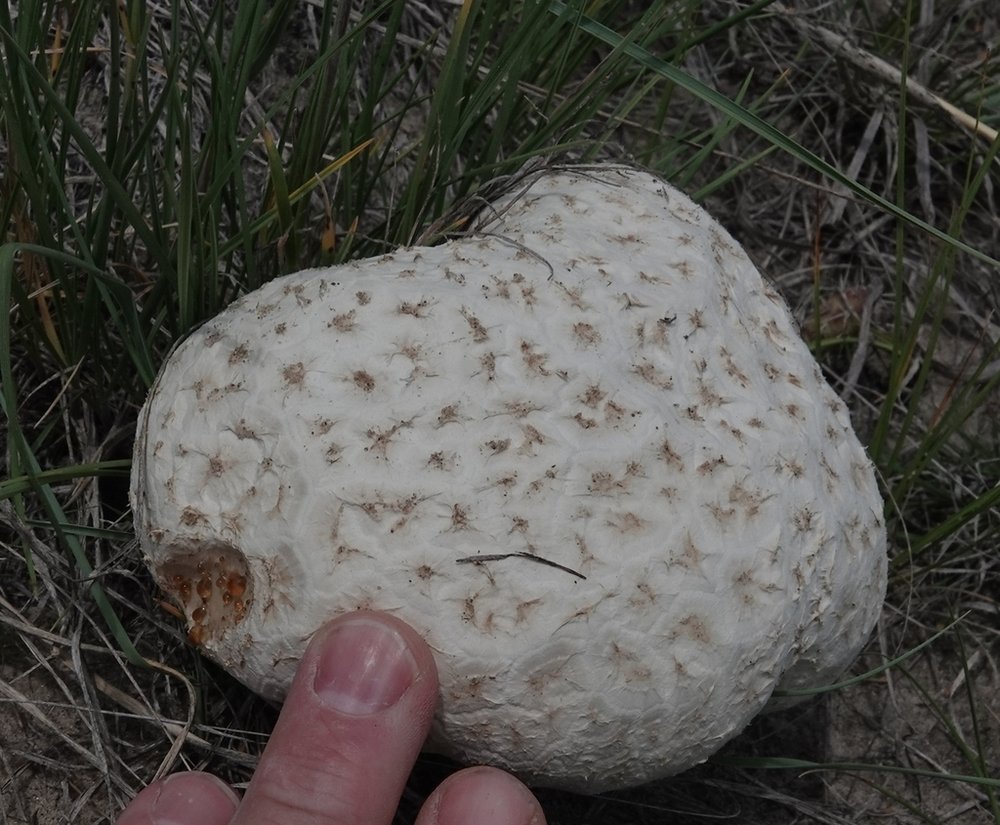
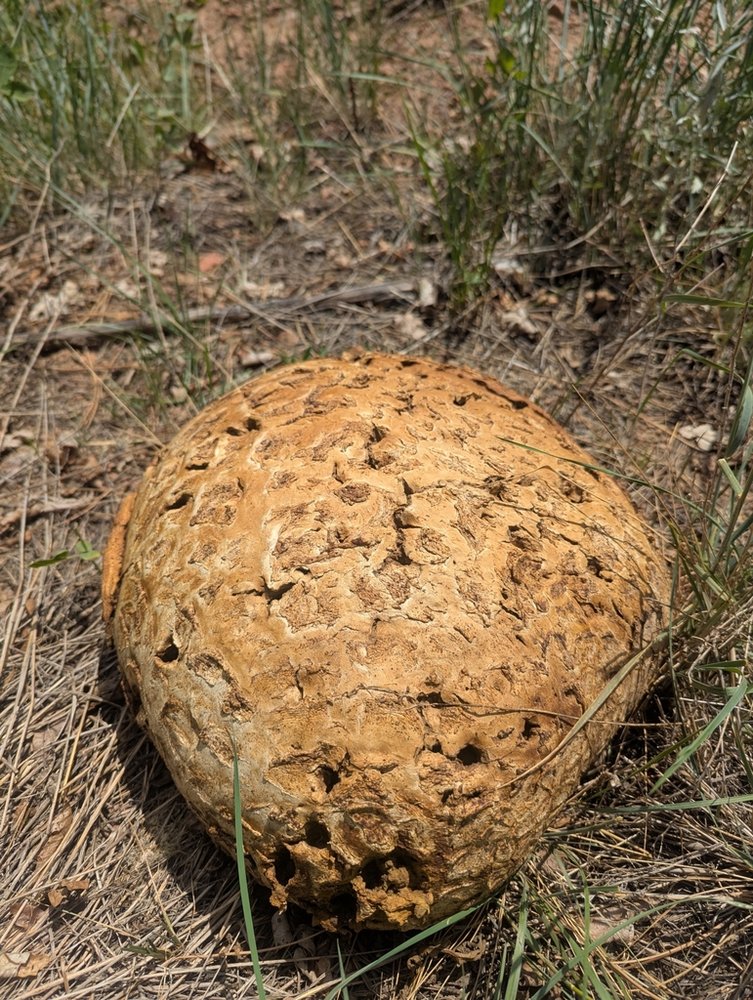
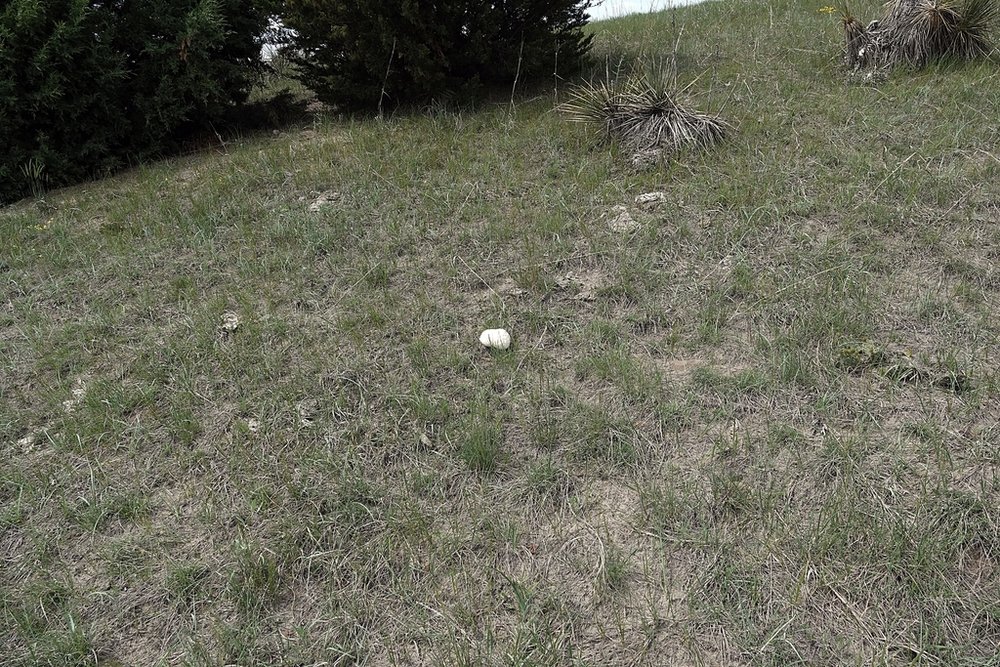
The Western Giant Puffball (Calvatia booniana) is a big white puffball, usually 15–30 cm (6–12 in) across, whose skin cracks into broad, many-sided plates. It grows on open, grassy ground, and iNaturalist has Black Hills reports from Wind Cave National Park, Custer State Park and nearby, mostly from May and June and again in September.
Free photos from other sources
| Family | Lycoperdaceae · Puffball |
|---|---|
| Type | Puffball |
| Season | May into September; most Black Hills records are from May and June |
| Size | 15–30 cm (6–12 in) across, up to 30 cm (12 in) high, sometimes over 60 cm (24 in) across |
| Grows on | Soil in open, grassy meadows and prairie |
| Spore print | Olive brown (spore dust) |
| Eating | This guide doesn't say which mushrooms are safe to eat. |
| Traditional use | Sitting Bull College's 1998 Culturally Important Plants of the Lakota says that, as with all puffballs, the dried brown spores were used to stop bleeding from wounds, especially on a newborn's navel. It records this under the Purple-spored Puffball and the Tumbling Puffball, which it calls hokší čhekpá, not under this species. |
How it lives
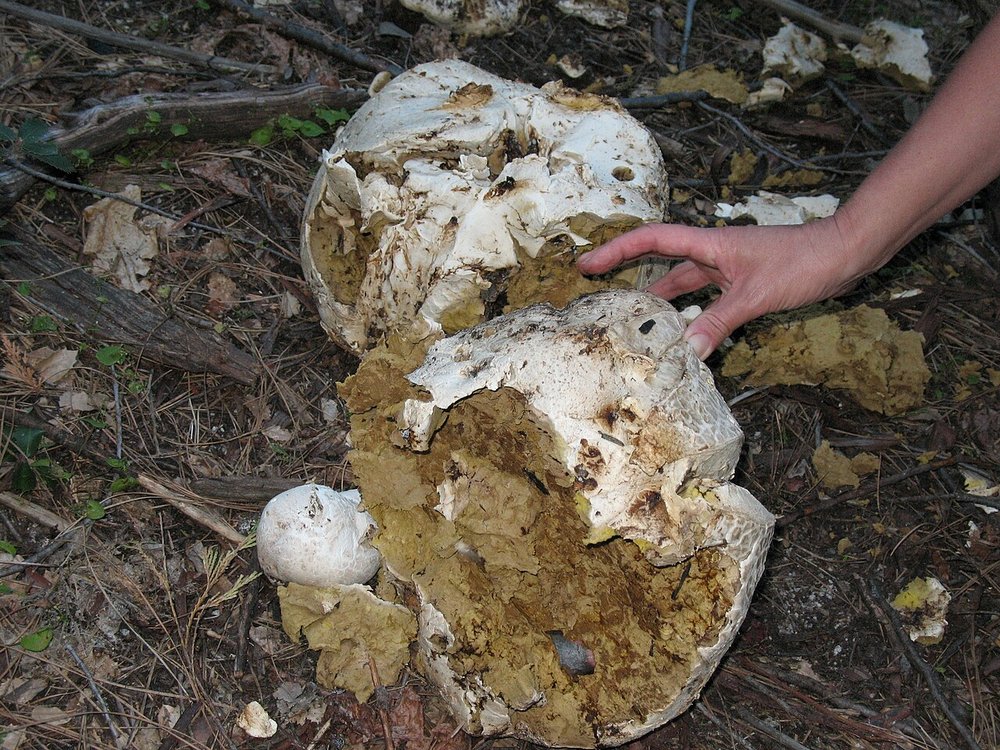
It is saprobic: it breaks down dead plant matter in the soil and does not partner with tree roots. Like other puffballs it has no gills. The inside ripens into a mass of spore dust, and the spores escape as the skin cracks and breaks away.
How do you identify Western Giant Puffball?
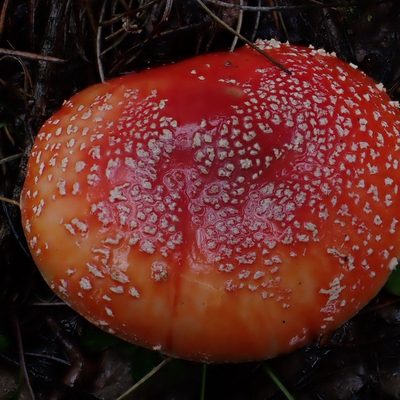
Look for a large white ball or flattened blob sitting on the ground with no stem, usually 15–30 cm (6–12 in) across and up to 30 cm (12 in) high. The dry white skin soon breaks up into large, many-sided patches, so it doesn't look smooth, and there is often a small cord where it meets the soil. Inside, a young one is white and fleshy all the way through, with no stem-like base; with age the inside turns greenish yellow and then into olive-brown spore dust. Cut any puffball from top to bottom. An Amanita button, such as a young Fly Agaric, the most recorded Amanita in the Black Hills on iNaturalist, shows the outline of a cap, gills and stem inside, while a young puffball is solid and evenly white. Earthballs (Scleroderma), reported in the Black Hills, are poisonous and often mistaken for puffballs: they feel firm, not spongy, have a rind about 2 mm (1/16 in) thick, and the Common Earthball is purplish gray to purple-black inside even when young. The Giant Puffball (Calvatia gigantea), the big puffball of the Great Plains and eastward, has smooth, velvety skin with no plates. The Purple-spored Puffball (Calvatia cyathiformis) is smaller, with a thick base that narrows toward the ground, and turns purple-brown inside.
When can you find it?
May into September; most Black Hills records are from May and June.
Where does it grow?
Open, grassy ground: meadows, prairie and fields, growing alone, scattered or in rings. MushroomExpert describes it from grassy areas and sagebrush, from low fields up to subalpine meadows, and the Global Fungal Red List calls it a fungus of dry grassland in North America. In the Black Hills, iNaturalist has 34 records under this name (9 research grade): 11 from Wind Cave National Park and 9 from Custer State Park, with the rest from Custer, Pennington, Meade and Fall River counties and Crook County, Wyoming. No herbarium specimen from the Hills was found. MushroomExpert gives this species to the western mountains and the smooth Giant Puffball to the Great Plains and eastward, so the name of the Black Hills puffballs is not settled.
Other mushrooms to compare


Sources: Calvatia booniana (M. Kuo, December 2017) — MushroomExpert.com; Calvatia gigantea (M. Kuo, November 2017) — MushroomExpert.com; Calvatia cyathiformis (M. Kuo, September 2016) — MushroomExpert.com; The Puffballs (M. Kuo, November 2008) — MushroomExpert.com; Scleroderma citrinum (M. Kuo, June 2025) — MushroomExpert.com; Scleroderma bovista, potato earthball — Beaty Biodiversity Museum, University of British Columbia (Mushrooms Up!); Puffballs (C. Engelbrecht, 2005) — Iowa State University Extension, Yard and Garden; Calvatia booniana: synonymy and classification — Species Fungorum (Royal Botanic Gardens, Kew); Calvatia booniana (proposed assessment, M. Jeppson 2024) — Global Fungal Red List Initiative; Calvatia booniana records in the Black Hills places — iNaturalist API; Calvatia booniana, Black Hills records by month — iNaturalist API; Amanita species recorded in the Black Hills places — iNaturalist API; Earthball (Scleroderma) records in the Black Hills places — iNaturalist API; Calvatia booniana records from South Dakota (no specimens) — GBIF; Culturally Important Plants of the Lakota (L. S. Black Elk & W. D. Flying By, Sitting Bull College, 1998), filed with the South Dakota PUC.