Shaggy Mane
Coprinus comatus
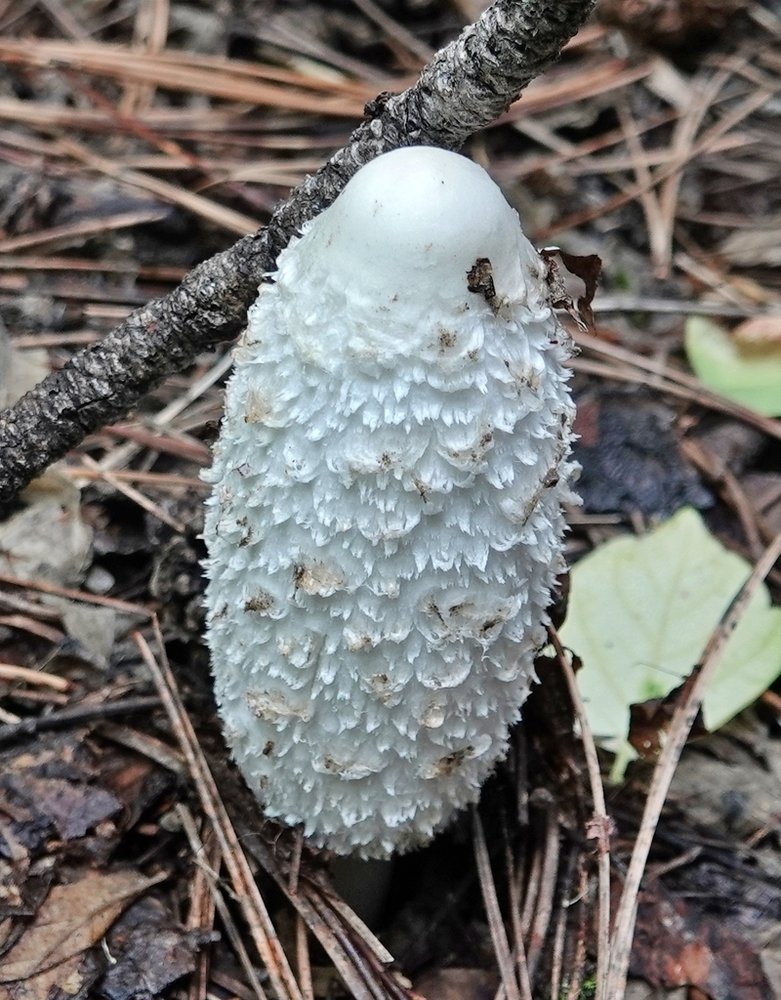
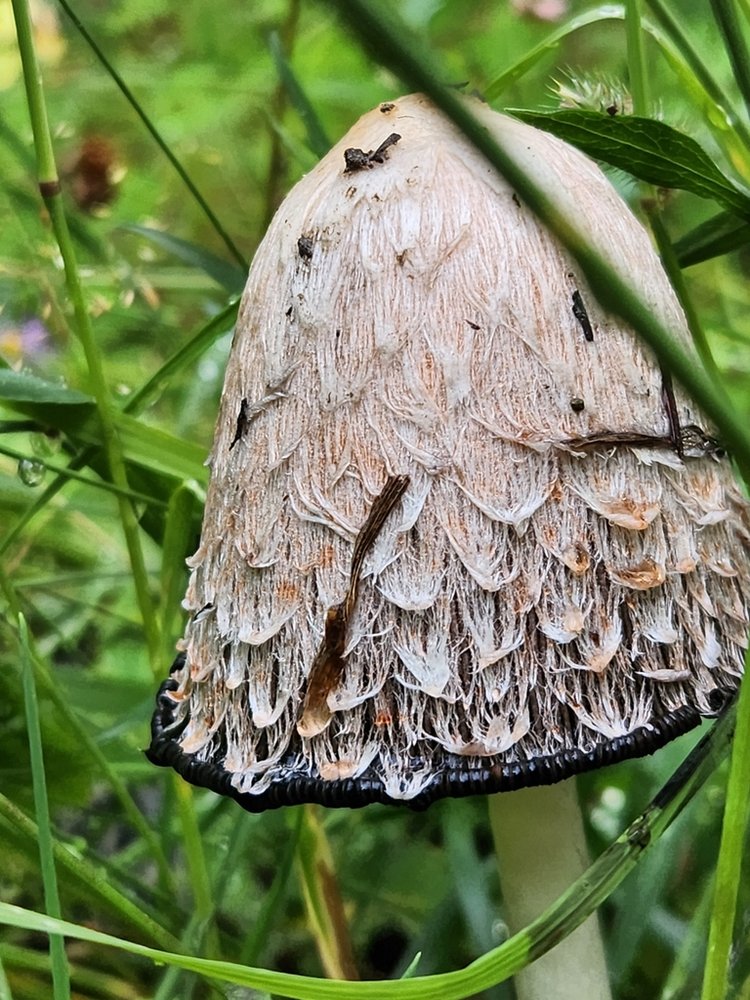
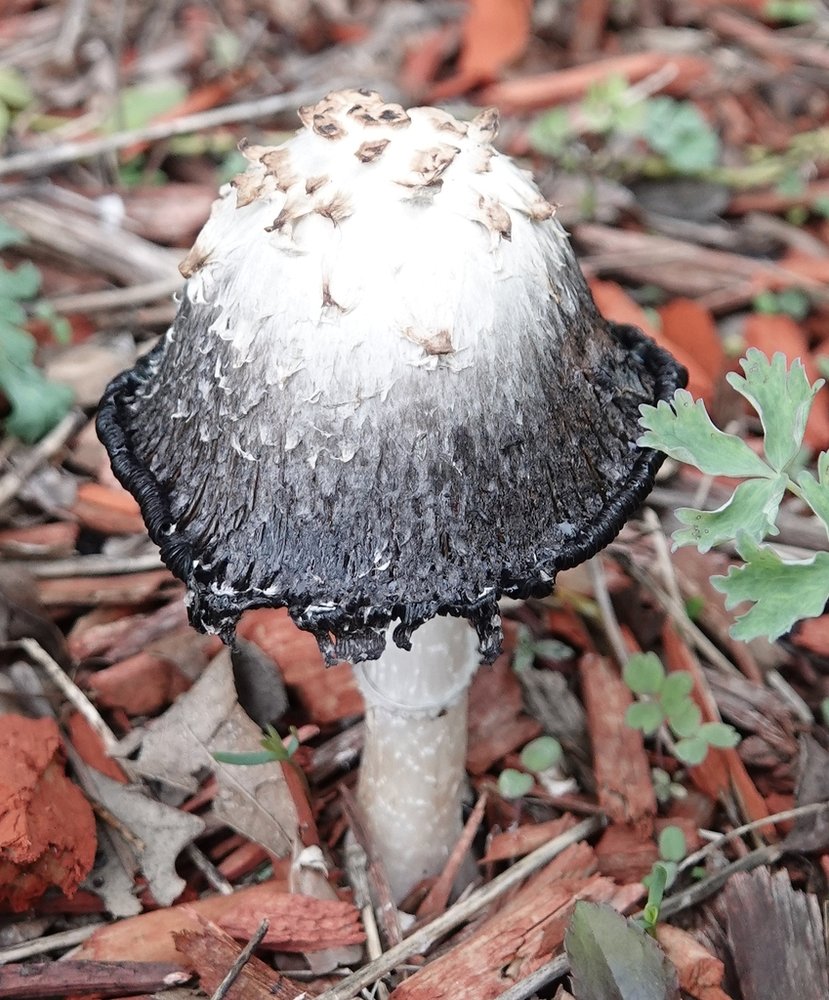
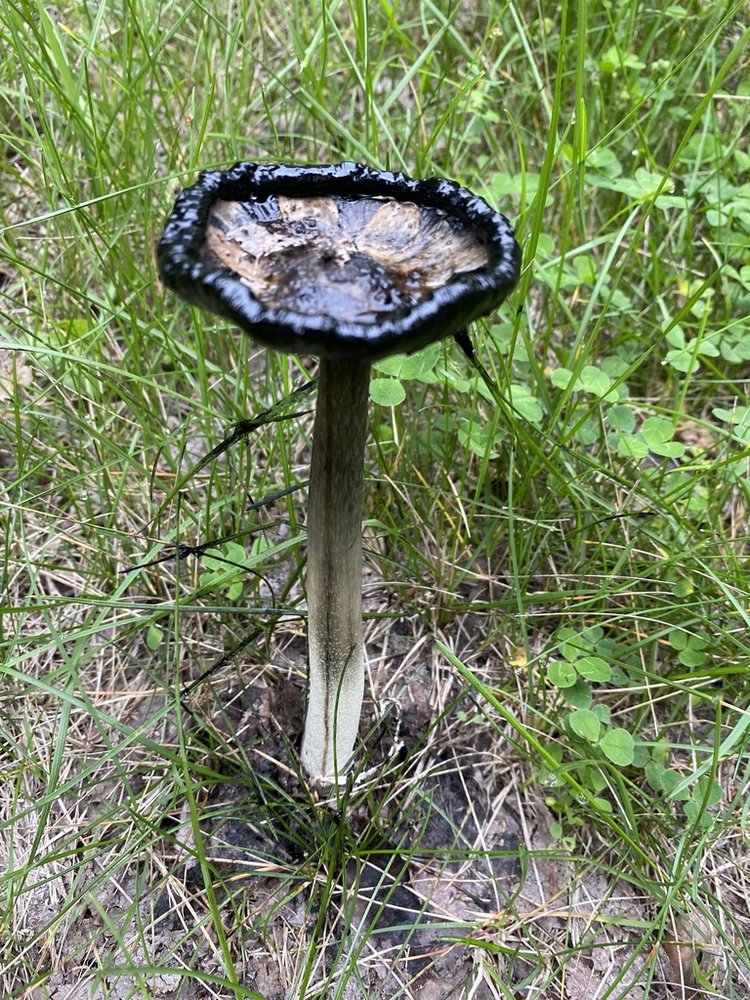
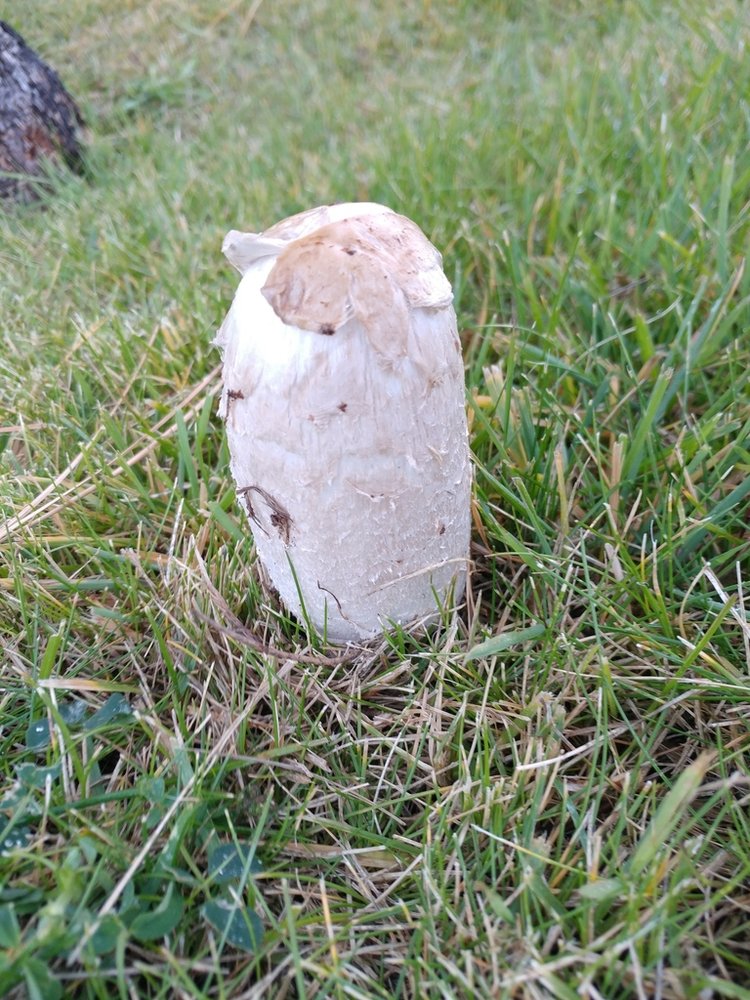
Shaggy Mane (Coprinus comatus) is a tall white mushroom whose egg- to cylinder-shaped cap is covered in shaggy scales and melts into black ink from the edge up as it ages. It comes up in lawns, along roadsides and on other disturbed ground; iNaturalist's Black Hills records come from towns and the national forest, mostly in May and again in September and October.
Free photos from other sources
| Family | Agaricaceae · Agaricus |
|---|---|
| Type | Gilled mushroom |
| Season | May into October, mostly in May and again in September and October |
| Size | Cap 4–15 cm (1½–6 in) tall and 2.5–6 cm (1–2½ in) wide, stem 5–20 cm (2–8 in) tall |
| Grows on | Lawns, roadsides and other disturbed or hard-packed ground |
| Spore print | Black |
| Also called | Lawyer's Wig |
| Toxicity | It has caused poisonings: the North American Mycological Association's case registry lists cases from Michigan, Quebec and Alberta with nausea, vomiting, diarrhea, chills, muscle spasms, trembling and numbness, flushing, and low blood pressure with a racing heart. |
| Eating | This guide doesn't say which mushrooms are safe to eat. |
How it lives
Shaggy mane is saprobic: it lives on buried wood and other decaying matter in the soil and returns the nutrients to the soil. The cap breaks down into ink from the edge up, which frees the spores. DNA studies show it is closer kin to Agaricus and Lepiota than to the other ink caps.
How do you identify Shaggy Mane?
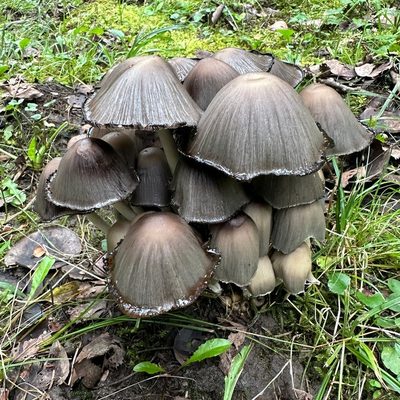
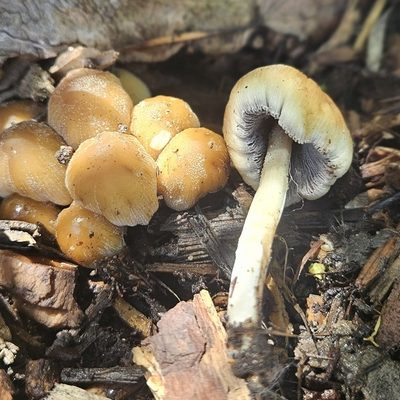
Look for a tall white cap, 4–15 cm (1½–6 in) tall, shaped like an egg or a cylinder and covered in large, shaggy scales, white with a brownish center. The cap opens into a bell as it ages. The gills are very crowded and free of the stem, white at first, then pinkish, then black, and they melt into black ink from the cap's edge inward. The spore print (the dust the gills drop) is black. The white stem is smooth and hollow, with a thin string of fibers hanging inside and a ring on the stem. The Common Ink Cap, which causes a reaction with alcohol, has a gray to gray-brown, fairly smooth cap with only a few tiny scales at the center, and it grows in clusters from buried wood or around stumps. The Mica Cap is much smaller, with a honey-brown, lined cap that glitters with fine granules when fresh, and it grows in clusters on rotting wood, which may be buried.
When can you find it?
May into October, mostly in May and again in September and October.
Where does it grow?
Lawns, wood chips, roadsides, hard-packed and other disturbed ground, alone or in groups, lines or rings. iNaturalist holds 40 Black Hills records (24 research grade) from 2016 to 2026, from May to October, from towns around the Hills and from the national forest, including 3 at Wind Cave and 3 in Custer State Park. The U.S. National Fungus Collections hold a specimen collected in the Black Hills on 1 August 1918 (BPI 778441). No published Black Hills source opened for this guide names it.
Other mushrooms to compare
Sources: Coprinus comatus: the shaggy mane (M. Kuo, 2008) — MushroomExpert.com; Coprinopsis atramentaria (M. Kuo, 2008) — MushroomExpert.com; Coprinellus micaceus (M. Kuo, 2008) — MushroomExpert.com; Shaggy Mane — Missouri Department of Conservation Field Guide; Mushroom Poisoning Syndromes — North American Mycological Association; Coprinus comatus: species synonyms — Species Fungorum (Index Fungorum); Shaggy Mane records in the six Black Hills places, research grade and needs ID — iNaturalist API; Coprinus comatus specimen BPI 778441, Black Hills, 1 August 1918 (U.S. National Fungus Collections) — GBIF; Beug, M. W. Summary of the Poisoning Reports in the NAMA Case Registry for 2006 through 2017 — North American Mycological Association.