Mica Cap
Coprinellus micaceus
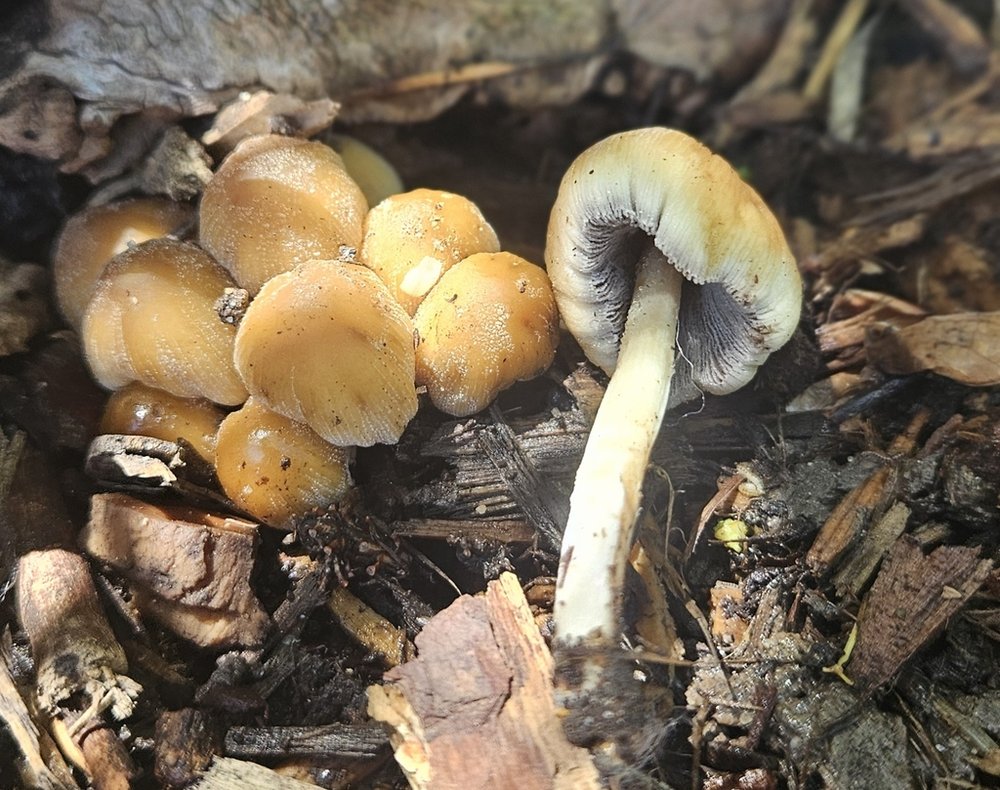
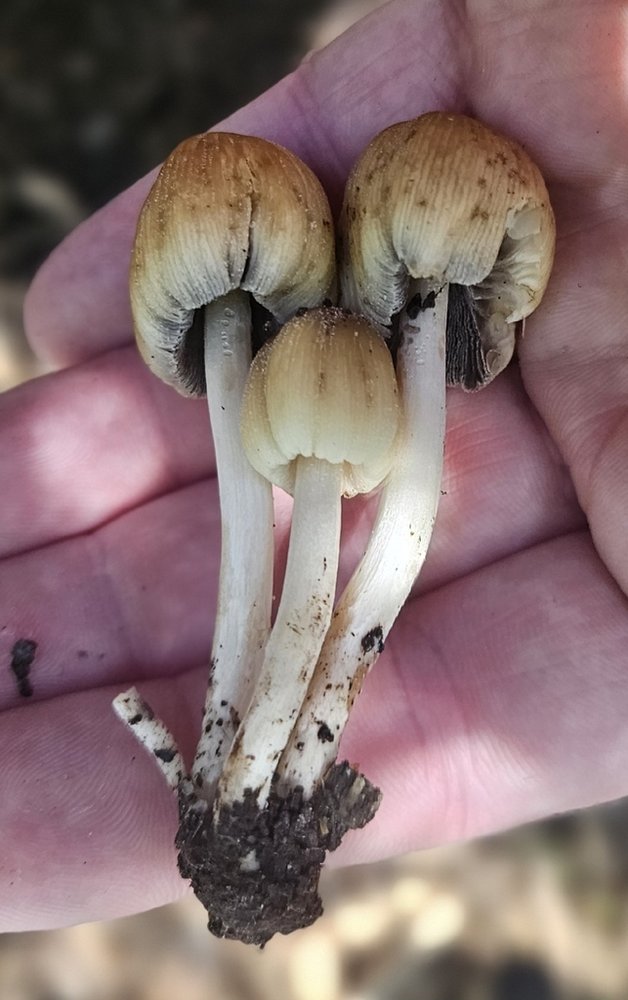
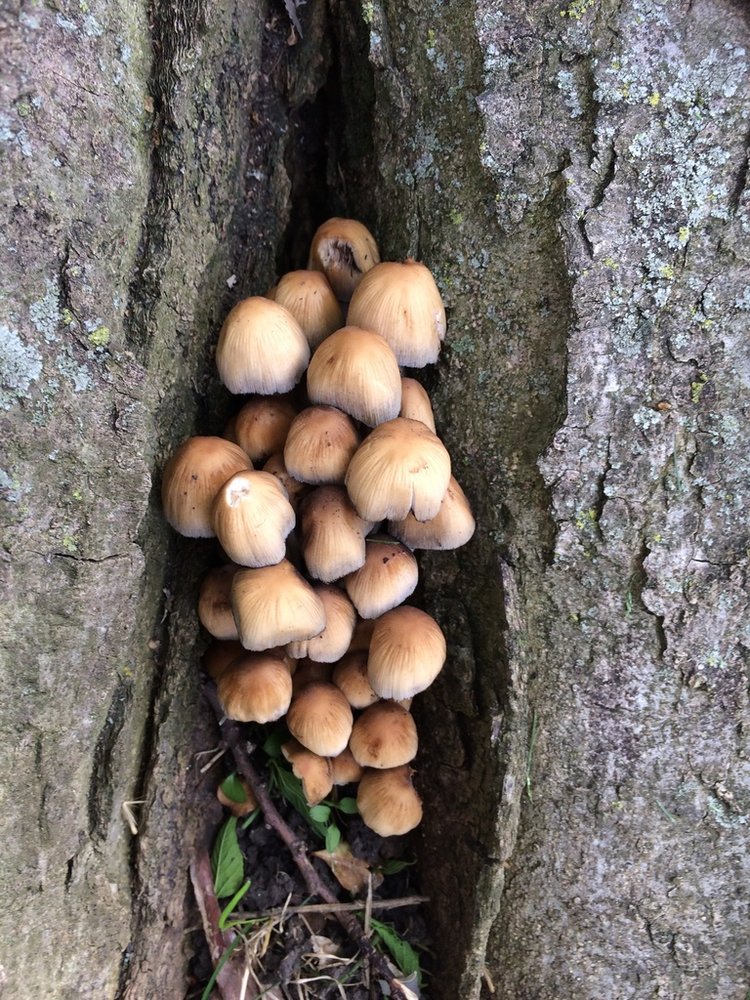
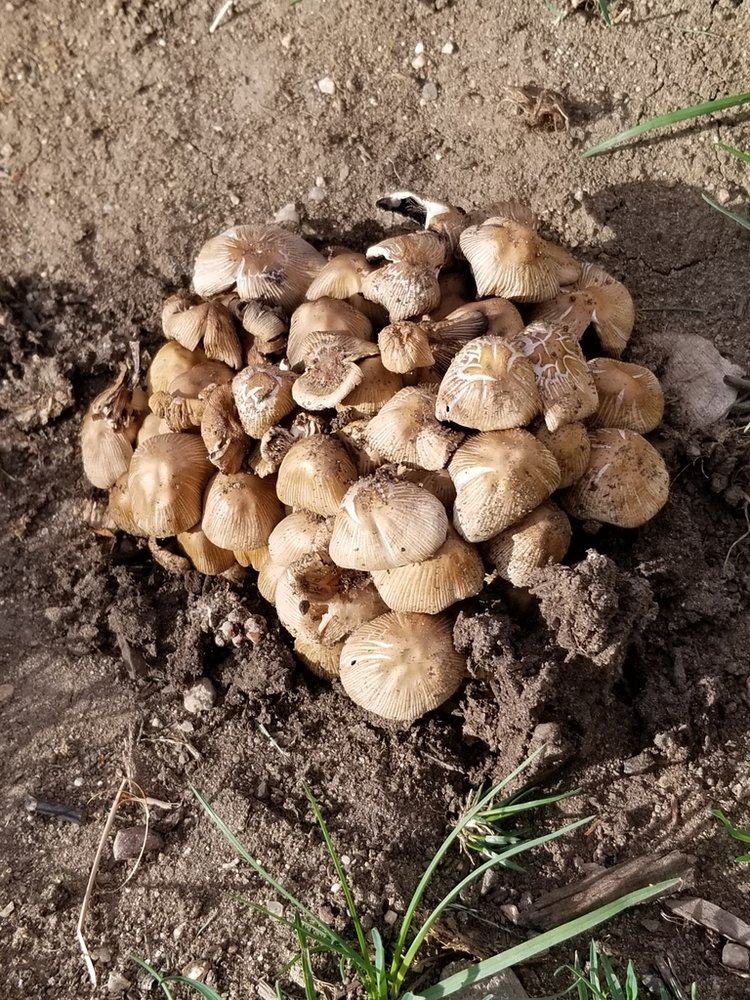
Mica Cap (Coprinellus micaceus) is a small honey-brown mushroom with a lined, bell-shaped cap that glitters with tiny mica-like flecks when fresh, growing in clusters on stumps, rotting wood and buried wood. iNaturalist's Black Hills records come mostly from towns, from April into September, most often in May and June.
Free photos from other sources
| Family | Psathyrellaceae · Brittlestem |
|---|---|
| Type | Gilled mushroom |
| Season | April into October, mostly in May and June |
| Size | Cap 2–5 cm (¾–2 in) wide, stem 2–8 cm (¾–3 in) tall |
| Grows on | Stumps, rotting wood and buried wood, often in towns |
| Spore print | Black to dark brown |
| Also called | Common Inky |
| Synonym | Coprinus micaceus |
| Toxicity | It has caused poisonings: the North American Mycological Association's case registry lists two children who vomited repeatedly and an adult with nausea, vomiting and diarrhea, and three dogs in Washington with intense drooling, vomiting and diarrhea that turned bloody. |
| Eating | This guide doesn't say which mushrooms are safe to eat. |
How it lives
Mica cap is saprobic: it breaks down dead wood, including stumps and buried wood. Like other ink caps, it releases its spores as the gills turn to ink.
How do you identify Mica Cap?
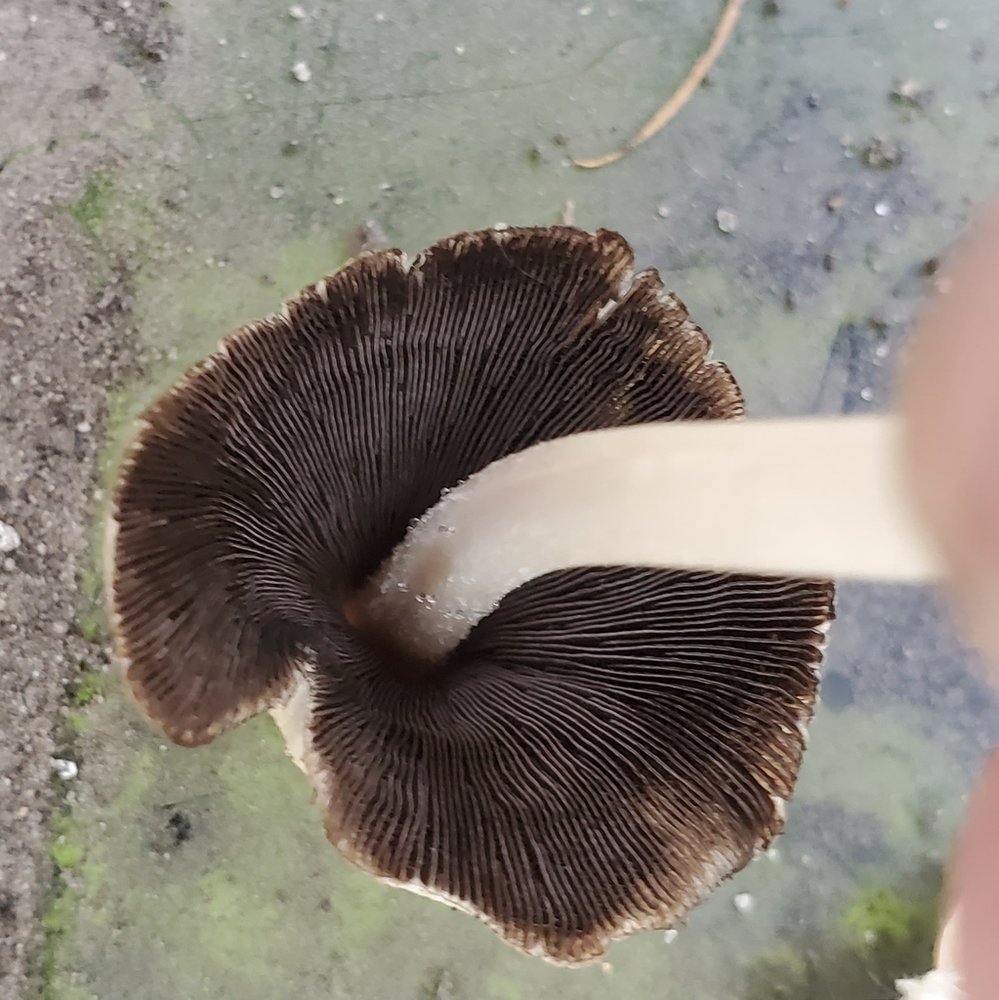
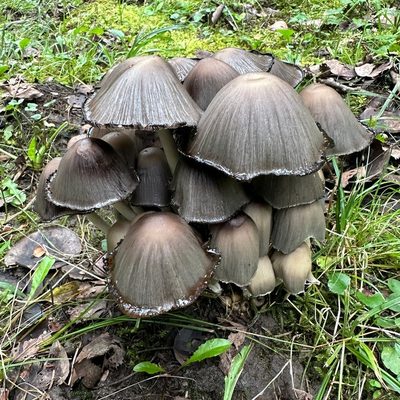
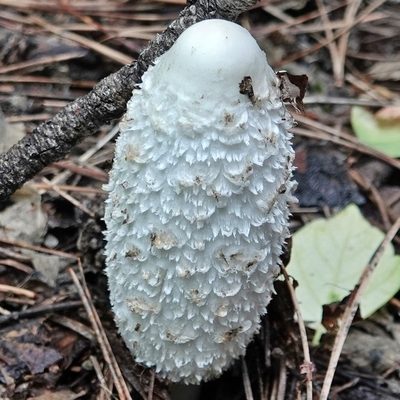
Look for clusters of small caps, 2–5 cm (¾–2 in) wide, oval at first and opening to a bell, honey brown to amber and paler toward the edge, with lines or grooves usually running halfway to the center or more. Fresh caps are dusted with fine, glittering granules like mica, but rain and dew often wash them off. The gills turn from pale to brown to black and partly melt into ink, and the spore print (the dust the gills drop) is black to dark brown. The slender white stems are hollow. It grows on stumps and rotting wood, or from buried wood so that it seems to come up from the soil. The Common Ink Cap, which causes a reaction with alcohol, is larger and fleshier, with a gray to gray-brown cap and no glittering granules. The Shaggy Mane is a much larger white mushroom covered in shaggy scales, growing in lawns and on hard-packed ground.
When can you find it?
April into October, mostly in May and June.
Where does it grow?
Clusters on stumps, wood debris and buried wood, often in towns but also in woods. iNaturalist holds 18 Black Hills records (9 research grade) from 2021 to 2026, from April to September, most from town streets and parks, plus one in Custer State Park and one in the national forest in the northern Hills. No Black Hills specimen turned up in GBIF (its South Dakota specimens are from the east of the state), and no published Black Hills source opened for this guide names it.
Other mushrooms to compare
Sources: Coprinellus micaceus (M. Kuo, 2008) — MushroomExpert.com; Coprinopsis atramentaria (M. Kuo, 2008) — MushroomExpert.com; Coprinus comatus: the shaggy mane (M. Kuo, 2008) — MushroomExpert.com; Mica Cap — Missouri Department of Conservation Field Guide; Alcohol Inky (Coprinopsis atramentaria) — Missouri Department of Conservation Field Guide; Coprinellus micaceus: species synonyms — Species Fungorum (Index Fungorum); Mica Cap records in the six Black Hills places, research grade and needs ID — iNaturalist API; Coprinellus micaceus specimens from South Dakota — GBIF; Beug, M. W. Summary of the Poisoning Reports in the NAMA Case Registry for 2006 through 2017 — North American Mycological Association; Beug, M. W. Summary of the Poisoning Reports in the NAMA Mushroom Poisoning Case Registry: 2018 through 2020 — North American Mycological Association.