Common Ink Cap
Coprinopsis atramentaria
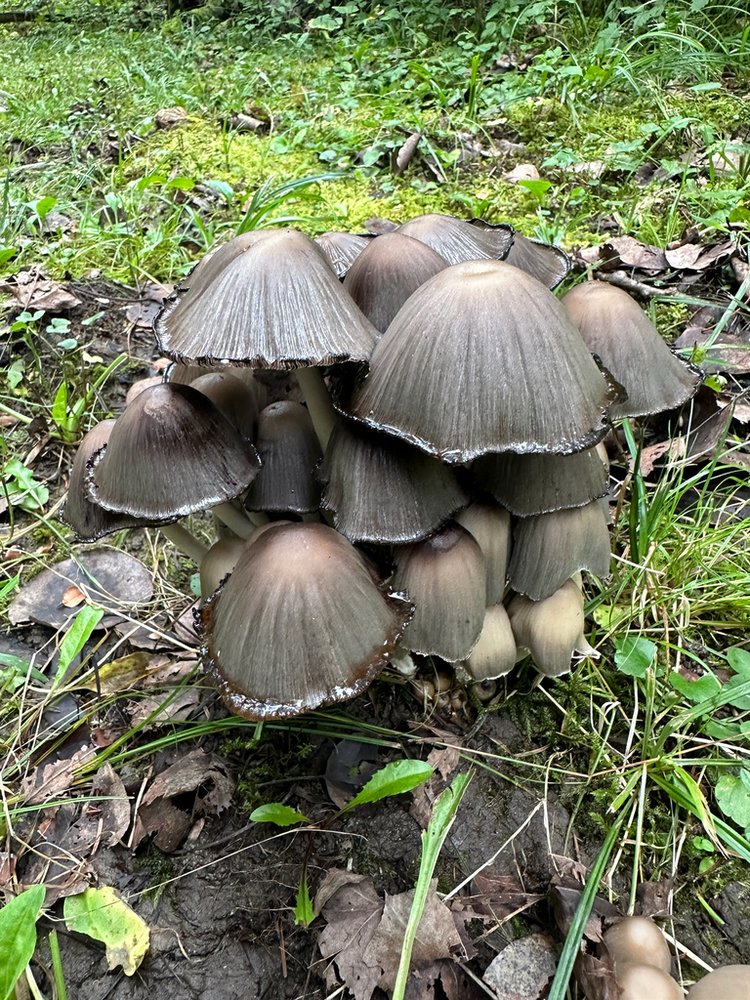
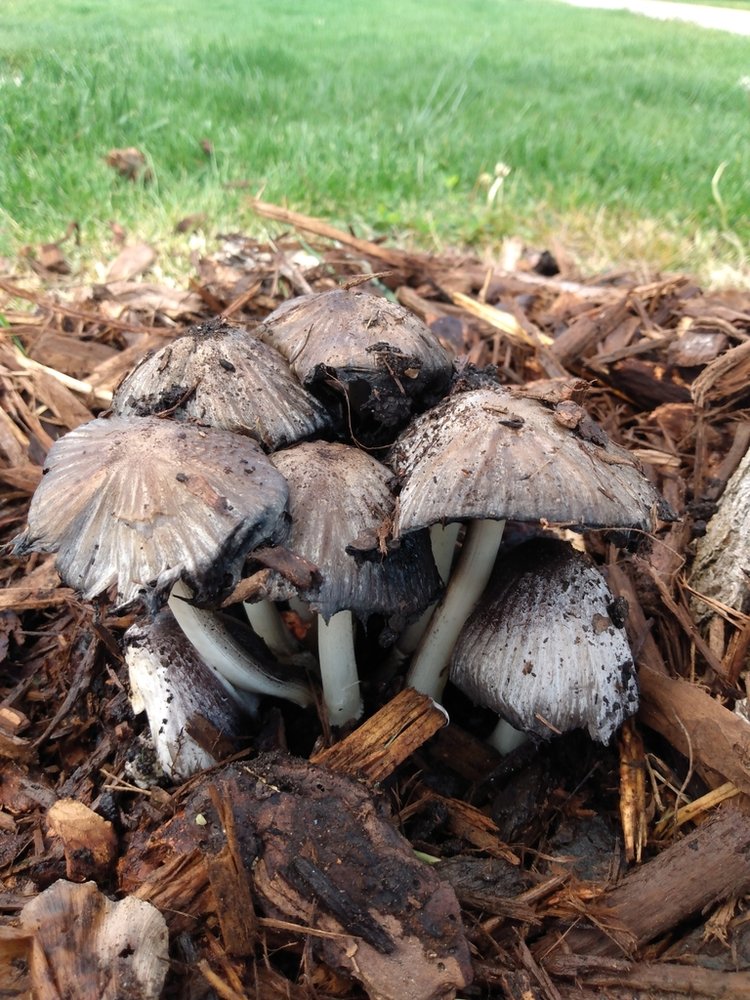
Common Ink Cap (Coprinopsis atramentaria) is a gray to gray-brown mushroom with a smooth, faintly lined cap that starts egg-shaped, opens to a bell and melts into black ink, usually in clusters from buried wood or old roots. iNaturalist has four Black Hills reports, from May, June and September; one, from the northern Hills, is confirmed.
Free photos from other sources
| Family | Psathyrellaceae · Brittlestem |
|---|---|
| Type | Gilled mushroom |
| Season | May into October, mostly in late spring and again in early fall |
| Size | Cap 3–6 cm (1¼–2½ in) tall, opening up to 10 cm (4 in) wide, stem 8–15 cm (3–6 in) tall |
| Grows on | Buried wood and old roots around stumps, often in towns |
| Spore print | Black |
| Also called | Alcohol Inky, Inky Cap, Tippler's Bane |
| Synonym | Coprinus atramentarius |
| Toxicity | Poisonous: it contains coprine, which has been shown to be highly carcinogenic (cancer-causing) and which brings on a racing heart, flushing, tingling arms and legs and sometimes headache when alcohol is drunk, even up to five days afterward. |
| Eating | This guide doesn't say which mushrooms are safe to eat. |
How it lives
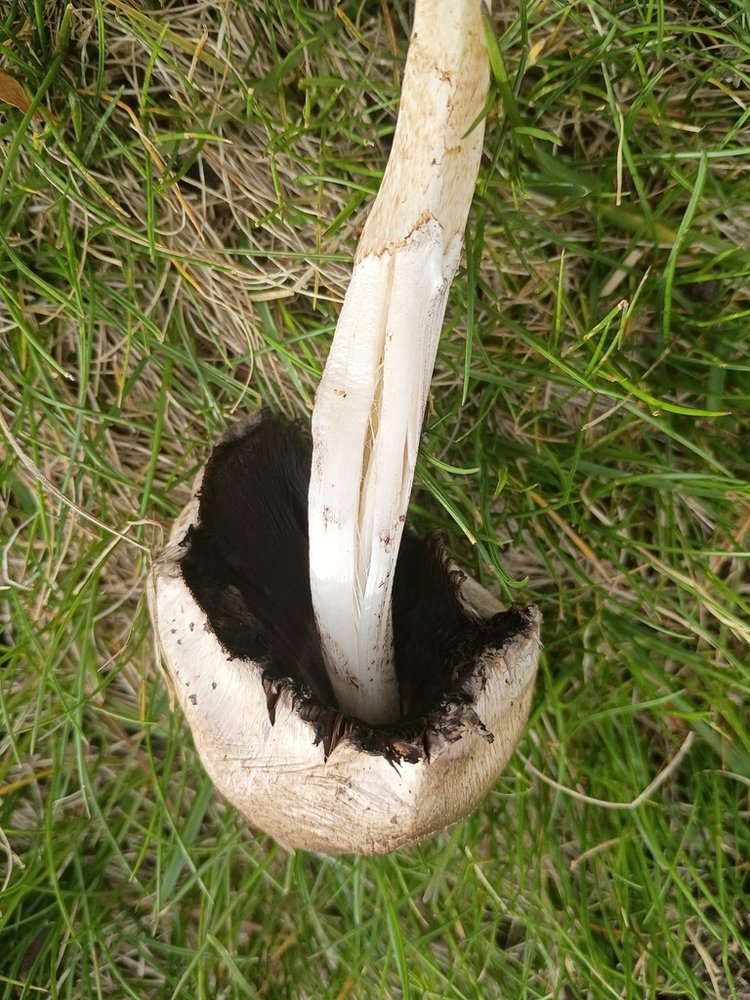
Common ink cap is saprobic: it breaks down dead wood, usually wood that is buried or the dying roots of an old stump. The gills dissolve into black ink that carries the spores.
How do you identify Common Ink Cap?
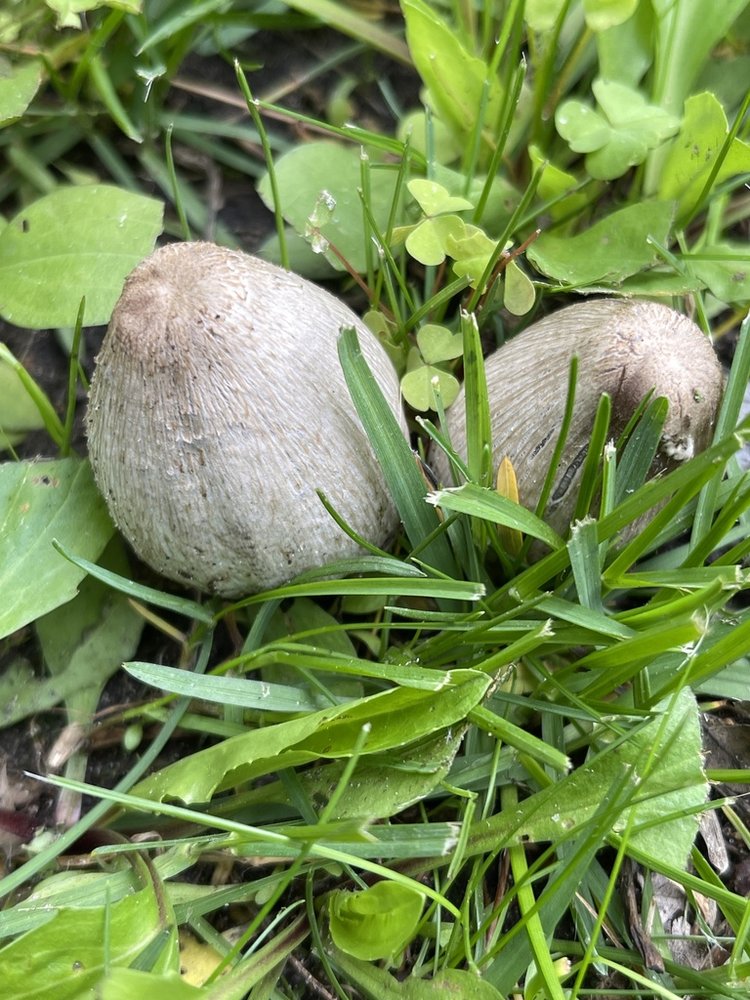
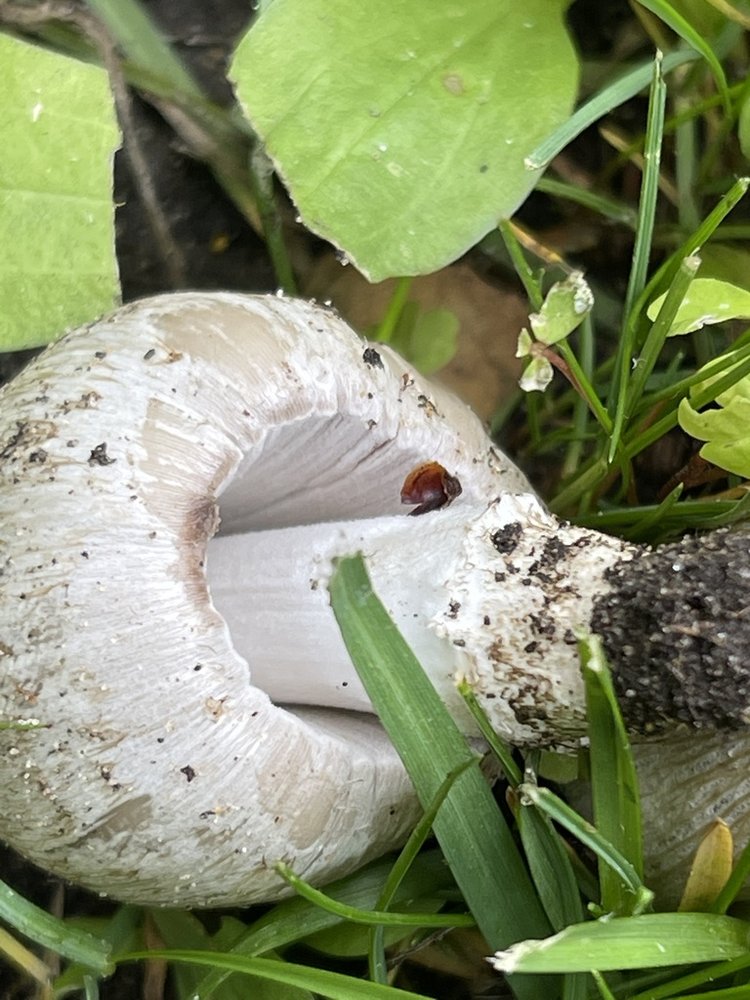
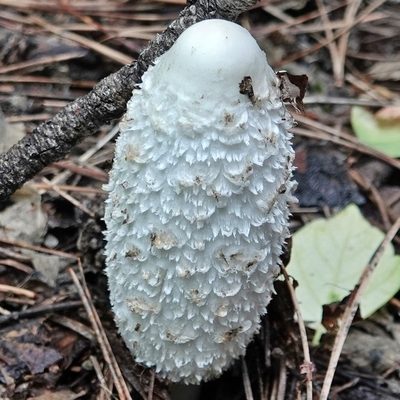
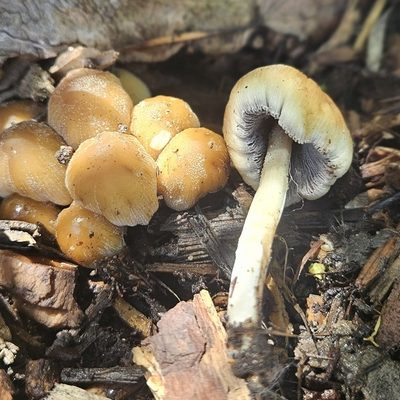
Look for clusters of gray to gray-brown caps, 3–6 cm (1¼–2½ in) tall, egg-shaped at first and opening to a bell up to 10 cm (4 in) wide, fairly smooth and faintly lined, with a few tiny scales over the center. The crowded gills turn from whitish to black and melt into black ink, and the spore print (the dust the gills drop) is black. The stem is white, hollow and fibrous. It comes up from buried wood, often from old roots around stumps, so the clusters can seem to rise from bare ground. The Shaggy Mane is white and covered in large shaggy scales, with a taller, cylinder-shaped cap, and it grows alone, in groups or in lines in lawns and on hard-packed ground. The Mica Cap is smaller and honey-brown, with glittering granules on fresh caps, and its gills often don't melt all the way.
When can you find it?
May into October, mostly in late spring and again in early fall.
Where does it grow?
Clusters on decaying wood, often buried, or from old roots around stumps; often in towns but also in woods. iNaturalist has 4 Black Hills records: 1 research grade, from the national forest in the northern Hills in May 2020, and 3 that still need identification, from towns in 2020, 2023 and 2025. No Black Hills specimen turned up in GBIF, and no published Black Hills source opened for this guide names it, so it counts here as reported.
Other mushrooms to compare
Sources: Coprinopsis atramentaria (M. Kuo, 2008) — MushroomExpert.com; Coprinus comatus: the shaggy mane (M. Kuo, 2008) — MushroomExpert.com; Coprinellus micaceus (M. Kuo, 2008) — MushroomExpert.com; Alcohol Inky (Coprinopsis atramentaria) — Missouri Department of Conservation Field Guide; Mica Cap — Missouri Department of Conservation Field Guide; Mushroom Poisoning Syndromes — North American Mycological Association; Coprinopsis atramentaria: species synonyms — Species Fungorum (Index Fungorum); Common Ink Cap records in the six Black Hills places, research grade and needs ID — iNaturalist API; Coprinopsis atramentaria specimens from South Dakota — GBIF.