Lobster Mushroom
Hypomyces lactifluorum
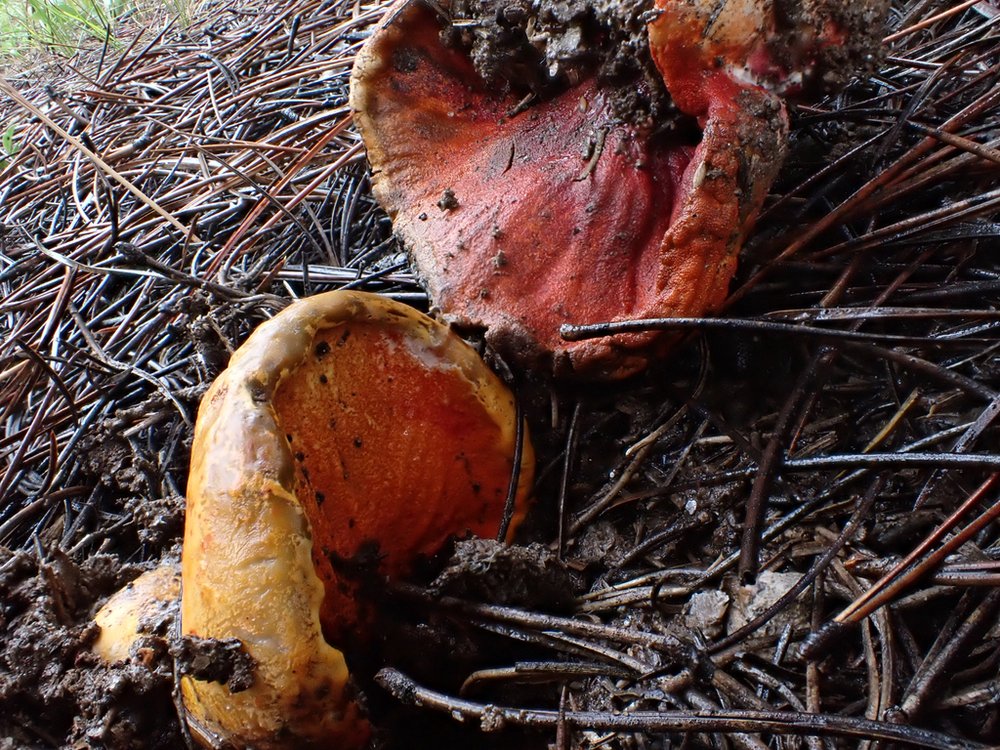
The Lobster Mushroom (Hypomyces lactifluorum) is not a mushroom of its own but a mold that coats a host mushroom, usually a large white russula or milkcap, in a hard orange to purplish-red crust and twists it out of shape. iNaturalist's Black Hills records run from late June into early October, mostly from mid-July to mid-August, and include Custer State Park and Wind Cave National Park.
Free photos from other sources
| Family | Hypocreaceae · Hypocrea molds |
|---|---|
| Type | Mushroom parasite |
| Season | Late June into early October, most from mid-July to mid-August |
| Size | As big as its host; Short-stemmed Russula caps run 6–20 cm (2½–8 in) wide |
| Grows on | Other mushrooms: large white russulas and milkcaps, on the ground |
| Eating | This guide doesn't say which mushrooms are safe to eat. |
How it lives
A parasite. Hypomyces lactifluorum is a sac fungus (an ascomycete) that grows over another mushroom, usually a large white Russula or Lactarius, changes its color and shape, and leaves it unable to make its own spores. By the late stages little of the host's DNA is left, though its white flesh looks unchanged. The host itself is mycorrhizal: it trades nutrients with the roots of conifers or hardwoods.
How do you identify Lobster Mushroom?
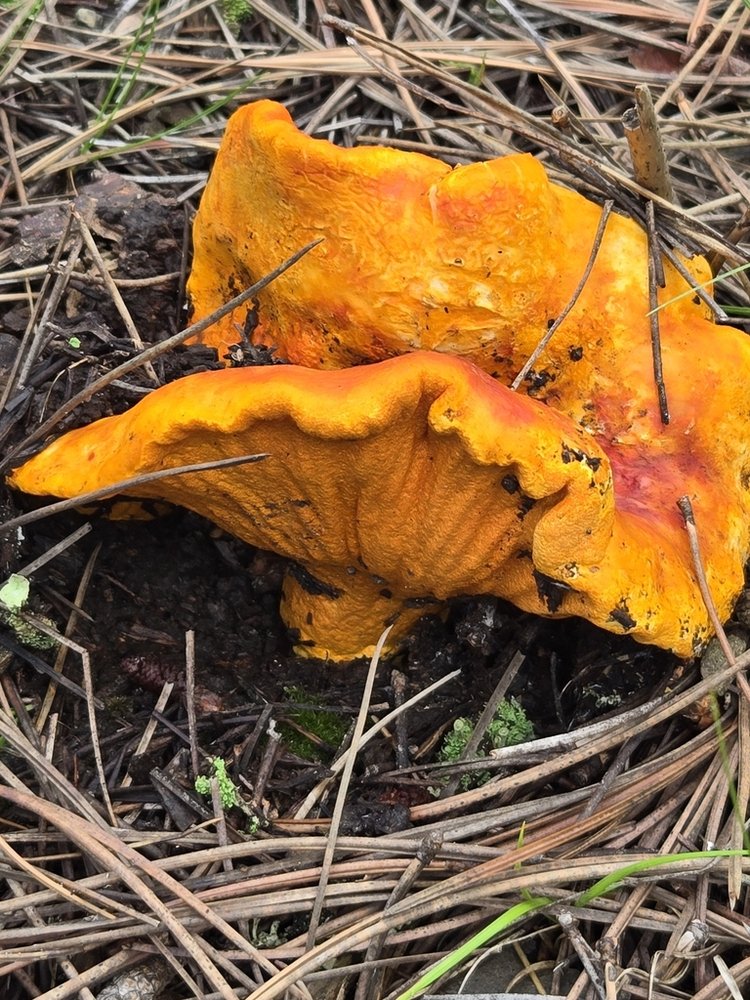
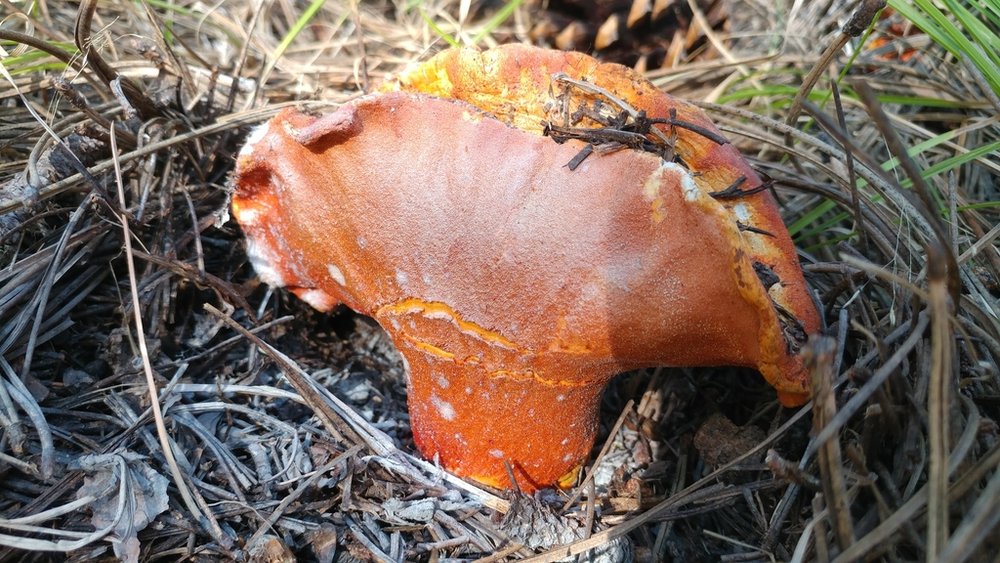
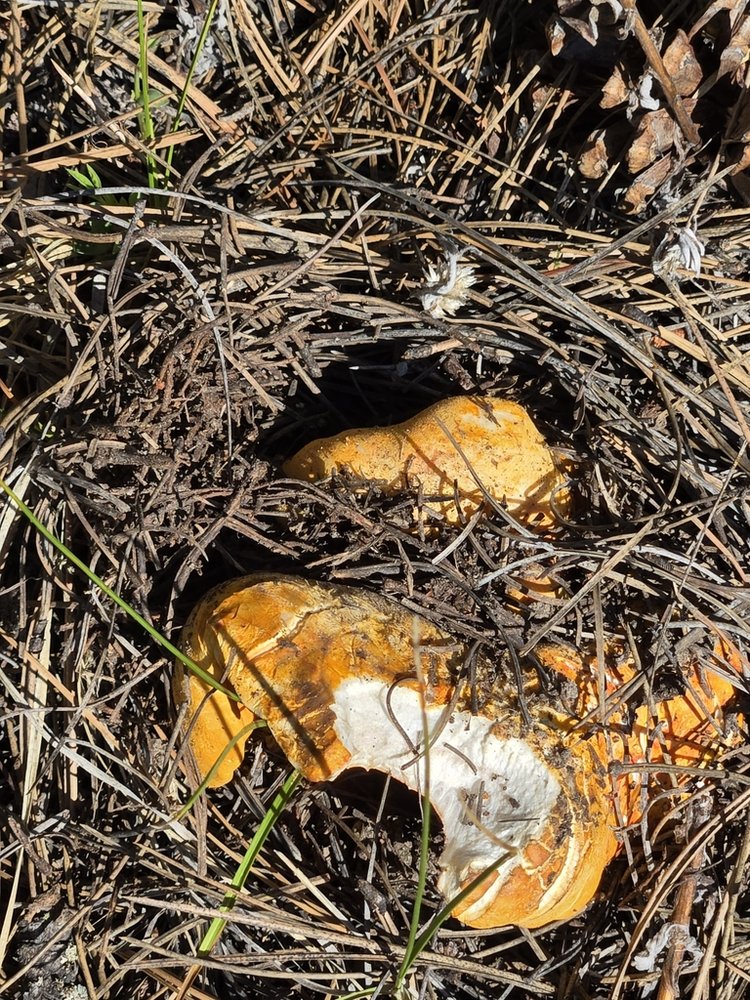
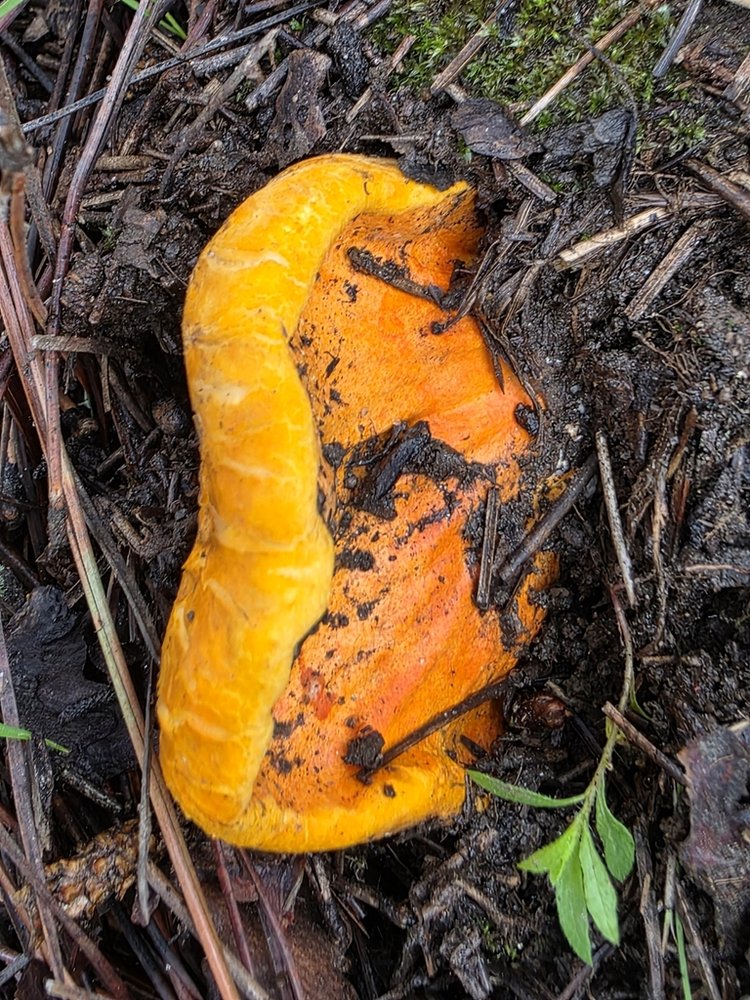
Look for a firm, lumpy mushroom shape coated all over in a hard orange to orange-red skin dotted with tiny pimples. Each pimple is a flask-shaped pocket where the mold makes its spores. Old ones darken to purplish red. The coating can hide the host's gills completely, and the cap often twists out of shape. Break one open and the flesh inside is white: that is the host's flesh. Bolete Mold (Hypomyces chrysospermus), which has one Black Hills iNaturalist record, starts white and turns golden yellow, then brown, and grows on boletes, the mushrooms with a sponge-like surface of pores under the cap. Hypomyces luteovirens is yellow-green and covers russulas, usually red- or purple-capped ones. An unaffected Short-stemmed Russula, the usual host, has a white to creamy cap and crowded white gills.
When can you find it?
Late June into early October, most from mid-July to mid-August.
Where does it grow?
On the ground in woods, wherever its host mushrooms grow. iNaturalist has 54 research-grade Black Hills records, mostly from Pennington and Custer counties, with others in Lawrence County and in Crook County, Wyoming; 10 are in Custer State Park and 4 in Wind Cave National Park. Herbarium specimens include one collected at Wind Cave in 1929 and one from Devils Tower National Monument in 1989.
Sources: Hypomyces lactifluorum — MushroomExpert.com (Michael Kuo); The Genus Hypomyces — MushroomExpert.com (Michael Kuo); Hypomyces chrysospermus — MushroomExpert.com (Michael Kuo); Russula brevipes — MushroomExpert.com (Michael Kuo); Fungus of the Month, August 2001: Hypomyces lactifluorum — Tom Volk, University of Wisconsin-La Crosse; Lobster Mushroom — Missouri Department of Conservation Field Guide; Hypomyces lactifluorum — Species Fungorum, Royal Botanic Gardens, Kew; Black Hills records of Hypomyces lactifluorum, with dates and places — iNaturalist; Black Hills records by month — iNaturalist; Specimen NY 2952447, Wind Cave, 1929 — GBIF; Specimen ILLS00165865, Devils Tower National Monument, 1989 — GBIF; Hypomyces chrysospermus (Bolete Mold) records in the Black Hills places — iNaturalist API; The Boletes — MushroomExpert.com (Michael Kuo).