Indigo Milk Cap
Lactarius indigo
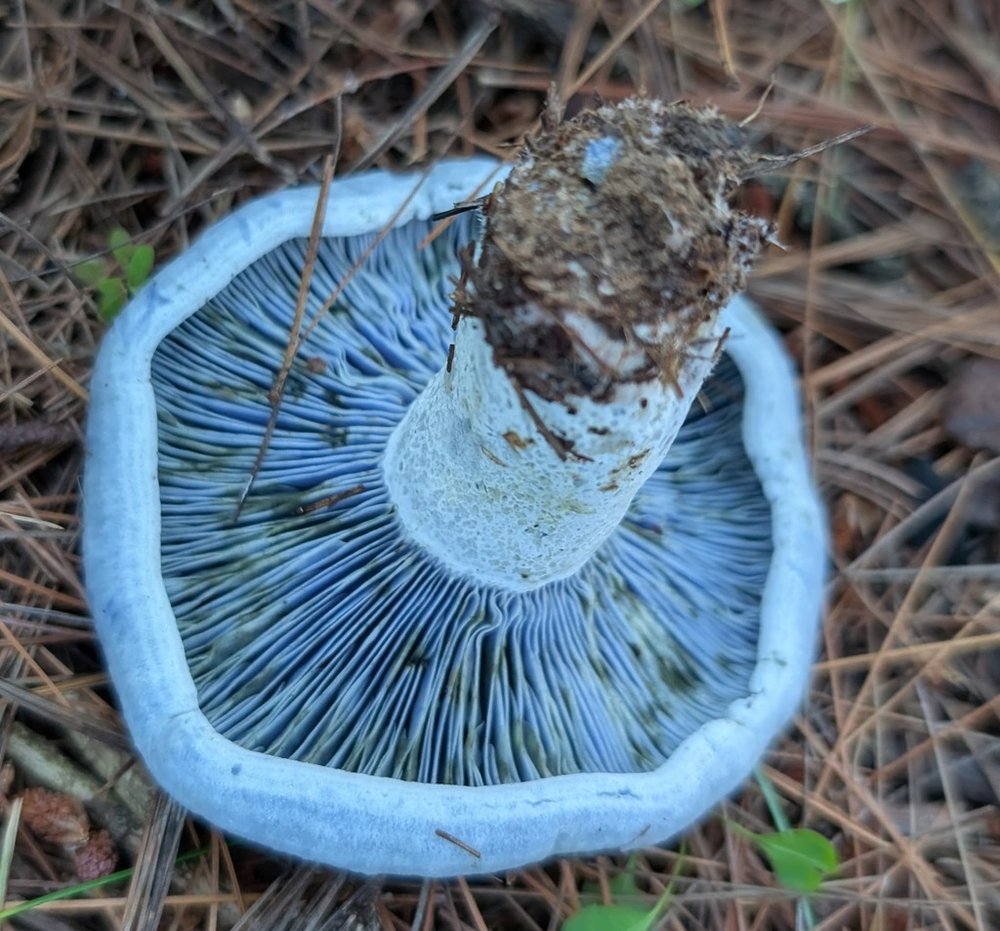
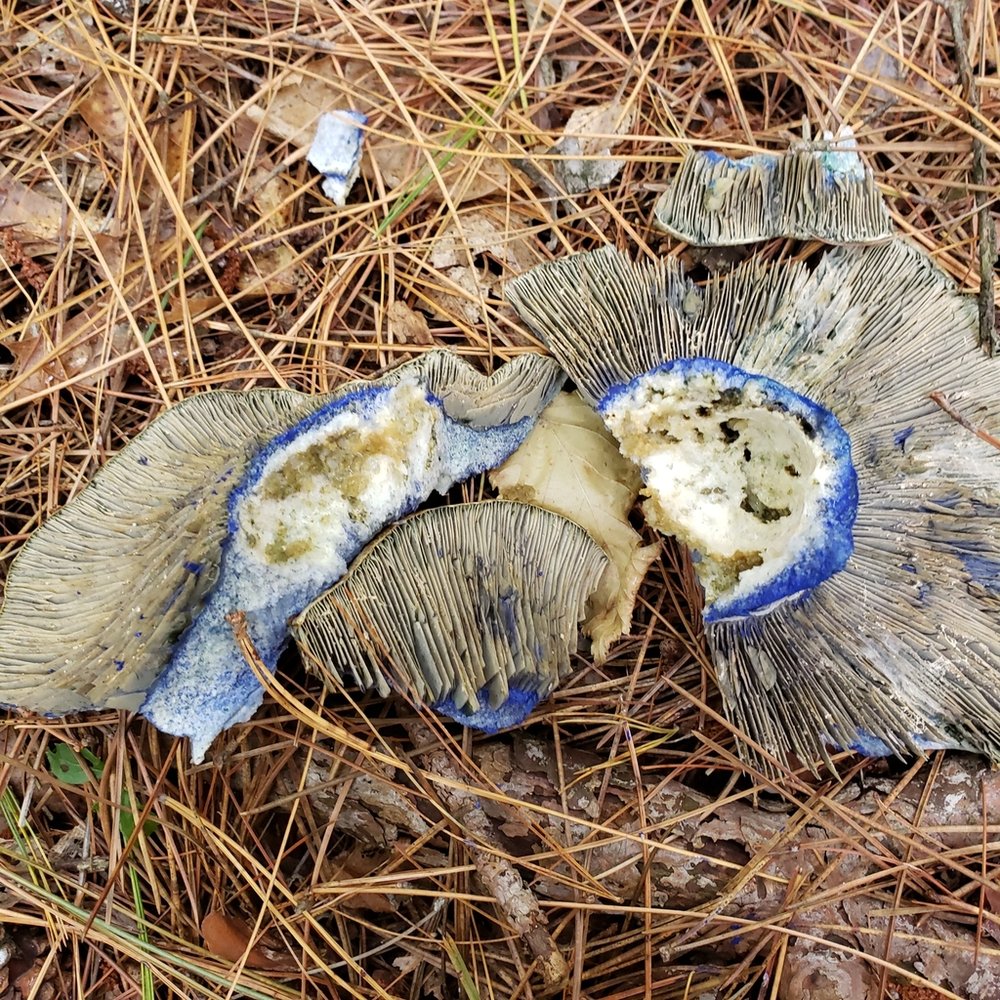
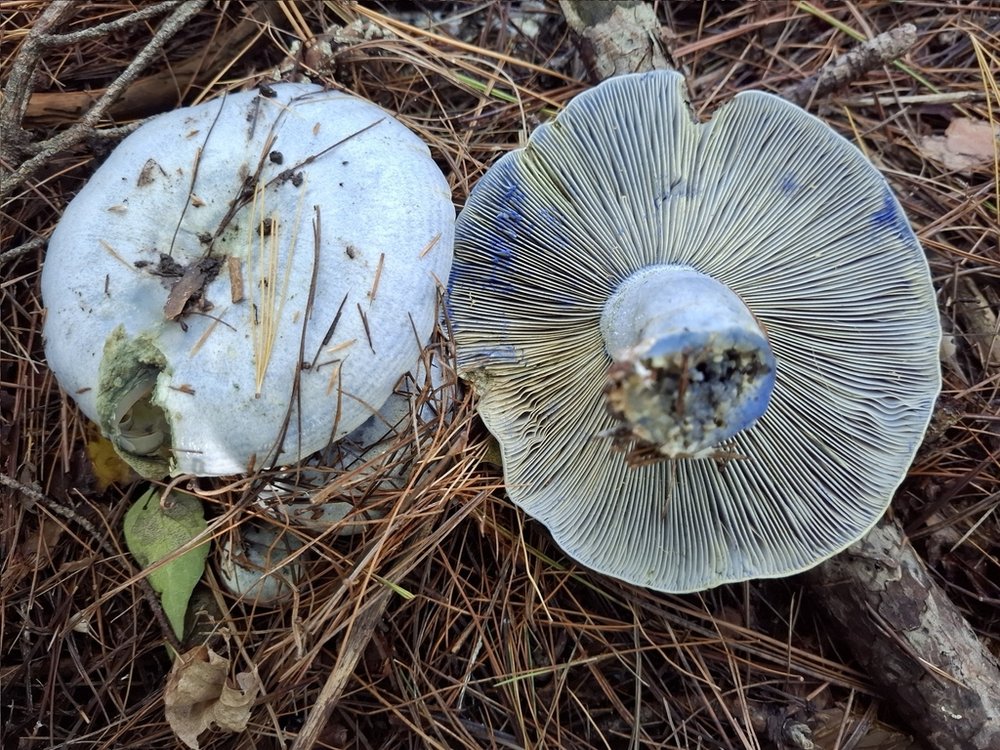
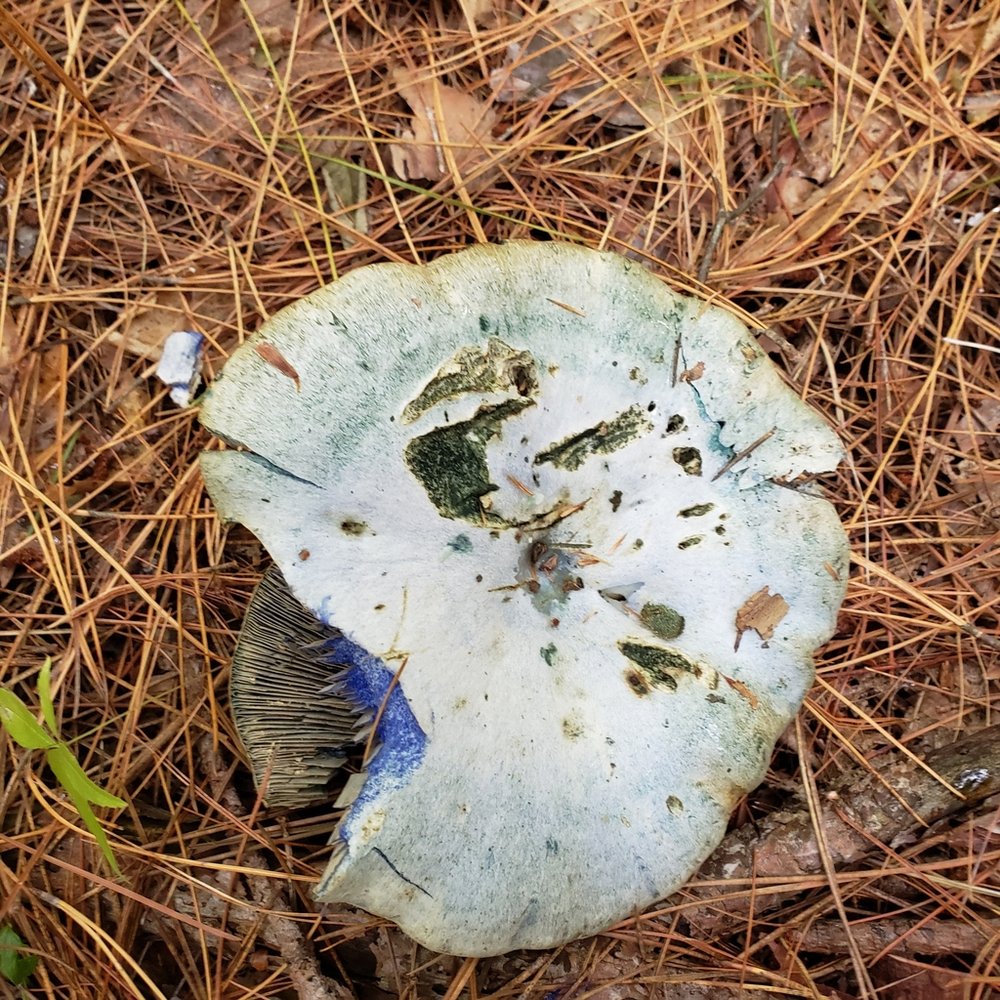
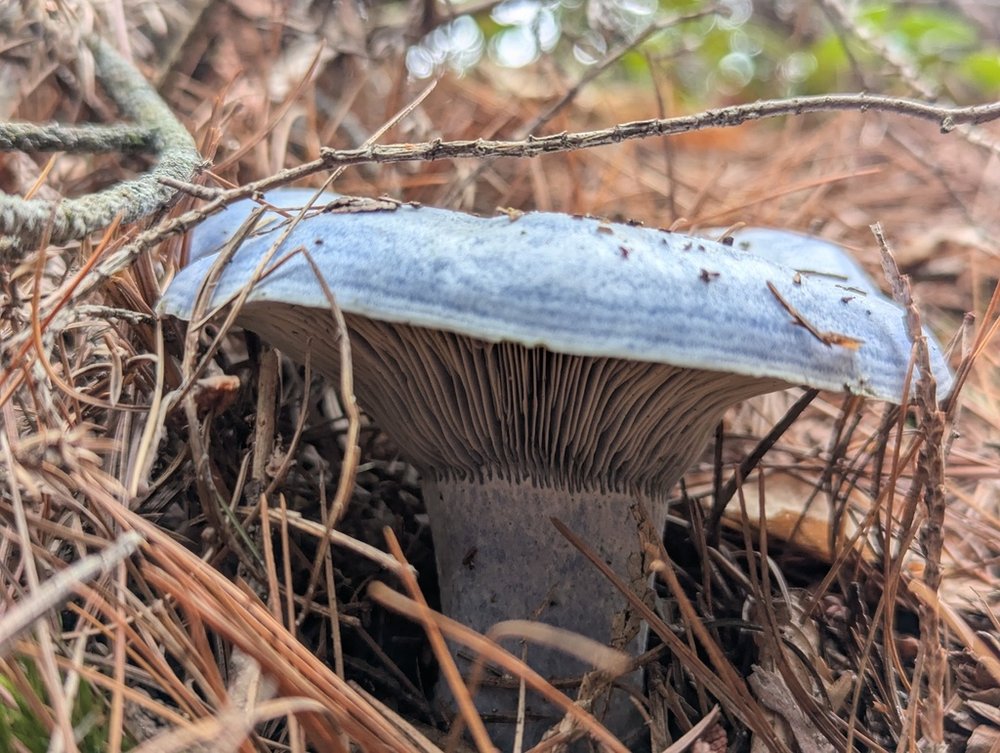
Indigo Milk Cap (Lactarius indigo) is a blue mushroom whose cap and gills are deep blue when fresh, and whose gills ooze dark blue milk when nicked and stain green. iNaturalist has 5 research-grade Black Hills records, all from July and August, four of them from Lawrence County.
Free photos from other sources
| Family | Russulaceae · Russula |
|---|---|
| Type | Gilled mushroom |
| Season | July and August on iNaturalist's Black Hills records |
| Size | Cap 5–15 cm (2–6 in) wide, stem 2–8 cm (¾–3 in) tall |
| Grows on | Soil near oaks or pines, its partner trees |
| Spore print | Cream |
| Also called | Indigo Milk Mushroom |
| Synonym | Agaricus indigo, Lactifluus indigo |
| Eating | This guide doesn't say which mushrooms are safe to eat. |
How it lives
It is mycorrhizal: it trades nutrients with the roots of living trees; Kuo names oaks and pines. The milk is stored in special large fungal threads called lactifers, and it seeps out when the mushroom is cut or bruised. Kuo suspects that, since it grows in so many kinds of forest and varies so much, a close study may split it into several species.
How do you identify Indigo Milk Cap?
The cap is 5–15 cm (2–6 in) wide, convex with an inrolled edge at first, later flat or vase-shaped. It is deep to medium blue when fresh and grayish or silvery blue when faded, with rings of color or sometimes evenly colored, and sticky or slimy when fresh. It bruises and ages deep green. The gills are blue like the cap, attached or running a little down the stem, turn nearly yellowish with age and stain green. The stem is 2–8 cm (¾–3 in) long, hard, hollowing, and usually marked with potholes. Nick the gills with a knife point and they ooze deep indigo milk that turns dark green; Volk notes it gives less milk than some other milk caps. The flesh is whitish but turns indigo where cut. The spore print (the dust the gills drop) is cream. Kuo says only two other milk caps come close, and only when very young. One of them, Lactarius chelidonium, has one research-grade Black Hills record on iNaturalist: its young cap can be pale bluish, but it turns yellowish brown to dull orange as it matures, and its scant milk is dirty yellowish to yellowish brown.
When can you find it?
July and August on iNaturalist's Black Hills records.
Where does it grow?
Soil in woods, near its partner trees. Kuo gives oaks and pines as partners and describes it from the Northeast to the Southwest, Texas and Mexico, in forests from oak-hickory woods to ponderosa pine country in the Southwest, but apparently not in the Pacific Northwest, on the West Coast or in the northern Rocky Mountains. iNaturalist has 5 research-grade Black Hills records, 2019 to 2025, all in July and August: 4 from Lawrence County and 1 from Pennington County. No herbarium specimen from South Dakota or Wyoming turned up in GBIF, and no published Black Hills source opened for this guide names it.
Sources: Lactarius indigo (M. Kuo, 2011) — MushroomExpert.com; Lactarius chelidonium var. chelidonioides (M. Kuo, 2011) — MushroomExpert.com; Lactarius indigo, the indigo milk mushroom: Fungus of the Month, June 2000 (T. Volk) — University of Wisconsin-La Crosse; Lactarius indigo: species synonyms — Species Fungorum; Lactarius indigo taxon record (common name indigo milk cap) — iNaturalist API; Indigo Milk Cap research-grade records in the six Black Hills places — iNaturalist API; Lactarius chelidonium research-grade records in the Black Hills places — iNaturalist API; Lactarius indigo records from South Dakota and Wyoming by record type (no specimens) — GBIF.