White Campion Silene latifolia
Also called White Cockle, Evening Lychnis
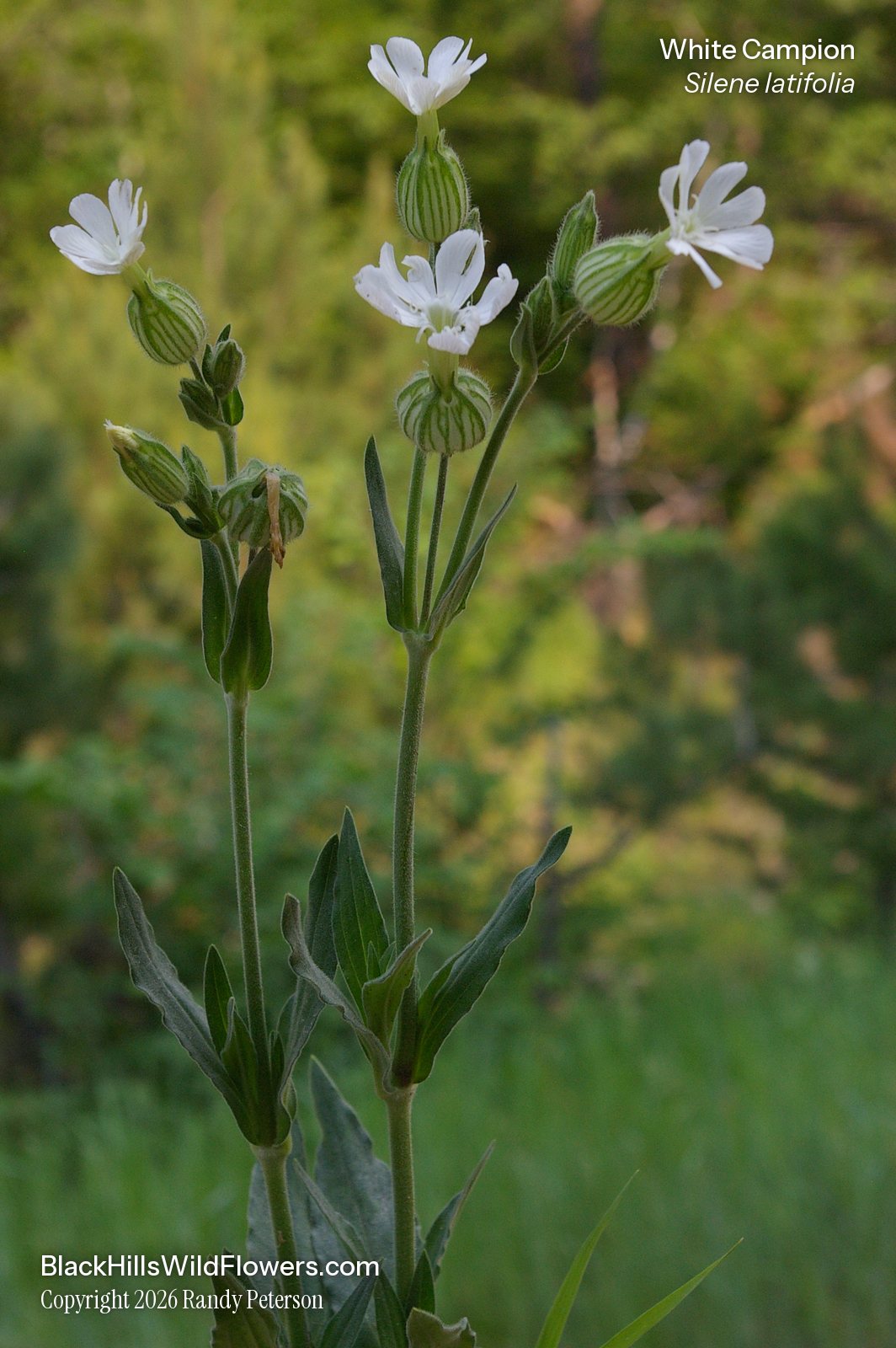
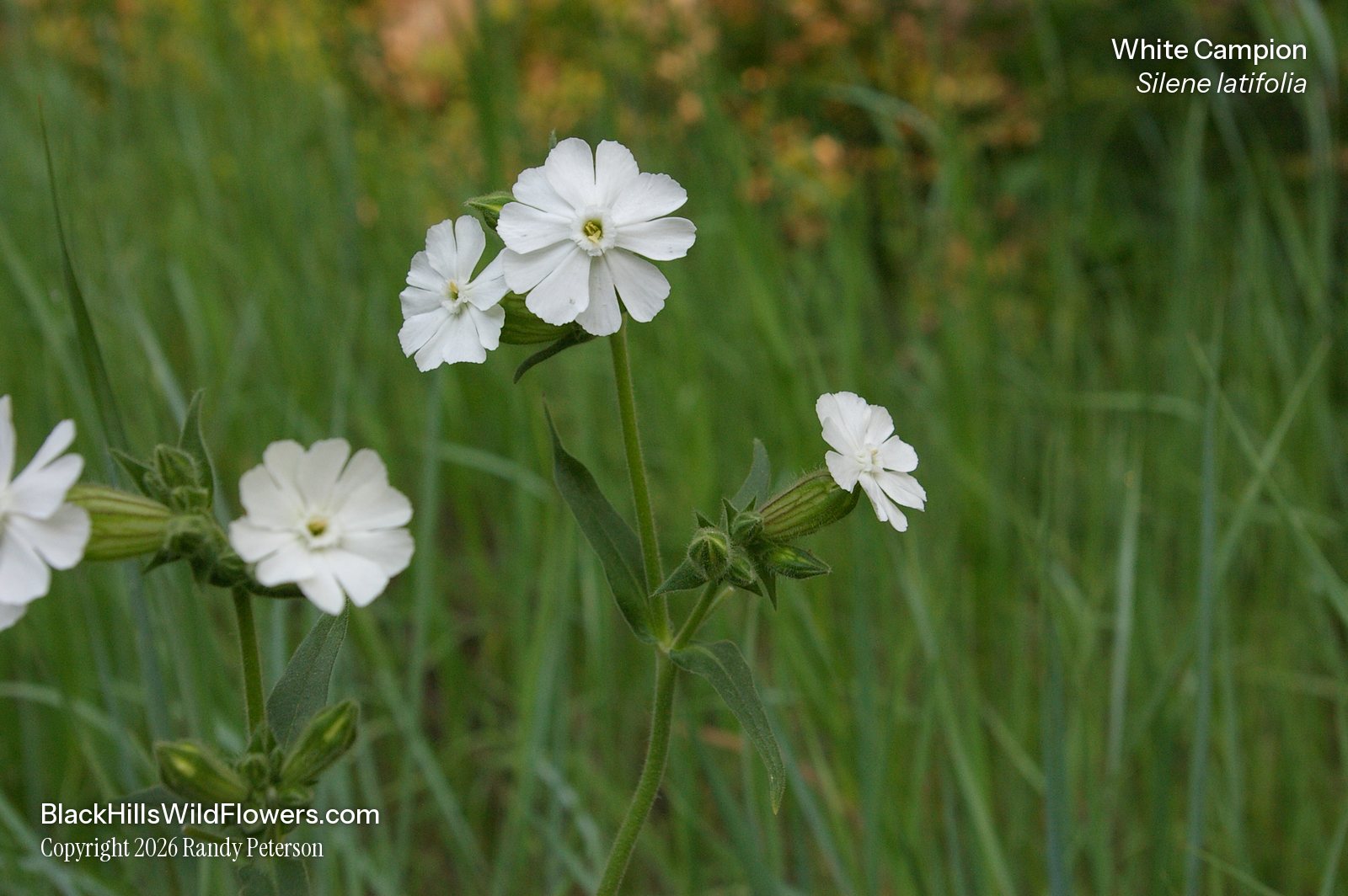
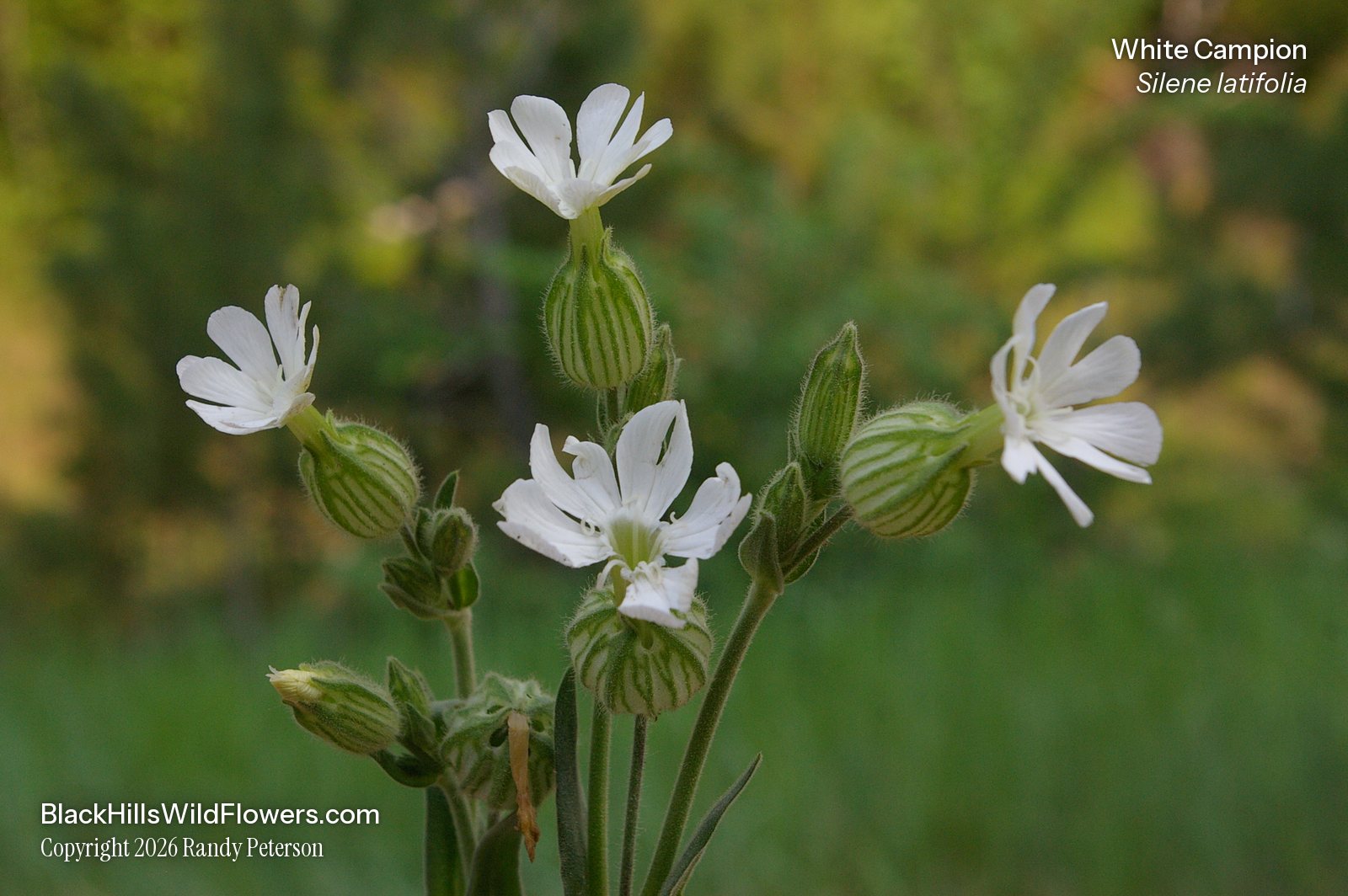
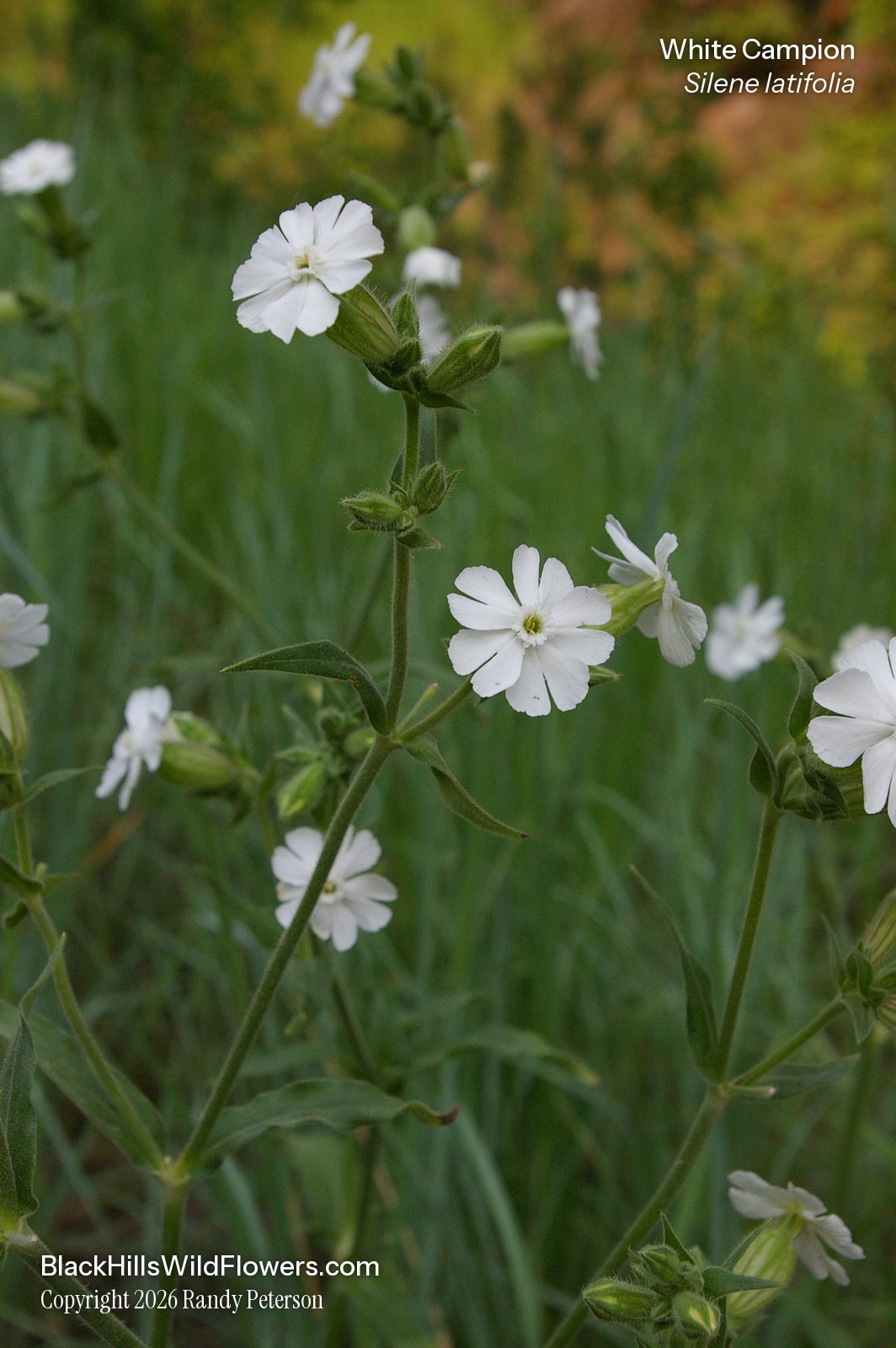
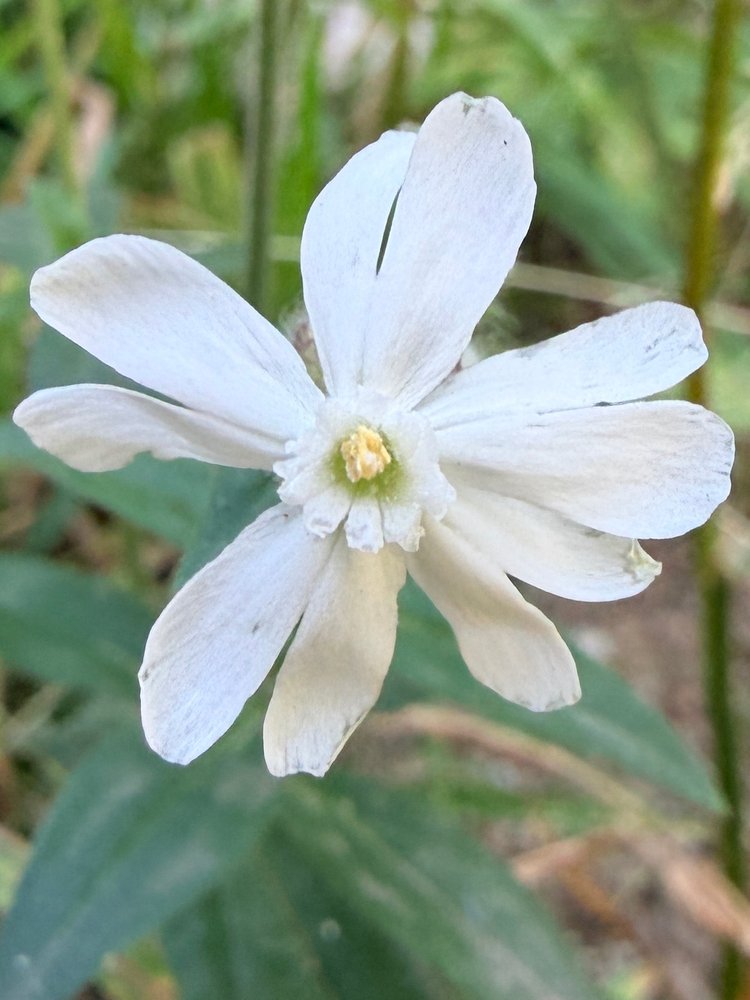
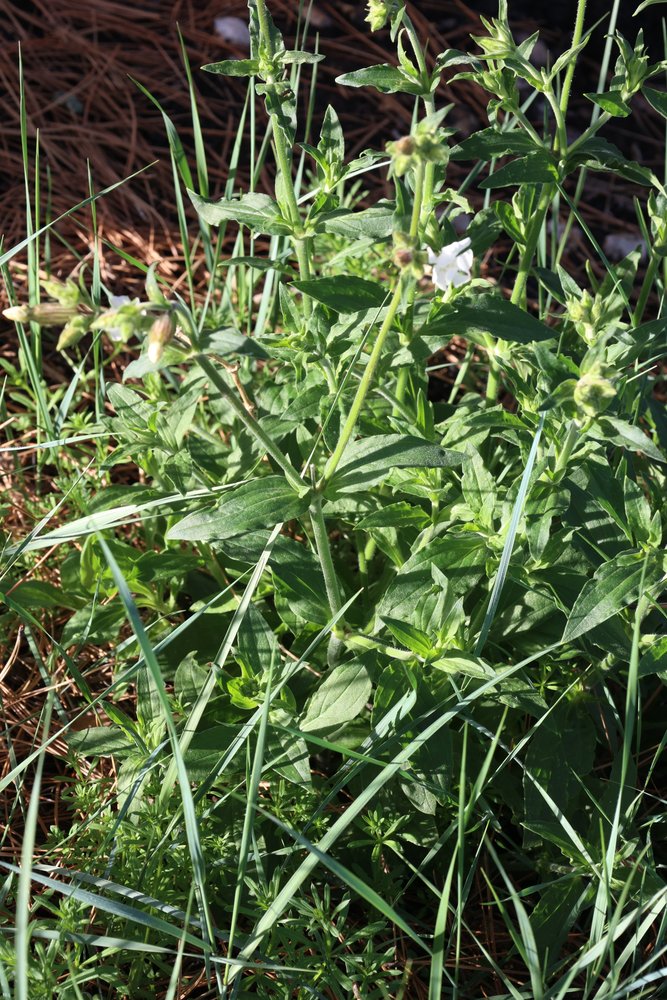
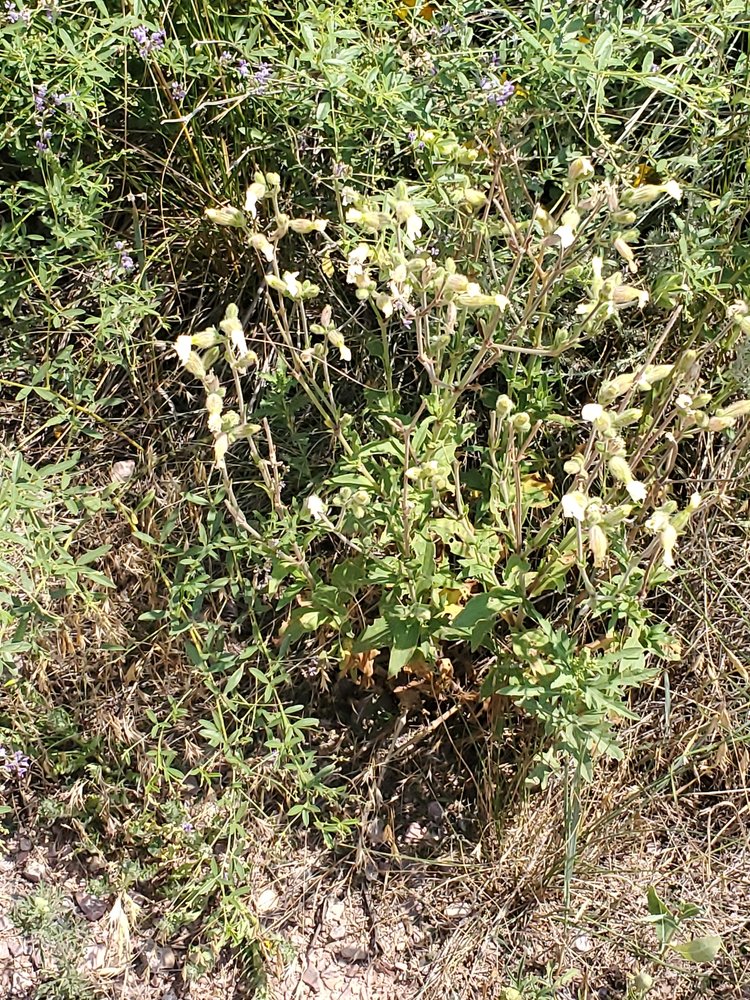
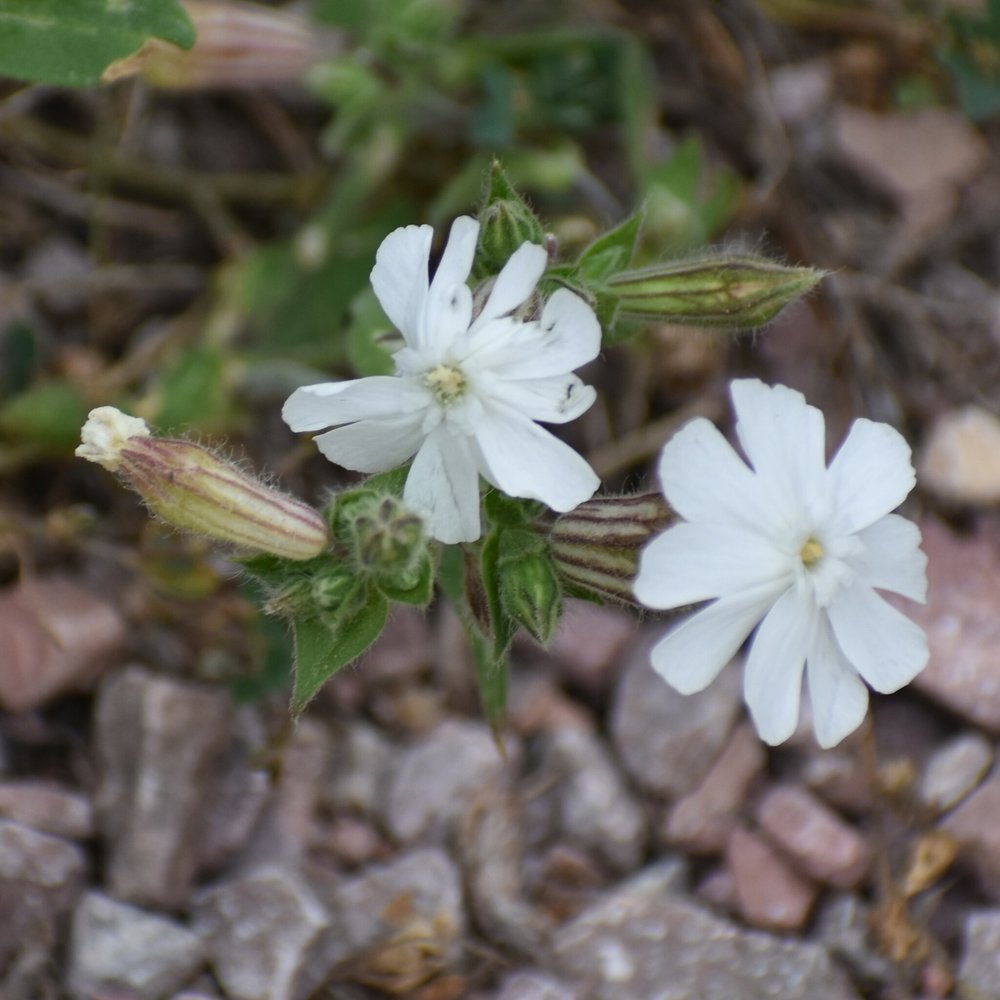
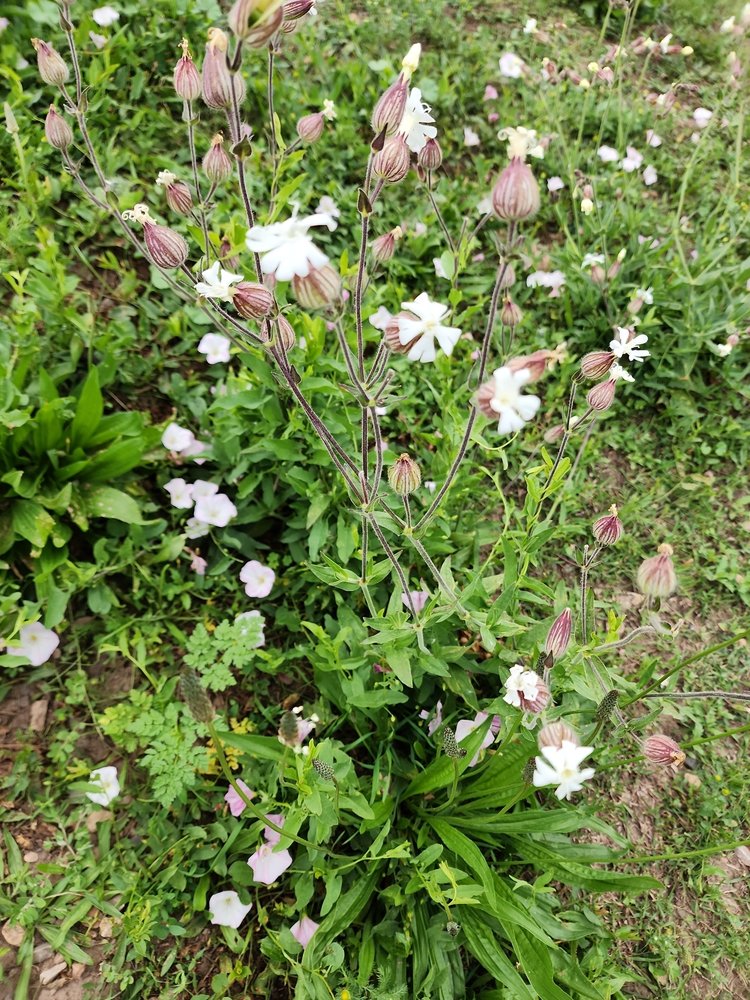
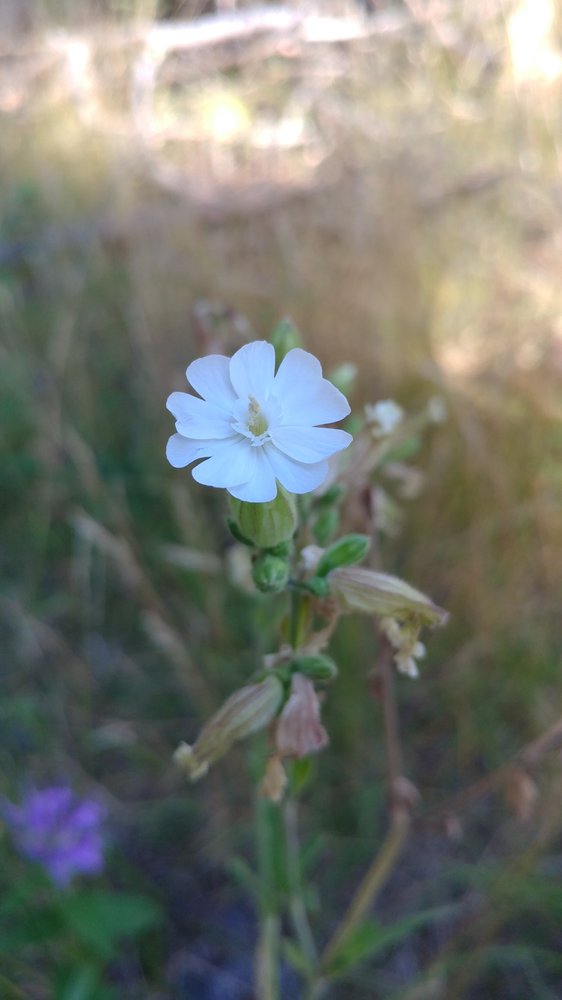
White Campion (Silene latifolia) is a hairy, sticky-topped European weed, 45–120 cm (18–48 in) tall, with opposite lance-shaped leaves and white flowers 2.5–4 cm (1–1½ in) across whose five petals are each split in two, held in an inflated, hairy, veined calyx, blooming from May into September. In the Black Hills it grows on roadsides, ditches, field edges and other disturbed ground, and the National Park Service lists it at Wind Cave, Jewel Cave and Mount Rushmore. Photographed in the Black Hills.
Free photos from other sources
| Family | Caryophyllaceae · Pink |
|---|---|
| Status | Introduced biennial or short-lived perennial |
| Blooms | May into September; the flowers open in the evening |
| Height | 45–120 cm (18–48 in) |
| Where | Roadsides, ditches, field and meadow edges, creek banks, campgrounds and other disturbed ground |
| Also called | White Cockle, Evening Lychnis |
| Synonym | Silene alba, Lychnis alba, Silene pratensis, Silene latifolia subsp. alba |
| Toxicity | Missouri State University says it may be toxic to livestock if grazed heavily, because of saponins in the plant and seeds. |
| Note | USDA PLANTS and the park lists also call this plant "bladder campion," but the Bladder Campion on this site is a different plant, Silene vulgaris. |
Roots, seeds & germination
Seed: An urn-shaped capsule about 12 mm (½ in) long stands upright and opens by 10 teeth, turning tan then dark brown inside the papery old calyx. The seeds are black, a little over 1 mm long, kidney-shaped and pimpled, and one female plant can make up to 24,000 of them.
How do you identify White Campion?
Look for a hairy plant 45–120 cm (18–48 in) tall, sticky near the top, with opposite, toothless, lance-shaped to broadly elliptic leaves 3–10 cm (1¼–4 in) long, and white flowers 2.5–4 cm (1–1½ in) across in an open branched cluster, each with five petals deeply cleft into two broad lobes and a fringed collar at the mouth of the tube. Behind the petals sits an inflated, densely hairy, strongly veined calyx: male and female flowers grow on separate plants, the females with 5 styles curling out over the collar and an urn-shaped calyx with 20 veins, the males with 10 stamens and a narrower calyx with 10 veins, often deep maroon. The flowers have a scent, open in the evening and close by noon, later on cloudy days, and the seed capsule stands upright with 10 teeth at its mouth. Bladder Campion, on this site under that name, is mostly hairless, with smooth stems and a smooth, more inflated calyx, smaller leaves and flowers, and long stamens with purplish tips sticking out of the flower.
When does it bloom?
May into September; the flowers open in the evening.
Where does it grow?
Roadsides, ditches, field and meadow edges, creek banks, campgrounds and other disturbed ground, in sun or shade. The National Park Service lists it at Wind Cave, Jewel Cave and Mount Rushmore, and the 1986 plant survey of Jewel Cave lists it as an introduced plant. Herbarium specimens come from Pennington, Lawrence and Custer counties in South Dakota and Crook County in Wyoming, the earliest from a garden in 1934 and roadsides in the 1940s, with labels from roadsides, picnic areas, campgrounds, creek banks, Custer State Park and Mount Rushmore. The few labels with an elevation say about 1,400–1,800 m (4,600–5,900 ft).
Other campions in this guide
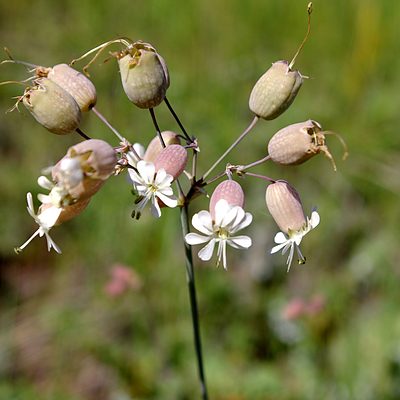
Pink family (Caryophyllaceae): 3 other plants in this guide
Sources: Minnesota Wildflowers: Silene latifolia (White Campion); Missouri State University, White Campion (P. B. Trewatha); USDA PLANTS Database: Silene latifolia (SILA21); South Dakota DANR: State Noxious Weeds; South Dakota DANR: Locally Noxious Weed and Pest List, updated 2024; Wyoming Weed and Pest Council: Designated noxious weeds; Marriott and Hartman 1986, A Survey of the Vegetation of Jewel Cave National Monument; NPSpecies checklist, Wind Cave National Park vascular plants; NPSpecies checklist, Jewel Cave National Monument vascular plants; NPSpecies checklist, Mount Rushmore National Memorial vascular plants; GBIF backbone: Silene latifolia Poir., with synonyms; GBIF occurrence search: Silene latifolia, South Dakota and Wyoming herbarium specimens; GBIF specimen 3034738473: Lawrence County, garden, 1934; GBIF specimen 2512288762: Lawrence County, creek margin under white spruce, 2009.