Bladder Campion
Silene vulgaris
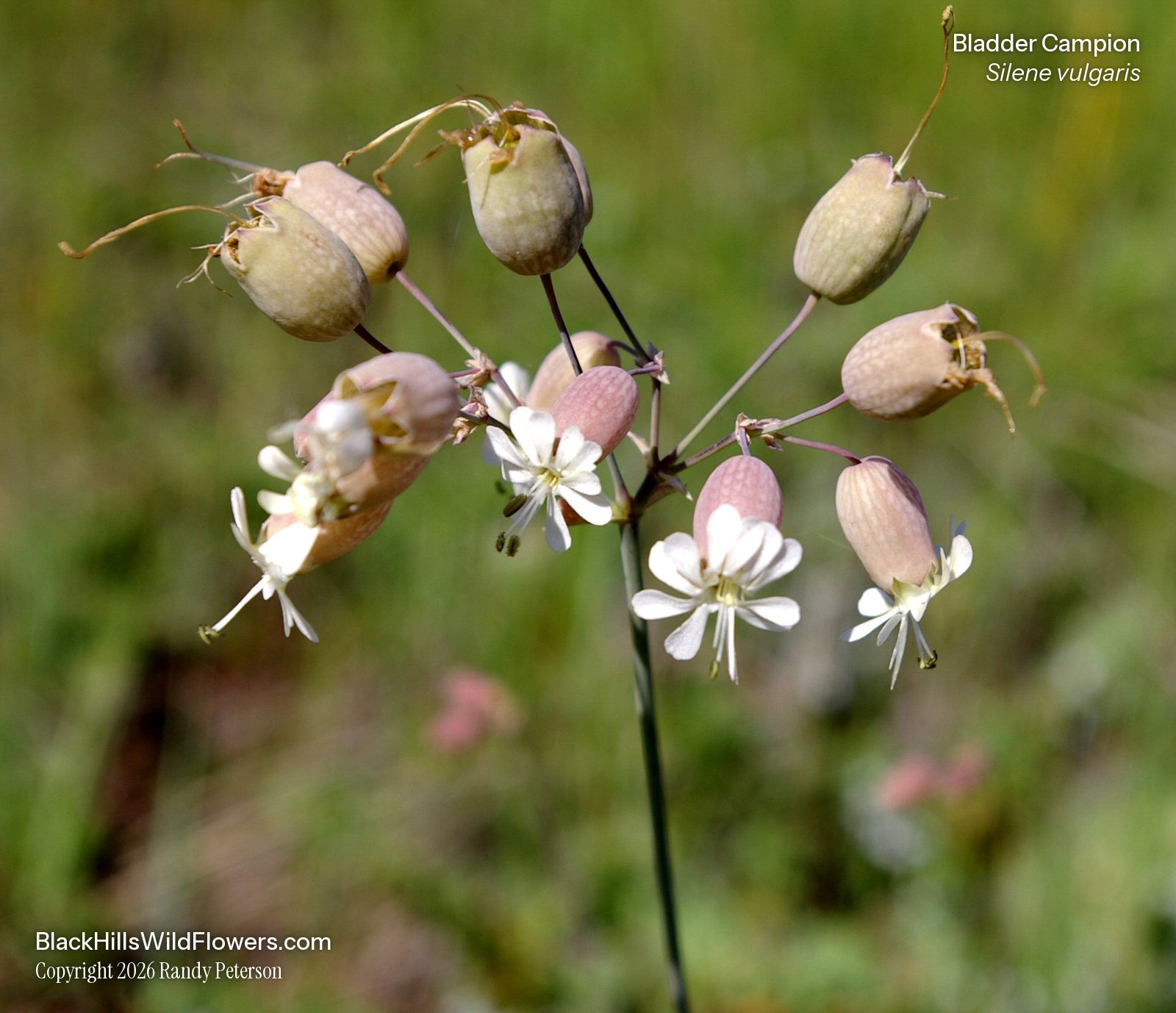
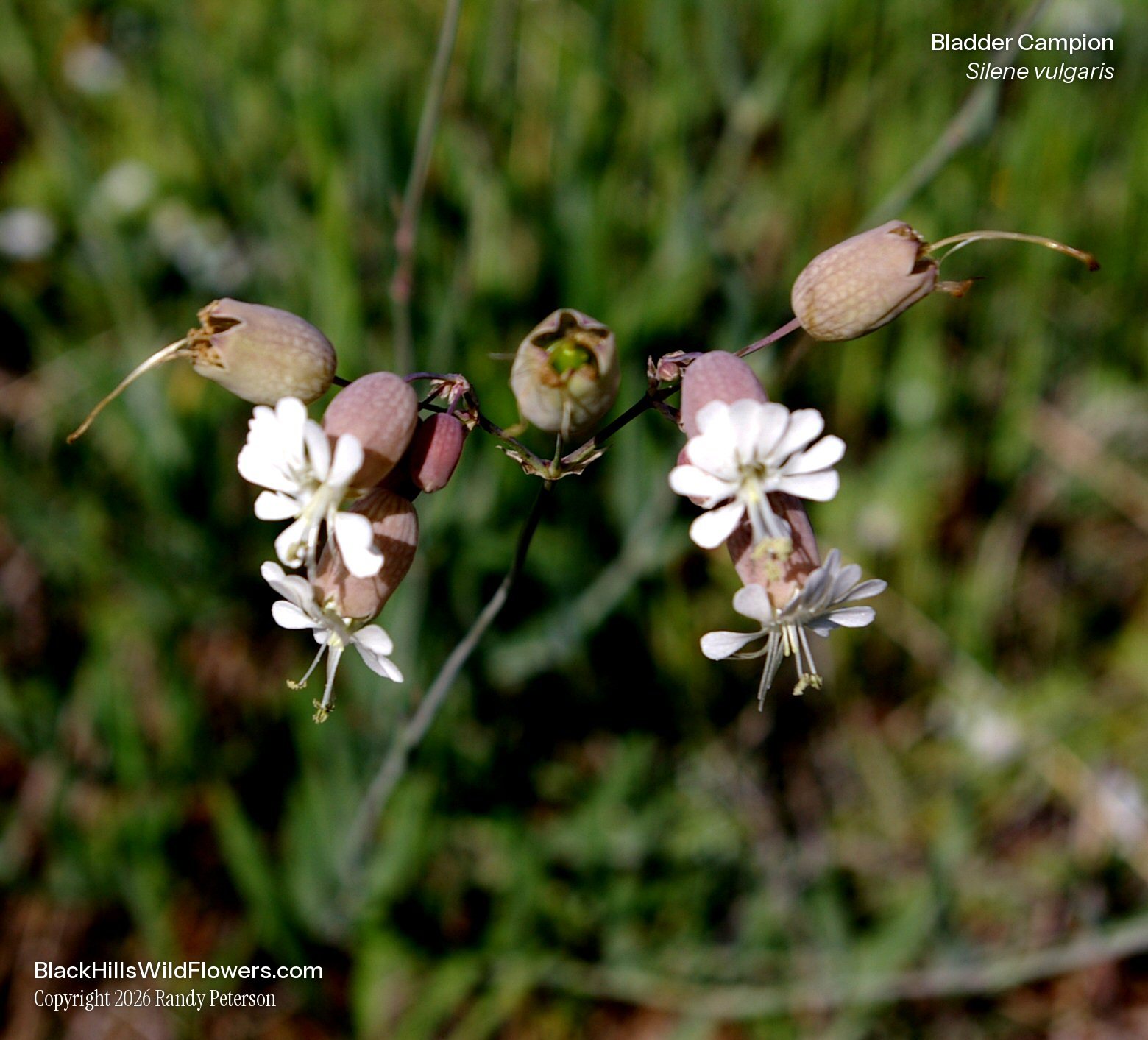
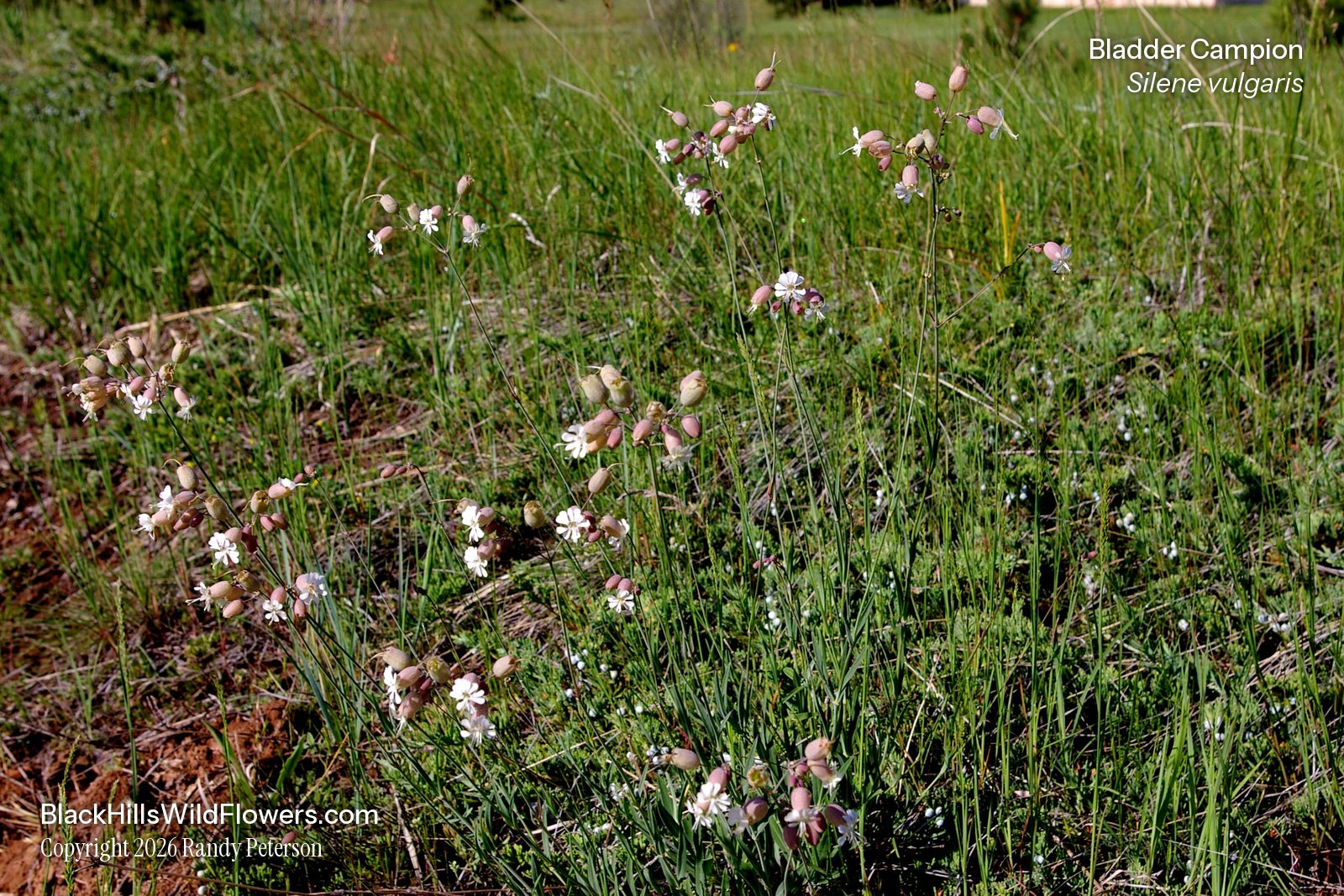
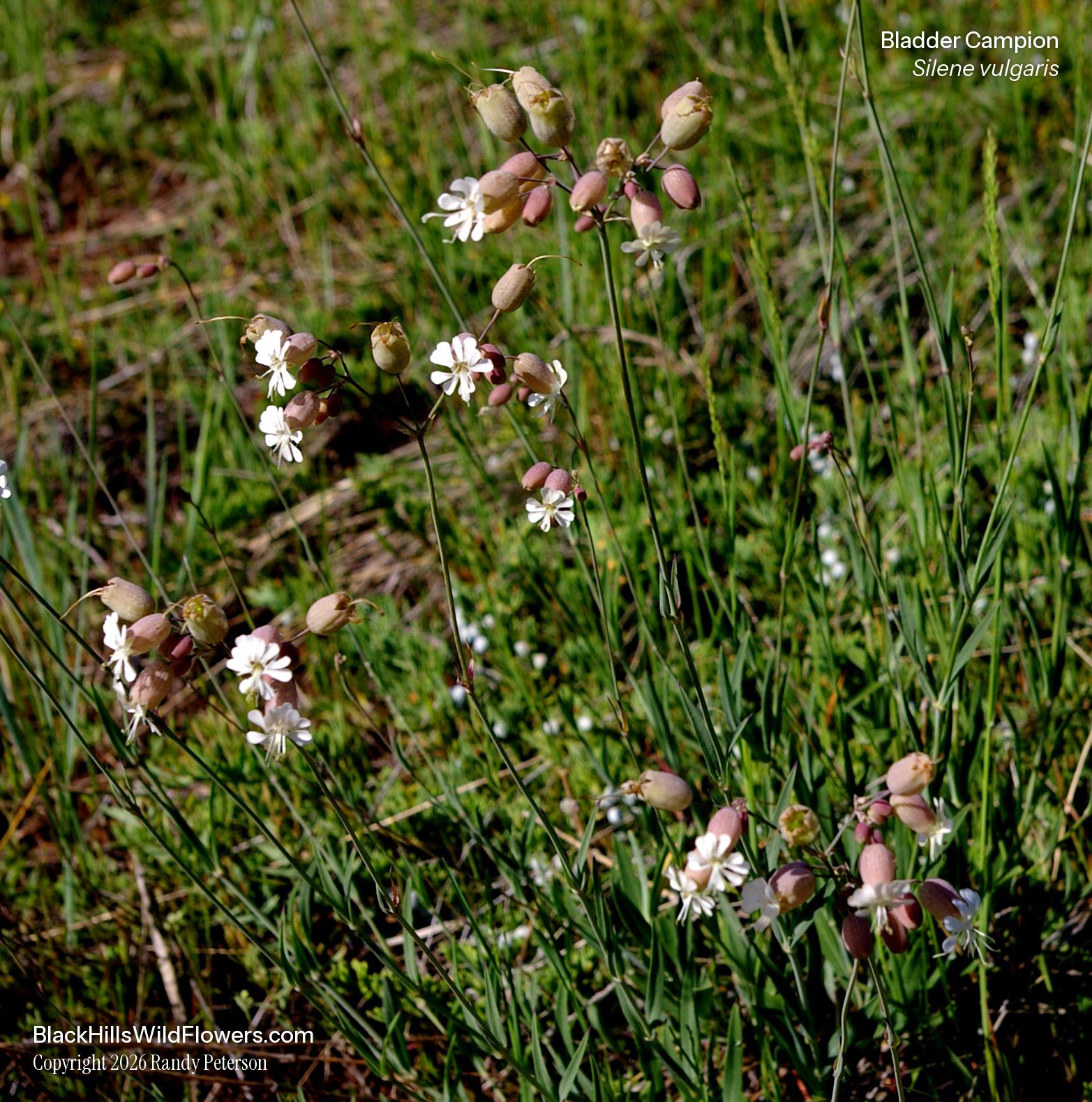
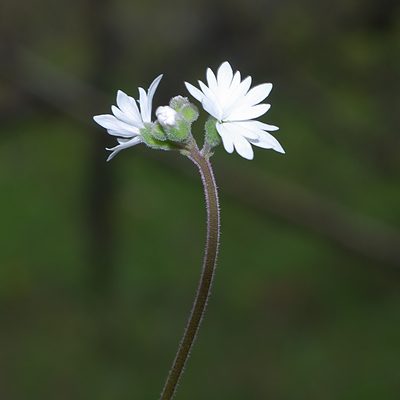
Bladder Campion (Silene vulgaris) is an introduced, short-lived perennial with white, deeply two-lobed petals and a pale green calyx (the cup behind the petals) swollen like a small balloon. In neighboring Minnesota it blooms June into October on roadsides, gravel pits and other disturbed ground. Photographed in the Black Hills.
| Family | Caryophyllaceae · Pink |
|---|---|
| Status | Introduced perennial |
| Blooms | June into October |
| Height | 20–80 cm (8–30 in) |
| Where | Roadsides, fields, gravel pits, shores and waste ground; sandy or gravelly soil |
| Synonym | Silene cucubalus |
| Listed | On Wyoming's prohibited noxious weed seed list (Wyo. Code R. 010-63-3). |
Roots, seeds & germination
Root: Grows from a woody rootstock and also spreads by rhizomes (underground stems).
Seed: The capsule splits open at the top with 6 flaring teeth. Seeds are black or nearly so, round to kidney-shaped, 1–1.8 mm.
How do you identify Bladder Campion?
Look for a smooth, pale green to pinkish calyx inflated like a balloon behind white petals, each split into two rounded lobes, with long white stamens sticking out of the center. The leaves come in opposite pairs, stalkless and nearly clasping the stem. Stems branch near the base and have a smooth, waxy coating.
When does it bloom?
June into October.
Where does it grow?
Roadsides, fields, pastures, gravel pits, shores and other disturbed ground, often in sandy or gravelly soil, in sun or part shade.
Other flowers to compare
Sources: Flora of North America: Silene vulgaris; Minnesota Wildflowers: Silene vulgaris; Missouri Plants: Silene vulgaris; UMass Amherst weed identification: Silene vulgaris (bladder campion); Canadian Food Inspection Agency, weed seed: Silene vulgaris (Bladder campion); Wyoming rule 010-63 Wyo. Code R. 63-3: Prohibited Noxious Weeds (noxious weed seed lists).