Low Whitlow-wort
Paronychia sessiliflora
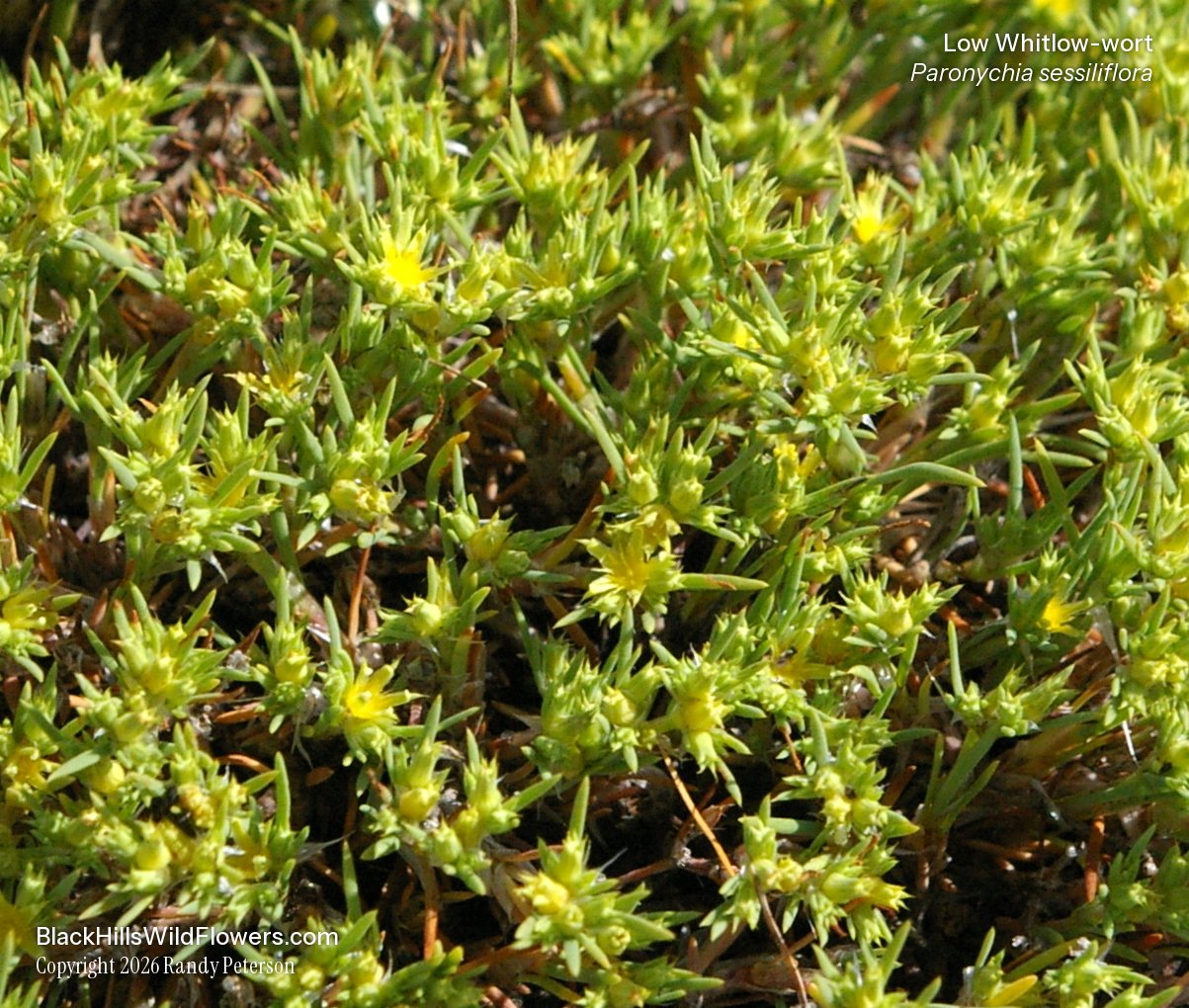
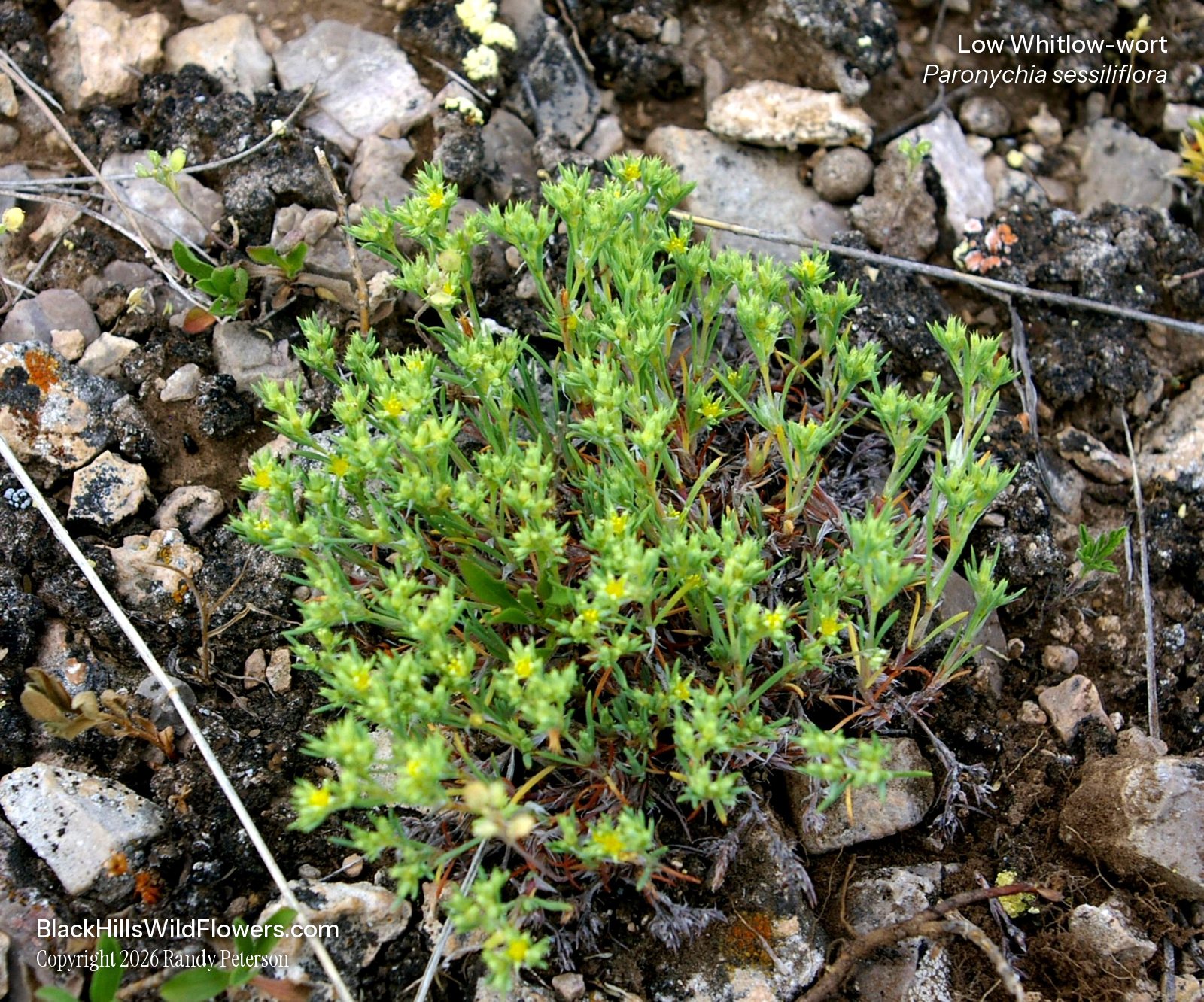
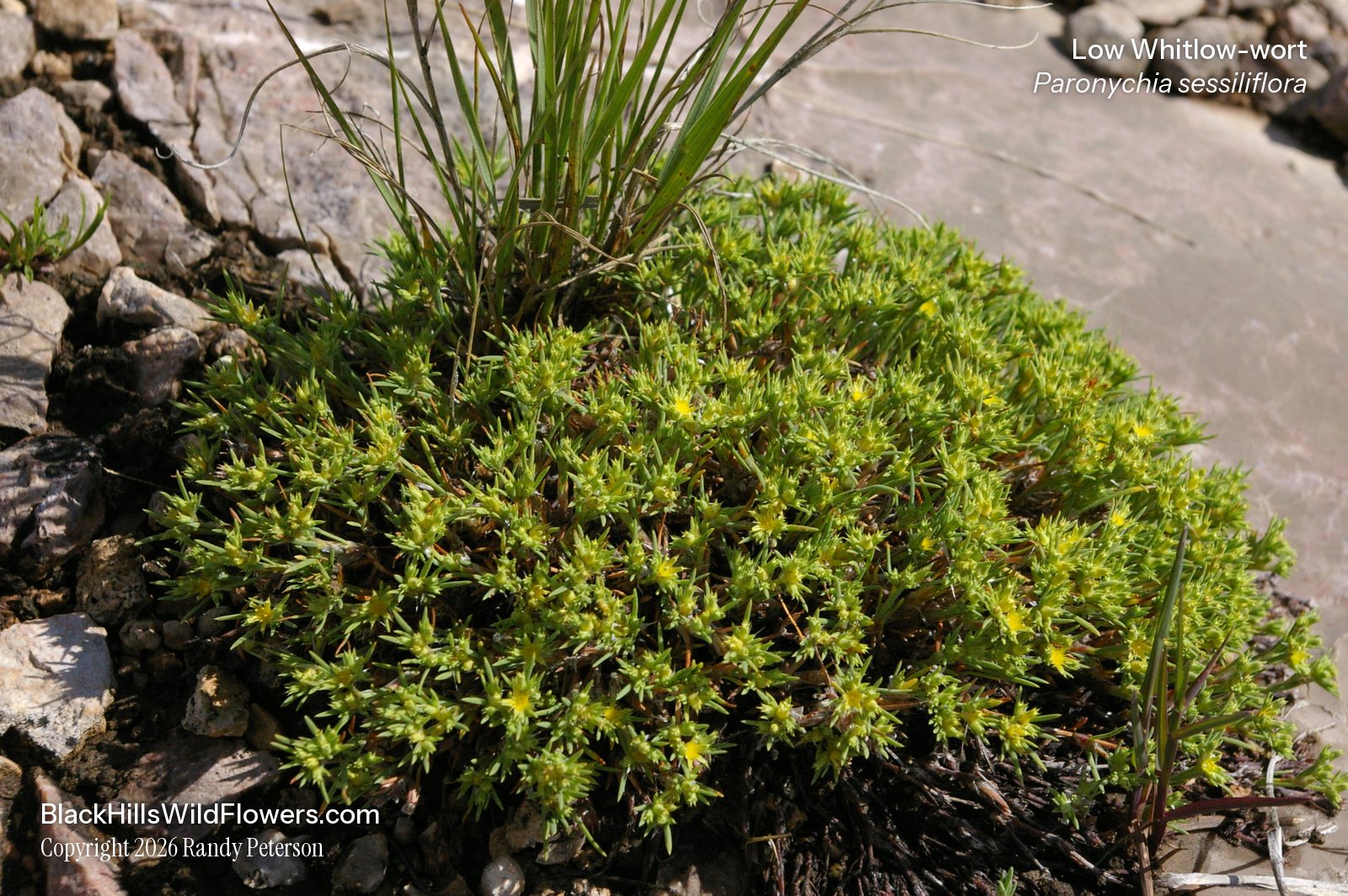
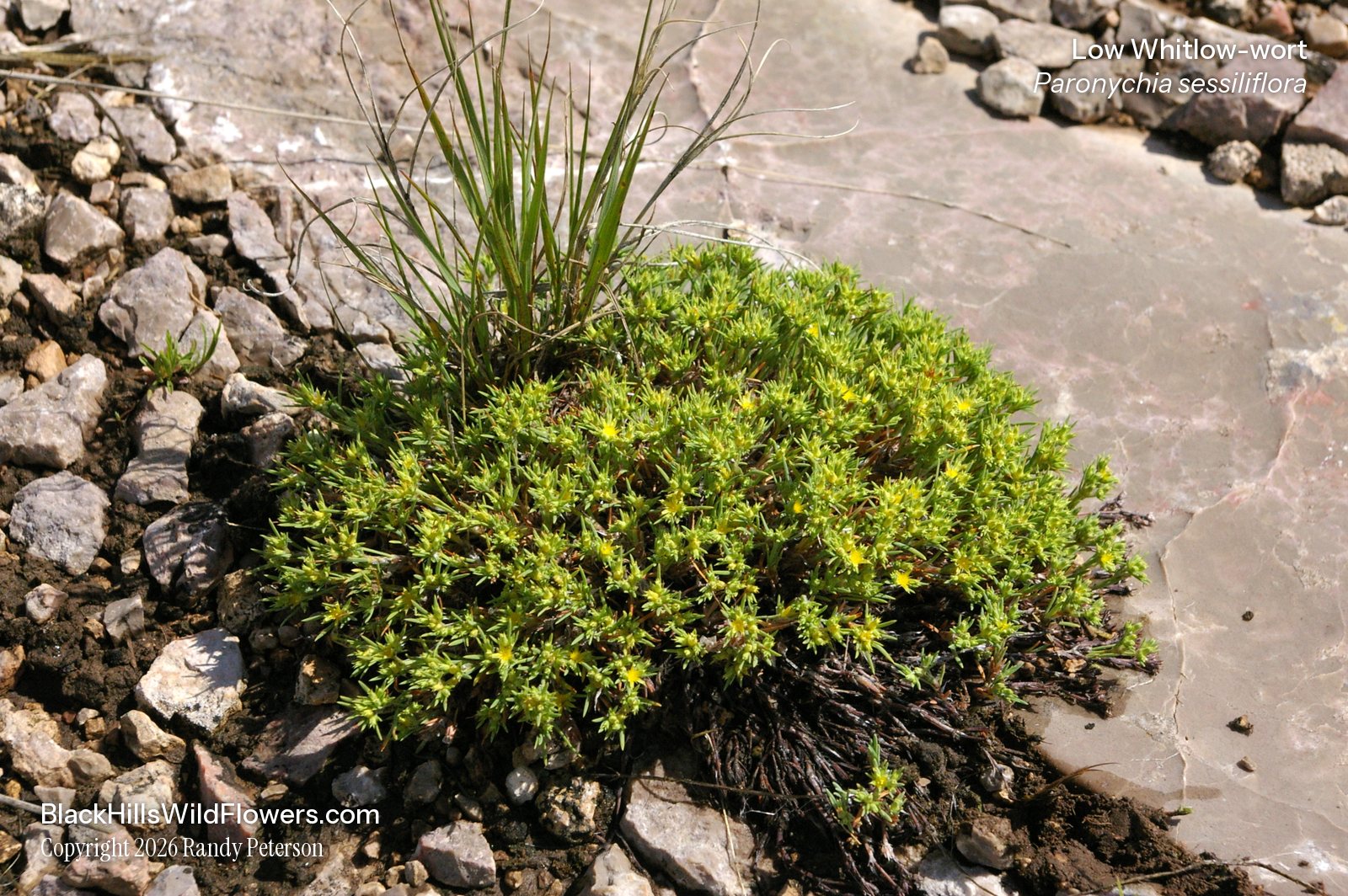
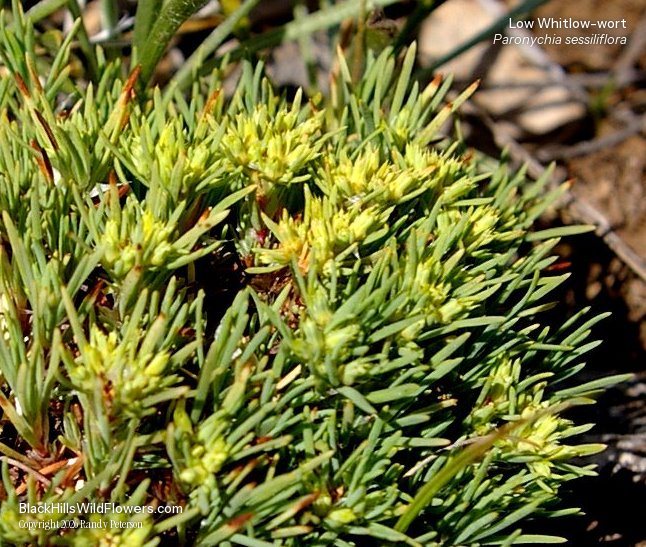
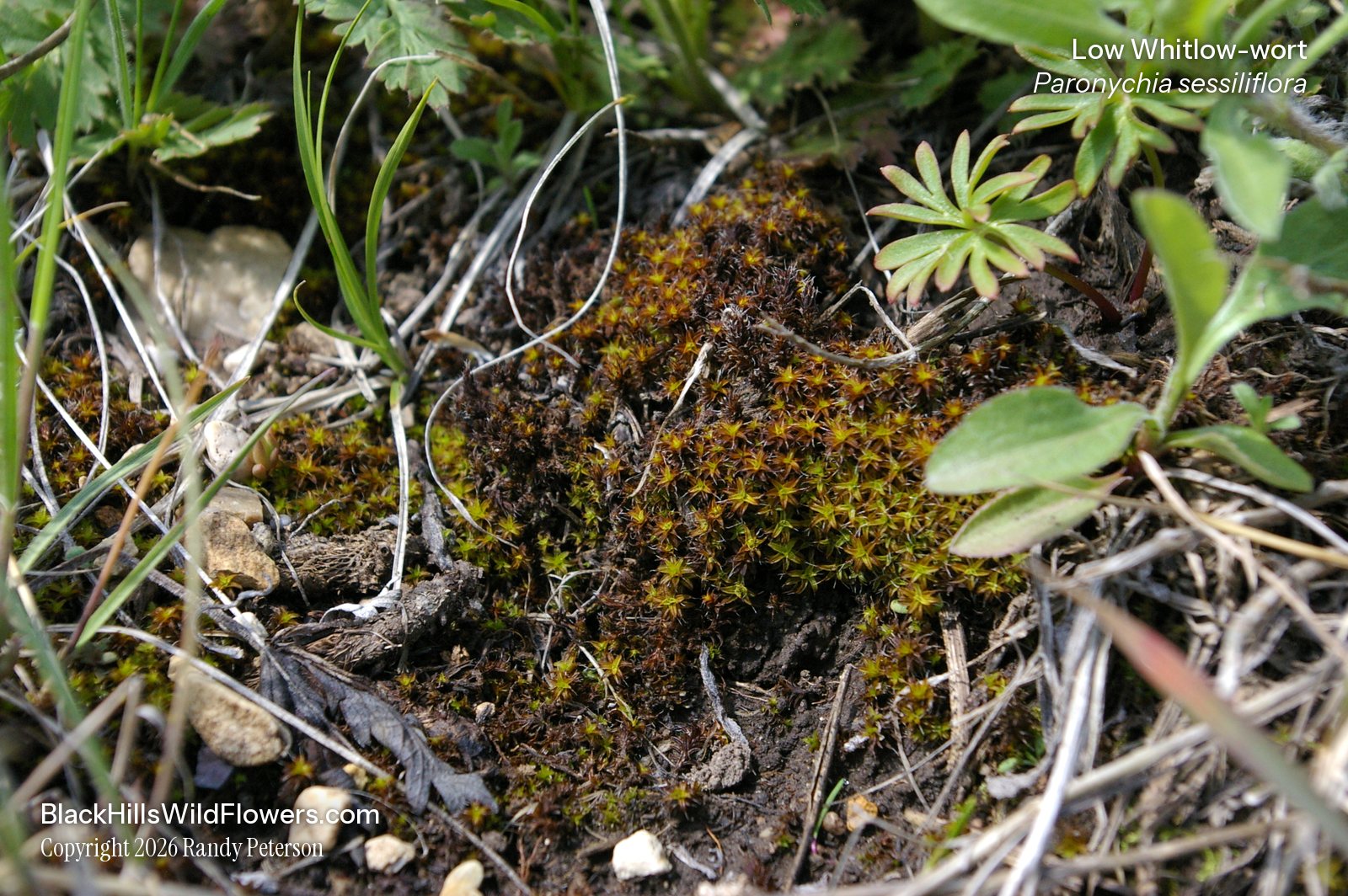
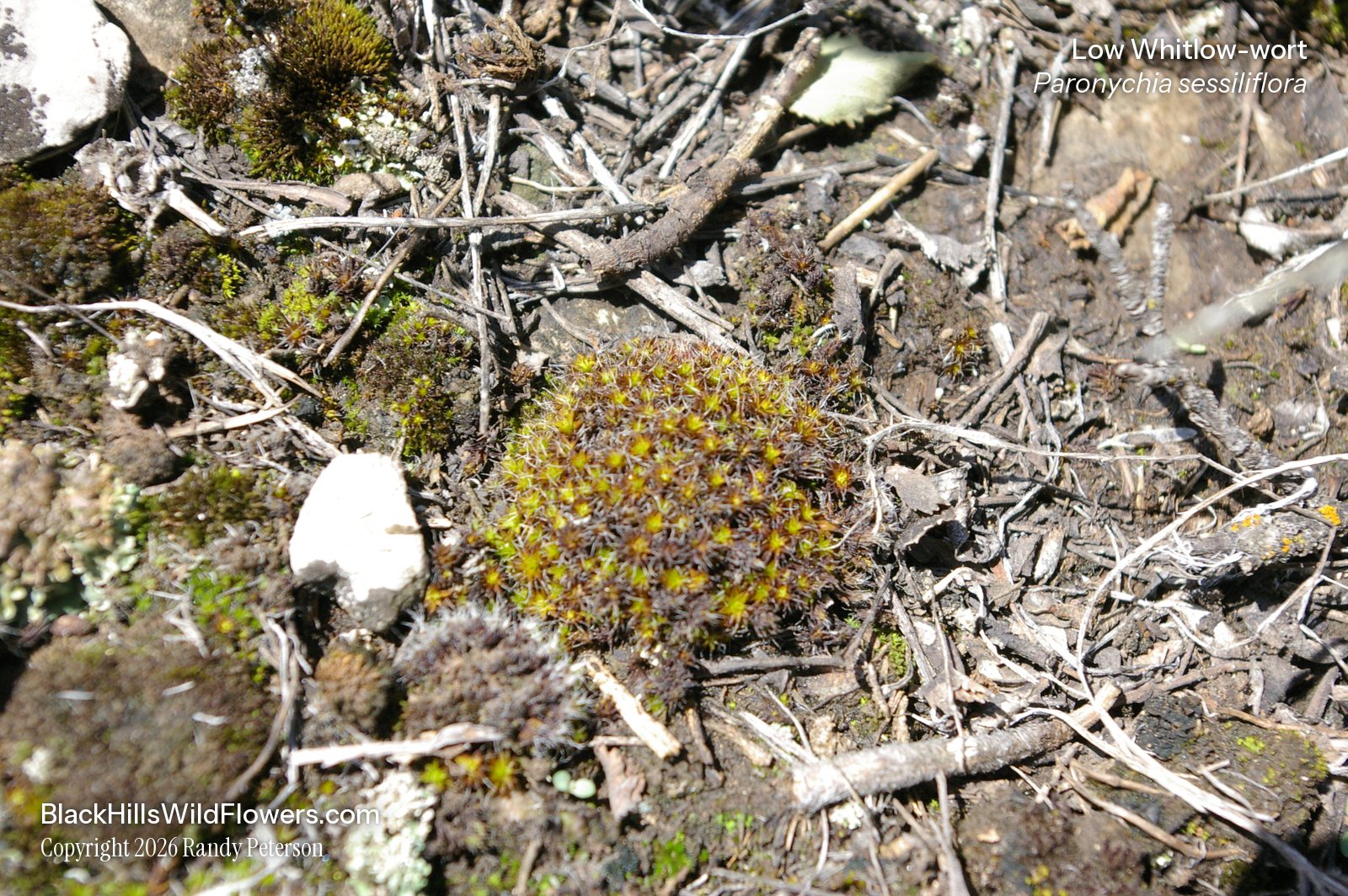
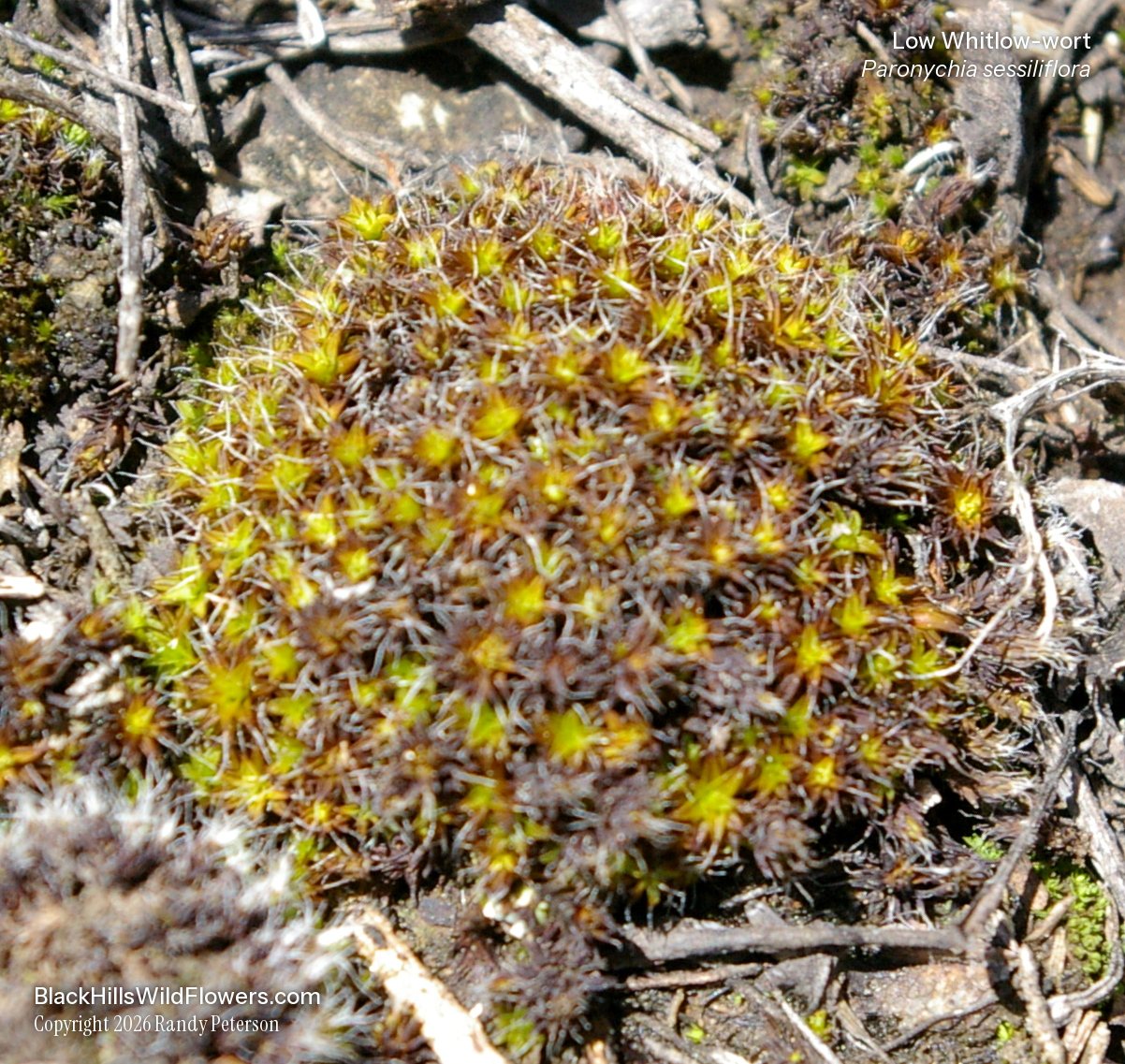
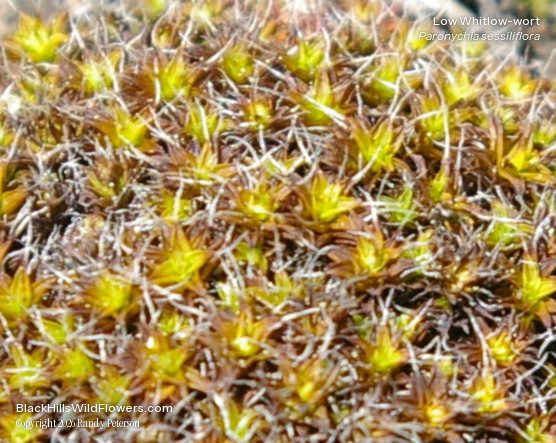
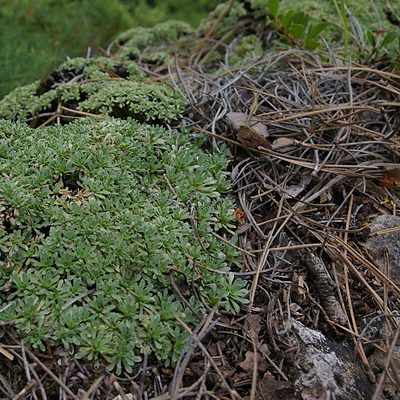
Low Whitlow-wort (Paronychia sessiliflora) is a native perennial that forms dense, low mats on a woody base, with tiny needle-like leaves and small flowers at the stem tips. It flowers in summer on dry, stony hillsides and summits. National Park Service plant lists for Jewel Cave National Monument and Wind Cave National Park record it in the Black Hills. Photographed in the Black Hills.
| Family | Caryophyllaceae · Pink |
|---|---|
| Status | Native perennial |
| Blooms | Summer |
| Height | 5–25 cm (2–10 in) |
| Where | Dry, stony hillsides, summits and sandstone mesas |
| Also called | Creeping Nailwort |
Roots, seeds & germination
Root: A branched, woody caudex (crown).
Seed: A utricle (a thin one-seeded fruit), 1.3–1.4 mm long, densely hairy in the upper half.
How do you identify Low Whitlow-wort?
Look for a dense mat with stems 5–25 cm long, stiff, narrow leaves only 4–7.5 mm long, and pointed stipules (small scales at the leaf base) 2–3 mm long. Flowers are 3.6–5 mm long, single or in tight groups of 3 to 6, with green to red-brown sepals that have pale edges and end in a short, white-spined awn 1–2 mm long.
When does it bloom?
Summer.
Where does it grow?
Dry, stony hillsides, summits and sandstone mesas, at 700–3100 m across its range. The 1986 Jewel Cave survey lists it, and Wind Cave National Park's species list records it as present and native.
Other flowers to compare
Sources: Flora of North America: Paronychia sessiliflora; Marriott and Hartman 1986, A Survey of the Vegetation of Jewel Cave National Monument; National Park Service, NPSpecies: Paronychia sessiliflora at Wind Cave National Park; Minnesota Wildflowers: Paronychia canadensis (genus and family).