Lodgepole Pine Pinus contorta also listed as Pinus contorta var. latifolia
Also called Rocky Mountain Lodgepole Pine, wazí čháŋ (Lakota)
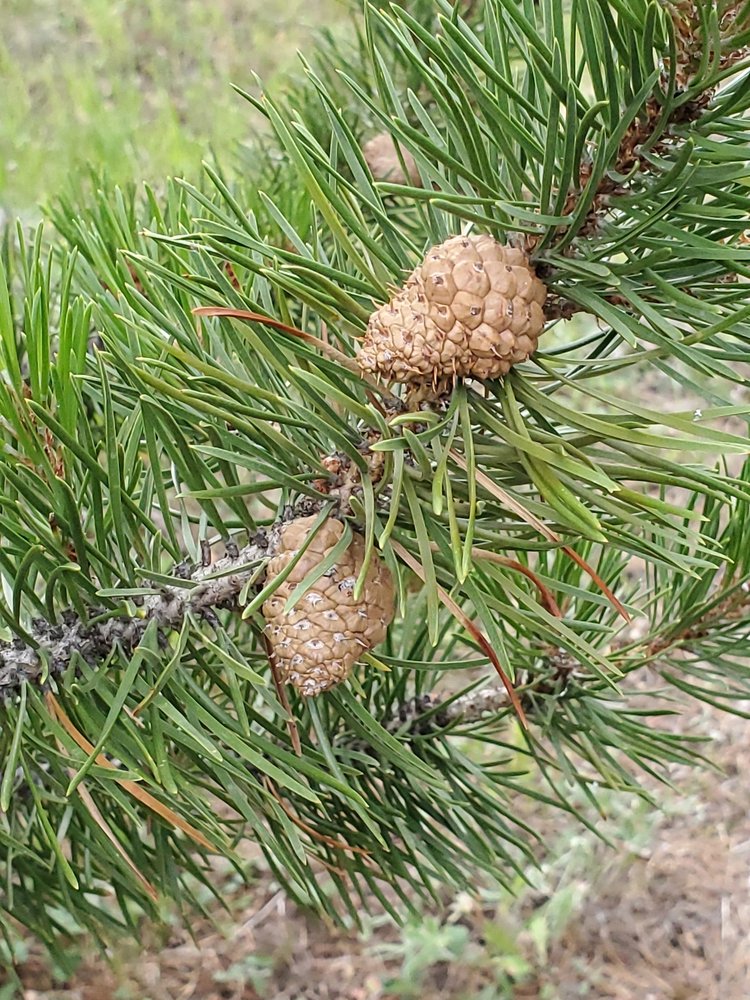
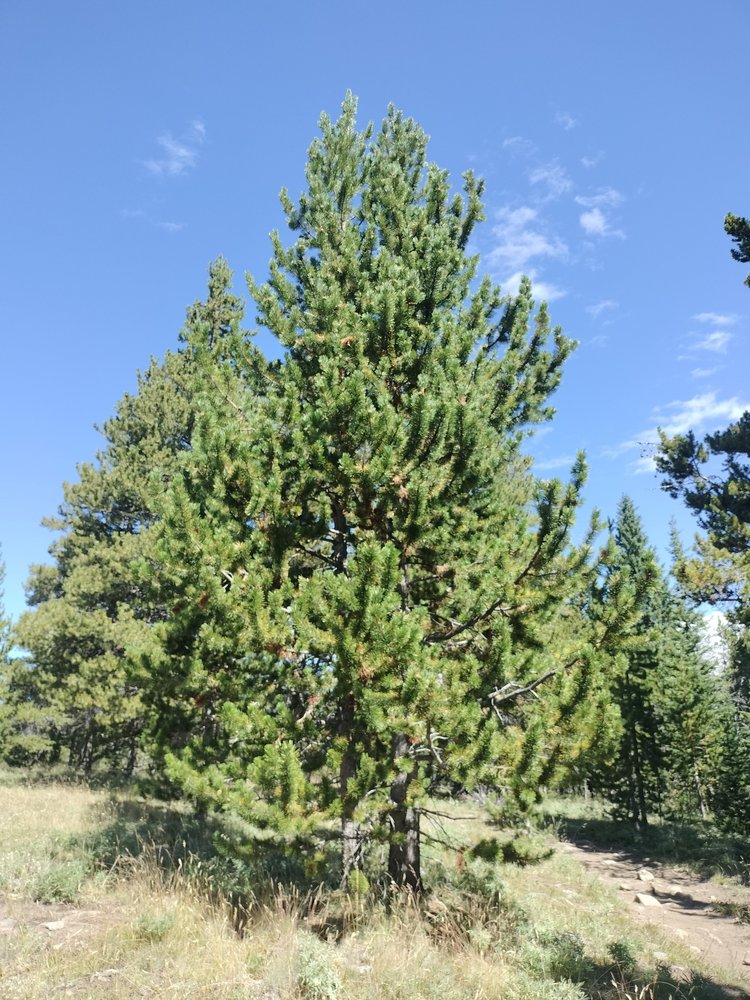
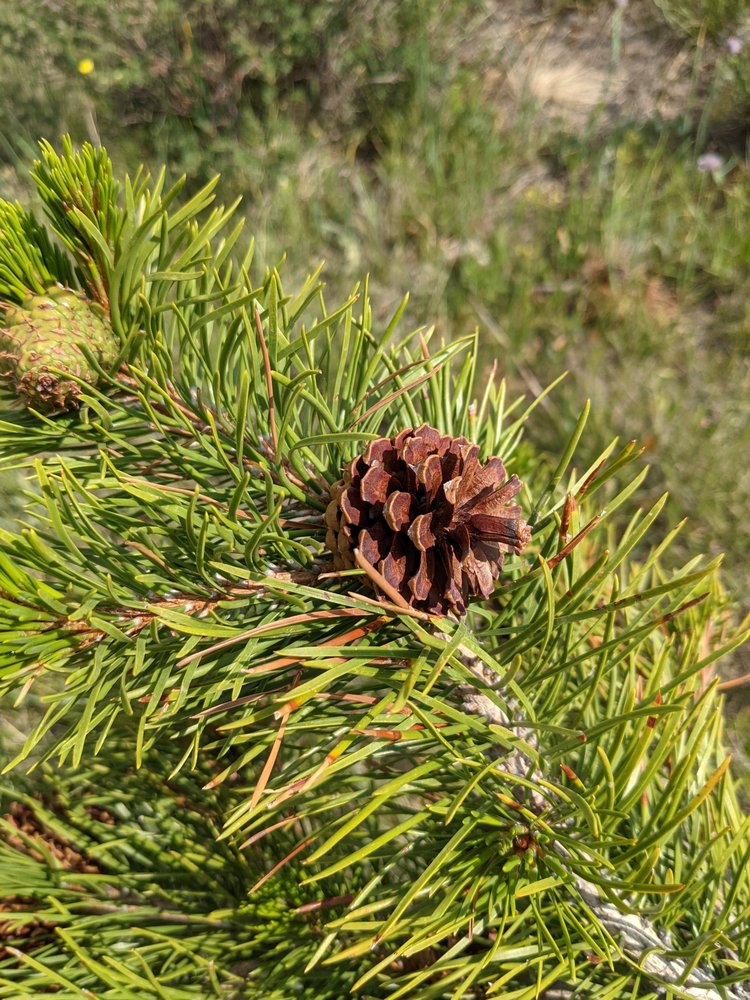
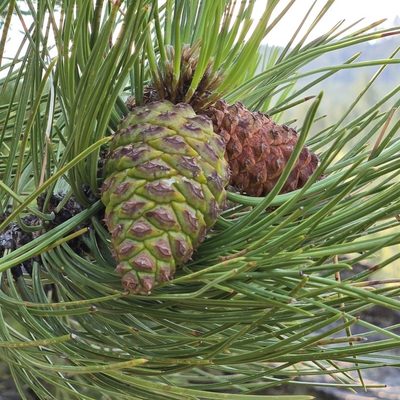
Lodgepole Pine (Pinus contorta) is a native two-needle pine with a straight, slender trunk, thin scaly bark and a narrow crown, usually 15–30 m (50–100 ft) tall; its needles grow two to a bundle, 4–8 cm (1½–3 in) long and often twisted, and its small lopsided cones have prickly scale tips and often stay sealed on the branches for years. Its Lakota name is wazí čháŋ, and SDSU says the common name comes from its use for tipi poles. In the Black Hills it is uncommon, growing on cool, higher sites with Ponderosa Pine, aspen and spruce at the eastern edge of its range, and the Forest Service estimates that it covers less than 100 acres there.
Free photos from other sources
| Family | Pinaceae · Pine |
|---|---|
| Status | Native evergreen tree |
| Blooms | Pollen in May and June; the cones ripen in September and October of their second year, and many stay sealed on the tree for years |
| Height | 15–30 m (50–100 ft) |
| Where | Cool, moist, higher-elevation sites and mixed conifer forest on dry soils, with Ponderosa Pine, aspen and spruce, at about 1,700–1,850 m (5,600–6,000 ft) |
| Also called | Rocky Mountain Lodgepole Pine, wazí čháŋ (Lakota) |
| Traditional use | The Sitting Bull College list of culturally important Lakota plants (1998) records that the Lakota use the tall, thin trees for tipi poles and a decoction of the roots to tan deerhides, and that the cones are called "wazi pinkpa." |
| Note | The Forest Service lists Lodgepole Pine as a species of conservation concern in the Black Hills. This page gives no locations. |
Roots, seeds & germination
Root: Often a taproot, and often many vertical sinker roots dropping from the side roots, reaching about 3.3 m (11 ft) deep.
Seed: The cones take two seasons to ripen. Each seed is about 5 mm long with a 10–14 mm wing for the wind. Cones that aren't sealed open in late September, but many are serotinous: glued shut with resin, they cling to the branches for years and open only when the heat of a fire melts the resin, and their seed stays viable for up to 80 years, so a burn is followed by a flush of seedlings, often in dense, slow-growing stands.
Germination: Sources disagree on a cold period: the Fire Effects Information System says the seed needs light but no stratification and sprouts 65 to 90% of the time in the lab, helped by temperatures that swing between 8 and 26 °C (47–78 °F), while SDSU says it germinates best after stratification and recommends sowing in fall. Cones may need heat to open and release the seed.
How do you identify Lodgepole Pine?
Count the needles: two to a bundle, 4–8 cm (1½–3 in) long, 1–2 mm wide, yellow-green to dark green and often twisted, with the sheath at the base staying on. Ponderosa Pine's needles also come mainly in twos and threes, but they are 10–17 cm (4–7 in) long, and Limber Pine's come five to a bundle. The bark is thin, only about 6 mm (¼ in) thick, gray-brown to red-brown, scaly and separating into loose plates, not deeply furrowed, and the trunk is straight, slender and evenly tapering with a narrow cone-shaped crown; a trunk only 13 cm (5 in) thick can be 15 m (50 ft) tall. The cones are small, 2–6 cm (1–2½ in), egg-shaped and lopsided, often curved back along the twig, the scales tipped with small prickles, sharpest toward the tip of the cone; Ponderosa cones are 5–10 cm (2–4 in). Many Lodgepole cones are sealed with resin and cling to the branches closed for years until the heat of a fire opens them. The pollen cones are orange-red.
When does it bloom?
Pollen in May and June; the cones ripen in September and October of their second year, and many stay sealed on the tree for years.
Where does it grow?
Cool, moist, higher-elevation sites and mixed conifer forest on dry soils, growing with Ponderosa Pine, aspen and spruce, at about 1,700–1,850 m (5,600–6,000 ft) in the Black Hills. Across its range it grows from low valleys to timberline in the mountains from the Yukon to Colorado, and the Black Hills are the eastern edge of that range, where SDSU calls it native. It is uncommon here: the Forest Service knows it from a few small stands and scattered trees that cover less than 100 acres in all, regenerating but not prolifically, with some mature trees attacked by mountain pine beetle. Sources differ on how it got here. A 1987 Forest Service habitat study says it has been part of the Black Hills flora since at least the Pleistocene, the time of the ice ages; a 2021 SDPB article says many experts believe people may have carried seeds or seedlings here from mountains to the west.
Other pines in this guide
Pine family (Pinaceae): 3 other plants in this guide
Sources: Flora of North America Vol. 2: Pinus contorta — eFloras; Flora of North America Vol. 2: Pinus contorta var. latifolia — eFloras; Flora of North America Vol. 2: Pinus ponderosa var. scopulorum — eFloras; Flora of North America Vol. 2: Pinus flexilis — eFloras; Fire Effects Information System: Pinus contorta var. latifolia (Anderson 2003) — USDA Forest Service; Pinus contorta, Lodgepole pine (R. Neil Reese) — SDSU Open PRAIRIE, South Dakota Native Plant Research; Revised Forest Assessment: At-Risk Species, draft October 2023 — USDA Forest Service; Forest vegetation: a habitat type classification (Hoffman and Alexander 1987, Research Paper RM-276) — USDA Forest Service; The Black Hills' onetime tallest tree (Enright, 2021) — SDPB; Range Plants of Utah: Lodgepole Pine — Utah State University Extension; Pinus contorta (PICO) — USDA PLANTS Database; Culturally Important Plants of the Lakota (Black Elk and Flying By, 1998) — Sitting Bull College, filed with the South Dakota PUC.