Boxelder Acer negundo
Also called Ash-leaf maple, Manitoba maple, Western boxelder, Box elder, čhaŋšúška (Lakota)
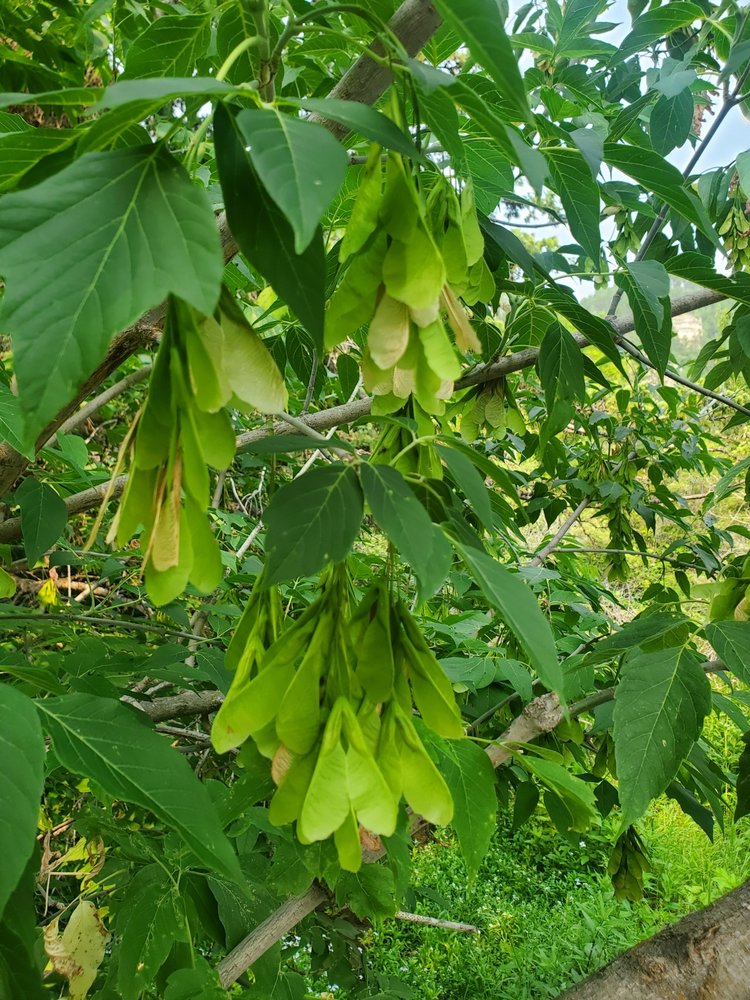
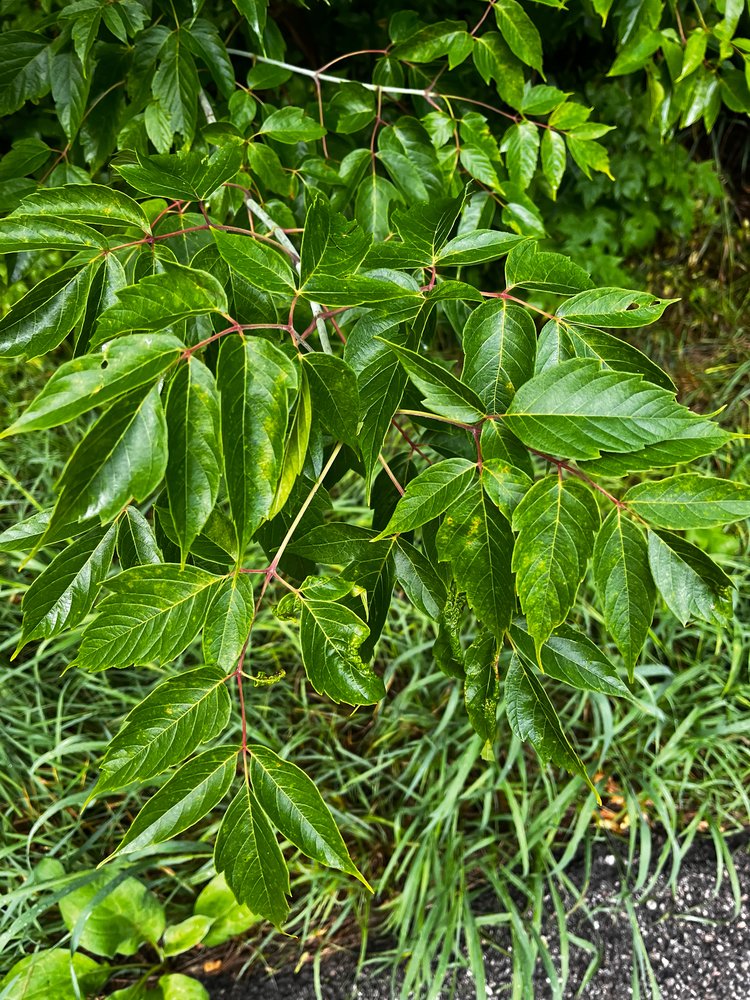
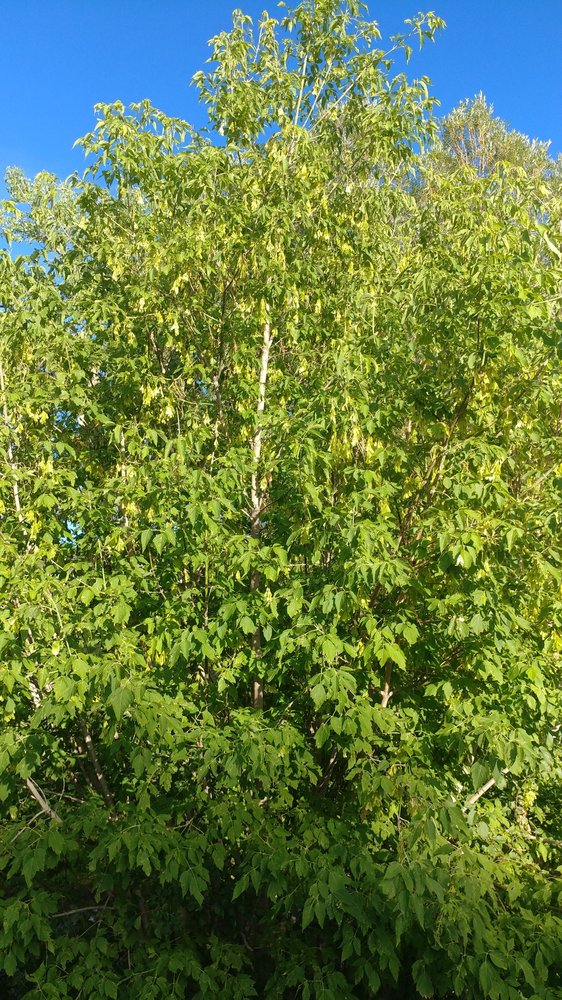
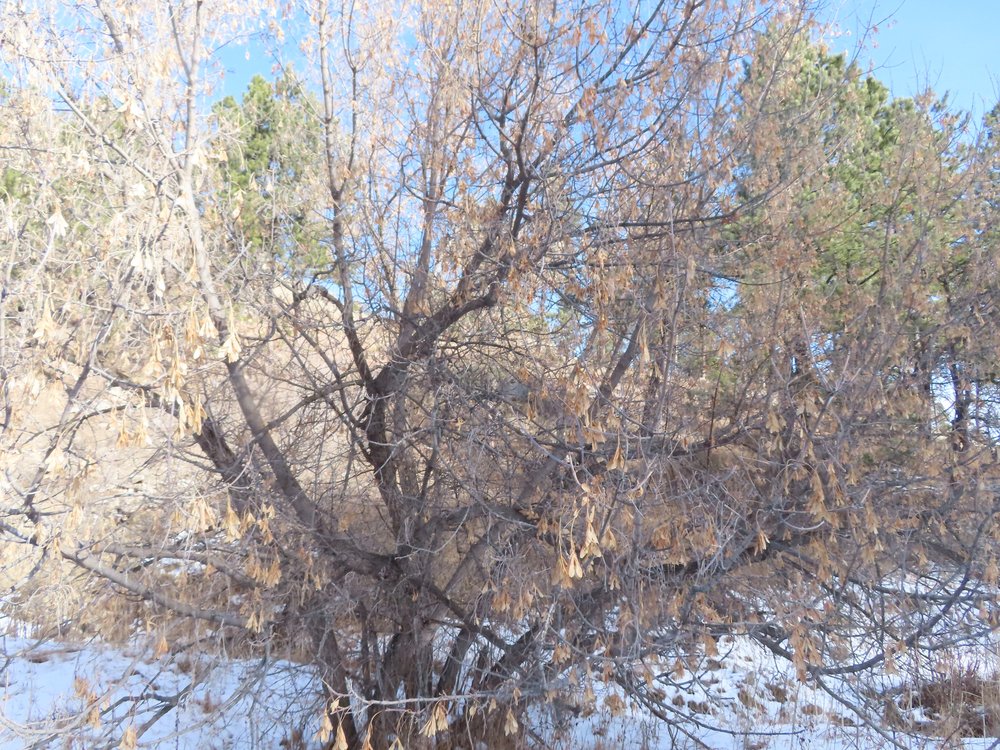
Boxelder (Acer negundo) is a native maple with opposite, compound leaves of 3 to 5 leaflets that are often coarsely toothed or lobed, green to purplish twigs often with a whitish bloom, and paired winged seeds that hang in chains from late summer into winter. Its flowers open in April and May, before or with the leaves, and in the Black Hills it grows in creek bottoms and canyon floors, where the Jewel Cave vegetation survey, the Forest Service's habitat-type classification and the National Park Service lists for Wind Cave, Jewel Cave and Devils Tower all record it.
Free photos from other sources
| Family | Sapindaceae · Soapberry |
|---|---|
| Status | Native deciduous tree |
| Blooms | April and May, before or as the leaves open; the paired seeds hang on from late summer into winter |
| Height | Usually 12–15 m (40–50 ft), up to 21 m (70 ft); often about 8 m (25 ft) on upland soils of the Great Plains |
| Where | Creek bottoms, canyon floors, floodplains, lake shores and draws; also yards and shelterbelts |
| Also called | Ash-leaf maple, Manitoba maple, Western boxelder, Box elder, čhaŋšúška (Lakota) |
| Synonym | Negundo aceroides |
| Toxicity | Boxelder seeds contain hypoglycin A, which causes seasonal pasture myopathy, a muscle disease that kills most of the horses that get it, mostly in fall. |
| Traditional use | Black Elk and Flying By (1998) record that the Lakota tapped the trees in early spring and used the sap as a sweetener or drink, sucked the leaves to relieve dry mouth during Sun Dances, ate the inner bark only in times of food shortage, and ate the seeds after boiling them. Gilmore (1919) recorded that all the tribes he describes made sugar from the sap, and that the Dakota and Omaha made charcoal from the wood for ceremonial painting and tattooing. The BRIT ethnobotany database, citing Hart (1981), adds that the Northern Cheyenne boiled the sap with hide shavings into a candy and made bowls from the wood. |
Traditional use: first drafted by Google AI, then checked against the sources on this page.
Roots, seeds & germination
Root: The roots are shallow and spreading, except on deep soils. It sprouts readily from exposed roots, the root collar and stumps, and shelterbelt trees on the Great Plains came back from root sprouts after the drought of the 1930s.
Seed: The paired winged seeds (samaras) are 3–5 cm (1¼–2 in) long and hang in chains. They ripen from late summer into October and are shed from September through March; wind can carry them up to 90 m (100 yards) across snow, and many hang on the tree through winter. Cleaned seed runs about 18,000–45,000 per kilogram (8,200–20,400 per pound).
Germination: The seed needs a cold, moist period: the Forest Service's Woody Plant Seed Manual gives 60 to 90 days of cold stratification at 5 °C (41 °F), and stratified seed germinated 24 to 96 percent in its tests. Very dry seed needs its hard fruit wall cracked, or perhaps a warm soak, before it will sprout. SDSU advises planting seed in moist soil when the fruits begin to drop, and says summer stem-tip cuttings root with rooting hormone.
How do you identify Boxelder?
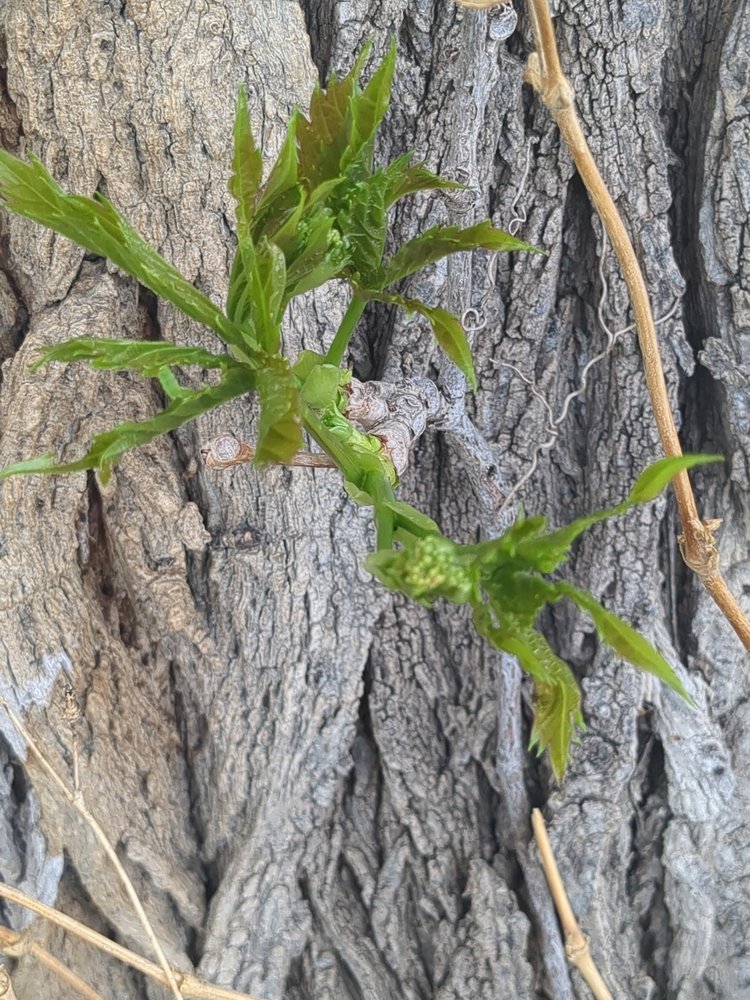
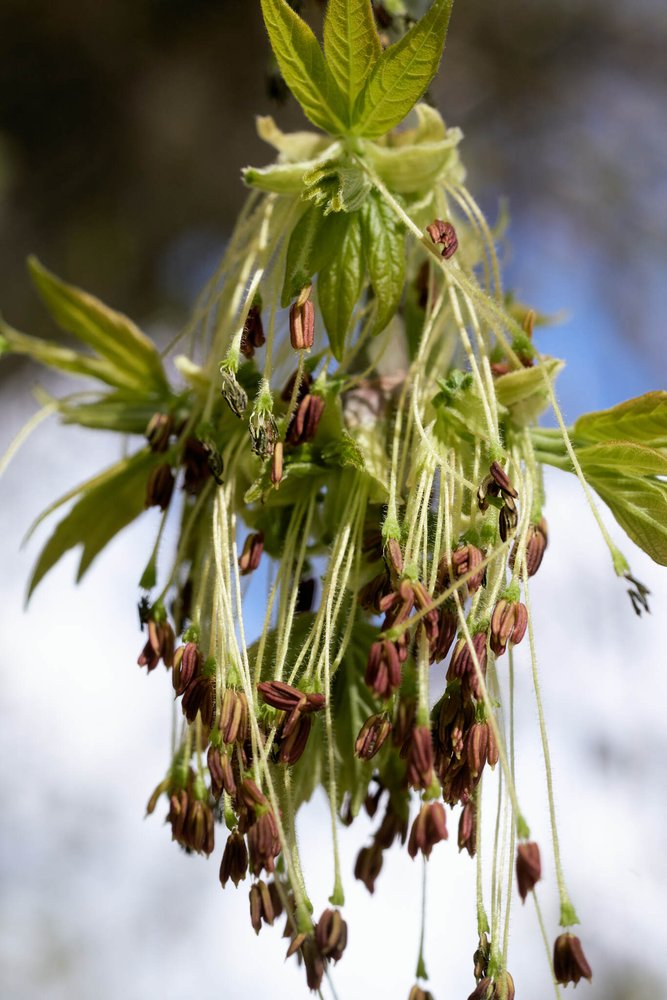
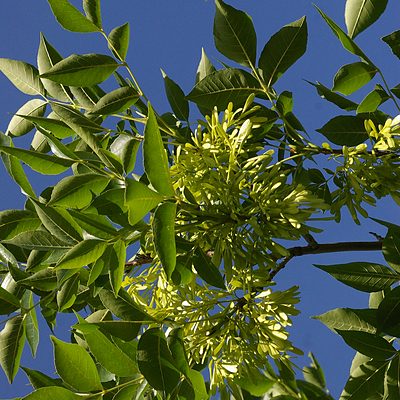
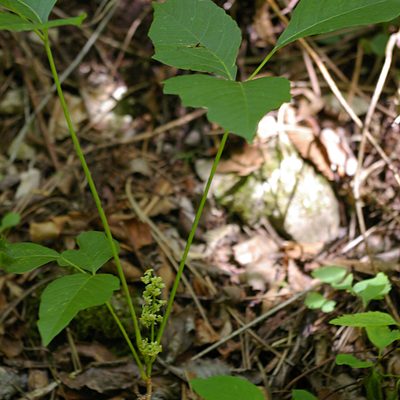
Start with the leaves and twigs: the leaves come in opposite pairs, and each leaf is compound with 3 to 5 leaflets (rarely 7), each 5–10 cm (2–4 in) long, lance-shaped to elliptic, smooth-edged to coarsely toothed, and the end leaflet is often shallowly cut into 3 lobes; it is the only maple with divided leaves. Twigs are olive green in summer and bluish to purple in winter, often with a whitish waxy bloom. The bark is light brown to gray-brown with blocky vertical ridges and furrows, smooth and gray on young trees, and the trunk often divides near the ground into crooked, spreading limbs under a crown that is often wider than it is tall. The flowers come before or with the leaves, male and female on separate trees: the males hang on long thread-like stalks with maroon anthers, the females in drooping clusters of 6 to 12. The fruit is a pair of winged seeds, 3–5 cm (1¼–2 in) long, hanging in chains from late summer and often into late winter. Green Ash also has opposite compound leaves, but Minnesota Wildflowers notes that ash leaflets are more uniform in shape and never lobed, and the North Dakota ash identification sheet adds that Boxelder has only 3 to 5 leaflets where ash has 5 to 11, that Boxelder seeds always come in pairs where ash seeds are single, and that Boxelder twigs are often blue or purple with a white, waxy coating. Young Boxelder shoots can be mistaken for Western Poison Ivy, whose leaves of 3 leaflets are alternate on a woody stem; Boxelder's leaves are opposite.
When does it bloom?
April and May, before or as the leaves open; the paired seeds hang on from late summer into winter.
Where does it grow?
Creek bottoms, canyon floors, floodplains, lake shores and draws, at about 1,040–1,950 m (3,400–6,400 ft) on herbarium labels, and also in yards and shelterbelts. The Jewel Cave vegetation survey of 1986 credits much of the monument's plant diversity to small communities such as the deciduous woodlands of birch, aspen and boxelder in canyon bottoms, and the Forest Service's 1987 habitat-type classification of the Black Hills National Forest lists Boxelder among the trees of the lowland riparian forests where bur oak grows as a tree. The National Park Service lists it, as var. interius, at Wind Cave National Park, Jewel Cave National Monument and Devils Tower National Monument. Herbarium specimens come from Lawrence, Meade, Pennington, Custer and Fall River counties in South Dakota and Crook County in Wyoming, from 1892 on, with labels describing creek banks, stream valleys, gulch floors and wooded canyon draws, a roadside with aspen, birch and ironwood, and draws in the Bear Lodge Mountains; many town specimens are from parks and yards. iNaturalist has about 160 research-grade records in the Black Hills.
Other plants to compare
Sources: SDSU Open PRAIRIE: Aceraceae: Acer negundo; USDA Forest Service Fire Effects Information System: Acer negundo (Rosario 1988); Minnesota Wildflowers: Acer negundo (Boxelder); Minnesota Wildflowers: Toxicodendron rydbergii (Western Poison Ivy); NDSU Extension F1633: Ash Tree Identification (Zeleznik); Marriott and Hartman 1986, A Survey of the Vegetation of Jewel Cave National Monument; Hoffman and Alexander 1987, Forest Vegetation of the Black Hills National Forest: A Habitat Type Classification (USDA Forest Service RM-276); NPSpecies checklist, Wind Cave National Park vascular plants; NPSpecies checklist, Jewel Cave National Monument vascular plants; NPSpecies checklist, Devils Tower National Monument vascular plants; Zasada and Strong, Acer, maple. Woody Plant Seed Manual (USDA Forest Service); ITIS: Acer negundo L., TSN 28749 (common names); University of Minnesota Extension: Seasonal pasture myopathy; GBIF occurrence search: Acer negundo, South Dakota and Wyoming herbarium specimens; GBIF specimen 2862184533: Meade County 1992, roadside with aspen, birch and ironwood; iNaturalist: research-grade Acer negundo observations in the Black Hills; Black Elk and Flying By 1998, Culturally Important Plants of the Lakota (entry 1), filed with the South Dakota PUC; Gilmore 1919, Uses of Plants by the Indians of the Missouri River Region; BRIT Native American Ethnobotany Database: Acer negundo.