False Morel
Gyromitra esculenta
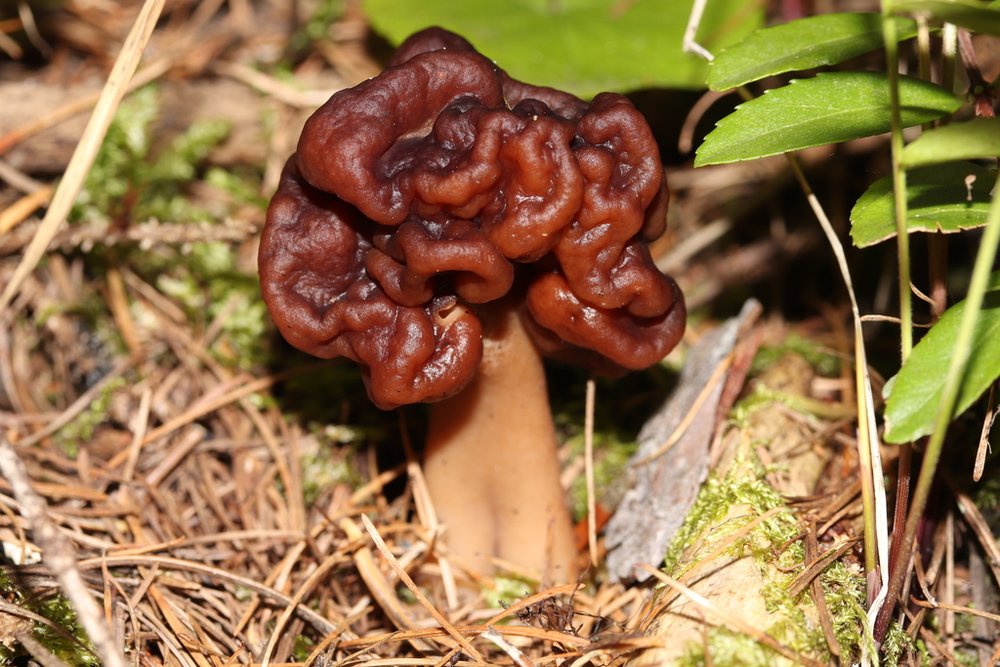
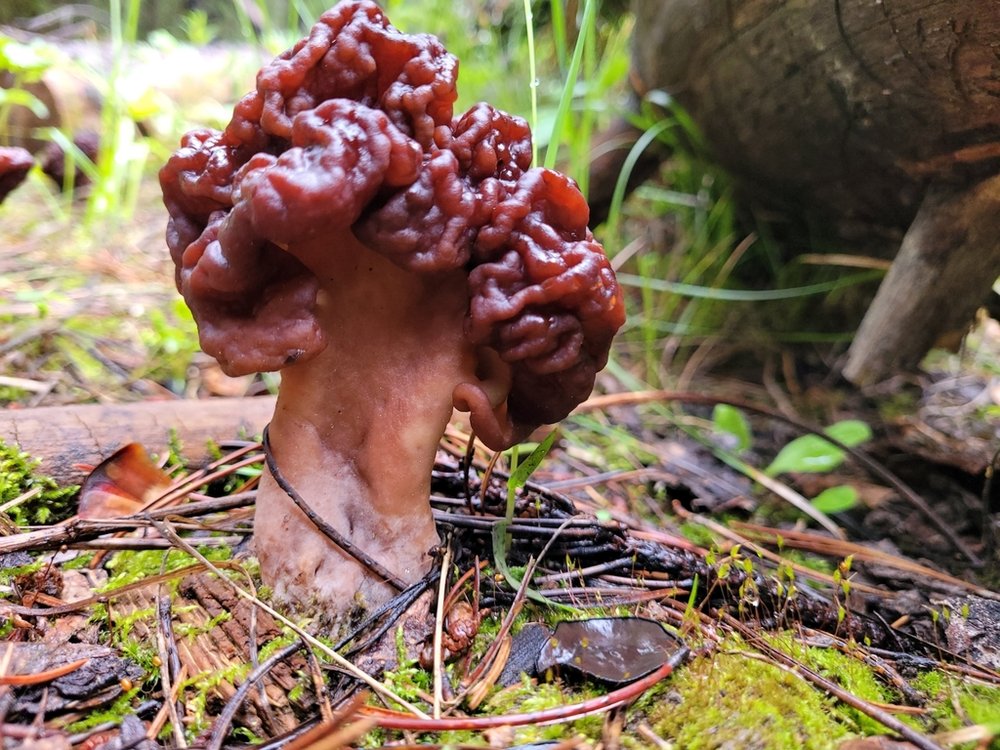
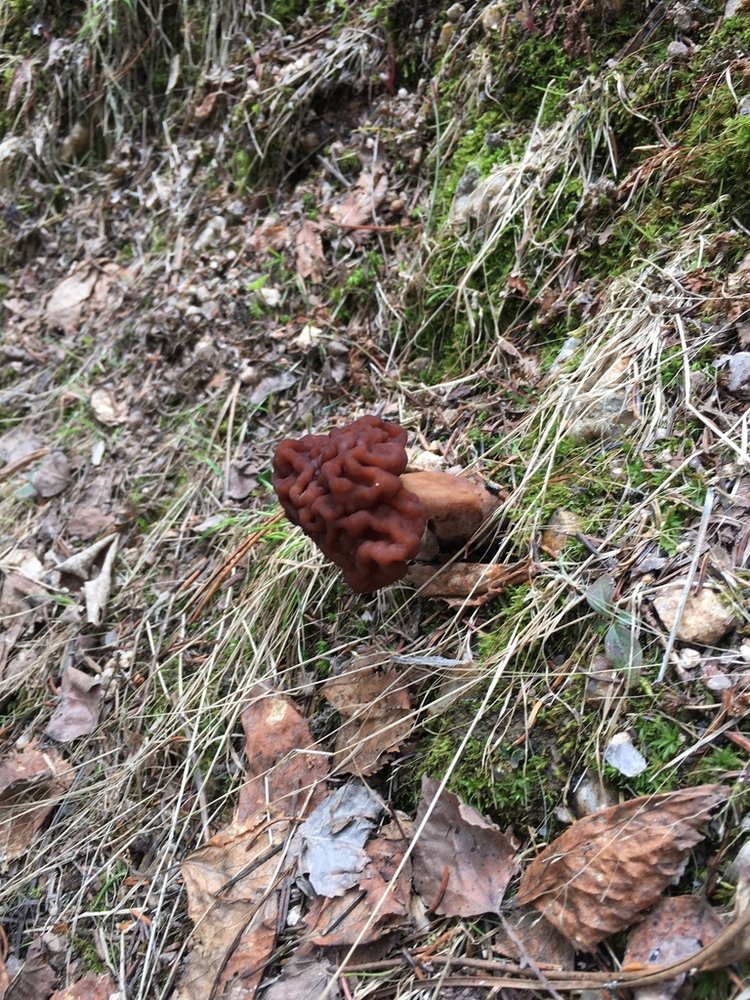
False Morel (Gyromitra esculenta) is a spring mushroom with a reddish brown, wrinkled, brain-like cap on a pale stem. It grows mainly under conifers, about the same weeks as true morels, and iNaturalist has one research-grade Black Hills record, from the national forest in Custer County in early June.
Free photos from other sources
| Family | Discinaceae · False morel |
|---|---|
| Type | False morel |
| Season | May and June, the same weeks as true morels |
| Size | Cap 3–12 cm (1¼–4¾ in) wide, stem 3–9 cm (1¼–3½ in) long |
| Grows on | Soil under conifers |
| Also called | Lorchel, Beefsteak Morel |
| Toxicity | Deadly poisonous: it contains gyromitrin, which the body turns into monomethylhydrazine, a rocket-fuel chemical; it causes headache, vomiting and diarrhea and, in severe cases, damage to the liver, kidneys and red blood cells, seizures and death, and gyromitrin has been linked to cancer. |
| Eating | This guide doesn't say which mushrooms are safe to eat. |
How it lives
Officially a saprobe, feeding on dead plant matter, though it may also be mycorrhizal (trading nutrients with tree roots), as true morels seem to be. In dry weather it can blacken and dry out yet stay on the forest floor for a long time.
How do you identify False Morel?
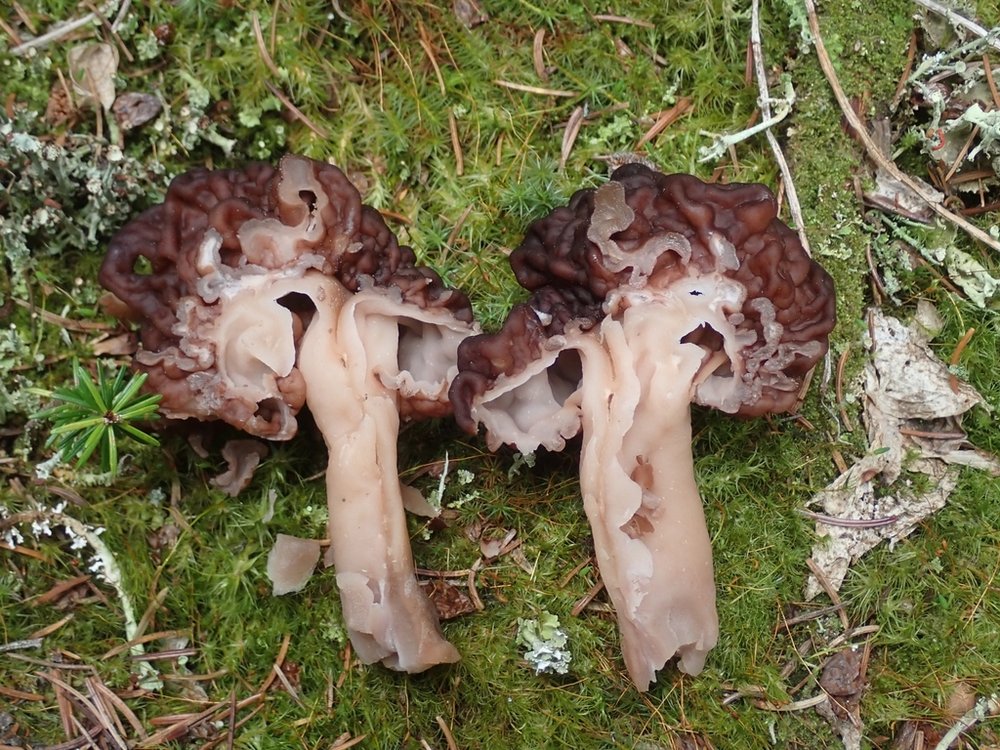
The cap is 3–12 cm (1¼–4¾ in) wide, irregular and brain-like, folded and wrinkled rather than pitted, pinkish tan to reddish brown and darkening to almost black with age. The stem is 3–9 cm (1¼–3½ in) long, pale tan to rosy, slim for the size of the cap, and often folded so that a cross-section looks like a figure eight. Cut one from top to bottom: the cap is joined to the stem only at the top, and the inside is chambered or stuffed with cottony tissue rather than one open tube. True morels (Yellow Morel and Black Morel) have pitted and ridged caps fused to the stem along their whole length, and are hollow from tip to base. Mountain False Morel has a tan to yellow-brown cap on a massive white stem. Hooded False Morel has a loosely wrinkled cap, usually not brain-like, pinched into two saddle-like lobes, and comes up in late summer and fall, not spring.
When can you find it?
May and June, the same weeks as true morels.
Where does it grow?
On the ground in spring, mainly under conifers; widespread in northern and mountain forests of North America. In the Black Hills one research-grade iNaturalist record comes from the national forest in Custer County (2 June 2019), and six more false-morel records identified only to the genus Gyromitra, all from 8 May to 1 June (2019–2026), come from Lawrence, Pennington and Custer counties, including Mount Rushmore and Custer State Park. No published Black Hills source names it.
Other mushrooms to compare
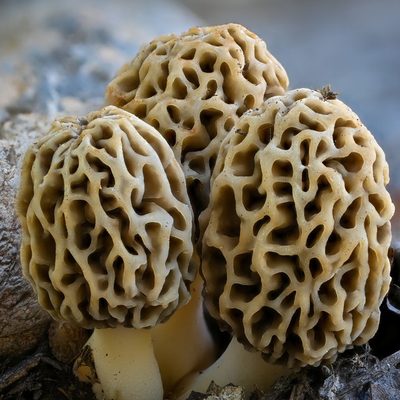
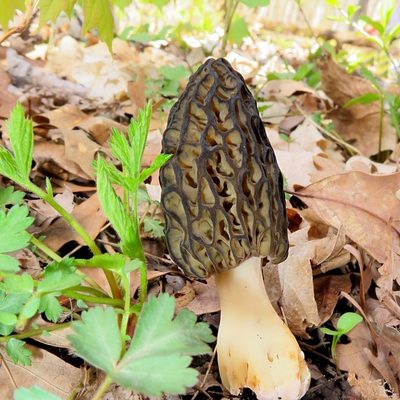
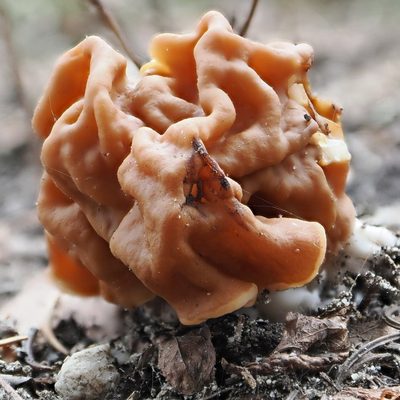
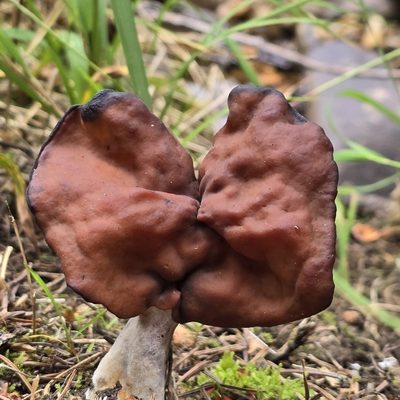
Sources: Gyromitra esculenta — MushroomExpert.com (Michael Kuo); Gyromitra: The False Morels, with key — MushroomExpert.com (Michael Kuo); The Morchellaceae: True Morels and Verpas, with key — MushroomExpert.com (Michael Kuo); Morchella esculentoides — MushroomExpert.com (Michael Kuo); Morchella angusticeps — MushroomExpert.com (Michael Kuo); Gyromitra montana (Gyromitra gigas) — MushroomExpert.com (Michael Kuo); Gyromitra infula — MushroomExpert.com (Michael Kuo); Gyromitra esculenta, the false morel: Fungus of the Month, May 2002 — Tom Volk, University of Wisconsin-La Crosse; Morchella, the morel: Fungus of the Month, April 1997 — Tom Volk, University of Wisconsin-La Crosse; Mushroom Poisoning Syndromes — North American Mycological Association; Dirks et al. 2023, Gyromitrin has a limited distribution in the false morels — Mycologia 115(1) (University of Michigan copy); iNaturalist: Gyromitra esculenta records in the Black Hills places (API query); iNaturalist: Gyromitra and related false-morel records in the Black Hills places (API query); iNaturalist: research-grade records by month within 500 km of the Black Hills, taxon 85120 (API query).