Black Morel
Morchella angusticeps
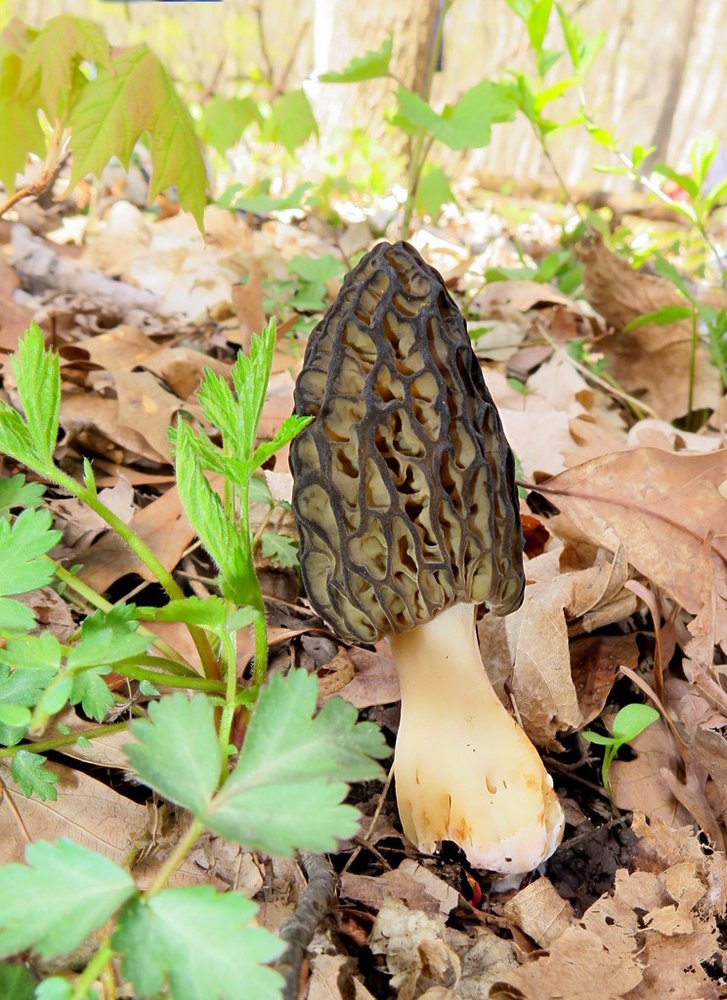
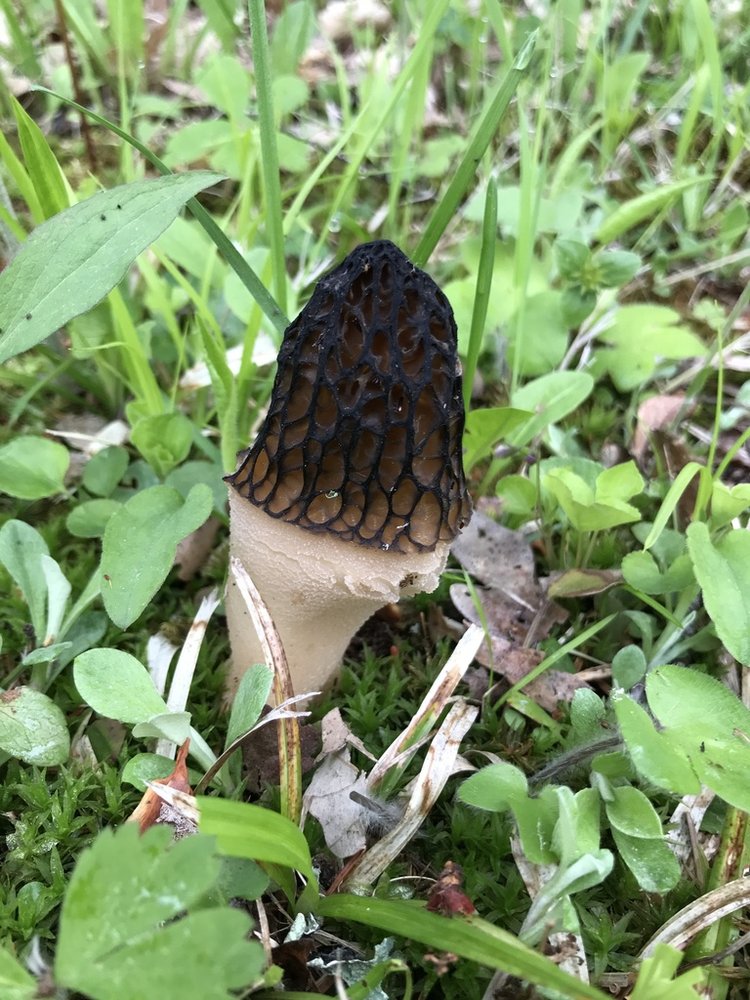
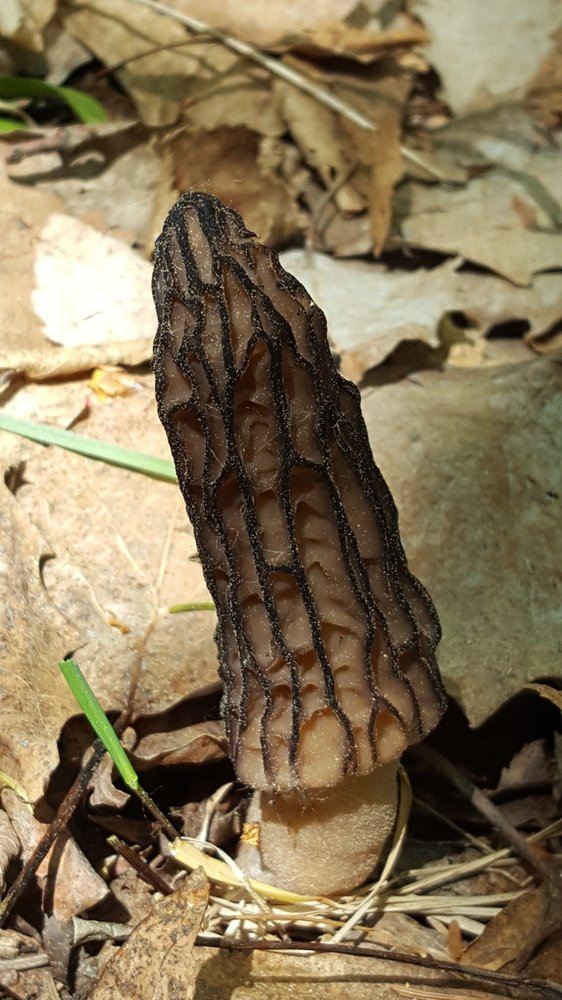
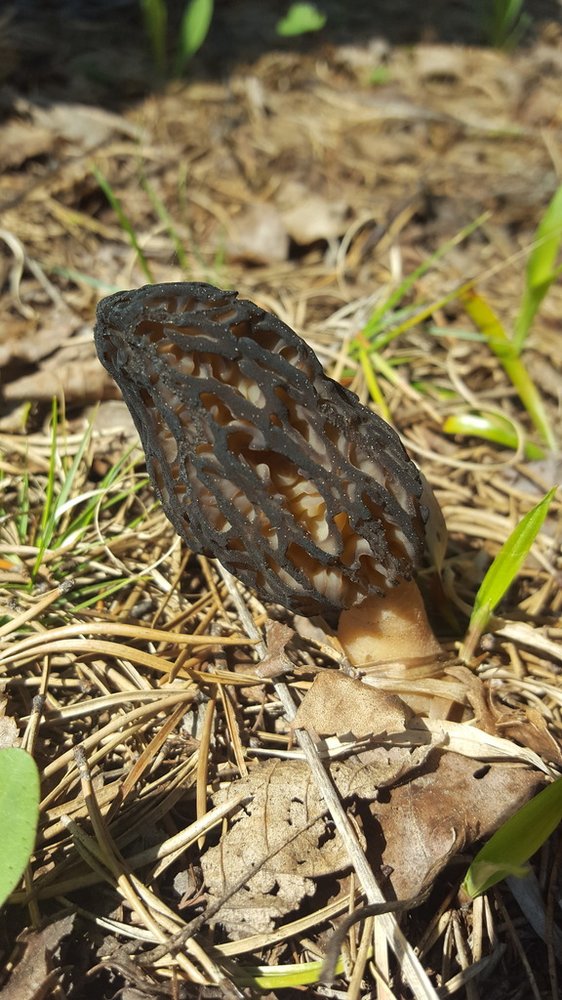
Black Morel (Morchella angusticeps) is a spring mushroom with a cone-shaped, pitted cap whose ridges turn dark brown to black, on a hollow whitish stem. iNaturalist's Black Hills records run from mid-April to early June, in Lawrence and Pennington counties in the northern and central Hills.
Free photos from other sources
| Family | Morchellaceae · Morel |
|---|---|
| Type | Morel |
| Season | Mid-April into early June |
| Size | Cap 3–8 cm (1¼–3 in) tall, stem 2–8 cm (¾–3 in) long |
| Grows on | Forest soil in spring, often under ash and other hardwoods |
| Toxicity | Morels have caused gastrointestinal illness (nausea, vomiting, diarrhea), sometimes with dizziness or other nervous-system effects, and in some people they upset the stomach when combined with alcohol; the toxin isn't known. |
| Eating | This guide doesn't say which mushrooms are safe to eat. |
How it lives
Like other true morels it may live as a saprobe, feeding on dead plant matter, at one stage and as a mycorrhizal partner, trading nutrients with tree roots, at another. In the West several black morel species come up in burned conifer forest within a year or two of a fire.
How do you identify Black Morel?
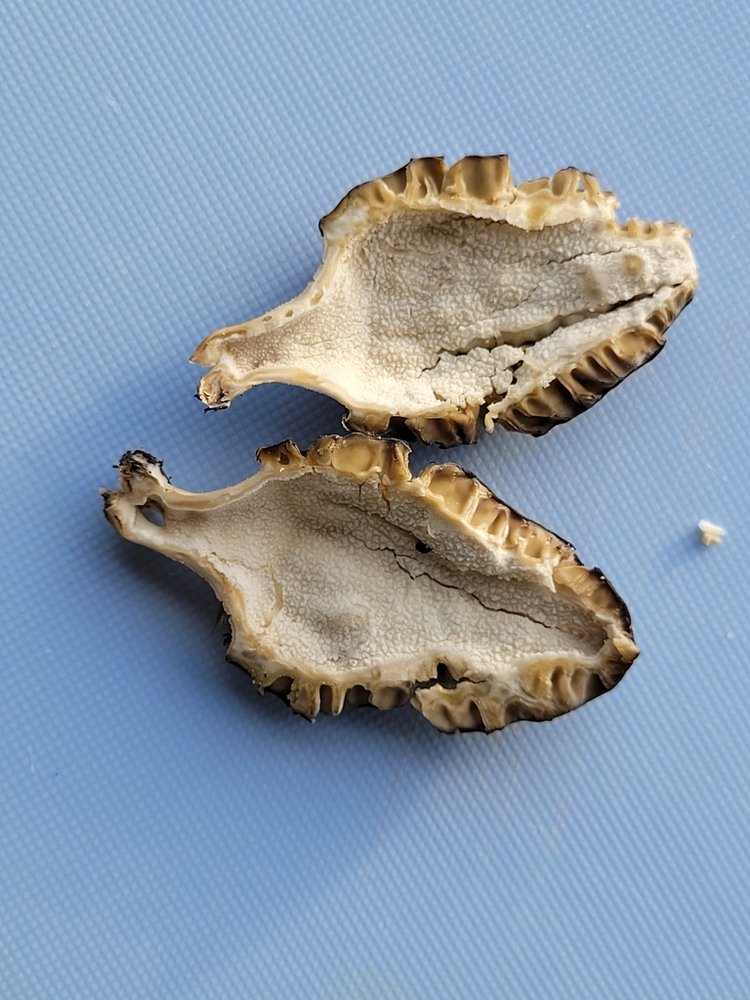
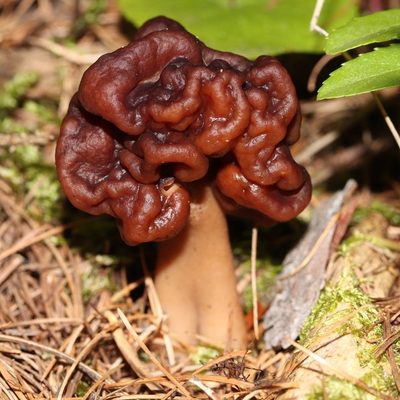
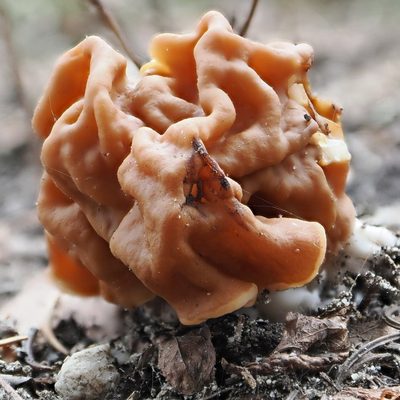
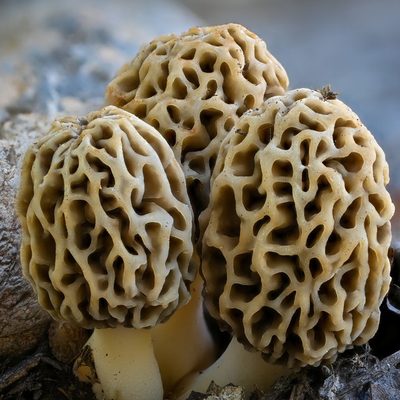
The cap is 3–8 cm (1¼–3 in) tall and usually conical, with pits and ridges lined up mostly up and down. Young ridges are tan to brown; on mature caps they turn dark brown to black while the pits stay brownish or yellowish. The cap meets the stem in a small groove, 2–5 mm deep, and the stem is whitish to pale brown. Cut one from top to bottom and the cap and stem form a single hollow chamber. False Morel, the dangerous lookalike, has a reddish brown, wrinkled, brain-like cap instead of pits, joined to the stem only at the top, and a cut one is chambered or stuffed with cottony tissue. Mountain False Morel, which iNaturalist also records here in May, has a loosely wrinkled tan cap on a thick white stem and chambered flesh. Yellow Morel has pale ridges that never darken and no groove where the cap meets the stem. Verpas (Verpa), with no Black Hills iNaturalist records, have a cap that hangs free from the very top of the stem.
When can you find it?
Mid-April into early June.
Where does it grow?
In woods in spring. Kuo describes it as the common black morel east of the Rocky Mountains, under hardwoods such as ash. In the Black Hills, iNaturalist has eight records (seven research grade, 2016–2026) from 14 April to 8 June, in Lawrence County in the northern Hills and Pennington County in the central Hills. Two Field Museum morel specimens from Lawrence County, collected in June 1965 on steep, rocky slopes in spruce and aspen forest at about 1,615 m (5,300 ft), aren't named to species. In the West some black morels come up in burned conifer forest a year or two after a fire; burn morels were reported in Custer State Park in 2020, but which species they were hasn't been confirmed.
Other mushrooms to compare
Sources: Morchella angusticeps — MushroomExpert.com (Michael Kuo); The Morchellaceae: True Morels and Verpas, with key — MushroomExpert.com (Michael Kuo); Morchella esculentoides — MushroomExpert.com (Michael Kuo); Gyromitra esculenta — MushroomExpert.com (Michael Kuo); Gyromitra: The False Morels, with key — MushroomExpert.com (Michael Kuo); Gyromitra montana (Gyromitra gigas) — MushroomExpert.com (Michael Kuo); Verpa bohemica — MushroomExpert.com (Michael Kuo); Gyromitra esculenta, the false morel: Fungus of the Month, May 2002 — Tom Volk, University of Wisconsin-La Crosse; Morchella, the morel: Fungus of the Month, April 1997 — Tom Volk, University of Wisconsin-La Crosse; Mushroom Poisoning Syndromes — North American Mycological Association; Outbreak Linked to Morel Mushroom Exposure, Montana, 2023 — CDC Morbidity and Mortality Weekly Report 73(10), 2024; Happy Places (10 June 2020) — South Dakota Magazine; iNaturalist: Morchella angusticeps records in the Black Hills places (API query); iNaturalist: Verpa records in the Black Hills places, none found (API query); GBIF occurrence search: Morchella in South Dakota, including two Field Museum specimens from Lawrence County, 1965; Dirks et al. 2023, Gyromitrin has a limited distribution in the false morels — Mycologia 115(1) (University of Michigan copy); iNaturalist: Maublancomyces montanus records in the Black Hills places (API query).