Yellow Morel
Morchella americana
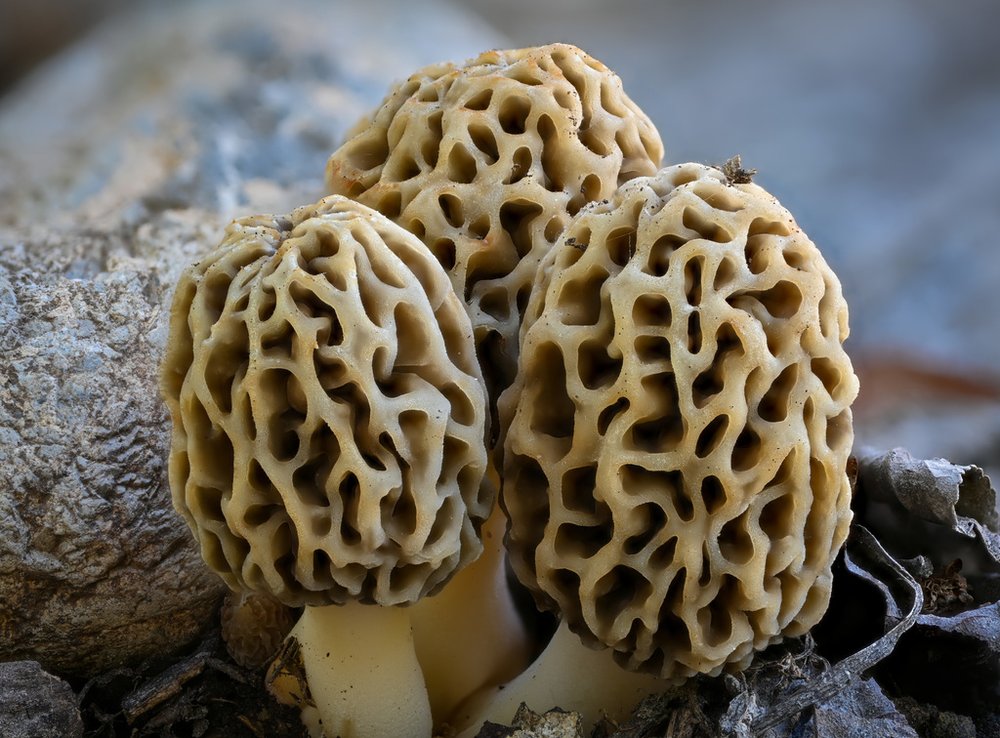
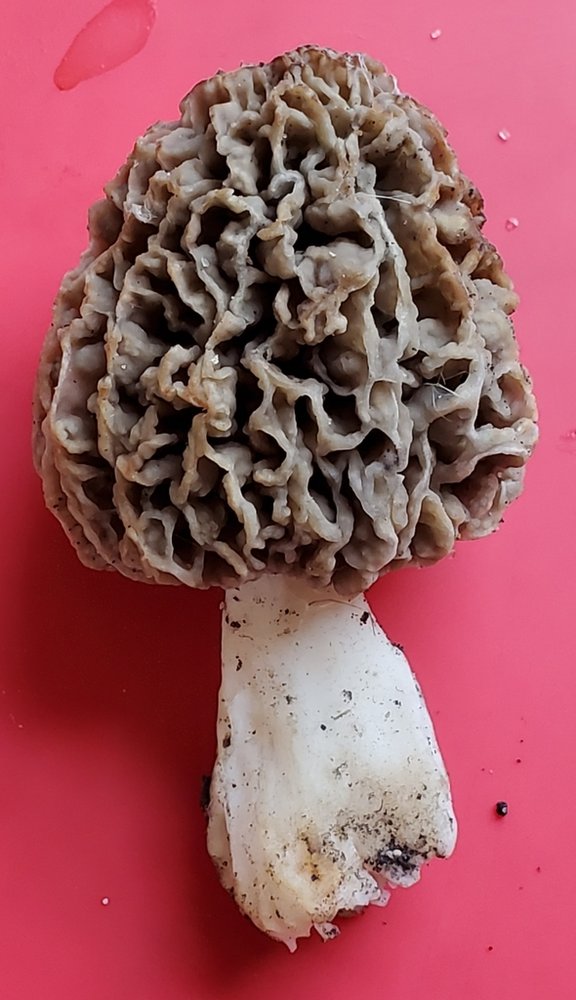
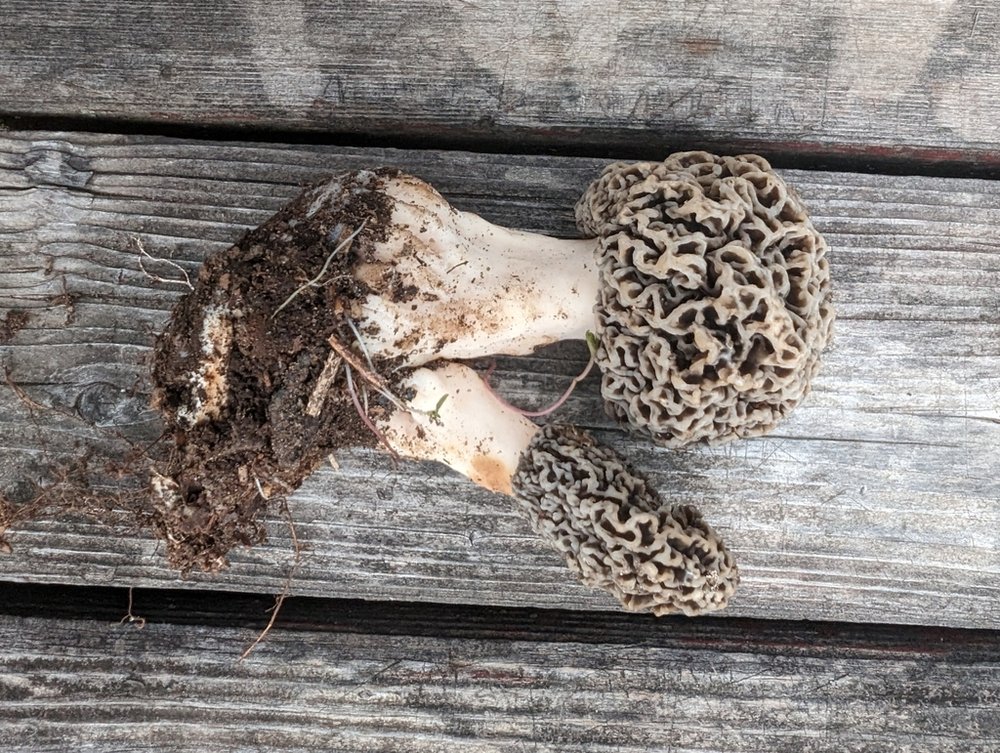
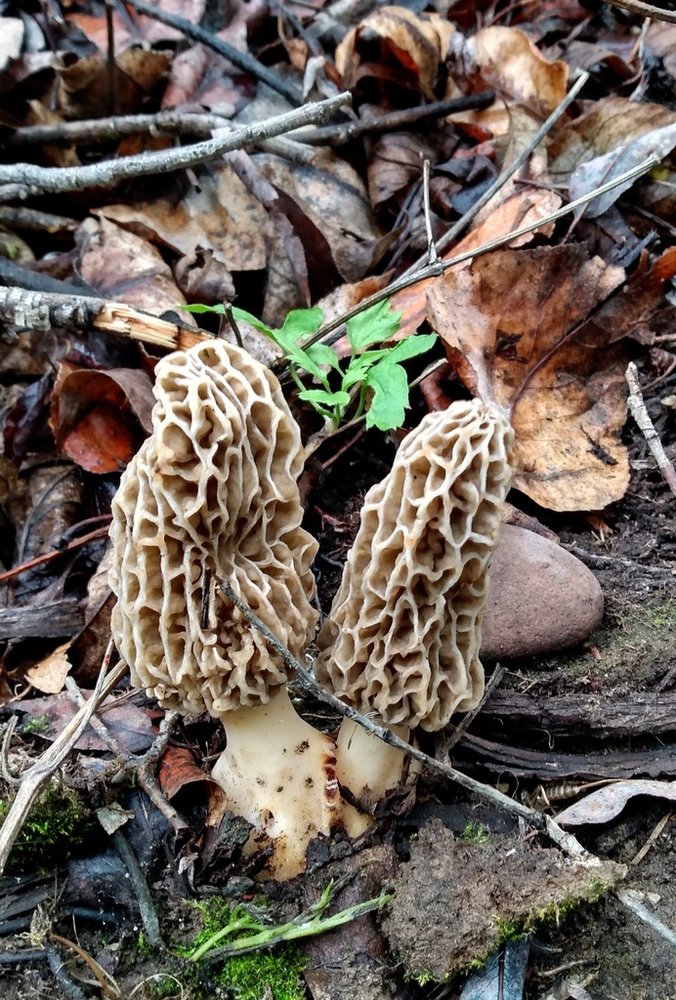
Yellow Morel (Morchella americana) is a spring mushroom with an egg-shaped cap of pale ridges and pits, grayish when young and yellowish when mature, joined to a hollow whitish stem. In the West it grows mostly in river bottoms under cottonwoods, and iNaturalist's Black Hills records are all from May, in the northern and southern Hills.
Free photos from other sources
| Family | Morchellaceae · Morel |
|---|---|
| Type | Morel |
| Season | May, in the Black Hills sometimes running to Memorial Day |
| Size | Cap 2.5–11 cm (1–4¼ in) tall, stem 2–12 cm (¾–4¾ in) long |
| Grows on | Soil under cottonwood, ash, elm and other hardwoods, often along streams |
| Also called | American Yellow Morel, White Morel, nasúla iyéčheča (Lakota) |
| Synonym | Morchella esculentoides |
| Toxicity | Morels have caused gastrointestinal illness (nausea, vomiting, diarrhea), sometimes with dizziness or other nervous-system effects, and in some people they upset the stomach when combined with alcohol; the toxin isn't known. |
| Eating | This guide doesn't say which mushrooms are safe to eat. |
How it lives
Morels seem to live two ways at different stages: as saprobes, feeding on dead plant matter, and as mycorrhizal partners, trading nutrients with tree roots. This one often fruits near dead or dying elms and under ash, apple and cottonwood.
How do you identify Yellow Morel?
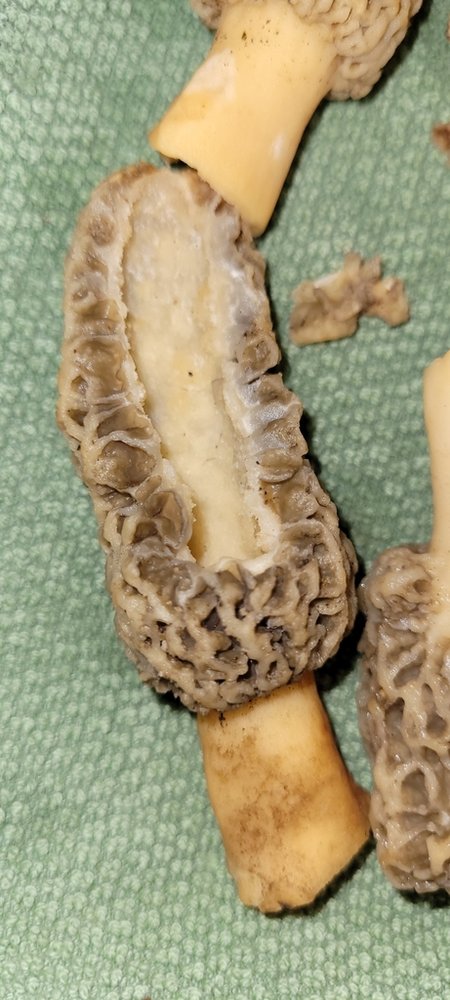
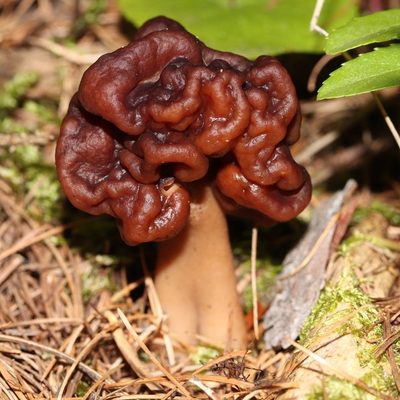
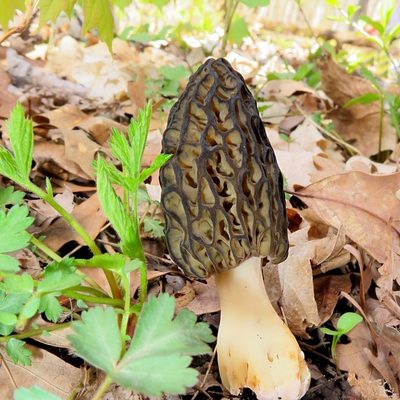
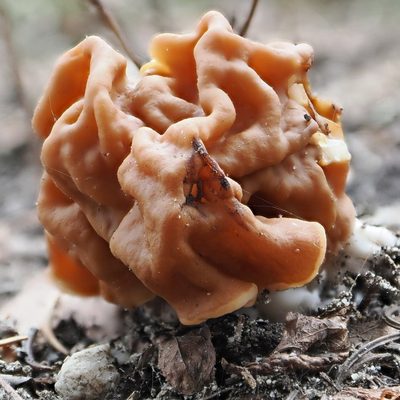
Look for a cap 2.5–11 cm (1–4¼ in) tall covered in pits and ridges, with the pits set at random rather than in rows. The ridges stay pale, whitish to yellowish, and never turn dark; young caps have gray-brown pits between pale ridges. The bottom edge of the cap joins the stem directly, with no groove, and the whitish stem is often swollen at the base. Cut one from top to bottom and the cap and stem form a single hollow chamber. False Morel, the dangerous lookalike, has a reddish brown, wrinkled, brain-like cap instead of pits, its cap is joined to the stem only at the top, and a cut one is chambered or stuffed with cottony tissue. Mountain False Morel has a wrinkled tan cap on a thick white stem and chambered flesh. Black Morel has ridges that turn dark brown to black and a small groove where the cap meets the stem. Verpas (Verpa) have a cap attached only at the very top of the stem, hanging free like a thimble, with cottony wisps inside; iNaturalist has no Black Hills records of them. Half-free morels have a cap attached about halfway up, with the lower part hanging free of the stem; iNaturalist has one research-grade record from Pennington County.
When can you find it?
May, in the Black Hills sometimes running to Memorial Day.
Where does it grow?
Under hardwoods, and occasionally under conifers. In the West it grows mostly in river bottoms with cottonwoods or under planted ash and apple trees; east of the Rockies it is common under dead or dying elms and under ash. All ten Black Hills records on iNaturalist (nine research grade, 2020–2024) fall between 3 and 23 May, in Lawrence County in the northern Hills and in Custer and Fall River counties in the southern Hills. Two Field Museum morel specimens from Lawrence County (June 1965) aren't named to species.
Other mushrooms to compare
Sources: Morchella esculentoides — MushroomExpert.com (Michael Kuo); The Morchellaceae: True Morels and Verpas, with key — MushroomExpert.com (Michael Kuo); Morchella angusticeps — MushroomExpert.com (Michael Kuo); Gyromitra esculenta — MushroomExpert.com (Michael Kuo); Gyromitra: The False Morels, with key — MushroomExpert.com (Michael Kuo); Gyromitra montana (Gyromitra gigas) — MushroomExpert.com (Michael Kuo); Verpa bohemica — MushroomExpert.com (Michael Kuo); Gyromitra esculenta, the false morel: Fungus of the Month, May 2002 — Tom Volk, University of Wisconsin-La Crosse; Morchella, the morel: Fungus of the Month, April 1997 — Tom Volk, University of Wisconsin-La Crosse; Mushroom Poisoning Syndromes — North American Mycological Association; Outbreak Linked to Morel Mushroom Exposure, Montana, 2023 — CDC Morbidity and Mortality Weekly Report 73(10), 2024; Hunhoff, The Art of Mushroom Hunting (2017, revised from 1993) — South Dakota Magazine; Culturally Important Plants of the Lakota (Black Elk and Flying By, Sitting Bull College, 1998), filed with the South Dakota PUC; NCBI Taxonomy record: Morchella americana, with synonym Morchella esculentoides — National Center for Biotechnology Information; iNaturalist: Morchella americana records in the Black Hills places (API query); iNaturalist: Verpa records in the Black Hills places, none found (API query); iNaturalist: Morchella punctipes within 100 km of the central Black Hills (API query); GBIF occurrence search: Morchella in South Dakota, including two Field Museum specimens from Lawrence County, 1965; Dirks et al. 2023, Gyromitrin has a limited distribution in the false morels — Mycologia 115(1) (University of Michigan copy); iNaturalist taxon record: Morchella americana, English names American yellow morel and white morel (API); Species Fungorum: Morchella esculentoides, a synonym of Morchella americana — Royal Botanic Gardens, Kew.