Hooded False Morel
Paragyromitra infula
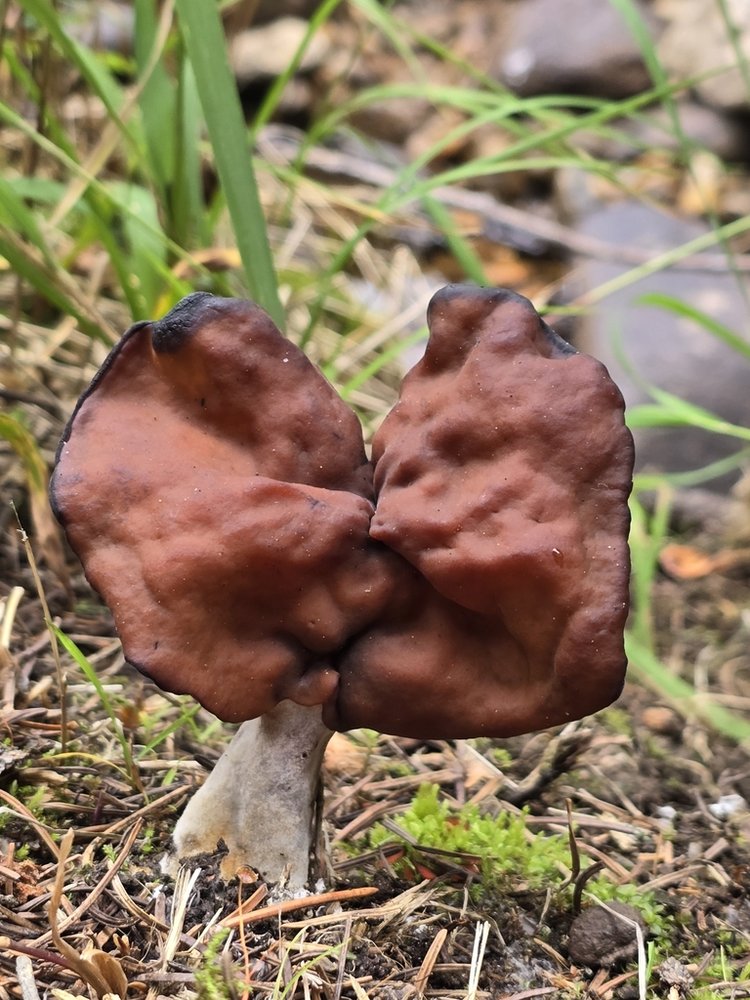
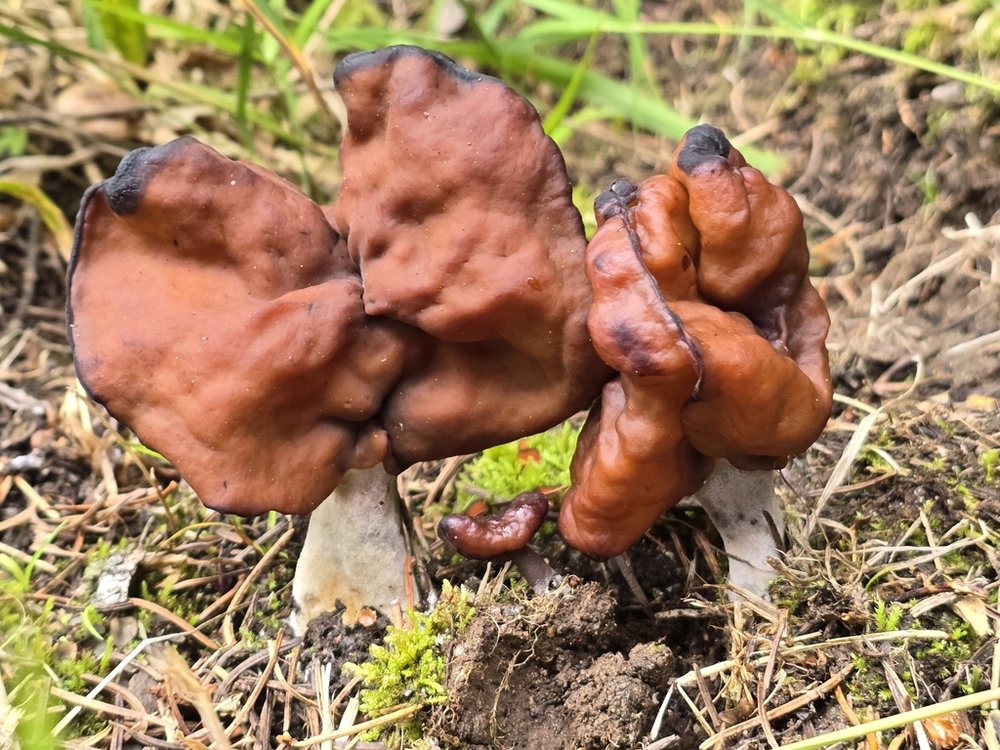
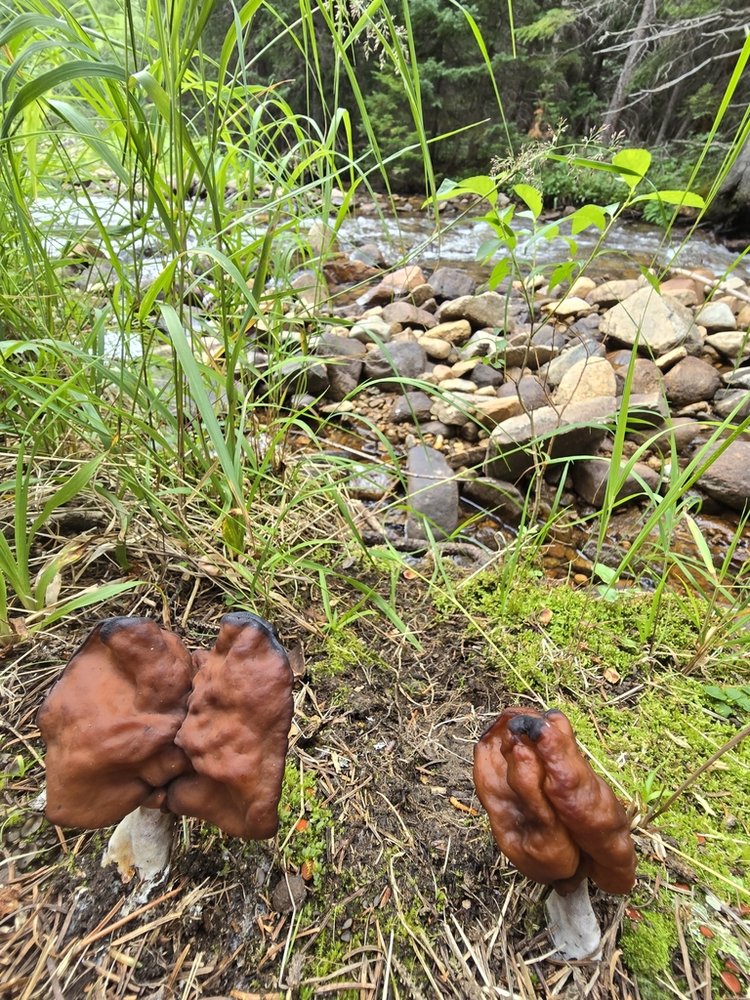
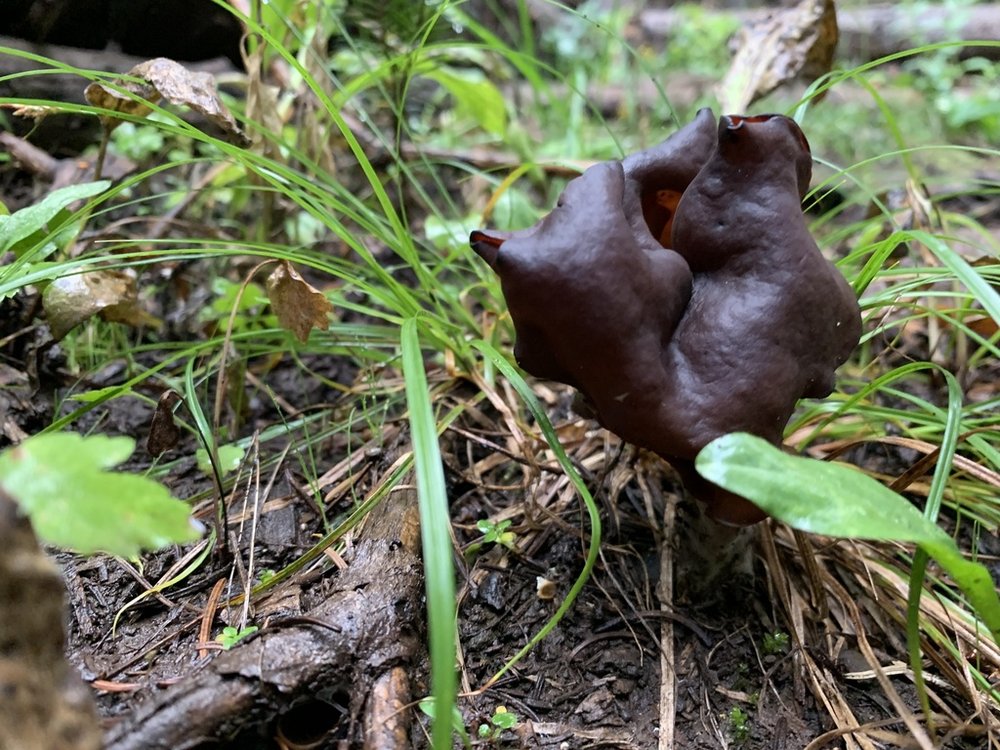
Hooded False Morel (Paragyromitra infula) is a late-summer and fall mushroom with a brown cap pinched into two lobes like a saddle, on a paler stem. iNaturalist has Black Hills records from July into September, in Custer, Lawrence and Pennington counties.
Free photos from other sources
| Family | Discinaceae · False morel |
|---|---|
| Type | False morel |
| Season | July into September, not in spring |
| Size | Cap 2–8 cm (¾–3 in) across, stem 2–12 cm (¾–4¾ in) long |
| Grows on | Well-rotted conifer wood, or soil near stumps |
| Also called | Saddle-shaped False Morel |
| Synonym | Gyromitra infula |
| Toxicity | Poisonous: the North American Mycological Association and a 2023 study of the family list it among the gyromitrin mushrooms; gyromitrin causes headache, vomiting and diarrhea and, in severe cases, damage to the liver, kidneys and red blood cells. |
| Eating | This guide doesn't say which mushrooms are safe to eat. |
How it lives
A saprobe: it feeds on dead wood and breaks down well-rotted conifer logs and stumps, sometimes coming up from the ground near stumps and woody debris.
How do you identify Hooded False Morel?
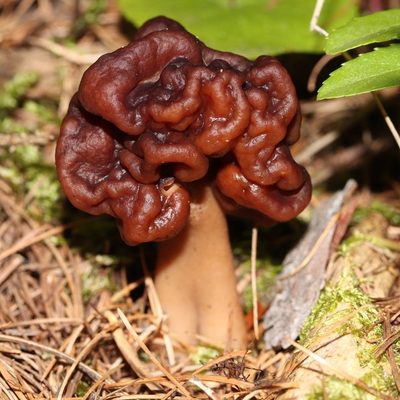
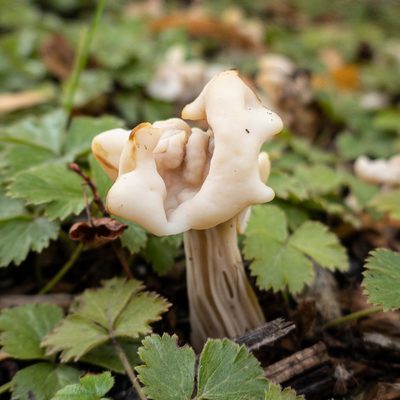
The cap is 2–8 cm (¾–3 in) across, usually pinched into two raised lobes like a saddle (rarely three or four), loosely wrinkled but usually not brain-like, and tan to reddish brown or dark brown. The underside is whitish to brownish. The stem is up to 12 cm (4¾ in) long, colored like the cap or paler, and not ribbed. It grows on well-rotted conifer wood or on the ground near stumps, in late summer and fall. False Morel, the deadly spring lookalike, has a reddish brown cap that is brain-like and wrinkled all over rather than two-lobed. White Saddle, which iNaturalist also records in the Hills in August, has a whitish to cream cap and a white stem deeply ribbed with pockets. True morels have pitted and ridged caps, come up in spring, and are hollow when cut lengthwise.
When can you find it?
July into September, not in spring.
Where does it grow?
On well-decayed conifer logs and stumps, or on the ground near stumps and woody debris; widespread in North America but most common in northern and mountain forests. In the Black Hills, iNaturalist has two research-grade records (August 2021 in Custer County and September 2022 in the national forest in Lawrence County) and two unconfirmed ones from July and August 2025 in Custer and Pennington counties. No published Black Hills source names it.
Other mushrooms to compare
Sources: Gyromitra infula — MushroomExpert.com (Michael Kuo); Gyromitra: The False Morels, with key — MushroomExpert.com (Michael Kuo); Gyromitra esculenta — MushroomExpert.com (Michael Kuo); Helvella crispa — MushroomExpert.com (Michael Kuo); The Morchellaceae: True Morels and Verpas, with key — MushroomExpert.com (Michael Kuo); Gyromitra esculenta, the false morel: Fungus of the Month, May 2002 — Tom Volk, University of Wisconsin-La Crosse; Mushroom Poisoning Syndromes — North American Mycological Association; Dirks et al. 2023, Gyromitrin has a limited distribution in the false morels — Mycologia 115(1) (University of Michigan copy); Wang et al. 2023, Phylogeny and Taxonomic Revision of the Family Discinaceae — Microbiology Spectrum 11(3); NCBI Taxonomy record: Paragyromitra infula, synonym Gyromitra infula — National Center for Biotechnology Information; iNaturalist: Paragyromitra infula records in the Black Hills places (API query); iNaturalist: Helvella crispa records in the Black Hills places (API query); iNaturalist: research-grade records by month within 500 km of the Black Hills, taxon 1613028 (API query).