White Saddle
Helvella crispa
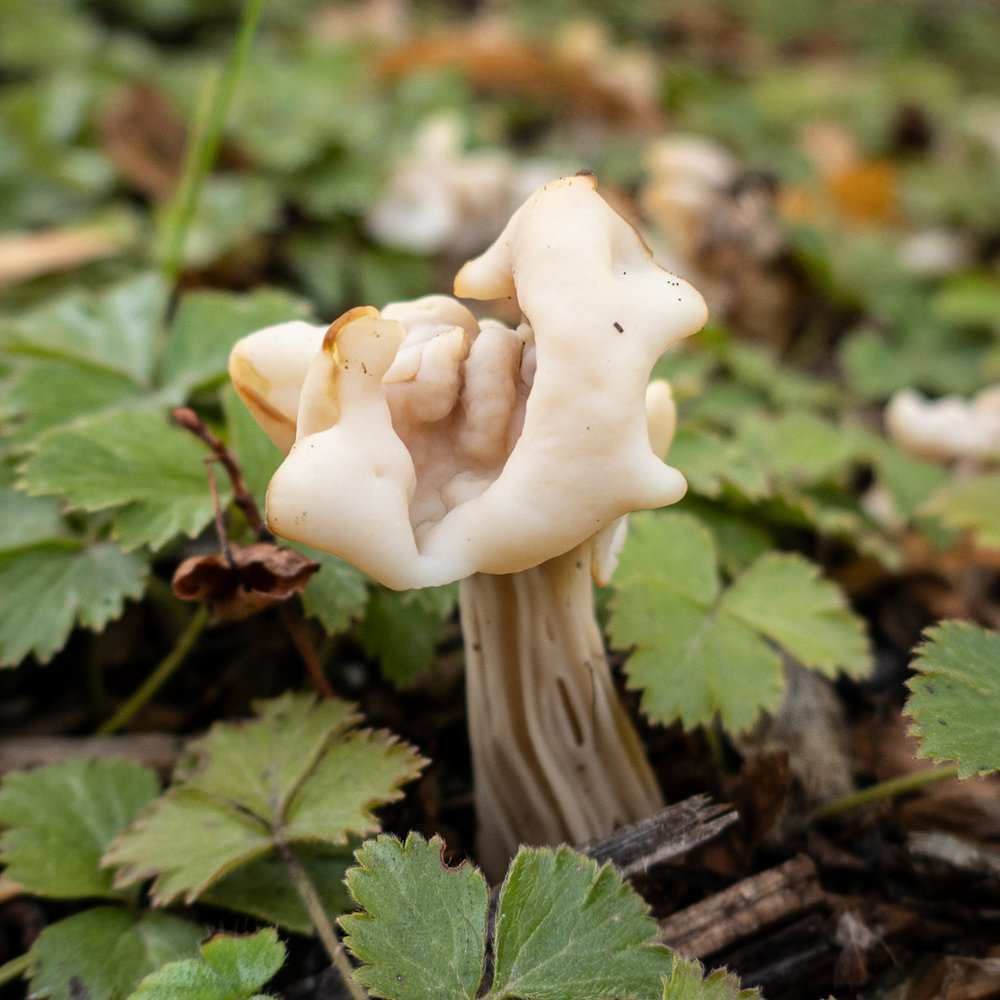
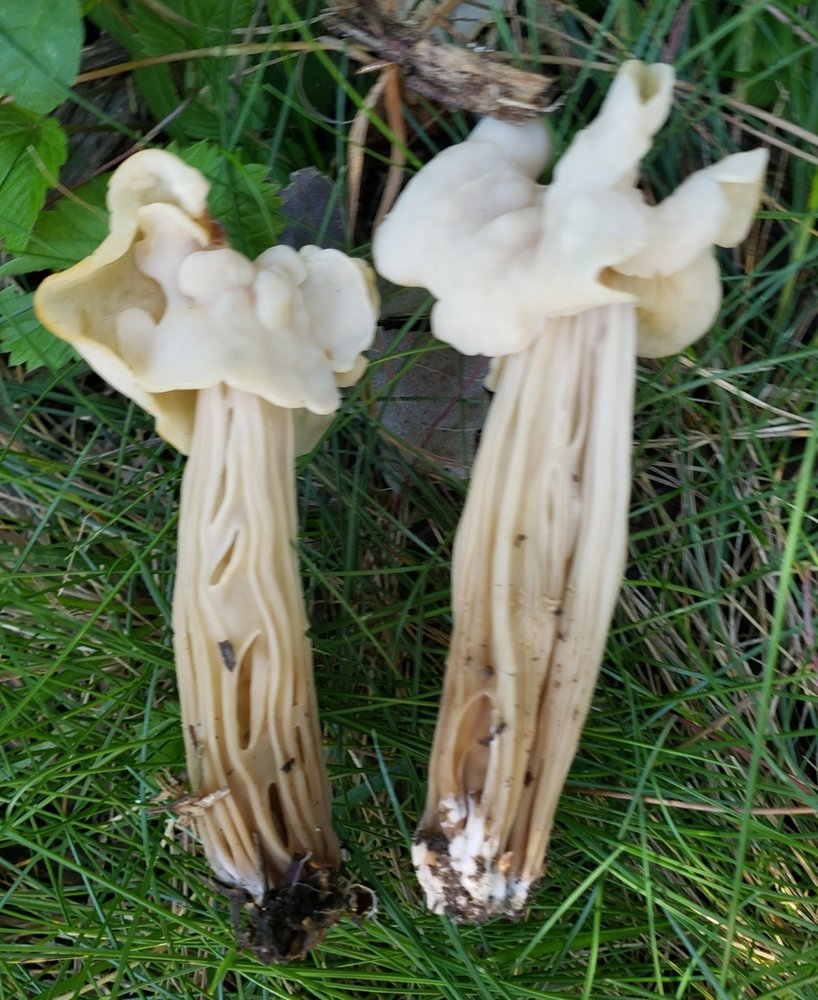
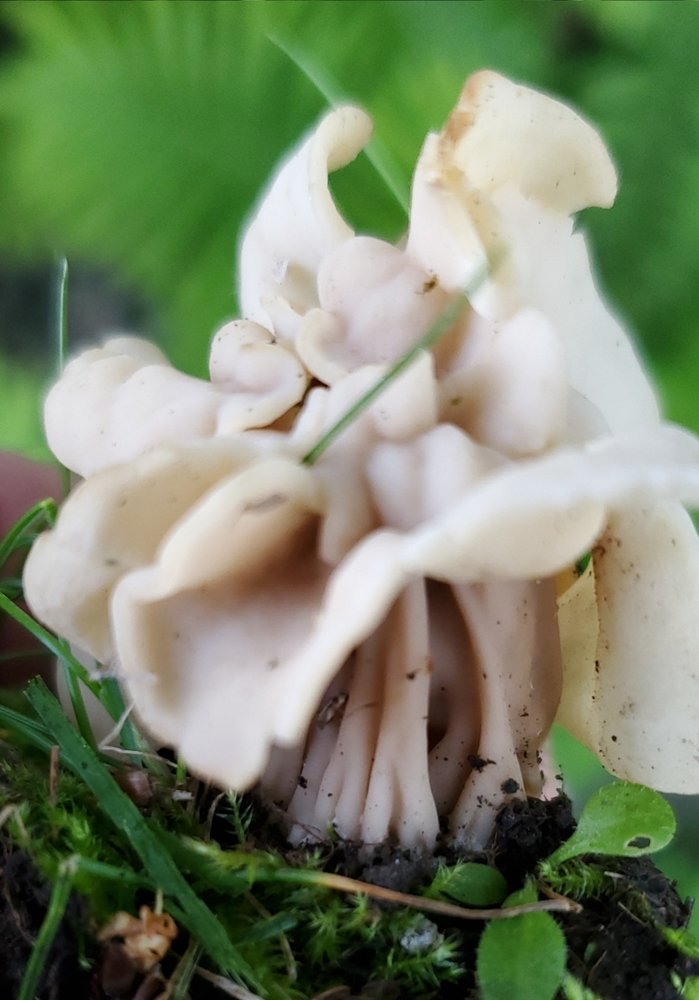
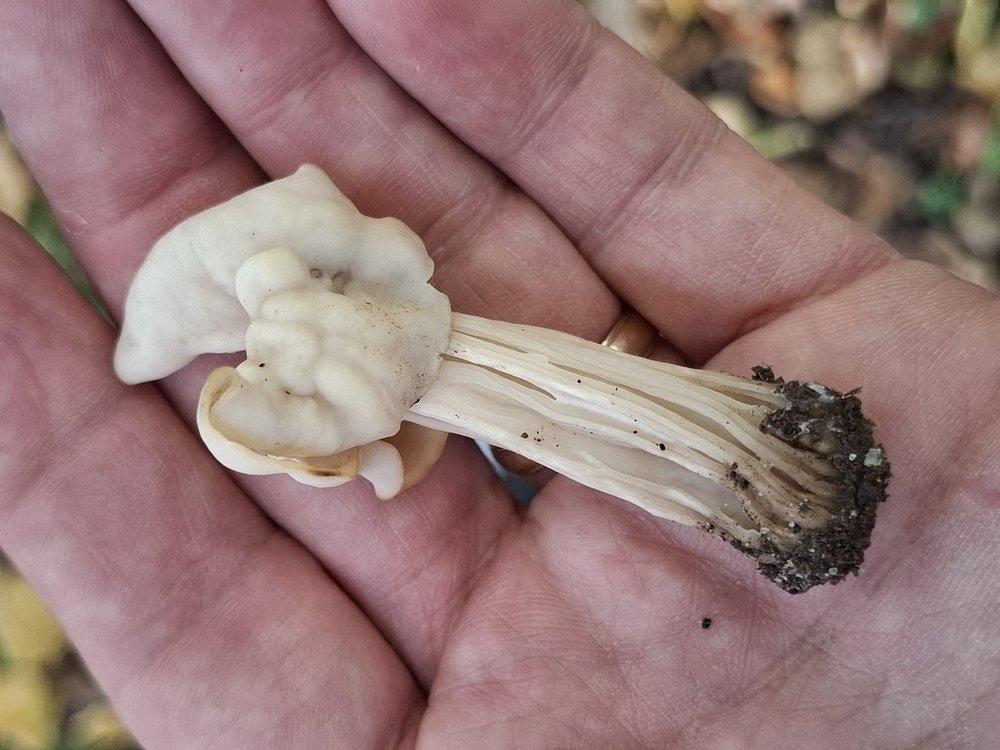
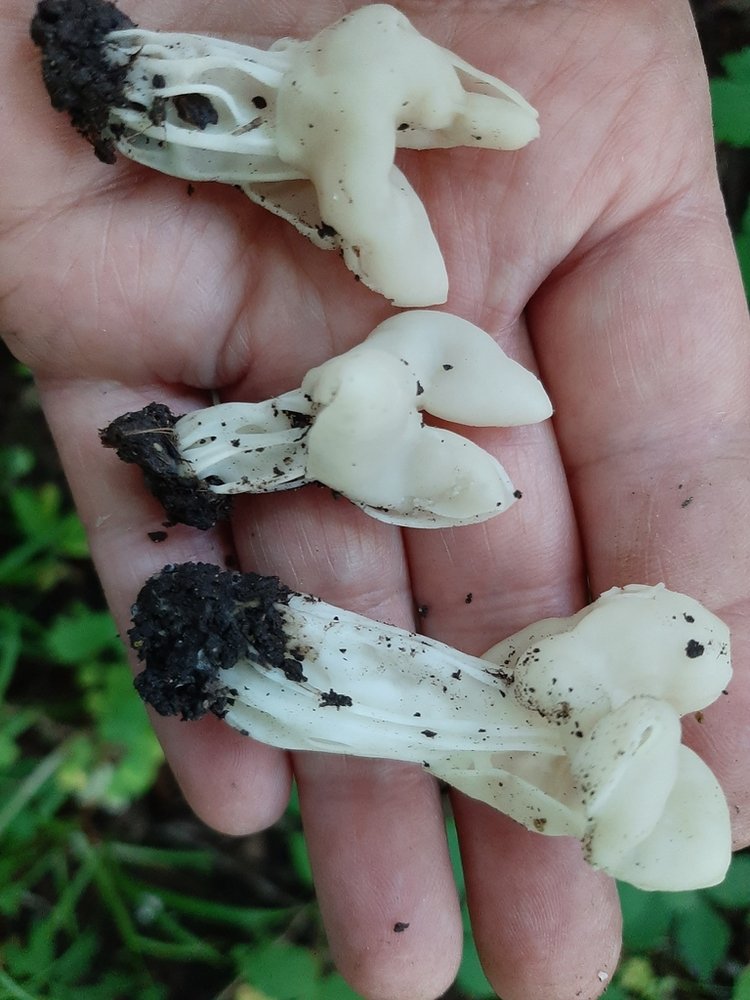
White Saddle (Helvella crispa) is a whitish to cream elfin saddle: a thin, curled cap folded into a saddle or a few lobes, on a white stem that is deeply ribbed and pocketed. It comes up from the ground or rotting wood in summer and fall, and iNaturalist's Black Hills records are from August, in the northern and central Hills.
Free photos from other sources
| Family | Helvellaceae · Elfin saddles |
|---|---|
| Type | Saddle fungus |
| Season | Summer and fall; the Black Hills iNaturalist records are from August |
| Size | Cap 1.5–7 cm (½–2¾ in) high and 1.5–4 cm (½–1½ in) wide, stem 3–12 cm (1¼–4¾ in) long |
| Grows on | Ground or rotting wood under conifers or broadleaf trees |
| Spore print | White |
| Toxicity | It has caused stomach upsets, and traces of gyromitrin, the poison in false morels, have been reported in it. |
| Eating | This guide doesn't say which mushrooms are safe to eat. |
How it lives
It may be mycorrhizal, meaning it trades nutrients with tree roots, but it also grows on rotting wood. It is a sac fungus (an ascomycete) in the order Pezizales, the same order as the false morels, and it forms its spores eight at a time in microscopic sacs.
How do you identify White Saddle?
Look for a thin, whitish to cream cap, 1.5–7 cm (½–2¾ in) tall, bent into a saddle or a few irregular lobes, with edges that often curl up and hang free of the stem. The underside is finely fuzzy under a hand lens. The white stem, 3–12 cm (1¼–4¾ in) long, is deeply ribbed, with cross-veins and pockets, and inside it the thin, brittle flesh is often chambered. The Hooded False Morel (Paragyromitra infula), which iNaturalist records in the Black Hills in the same late-summer season, also has a saddle-shaped cap, but it is tan to reddish or dark brown, and its stem is not ribbed. The False Morel (Gyromitra esculenta) comes up in spring, with a brain-like, reddish brown cap on a smooth, pale stem. Other pale elfin saddles differ in small ways: one has a cap edge fused to the stem, and a white form of the usually gray to black Helvella lacunosa has a bald underside.
When can you find it?
Summer and fall; the Black Hills iNaturalist records are from August.
Where does it grow?
On the ground or on rotting wood under conifers or broadleaf trees, often where the soil has been disturbed. iNaturalist has 3 research-grade Black Hills records, all from August 2025, in Lawrence and Pennington counties, and one was kept as a voucher specimen. No museum specimen from the Black Hills counties turned up, and no published Black Hills source names it.
Other mushrooms to compare
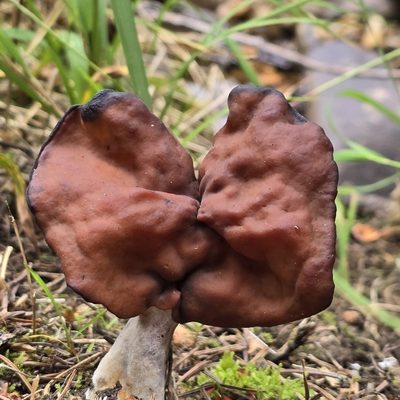
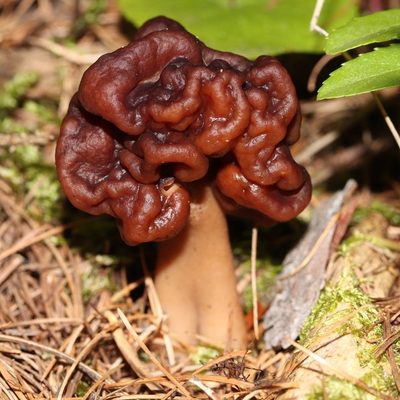
Sources: Helvella crispa (M. Kuo) — MushroomExpert.com; Gyromitra infula (M. Kuo) — MushroomExpert.com; Gyromitra esculenta (M. Kuo) — MushroomExpert.com; Toxic Fungi of Western North America: Gyromitrin group (T.J. Duffy) — MykoWeb; White Saddle, Helvella crispa — First Nature; Helvella crispa: synonymy — Species Fungorum (Royal Botanic Gardens, Kew); Gyromitra esculenta: synonymy — Species Fungorum (Royal Botanic Gardens, Kew); Helvella crispa in the Black Hills — iNaturalist; Elfin saddles and hooded false morels in the Black Hills — iNaturalist; Mushroom Poisoning Syndromes — North American Mycological Association; GBIF occurrence search: Helvella crispa in South Dakota (iNaturalist copies only, no specimens); GBIF occurrence search: Helvella crispa in Wyoming (specimens only from Fremont and Teton counties and the Cody area); iNaturalist: Helvella crispa research-grade records by month within 500 km of the Black Hills (API query).