Red-osier Dogwood Cornus sericea
Also called Red Willow, American Dogwood, Redstem Dogwood, Creek Dogwood, čhaŋšáša (Lakota)
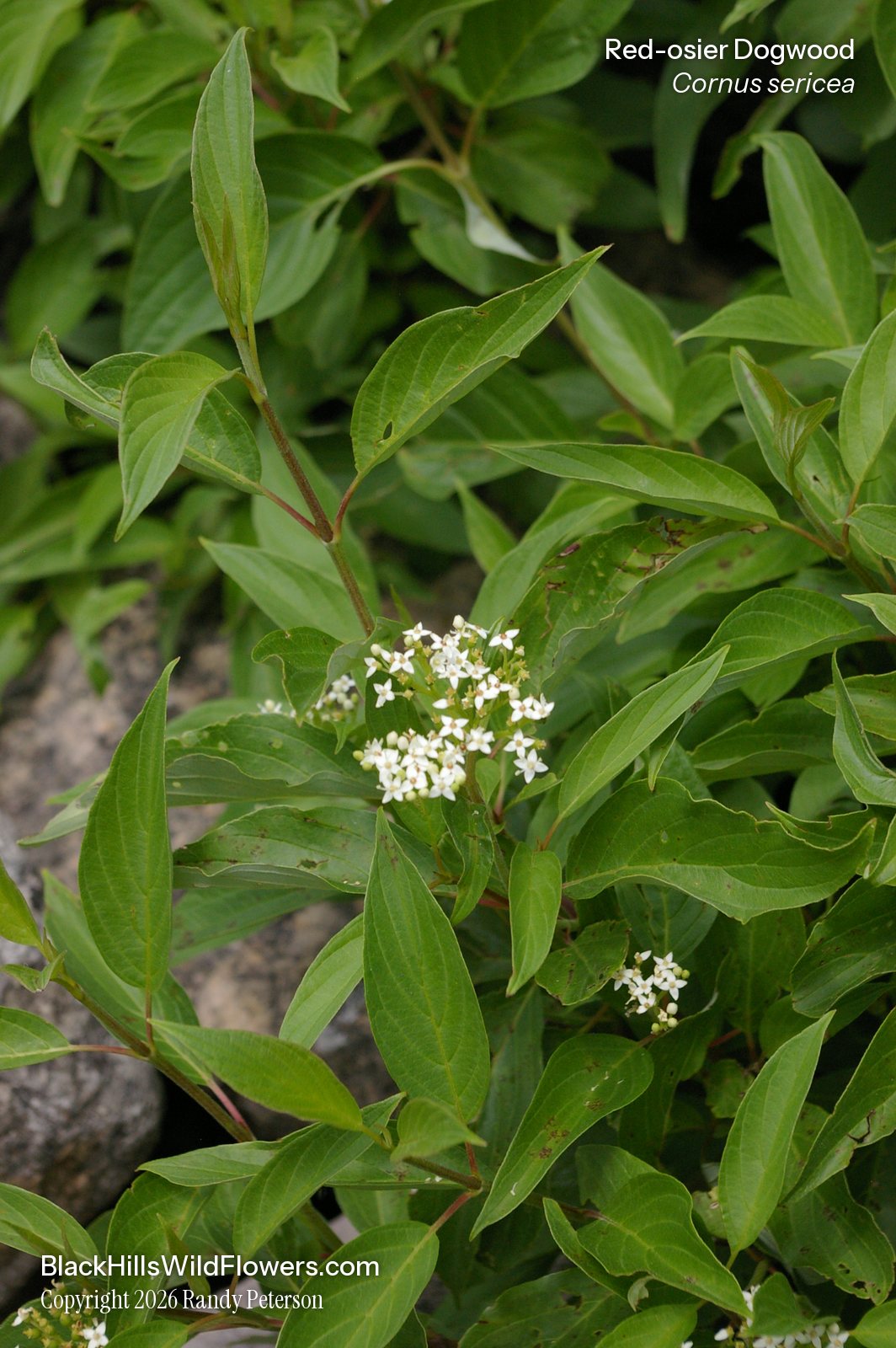
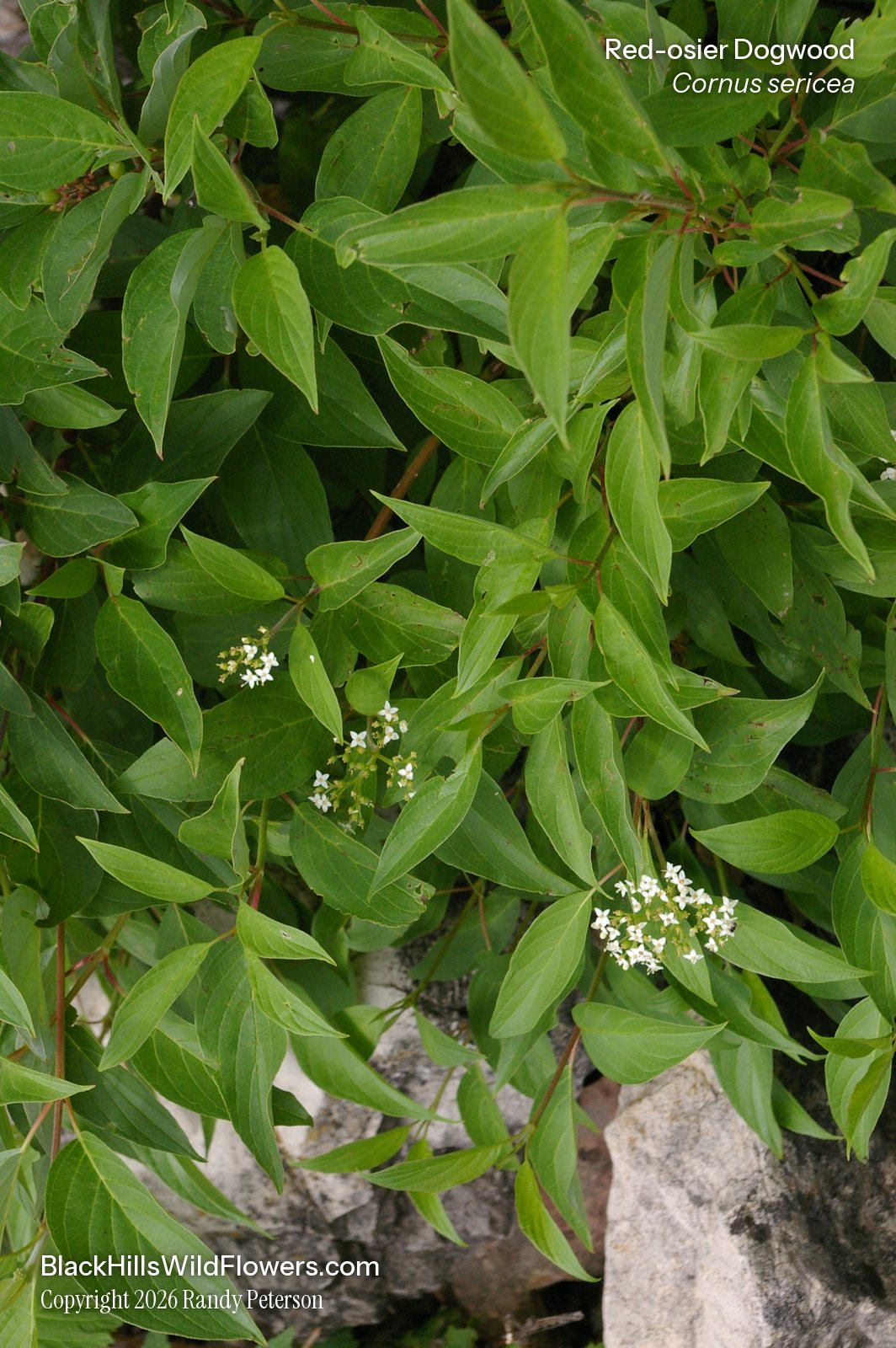
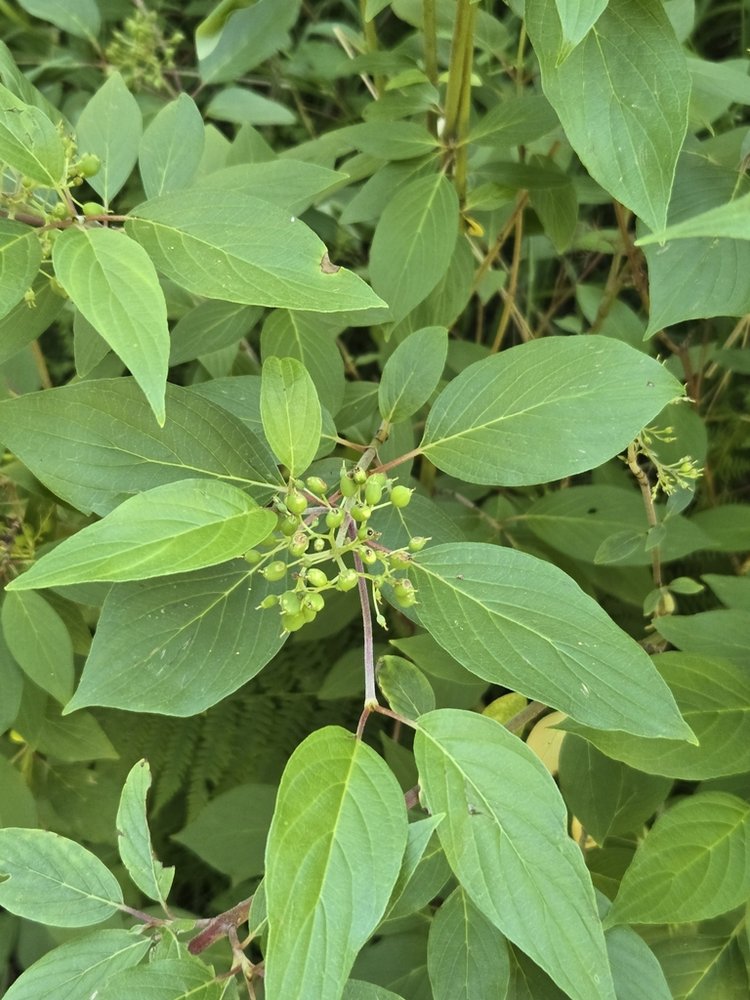
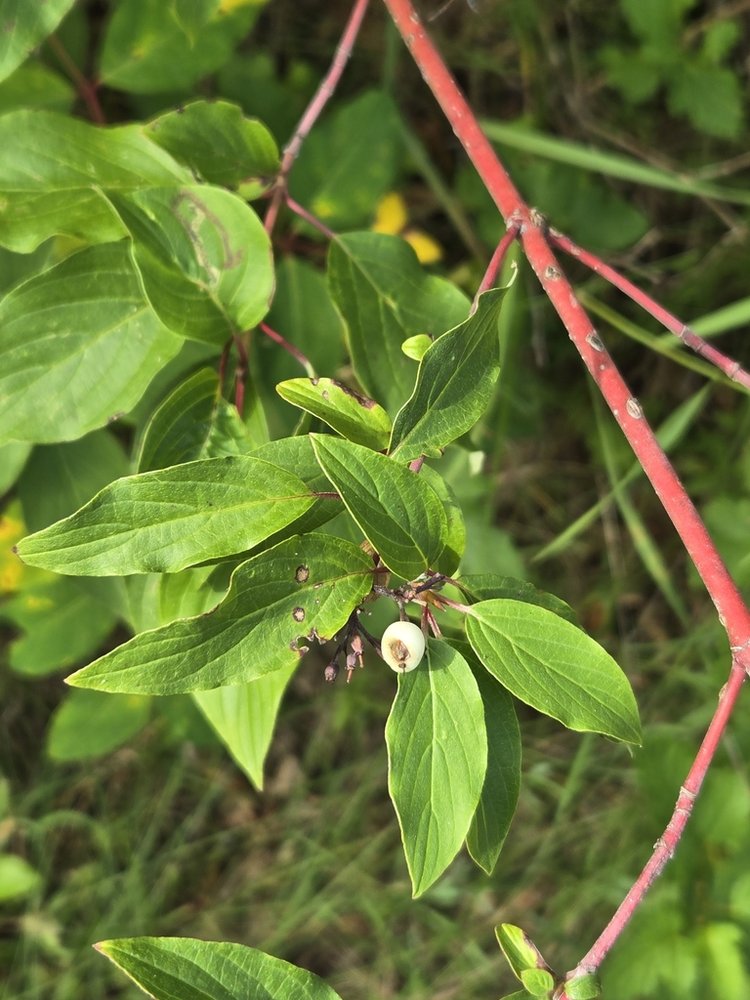
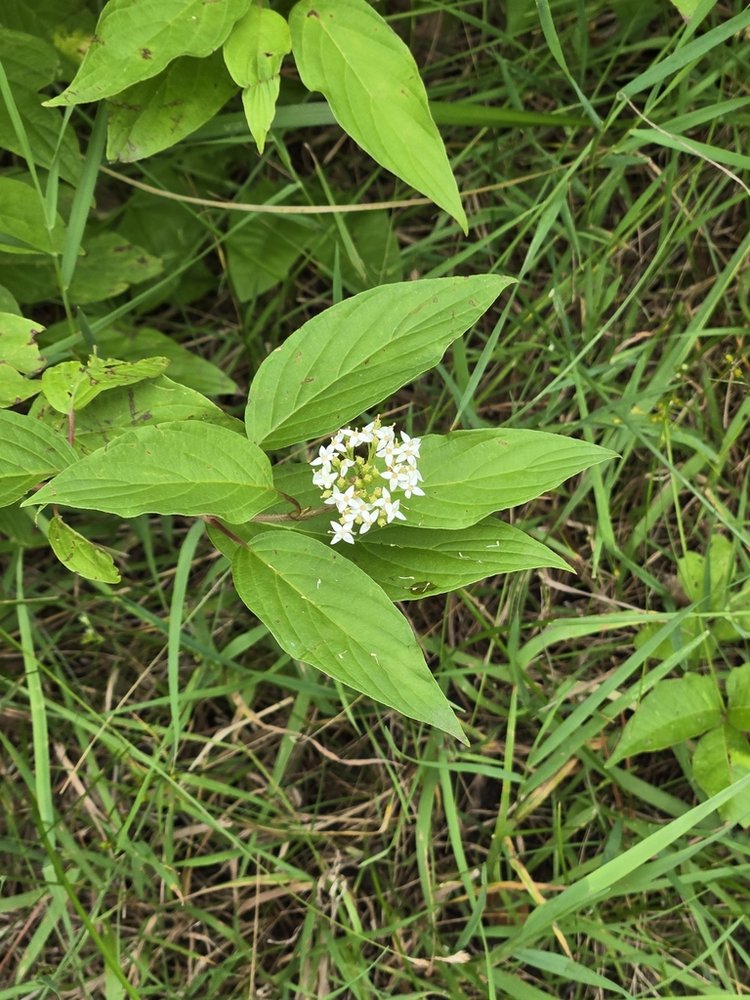
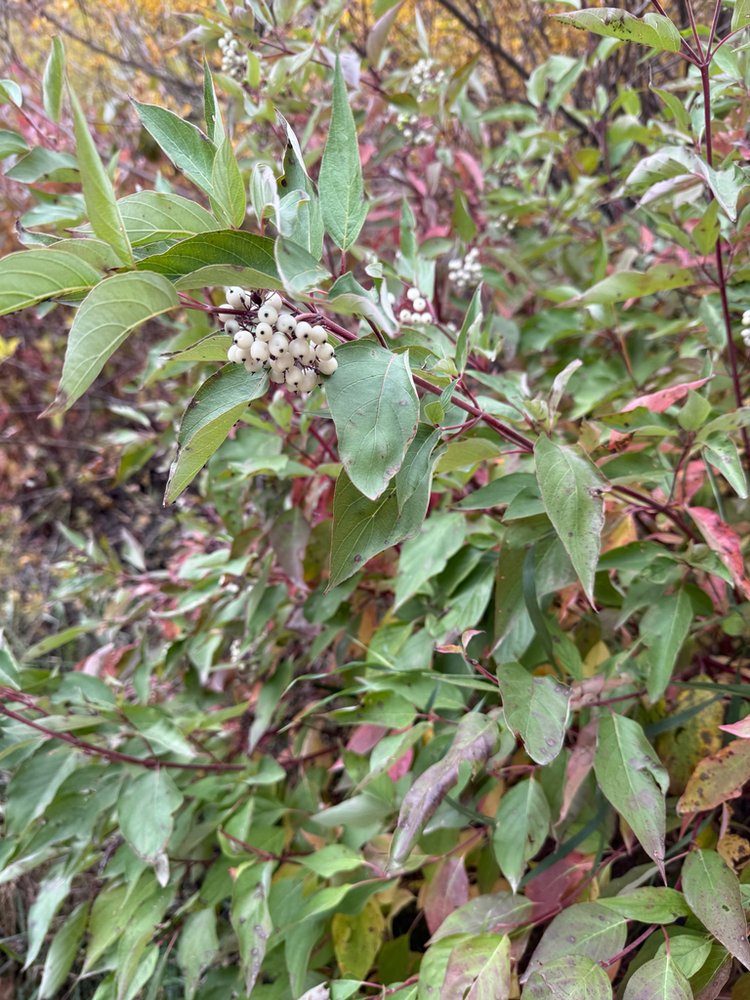
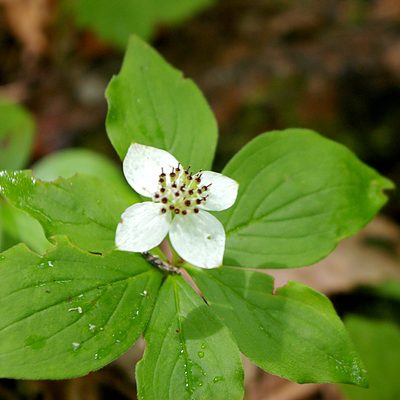
Red-osier Dogwood (Cornus sericea) is a native shrub 1–4 m (3–13 ft) tall whose bright red to maroon twigs make it easy to spot along creeks and springs in the Black Hills, where the National Park Service lists it at Wind Cave, Jewel Cave, Mount Rushmore and Devils Tower. Flat-topped clusters of small, four-petaled cream-white flowers open in June and July, and white berries follow in late summer. Its opposite, toothless leaves carry 5 to 7 pairs of veins that curve toward the tip, the mark of a dogwood. Photographed in the Black Hills.
Free photos from other sources
| Family | Cornaceae · Dogwood |
|---|---|
| Status | Native deciduous shrub |
| Blooms | June into July, sometimes again in late summer |
| Height | 1–4 m (3–13 ft) |
| Where | Creek banks and floodplains, wet meadows, springs and seeps, lake shores, and moist spruce, birch and pine canyons |
| Also called | Red Willow, American Dogwood, Redstem Dogwood, Creek Dogwood, čhaŋšáša (Lakota) |
| Synonym | Cornus stolonifera, Cornus alba subsp. stolonifera, Cornus instolonea, Swida stolonifera, Swida sericea |
| Traditional use | Black Elk and Flying By's 1998 Culturally Important Plants of the Lakota says that in the coldest months the Lakota gather the stems, peel off the bright red outer bark and keep the pale layer just beneath it, which dries to reddish brown; this čhaŋšáša is used in ceremonial pipe smoking and is considered a very sacred plant. The USDA plant guide adds that the Dakota, Cheyenne, Omaha and Ponca used the inner bark in a smoking mixture for the sacred pipe. |
| Note | The names red willow and čhaŋšáša are used for this shrub, which is a dogwood, not a willow. Bunchberry, the guide's other dogwood, has its own page. |
Roots, seeds & germination
Root: There are no rhizomes, and despite the old name Cornus stolonifera the shrub is not truly stoloniferous: the stems grow in a clump, and a branch that arches to the ground now and then roots where it touches, which is how it builds thickets. One study describes it as having no taproot. It sprouts from the root crown after cutting, and in a Minnesota study survived six straight years of cutting.
Seed: Each white berry holds one furrowed stone, with 10 to 30 berries to a cluster, ripe from August into October. Plants start setting seed at about 3 to 4 years, with good crops often 1 to 2 years apart. Birds and mammals spread the seed; 95 kinds of birds eat the fruit in New England, and seed that passed through pheasants and black bears sprouted as well as or better than uneaten seed. Few seeds last in forest soil, but dried seed kept sealed at 3–5 °C stayed alive 2 to 4 years.
Germination: Cold, moist storage breaks the dormancy: seed held 120 to 160 days at 3–5 °C (37–41 °F) and then warmed to 20–30 °C sprouted 80 to 90 percent within four weeks, and a sulfuric-acid soak before the cold period roughly doubled germination over cold alone. The USDA plant guide says fall sowing of fresh seed, covered with 0.6–1.25 cm (¼–½ in) of soil, gives the best results, and that the shrub starts easily from hardwood cuttings, layering and divided suckers.
How do you identify Red-osier Dogwood?
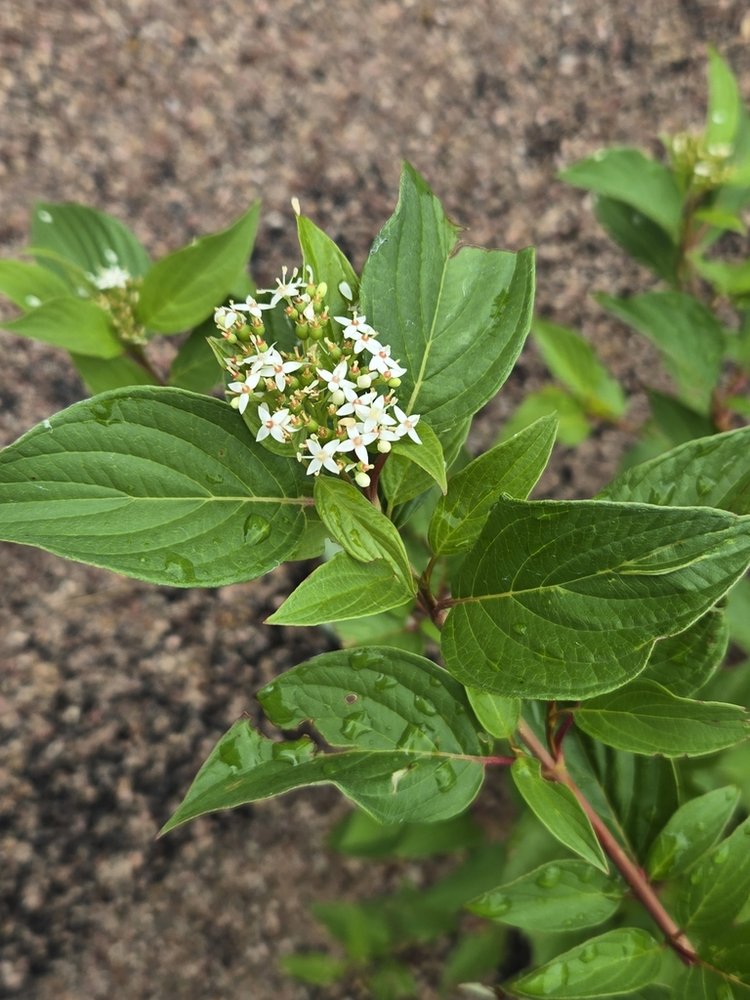
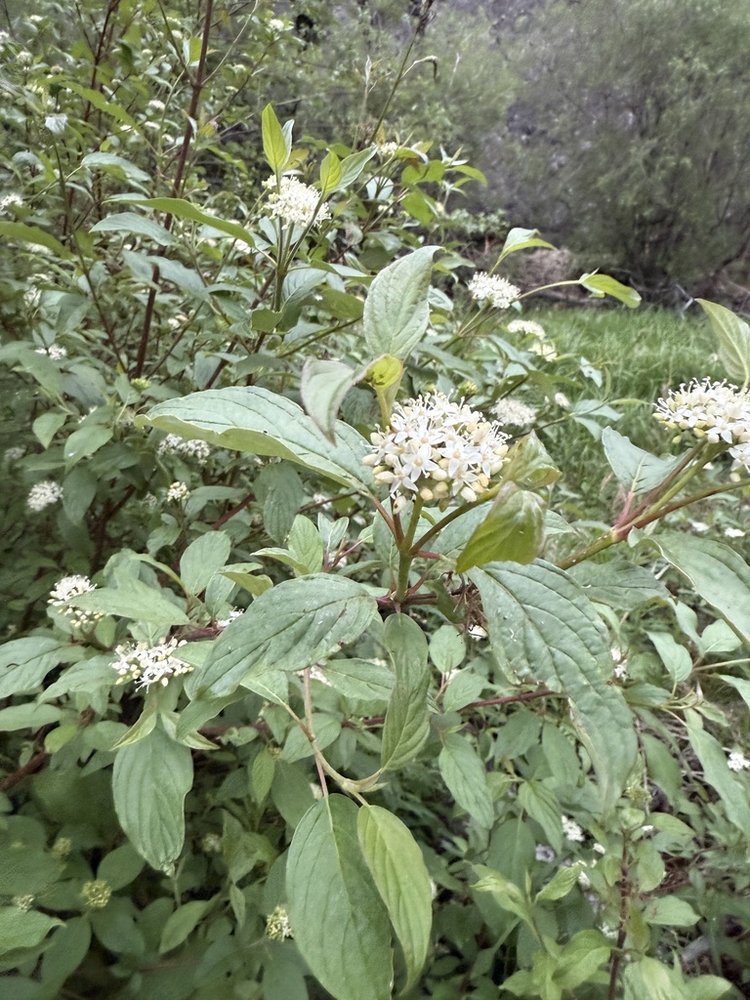
Look first at the twigs: smooth, shiny and bright red to maroon, flecked with pale raised dots (lenticels) on last year's wood, with white pith inside, reddest from fall to late spring. Older bark is yellow to red and loosely warty, going roughish gray at the base. The leaves are opposite, 3.5–20 cm (1½–8 in) long, lance- to egg-shaped with a pointed tip and no teeth, dark green above and whitish beneath with flattened hairs, and their 5 to 7 side veins per side curve toward the tip. Flat-topped clusters 3–6 cm (1–2½ in) across of cream-white flowers, each with 4 narrow petals 2.5–4 mm long and 4 stamens standing above them, open in June and July at the branch tips, and the round white berries that follow are 6–10 mm across on stalks that turn maroon, each with one stone furrowed on the sides.
When does it bloom?
June into July, sometimes again in late summer.
Where does it grow?
Creek banks and floodplains, wet meadows, springs and seeps, lake shores and the moist bottoms of spruce, birch and pine canyons, from about 1,220 to 1,950 m (4,000–6,400 ft) on herbarium labels. The National Park Service lists it at all four Black Hills parks, the 1986 Jewel Cave plant survey records it as Cornus stolonifera, and more than 150 herbarium specimens come from Lawrence, Pennington, Custer, Meade and Fall River counties in South Dakota and Crook and Weston counties in Wyoming. The Fire Effects Information System cites an unpublished Wind Cave survey suggesting that heavy browsing by hoofed animals has pushed it into hard-to-reach, out-of-the-way spots in the park.
Other dogwoods in this guide
Sources: Flora of North America Vol. 12: Cornus sericea (Z. E. Murrell and D. B. Poindexter), eFloras; USDA Forest Service Fire Effects Information System: Cornus sericea (Gucker 2012); USDA NRCS Plant Guide: Redosier Dogwood, Cornus sericea (Mohlenbrock); USDA PLANTS Database: Cornus sericea (COSE16); Minnesota Wildflowers: Cornus sericea (Red-osier Dogwood); Marriott and Hartman 1986, A Survey of the Vegetation of Jewel Cave National Monument; NPSpecies checklist, Wind Cave National Park vascular plants; NPSpecies checklist, Jewel Cave National Monument vascular plants; NPSpecies checklist, Mount Rushmore National Memorial vascular plants; NPSpecies checklist, Devils Tower National Monument vascular plants; GBIF occurrence search: Cornus sericea, South Dakota and Wyoming herbarium specimens; iNaturalist: research-grade Cornus sericea observations in the Black Hills; Culturally Important Plants of the Lakota (Black Elk and Flying By, 1998), entry 87, filed with the South Dakota PUC.