Hooded Tube Lichen Hypogymnia physodes
Also called Monk's-hood Lichen, Puffed Lichen
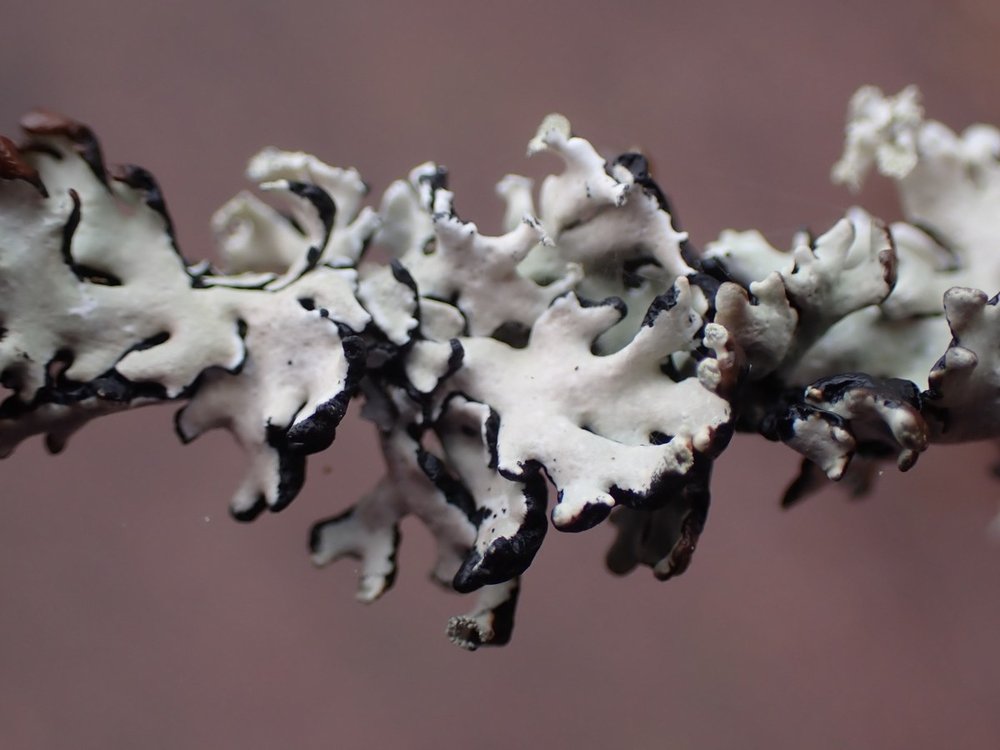
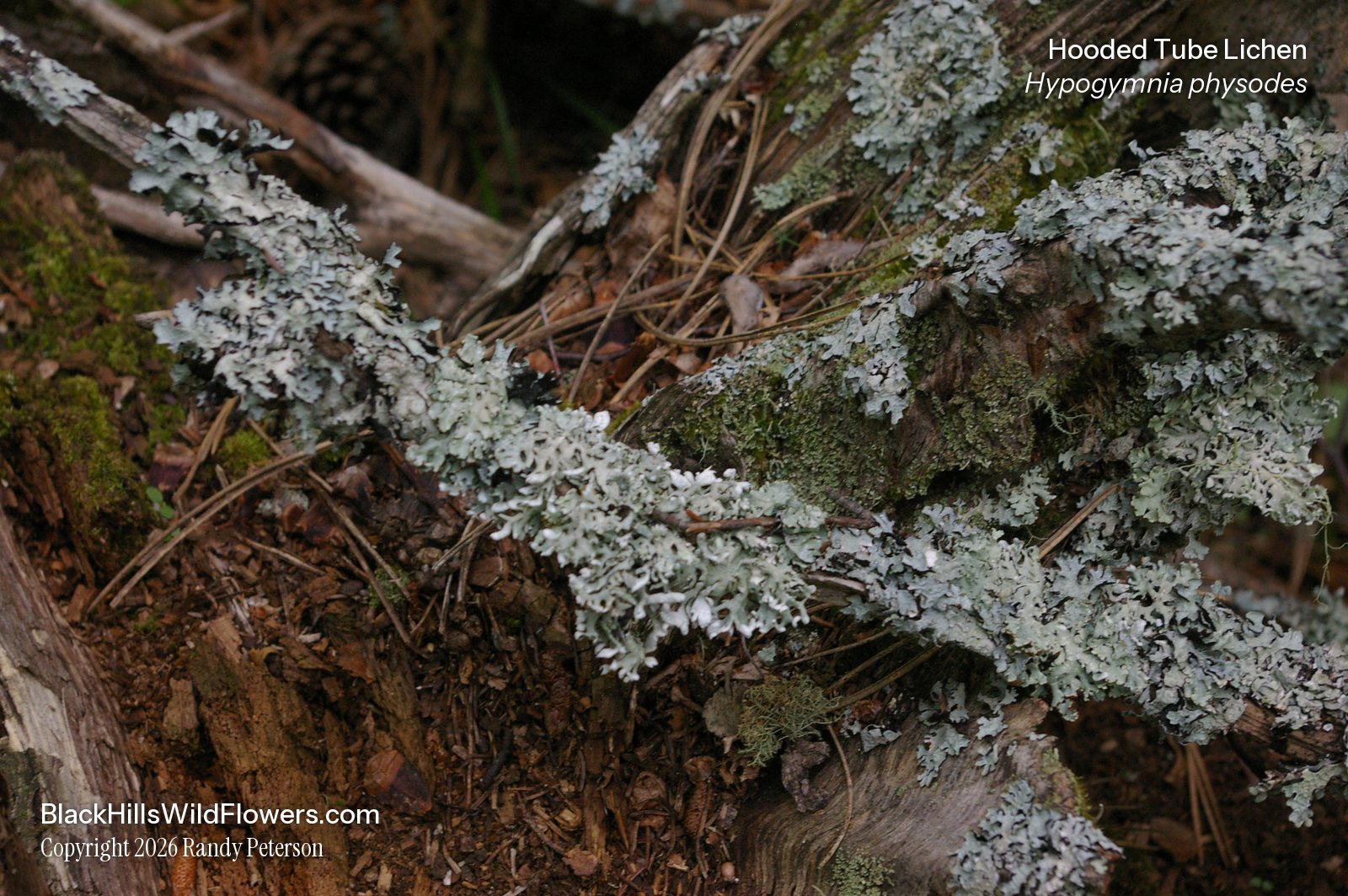
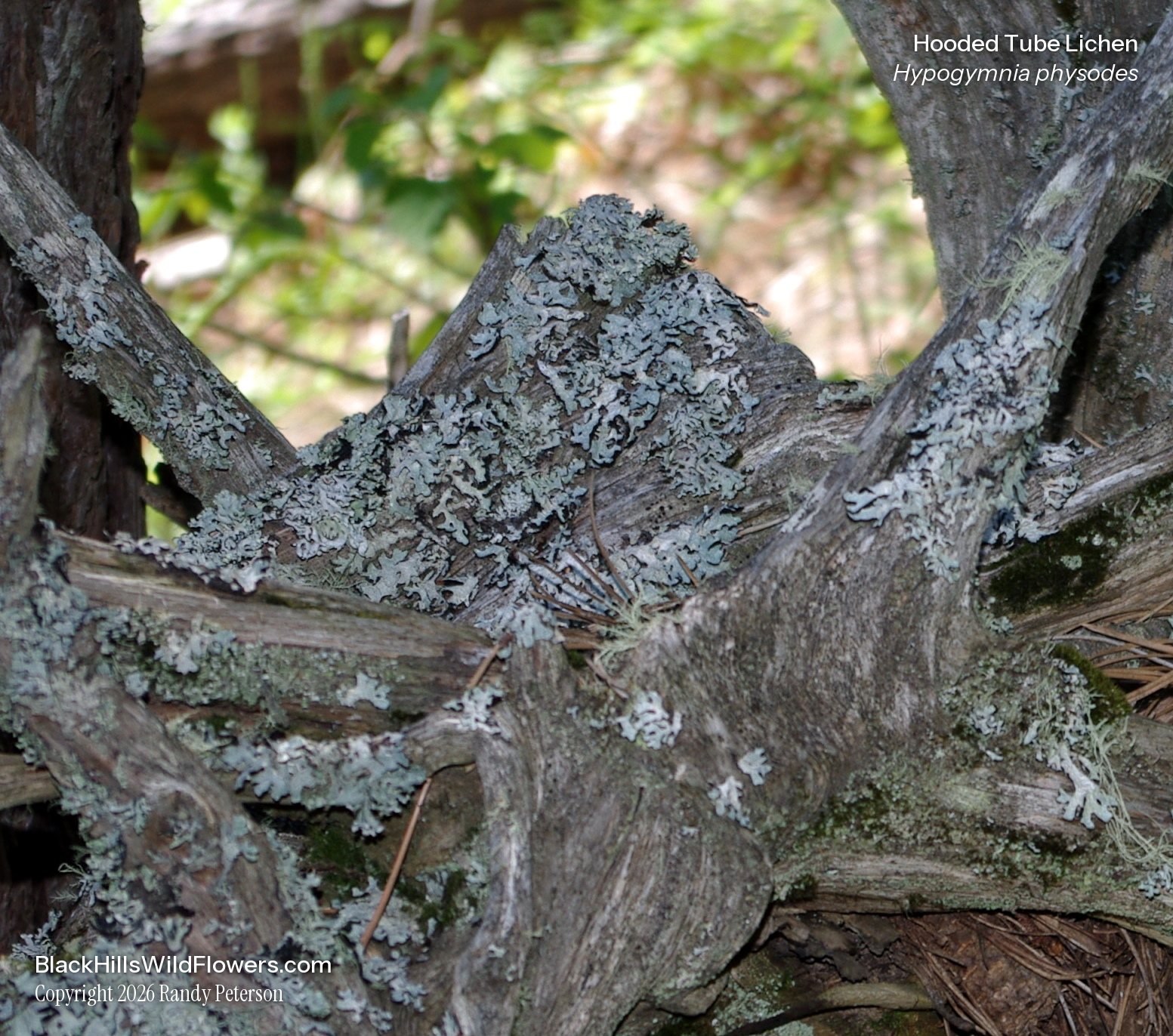
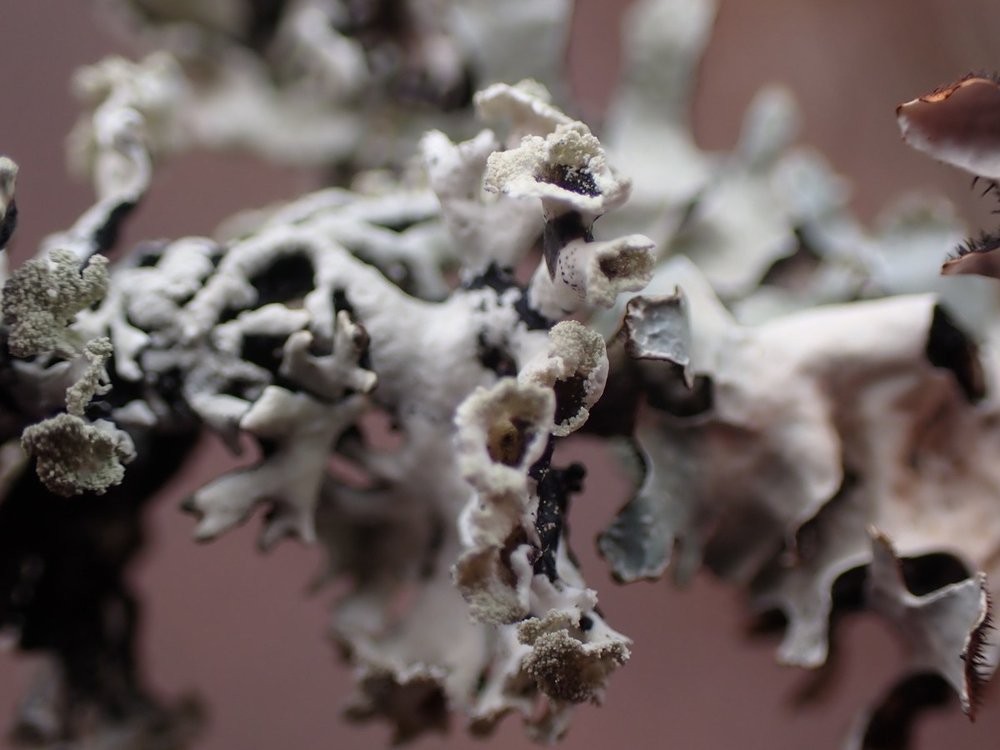
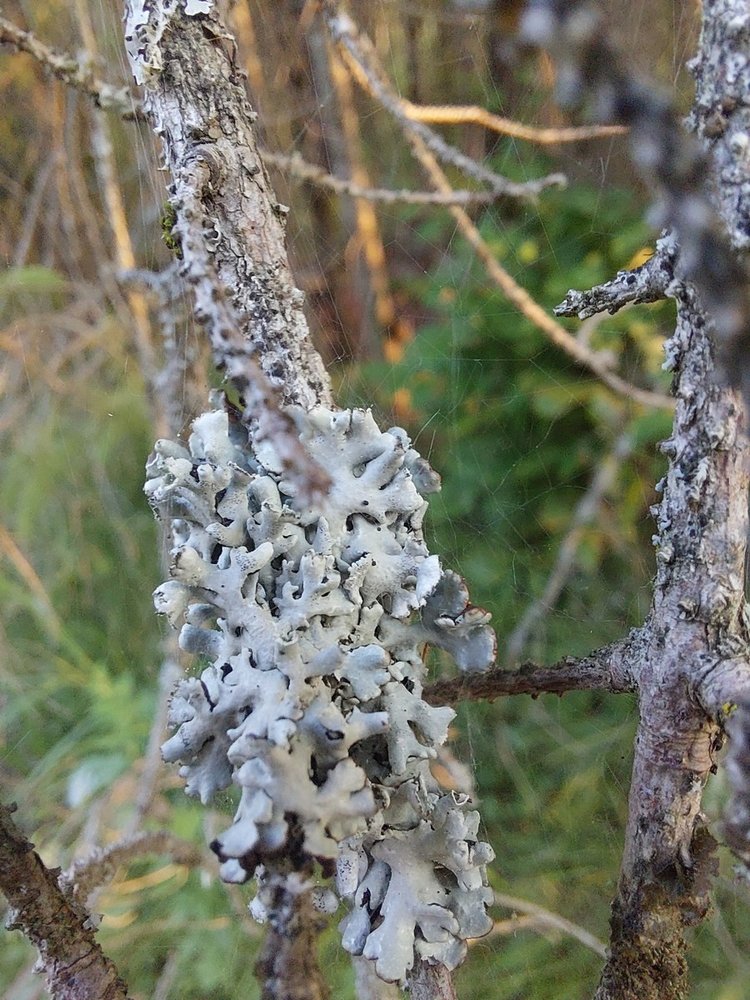
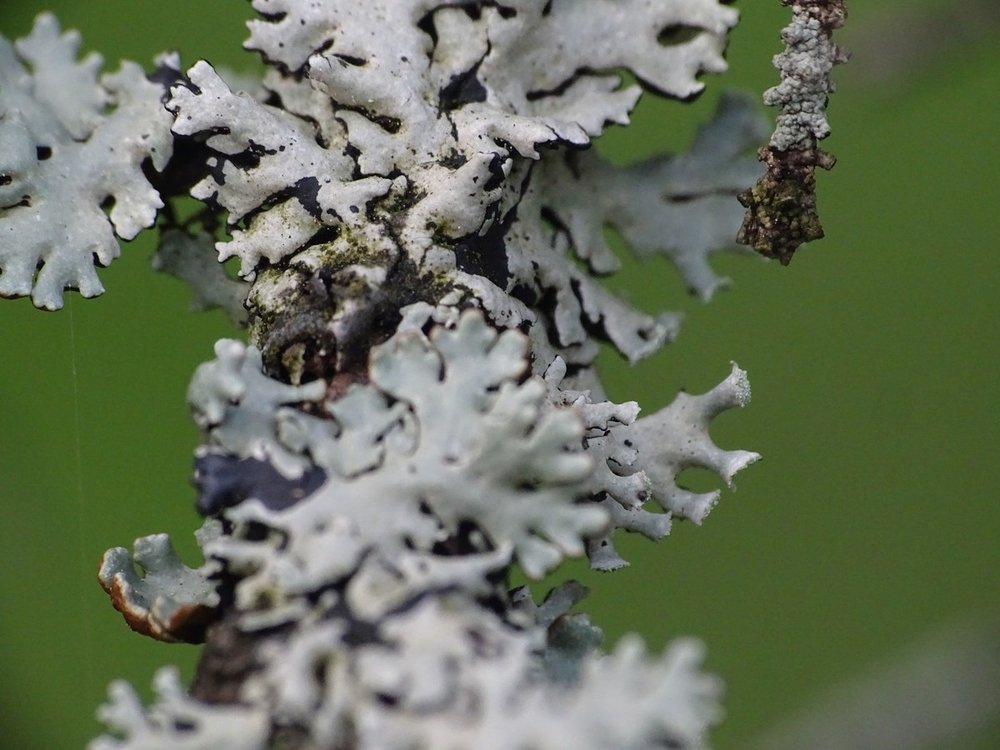
Hooded Tube Lichen (Hypogymnia physodes) is a pale gray-green leafy lichen whose narrow lobes are hollow like little tubes, with tips that burst open into lip-shaped hoods full of powdery granules. It grows on tree bark and old wood, mostly of conifers, and herbarium specimens collected from 1940 to 1997 record it across the Black Hills of South Dakota and Wyoming. Photographed in the Black Hills.
Free photos from other sources
| Family | Parmeliaceae · Shield lichen |
|---|---|
| Status | Native lichen |
| Blooms | Never flowers; spreads by soredia from lip-shaped lobe tips |
| Size | Up to 6 cm (2½ in) across, rarely 8 cm (3 in) |
| Where | Bark and wood, mostly of conifers; rarely moss, soil or rock |
| Also called | Monk's-hood Lichen, Puffed Lichen |
| Synonym | Parmelia physodes, Lichen physodes |
| Traditional use | Moerman's ethnobotany database (BRIT), under the old name Parmelia physodes, records that the Potawatomi cooked it into vegetable soup, where it swelled and gave the soup a pleasant flavor (Smith 1933). |
Roots, seeds & germination
Seed: No seeds. Spore cups (apothecia) are rare (Nova Scotia guide; Consortium of Lichen Herbaria). The lichen spreads by soredia, the powdery granules that form inside the lip-shaped tips of the lobes.
How do you identify Hooded Tube Lichen?
Look for a leafy (foliose) lichen that is pale greenish gray and smooth above, with narrow lobes that are hollow and tube-like, usually ascending and fanning out at the tips. The lobe tips are mostly 1–2.5 mm (1/25–1/10 in) wide and can broaden to 5 mm (1/5 in) (Nova Scotia guide), and the upper surface has few or no dark mottles (Consortium of Lichen Herbaria). The underside of a tip bursts open into a lip- or hood-shaped opening full of coarse, powdery granules called soredia (a few algae cells wrapped in fungus threads, which break off and spread the lichen). Flip a lobe over: the lower surface is black with no rhizines, the root-like threads many leafy lichens use to hold on (Nova Scotia guide; Ohio Moss and Lichen Association). The Nova Scotia guide calls the hooded tips the easy mark, but warns that some patches carry almost no soredia, so check several lobes for one or two hooded tips. Spore cups (apothecia) are rare. Five similar lichens have herbarium specimens from the Black Hills (GBIF). The Nova Scotia guide's key separates two of them. Hammered Shield Lichen (Parmelia sulcata) is blue-gray, with thin, solid lobes 2–5 mm (1/12–1/5 in) wide marked by a network of sharp ridges and dips like hammered metal, powdery soredia along the ridges and edges, and a black underside with bottle-brush rhizines. Hooded Rosette Lichen (Physcia adscendens) also has hollow, hooded lobe tips full of soredia, but its lobes are mostly under 1 mm (1/25 in) broad, with long white hairs along the edges, and its underside is white. The other three are tube lichens, which the Consortium of Lichen Herbaria describes: Hypogymnia tubulosa has upright, separate lobes whose tips are coated with a head-shaped cluster of soredia; H. austerodes is greenish gray to brown, often with dark mottles, and carries its soredia mainly on the upper surface of the lobes; and H. bitteri, also greenish gray to brown, is best told by short, narrow, upturned side lobes tipped with small clusters of soredia.
When does it bloom?
Never flowers; spreads by soredia from lip-shaped lobe tips.
Where does it grow?
It grows on bark and wood, mostly of conifers, and rarely on moss, soil or rock (Nova Scotia guide; Consortium of Lichen Herbaria). The Nova Scotia guide calls it one of the most common tree lichens in the conifer forests of North America, and the Consortium describes a widespread generalist found throughout northern North America and south along the Rocky Mountains. GBIF lists 94 herbarium specimens from the Black Hills, most of them collected by Clifford Wetmore in 1960 and 1961; the dated ones run from 1940 to 1997. They come from Lawrence, Custer, Pennington, Meade and Fall River counties in South Dakota and Crook and Weston counties in Wyoming, with labels such as Custer State Park, Wind Cave National Park and Black Hills National Forest. Most labels that give an elevation fall between about 1,300 and 1,970 m (4,300–6,450 ft), and the habitats they name include ponderosa pine forest, some with bur oak and paper birch; spruce, pine, birch and aspen forest; mixed pine woods; open pine forest among rock outcrops; and north-facing slopes. The Black Hills National Forest's 2023 at-risk assessment names five other lichens but not this one, and South Dakota's rare plant list includes no lichens.
Shield lichen family (Parmeliaceae): 2 other plants in this guide
Sources: Identifying Lichens of Nova Scotia (Brodo, Cameron, Andrachuk and Craig; text from Lichens of North America, Brodo, Sharnoff and Sharnoff 2001): Hypogymnia physodes, Parmelia sulcata, Physcia adscendens, glossary and key; Consortium of Lichen Herbaria: Hypogymnia physodes (description from Lichen Flora of the Greater Sonoran Desert Region, Nash et al. 2002); Consortium of Lichen Herbaria: Hypogymnia tubulosa (description from Lichen Flora of the Greater Sonoran Desert Region); Consortium of Lichen Herbaria: Hypogymnia austerodes (description from Lichen Flora of the Greater Sonoran Desert Region); Consortium of Lichen Herbaria: Hypogymnia bitteri (description from Lichen Flora of the Greater Sonoran Desert Region); Ohio Moss and Lichen Association: Hypogymnia physodes; Government of the Northwest Territories, NWT Species Search: Hypogymnia physodes; GBIF occurrence search: Hypogymnia physodes, preserved specimens labeled South Dakota (86; 6 of them from Crook County, Wyoming); GBIF occurrence search: Hypogymnia physodes, preserved specimens, Wyoming (24; 8 from Crook and Weston counties); GBIF occurrence search: Parmelia sulcata, Physcia adscendens, Hypogymnia tubulosa, H. austerodes and H. bitteri, preserved specimens, South Dakota; GBIF species: Parmeliaceae, shield lichens and allies (Catalogue of Life); USDA PLANTS: Hypogymnia physodes (HYPH60), native lichen; genus Hypogymnia, tube lichen; Maryland Biodiversity Project: Hypogymnia physodes (common names); Black Hills National Forest Revised Forest Assessment: At-Risk Species (October 2023); South Dakota Natural Heritage Program: Rare Plants of South Dakota; Native American Ethnobotany Database (BRIT): Parmelia physodes.