Bloodroot Sanguinaria canadensis
Also called ok šaša (Lakota)
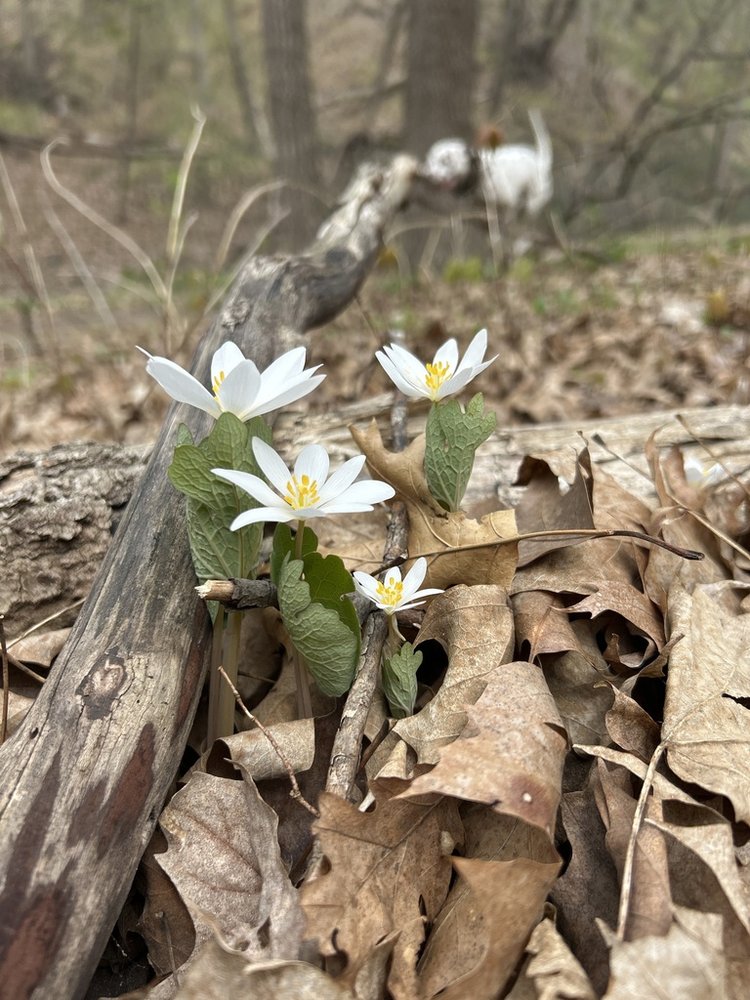
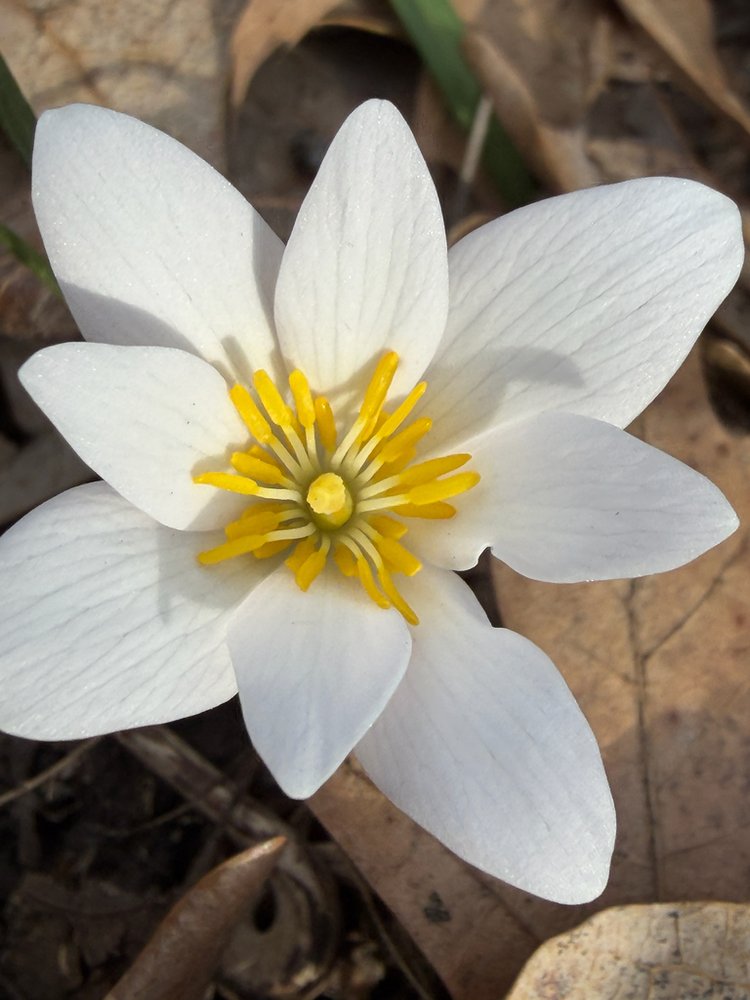
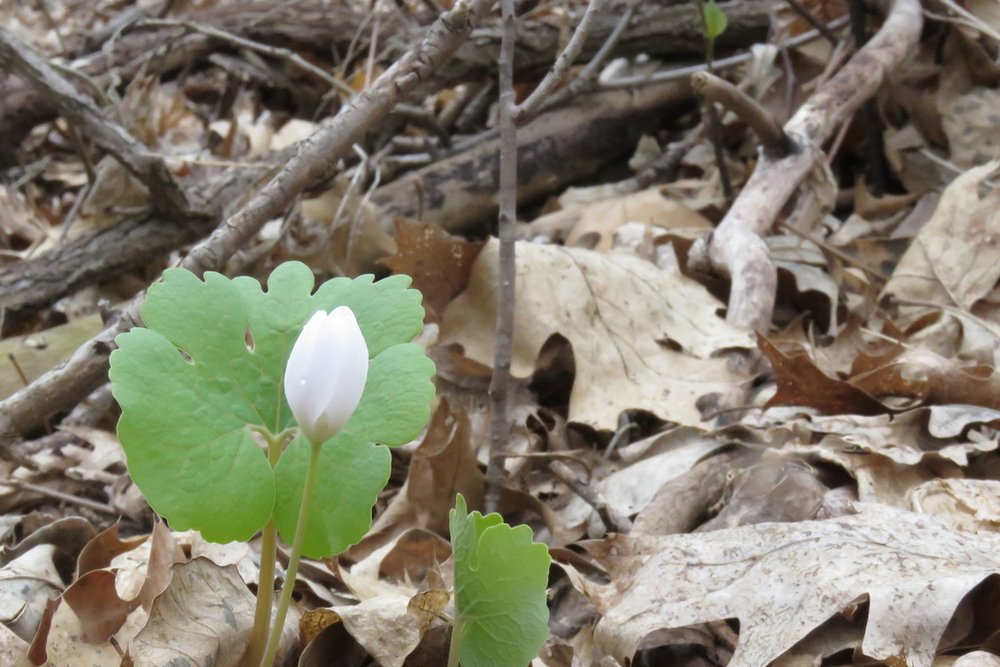
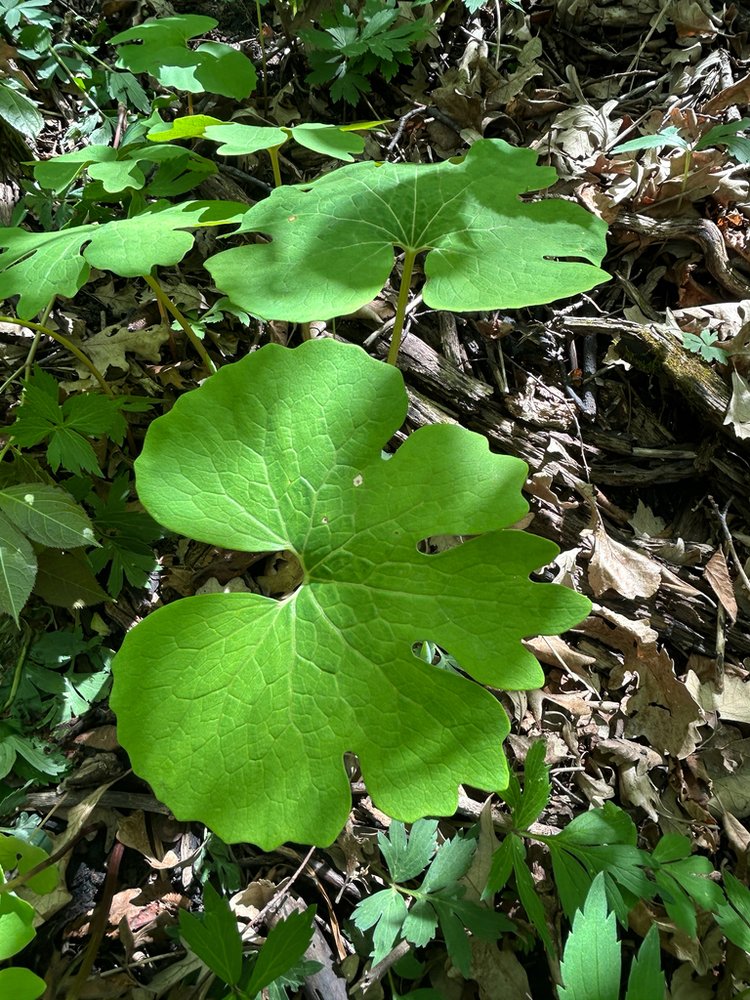
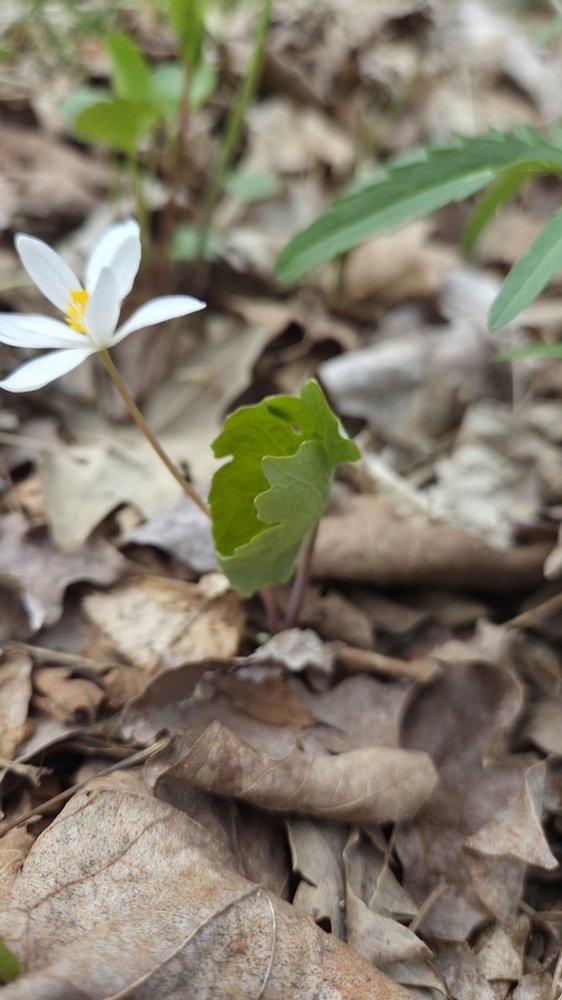
Bloodroot (Sanguinaria canadensis) is a native perennial of shaded hardwood woods whose single white flower, with 8 to 10 petals around a cluster of yellow stamens, opens in April and May wrapped in a lone, deeply lobed leaf; broken stems, leaves and roots bleed orange-red sap. In the Black Hills it grows as an outlying population of an eastern woodland plant, under bur oak and other hardwoods, and the Forest Service lists it as a species of conservation concern.
Free photos from other sources
| Family | Papaveraceae · Poppy |
|---|---|
| Status | Native perennial |
| Blooms | April and May |
| Height | 15–30 cm (6–12 in) |
| Where | Shaded hardwood woods of bur oak, elm, birch and ironwood on north- and east-facing slopes and in draws |
| Also called | ok šaša (Lakota) |
| Synonym | Sanguinaria canadensis var. rotundifolia, Sanguinaria australis, Sanguinaria dilleniana |
| Toxicity | Bloodroot contains the poisonous alkaloid sanguinarine, and its juice can burn the skin. |
| Traditional use | A 1998 Sitting Bull College list of plants important to the Lakota records that the Lakota made bloodroot into a very weak decoction (boiled extract) for fevers and rheumatism and to cause vomiting, used it to clear lung congestion, and put a poultice of the root on skin conditions. The BRIT ethnobotany database, citing Gilmore (1919), records that the Omaha, Ponca and Winnebago boiled the root with the objects they wanted to dye red and used it as a decorative skin stain, and that a Ponca bachelor rubbed the root on his palm as a love charm. |
| Note | The U.S. Forest Service listed it as a sensitive plant for the Black Hills in 2005, and its 2023 draft assessment for the Black Hills forest plan lists it as a species of conservation concern. South Dakota's rare plant list ranks it S4? statewide (apparently secure) and calls the Black Hills plants disjunct, cut off from its range in eastern South Dakota. This page gives no locations. |
Traditional use: first drafted by Google AI, then checked against the sources on this page.
Roots, seeds & germination
Root: A branching rhizome (underground stem) that bleeds red sap when broken.
Seed: A spindle-shaped capsule 3.5–6 cm (1½–2½ in) long holds 10 to 15 seeds, black to red-orange.
How do you identify Bloodroot?
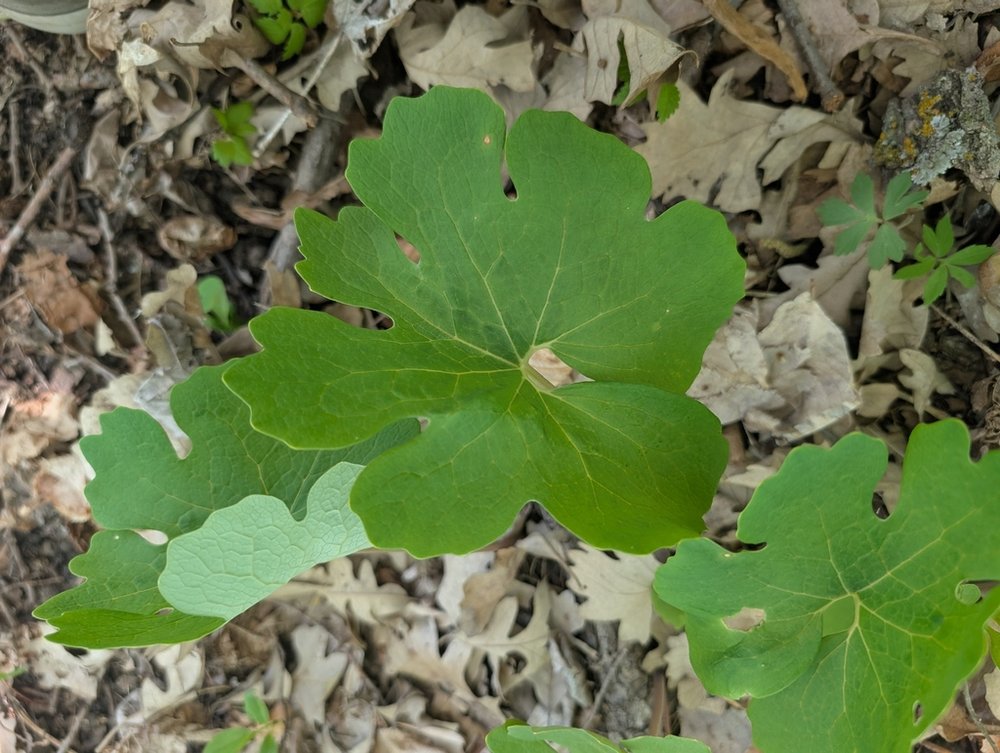
A single white flower on a bare, smooth, reddish stalk straight from the ground, with petals 15–30 mm (⅝–1¼ in) long, usually 8 to 10 of them and often four longer than the rest, around a cluster of many yellow-tipped stamens; each flower lasts only a day or two. One round leaf, lobed into 3 to 9 parts with scalloped edges and a deep notch at the base, wraps around the flower stalk at bloom time and then opens out and keeps growing after the flower is gone, to as much as 25 cm (10 in) wide; its upper surface has a grayish bloom. A broken leaf, stem or root oozes orange-red juice, which gave the plant its name. The fruit is a spindle-shaped pod 3.5–6 cm (1½–2½ in) long.
When does it bloom?
April and May.
Where does it grow?
Shaded hardwood woods on north- and east-facing slopes, in draws and on terraces above streams, under bur oak, American elm, birch and ironwood, at about 1,150–1,500 m (3,800–5,000 ft) in the Black Hills. This is west of the plant's main range in the eastern woodlands, which reaches eastern South Dakota, and the Forest Service ties it to bur oak and other hardwood communities here, naming conifers crowding in and invasive plants as risks to it.
Poppy family (Papaveraceae): 2 other plants in this guide
Sources: Phase II Amendment Final Environmental Impact Statement, Chapter 3-3.2 Flora: Region 2 sensitive plants (Bloodroot) (2005) — USDA Forest Service; Revised Forest Assessment: At-Risk Species, draft October 2023 (Bloodroot: species of conservation concern; elevation; bur oak and hardwood habitats) — USDA Forest Service; Rare Plants of South Dakota (Sanguinaria canadensis, Bloodroot, G5 S4?, disjunct in the Black Hills) — South Dakota Natural Heritage Program, SD Game, Fish and Parks (2018); Flora of North America Vol. 3: Sanguinaria canadensis (R. Kiger) — eFloras; USDA PLANTS Database: Sanguinaria canadensis L., bloodroot (SACA13); ITIS: Sanguinaria canadensis L., TSN 18990 (synonyms); Minnesota Wildflowers: Sanguinaria canadensis (Bloodroot); Culturally Important Plants of the Lakota (Black Elk and Flying By, 1998), entry 273 Sanguinaria canadensis — Sitting Bull College, filed with the South Dakota PUC; Gilmore 1919, Uses of Plants by the Indians of the Missouri River Region; BRIT Native American Ethnobotany Database: Sanguinaria canadensis.