Bigblue Lobelia Lobelia siphilitica
Also called Great Blue Lobelia, Blue Lobelia, Blue Cardinal Flower, zuzéča tȟawóte (Lakota), úma/uŋmá wápe tȟotȟó hé (Lakota)
Bigblue Lobelia (Lobelia siphilitica) is a native perennial 30–120 cm (1–4 ft) tall, with a spike of bright blue to blue-violet, two-lipped flowers that open from the bottom up above leafy bracts. In the Black Hills it grows on wet banks and beside streams, where herbarium specimens from August and September go back to 1887 and the Wind Cave plant list includes it.
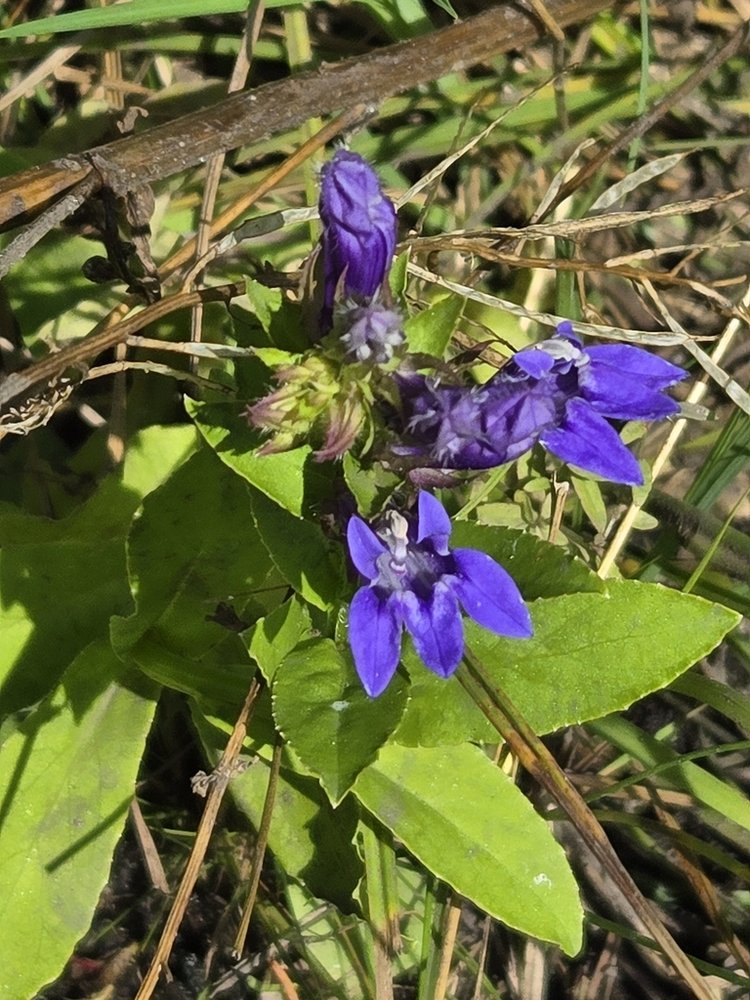
Free photos from other sources
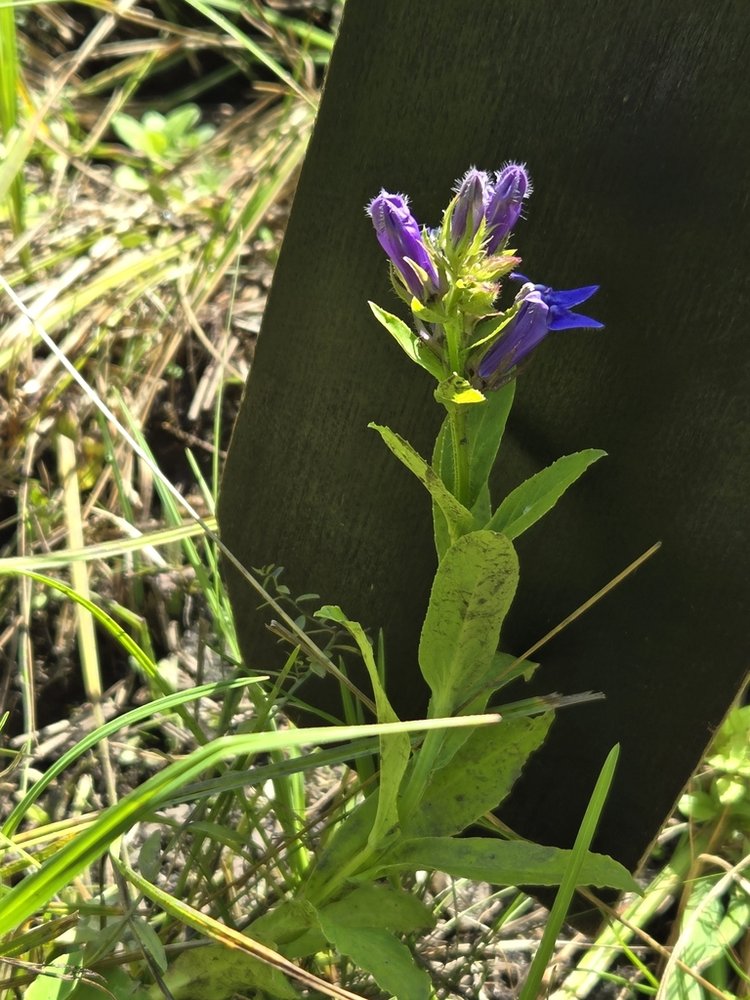
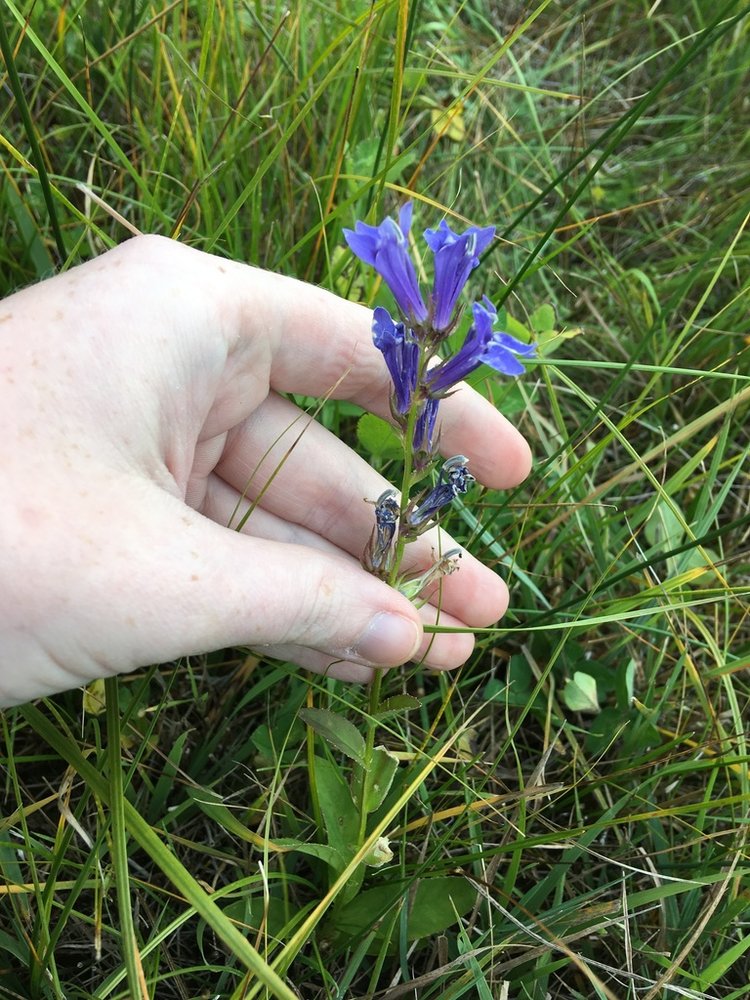
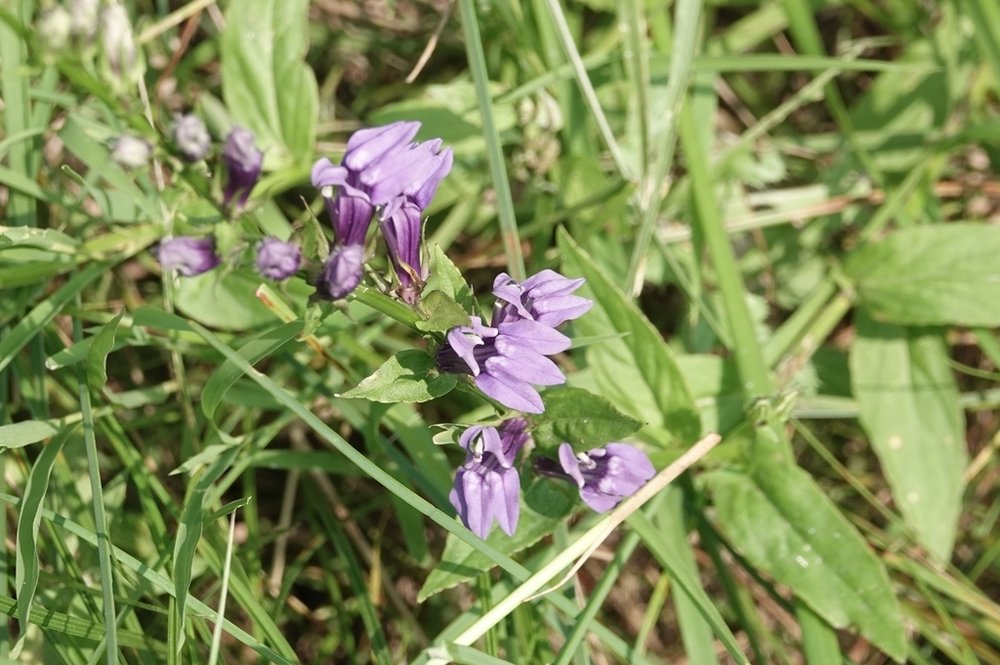
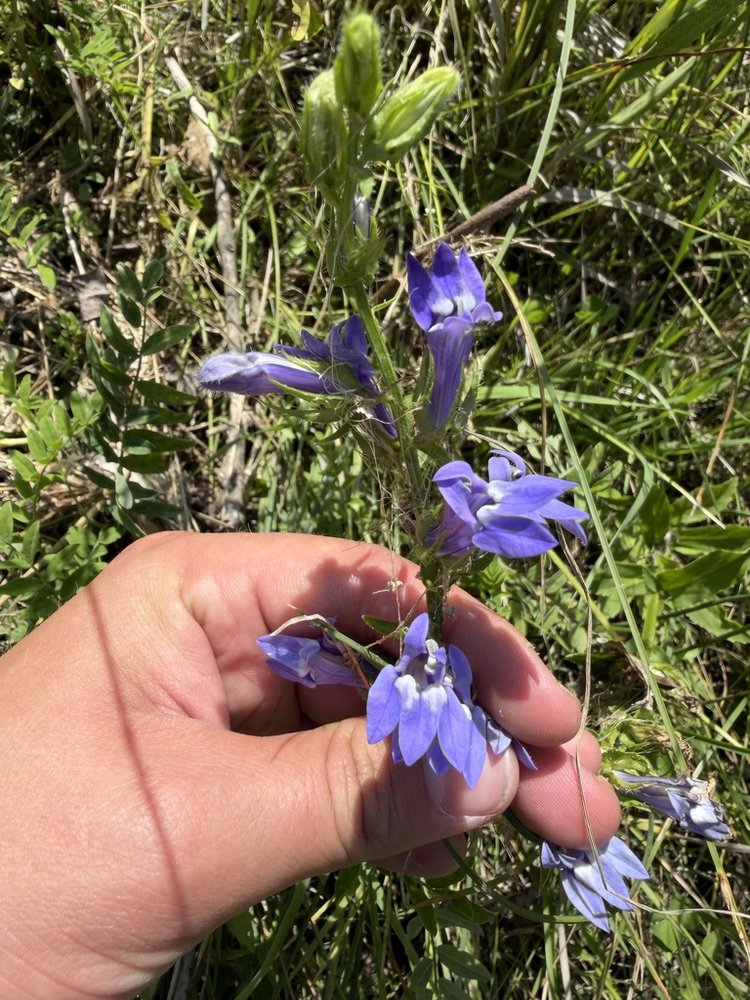
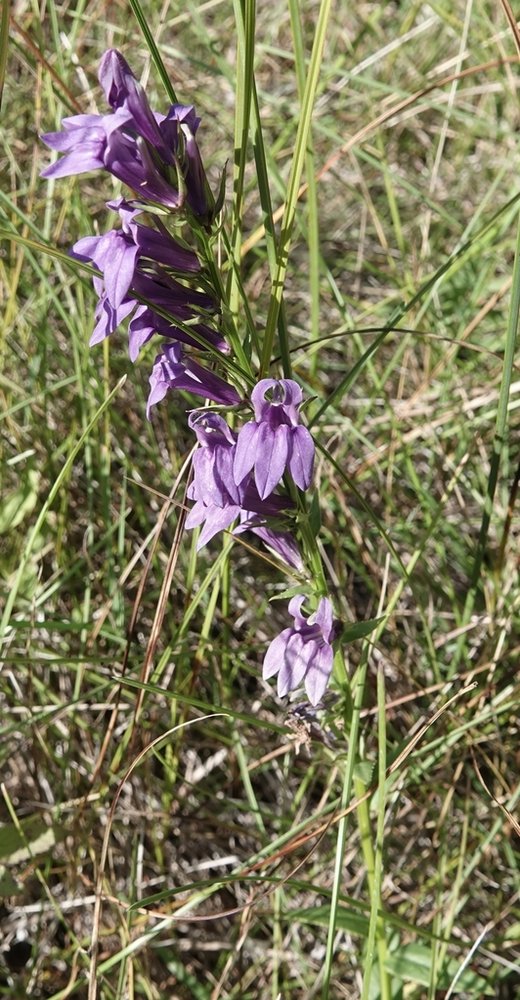
| Family | Lobeliaceae · Lobelia |
|---|---|
| Status | Native perennial |
| Blooms | August into September |
| Height | 30–120 cm (1–4 ft) |
| Where | Stream banks, creek edges, wet cliffs, seeps and other moist ground |
| Also called | Great Blue Lobelia, Blue Lobelia, Blue Cardinal Flower, zuzéča tȟawóte (Lakota), úma/uŋmá wápe tȟotȟó hé (Lakota) |
| Toxicity | The Lady Bird Johnson Wildflower Center lists all parts of this plant as poisonous if eaten in large quantities, citing the alkaloids lobeline and lobelamine. |
| Traditional use | The Lakota plant guide by Black Elk and Flying By (1998) lists it as zuzéča tȟawóte and úma/uŋmá wápe tȟotȟó hé, and records the root as used for fluid retention, diarrhea and dysentery, and as a love charm, with powdered root added to the food of a person one hoped to win. The Meskwaki had a couple eat finely chopped roots to avert divorce and renew love (Smith 1928, via Moerman's database). The Cherokee took an infusion of the leaf for colds and fever and used the plant for croup (Hamel and Chiltoskey 1975, via Moerman's database). |
| Note | Two of the photos were taken in Custer County, South Dakota; the others are from Nebraska. |
Traditional use: first drafted by Google AI, then checked against the sources on this page.
Roots, seeds & germination
Seed: The fruit is a small two-chambered capsule holding many tiny, oval, brown seeds (Minnesota Wildflowers and Kansas Wildflowers).
How do you identify Bigblue Lobelia?
Look for an unbranched, ridged stem with alternate, toothed leaves 5–15 cm (2–6 in) long that have no leaf stalk and get smaller up the stem. The flowers form a long spike, about 10–50 cm (4–20 in), packed more tightly at the top, and open from the bottom up, each with a leafy bract at its base. Each flower is about 2.5 cm (1 in) long, light to bright blue-violet, with 3 pointed lobes below, 2 smaller lobes above and white stripes on the outside of the throat. The bell-shaped calyx has long, narrow lobes that can be hairy at the edges. Palespike Lobelia (Lobelia spicata), also on the Black Hills lists, is a separate species with its own page.
When does it bloom?
August into September.
Where does it grow?
Wet ground: stream banks, creek margins, wet cliffs and seeps, marshy edges and moist sandy soil. Specimen labels describe it on a dry stream bank, on moss-covered rocks and a granite boulder in a creek, on wet limestone cliffs and a talus glade, on a gravelly stream bank and on moist red sandy soil in open sun. GBIF holds 22 Black Hills specimens from Fall River, Custer, Lawrence and Pennington counties, dated 1887 to 2014, 13 of them from Fall River County in the southern Hills and 13 from before 1950. The National Park Service lists it as present at Wind Cave (not at Jewel Cave, Mount Rushmore or Devils Tower), and iNaturalist has one research-grade record in Custer County, from 2025.
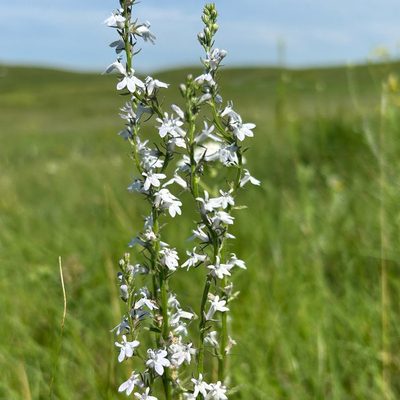
Other lobelias in this guide
Sources: Minnesota Wildflowers: Lobelia siphilitica (Blue Lobelia); Kansas Wildflowers and Grasses: Blue lobelia, Lobelia siphilitica; Lady Bird Johnson Wildflower Center: Lobelia siphilitica (great blue lobelia); USDA PLANTS: Lobelia siphilitica (LOSI), profile data; NPSpecies checklist, Wind Cave National Park vascular plants; GBIF specimen 2821218567: Mayer 2014, Pennington County, east-central Black Hills, creek; GBIF specimen 3023458047: Wickham 1997, Fall River County, dry stream bank; GBIF specimen 2564831704: Ode 1983, Fall River County, stream bank and moss-covered rocks; GBIF specimen 3038911377: Brandt 1980, Lawrence County, red sandy moist soil; GBIF specimen 2573523859: Thornburg 1948, Fall River County, marshy border of stream; GBIF specimen 3023458041: Bennett 1946, northern Black Hills, soggy creek bank; GBIF specimen 2564831715: McIntosh 1926, Fall River County, wet limestone cliffs; GBIF specimen 2564831643: McIntosh 1924, Pennington County, gravelly bank of stream; GBIF specimen 1305287701: Hayward 1926, Black Hills, Hot Brook Creek; GBIF occurrence search: Lobelia siphilitica preserved specimens, South Dakota and Wyoming; iNaturalist: research-grade Lobelia siphilitica observations near the Black Hills; Culturally Important Plants of the Lakota (Black Elk and Flying By, 1998), entry 171; Native American Ethnobotany Database (BRIT): Lobelia siphilitica, 14 uses.