Palespike Lobelia Lobelia spicata
Also called Pale-spike Lobelia, Pale-spiked Lobelia
Palespike Lobelia (Lobelia spicata) is a slender native perennial 30–90 cm (1–3 ft) tall, with a loose spike of small, two-lipped flowers that are pale blue to white. In the Black Hills it is known mainly from old herbarium sheets from Custer and Pennington counties, dated 1892 to 1969, and the National Park Service lists it at Wind Cave, Jewel Cave and Mount Rushmore.
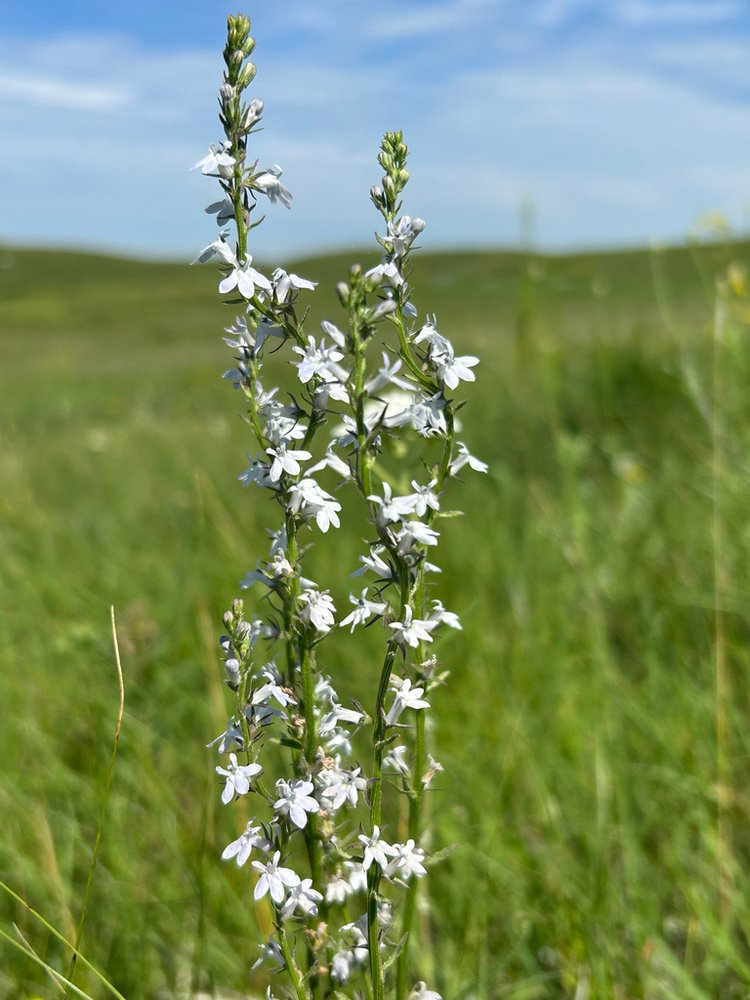
Free photos from other sources
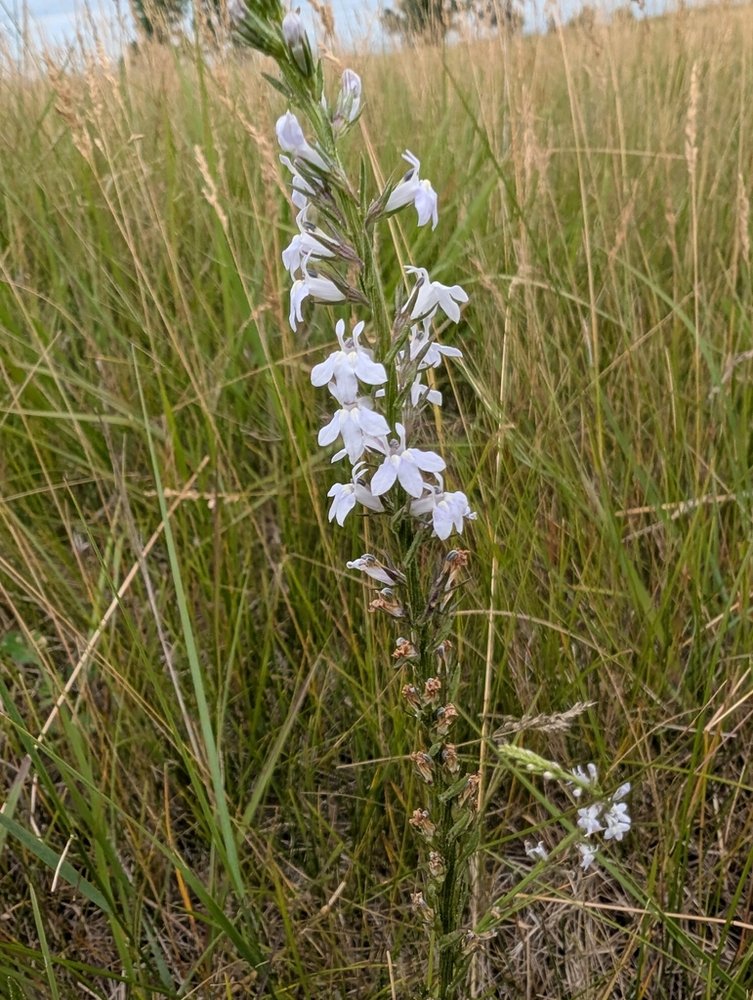
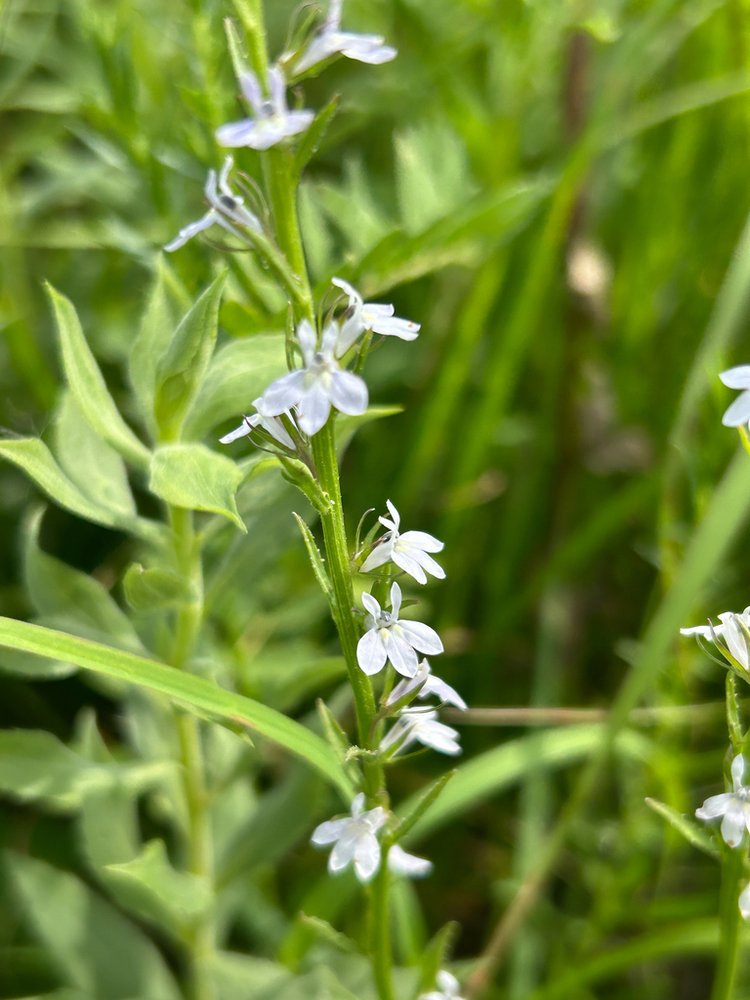
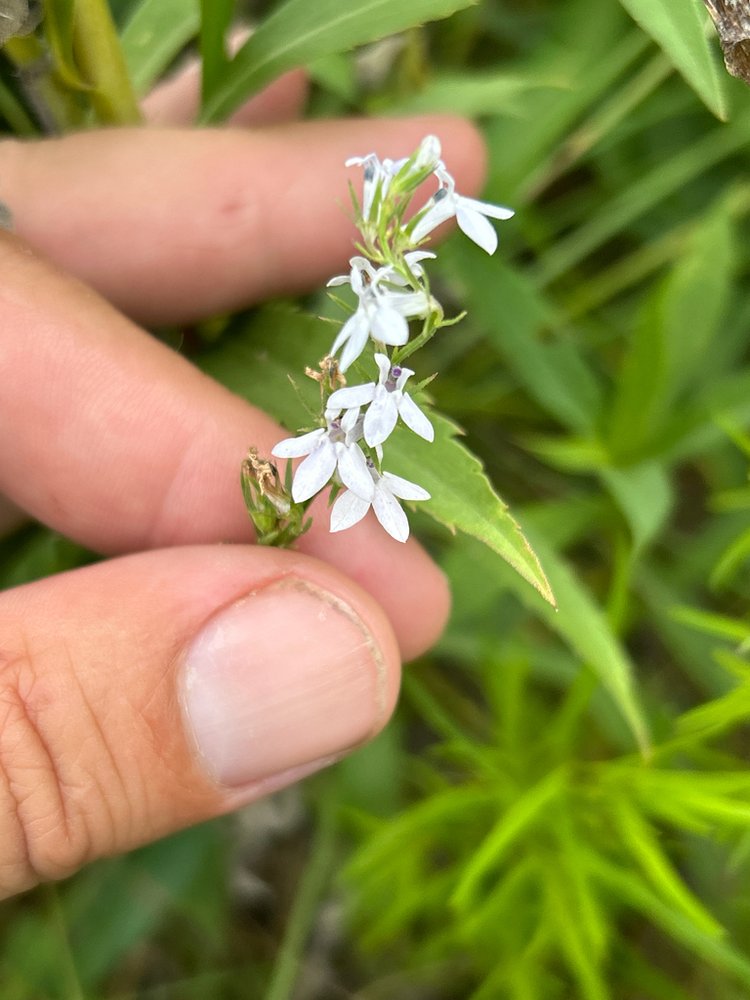
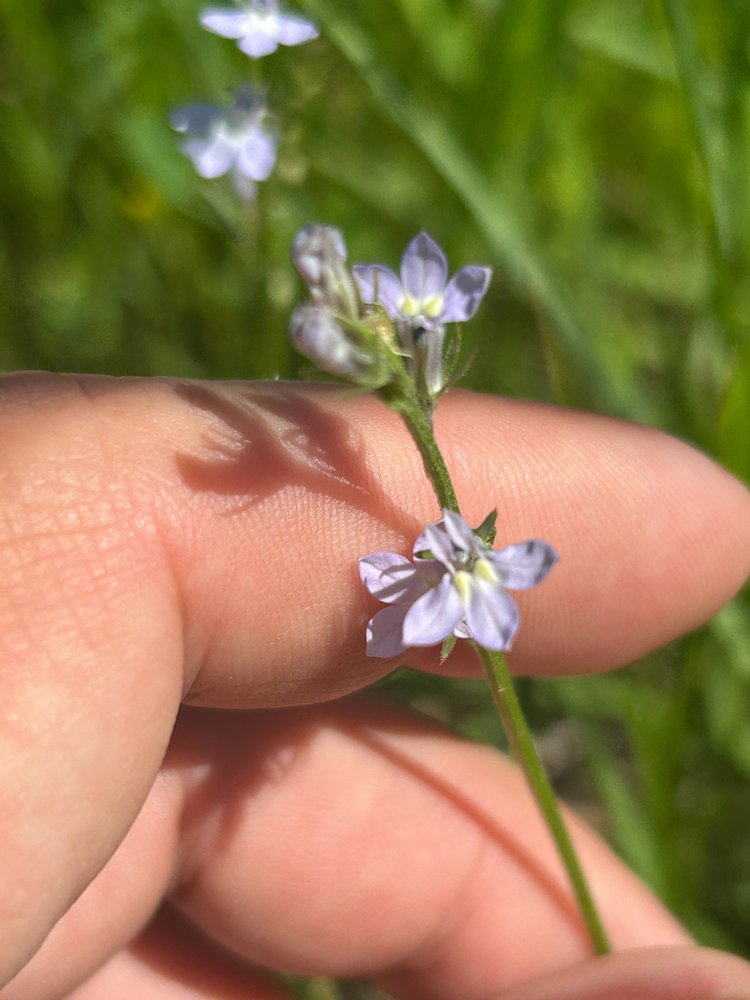
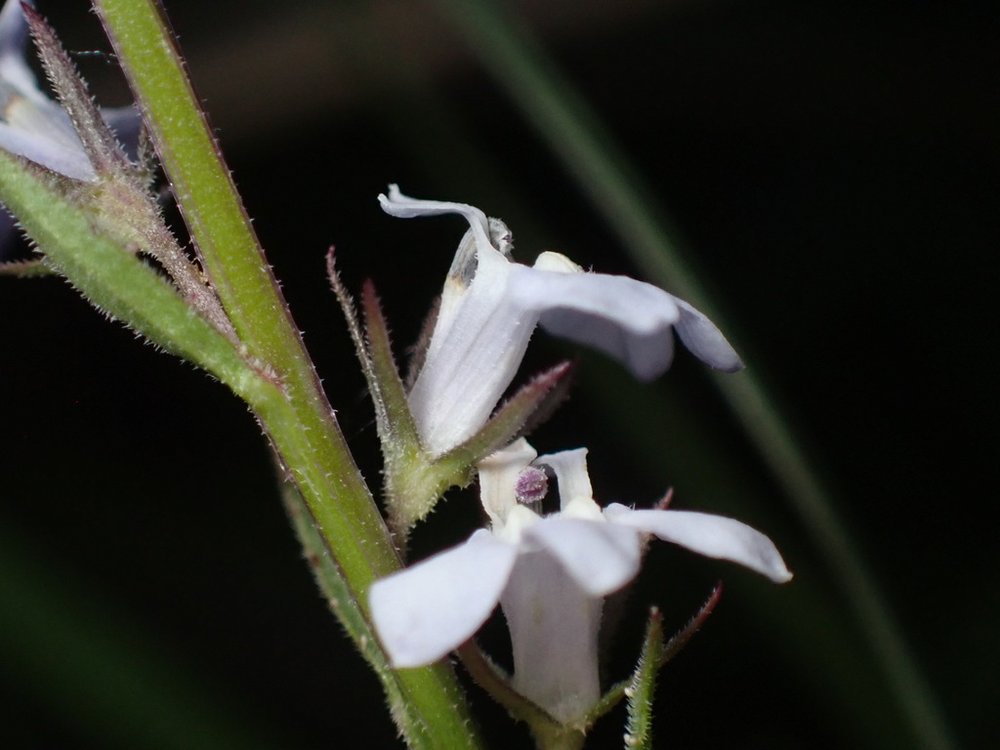
| Family | Lobeliaceae · Lobelia |
|---|---|
| Status | Native perennial |
| Blooms | Late June into August |
| Height | 30–90 cm (1–3 ft) |
| Where | Moist, grassy places at the edge of pine woods, and meadows |
| Also called | Pale-spike Lobelia, Pale-spiked Lobelia |
| Synonym | Lobelia leptostachys, Lobelia spicata var. leptostachys |
| Toxicity | The Lady Bird Johnson Wildflower Center lists all parts of lobelias as poisonous if eaten in large quantities, citing the alkaloids lobeline and lobelamine. |
| Traditional use | The Cherokee used a cold infusion of the roots, put into scratches, and a compound taken for 'arm shakes and trembles' (Taylor 1940 and Hamel and Chiltoskey 1975, via Moerman's database). The Iroquois used a decoction of the stalks as a wash for bad blood and for sores of the neck and jaw, and an infusion of the plants as an emetic for the lovelorn (Herrick 1977, via Moerman's database). |
| Note | The Black Hills evidence for this plant is thin and old, and the photos here were taken in eastern South Dakota. |
Traditional use: first drafted by Google AI, then checked against the sources on this page.
Roots, seeds & germination
Seed: The fruit is a nearly round capsule up to about 6 mm (¼ in) long holding many brown seeds (Minnesota Wildflowers and Kansas Wildflowers).
How do you identify Palespike Lobelia?
Look for an erect, unbranched stem with 4 or 5 angles, sometimes hairy near the base, with most of the leaves in the lower half: the lower leaves are spatula-shaped to oval with rounded tips, up to 7.5 cm (3 in) long, with little or no leaf stalk, and they get smaller and farther apart up the stem. The flowers form a loose to fairly dense, spike-like cluster 5–40 cm (2–16 in) long. Each flower is about 1.2 cm (½ in) across, pale blue to white, with 2 small upper lobes bent back, 3 larger lower lobes of similar size, all pointed, and two yellowish spots at the base of the lower lobes. The calyx (the green cup under the flower) has 5 narrow, triangular lobes about as long as the flower tube. The fruit is a nearly round capsule up to 6 mm (¼ in) long.
When does it bloom?
Late June into August.
Where does it grow?
Moist, grassy ground at the edge of pine woods, and meadows with deep clay loam, according to two specimen labels; the other Black Hills labels give only a town, and two give elevations of about 1,130 m (3,700 ft) and 1,680 m (5,500 ft). GBIF holds 10 herbarium sheets from the Black Hills, labeled Pennington or Custer County where a county is given (some of them probably duplicates of one collection), dated 1892, 1908, 1924, 1949 and 1969, with one undated; there is no later specimen and no research-grade iNaturalist record in the Hills. The National Park Service lists it as present at Wind Cave, Jewel Cave and Mount Rushmore, and not at Devils Tower. Minnesota Wildflowers and Kansas Wildflowers describe it in prairies, meadows and open woods on moist soil in those states.
Other lobelias in this guide
Sources: Minnesota Wildflowers: Lobelia spicata (Pale-spike Lobelia); Kansas Wildflowers and Grasses: Pale-spike lobelia, Lobelia spicata; Lady Bird Johnson Wildflower Center: Lobelia spicata (pale-spike lobelia); USDA PLANTS: Lobelia spicata (LOSP), profile data; NPSpecies checklist, Wind Cave National Park vascular plants; NPSpecies checklist, Jewel Cave National Monument vascular plants; NPSpecies checklist, Mount Rushmore National Memorial vascular plants; GBIF specimen 176976263: McGregor 1969, Pennington County, west of Hisega; GBIF specimen 3798058381: Giersich 1949, Custer County, meadows; GBIF specimen 2564831863: McIntosh 1924, Custer County, moist grassy place at the edge of pine woods; GBIF specimen 5895820634: Petersen 1908, Custer, Black Hills; GBIF specimen 5895875408: Rydberg 1892, Pennington County, Rapid City, 3700 ft; GBIF specimen 5895807933: Rydberg 1892, Custer County, Custer, 5500 ft; GBIF occurrence search: Lobelia spicata preserved specimens, South Dakota and Wyoming; iNaturalist: research-grade Lobelia spicata observations (none found in the Black Hills); Native American Ethnobotany Database (BRIT): Lobelia spicata, 6 uses; Culturally Important Plants of the Lakota (Black Elk and Flying By, 1998), checked; Lobelia spicata not listed.