Tinder Conk
Fomes excavatus
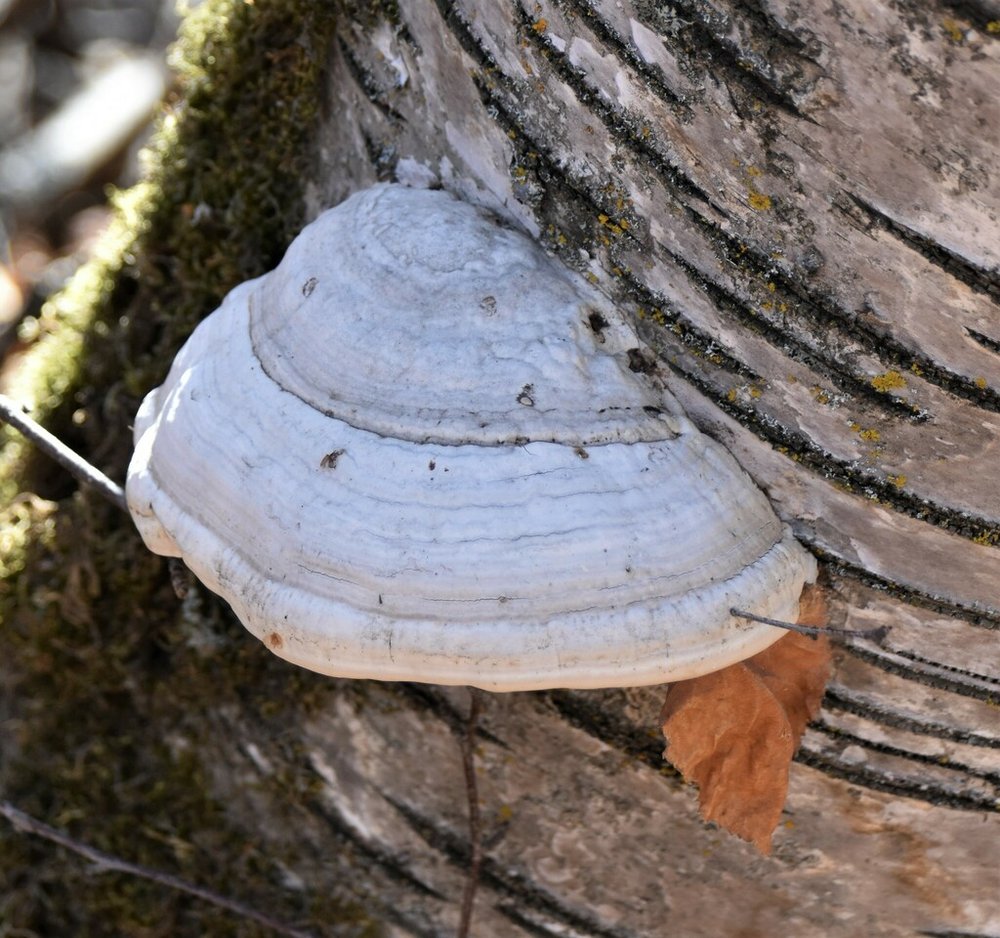
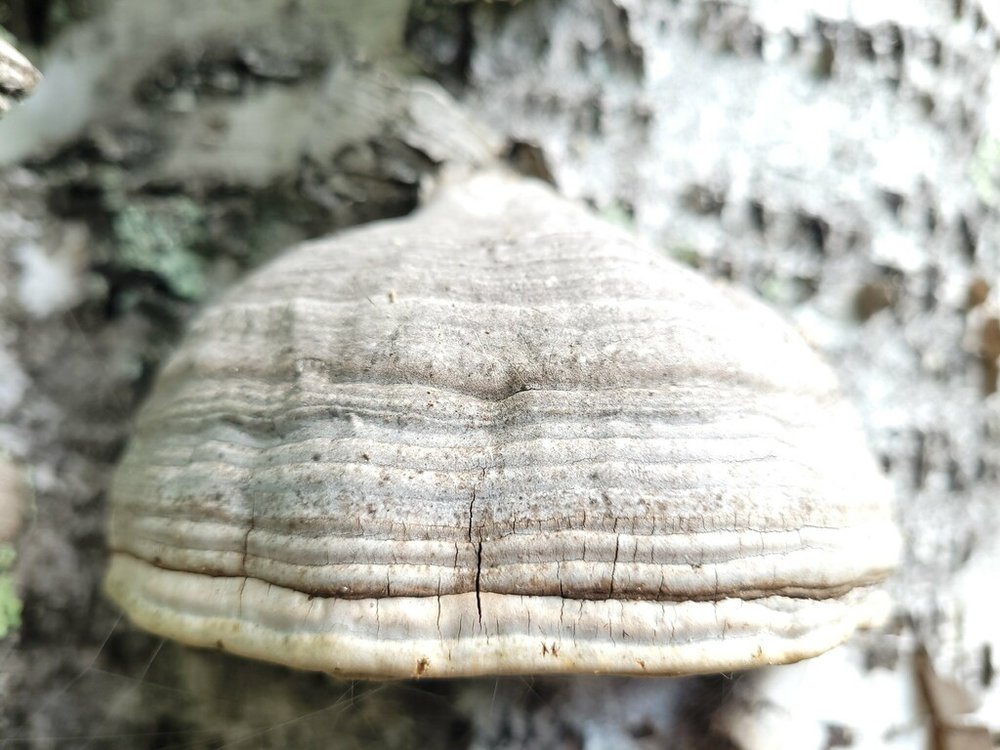
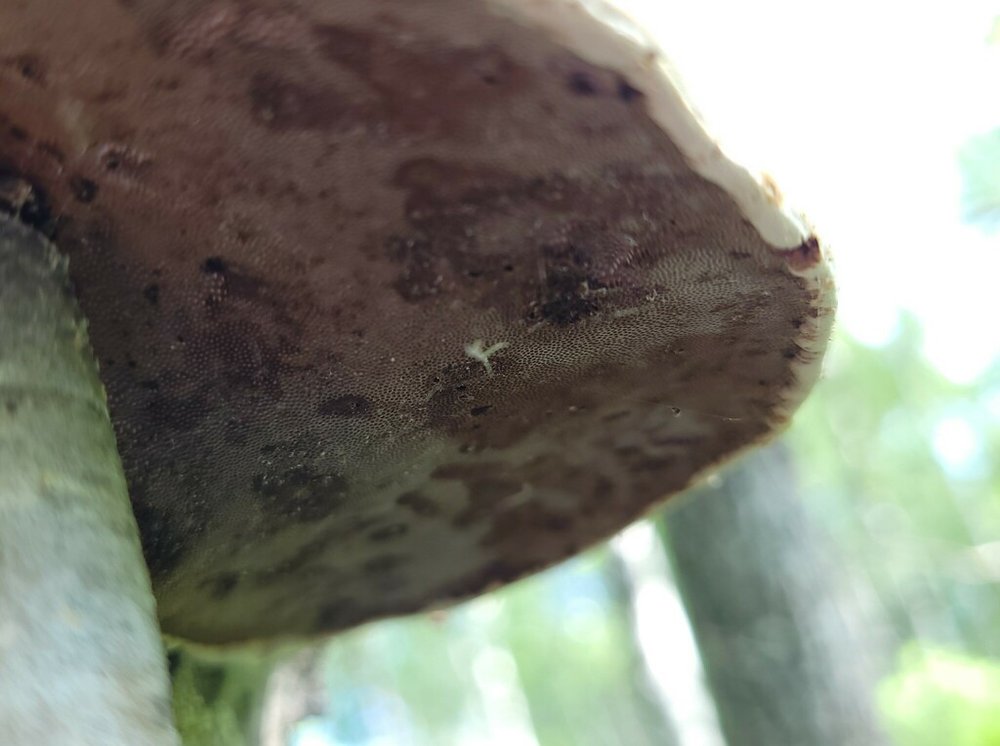
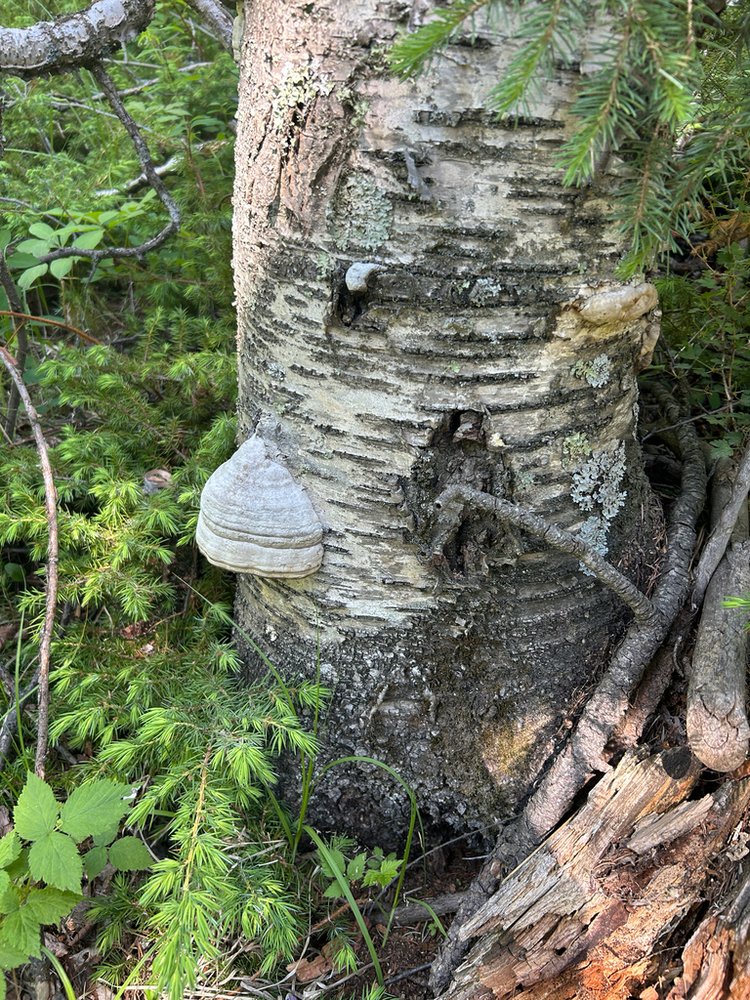
Tinder Conk (Fomes excavatus) is a hard, gray, hoof-shaped conk zoned in gray and brownish-gray bands, with a brownish pore surface underneath. In the Black Hills it grows on the trunks of paper birch and can be seen all year.
Free photos from other sources
| Family | Polyporaceae · Polypore |
|---|---|
| Type | Shelf fungus |
| Season | All year; the conks live for years |
| Size | Hoof up to 20 cm (8 in) across |
| Grows on | Trunks of paper birch, living or dead |
| Also called | Tinder Polypore, Hoof Fungus, Tinder Fungus |
| Synonym | Fomes fomentarius, Polyporus fomentarius var. excavatus |
| Eating | This guide doesn't say which mushrooms are safe to eat. |
| Note | Many guides call it Fomes fomentarius, the name of the European tinder conk. |
How it lives
A white-rot fungus and probably a long-term heart rot of living birch: it eventually kills the tree and keeps fruiting on the dead trunk. White rot breaks down all parts of the wood, so the rotted wood stays fibrous instead of turning brown and crumbly like the wood Red-belt Conk leaves. The common name comes from its old use for starting fires: small pieces were struck with flint to make sparks, and Ötzi, the Tyrolean Iceman, carried it, apparently as tinder, about 5,000 years ago.
How do you identify Tinder Conk?
A woody conk with no stem, shell-shaped when young and hoof-shaped with age, up to about 20 cm (8 in) across. The top is dull and hard, zoned in gray and brownish-gray bands. Underneath is a brownish pore surface with 2–5 round pores per mm, and the inside is brown and hard, made up mostly of layered tubes. It grows almost only on birch. Red-belt Conk grows on dead conifers, usually has a red-orange band and a cream pore surface, and has pale flesh. Artist's Conk is flatter, with a white underside that turns dark brown where scratched, and in the Rocky Mountains it grows at the base of aspen. Aspen Bracket grows on living aspen; its top is black and cracked, and its profile is roughly triangular.
When can you find it?
All year; the conks live for years.
Where does it grow?
Trunks of birch, standing or fallen, living or dead; elsewhere also beech and other hardwoods. In the Black Hills its host is paper birch, which grows here as an outlying population, apart from its main range. Herbarium specimens from the Hills, 1918 to 1980, come from Custer and Pennington counties and Weston County, Wyoming, and the ones with a host recorded are on paper birch or birch. It is on Mount Rushmore's species list as Fomes fomentarius, and iNaturalist has 11 research-grade Black Hills records under the two names. The name is still unsettled. Most guides call it Fomes fomentarius, the European tinder conk, but DNA studies show the North American tinder conk is probably a separate species. Fomes excavatus, a name first given in 1839 to a conk on birch from Saskatchewan, may be the name for it, and iNaturalist uses it; Index Fungorum still files it under F. fomentarius.
Other mushrooms to compare
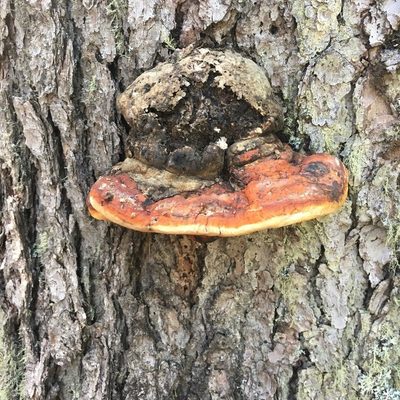
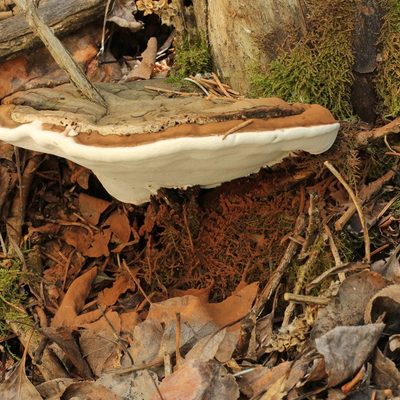
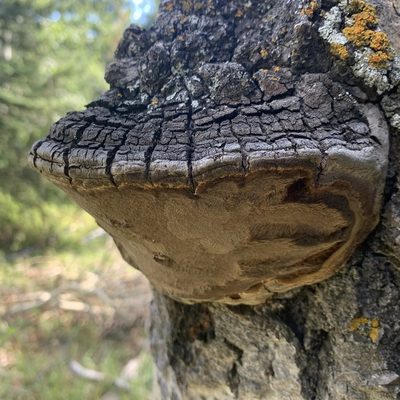
Sources: Fomes fomentarius (M. Kuo) — MushroomExpert.com; Fomes fomentarius, the tinder polypore (T. Volk, Fungus of the Month, December 2001) — University of Wisconsin; Peintner et al. 2019, How to resolve cryptic species of polypores: an example in Fomes — IMA Fungus 10: 17; Fomes fomentarius, synonymy (lists Fomes excavatus) — Species Fungorum (Index Fungorum); NPSpecies checklist: Fungi, Mount Rushmore National Memorial — National Park Service; Betula papyrifera (paper birch), Fire Effects Information System — USDA Forest Service; Field Guide to Diseases & Insects of the Rocky Mountain Region (RMRS-GTR-241, 2010) — USDA Forest Service; Fomitopsis mounceae (M. Kuo) — MushroomExpert.com; Ganoderma applanatum (M. Kuo) — MushroomExpert.com; Phellinus tremulae (M. Kuo) — MushroomExpert.com; Fomes excavatus: research-grade records in the six Black Hills places — iNaturalist; Fomes fomentarius: research-grade records in the six Black Hills places — iNaturalist; Specimens filed as Fomes fomentarius, South Dakota — GBIF; Specimens filed as Fomes fomentarius, Wyoming (RMS 405, Weston County, 1980) — GBIF.