Aspen Bracket
Phellinus tremulae
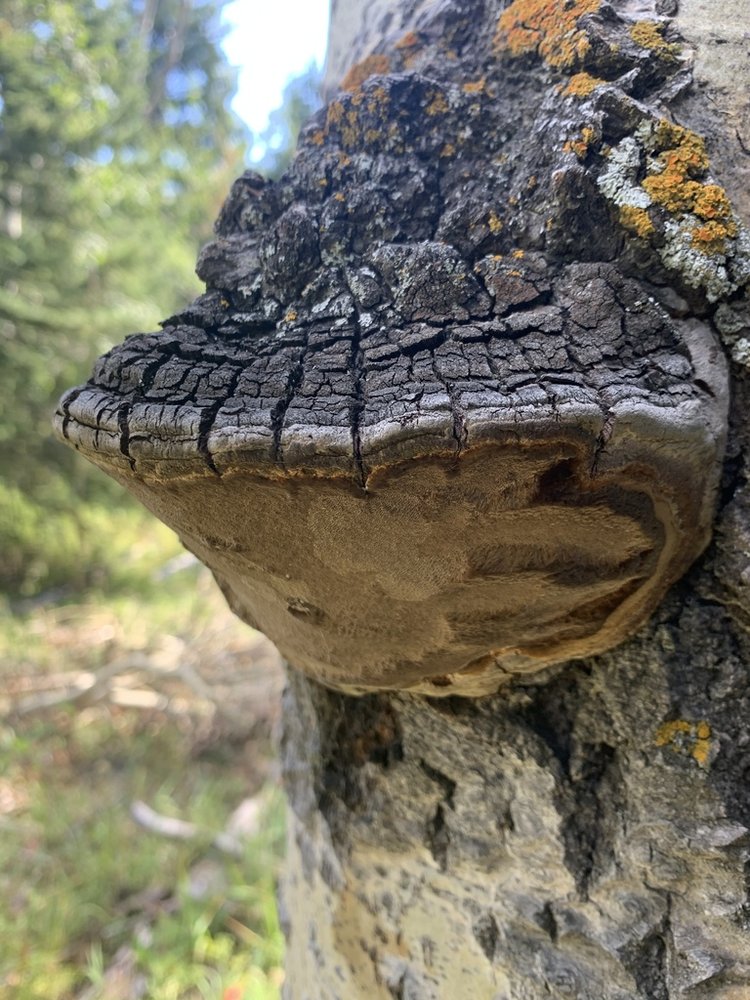
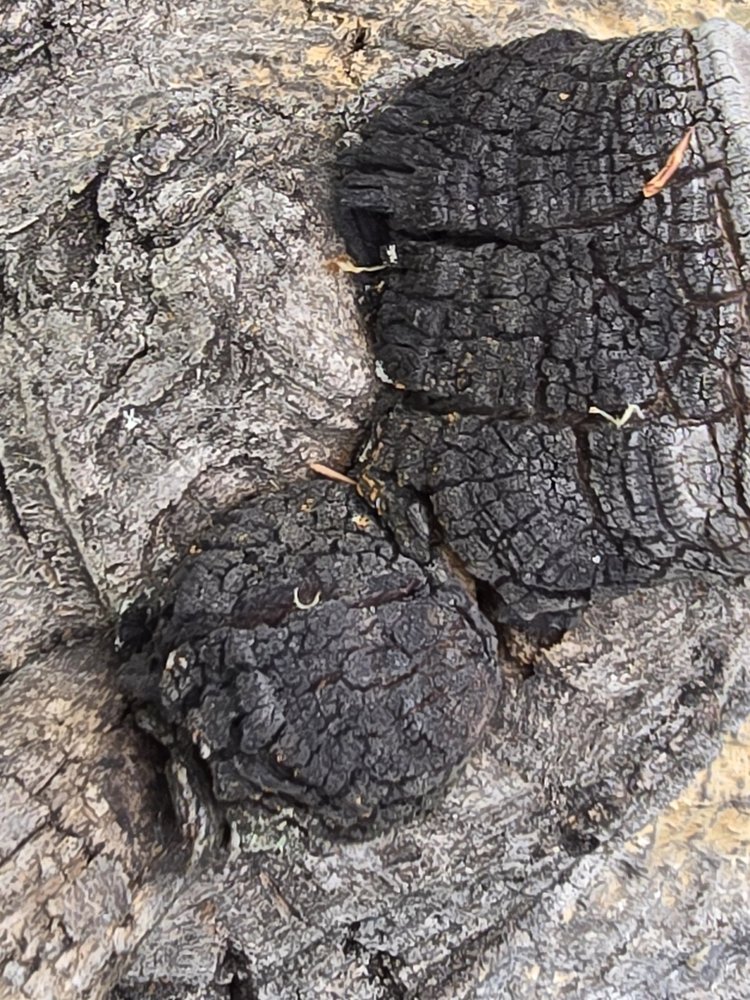
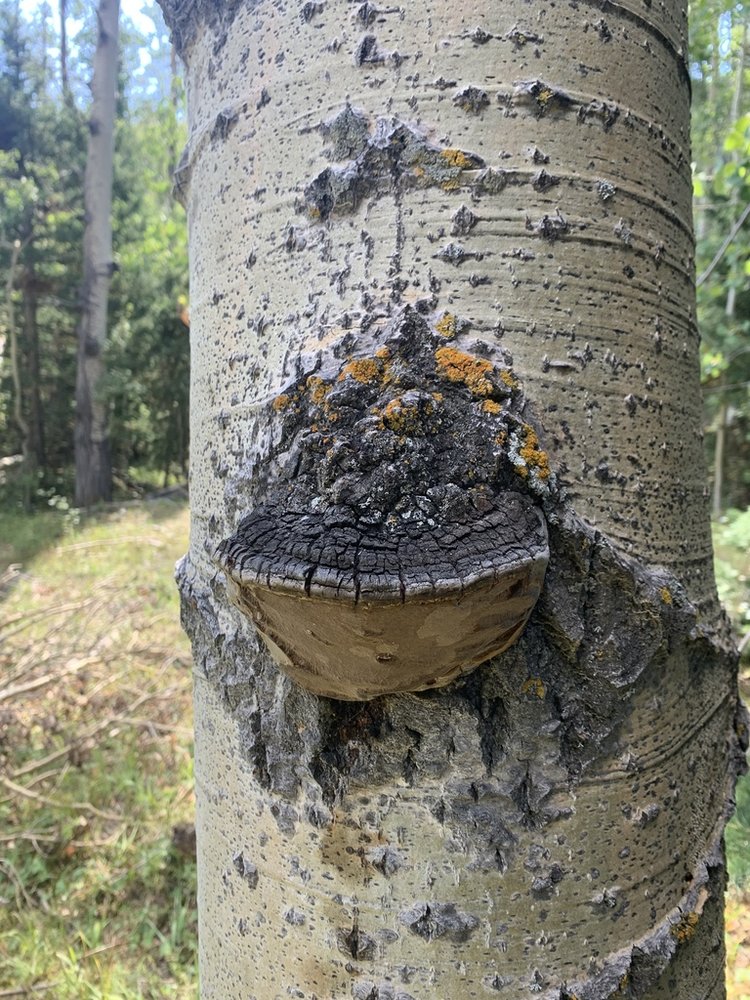
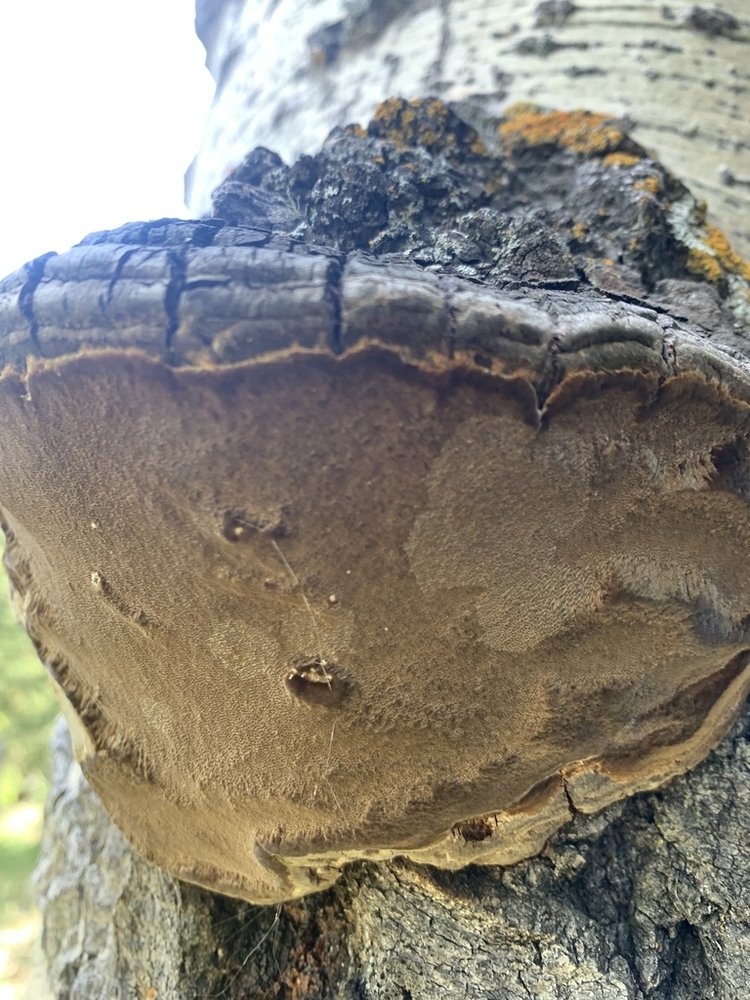
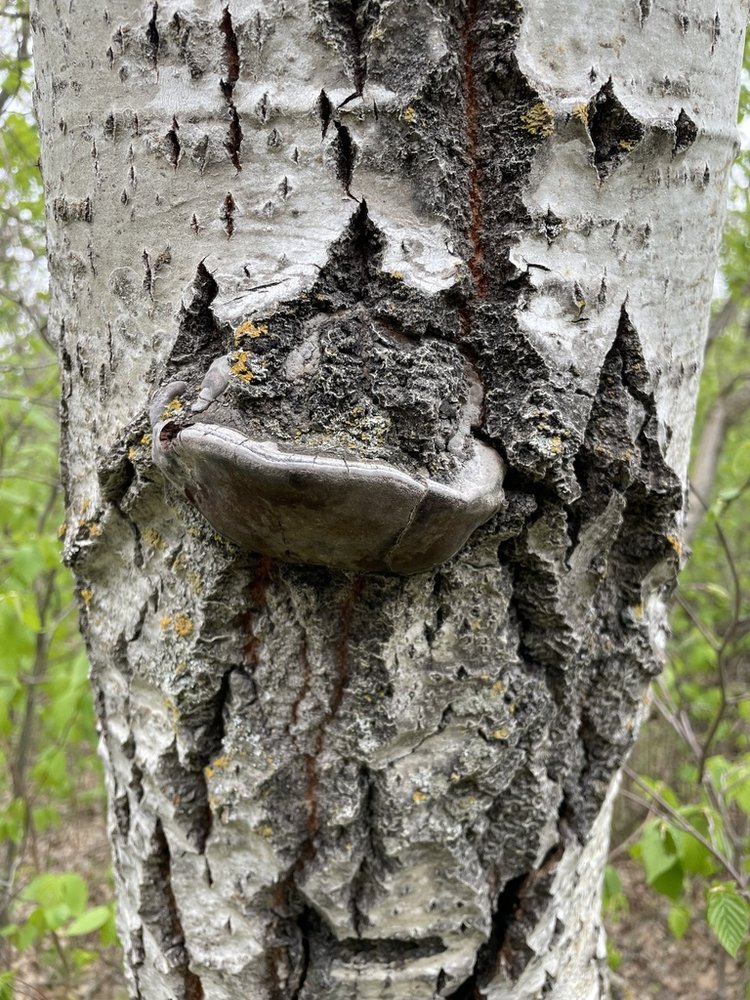
Aspen Bracket (Phellinus tremulae) is a hard, hoof-shaped conk with a black, cracked top and a brown pore surface, growing from old branch stubs on living quaking aspen. It is the most common trunk-rot fungus of aspen in North America, it can be seen all year, and the Black Hills have a few records of it on aspen.
Free photos from other sources
| Family | Hymenochaetaceae · Hymenochaete |
|---|---|
| Type | Shelf fungus |
| Season | All year; a conk can live up to about 20 years |
| Size | Cap 5–20 cm (2–8 in) across |
| Grows on | Trunks of living quaking aspen, at old branch stubs |
| Also called | False Tinder Fungus, Aspen Trunk Rot |
| Synonym | Fomes igniarius f. tremulae, Ochroporus tremulae |
| Eating | This guide doesn't say which mushrooms are safe to eat. |
How it lives
A white heart rot of living aspen: the heartwood turns yellowish tan, firm to spongy and fibrous, often with a sweet wintergreen smell and scattered zone lines. The fungus gets in through branch stubs and small dead branches and rots the wood for perhaps 5 years or more before conks appear. It is the most common trunk decay of aspen in North America and destroys the most wood; infected trees lose about 70% of their wood volume on average, and the rot runs 2.4–3.7 m (8–12 ft) above and below a conk. Sapsuckers and woodpeckers dig their nest holes in aspen, and those cavities are almost always in trees with this rot.
How do you identify Aspen Bracket?
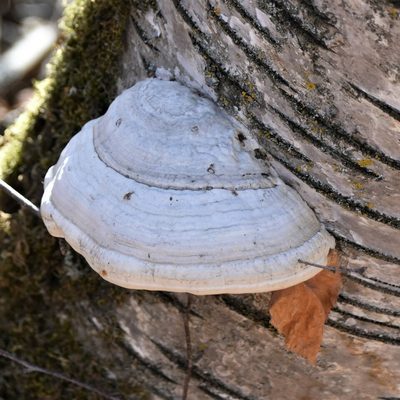
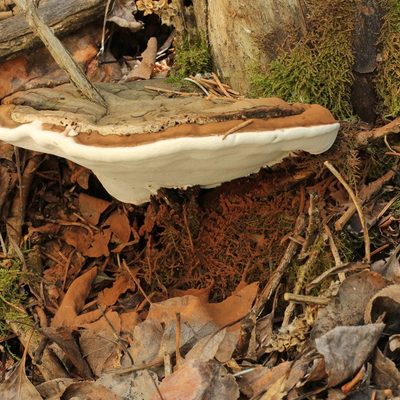
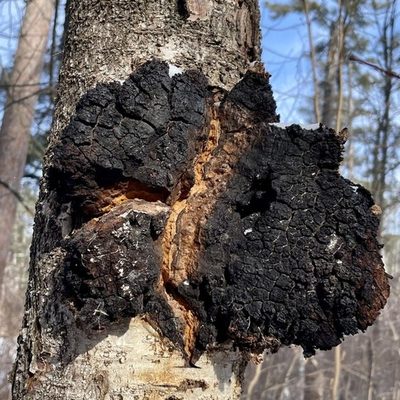
A woody conk 5–20 cm (2–8 in) across, roughly triangular from the side: the top slopes down and the underside slopes up. The top is black to dark grayish brown, very rough and cracked, often with moss or lichens, and the rim is paler and smoother. The underside is purplish brown to tawny, with tiny pores, 3–5 per mm. Inside, a granular core sits where it attaches, with hard reddish-brown flesh above the pore layers. It grows only on living aspen, often from the eye-shaped scars of old branches, and one trunk often carries several. Tinder Conk is gray rather than black and grows on birch. Artist's Conk grows at the very base of aspen, is flat, and has a white underside. Chaga makes a black, cracked lump with no pores, orange-brown inside, mostly on birch.
When can you find it?
All year; a conk can live up to about 20 years.
Where does it grow?
Trunks of living quaking aspen, from branch stubs and old wounds; the fungus dies soon after the tree does. iNaturalist has 3 research-grade Black Hills records, from Lawrence and Pennington counties, 2021 to 2025, one noted on aspen in an aspen grove. Older herbarium specimens from the Hills filed under the broad name Fomes igniarius include three on aspen or another poplar (two from 1918, one from 1926), probably this fungus, which was long treated as an aspen form of F. igniarius. Mount Rushmore's species list includes Phellinus igniarius.
Other mushrooms to compare
Sources: Field Guide to Diseases & Insects of the Rocky Mountain Region (RMRS-GTR-241, 2010) — USDA Forest Service; Hinds 1985, Diseases, in Aspen: Ecology and Management in the Western United States (RM-119) — USDA Forest Service; Phellinus tremulae (M. Kuo) — MushroomExpert.com; Phellinus tremulae, synonymy — Species Fungorum (Index Fungorum); Phellinus tremulae, common names (aspen bracket, aspen trunk rot) — iNaturalist; Phellinus tremulae: research-grade records in the six Black Hills places — iNaturalist; Specimens filed as Fomes igniarius, South Dakota — GBIF; NPSpecies checklist: Fungi, Mount Rushmore National Memorial — National Park Service; Fomes fomentarius (M. Kuo) — MushroomExpert.com; Ganoderma applanatum (M. Kuo) — MushroomExpert.com; Inonotus obliquus (M. Kuo) — MushroomExpert.com.